On this day, in theory, I move Rosamond Publications into Ralston Hall, where my great grandfather got married to William Janke’s daughter, who was named after Carl Augusta Janke.
Rosamond Publications
Posted on September 8, 2011 by Royal Rosamond Press

Early this morning I created the domain ROSAMONDPUBLICATIONS.COM
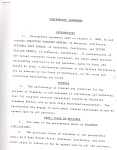
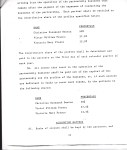
In theory I am continuing the Family Partnership founded by Christine Rosamond Benton, Victoria Mary, and Victor Presco. According to the partnership agreement, surviving members of the partnership can carry on – go forward!
Yesterday, Vicki told me she is out of the art business, and does not want to do what Shannon Rosamond recently suggested, that Vicki and I take over the business of selling her mother’s beautiful images now that Stacey Pierrot has no right to market them. Drew Benton and Shannon Rosamond now have legal rights to these images that Pierrot had control of. There is a question as to whether my two nieces can come together and put aside their differences in order to go forward and realize the profits their mother intended for them – just them!
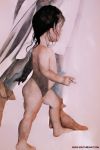
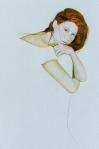
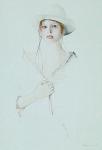
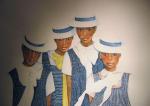
To this end, I offer to market the four images that Rosamond rendered for this family partnership. What I suggest is that the four images be reduced in number, and a Family certificate of authenticity be applied to all sales via Rosamond Publications. I will apply my Seal of Approval, even sign unsigned prints with a combination of our family names – JOHN ROSAMOND.
John@rosamondpublications.com
Several of Christine Rosamond’s fans have asked me how they own a ROSAMOND, and make sure Christine’s daughters are getting the proceeds. I am positive that Christine only wanted her children to realize a profit from the art she left them in her Legacy. This plan allows Rosamond’s loyal fans to fulfill her Last Wishes. Rosamond Publications was a partnership outside the Probate.
What I suggest is that all but a thousand partnership prints be destroyed in order to create a viable market that hopefully will be integral to collectors and investors in Rosamond’s work. A fixed price should be applied that is agreeable to Drew, Shannon, and my daughter, Heather Hanson, who came to own some of these prints via her grandfather’s investment of his mother’s legacy that Melba once intended for all four Presco grandchildren.
Here is the opportunity for Melba’s three great granddaughters to go forward and realize monies that would be a great help to them in these hard times. For instance: If you set the price of the prints at $250 dollars, then we are looking at a legacy worth $250,000 thousand dollars. This could mean the three granddaughter could receive $80,000 dollars apiece. The remaining $10,000 will go to expenses and possible marketing of the other Rosamond images, that will also be Family Certified. This does not mean these images will sell. This is a plan that will attempt to establish sane expectations, and hopefully like the Vincent Rice Trust, put money in the hands of family members so they can realize their dreams.
Shannon, Drew, and Heather are artists. There are Rosamond fans who want to see their art, want to see our family do well. Folks want to be a part of our dream. This is what makes Art valuable. Those born with a Gift are the designers and builders of our boats that take all of humanity forward, into a creative world that gives hope to us all. Now that Rosamond’s Legacy is back in her family, we can now design and build the vessel Christine always had in mind, when just after she became world famous, she made me a sincere offer to teach me her style so I could be famous too, so I would no longer be dirt-poor, so I would no longer be an Anonymous, but an integral Artist with money, whose vision, and Love of Art and the Truth, inspired my beloved sister, for Art was my religion.
Never in the annals of Art has such a generous offer been made. Who would consider such a thing? These are the profound considerations that Christine Rosamond weighed, he artistic identity but an infant in a realm she knew very little about.
I turned down Christine’s amazing offer, for I didn’t know what to do with it – and I knew much about Art. It is the one thing in my life I regret, not that I would be “rich too” but that she went to our parents for help, and they were happy at our falling out, they not once inquiring what had gone wrong between us, they instead exploiting the rent in our loving bond till the day they died. This bond was the most valuable thing I owned. Christine were more then allies in a abusive home, we were like Love Parents who forever tried to nurture our family. Not only were we the housekeeper and cook, we were creative and imaginative, we were Healers!
This is the bond I will bring to light in my story ‘Artist Anonymous’ becasue I truly believed if I took Christine up on her offer, our bond would soon come to and end. Being born in the world at the same time, from the same womb, was one of the bests things that ever happened to me. Vicki told me Christine wanted to see me again near the end of her success, for the reason she had come to the same conclusion.
In the final Divorce granted Rosemary, “Extreme Cruelty” was cited as the reason why these two had to separate. Though sperated, they used their children and grandchildren as conduits of the continuing cruelty. When I got sober in 1987, I sent a long letter pleading with my siblings to get their throw-away children back, because, “IT WAS BOTH OF THEM!”
The days of the imprisoned Child Jurors – is over! The Presco Divorce – is over! Forgive Melba, and look to June and Vinnie Rice as parents, and grandparents – who loved you!
Now that Stacey Pierrot is out of the way, I will give THE ANTIDOTE to the poison that kept Christine and I apart. If my gift should produce a book, a movie, a television series, then I will take %25 percent for my self, and gift %25 percent in a Trust to Shannon, Drew, and Heather so they can launch their boats across the pond, and alas arrive in a happier homeland.
Rosamond Publications will also publish Royal Rosamond’s and my poetry.
I am willing to spend up to $1,000 dollars to have my attorney (who handled the Rice Trust) draw up an agreement, and $500 dollars for a renowned genealogist prove the Benton connection to the Royal Stewarts, and the Windors. How many world famous artists have royal connections? Christine made a brilliant marriage, but, I believe their was a Guiding Hand, from a Higher Power, at work here. Family members can now help author the end of Rosamond’s story. Like I told my daughter when all looked lost;
“All’s well, that ends well!”
Amen!
sincerely
John Presco
Presdient: Royal Rosamond Press
The child plays
The toy boat sailsacrossthe pond
The wrok now has just begun
Oh child
Look what you have done.
Stuttmeister-Janke Wedding at Ralston Hall
Posted on September 9, 2011 by Royal Rosamond Press
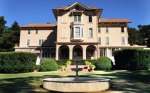
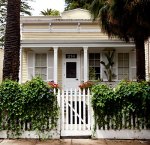
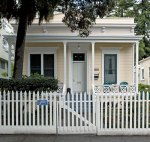
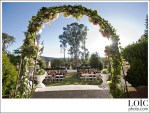
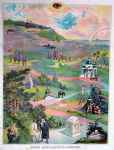
This morning I opened an email from my kin, Murray Oltman, and read the proof of what I have been saying for over ten years, being, Augusta Stuttmeister, the beloved wife of William Oltman Stuttmeister, is kin to Carl Arugusta Janke the co-founder, if not sole founder of the City of Belmont California.
William August Janke, native of Hamburg, Germany, born Dec. 25, 1842, died Nov. 22, 1902, son of Carl August & Dorette Catherine Janke.
Carl Janke came to San Francisco in 1848, one year before the Gold Rush. According to an article in the DAR, he brought six portable houses around the Cape and erected them in Belmont for gold miners who had struck it rich. As fate would have it, William Ralston ‘The Man Who Built San Francisco’ and his partner, lived in Belmont in a house that still stands, called Ralston Hall. I believe this is one of Janke’s homes that Coun Leonetto Cipriani purchased, and added on to. This house had 5,000 screws in it according to one (lost) article I read. Another lost article said these homes were manufactured in Mass. then shipped to California. I suspect two of these homes are found on Dolores Street in the Mission. One article said one house was moved a distance from the Tanforan ranch. The name Tanforan may have been the name of the Theme Park that Janke built in Belmont, perhaps the first in California. It also might be Turnverein, the German gymnastic clubs of the Forty-Eighters. There is much evidence the Stuttmeisters were members of the Turner Societies of Free-thinkers.
What is truly astounding, is that Sir Thomas Hesketh married Florence Sharon at Ralston Hall, and Florence Breckenridge married their son. Florence descends from John Witherspoon,and thus is kin to the Jessie Benton Fremont, thus the Presco family, when Christine Rosamond Presco married Garth Benton.
This is truly a Rags to Riches story. Christine and I used to take walks in Piedmont where the Sharon family lived. The Hesketh family are in the Peereage.
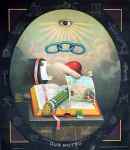
Then there is the Oddfellow gathering in Belmont that may have been staged by William Ralston. The Oddfellows were forming a union with the Freemasons and holding Knights Templar titles. Was the Stuttmeister-Janke union a Masonic-Odfellow marriage? If so, my family owns all those legends that Dan Brown gathered into his basket to create a money-making work of fiction.
When my daughter gets married, I will do all that is humanly and divinely possible to see that she ties the night at Ralston Hall, because; “All’s wll, that ends well!”
Jon Presco
Copyright 2011
Florence Louise Breckinridge was born in November 1881 at California, U.S.A..2 She married Thomas Fermor-Hesketh, 1st Baron Hesketh, son of Sir Thomas George Fermor-Hesketh, 7th Bt. and Florence Emily Sharon, on 9 September 1909 at British Embassy Church, Paris, France.
1888: From the Daily Alta, an article on the marriage of Dr. William O.
Stuttmeister and Augusta D. Janke.
Daily Alta California, Volume 42, Number 14175, 24 June 1888
STUTTMEISTER-JANKE.
One of the most enjoyable weddings of the past week took place at
Belmont, Wednesday morning last, the contracting parties being Miss
Augusta Janke, daughter of Mr. and Mrs. August Janke of Belmont,
and Dr. Wm. Stuttmeister of San Francisco. The house was
handsomely decorated with a rich profusion of ferns and flowers, and
at the appointed hour was filled with the relatives and intimate friends
of the contracting parties. At 11 o’clock the wedding march was played
and the bridal party entered the parlor. The bride was attended by Miss
Alice Stuttmeister, a sister of the groom, and Miss Minnie Janke, a
sister of the bride, as bridesmaids, and Dr. Muldownado and Wm.
Janke, a cousin of the bride, were groomsmen. The Rev. A. L. Brewer
of San Mateo performed the beautiful and impressive ceremony under
an arch composed of flowers and greens very prettily arranged, after
which the guests pressed forward and offered their congratulations.
The bride was attired in a very pretty and becoming costume of the
crushed strawberry shade, and wore a corsage bouquet of orange
blossoms. She carried a handsome bouquet of white flowers. After the
guests had paid their compliments the bride and groom led the way to
the dining-room, where the wedding dinner was served and the health
of the newly married pair was pledged. The feast over, the guests
joined in the dance, and the hours sped right merrily, interspersed with
music singing and recitations, until the bride and groom took their
departure amid a shower of rice and good wishes. Many beautiful
presents were received. Dr. and Mrs. Stuttmeister left Thursday
morning for Santa Cruz and Monterey, where they will spend the
honeymoon. On their return they will make their home in Belmont.
1911: Dr. Willian O. Stuttmeister was practicing dentistry in Redwood
City, CA. (Reference: University of California, Directory of Graduates,
1864-1910, page 133).
Records from Tombstones in Laurel Hill Cemetery, 1853-1927 – Janke
– Stuttmeister
Mina Maria Janke, daughter of William A, & Cornelia Janke, born
February 2, 1869, died March 1902.
William August Janke, native of Hamburg, Germany, born Dec. 25,
1642, died Nov. 22, 1902, son of Carl August & Dorette Catherine
Janke.
Frederick William R. Stuttmeister, native of Berlin, Germany, born
1612, died January 29, 1877.
Mrs. Matilda Stuttmeister, wife of Frederick W.R. Stuttmeister, born
1829, died March 17, 1875, native of New York.
Victor Rudolph Stuttmeister, son of Frederick W.R. & Matilda
Stuttmeister, born May 29, 1846, died Jan. 19, 1893, native of New
York.
http://www.ebooksread.com/authors-eng/daughters-of-the-americanrevolution-
california-s/records-from-tombstones-in-laurel-hill-cemetery-
1853-1927-gua/page-6-records-from-tombstones-in-laurel-hillcemetery-
1853-1927-gua.shtml
http://www.ralstonhall.com/tour/video.html
John Witherspoon BRECKENRIDGE
The great grandmother of John Witherspoon Owen Breckenridge, is the Ann Witherspoon, the daughter of Signer, John Witherspoon. His great grandfather, was John Breckenridge, Attorney General of the United States in the Cabinet of President Thomas Jefferson. I lived with Dottie Witherspoon in Boston, and met many Witherspoons in South Carolina who are kin to the actress, Reese Witherspoon.
I have been exchanging e-mails with a member of the Sharon family about revising the Sharon Family reunion at the Palace Hotel in San Francisco. I was invited to go to Europe with a member of the Hesketh-Fermor family, who are kin to my niece, Drew Benton, and thus the Prescos. We are all kin to Lloyd Tevis the President of Welles Fargo Bank.
I have put on pause my homework of family relations. I do know some of the California Sharons and I am familiar with the reunion that use to take place in San Francisco, but I have been swamped. I would love to refresh the reunion for our family. I am not familiar with the names on your email yet. I don’t know if you sent email to Philip or had misplaced my name. I will start more family connections with the Sharon clan soon.
Patrick Sharon
Hi Jon- Get ready- much info coming now- please go ASAP to tatler.com- June issue page 102- big article on the new owner of Easton Neston- Leon Max- I’m headed there with James Baring and Bob and Joanne Fermor tomorrow.
Anne
Florence Louise Breckinridge1
F, #152844, b. November 1881, d. 4 March 1956
Florence Louise Breckinridge|b. Nov 1881\nd. 4 Mar 1956|p15285.htm#i152844|John Witherspoon Breckinridge|b. 22 Dec 1850\nd. 9 May 1892|p15285.htm#i152845|Florence Louise Tevis|b. 12 Oct 1858\nd. 19 Dec 1938|p15285.htm#i152846|General John C. Breckinridge|b. 16 Jan 1821\nd. 17 May 1875|p15287.htm#i152867|Mary C. Burch|b. 16 Aug 1826\nd. 8 Oct 1907|p15312.htm#i153115|Lloyd Tevis|b. 20 Mar 1824\nd. 24 Jul 1899|p15285.htm#i152847|Susan G. Sanders|b. 9 Feb 1831\nd. 29 Apr 1902|p15312.htm#i153112|
Last Edited=13 Feb 2010
Florence Louise Breckinridge was born in November 1881 at California, U.S.A..2 She married Thomas Fermor-Hesketh, 1st Baron Hesketh, son of Sir Thomas George Fermor-Hesketh, 7th Bt. and Florence Emily Sharon, on 9 September 1909 at British Embassy Church, Paris, France.1 She died on 4 March 1956 at age 74 at Easton Neston, Towcester, Northamptonshire, England.3,4 She was buried at St. Mary’s Church, Easton Neston, Northamptonshire, England.4
She was the daughter of John Witherspoon Breckinridge and Florence Louise Tevis.1 From 9 September 1909, her married name became Fermor-Hesketh.1 As a result of her marriage, Florence Louise Breckinridge was styled as Baroness Hesketh on 25 January 1935.
Children of Florence Louise Breckinridge and Thomas Fermor-Hesketh, 1st Baron Hesketh
Lt. Hon. Thomas Sharon Fermor-Hesketh1 b. 7 Sep 1910, d. 21 Jun 1937
Hon. Louise Fermor-Hesketh+5 b. 15 Dec 1911, d. 1994
Hon. Flora Breckinridge Fermor-Hesketh+1 b. 23 Feb 1913, d. 15 Sep 1970
Major Frederick Fermor-Hesketh, 2nd Baron Hesketh+1 b. 8 Apr 1916, d. 10 Jun 1955
Major Hon. John Breckinridge Fermor-Hesketh5 b. 7 Mar 1917, d. 8 Nov 1961
John Witherspoon Breckinridge1
M, #152845, b. 22 December 1850, d. 9 May 1892
John Witherspoon Breckinridge|b. 22 Dec 1850\nd. 9 May 1892|p15285.htm#i152845|General John Cabell Breckinridge|b. 16 Jan 1821\nd. 17 May 1875|p15287.htm#i152867|Mary Cyrene Burch|b. 16 Aug 1826\nd. 8 Oct 1907|p15312.htm#i153115|Hon. Joseph C. Breckinridge|b. 24 Jul 1788\nd. 1 Sep 1823|p15310.htm#i153094|Mary S. C. Smith|b. 30 Aug 1787|p692.htm#i6913|Clifton R. Burch|b. 1792\nd. 28 Dec 1834|p15315.htm#i153141|Alethia Villey|b. 18 Nov 1793\nd. 4 Sep 1838|p15315.htm#i153142|
Last Edited=3 Dec 2006
John Witherspoon Breckinridge was born on 22 December 1850 at Kentucky, U.S.A..3 He married, firstly, Florence Louise Tevis, daughter of Lloyd Tevis and Susan Gano Sanders.3 He and Florence Louise Tevis were divorced before 1881.3,4 He married, secondly, Harriett Turner, daughter of W. C. Turner, after 1881.3 He died on 9 May 1892 at age 41 at Merced County, California, U.S.A..3 He was buried at Lexington Cemetery, Lexington, Fayette County, Kentucky, U.S.A..3
John Witherspoon Breckinridge also went by the nick-name of Owen.4 He was the son of General John Cabell Breckinridge and Mary Cyrene Burch.2,3 He held the office of Member of the California State Assembly between 1884 and 1885.5,4 He lived between 1884 and 1885 at Merced County, California, U.S.A..4 He lived at San Francisco, California, U.S.A..1
Children of John Witherspoon Breckinridge and Florence Louise Tevis
Lloyd Tevis Breckinridge3 b. 1878, d. 1901
John Cabell Breckinridge+3 b. 1879, d. a Mar 1914
Florence Louise Breckinridge+1 b. Nov 1881, d. 4 Mar 1956
Hon. Joseph Cabell Breckinridge1
M, #153094, b. 24 July 1788, d. 1 September 1823
Hon. Joseph Cabell Breckinridge|b. 24 Jul 1788\nd. 1 Sep 1823|p15310.htm#i153094|Hon. John Breckinridge|b. 2 Dec 1760\nd. 14 Dec 1806|p15310.htm#i153095|Mary Hopkins Cabell|b. 22 Feb 1769\nd. 26 Mar 1858|p15314.htm#i153135|Robert Breckenridge|b. c 1720\nd. a 16 Aug 1772|p15313.htm#i153121|Letitia Preston|b. Jul 1728\nd. Mar 1797|p15314.htm#i153131|Colonel Joseph Cabell|b. 19 Sep 1732\nd. 1 Mar 1798|p15314.htm#i153136|Mary Hopkins|b. Jan 1735\nd. 12 Jul 1811|p15314.htm#i153138|
Last Edited=16 Aug 2005
Hon. Joseph Cabell Breckinridge was born on 24 July 1788 at Albemarle County, Virginia, U.S.A..2 He married Mary Stanhope Clay Smith, daughter of Reverend Samuel Stanhope Smith and Ann Witherspoon, on 11 May 1811. He died on 1 September 1823 at age 35 at Frankfort, Franklin County, Kentucky, U.S.A., from an epidemic.2
He was the son of Hon. John Breckinridge and Mary Hopkins Cabell.1,2
Child of Hon. Joseph Cabell Breckinridge and Mary Stanhope Clay Smith
General John Cabell Breckinridge+1 b. 16 Jan 1821, d. 17 May 1875
http://en.wikipedia.org/wiki/Benton-Brown-Fremont-Clay-McDowell_family
The Benton-Brown-Fremont-Clay-McDowell family is a family of politicians from the United States. Below is a list of members:
John Brown (1757-1837), Virginia State Senator 1783-1788, Delegate to the Continental Congress from Virginia 1787-1788, U.S. Representative from Virginia 1789-1792, U.S. Senator from Kentucky 1792-1805. Brother of James Brown.
John Breckinridge (1760-1806), candidate for U.S. Senate from Kentucky 1794, Attorney General of Kentucky 1795-1797, Kentucky State Representative 1798-1800, U.S. Senator from Kentucky 1801-1805. Cousin of John Brown and James Brown.
James Breckinridge (1763-1833), Virginia House Delegate 1789-1802 1806-1808 1819-1821 1823-1824, U.S. Representative from Virginia 1809-1817. Cousin of John Brown and James Brown.
Francis Preston (1765-1836), Virginia House Delegate 1788-1789 1812-1814, U.S. Representative from Virginia 1793-1797, Virginia State Senator 1816-1820. Cousin of John Brown and James Brown.
James Brown (1766-1835), Secretary of the Louisiana Territory, U.S. District Attorney of Louisiana Territory, U.S. Senator from Louisiana 1813-1817 1819-1823, U.S. Minister to France 1823-1829. Brother of John Brown.
Henry Clay (1777-1852), U.S. Senator from Kentucky 1806-1807 1810-1811 1831-1842 1849-1852, U.S. Representative from Kentucky 1811-1814 1815-1821 1823-1825, Speaker of the U.S. House of Representative 1811-1813 1813-1814 1815-1817 1817-1819 1819-1820 1823-1825, candidate for President of the United States 1824 1832 1844, U.S. Secretary of State 1825-1829. Brother-in-law of James Brown.
Thomas Hart Benton (1782-1858), U.S. Senator from Missouri 1821-1851, U.S. Representative from Missouri 1853-1855. Cousin-in-law of James Brown and Henry Clay.
Belmont park has history of sun, libations, mystery and disasters
October 22, 2001, 12:00 AM By Paul D. BuchananDaily Journal Feature Writer
The most popular daytime excursion destination on the Peninsula during the late 19th century once occupied the area in Belmont now known as Twin Pines Park. The Belmont Picnic Grounds proved so popular, in fact, that scores of picnickers would travel regularly from San Jose and San Francisco for sun, fresh air and libations.
The size of the crowds and the fondness for libation, however, eventually led to the attraction’s demise.
According to Belmont Historical Society records, Dorothea and Carl August Janke sailed around Cape Horn from Hamburg, Germany, in 1848. After landing in San Francisco, they settled in Belmont in 1860. Industrious and entrepreneurial, Carl Janke purchased land in the vicinity of 6th and Ralston. Janke set out to create a site for leisure activities, modeled after the biergarten in his native Hamburg. His creation became Belmont Park.
Janke’s park offered all the necessary provisions for an outdoor holiday, which included a dance pavilion to accommodate 300 large glassless windows, a conical roof and a dance floor situated around a large spreading tree. The pavilion was also equipped with a bar, an ice cream parlor and a restaurant.
Outside the pavilion, the park provided a carousel for children, footpath bridges crossing the meandering of creeks, and a shooting gallery, with picnic benches and lathe houses situated about the shady grounds. Brass bands performing from bandstands could be heard all around the woodland.
In 1876, Janke opened Belmont Soda Works, located north of Ralston along Old County Road. Janke’s sons, Gus and Charlie, operated the soda works, which offered a variety of sarsaparillas. Within two years, the Soda Works produced more than 1,000 bottles a month — a large percentage of which would be sold at Belmont Park. Between the Soda Works and the several bars situated in and around the park, the liquid refreshment flowed abundantly.
Belmont Park became so popular that Southern Pacific Railroad began reserving exclusive trains for the sojourn to Belmont. Several local organizations and fraternities used the grounds for the celebrations, such as the Germania Rifles, the Apollo Verein, the Blue Bells, the Bunker Hill Association, the Ignatian Literary Society, the Hibernians and the Purple Violets. Races – foot, three-legged, and pony cart – as well as other amusements became commonplace at the gatherings.
The same year the Belmont Soda Works opened, the Independent Order of Odd Fellows (I.O.O.F.) hired 75 Southern Pacific railroad cars to transport 7,000 of its members from San Francisco to Belmont Park. There, 1,000 other members met them there, making the largest picnic ever held at Belmont Park.
With all the alcohol, dancing and overheated bodies gathered in a relatively small place, trouble seemed destined to follow.
In 1880, rival gangs started a small riot at Belmont Park, leaving one person dead and several injured. On another occasion, a young girl named Anne Mooney mysteriously disappeared. Authorities assumed she had been kidnaped, but a suspect was never identified. The fate of Anne Mooney remains a mystery.
By the turn of the century, the weekly treks to Belmont had become something of a nuisance. The drunken tussling would often begin at the on-board bars, continuing and intensifying by the time the passengers reached Belmont. The small communities through which the trains rumbled complained about the outsiders cavorting and otherwise disturbing their peaceful Peninsula neighborhoods. Southern Pacific, tired of the rowdies and the damage inflicted to the railroad cars, finally stopped operating the excursions in 1900.
In her book “Heritage of the Wooded Hills,” Ria Elena MacCrisken writes, “… if the railroad looked down its nose at the San Francisco picnickers, the little town of Belmont welcomed them with open arms. These early-day tourists brought lively times to Belmont and revenue to its stores…” Unfortunately for the Jankes , when the train stopped bringing carloads of revelers, much of Belmont Park’s clientele disappeared.
By 1910, the property had sold to George Center, the director of the Bank of California, who built a home on the property. Later Dr. Norbert Gottbrath opened a sanitarium called “Twin Pines,” which operated until March of 1972. The City of Belmont took over the property, dedicating Twin Pines Park in June of 1973.
Odd Fellowship was established in California in 1849 with the formation of San Francisco Lodge No. 1 in San Francisco. Odd Fellowship spread throughout the state, particularly to the gold rush towns such as Marysville, Rough and Ready, Grass Valley, Whiskey Flat, Hangtown (a.k.a. Placerville), Comptonville, San Juan, Downieville, etc. The Grand Lodge of California was established in 1853, making it the first Grand Lodge of Odd Fellows established on the Pacific. By 1856, the jurisdiction of California consisted of sixty lodges with a membership of more than two thousand four hundred.
Early in the history of California, the two largest fraternal orders, the Odd Fellows and the Freemasons embarked on a unique cooperative project to benefit the State. The two fraternal orders created the first hospital in the new State of California in 1850 following the great flood of the winter of 1849-1850. It was called the Odd Fellows and Masons Hospital, and admitted and cared for any patient regardless of affiliation, making no distinction between members and non-members. All funds for operating the hospital were to be contributed only by the members of the two fraternal organizations.
In 1869, California hosted the Supreme Lodge session in San Francisco (opening September 20, 1869), an event memorable for two reasons: the Supreme Lodge officers became the first organized body to cross the continent to the Pacific by the newly completed transcontinental Rail Road; and the financial panic known as “Black Friday” occurred during the sessions. Delegates traveled free, thanks to the generosity of Templar Lodge No. 17, San Francisco: A Templar Lodge member, William Chapman Ralston (president of the California Bank) underwrote the $10,000 pledged by Templar Lodge. Subsequent to the 1869 session, California was host to Supreme Lodge sessions in 1888, 1904, 1915, 1949, 1960 and 1994. In 1871, Past Grand Master of California Odd Fellows, John F. Morse succeeded in establishing the Order in Germany and Switzerland. For the pleasure of members and their families, the Odd Fellows maintained several outdoor resort areas in California, including the Odd Fellows Beach and Park on the Russian River near Healdsburg, CA
Belmont is a city in San Mateo County, California, United States. It is in the San Francisco Bay Area, located half-way down the San Francisco Peninsula between San Mateo and San Carlos. It was originally part of the Rancho de las Pulgas, for which one of its main roads, the Alameda de las Pulgas, is named. The town was incorporated in 1926. The population was 25,835 at the 2010 census.
Ralston Hall is a historic landmark built by Bank of California founder, William Chapman Ralston, on the campus of Notre Dame de Namur University. It was built around a villa formerly owned by Count Cipriani, an Italian aristocrat. The locally famous “Waterdog Lake” is also located in the foothills and highlands of Belmont.
One of two surviving structures from the Panama-Pacific International Exposition is on Belmont Avenue (the other is the Palace of Fine Arts in San Francisco). The building was brought to Belmont by E.D. Swift shortly after the exposition closed in 1915. Swift owned a large amount of land in the area.
Carlmont High School and Ralston Middle School are located in Belmont and are both Distinguished California Schools.
Belmont has attracted national attention for a smoking ordinance passed in January 2009 which bans smoking in all businesses and multi-story apartments and condominiums; the ordinance has been described as one of the strictest in the nation.
Ralston Hall Mansion located in Belmont, California, was the country house of William Chapman Ralston, a San Francisco businessman, founder of the Bank of California, and financier of the Comstock Lode. It is an opulent Italianate Villa, modified with touches of Steamboat Gothic and Victorian details. It is a California Registered Landmark and is designated a National Historic Landmark[4]. It is now part of Notre Dame de Namur University.
Contents
[hide]
1 The mansion
2 Uses of the mansion
3 References
4 External links
The mansion
Ralston Hall Mansion is situated on the campus of Notre Dame de Namur University, on the San Francisco Peninsula. The mansion has been built around the villa of Count Leonetto Cipriani, former owner of the Estate. It took three years to build and was completed in 1867, when San Francisco’s leaders and first citizens had large summer homes on the Peninsula and was an integral part of San Francisco high society. Architect John Painter Gaynor, who later worked with Ralston on the Palace Hotel in San Francisco is thought to have worked on it. Several of the design elements of Ralston Hall Mansion were copied in the design of the Palace.
A history of San Francisco speaks of the palatial grandeur of Ralston Hall: “In a domed wing was the oval ballroom. Its walls were mirrored, and from the frescoed ceiling hung a great crystal chandelier whose reflected lights and sparkle filled the room. I have never seen a more effective setting for a ball.”
The Hall is a four-floor, 55,000 square foot (5,000 m²) mansion, with a stately dining room, a mirrored ballroom in the Versailles tradition, an opera box modelled after the Opéra Garnier in Paris, a grand staircase, 23 crystal chandeliers, and in-laid wood floors. Ralston greatly admired the Palace of Versailles and incorporated several of the palace’s elements in his design of the mansion. The mansion has a number of elegant sitting rooms and parlours. The Oriental Music Room has a set of Chinese high-tea chairs and buffets. Ralston Hall houses a collection of antiques accumulated by Ralston, including some valuable Thomas Hill paintings.
The grounds of the mansion contain numerous gardens, a stoney grotto, and a garden of 150-year-old bamboo trees.
Uses of the mansion
After Ralston’s death, the estate passed to his former business partner, United States Senator from Nevada William Sharon, whose family lived in the house. Sharon’s daughter Flora’s wedding to Englishman Sir Thomas George Fermor-Hesketh, 7th Baronet, of Rufford was one of the last elaborate social events of the time, taking place in the mansion’s ballroom. After Senator Sharon’s death in 1885, the mansion became Radcliffe Hall, a girls’ finishing school. From 1900 to 1922 it was the Gardner Sanitarium.
Since 1922, Ralston Hall has been on the campus Notre Dame de Namur University, formerly the College of Notre Dame. It contains the admissions office and is rented out for society weddings and other occasions.
A few of the notable persons who have been entertained at Ralston Hall include:
President Ulysses S. Grant
Admiral David Farragut
Leland Stanford
Mark Hopkins
http://www.worldmastiffforum.com/post?id=4925767
http://query.nytimes.com/mem/archive-free/pdf?res=F40713F8395B1B7A93C1AB1789D95F448884F9
I’m also trying to find out where Adelaide (Murphy) Breckenridge-Roberts is buried. John Cabell Breckenridge, Sr., born 1879 was her 1st spouse. He was the son of Louise (Tevis) and John Witherspoon “Owen” Breckenridge. Adelaide was living in Cowfold, England in 1954. If there is anything in your information about her I would appreciate hearing of it.
Hello Gareth,
Many thanks for the posting. Since my initial query I have located more information for this line.
I have seen photographs of the home at East Neston that you mentioned. It is very beautiful.
The Breckenridges and the Fermor-Hesketh family lines has been very interesting to research.
Does your information show where Florence Louis (Breckenridge) and Thomas Fermor-Hesketh are buried?
Dear Gloria:
Congrats! You’ve hit the big time. The FERMOR-HESKETHs are a still existing line of the British nobility seated at the FERMOUR ancestral home at Easton Neston, Northamptonshire. It is a royal retreat – no visitors allowed. The FERMO(U)Rs trace their lineage back through the royal lines of Europe, starting with Edward I of England and David I of Scotland. They were Earls of Pomfret from the late 1600’s through circa 1867 when the FERMOR male line failed and the title lapsed. Lady Julianna FERMOUR m.
Gov. Thomas PENN, son of Wm. PENN. If you would like additional info please call me
BOMFORD Genealogy
Sir Thomas George FERMOR-HESKETH
(1849 – 1924)
John Witherspoon BRECKENRIDGE
Florence Emily SHARON
(1858 – 1924)
m. 1909
Sir Thomas George FERMOR-HESKETH
Florence Louise BRECKENRIDGE
b. 1881
ch.
d. 1935
bur.
occ.
edu.
rel.
b. 1881
ch.
d. 1956
bur.
occ.
edu.
rel.
Landmark 67
Tanforan Cottage 1
214 Dolores Street Between 15th and 16th Streets
Mission Dolores
Built 1853
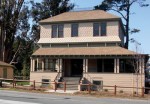
This is one of a pair of redwood cottages built by the Tanforan ranching family on land that lay within the 1836 Mexican Grant to Francisco Guerrero. Located only half a block from Mission Dolores, the oldest building in San Francisco, these two cottages are probably the oldest residential buildings in the Mission District.
Landmark 68
Tanforan Cottage 2
220 Dolores Street Between 15th and 16th Streets
Mission Dolores
Built 1854
The following is quoted from Here Today, San Francisco’s Architectural Heritage by Roger Olmsted and T. H. Watkins, published by Chronicle Books in 1969:
Two very old houses that have maintained their original appearance can be seen side-by-side at 220 and 214 Dolores Street. The “Tanforan Cottages,” so called because members of the family of Toribio Tanforan occupied them from 1896 to 1945, are simple frame structures with modified late Classical Revival facades. Though very nearly identical in appearance, they were not constructed at the same time; 214 Dolores is said to have been built a little before 1853, 220 not long after that date. This dating is questionable, though, as the first substantiated date is 1866, when Revilo Wells, owner of 214, had water piped in. There is still a small carriage house behind 220 Dolores – occupied as late as 1940 by one of the Tanforan carriages. The large gardens of these houses have been well-maintained and contain many specimens of turn-of-the-century San Francisco taste in flora.
Since 1995, Tanforan Cottage 2 has been the Richard M. Cohen Residence, a residential care facility for homeless men and women living with disabling HIV or AIDS. For more information, see Dolores Street Community Services.
Sir Thomas George Fermor-Hesketh, 7th Baronet
From Wikipedia, the free encyclopedia
Jump to: navigation, search
Sir Thomas George Fermor-Hesketh, 7th Baronet (9 May 1849 – 19 April 1924) was a British baronet and soldier.
Born Thomas George Hesketh, he was the second son of Sir Thomas Fermor-Hesketh, 5th Baronet, and Lady Anna Maria Isabella Fermor, daughter of William Fermor, 4th Earl of Pomfret. In 1867 he and his father assumed by Royal license the additional surname of Fermor and in 1876 he succeeded his elder brother as seventh Baronet of Rufford.
Fermor-Hesketh gained the rank of Lieutenant in the Rifle Brigade and was also an Honorary Colonel in the service of the 4th Battalion, Liverpool Regiment of Militia. In 1880, Sir Thomas was instrumental in the rescue at sea off the coast of Mexico of a number of citizens of San Francisco. In recognition of this, he was honoured by the city, and at a party in his honour he came to the attention of the San Francisco heiress Florence Emily Sharon (1858–1924). Florence Emily Sharon was the daughter of the Hon. William Sharon (1812–1885), who had made an enormous fortune in the gold, silver, banking and hotel business in California and Nevada. The first United States Senator from Nevada, Sharon was also the wealthiest man in the state. By the early 1880s, his empire was such that he was the largest single tax payer in California. When he died in 1885, he left the bulk of his estate to his daughter Florence Emily Sharon — and this she brought with her to the marriage. When her brother died, the whole of the Senator’s fortune passed to her. The two were married at the Ralston Hall Mansion of Belmont, California, in 1880, and had two sons.
In 1881 he was appointed high Sheriff of Northamptonshire.
Fermor-Hesketh died on April 19, 1924, aged 74, and was succeeded in the baronetcy by his son Thomas, who in 1935 was elevated to the peerage as Baron Hesketh. Lady Fermor-Hesketh died by falling down the stairs at Euston Hall in September of the same year as her husband.
http://belmont-ca.patch.com/articles/belmont-unveils-renovated-emmett-house#video-5343759
Share this:
Oddfellows and Knight Templars
Posted on September 10, 2011 by Royal Rosamond Press
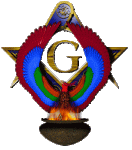

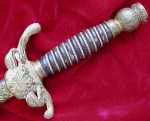
The Oddfellows adobted Masonic rituals and had their Knight Templars on parade in San Francisco. Lodge 17 approved the formation of the German Lodge.
Jon Presco
As the committee had intended, this parade was the largest and most beautiful of any ever seen upon
the Pacific Coast. It was a parade grand and inspiring, and in numbers, variety and beauty far
exceeded the Knights Templar parade of the previous week, although they had in line the Bostonian
Knights, each wearing a uniform representing 15,000 or more. To make this procession a grand
success, the committee offered cash prizes of |T5^ and more for the largest city lodge in line, the lodge
making the best display, the largest interior lodge, the handsomest float, and the finest Rebekah lodge.
The Rebekahs made a beautiful appearance, they having some ten or twelve of the fifteen magnificent
floats, one, the orphan children from their Home.
Many wondered at the grandeur and beauty of the electrical display, and it was pronounced the finest ever seen outside of New York. Each evening, Market street, from the ferry up some two miles distiint, was a ll(K>d of dazzling light. Many of the prominent buildings were beautifully decorated, and the overhanging bell, near the Examiner, Call and Chronicle buildings Avas a magnificent, gorgeous display of electrical art
In 1869, California hosted the Supreme Lodge session in San Francisco (opening September 20, 1869), an event memorable for two reasons: the Supreme Lodge officers became the first organized body to cross the continent to the Pacific by the newly completed transcontinental Rail Road; and the financial panic known as “Black Friday” occurred during the sessions. Delegates traveled free, thanks to the generosity of Templar Lodge No. 17, San Francisco: A Templar Lodge member, William Chapman Ralston (president of the California Bank) underwrote the $10,000 pledged by Templar Lodge. Subsequent to the 1869 session, California was host to Supreme Lodge sessions in 1888, 1904, 1915, 1949, 1960 and 1994. In 1871, Past Grand Master of California Odd Fellows, John F. Morse succeeded in establishing the Order in Germany and Switzerland. For the pleasure of members and their families, the Odd Fellows maintained several outdoor resort areas in California, including the Odd Fellows Beach and Park on the Russian River near Healdsburg, CA.
Odd Fellows in California
The history of California Odd Fellows started in Philadelphia, PA. The charter for California Odd Fellows Lodge #1 was issued on January 12, 1849 by Grand Sire Horn R. Knease bearing the names of 6 officers and one new member who, days later, embarked for the California territory in 3 separate ships. Of the seven men only three arrived in California on May 20, 1849. The discovery of gold had Port Yerba Buena in turmoil. Two of the three men left for the gold fields and left James L. Smiley alone with the charter. Smiley made several attempts to start the Lodge but there was little interest. When the two companions and others returned from the gold fields then the interest of the Lodge started to grow. On September 9, 1849, exactly one year to the day that California was a state, California Odd Fellows Lodge #1 held it’s first meeting with Brother Smiley instituting the Lodge. The first meeting had 25 members representing 25 different states.
On November 12, 1849 the Brothers moved to the building owned by Levi Stowell located on Montgomery Street. The Lodge hall in San Francisco at 7th and Market was built in 1884 and the first meeting held was on May 14th. The original hall was destroyed in the 1906 Earth Quake and fire. Thanks to the heroics of one member the charter was saved before the building collapsed. The current building was re-dedicated on June 27th, 1910.
Odd Fellows in Fremont
The Inception of Mission Peak Odd Fellows Lodge #114, as with many Lodges from California, grew from the quick expanse of the membership spreading out through the state. On July 5, 1851, James Smiley instituted San Francisco Odd Fellows Lodge #3. James Smiley transferred to that Lodge by card soon after. On October 22, 1853 Samuel Hale Parker instituted Templar Odd Fellows Lodge #17 in San Francisco. Brother Parker transferred to that Lodge by card soon after.
On November 26, 1859, Crusade Odd Fellows Lodge #93 in Alvarado (Now Union City) was instituted by John L. Van Bokkelen. One man that lived in the area at the time pushed the presence of this Lodge. Charles S. Elgenbrodt joined Charity Odd Fellows Lodge #6 in Stockton. He transferred by card to Templar Lodge. In 1858 he moved to Alvarado and worked months to organize a Lodge. Brother Elgenbrodt was an active member who moved quickly through the ranks but resigned his position as District Deputy Grand Master to recruit a company of volunteers for the California Battalian. He quickly received the rank of Captain and was killed on September 2, 1864 in Shenedoah Valley leading a charge for the Union. He is the only California Odd Fellow to be killed in the Civil War.
In the early 1860’s there were several members of the Crusade Lodge that were traveling to Alvarado from the area known as Washington Corners (Now known as the Irvington district of Fremont). These members felt they had enough support in the area to start a new Lodge and on June 27, 1863 Mission Peak Odd Fellows Lodge #114 held its first meeting with 9 charter members from Alvarado and 1 charter member from San Jose. The first meetings were held in the Union Hotel; soon a 20 x 40 room was rented for the purpose of meetings. Chester Harris, N.G.; Jacob Salz, V.G.; Benjamin Marsten, Rec. Sec.; Edward Niehowe, Treas.; and Orrin Wilson, Fin Sec, held the first offices. Other charter members were Herman C. Crowell, Otho Morgan, John M. Murphy, Robinson Ruckledge and Jared Walker.
Odd Fellowship Established in Germany
Following the Order’s rule “to propagate the Order” the German-American, “Grossreprasentant (Grand Representative) Brother Ostheim,” applied to The Grand Lodge of the United States to establish the Odd Fellow Order in Germany in 1869. When Grand Sire Ellias Driggs Farnsworth was visiting Germania Odd Fellows Lodge #116 in San Francisco, California, U.S.A., on April 6, 1870, a large number of brethren from Templar Odd Fellows Lodge #17, also of San Francisco, were in attendance and heard Brother Farnsworth state that the Grand Lodge of the United States had no funds for the purpose of instituting the Order in Germany. When the next meeting of Templar Lodge was held, they voted unanimously to appropriate $1,200.00 to establish Odd Fellowship on German soil. After Brother Farnsworth’s sojourn in California, he returned east, and wished to commission P.G.M. Dr. John Frederick Morse of California as Deputy Grand Sire for the purpose of establishing the Order in Germany. Brother Morse was residing in Dresden, Germany at that time. Grand Sire Farnsworth was convinced that he should undertake this important mission, and do so at once.
On July 8, 1870, Grand Sire Farnsworth sailed on the Germanic Steamer Main for Germany. On his arrival in English waters, he learned that war had been declared between France and Germany. Useless appeared the trip of the Grand Sire; or at least all his carefully prepared steps seemed useless for the time being. Landing in England, a continuance of his journey to Germany being scarcely possible, he requested Dr. Morse to come to London and meet with him. Brother Morse had been a professor in Berlin and Dresden for a short time. Dr. Morse was charged with spreading the ideals and philosophy of Odd Fellowship in Germany and Switzerland by the American Grand Lodge. He was commissioned Deputy Grand Sire on August 13, 1870, and he immediately returned to Germany to proceed with the institution of Wurttemberg Odd Fellows Lodge No. 1 in Stuttgart on December 1, 1870. The organizers of the Lodge were Brothers Moritz Bernheim, P.D.D.G.M. of California and a member of Harmony Odd Fellows Lodge No. 13 of San Francisco; Otto Schaettle of Pennsylvania; E. Klauprecht of Ohio; Brother Kohkaas of Pennsylvania; and H. Wöernle. From Stuttgart the Order developed rapidly, and the reason for this might be that the doctrine of Odd Fellowship was not so different from German mentality, even today. He then hastened to Washington, D.C., to meet with German Ambassador Baron F. von Gerolt. Schuyler Colfax, Vice President of the United States, founder of the Rebekah Degree and Past Grand Representative, introduced Brother Farnsworth to the German ambassador. After a brief period, the Baron gave him a letter of introduction to Bismarck, the Iron Chancellor. Without the consent of Bismarck, the Independent Order of Odd Fellows could not be founded in Preussen (Prussia).
After the institution of Wurttemberg Lodge other lodges were instituted including Germania Lodge No. 1 in Berlin on March 30, 1871; Helvetia Lodge No. 1 in Zurich, Switzerland on April 2, 1871; Saxonia Lodge No. 1 in Dresden on June 6, 1871; and
History of Rebekahs
On September 20th, 1851 the Rebekah Degree was adopted to encourage women to join in Odd Fellowship. Odd Fellows are the first fraternal organization to incorporate women. The degree of the Rebekah is based on the women of the bible and the teachings of this degree are very beautiful. Schyuler Colfax, Vice President under Ulysses S. Grant 1868 – 1873, wrote the Rebekah Degree. In 1823 Mission Peak Lodge #114 decided that it should have a Rebekah Lodge and asked that all Wives, sisters & daughters attend a meeting. This meeting resulted in the inception of Aqua Pura Rebekah Lodge #193 Instituted on July 19, 1893, a gala ball in the area at that ti
 Rosamond Press
Leave a comment