
When is a Democrat, or President of a University; going to call the Trumpite bluff? Trump and his Government Shamers – do not have Jesus on their side. Harvard – may have Jesus on its side. If I was funded I would be in Harvard Yard conducting the Judging of the Adulteress ceremony, that the Sanhedrin did away with eighty years before Jesus was born. Why did they do that? It was very popular with Jewish Women – who were accused of being a Sotah, an Adulteress. They wanted to be found…
INNOCENT
Some women could not conceive, and their closed wombs were opened after they passed the test. Then there were Jewish Women who wanted to give birth to a Jewish Prophet via a Virgin Birth. If rabbis did not forbid Jews from reading the NT, one bright student of the Torah might have made the amazing discovery that I did, being, Jesus is not the author of the NT, and was a devout Jew and follower of the laws of Moses. The study should be….Did the boycott of rabbis plant the seeds of Antisemitism. Should all Jews at Harvard be bid to read the NT, being they own dual citizenship.
I have read that John Wilson was the sole founder of Harvard – as a Divinity College. He appears in the Scarlet Letter written by Nathaniel Hawthorn, who may be the Father of Liberalism.
John Presco
a goodly portion of the American public.
“Pinker’s piece is heartfelt, thoughtful — and off target. Harvard has rightly lost legitimacy in the eyes of a goodly portion of the American public. The school has betrayed its very motto and purpose — the search for truth, veritas. Harvard has become an effectively partisan institution, undeserving of public support.
The concern for Jews is patently disingenuous, given Mr. Trump’s sympathy for Holocaust deniers and Hitler fans. The obvious motivation is to cripple civil society institutions that serve as loci of influence outside the executive branch. As JD Vance put it in the title of a 2021 speech: “The Universities Are the Enemy.”
No, Jewish people generally do not read or study the New Testament. The New Testament is not part of the Jewish scriptures, which are known as the Tanakh. While the New Testament is considered part of the Christian Bible, it is not recognized as authoritative by Jewish tradition.
As Boston’s eldest clergyman, Reverend John Wilson is in many ways the stereotypical Puritan. He has dedicated his life to the study of Scripture and upholding the tenets of righteousness. Highly respected and revered, ruled by tradition and religion, he is a figure of purity and punishment, believing that sin is to be treated severely and disciplined to the full. However, while there is a hardness and immovability in Wilson, there is also a kind and genial spirit. This gentleness, however, is less developed than his more learned gifts, and is even a source of shame for Wilson, as he most likely believes grace to be a weakness. Wilson holds great respect for Dimmesdale, his younger colleague. While his view is plain when it comes to sin, Wilson is willing to be persuaded by Dimmesdale’s more merciful approach.
Nathaniel Hathorne, as his name was originally spelled, was born on July 4, 1804, in Salem, Massachusetts; his birthplace is preserved and open to the public.[3] His great-great-great-grandfather, William Hathorne, was a Puritan and the first of the family to emigrate from England. He settled in Dorchester, Massachusetts, before moving to Salem. There he became an important member of the Massachusetts Bay Colony and held many political positions, including magistrate and judge, becoming infamous for his harsh sentencing.[4] William’s son, Hawthorne’s great-great-grandfather John Hathorne was one of the judges who oversaw the Salem witch trials. Hawthorne probably added the “w” to his surname in his early twenties, shortly after graduating from college, in an effort to dissociate himself from his notorious forebears
Judging The Sotah
Posted on August 12, 2019 by Royal Rosamond Press

Jesus said;
“Judge not, lest thee be judged!”
This has everything to do with the judging of the woman accused of adultery that I ALONE solved the riddle of. I announced that I know the answer surrounded by men and women carrying guns. One said;
“No one knows the answer!”
“I do!” says I.
Why does Jesus pretend he does not hear the accusation? Because, one becomes sinful by just hearing this sin. It is suggested those wh heard the sin, take the Oath of Nazarite to purify themselves. John’s mother was named Elizabeth, which means ‘Daughter of the Oath’. Hannah drank the cup in which THE NAME of God, had been poured, because The Law of God and Moses declares that if a BARREN WOMAN take the judgement be judged, then she will be able to conceive. I was named after John the Baptist.
King John
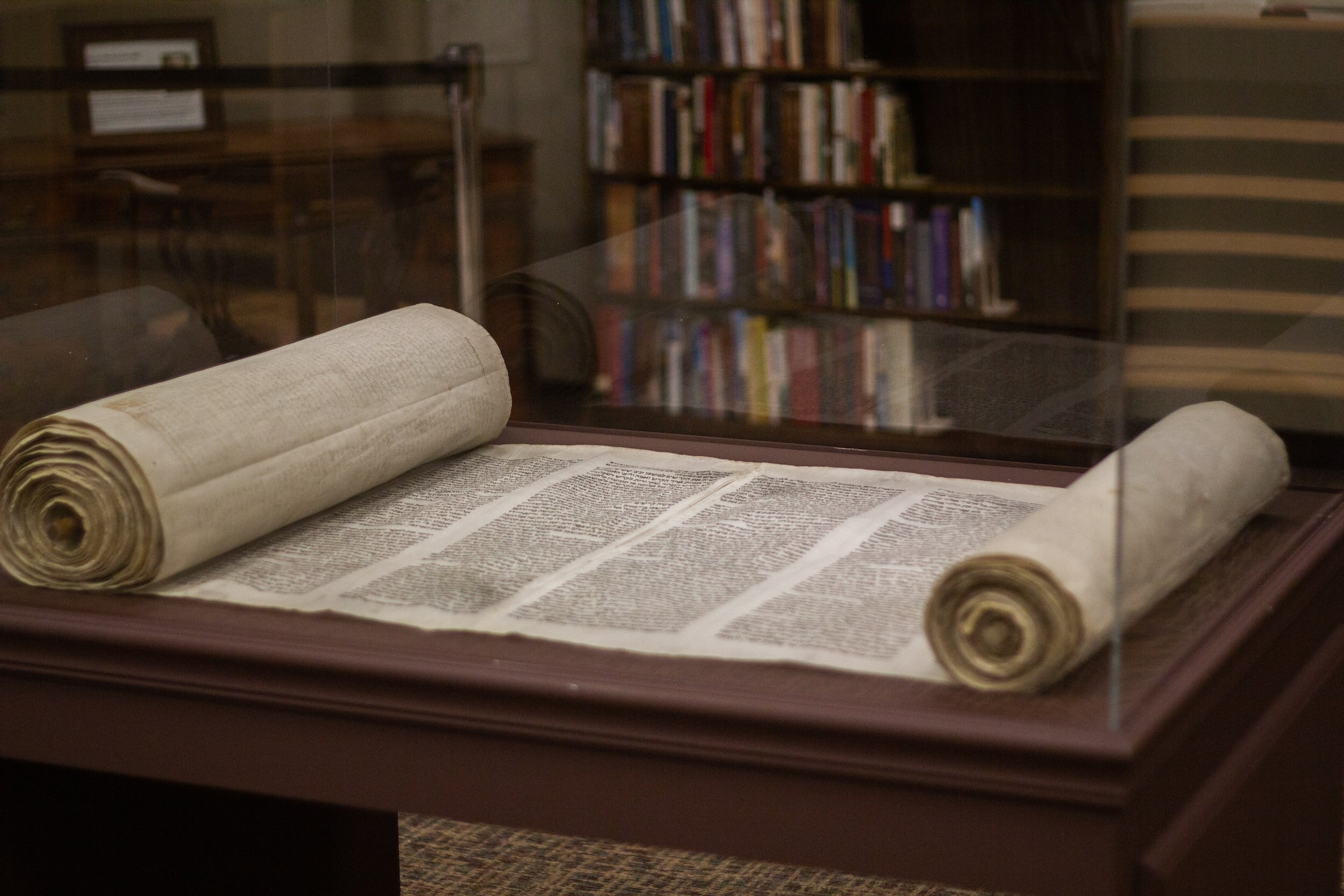
The Closed Book:
How the Rabbis Taught the Jews (Not) to Read the Bible
Princeton University Press, 2023.
In some ways, the story of The Closed Book begins with the day my survey course on Jewish biblical interpretation was banned by an ultraorthodox Jewish chaplaincy on campus. Early in the semester, a Conservative dayschool graduate taking the course (let’s call him Ari) came into office hours looking sheepish. He hemmed and hawed a bit. But eventually he worked up the courage to tell me that he had accidentally gotten my biblical interpretation survey course put on this chaplaincy’s blacklist of courses that Jewish students at the University of Michigan should never take.
As Ari explained it, he had been sitting next to the rabbi at Friday night dinner and began asking questions about some of the things I had taught them the previous week. When I inquired what precisely he’d said to the rabbi to elicit this extreme reaction, Ari reported that he had asked the rabbi what he thought of the idea that Joshua had finished writing the Torah after Moses died, what it meant that Moses himself might have written the book of Job as a sacred allegory, and how much Ezra might have changed about the language or script of the Torah in the process of re-issuing the Torah to the returned people of Israel after an Aramaic-seeped Babylonian exile. Apparently, the rabbi had objected to the idea that vulnerable young minds should be exposed to such heretical freethinking about the Tanakh and its origins. When I heard this, I just stared at Ari for a minute. “Ari…” I started, “Ari, did you tell the rabbi that I was just reading to you from the gemara that day? All of those stories are from Bava Batra and Sanhedrin…” “Oh,” Ari says, looking even more sheepish. “I guess I missed that part.” I couldn’t help but laugh. “So, you’re telling me that you somehow managed to get me banned from teaching Jewish Studies to Jewish student by quoting chazal (the founders of rabbinic Judaism as we know it)…?”
Harvard Is Illegitimate: A Reply to Steven Pinker

The Democrats Actually Are in Disarray
Jeffrey Blehar
The Left Will Never Recover from Donald Trump
Rich Lowry
California Changes the Rules for Trans High School Athletes in Girls’ Sports
Jim Geraghty
Pinker’s piece is heartfelt, thoughtful — and off target. Harvard has rightly lost legitimacy in the eyes of a goodly portion of the American public. The school has betrayed its very motto and purpose — the search for truth, veritas. Harvard has become an effectively partisan institution, undeserving of public support.
This does not mean that important scientific research and valuable, apolitical instruction in introductory languages and basic sciences does not also take place at Harvard, as Pinker says. Nor does it prevent the occasional plucky conservative student from running the gauntlet of opposition and emerging the better for it. The existence of these goods may pose practical challenges to a complete cutoff of federal support. Yet none of that gainsays the fact that Harvard has sacrificed its legitimate claim on the public purse.
The New York Times has no proper call on public financial support, although it is in many ways an excellent paper filled with deeply reported stories, often on apolitical topics, and although its coverage of controversial political and cultural issues is informative even when biased. We wouldn’t expect the public to support a private news outlet that is effectively the voice of the Democratic Party. (NPR is the controversial exception that proves the rule.) Nor should the public be expected to support universities that have become de facto instruments of political and cultural partisanship.
More onHarvard University
Irony Alert! Tenured Harvard Prof Who Studied Honesty Fired for Falsifying Data
Don’t Stop with Harvard
Trump vs. Harvard: A Negotiated Solution
Partisanship has taken over the academy to the point where it is next to impossible to receive beneficial training in science or languages without also being subjected to one-sided politicking in nontechnical subjects. Families rightly worry that the price of a scientific or mathematical education for their children is a four-year campaign to alienate their offspring from their parents’ values. Rather than being a saving grace, as Pinker would have it, nonpartisan courses like engineering or science are the bait that draws students into ideological manipulation.
Yes, it worked for decades. Half the country tolerated the academy’s egregious bias for the sake of science, medicine, languages, business, and, above all, the doors opened by a prestigious degree. Those days are over. After decades of frog boiling, the water finally got too hot too fast. Safe spaces and microaggressions seemed almost entertainingly funny at first. But when the woke tide burst the academy’s bounds and spilled into human relations offices, elementary school classrooms, and girls’ sports, a line was crossed. Anyone, anywhere — even your children — could get canceled. It was instantly understood that the country had become the campus. What was once a joke was now a very real threat.
Pinker is a cofounder of Harvard’s Council on Academic Freedom. That’s great. The council comes to the defense of professors who are canceled for being politically incorrect, and Pinker cites numerous such cancellations at Harvard. He also acknowledges that the significance of these cases goes beyond the individuals involved. After all, every public cancellation acts as a standing threat to everyone who’s witnessed it. Yet for all that, says Pinker, things are not so bad at Harvard, pointing to himself as proof. He’s taught many politically incorrect concepts over the years and has never once been canceled. In general, Pinker says, heterodox opinions are frequently voiced at Harvard, without kicking up a fuss. Conservatives, in other words, are exaggerating Harvard’s problems.
00:06
02:00
Actually, Pinker is underplaying the problems. The real difficulty is that conservative academics don’t get appointed to begin with. That is the most important source of Harvard’s illegitimacy. The founding American statement on academic freedom is the 1915 Declaration of Principles on Academic Freedom and Academic Tenure promulgated by the then newly founded American Association of University Professors (AAUP). The latter part of that declaration highlights the responsibilities that accompany academic freedom. This is the material that the contemporary professoriate has forgotten, betrayed, and even, at points, repudiated.
The 1915 declaration warns of trouble “if this profession should prove itself unwilling . . . to prevent the freedom which it claims in the name of science from being used as a shelter . . . for uncritical and intemperate partisanship.” Should the academy not police itself for partisanship, says the fledgling AAUP, “it is certain that the task will be performed by others—by others who lack essential qualifications for performing it,” and whose actions will be “deeply injurious to the internal order and the public standing of universities.” This is obviously a warning against government intervention, yet it also clearly cites irresponsible partisanship on the part of professors as the likely cause of such intervention.
The 1915 declaration goes on to warn faculty against indoctrinating students, emphasizing the importance of exposing students to both sides of the argument on “controverted issues.” The declaration continues, “It is manifestly desirable that such teachers have minds untrammeled by party loyalties, unexcited by party enthusiasms, and unbiased by personal political ambitions; and that universities should remain uninvolved in party antagonisms.” That doesn’t sound like Harvard to me. The problem is not merely a lack of partisan restraint on the part of Harvard’s faculty, but the sheer absence of professors most able to convey the conservative side of the argument on “controverted issues.”
More fromStanley Kurtz
Against ‘World History’
Against the 1619 Curriculum
AP U.S. History Bias Still Runs Deep
How did Harvard’s faculty become so one-sided? An important part of the answer is that hard leftists on the faculty simply don’t believe in classical liberal notions such as impartiality, or the distinction between knowledge and politics. In other words, faculty leftists don’t accept the founding premises of academic freedom. These sorts of professors make no effort either to hire without regard to politics, or to seek out the finest representatives of contending points of view. On the contrary, faculty on the left have generally worked to reproduce themselves politically. As a result, very few conservatives remain on the faculty. Hard-left professors will cry “academic freedom” when their intellectual monopoly is put at risk by outside forces. Yet the truth is, they care nothing for academic freedom in its true and fuller meaning. They simply deploy the phrase as a cudgel to protect their political cartel.
Pinker’s relatively small Council on Academic Freedom is far better than that. They mean it when they speak of academic freedom. Yet it remains difficult for these professors to confront the reality that the left’s faculty monopoly has destroyed the very basis of academic freedom at Harvard. Pinker’s group is better at protecting those who already have appointments than at dismantling the ideological filter that’s corrupted the appointment system itself.
Jonathan Turley chides the Harvard faculty members now loudly complaining about the Trump administration’s actions for having been “entirely silent for years as departments purged their ranks of conservatives to create one of the most perfectly sealed-off echo chambers in all of higher education.” When I taught as a lecturer at Harvard in the mid- to late 1990s, I got to see some of that purging at work. From what I saw of the nearly nonexistent number of conservatives on the tenure track, the fix against them was in from the start. When Harvard’s Department of Government voted on tenure for one of them, the university betrayed its own rules and regulations to deny the candidate’s promotion.
Pinker denies that Harvard is a leftist indoctrination camp — that’s Harvard Derangement Syndrome at work, he says. Well, I taught in Harvard’s Committee on Degrees in Social Studies, a selective and popular interdisciplinary major in social and political theory and the social sciences. One of my jobs was to co-teach the large great books course required of all majors, so I had plenty of opportunity to see other faculty at work. Virtually the entire departmental faculty co-taught that course. The year I entered, leftists on the faculty had reworked the reading list, bringing in authors such as Jurgen Habermas, Michel Foucault, and a large assortment of radical feminists. The choice between neo-Marxism and postmodernism became something close to the dominant theme of the course. The faculty — a mixture of junior faculty on the tenure track, lecturers, and grad students — were very far to the left. Many held President Clinton in contempt (from the left). At least a plurality, and probably a majority, were socialists of one sort or other. Similarly, at least a plurality, and likely a majority, were effectively proselytizing for their leftist political views in class.
Guest Essay
Return of the Scarlet Letter
Posted on August 7, 2018 by Royal Rosamond Press
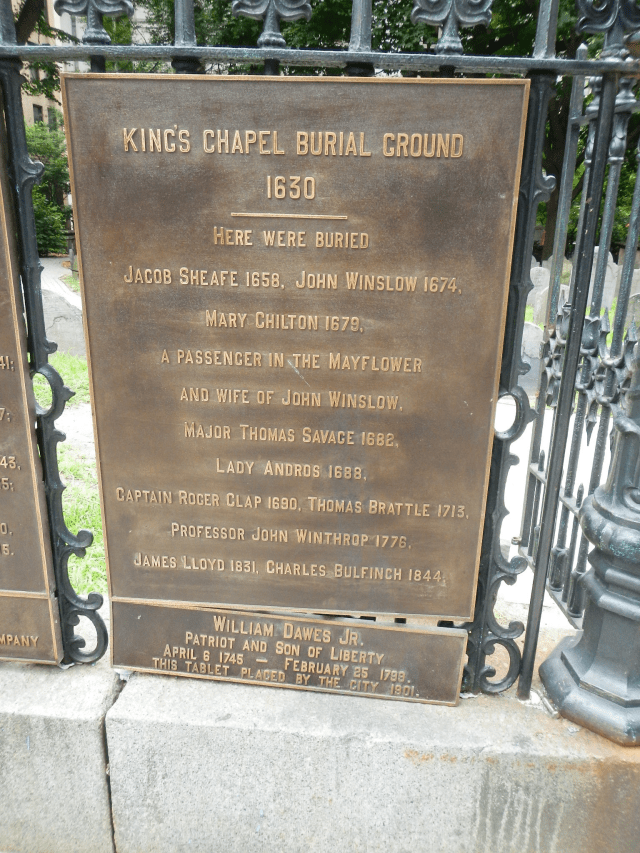

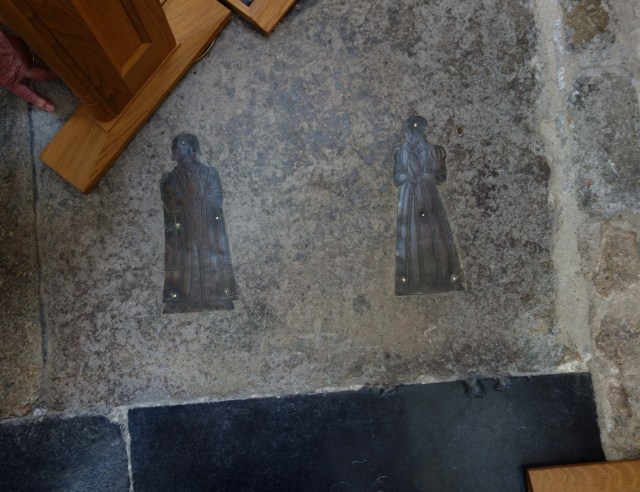

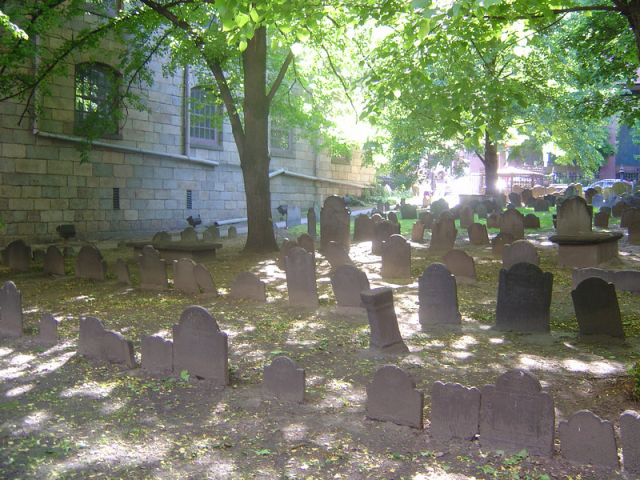
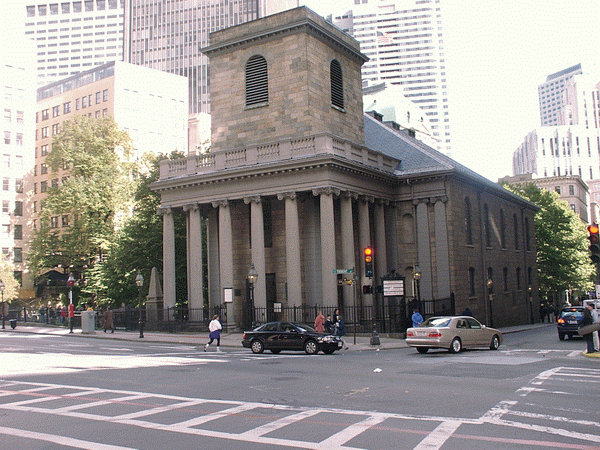

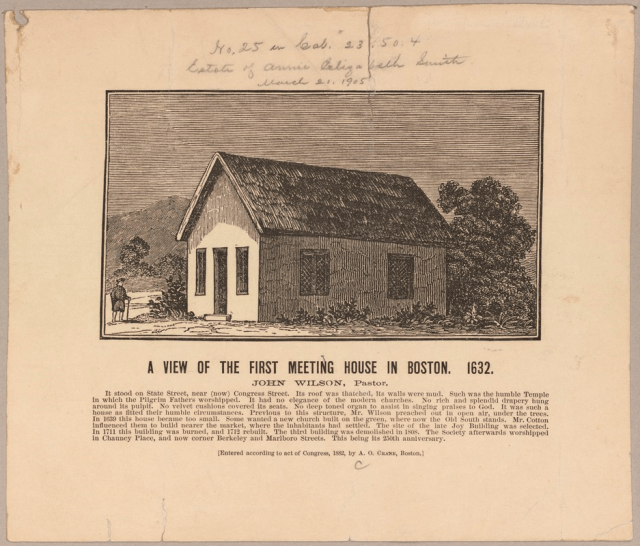


My kindred, John Wilson, is buried in The King’s Chapel, along with Elizabeth Pain who is associated with Hester Prynne the subject of Hawthorne’s The Scarlet Letter.
Christine Wandel lived on Hancock Street located on Beacon Hill. I lived on Anderson Street a few blocks away. I took the Mafia to court at the top of Hancock, and won. I loved in with Dottie Witherspoon on Cambridge. She descends from Signer, John Witherspoon. We were both looking for a new religion. We were destined for the Church. I should have never left Boston. I have features like John Wilson. I am kin to real Boston Bluebloods.
Harvard Derangement Syndrome
Credit…Lisa Sheehan
- Share full article
- 1.5k
By Steven Pinker
Dr. Pinker is a professor of psychology at Harvard University.
- May 23, 2025
In my 22 years as a Harvard professor, I have not been afraid to bite the hand that feeds me. My 2014 essay “The Trouble With Harvard” called for a transparent, meritocratic admissions policy to replace the current “eye-of-newt-wing-of-bat mysticism” which “conceals unknown mischief.” My 2023 “five-point plan to save Harvard from itself” urged the university to commit itself to free speech, institutional neutrality, nonviolence, viewpoint diversity and disempowering D.E.I. Last fall, on the anniversary of Oct. 7, 2023, I explained “how I wish Harvard taught students to talk about Israel,” calling on the university to teach our students to grapple with moral and historical complexity. Two years ago I co-founded the Council on Academic Freedom at Harvard, which has since regularly challenged university policies and pressed for changes.
So I’m hardly an apologist for my employer when I say that the invective now being aimed at Harvard has become unhinged. According to its critics, Harvard is a “national disgrace,” a “woke madrasa,” a “Maoist indoctrination camp,” a “ship of fools,” a “bastion of rampant anti-Jewish hatred and harassment,” a “cesspool of extremist riots” and an “Islamist outpost” in which the “dominant view on campus” is “destroy the Jews, and you’ve destroyed the root of Western civilization.”
And that’s before we get to President Trump’s opinion that Harvard is “an Anti-Semitic, Far Left Institution,” a “Liberal mess” and a “threat to Democracy,” which has been “hiring almost all woke, Radical Left, idiots and ‘birdbrains’ who are only capable of teaching FAILURE to students and so-called future leaders.”
This is not just trash talk. On top of its savage slashing of research funding across the board, the Trump administration has singled out Harvard to receive no federal grants at all. Not satisfied with these punishments, the administration just moved to stop Harvard from enrolling foreign students and has threatened to multiply the tax on its endowment as much as fifteenfold, as well as to remove its tax-free nonprofit status.
your times access
Have a moment? Play these games.
Connections
Group words that share a common thread.

Spelling Bee
Make as many words as you can with 7 letters.
The Crossword
Crack the clues in today’s puzzle.
Call it Harvard Derangement Syndrome. As the country’s oldest, richest and most famous university, Harvard has always attracted outsize attention. In the public imagination the university is both the epitome of higher learning and a natural magnet for grievances against elites.
Psychologists have identified a symptom called “splitting,” a form of black-and-white thinking in which patients cannot conceive of a person in their lives other than as either an exalted angel or an odious evildoer. They generally treat it with dialectical behavior therapy, advising something like: Most people are a mix of strengths and flaws. Seeing them as all bad might not help in the long run. It’s uncomfortable when others disappoint us. How could you make space for the discomfort without letting it define your whole view of them?
The nation desperately needs this sense of proportionality in dealing with its educational and cultural institutions. Harvard, as I am among the first to point out, has serious ailments. The sense that something is not well with the university is widespread, and it’s led to sympathy, even schadenfreude, with Mr. Trump’s all-out assault. But Harvard is an intricate system that developed over centuries and constantly has to grapple with competing and unexpected challenges. The appropriate treatment (as with other imperfect institutions) is to diagnose which parts need which remedies, not to cut its carotid and watch it bleed out.
Editors’ Picks
These Plants Protect Larvae From WildfiresDandy Attire for a Night at the OperaThe Unparalleled Daily Miracle of Tap Water

How did Harvard become such a tempting target? Some of the ire is unavoidable, a consequence of its very nature.
Advertisement
Harvard is huge: It has 25,000 students taught by 2,400 faculty members, spread out over 13 schools (including business and dentistry). Inevitably, these multitudes will include some eccentrics and troublemakers, and today their antics can go viral. People are vulnerable to the availability bias, in which a memorable anecdote lodges in their brains and inflates their subjective estimate of its prevalence. One loudmouth lefty becomes a Maoist indoctrination camp.
Also, universities are committed to free speech, which includes speech we don’t like. A corporation can fire an outspoken employee; a university can’t, or shouldn’t.
Harvard, too, is not a monastic order but part of a global network. Most of our graduate students and faculty members were trained elsewhere and go to the same conferences and read the same publications as everyone else in academia. Despite Harvard’s conceit of specialness, just about everything that happens here may be found at other research-intensive universities.
Finally, our students are not blank slates which we can inscribe at will. Young people are shaped by peers more than most people realize. Students are shaped by the peer cultures in their high schools, at Harvard and (especially with social media) in the world. In many cases, students’ politics are no more attributable to indoctrination by professors than are their green hair and pierced septums.
Sign up for the Opinion Today newsletter Get expert analysis of the news and a guide to the big ideas shaping the world every weekday morning. Get it sent to your inbox.
Yet some of the enmity against Harvard has been earned. My colleagues and I have worried for years about the erosion of academic freedom here, exemplified by some notorious persecutions. In 2021 the biologist Carole Hooven was demonized and ostracized, effectively driving her out of Harvard, for explaining in an interview how biology defines male and female. Her cancellation was the last straw that led us to create the academic freedom council, but it was neither the first nor the last.
The epidemiologist Tyler VanderWeele was forced to grovel in “restorative justice” sessions when someone discovered that he had co-signed an amicus brief in the 2015 Supreme Court case arguing against same-sex marriage. A class by the bioengineer Kit Parker on evaluating crime prevention programs was quashed after students found it “disturbing.” The legal scholar Ronald Sullivan was dismissed as faculty dean of a residential house when his legal representation of Harvey Weinstein made students feel “unsafe.” The Foundation for Individual Rights and Expression tallies such incidents, and in the past two years ranked Harvard last in free speech among some 250 surveyed colleges and universities.
These cancellations are not just injustices against individuals. Honest scholarly inquiry is difficult if researchers constantly have to watch their backs lest a professional remark expose them to character assassination, or if a conservative opinion is treated as a crime. In the Sullivan case, the university abdicated its responsibility to educate mature citizens by indulging its students’ emotions rather than teaching them about the Sixth Amendment and the difference between mob justice and the rule of law.
But a woke madrasa? This is black-and-white splitting, in need of behavior therapy. Simply enumerating cancellations, especially at a large and conspicuous institution like Harvard, can overshadow the vastly greater number of times that heterodox opinions are voiced without anyone making a fuss. As troubled as I am by assaults on academic freedom at Harvard, the last-place finish does not pass the smell test.
I’ll start with myself. During my decades at the university I’ve taught many controversial ideas, including the reality of sex differences, the heritability of intelligence and the evolutionary roots of violence (while inviting my students to disagree, as long as they provide reasons). I claim no courage: The result has been zero protests, several university honors and warm relations with every chair, dean and president.
Most of my colleagues, too, follow the data and report what their findings indicate or show, however politically incorrect. A few examples: Race has some biological reality. Marriage reduces crime. So does hot-spot policing. Racism has been in decline. Phonics is essential to reading instruction. Trigger warnings can do more harm than good. Africans were active in the slave trade. Educational attainment is partly in the genes. Cracking down on drugs has benefits, and legalizing them has harms. Markets can make people fairer and more generous. For all the headlines, day-to-day life at Harvard consists of publishing ideas without fear or favor.
Advertisement
Another area in which Harvard’s shortcomings are genuine, but seeing it as all bad does not help in the long run, is viewpoint diversity. According to a 2023 survey in The Harvard Crimson, 45 percent of members of the Faculty of Arts and Sciences identified their politics as “liberal,” 32 percent as “very liberal,” 20 percent as “moderate” and only 3 percent as “conservative” or “very conservative.” (The survey did not include the option “woke Radical Left idiot birdbrain.”) FIRE’s estimate of conservative faculty members is slightly higher, at 6 percent.
A university need not be a representative democracy, but too little political diversity can compromise its mission. In 2015 a team of social scientists showed how a liberal monoculture had steered their field into scientific errors, such as prematurely concluding that liberals are less prejudiced than conservatives because they had tested for prejudice against African Americans and Muslims but not against evangelicals.
A poll of my colleagues on the academic freedom council turned up many examples in which they felt political narrowness had skewed research in their specialties. In climate policy, it led to a focus on demonizing fossil fuel companies rather than acknowledging the universal desire for abundant energy; in pediatrics, taking all adolescents’ reported gender dysphoria at face value; in public health, advocating maximalist government interventions rather than cost-benefit analyses; in history, emphasizing the harms of colonialism but not of communism or Islamism; in social science, attributing all group disparities to racism but never to culture; and in women’s studies, permitting the study of sexism and stereotypes but not sexual selection, sexology or hormones (not coincidentally, Hooven’s specialty).
Though Harvard indisputably would profit from more political and intellectual diversity, it is still far from a “radical left institution.” If The Crimson survey is any guide, a sizable majority of faculty across Harvard locate themselves to the right of “very liberal,” and they include dozens of prominent conservatives, like the legal scholar Adrian Vermeule and the economist Greg Mankiw. For years the most popular undergraduate courses have been the introduction to mainstream economics taught by a succession of conservatives and neoliberals, and the resolutely apolitical introductions to probability, computer science and life sciences.
Of course, Harvard also has plenty of offerings like Queer Ethnography and Decolonizing the Gaze, but they tend to be boutique courses with small enrollments. One of my students has developed an artificial-intelligence-based “Woke-o-Meter” that assesses course descriptions for Marxist, postmodernist and critical social justice themes (signaled by terms like “heteronormativity,” “intersectionality,” “systemic racism,” “late-stage capitalism” and “deconstruction”). He estimates that they make up at most 3 percent of the 5,000 courses in the Faculty of Arts and Sciences’ 2025-26 course catalog and 6 percent of its larger General Education courses (though about a third of these had a discernible leftward tilt). More typical are offerings like Cellular Basis of Neuronal Function, Beginning German (Intensive) and The Fall of the Roman Empire.
And if Harvard is teaching its students to “despise the free-market system,” we’re not doing a very good job. The most popular undergraduate concentrations are economics and computer science, and half of our graduates march from their commencement ceremony straight into jobs in finance, consulting and technology.
How to achieve an optimal diversity of viewpoints in a university is a difficult problem and an obsession of our council. Of course, not every viewpoint should be represented. The universe of ideas is infinite, and many of them are not worthy of serious attention, such as astrology, flat earthism, and Holocaust denial. The demand of the Trump administration to audit Harvard’s programs for diversity and jawbone a “critical mass” of government-approved contrarians into the noncompliant ones would be poisonous both to the university and to democracy. The biology department could be forced to hire creationists, the medical school vaccine skeptics and the history department denialists of the 2020 election. Harvard had no choice but to reject the ultimatum, becoming an unlikely folk hero in the process.
Still, universities cannot continue to ignore the problem. Though obsessed with implicit racism and sexism, they have been insensitive to the most powerful cognitive distorter of all, the “myside bias” that makes all of us credulous about the cherished beliefs of ourselves or our political or cultural coalitions. Universities should set the expectation that faculty members leave their politics at the classroom door, and affirm the rationalist virtues of epistemic humility and active open-mindedness. To these ends, a bit of D.E.I. for conservatives would not hurt. As the economist Joan Robinson put it, “Ideology is like breath: You never smell your own.”

The most painful indictment of Harvard is its alleged antisemitism — not the old-money WASP snobbery of Oliver Barrett III, but a spillover of anti-Zionist zealotry. A recent, long-awaited report detailed many troubling incidents. Jewish students have felt intimidated by anti-Israel protests that have disrupted classes, ceremonies and everyday campus life, often met with a confused response by the university. Members of the teaching staff have gratuitously injected pro-Palestinian activism into courses or university programming. Many Jewish students, particularly Israelis, reported being ostracized or demonized by their peers.
As with its other maladies, Harvard’s antisemitism has to be considered with a modicum of discernment. Yes, the problems are genuine. But “a bastion of rampant anti-Jew hatred” with the aim of “destroying the Jews as a first step to destroying Western civilization”? Oy gevalt!
In response to the infamous statement by 34 student groups after Oct. 7 holding Israel “entirely responsible” for the massacre, more than 400 Harvard faculty members posted an open letter in protest. A new collective, Harvard Faculty for Israel, has attracted 450 members. Harvard offers more than 60 courses with Jewish themes, including eight Yiddish language courses. And though the 300-page antisemitism report reviews every instance it could find in the past century, down to the last graffito and social media post, it cited no expressions of a goal to “destroy the Jews,” let alone signs that it was the “dominant view on campus.”
For what it’s worth, I have experienced no antisemitism in my two decades at Harvard, and nor have other prominent Jewish faculty members. My own discomfort instead is captured in a Crimson essay by the Harvard senior Jacob Miller, who called the claim that one in four Jewish students feels “physically unsafe” on campus “an absurd statistic I struggle to take seriously as someone who publicly and proudly wears a kippah around campus each day.” The obsession with antisemitism at Harvard represents, ironically, a surrender to the critical-social-justice credo that the only wrong worthy of condemnation is group-against-group bigotry. Instead of directly rebutting the flaws of the anti-Zionist platform, such as its approval of violence against civilians and its historical blind spots, critics have tried to tar it with the sin of antisemitism. But that can devolve into futile semantic disputation about the meaning of the word “antisemitism,” which, our council has argued, can lead to infringements on academic freedom.
Harvard’s antisemitism report has recommended many sensible and overdue reforms, and that’s the point: Responsible people, faced with problems in a complex institution, try to identify the flaws and fix them. Blowing off such efforts as “spraying perfume on a sewer” is unhelpful.
One set has already been adopted: to enforce regulations already on the books that prevent protests from crossing the line from expressions of opinion to campaigns of disruption, coercion and intimidation.
Another no-brainer is to apply standards of scholarly excellence more uniformly. Harvard has almost 400 initiatives, centers and programs, which are distinct from its academic departments. A few were captured by activist lecturers and became, in effect, Centers for Anti-Israel Studies. At the same time, Harvard has a paucity of professors with disinterested expertise in Israel, the Middle East conflict and antisemitism. The report calls for greater professorial and decanal oversight of these subjects.
Harvard can’t police its students’ social lives or social media posts (particularly on anonymous platforms where the vilest antisemitism was expressed). But it can enforce its regulations against discrimination on the basis of religion, national origin and political belief, and against blatant derelictions such as a teaching assistant dismissing sections so students can attend anti-Israel protests. It could treat antisemitism with the same gravity with which it treats racism, and it could set expectations, as soon as students take their first steps into Harvard Yard, that they treat one another with respect and openness to disagreement.
Just as clear is what won’t work: the Trump administration’s punitive defunding of science at Harvard. Contrary to a widespread misunderstanding, a federal grant is not alms to the university, nor may the executive branch dangle it to force grantees to do whatever it wants. It is a fee for a service — namely, a research project that the government decides (after fierce competitive review) would benefit the country. The grant pays for the people and equipment needed to carry out that research, which would not be done otherwise.
Mr. Trump’s strangling of this support will harm Jews more than any president in my lifetime. Many practicing and aspiring scientists are Jewish, and his funding embargo has them watching in horror as they are laid off, their labs are shut down or their dreams of a career in science go up in smoke. This is immensely more harmful than walking past a “Globalize the Intifada” sign. Worse still is the effect on the far larger number of gentiles in science, who are being told that their labs and careers are being snuffed out to advance Jewish interests. Likewise for the current patients whose experimental treatments will be halted, and the future patients who may be deprived of cures. None of this is good for the Jews.
The concern for Jews is patently disingenuous, given Mr. Trump’s sympathy for Holocaust deniers and Hitler fans. The obvious motivation is to cripple civil society institutions that serve as loci of influence outside the executive branch. As JD Vance put it in the title of a 2021 speech: “The Universities Are the Enemy.”
Advertisement
If the federal government doesn’t force Harvard to reform, what will? There are legitimate concerns that universities have weak mechanisms for feedback and self-improvement. A business in the red can fire its chief executive; a losing team can replace its coach. But most academic fields don’t have objective metrics of success and rely instead on peer review, which can amount to professors conferring prestige on one another in self-affirming cliques.
Worse, many universities have punished professors and students who criticize their policies, a recipe for permanent dysfunction. Last year a Harvard dean actually justified this repression until our academic freedom council came down on the idea like a ton of bricks and his boss swiftly disavowed it.
Still, there are ways to let the light get in. Universities could give a stronger mandate to the external “visiting committees” that ostensibly audit departments and programs but in practice are subject to regulatory capture. University leaders constantly get an earful from disgruntled alumni, donors and journalists, and they should use it, judiciously, as a sanity check. The governing boards should be more tuned in to university affairs and take more responsibility for its health. The Harvard Corporation is so reclusive that when two of its members dined with members of the academic freedom council in 2023, The Times deemed it worthy of a news story.
Harvard’s nearly two-year ordeal in the public eye has, perhaps belatedly, prompted many reforms. It has adopted a policy of institutional neutrality, no longer pontificating on issues that don’t affect its own functioning. It has drawn lines on disruptive protests and will create centralized enforcement so that violators can’t jury-shop or count on faculty nullification. The Faculty of Arts and Sciences has eliminated the “diversity statements” that vetted job applicants for their willingness to write woke-o-babble, and its dean has called on program directors to report on their units’ viewpoint diversity. The rogue centers are under investigation, and their directors have been replaced. The task force report, solemnly accepted by the university’s president, Alan Garber, shows that antisemitism is being taken seriously. A new classroom compact enjoins students to be open to ideas that challenge their beliefs.
The uncomfortable fact is that many of these reforms followed Mr. Trump’s inauguration and overlap with his demands. But if you’re standing in a downpour and Mr. Trump tells you to put up an umbrella, you shouldn’t refuse just to spite him.
Advertisement
And doing things for good reasons is, I believe, the way for universities to right themselves and regain public trust. It sounds banal, but too often universities have been steered by the desire to placate their students, avoid making enemies and stay out of the headlines. We saw how well that worked out.
Instead, university leaders should be prepared to affirm the paramount goal of a university — discovering and transmitting knowledge — and the principles necessary to pursue it. Universities have a mandate and the expertise to pursue knowledge, not social justice. Intellectual freedom is not a privilege of professors but the only way that fallible humans gain knowledge. Disagreements should be negotiated with analysis and argument, not recriminations of bigotry and victimhood. Protests may be used to generate common knowledge of a grievance, but not to shut people up or coerce the university into doing what the protesters want. The university commons belongs to the community, whose members may legitimately disagree with one another, and it may not be usurped by one faction. The endowment is not an op-ed page but a treasure that the university is obligated to hold in trust for future generations.
Why does this matter? For all its foibles, Harvard (together with other universities) has made the world a better place, significantly so. Fifty-two faculty members have won Nobel Prizes, and more than 5,800 patents are held by Harvard. Its researchers invented baking powder, the first organ transplant, the programmable computer, the defibrillator, the syphilis test and oral rehydration therapy (a cheap treatment that has saved tens of millions of lives). They developed the theory of nuclear stability that has saved the world from Armageddon. They invented the golf tee and the catcher’s mask. Harvard spawned “Sesame Street,” The National Lampoon, “The Simpsons,” Microsoft and Facebook.
Ongoing research at Harvard includes methane-tracking satellites, robotic catheters, next-generation batteries and wearable robotics for stroke victims. Federal grants are supporting research on metastasis, tumor suppression, radiation and chemotherapy in children, multidrug-resistant infections, pandemic prevention, dementia, anesthesia, toxin reduction in firefighting and the military, the physiological effects of spaceflight and battlefield wound care. Harvard’s technologists are pushing innovations in quantum computing, A.I., nanomaterials, biomechanics, foldable bridges for the military, hack-resistant computer networks and smart living environments for the elderly. One lab has developed what may be a cure for Type 1 diabetes.
Practical applications are not the only things that make Harvard precious. It is a phantasmagoria of ideas, a Disneyland of the mind. Learning about my colleagues’ research is a source of endless delight, and when I look at our course catalog, I wish I were 18 again. DNA extracted from human fossils reveals the origin of the Indo-European languages. Grimm’s fairy tales, with their murder, infanticide, cannibalism and incest, reveal our eternal fascination with the morbid. A single network in the brain underlies remembering the past and daydreaming about the future. Nonviolent resistance movements are more successful than violent ones. The ailments of pregnancy come from a Darwinian struggle between mother and fetus. The “Who is like you?” prayer in the Jewish liturgy suggests that the ancient Israelites were ambivalent about their monotheism.
Advertisement
And if you’re still skeptical that universities are worth supporting, consider these questions: Do you think that the number of children who die every year from cancer is just about right? Are you content with your current chance of developing Alzheimer’s disease? Do you feel our current understanding of which government policies are effective and which ones are wasteful is perfect? Are you happy with the way the climate is going, given our current energy technology?
In his manifesto for progress, “The Beginning of Infinity,” the physicist David Deutsch wrote, “Everything that is not forbidden by laws of nature is achievable, given the right knowledge.” To cripple the institutions that acquire and transmit knowledge is a tragic blunder and a crime against future generations.
More on Harvard and the Trump administration
What are the differences – Christianity vs Judaism?
Why Jews Cannot Accept the New Testament
For centuries, Christians have asked why Jews don’t accept the authenticity of the New Testament. Let’s explore in depth one of the many reasons, namely contradictions and inconsistencies.
Judaism believes that the Jewish Scriptures, often referred to as the Old Testament,[1] are the inspired word of God. If passages appear to contradict one another, it is our responsibility to delve deeply and uncover a correct understanding. Unfortunately, some Christians believe that the end justifies the means and often use the following New Testament passage to justify their approach. “Only that in every way, whether in pretense or in truth, Christ is proclaimed…” [Philippians 1:18]
Additionally, Judaism encourages full disclosure and an honest examination of the Bible. Therefore, when passages within Jewish Scriptures appear to contradict one another, our sages never ignored them. Instead, they always sought an understanding consistent with the entire Torah.
I begin by presenting one of many examples that substantiate the Jewish approach. In 1 Chronicles 21:1, it states, “Then Satan stood up against Israel and moved David to number Israel.”
However, another passage in the Jewish Bible, 2 Samuel 24:1, states that God caused King David to count the Jewish people. “The anger of the Lord burned against Israel, and He incited David against them to say, ‘Go number Israel…’”
 Rosamond Press
Leave a comment