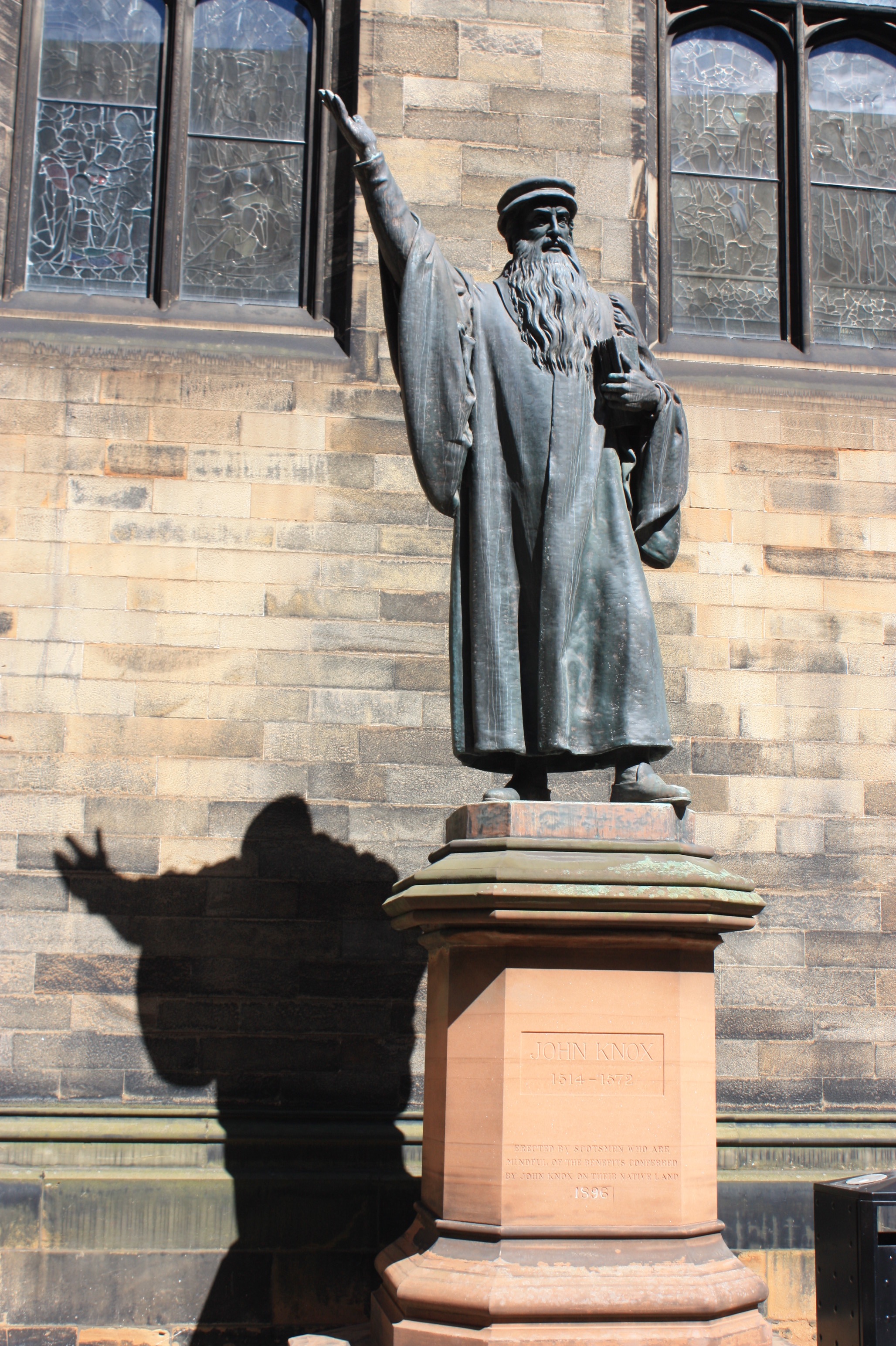

There stands a neoclassical bronze statue of Thomas Hart Benton, complete with toga and sandals, in Lafayette Park. I recently put the compass of my iPhone in a line from the Benton statue’s nose. West 270 degrees bang on. There’s a reason for this.
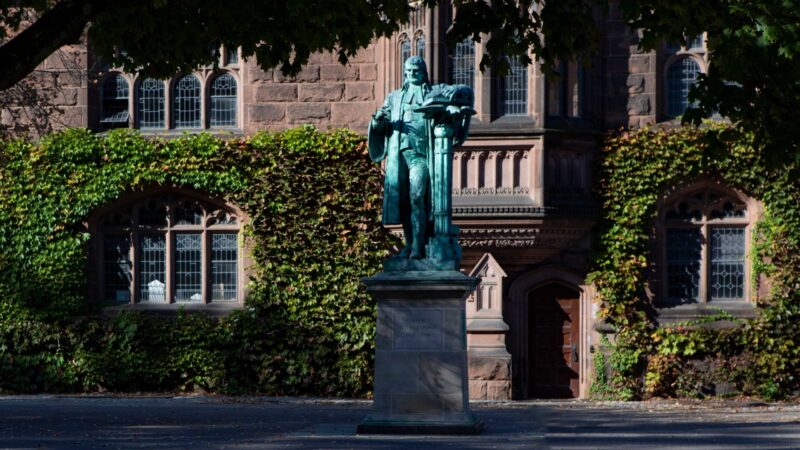
COMPLICATED LEGACY: The Princeton University Board of Trustees has decided not to remove the statue of founding father and former University President John Witherspoon from its prominent place in Firestone Plaza, despite Witherspoon’s ownership of slaves and opposition to abolition. (Photo by Princeton University, Denise Applewhite)


The people of Greenland told the Vances they were not invited to attend the Dog Race. They assumed they would be welcomed. No Greenlander fell for the United States Ruse! They knew Trump wanted a foot in the door, because he “desires” to own Greenland. This was a very personal desire that he shared with The Great American Isolationist, who war born with an innate NEED to hide in the hills, and keep the Revenuers from finding your still. Why then is it, Vance chose to becoming a Catholic, rather than a Presbyterian, like Signer John Witherspoon, who claimed he descend from John Knox. John had pone of the greatest Religious Battles in history
“Mary of Guise decided that it could be taken only by force and requested the king of France, Henry II to intervene.[24] On 29 June 1547, 21 French galleys approached St Andrews under the command of Leone Strozzi, prior of Capua. The French besieged the castle and forced the surrender of the garrison on 31 July. The Protestant nobles and others, including Knox, were taken prisoner and forced to row in the French galleys”
I don’t buy it that Vance converted to Catholcism after he wrote a book on the Scot-Irish who hated Catholics die to the War of Religions. I demand an ionvestigation!
Above is a photograph of Dottie Witherspoon and myself. Her great grandfather is John Witherspoon – who owned slaves, and did my Rosamond ancestor, James Rosamond. However, my grandmother was raised Catholic, and raised her four daughters in the churh of Mary De Guise.
John Presco
Speaking to reporters, Vance lashed out at Europe and Denmark, saying both “have not done their job in keeping Greenland safe.”
“We need to have more of a position in Greenland,” he said.
But Vance retreated from Trump’s past suggestions that the U.S. could take control of the island by force, saying Greelanders themselves would choose to split from Denmark.
Born 1273 in Scotland
“The United States, through our Consulate in Nuuk, sponsored the transport of all dogs, sleds, and racers to and from 10 cities and towns around Greenland for the race,” a State Department spokesman told NPR in a statement. “We are still coordinating with race organizers to determine needs and fix a final amount of our sponsorship.”
This all comes as Secretary of State Marco Rubio has cancelled more than 80% of foreign aid grants. Grants are now screened to determine whether they make the U.S. stronger, safer and more prosperous. At the same time, the Trump administration has made cuts to grants for USAID programs around the world and also frozen funding for Fulbright scholars.
Speaking to reporters, Vance lashed out at Europe and Denmark, saying both “have not done their job in keeping Greenland safe.”
“We need to have more of a position in Greenland,” he said.
A letter of credence (French: Lettre de créance, [lɛtʁ də kʁeɑ̃s]) is a formal diplomatic letter that designates a diplomat as ambassador to another sovereign state. Commonly known as diplomatic credentials, the letter is addressed from one head of state to another, asking them to give credence (French: créance) to the ambassador’s claim of speaking for their country. The letter is presented personally by the ambassador-designate to the receiving head of state in a formal ceremony, marking the beginning of the ambassadorship.
Letters of credence are traditionally written in French, the lingua franca of diplomacy.[1] However, they may also be written in the official language of the sending state.[2][3]
U.S. officials went door-to-door in Greenland to find anyone who wanted to be visited by the Vances. They found no one
Graig Graziosi
Fri, March 28, 2025 at 12:53 AM PDT
3 min read4.5k

Yahoo is using AI to generate takeaways from this article. This means the info may not always match what’s in the article. Reporting mistakes helps us improve the experience.
Generate Key Takeaways
No one wants to talk to Usha Vance—at least no one in Greenland.
US officials have reportedly been traveling around the Danish-controlled territory looking for locals who wanted to receive a visit from the Second Lady, according to a report from Danish TV 2.
Greenlanders’ response? No thanks.
Residents aren’t the only ones snubbing the Second Lady ahead of her high-profile visit to the island; Tupilak Travel, which is based in Greenland’s capital city, Nuuk, initially said it would host Usha Vance, but pulled out on Thursday.
In a post on Facebook, the company said that the US Consulate called and asked if it wanted the visit, and the company initially said yes, but then backed out.
“After closer consideration, however, we have now informed the consulate that we do not want her visit, as we cannot accept the underlying agenda and will not be part of the press show that, quite, of course, comes with it. No thanks to nice visit… Greenland belongs to the Greenlanders,” the company said.
The cancellation comes on the same day that Vice President JD Vance announced that he would join his wife’s upcoming trip to Greenland.
“There was so much excitement around Usha’s visit to Greenland this Friday, that I decided that I didn’t want her to have all that fun by herself, and so I’m going to join her,” Vance said in a video posted to X.
Vance, the Second Lady, National Security Adviser Mike Waltz, and Energy Secretary Christ Wright are scheduled to depart for Greenland on Friday, though those plans could change by the time the delegation departs.
The U.S. delegation was also scheduled to attend the Avannaata Qimusserua, one of the world’s largest dog-sledding events, but that visit has been cancelled as well, according to USA Today.
More in World

Putin Sends a Clear Warning as Trump Tries to Take Over Greenland
The Daily Beast
Barnes and Ivy Rosslyn Bronze Plug-In Swing Arm Wall Lamps Set of 2$149.99 – Lamps Plus・

Germany leads defiance of Trump car tariffs, saying it ‘will not give in’
BBC

Zelenskyy sensationally predicts Putin ‘will die soon’
Fox News
As it currently stands, the American visitors will only be visiting the U.S. Space Force Base at Pituffik.
Greenlanders and Danish authorities aren’t pleased about the trip. Denmark’s Prime Minister Mette Frederiksen accused the US of exerting “unacceptable pressure” on Greenland through its planned visit.
“I have to say that it is unacceptable pressure being placed on Greenland and Denmark in this situation. And it is pressure that we will resist,” Frederiksen told Danish broadcasters DR and TV2 on Tuesday. “You cannot make a private visit with official representatives from another country, when the acting Greenlandic government has made it very clear that they do not want a visit at this time,”
Frederiksen went on to say the US delegation’s arrival is “clearly not a visit that is about what Greenland needs or wants.”
“President Trump is serious. He wants Greenland. Therefore, [this visit] cannot be seen independently of anything else,” Frederiksen said.
Donald Trump has repeatedly said he wants to buy Greenland or obtain it through other means, including potential military action.
Thanks to climate change driven by human burning of fossil fuels, new shipping corridors are opening up in the Arctic Circle as sea ice melts. Trade routes between Asia and Europe or Asia and the U.S. are approximately 40 percent shorter through the Arctic than by way of the Suez or Panama Canals, according to the U.S. Naval Institute.
Currently, only five countries have territory in the Arctic Circle: Canada, Russia, Norway, Denmark, by way of the semiautonomous Greenland, and the U.S. via Alaska. If the U.S. controls Greenland, it would be a major expansion of the nation’s control over Arctic shipping routes.
Trump has gone so far as to say that the island is “very, very important” for U.S. “military security.”
In addition to its potential military and economic strategic benefits, the Arctic may also have as of yet untapped fuel resources. According to the U.S. Geological Survey, the Arctic holds 13 percent of undiscovered oil resources and 30 percent of undiscovered natural gas, primarily all offshore.
Greenland itself is rich with rare earth minerals, which are essential components in the production of cellphones, batteries, and other consumer technologies.
Confinement in the French galleys, 1547–1549
[edit]
John Knox’s chaplaincy of the castle garrison was not to last long. While Hamilton was willing to negotiate with England to stop their support of the rebels and bring the castle back under his control, Mary of Guise decided that it could be taken only by force and requested the king of France, Henry II to intervene.[24] On 29 June 1547, 21 French galleys approached St Andrews under the command of Leone Strozzi, prior of Capua. The French besieged the castle and forced the surrender of the garrison on 31 July. The Protestant nobles and others, including Knox, were taken prisoner and forced to row in the French galleys.[25] The galley slaves were chained to benches and rowed throughout the day without a change of posture while an officer watched over them with a whip in hand.[26] They sailed to France and navigated up the Seine to Rouen. The nobles, some of whom would have a bearing on Knox’s later life such as William Kirkcaldy and Henry Balnaves, were sent to various castle-prisons in France.[27] Knox and the other galley slaves continued to Nantes and stayed on the Loire throughout the winter. They were threatened with torture if they did not give proper signs of reverence when mass was performed on the ship. Knox recounted an incident in which one of the prisoners—possibly himself, as Knox tended to narrate personal anecdotes in the third person—was required to show devotion to a picture of the Virgin Mary. The prisoner was told to give it a kiss of veneration. He refused and when the picture was pushed up to his face, the prisoner seized the picture and threw it into the sea, saying, “Let our Lady now save herself: she is light enough: let her learn to swim.”[28] After that, according to Knox, the Scottish prisoners were no longer forced to perform such devotions.[29]
My Letter to Ed Ray
Posted on May 28, 2019 by Royal Rosamond Press
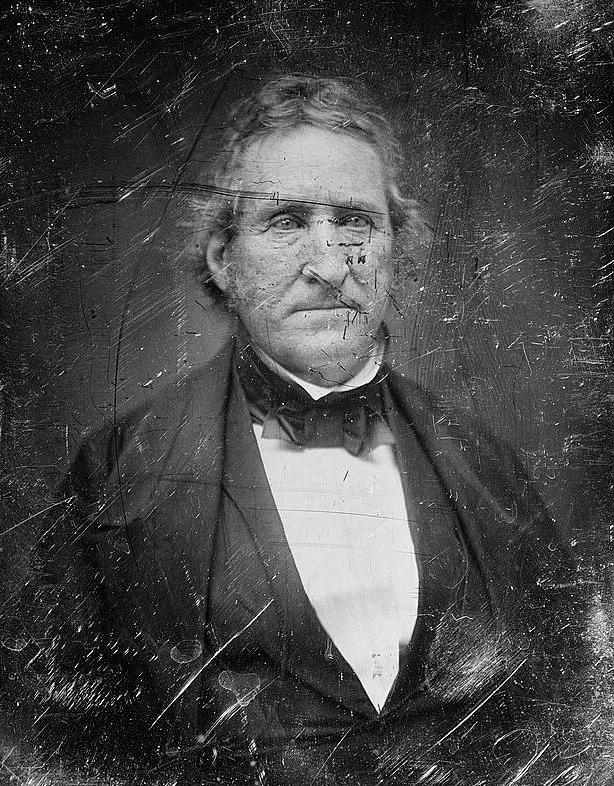
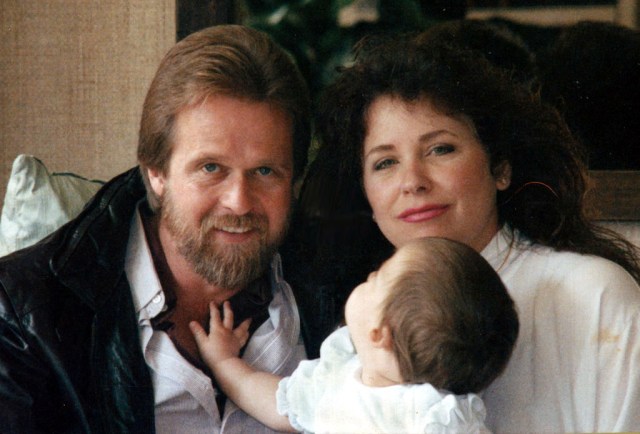
To Ed Ray: President of Oregon State
Several months ago I began my response to you about giving a new name to Benton Hall that was named after my kin, Senator Thomas Hart Benton. My sister was a world famous artist that married Garth Benton. The artwork of Christine Rosamond Benton is found all over the world. As fate would have it, the beautiful images of Rosamond are very similar to the beautiful women Philip Boileau rendered. Philip is the son of Susan Benton, who held a salon in Paris, while her sister, Jessie, held one in San Francisco. Jessie wrote the journals of her husband’s mapping of the Oregon Territory.
Trump’s running mate ‘Scots-Irish hillbilly at heart’
16 July 2024ShareSave
Faye Kidd
BBC News NI

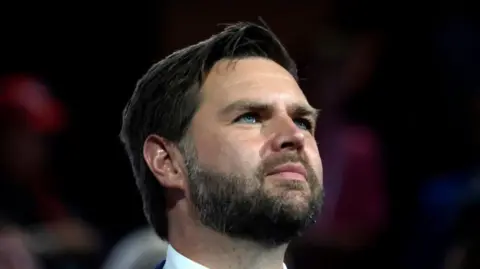
JD Vance, a self proclaimed “Scots-Irish hillbilly at heart”, has been formally selected as Donald Trump’s vice-presidential nominee.
Republican National Convention (RNC) delegates formally selected Mr Vance, 39, on Monday after Trump publicly endorsed him on his social media platform.
The former marine and Yale-educated venture capitalist rose to fame after his best-selling memoir-turned-film Hillbilly Elegy saw him go on to be a Republican Senator.
His award winning memoir recollected his ‘blue collar’ upbringing in Ohio, where via the Appalachian region, his Scots-Irish ancestors emigrated over three centuries ago.
Advertisement
Mr Vance was born James David Bowman in Middletown, Ohio, to a mother who struggled with addiction and a father who left the family when JD was a toddler.
He was raised by his grandparents, “Mamaw” and “Papaw”, whom he sympathetically portrayed in his 2016 memoir.
Although Middletown is located in rust-belt Ohio, Mr Vance identified closely with his family’s roots slightly to the south in Appalachia, the vast mountainous inland region that stretches from the Deep South to the fringes of the industrial Midwest. It includes some of the country’s poorest areas.
In his book, Mr Vance recounts how his grandparents moved from the Appalachian hills of eastern Kentucky, “in the hope of escaping the dreadful poverty around them”.
The Appalachian region is where many Ulster Scots settled after the Ulster plantation.
Advertisement
“To understand me, you must understand that I am a Scots-Irish hillbilly at heart”, he confesses in his autobiography.
The terms Scots-Irish, Scotch-Irish and Ulster-Scots relate to people who left Scotland, settled as part of the Ulster plantation and then moved on to North America.
From the first decades of the eighteenth century, the Scots-Irish emigrated to the Americas in increasing numbers.
Mr Vance has written about how he identifies with millions of “working-class white Americans of Scots-Irish descent” who have no college degree and to whom “poverty is the family tradition”.
Scots-Irish: ‘distinctive subgroup’
The Ohio Senator describes how there are “good and bad traits” associated with the Scots-Irish tradition, “we do not like outsiders or people who are different from us, whether the difference lies in how they look, how they act, or, most important, how they talk”.
He believes Scots-Irish is “one of the most distinctive subgroups in America”, with an “intense sense of loyalty” and a “fierce dedication to family and country”.
After previously criticising his new running mate, JD Vance has since demonstrated this ‘Scots-Irish’ loyalty, becoming an outspoken defender of the former president.
Mr Trump posted on the Truth Social platform: “As Vice President, J.D. will continue to fight for our Constitution, stand with our Troops, and will do everything he can to help me MAKE AMERICA GREAT AGAIN”.
Advertisement
Sweeping statement?
Ian Crozier, the CEO of the Ulster-Scots Agency told BBC News NI that JD Vance is “the latest in a very long line of people with Ulster Scots ancestry” to influence American politics.
He said that the Ulster Scots influence and “values of freedom, liberty and hard work” continues to resonate with Americans today and shape the political system.
Broadcaster and Ulster Scots enthusiast Mark Thompson has a different view.
The former Chairman of the Ulster Scots Agency told BBC News NI: “As an autobiography it’s a good read, but it’s lazy to regard it as a sweeping cultural statement for either Appalachia or the Scotch-Irish contribution to the United States.”
He thinks that Vance’s book Hillbilly Elegy was only ever intended to be a “personal memoir”, but that “bewildered journalists latched on to it in 2016 as they tried in desperation to find an easy explanation for Trump’s rise”.
J.D. Vance Used to Be an Atheist. What He Believes Now Is Telling.
He’s not an evangelical Christian. He’s a Catholic—of a very specific type.
Aug 08, 20245:45 AM
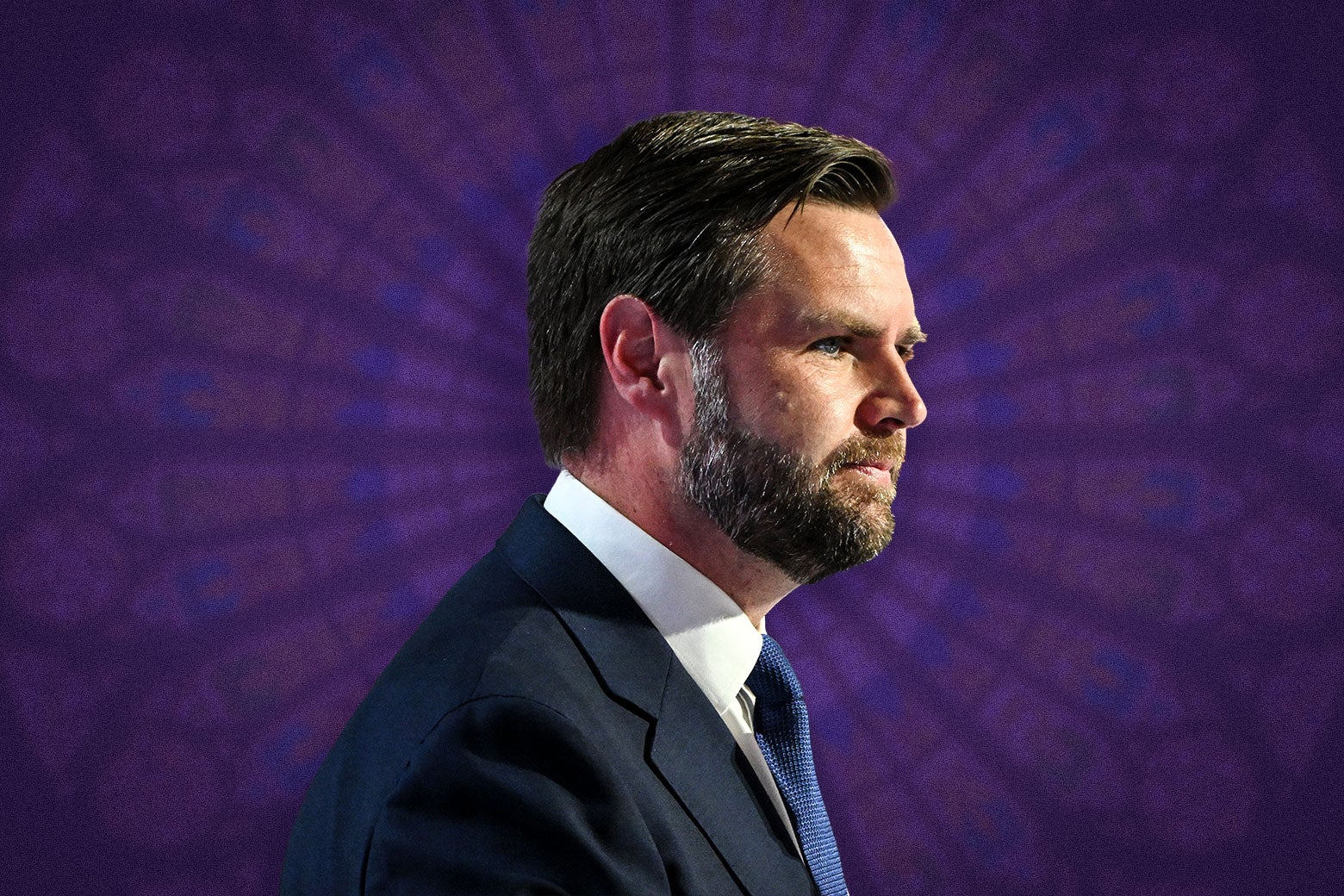
In 2021, when J.D. Vance was asked at a conference why he had converted to Catholicism just two years earlier, he had a fairly simple answer.
“I really liked that the Catholic Church was just really old,” he said.
This anti-modern worldview is key to understanding Vance. In a party long dominated by anti-intellectual evangelical Christians with a hearty distrust of institutions, Vance stands out among its leaders for having embraced a church with a complex social doctrine built off the work of ancient philosophers. His enthusiasm for a particular and relatively obscure kind of contemporary Catholic political thought shows up in his politics—his longing for Americans to build robust nuclear families, his comments about banning porn, his scorn for childless cat ladies. It’s tempting to see these stances as old ones from the Christian right, familiar to anyone who has followed the evolution of the GOP in the past couple of decades, but Vance’s past comments indicate that they’re motivated by something newer, and more radical, than that.
0:01
/
0:09
The Trouble With Texting
Read More

Vance wasn’t always so unusual among his fellow Republicans: He grew up loosely evangelical Christian; he writes in Hillbilly Elegy that his commitment to his father’s church was strong but short-lived. As a young man, he identified for a while as an atheist. Then, as he recounted in a 2020 essay about his conversion for the Catholic magazine the Lamp, he reconnected with Christianity when he was searching for greater meaning in his life during law school. He began to feel drawn to Catholicism in particular after reading up on Catholic moral philosophers and discussing theology with conservative Dominican friars he knew.
After he officially converted in 2019, Vance explained in an interview with his friend Rod Dreher—a conservative writer and Catholic convert who later went on to convert, again, to Orthodox Christianity—that he had come to Catholicism in part because of the writings of Saint Augustine. “Augustine gave me a way to understand Christian faith in a strongly intellectual way,” Vance said. “As someone who spent a lot of his life buying into the lie that you had to be stupid to be a Christian, Augustine really demonstrated in a moving way that that’s not true.”
Advertisement
This approach generally made sense for Vance, a man who, despite his boasts of blue-collar roots, clearly considers himself a serious intellectual.
But as Vance would explain at that 2021 conference (held by the Napa Institute, a conservative Catholic organization), he was also drawn to Catholicism for its rules and relative stability over centuries. “I felt like the modern world was constantly in flux,” Vance said. “The things you believed 10 years ago were no longer acceptable to believe 10 years later.”
In the past few weeks, Vance has come under fire for resurfaced comments attacking “childless cat ladies” as “miserable” and bad for society; claiming that childless people tend to be “deranged” and “psychotic”; and proposing giving extra voting power to parents with young children.
“We have, I believe, a civilizational crisis in this country,” Vance said at the 2021 Napa Institute event. “Even among healthy, intact families, they’re not having enough kids such that we’re going to have a long-term future in this country.” For his Senate campaign, also in 2021, Vance praised Hungarian strongman Viktor Orbán for policies that incentivized marriage and children. Orbán’s government had offered loans to married couples that were forgiven if the couple stayed together and had three children. (Orbán is not himself Catholic but has privileged Christianity in a country dominated by Catholicism.) “Why can’t we do that here?” Vance asked. “Why can’t we actually promote family formation?”
These anti-modern comments fit with a certain kind of worldview that prizes a traditional and family-oriented society above individual liberties—and even democracy. It’s a guiding philosophy of a new faction of the conservative movement that pulls from elements of both the left and far right, that champions populist economics and radically conservative social policies, and that promises a revolution in the entire political order: the postliberal right.
In recent years, a sect of the Republican Party has boomeranged away from libertarianism and toward Big Government. A set of young legislators, including Vance, Marco Rubio, Tom Cotton, and Josh Hawley, is snubbing the party’s policies favoring tech companies and big business, instead infusing the GOP with populist energy—and, in some cases, disdain for the liberal political order. (Liberalism here refers to the dominant political order of the modern world, with its emphasis on equality, personal liberty, and individual rights.) Those legislators who identify with the postliberal right advocate for state authority in order to build the kind of society they want to live in. They aim to control women’s reproductive choices and individual freedoms concerning gender, sexuality, and identity; they prefer isolationist economic policies; they support unions and labor protections and oppose immigration; and they seek to elevate religious organizations’ place in their schools and civic institutions.
Advertisement
A significant number of these legislators are influenced by Christian nationalism or philosophies that mirror the aims of Christian nationalism: to reclaim society and reorder it according to Christian values. The idea is to use soft power to gain control of the major secular institutions to align them with Christian aims, without too much concern for democratic processes.
At a practical level, we’ve seen this in the efforts in state legislatures to have schools display the Ten Commandments; in certain policy groups coming out to oppose no-fault divorce; in Florida’s restrictions on health care for transgender adults; in Project 2025’s plan to criminalize porn (or other materials deemed indecent that can be categorized as porn); in legal challenges to get prayer in public schools; and in Hawley’s proudly pronouncing himself to be “calling America a Christian nation.”
There’s a term for intellectual Catholics with a similar worldview: integralists. There’s no universally accepted platform uniting integralists; it’s more of an intellectual framework built around the idea that Catholic moral theology should govern society. Mat Schmalz, a religious studies professor at College of the Holy Cross in Worcester, Massachusetts, defined it simply as the idea of “integrating spiritual and worldly, or integrating church and state.” In other words: church before state.
Advertisement
Vance gave the keynote address at a 2022 conference organized by Sohrab Ahmari, another Catholic convert and conservative intellectual, at Franciscan University of Steubenville, in Ohio. The conference gathered integralist and so-called postliberal Catholic thinkers to discuss policies and tactics to bring the country in harmony with their understanding of Christian values. (Extreme proposals, such as a ban on commerce on Sundays, were floated alongside ideas often associated with the left, such as paid parental leave and antitrust action.) Ahmari has written two books laying out the case for his postliberal ideas. His particular vision of society would place a check on the destructive nature of modern capitalism and build a strong social safety net with financial support for struggling parents and people with disabilities and mental health struggles—but also banish abortion, porn, same-sex marriage, divorce, and drugs. Autonomy and individual liberty would be de-emphasized, meaning that people with addiction and mentally ill unhoused people would be given institutional care even if they didn’t want it.
That wasn’t an isolated incident for Vance: At a 2023 speech at the Catholic University of America by the postliberal scholar Patrick Deneen, Vance “strode into the room, made a bee-line for Deneen and wrapped him in an enthusiastic hug,” according to Politico. Deneen and Ahmari are two of the leading voices in a small group of Catholic scholars who frequently discuss and co-write treatises on integralist and postliberal ideas. Another, Harvard Law professor Adrian Vermeule (another Catholic convert), spoke at Ahmari’s 2022 conference that Vance attended.
Advertisement
Vance does not claim to be an integralist. We don’t know if he wants to put church over state or enmesh the two. But Schmalz thinks that Vance’s views, particularly around policing gender expression, indicate that he is at least “pulling from a Catholic integralist strain.”
At the Catholic University of America event, Politico reported, Vance identified as “a member of the ‘postliberal right.’ ” More recently, in the foreword he wrote for a book by Heritage Foundation President Kevin Roberts, another Catholic, recently republished by the New Republic, Vance praised Roberts for “articulating a fundamentally Christian view of culture and economics” that recognizes “that virtue and material progress go hand in hand.”
“Roberts sees a conservatism that is focused on the family,” Vance wrote about the architect of Project 2025. “In this, he borrows from the old American Right that recognized—correctly, in my view—that cultural norms and attitudes matter.”
Setting aside political debates among Catholic intellectuals, the Catholic Church itself is technically aligned with Vance’s stances. The church under Pope Francis certainly encourages a less individualistic outlook. And it shares Vance’s ideas about gender and family, as seen in its official ban on birth control—in practice ignored by the vast majority of Catholics—and in Francis’ declaration that it is “selfish” to have pets instead of children. (These men often, however, express dismay at Francis’ leadership, given the ways he has curtailed certain traditional worship practices and emphasized tolerance and compassion over policing sexual morality.)
Related From Slate
Molly OlmsteadWhy Shia LaBeouf’s Conversion to Catholicism Is So ScandalousRead More
The idea of forcing those values onto all of American society, through governmental policy, is what sets integralists apart from other traditionalist Catholics.
“It’s an idealization of the Middle Ages,” said Steven Millies, a professor of public theology at Catholic Theological Union in Chicago. As Millies sees it, the efforts among conservatives to push “classical education” in schools and the efforts by traditionalist Catholics to worship with Latin masses, in the style of 16th-century Catholics, come from the same impulse. “All these things are selective rereading of the past.”
Popular in Life
- I Knew the Signal Chat Leak Reminded Me of Something. Now I Know What.
- If You Want to Know How It’s Going at the White House, Just Look at the 27-Year-Old Press Secretary’s Wedding Photos
- I Spent a Day With the Internet’s Most Beloved Risk-Taker. Millions Watch Obsessively. Few See What I Saw.
- While the Ivy League Is Caving to Trump, Less Fancy Schools Are Preparing for Disaster
This longing for an imagined simple past, Millies said, is something that has drawn cultural reactionaries to the faith for decades. “You gaze at stained-glass windows and Gothic architecture and you look at the orderliness of a 2,000-year-old tradition, and it looks like a rock to cling to in the torrents of modern life,” he said. “The present is disturbing to people. They feel unprepared for it, overwhelmed by it.”
In Millies’ view, though, it doesn’t matter if Vance has a coherent articulation of some kind of postliberal political theology. Vance, he argues, isn’t so much buying into a niche Catholic ideology as advocating for collapsing the walls between church and state—perhaps in an effort to cope with the discomfort of the modern world—with some vaguely Christian reasoning built around that impulse. What matters more, Millies says, is that Vance is expressing a vision for taking us back in time to an imagined past. “It reflects a desire to regain control,” Millies said.
Vance, it seems, is optimistic the country is headed that way. As he said at the Napa conference: “I believe, I really do, that the next 30 years in this country is going to be really exciting, really prosperous, and really good for Christian virtue and the values that we care about.”
 Rosamond Press
Leave a comment