“I’m working closely with other European leaders on this, and I’m clear that the U.K. is ready to put boots on the ground and planes in the air to support a deal, working together with our allies, because that is the only way that peace will last,” he added.
Prime Minister of Britain

The European Union is preparing its most extensive defense initiative since the Cold War, with plans to allocate hundreds of billions of euros to strengthen security across the bloc.
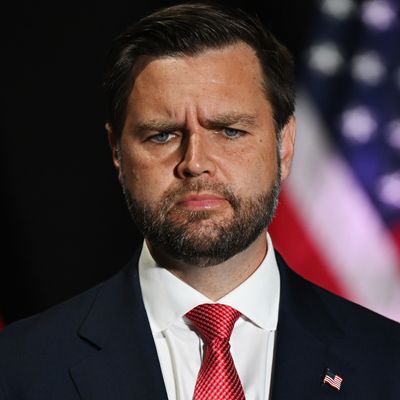
The future looked so bright for a minute. Photo: Drew Hallowell/Getty Images

Greg NashRep. Dan Crenshaw (R-Texas) is seen before Greek Prime Minister Kyriakos Mitsotakis gives an address to a joint session of Congress on Tuesday, May 17, 2022.
.jpg)
.jpg)
Helen of High Noon
A Historic Love Story
by
John Presco
ALL RIGHTS RESERVED
Someone on the European Union-NATO side should have discovered what it took me two hours to know, being VP. Vance is a…….BUSHWHACKER!
‘I Am A Bonded Custodian-Janitor’ – may be the most prophetic writing in human history. It is beyond anything Nostradamus wrote, and anything in the Bible, including both books of the Bible. Indeed, the beginning of World War Three could have begun as I wrote about Rena and Ian Easton.
Let me cut to the chase…..It looks like Trump and Vance were having conversations with Putin – before Stermer came to town. Did Putin make a NUCLEAR THREAT when it was suggested Ukraine might become a member of NATO? How many times did our President say “You’re gambling with World War III.“
“You’re gambling with World War III. And what you’re doing is very disrespectful to the country, this country that’s backed you far more than a lot of people say they should.”
I suspect after Keir Starmer said Britain is ready to put boots on the ground – PUTIN PLAYED THE ATOMIC BEMB CARD! I suspect Vance convinced Trump it wasn’t worth it, and a plan was made to SABOTAGE the peace deal!
In my opinion, this is the line that lit the fuse to – THE BOMB! Zelensky was trying to make the point Starmer made, which suggests British troops and jets will be stationed in Ukraine – forever!
” working together with our allies, because that is the only way that peace will last,“
This line is not – playing a any card! It is – THE BOMB CARD! Victoria Rosemond Bond, and Miriam Starfish Christling – celebrated at the new BAD headquarters on the McKenzie! Britain has had it with the evil murderous game Putin has played with NATO Nations – that he wants to destroy! Vance is on his side!
JRP
“I’m working closely with other European leaders on this, and I’m clear that the U.K. is ready to put boots on the ground and planes in the air to support a deal, working together with our allies, because that is the only way that peace will last,” he added.
Previously, Zelensky said that European partners would need to station 100,000 to 150,000 soldiers in Ukraine to effectively deter Russia. The U.S. has ruled out sending its own troops while encouraging European allies to take the lead in securing Ukraine’s post-war stability.
A bushwacker gunfighter was an irregular soldier who ambushed and raided targets during the American Civil War. The term “bushwacker” was used to describe guerilla fighters on both sides of the war.
How did bushwhackers operate?
- Bushwhackers were known for their ambushes and raids in rural areas.
- They often claimed to be on one side of the conflict, usually the South.
- Bushwhackers conducted well-organized raids against the military.
Examples of bushwacker gunfighters:
- Jesse James and his brother Frank James were pro-Confederate guerrillas who operated in Missouri and Kansas during the American Civil War.
Other uses of the term “bushwacker”:
- The term “bushwacker” can also be used as a disparaging term for an unsophisticated person.
To play Go Fish, each player is dealt a set of cards from a standard deck, and then takes turns asking another player if they have a specific card rank; if the player does have that card, they must give it to the asker, but if not, the asker must “go fish” and draw a card from the center pile; the goal is to collect sets of four matching cards (a “book”) by asking other players for cards you need, and the player with the most books at the end wins.
“We’re trying to solve a problem. Don’t tell us what we’re going to feel,” Trump reprimanded.
“You are in no position to dictate what we’re going to feel. We’re going to feel very good. We’re going to feel very good and very strong. You’re right now not in a very good position. You’ve allowed yourself to be in a very bad position…
“You’re gambling with World War III. And what you’re doing is very disrespectful to the country, this country that’s backed you far more than a lot of people say they should.”
“We gave you, through this stupid president [Joe Biden], $350 billion. We gave you military equipment… If you didn’t have our military equipment, this war would have been over in two weeks.”
“You have to be thankful,” Trump went on, telling Zelensky: “You don’t have the cards.
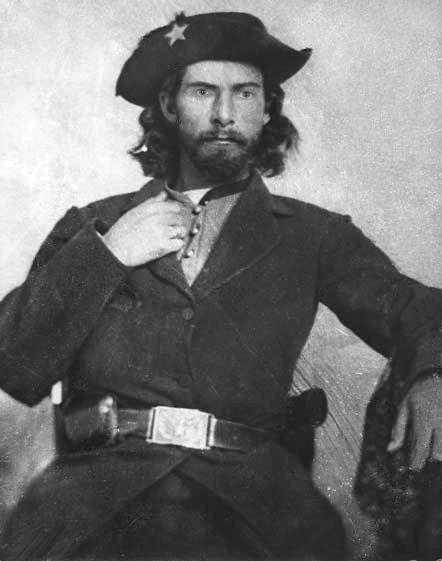
William T. Anderson[a] (c. 1840 – October 26, 1864), known by the nickname “Bloody Bill” Anderson, was a soldier who was one of the deadliest and most notorious Confederate guerrilla leaders in the American Civil War. Anderson led a band of volunteer partisan raiders who targeted Union loyalists and federal soldiers in the states of Missouri and Kansas.
“It turns out there are some people on the internet who don’t like Catholic converts,” he quipped.
At the same time, the vice president didn’t shy away from the fact that he is still learning about Catholicism, and might not always get every aspect of it right.
“I recognize very much that I am a ‘baby Catholic,’” said Vance, who was raised evangelical but became an atheist before making his way to Catholicism.
The vice president promised that his fellow Catholics will have an “open door” with the Trump administration when it comes to sharing concerns and corrections. Acknowledging that he lives in a “roaming bubble” of Secret Service protection, Vance insisted that people of faith communicate with the administration “when we get things right but also when we get things wrong.”

U.S. President Donald Trump meets with Ukrainian President Volodymyr Zelenskyy at the White House in Washington, D.C., U.S., Feb. 28, 2025.
Brian Snyder | Reuters
President Donald Trump found the tone and body language of Ukrainian President Volodymyr Zelenksyy objectionable during an Oval Office meeting that exploded into a loud argument on Friday, the White House told CNBC.
White House press secretary Karoline Leavitt said there was not a specific thing that Zelenskyy said in the Oval Office to Trump or Vice President JD Vance that the president objected to, but the tone and manner in which he said it.
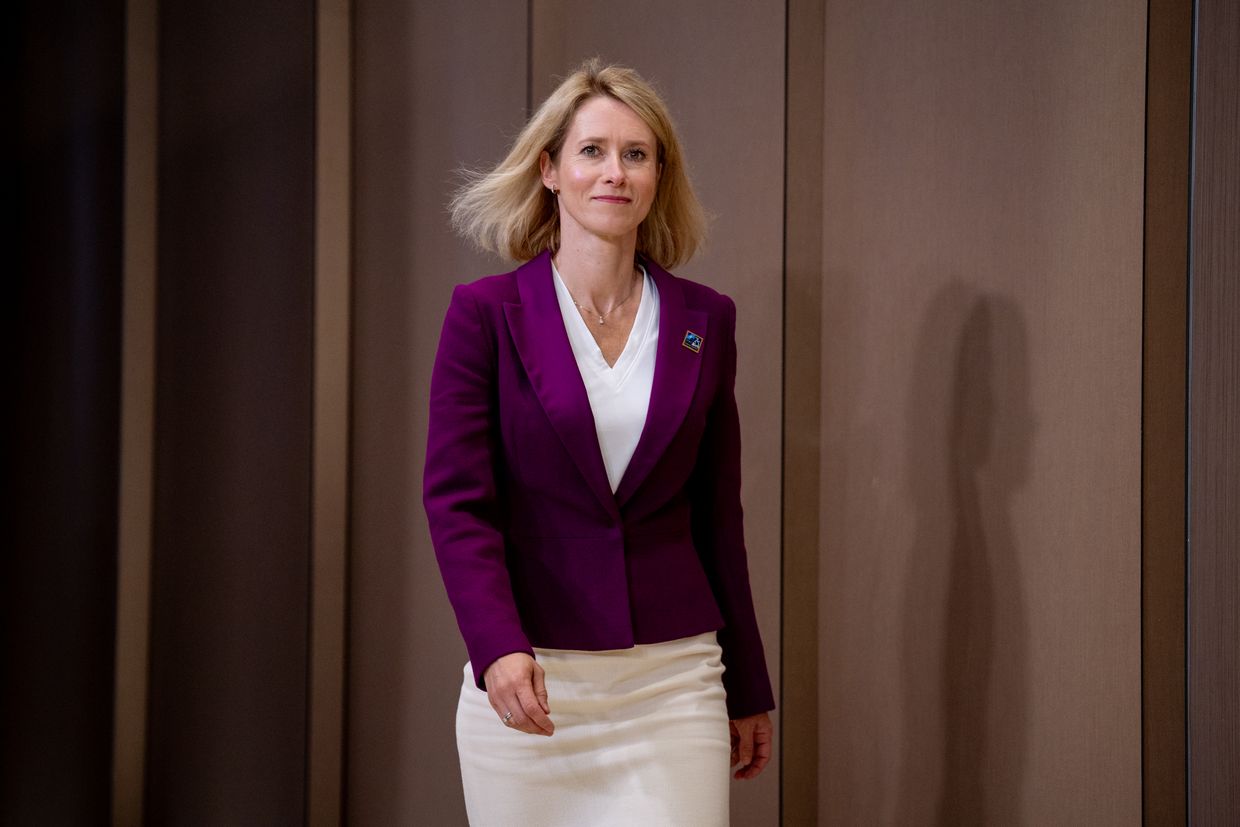
Estonian Prime Minister Kaja Kallas arrives at the 2024 NATO summit in Washington, DC, US on July 10, 2024. (Andrew Harnik/Getty Images)
Trump extends Russia sanctions, citing security threats
- Signal Contributor
- February 27, 2025
- 2:58 pm

By Tom Ozimek
Contributing Writer
President Donald Trump has extended for one year a series of sanctions against Russia over its invasion of Ukraine, citing ongoing threats to U.S. national security and foreign policy.
A notice released by the White House on Thursday confirms the continuation of measures first enacted in 2014 and expanded through multiple executive orders across several presidential administrations.
“The actions and policies addressed in these executive orders continue to pose an unusual and extraordinary threat to the national security and foreign policy of the United States,” the notice states. “Therefore, in accordance with section 202(d) of the National Emergencies Act (50 U.S.C. 1622(d)), I am continuing for one year the national emergency declared in Executive Order 13660.”
The notice is scheduled for publication in the Federal Register and has been formally transmitted to Congress.
The national emergency was initially declared on March 6, 2014, by President Barack Obama in Executive Order 13660, in response to Russia’s invasion of Crimea. The order stated that Russia’s actions undermined Ukraine’s sovereignty and democratic institutions while posing an “extraordinary threat” to U.S. national security and foreign policy.
Executive Order 13660 laid the groundwork for subsequent measures, including Executive Orders 13661 and 13662, which broadened the scope of sanctions to target Russian officials, entities, and key sectors of the economy as the conflict escalated.
Trump’s decision to extend the national emergency means continued enforcement of broad economic sanctions, including asset freezes, financial restrictions, and prohibitions on business dealings with specific Russian entities and individuals.
The move follows Trump’s recent comments dismissing any immediate easing of sanctions on Russia.
“We haven’t lifted any sanctions on anybody,” he told reporters at the Oval Office on Tuesday, in response to a question about potential relief as part of negotiations to end the war in Ukraine.
The next day, during a Cabinet meeting, he reaffirmed his stance: “Not now, no,” adding that he thinks the Moscow sanctions will eventually be lifted.
Ending the war in Ukraine is a key foreign policy objective for Trump, who has directly engaged with both Russian President Vladimir Putin and Ukrainian President Volodymyr Zelenskyy in discussions aimed at halting hostilities.
Trump recently said he was in serious negotiations with Putin, not only about ending the war but also about a potential U.S.-Russia economic development deal. The agreement could grant the United States access to Russia’s rare earth minerals, which are critical for both civilian and military technologies.
Putin, for his part, expressed openness to increased cooperation with Washington, proposing joint resource extraction projects — including aluminum, rare earths, and hydropower production. The Russian leader also suggested talks on a mutual 50% reduction in defense budgets and praised Trump’s diplomatic efforts toward resolving the Ukraine conflict.
Meanwhile, Trump is on the cusp of finalizing a major economic partnership with Ukraine, focused on rare earths, critical minerals and other resources. While the agreement lacks explicit security guarantees — a key demand from Zelenskyy — it offers what Treasury Secretary Scott Bessent has called an “economic security guarantee.”
Zelenskyy is expected to visit Washington on Friday to sign the agreement, further strengthening Kyiv’s economic ties with Washington and reinforcing American interests in Ukraine’s long-term stability.

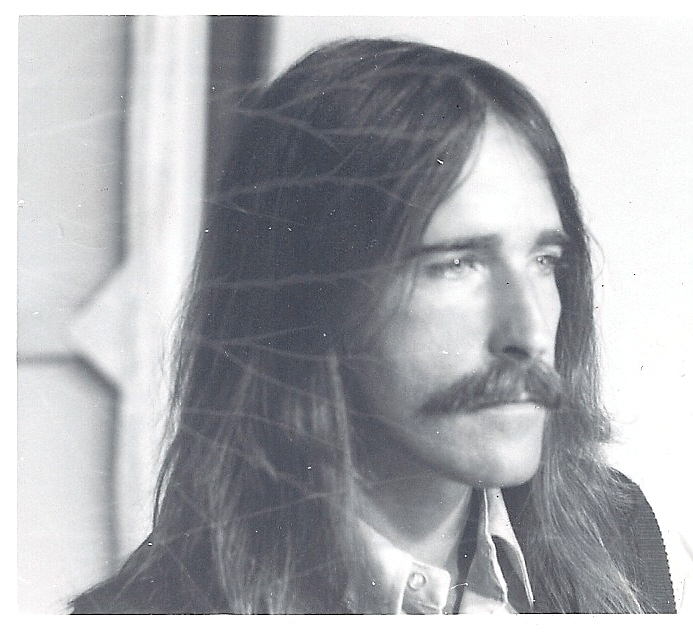

Dear Rena
About ten this evening I put on my slippers and went to get my mail. I pulled a bundle out and noticed your letter nestled in a packet. On the walk back to my apartment I took a peek and noticed the beautiful handwriting, and the name “Rosemond”. There was this energy pouring from the envelope and flowing up my arm. When I opened it and saw the name “Bozeman” I began to cry. For several minutes I sobbed, let go tears of great relief as if you were my child who had been kidnapped, or lost, for all these years. And, now…..you are found.
In the history of letter writing, and receiving, I don’t think anyone was ever so moved. Then, I opened the envelope and read; “Here I am”.
If these were the only words this letter contained, then I had way more then enough to read for the rest of my days. My cup runneth over.
I Am Bonded Custodian-Janitor!
Posted on February 28, 2025 by Royal Rosamond Press
‘That’s enough’: Donald Trump interrupts UK PM Keir Starmer to shoot down question on Canada
ByHT News Desk | Edited by Nikita Sharma
Feb 28, 2025 08:19 AM IST
Donald Trump and UK PM Keir Starmer discussed Ukraine peace deal and their trade ties among other issues during their meeting.
US President Donald Trump, while addressing a press conference with UK prime minister Keir Starmer at the White House, shut a reporter down who asked a question about whether the two leaders discussed Canada.

The reporter asked the UK PM whether he discussed with President Trump about his statements over annexing Canada. “Has the King expressed any concern over the President’s apparent desire to remove one of his realms from his control?” the reporter asked.
To this, Starmer replied, “I think you’re trying to find a divide between us that doesn’t exist. We’re the closest of nations and we had very good discussions today but we didn’t touch Canada.” Interrupting the UK PM before he could finish his statement, Trump told the reporter, “That’s enough”.
The two state leaders had met to primarily discuss support for Ukraine and also trade ties. Trump hosted UK PM Keir Starmer, and the two discussed the United States’ stance on ending the three-year-long war in Ukraine.
Discussions on Ukraine War
Reiterating that the war would never have happened had he been the President, Trump said, “To begin the process of ending this spiral of death, I had historic back-to-back calls with President Putin, very successful calls I might add, and President Zelensky…We’re working very hard to get that war brought to an end.”
The United States’ stance on Russia took a turn under Trump when the two countries met to discuss an end to the war without involving Ukraine on the discussion table. Trump also pinned the blame on Zelensky for starting the war, saying that he could have struck a deal with Russia.
While Trump took a softer tone on the matter with UK PM Keir Starmer, he didn’t say much about the US “backstop” that the European countries are seeking, reported news agency AFP.
“It’ll either be fairly soon or it won’t be at all,” Trump said while talking about ending the Ukraine conflict.
Keir Starmer, on the other hand, vouched for a peace deal in Ukraine that does not “reward” Russia. “There’s a famous slogan in the United Kingdom from after the Second World War, that is that we have to win the peace, and that’s what we must do now. Because it can’t be a peace that rewards the aggressor ,” he said.
A group of bipartisan senators met with Ukrainian President Volodymyr Zelenskyy on Friday morning ahead of the tense exchange between the Ukrainian leader, President Donald Trump and Vice President J.D. Vance.
Sens. Lindsey Graham, R-S.C., Chris Coons, D-Del., and Amy Klobuchar, D-Minn., as well as other Democratic and Republican senators, gathered for an hourlong “encouraging” meeting with Zelenskyy ahead of his visit to the White House, the three lawmakers posted on their social media accounts.
“Just finished an encouraging meeting in Washington with President @ZelenskyyUa and a bipartisan group of Senators to discuss our ongoing partnership with Ukraine,” Coons wrote on X, accompanied by a selfie with Zelenskyy, Graham and Klobuchar.

MORE: Trump and Zelenskyy key takeaways: Oval Office meeting explodes into shouting match
“Really good bipartisan meeting before President Zelensky heads to the White House. We stand with Ukraine.🇺🇦” Klobuchar wrote in a post on X.
“So honored to take part in the hour-long discussion with President Zelensky and Senators Coons, Graham, and other Democratic and Republican Senators this morning. There is strong bipartisan support in the Senate for Ukraine’s freedom and democracy,” she added.
UK ready ‘to put boots on the ground, planes in the air’ to back Ukraine peace deal, Starmer says
Share
by Kateryna DenisovaFebruary 28, 2025 9:07 AM2 min read
Listen to this article
2 min
This audio is created with AI assistance
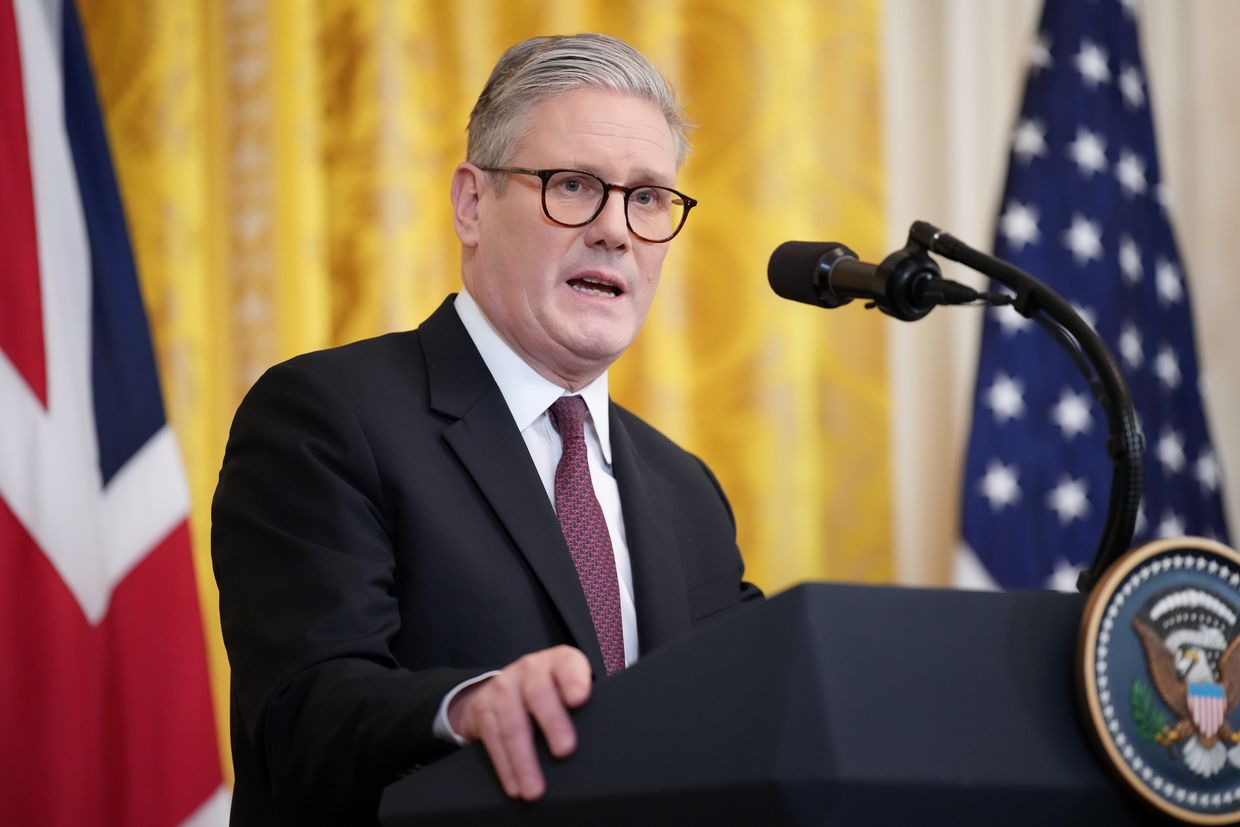
London is ready to send its troops to Ukraine to secure a “good deal” on ending Russia’s full-scale war, U.K. Prime Minister Keir Starmer said at a press conference with U.S. President Donald Trump in the White House on Feb. 27.
The two leaders met earlier in the day for talks that focused heavily on the Western allies’ role in securing a lasting peace in Ukraine. The U.K. prime minister’s visit took place a day before President Volodymyr Zelensky’s trip to Washington, where he is expected to sign a minerals agreement with the U.S.
According to Starmer, he and Trump discussed a plan to reach a just peace “that Ukraine will help shape,” and that is “backed by strength to stop (Russian President Vladimir) Putin (from) coming back for more.”
“We agree history must be on the side of the peacemaker, not the invader,” Starmer said.
“I’m working closely with other European leaders on this, and I’m clear that the U.K. is ready to put boots on the ground and planes in the air to support a deal, working together with our allies, because that is the only way that peace will last,” he added.
Previously, Zelensky said that European partners would need to station 100,000 to 150,000 soldiers in Ukraine to effectively deter Russia. The U.S. has ruled out sending its own troops while encouraging European allies to take the lead in securing Ukraine’s post-war stability.
The U.K. and France are considering deploying a much smaller European-led peacekeeping force with up to 30,000 soldiers, the Telegraph reported.
Apart from the U.K. and France, other countries remain cautious about sending their troops to Ukraine, citing concerns over the escalation and limited military resources, according to the Washington Post.
5 Takeaways from JD Vance’s NCPB Speech
ANALYSIS: Vance argues that Catholic political engagement should prioritize peace and economic stability alongside pro-life and religious liberty concerns.

Jonathan Liedl NewsFebruary 28, 2025
JD Vance may be a recent convert, but in his first public speech to an explicitly Catholic audience since becoming vice president, he didn’t miss his chance to present himself as a thought leader within American Catholicism.
And that included making the case that the old way of conservative Catholic political engagement in the U.S. is over.
Speaking at the National Catholic Prayer Breakfast (NCPB) Friday morning, Vice President Vance contended that pursuing international peace and economic policies that promote the common good are Catholic priorities worthy of being mentioned alongside protecting the sanctity of life and religious liberty.
“I think that what the Catholic Church calls me to do is to say that if the stock market’s doing okay but people are literally dying and losing years off of their life then we have to do better as a country,” said Vance, whose remarks diverged from emphases on individual liberty and the promotion of democracy abroad that had been mainstays in D.C. Catholic conservative circles for decades.
Vance, who became Catholic in 2019, also acknowledged his recent public disagreement with the U.S. bishops and Pope Francis over immigration and foreign aid, but did not directly respond to the prelates’ criticisms of the Trump administration’s position.
Instead, the vice president called for greater listening in public conversations and encouraged Catholics to stop politicizing the statements of their clergy. Then, he led those gathered in praying for the Pope, who has been hospitalized since Feb. 14 with a respiratory infection.
“If the Holy Father can hear us, I hope he knows that there are thousands of faithful Catholics in this room and millions of faithful Catholics in this country who are praying for him as he weathers this particular storm,” said Vance, just hours before the Vatican reported that the Pope’s condition had worsened.
And in comments that will likely further endear him to Catholic conservatives, the 40-year-old Vance joked about trying to stay out of the “civil war” between Jesuits and Dominicans, said that his seven-year-old child’s decision to be baptized this past November was his “proudest moment” as a father, and embraced his status as a “baby Catholic.”
The vice president’s presence at the breakfast offered something of a reprieve from what has otherwise been a contentious 24 hours for the Trump administration, including its relationship with the Catholic Church. On Thursday, the State Department cut off funding for the U.S. bishops’ refugee resettlement program amid the bishops’ lawsuit seeking millions in reimbursement funds. And shortly after Vance’s speech, he joined Trump in the Oval Office for a contentious meeting with Ukrainian president Volodymyr Zelenskyy.
But before that, Vance’s mix of personal anecdotes about his faith with serious reflections about the public policy implications of Catholic social teaching demonstrated his potency as a Catholic thought leader, one who will likely influence Catholic conversations about political engagement for decades to come.
Here are five takeaways from Vice President JD Vance’s address to the National Catholic Prayer Breakfast.
1. Vance is reshaping conservative Catholic political engagement.
Vance played up the way the Trump administration, at least compared to the White House under Joe Biden, has already delivered on perennial priorities among conservative Catholics: religious liberty and pro-life policies.
But in the same breath, the Republican leader linked these principles to ones that certainly were not on the conservative Catholic priority list less than a decade ago: restrained foreign policy and economic populism.
In fact, in defending what he described as the Trump administration’s peace-first foreign policy, the Marine veteran argued that American intervention abroad has directly contributed to the demise of Christians’ religious liberty.
“One of the things, I have to be honest, that I am most ashamed about is that in the United States of America sometimes it is our foreign misadventures that lead to the eradication of historical Christian communities all over the world,” said Vance, who served in Iraq, where the Christian population has been reduced by 75% since the United States’s 2003 invasion.
Similarly, Vance emphasized that rising GDP rates don’t mean anything if ordinary Americans aren’t flourishing.
“The real measure of health in a society is the safety and stability and the health of our families and of our people,” said Vance, who has been described as a “religious populist.”
The populist shift of Catholic conservatives away from neoconservatism certainly preceded Vance’s political ascendancy. But in his speech Friday, the vice president demonstrated why he will be the movement’s standard bearer moving forward.
2. The VP is also trying to “Catholicize” Trump’s policies
Vance acknowledged that there were likely people in the Catholic audience who disagreed with the Trump administration “on any number of issues,” which could have been a reference to everything from in vitro fertilization to mass deportation.
But the vice president did his best to place some of the Trump administration’s policies in a better Catholic light.
For instance, when Vance spoke about “prosperity,” a constant buzzword for Trump, he suggested that it wasn’t solely about material wealth.
“Yes, we care about prosperity, but we care about prosperity so that we can promote the common good of every citizen in the United States of America,” said Vance,
Similarly, he framed Trump’s push to end conflicts in Ukraine and the Middle East as oriented “towards saving lives and carrying out one of Christ’s most important commandments.” He described the president’s pursuit of “a path of peace” as a policy area where Trump “is most in accord with Christian social teaching and with the Catholic faith more than any president in my lifetime.”
However, during Vance’s brief comments on immigration, he didn’t appeal to anything from Catholic teaching (as he has before, for instance, by referencing a medieval theological concept called the ordo amoris). Instead, he simply said that he would continue to advance his hardline stance on immigration “because it serves the best interest of the American people.”
Vance is clearly committed to reframing Trump’s policies in light of Catholic teaching — when possible. But what he does on the harder-to-square positions will be more telling.
3. Vance steered clear of conflict with the U.S. bishops and Pope Francis.
U.S. Catholic politicians running afoul of their spiritual leaders is nothing new. And Vance certainly qualifies, after his suggestion that U.S. bishops engaged in refugee resettlement to pad their bottom line earned some sharp rebukes, and his use of the ordo amoris to justify the Trump administration’s mass deportation program earned him a reprimand from Pope Francis.
However, in his remarks at the NCPB, the vice president took a different public strategy than other Catholic politicians who have been publicly called out by Church leaders.
Although Vance didn’t apologize for or amend any of his comments, he also didn’t downplay the spiritual authority of the Pope or the bishops — something that former Speaker of the House Nancy Pelosi, for instance, did when she was barred from Communion by Archbishop Salvatore Cordileone for her pro-abortion positions.
“I think that’s the wrong way to look at it and that’s certainly not the right way to look at it for me,” said Vance of those who say clergy should stay out of public policy.
Instead, the vice president suggested that in an age of social media, Catholics should be less willing to offer “political criticism” of clergy, or of dragging “the Holy Father into every culture war battle in American politics.”
“Sometimes we should let this stuff play out a little bit and try to live our faith as best we can,” he said, and not hold spiritual leaders “to the same standards of social media influencers, because they’re not.”
A humble suggestion for a better form of Catholic engagement in politics? Or a clever rhetorical sidestep of papal criticism? Maybe both.
4. The “baby Catholic” welcomes feedback.
Some Catholics have criticized Vance’s theological views because of his relatively recent entry into the Church, something the vice president is aware of and joked about at the NCPB.
“It turns out there are some people on the internet who don’t like Catholic converts,” he quipped.
At the same time, the vice president didn’t shy away from the fact that he is still learning about Catholicism, and might not always get every aspect of it right.
“I recognize very much that I am a ‘baby Catholic,’” said Vance, who was raised evangelical but became an atheist before making his way to Catholicism.
The vice president promised that his fellow Catholics will have an “open door” with the Trump administration when it comes to sharing concerns and corrections. Acknowledging that he lives in a “roaming bubble” of Secret Service protection, Vance insisted that people of faith communicate with the administration “when we get things right but also when we get things wrong.”
“I will always try to remind myself that the goal of our public policy is to promote the common good and I will fight for that every single day that I am a public official,” he said.
Whether Vance’s “open door” affects the Trump administration’s policies or not, it’s likely a valuable political overture as some of the president’s priorities continue to risk alienating Catholics.
5. The vice president’s ability to get personal will score him points.
Vance’s familiarity with aspects of the Catholic intellectual tradition makes him unique among national politicians, but his ability to connect with his audience is what will allow him to be effective. And the vice president showed this ability in spades at the NCPB.
He spoke candidly about the slow pace of grace, acknowledging how when he first became Catholic he struggled to make it to Mass every Sunday (having to go to confession was an effective motivator, he said, adding that he’s now batting “like 95%”).
“While I am as imperfect a Christian as any person in this room, I really do feel that God is transforming me every single day and that’s one of the great blessings of our faith” and the sacramental life, said Vance.
Vance also shared that while he and his wife, Usha, a Hindu, have agreed to raise their three children Catholic, they’ll let their kids decide when they’re ready to be baptized.
“If that’s terrible sacrilege, then blame the Dominicans, because they’re the ones who came up with this scheme,” said Vance, before sharing how proud he was when his 7-year-old son, Ewan, was baptized this past November.
But the most impactful moment of the whole speech came at its conclusion, when Vance led those gathered in a prayer for Pope Francis. This was preceded by his own reflections upon the pastoral guidance of the Holy Father, and a lengthy recitation of part of the homily Pope Francis gave on March 20, 2020, shortly after he blessed an empty St. Peter’s Square amid the COVID-19 epidemic.
When Vance spoke about his faith, it was real and personal. It was also likely politically beneficial, at least among those in the room. The two often seem to go hand in hand for the Millennial vice president, who conducts his PR over Twitter, quotes St. Augustine, and is poised to have an extraordinary impact on Catholic political life in America.
Crenshaw apologizes for calling colleagues ‘terrorists’
by Julia Mueller – 01/08/23 10:56 AM ET


Rep. Dan Crenshaw (R-Texas) on Sunday apologized for calling his fellow House GOP colleagues “terrorists” amid a tense election for Speaker.
“Look, things get heated and things get said. Obviously, to people who took offense by that, it’s pretty obvious that it’s meant as a turn of phrase,” Crenshaw told host Jake Tapper on CNN’s “State of the Union.”
The GOP lawmaker said he was “a little taken aback” by the “sensitivity” in the response to his comments, noting that he’s been “called awful, vile things by the very same wing of the party” that he was “fighting at that moment,” but underscored he was sorry for the quip.
“To the extent that I have colleagues that were offended by it, I sincerely apologize to them. I don’t want them to think I actually believe they’re terrorists. It’s clearly a turn of phrase that you use in what is an intransigent negotiation,” Crenshaw said.
Republican Rep. Kevin McCarthy (Calif.) ultimately secured the Speakership after 15 rounds of voting, during which around 20 Republican holdouts forced the race into a stalemate, preventing McCarthy from hitting the majority threshold he needed.
Crenshaw last week said the hard-liners “are enemies now” and argued that “we cannot let the terrorists win.”
gunslinger
gun·sling·er ˈgən-ˌsliŋ-ər
: a person noted for speed and skill in handling and shooting a gun especially in the American West
 Rosamond Press
Leave a comment