The agreement includes the possible purchase of the main NDNU campus in Belmont, including Ralston Hall, Koret Field, NDNU Theater, and Cunningham Chapel. The property included in the agreement is outlined above with a yellow dashed line. https://belmont.stanford.edu/about
To: Governor Newsom
From: John Presco
I am the great grandson of Carl Janke, the founder of Belmont. I suspect he was a member of the Turnverein Germans who came with John Sutter to California from Saint Louis, and later brought six portable homes around the Cape to Belmont California in 1848. It stands to reason Janke already has buyers for these homes. After much study I conclude the Franciscan Order bought some of these homes and placed them on a large parcel of land they called Belmont, or Canada del Diablo. I have a theory the Monks saw Mount Diablo from a hill above Belmont. The setting sun created what is called, Alpenglow, that turned Diablo a crimson red. Was this a sign to build a Mission here that I suspect Count Leonetti was ordained to support, and is why he came West with a wagon train, and cattle? Cipriani did not dismantle his home in Italy and have it shipped to Belmont. I suspect the house he assembled with 5,000 screws was one of the Janke houses, that was built atop the primetime structure the Monks made that was raised. Building atop the original structure may have sustained land grant rules, Janke’s house is within Ralston Hall this day.
I suspect Cipriani lived in San Francisco after he was appointed Italian Council, and added a structure for his residence when he came to stay in Belmont, that was under his protectorate. He may have left the Mission in charge of a unknown person when he moved to Italy. Carl Janke had to be fully aware of this. How William Ralston came to own this Mission, needs to be investigated. He might have had a religious agreement, that was not respected by William Sharon when he moved in. I can not find an history of contact with Carl Janke and Sharon. Both men had to be aware of the two graves mentioned by Russel Estep who was a founding member of the Belmont Historic Society. I suspect they are the graves of Franciscan Monks that were put in a designated Franciscan cemetery. There is a sculpture of Saint Francis in back of Ralston Hall made by Benny Buffano. I suspect it was paced there after the two tombstones were removed. I suspect there are other Franciscan buried on the hill, who got wooden markers that deteriorated, are a simply engraved rock that were taken as souvenirs.
On this day, I John Presco claim this hill, and all the grounds that were designated to the College of Norte Dame De Namur. One article on the Ralston house says there were four acres. I will go by this area, that I suspect includes much of Twin Pines Park where Carl Janke was buried under a Bay tree, along with his wife, and possibly his mother-on-law. This suggests Janke understood there was an established and ordained graveyards that surrounded a stone mission, that my have been an attraction to Janke’s These Park, which may be the first in California. I suspect Simon Mezes created a fictional Spanish family, the Tanforan family, and took the large track of land the Governor of Mexico gave the the Franciscan Order. I suspect Simon heard the Franciscans had abandoned the Mission when they moved to San Francisco, that is named after Saint Francis.
The confusion began with the Mexican Secularization Act of 1833, officially called the Decree for the Secularization of the Missions of California. The Franciscan Order had to give up vast tracks of land, but were allowed to keep land that may have been sizable. Simon Mezes wins all of a track for the Arguello family – that might have included Franciscan property. I suspect the Franciscans sold Carl Janke a large track of their land to keep it out of the clutches of Simon Mezes who ended up with 7,000 acres. His son is born in Belmont and manages his family property.
“Mexico ceded California to the United States in 1848 and California became the 31st state in 1850. The arrival of large numbers of settlers put Mexican land titles at risk and members of the Argüello family, holders of the vast Rancho de las Pulgas, were forced to defend their land titles in court. Attorney Simon Mezes successfully defended the claim for the Argüellos and was paid for his services with nearly 7,000 acres, much of what is now Redwood City.”
My cousin (who I never met) brought up the removal of the three bodies in the middle of the night, at a Belmont Historic Society meeting in 1992. I have the minutes. She and another person wanted Denny Lawhern to ask the City to pay for a plaque to put on the Bay tree sating their Pioneer Contributions. This was never done. The original marker for the three Jankes, was replaced, I suspect because it was vandalized. I suspect it was a large metal monument – that may have been moved – three times! This marker may have contained a declaration of a land grant. Doris Vanier listed a large area of land owned by her great grandfather in a document founding ‘Carl Janke Day’ that was signed by the Mayor of Belmont – and City Seal – applied.
Because I am being stalked by someone who reads my blog, and who began to overlay his fake family history over mine – saying anyone can make a land claim – I hereby claim all the land mentioned by Mrs. Vannier. In a private letter I will say who this person is, and categorized the ill treatment I received when I posted on the BHS Facebook over three years ago. I suspect a cover-up, and possible conspiracy.
It stands to reason the Franciscan Friar did not want to live in the infamous SF Fog, and built their mission in a fog-free place, where they could climb hill and see the Wondrous Alpenglow. Was a statue of Saint Francis put on this hill Down below they could see the stone mission – with graves around it. Then came Carl Janke with his six homes. I believe my beautful vison has restored – The Truth!
I have written you several times on this matter, and you NEVER responded. You left a great grandson of a California Pioneer un-protected! There are vultures flying overhead – governor! There are DEAD BODIES without tombstones. Your beautiful wife went to Stanford. She needs to lead this study of Belmont History. I put political pressure on your family tree. Member of my Wieneke family became members of the Order of Sant Francis and founded Briarcliff College. I have a spiritual connection to Saint Francis via Meher Baba, an Avatar from India who flew into SF airport. I will make Kamala Harris aware of this after I anoint my cousin Elizabeth Rosemond Taylor the Spiritual Saint of a claim I will make – for all of California, There is such a thing as a Celestial Deed!
Governor, you and Jenny got to go to the Seibel Ranch in Montana and recognize the Christian Foundations of the old ranch building that were torn down. Thomas Siebel came from San Mateo County that has wiped out most of it’s history in order to build expensive housing for High Tech Workers. This is the fate of Belmont – who insults me this very day! They want me to go away – and die! The tenant of Christianity is the promise you can be reborn. My cousin, Elizabeth Rosemond Taylor is reborn every other day to satisfy the whimsy of attention getters. You need to talk to the Governor of Montana about making it real. Jenny needs to make another film about strong pioneer women! Franciscan Friars take a vow of celibacy, and thus are often adopted by heterosexual families whose children enter the Order. If they had offspring, then, it stands to reason the OSF would own most of California and be Dynastic.
You need to put together a panel to study what can be titled Artificial Rich Cowboy Intelligence, where an owner builds high density, high tech cities of no empathy, then movies to his mega-ranch in order to touch Indians, and get in touch with his roots – that are not in The Country! But – let’s pretend! May I suggest you levy a ‘Pretend Tax’. There might not be a God? – is the question by those left behind! Only from ones high saddle, does everything look good? Jesus on horseback, or on zn ass, riding north out of Baja California.
Siebel angers neighbors for tearing down historic buildings
GRASS RANGE, Mont. — California computer billionaire Thomas M. Siebel has angered some central Montana ranchers by tearing down two historic buildings on the N Bar Ranch he bought last June.
Former owner and manager Tom Elliott, neighboring ranchers and historians are dismayed.
“I think it’s a tragedy, personally. It’s so senseless,” Elliott said.
Siebel, a San Mateo, Calif. software mogul ranked No. 105 in Forbes magazine’s latest list of the world’s richest people, is worth an estimated $4.2 billion.
The two buildings he razed were on the National Register of Historic Places. N Bar Ranch manager Doug Groats said he had no idea the buildings has special status.
“I wasn’t aware that they needed to be protected,” Groats said. “We have all those houses that if we just let them sit there the mice and the rats would take over.”
Darrell Abbott, who lives a few miles west of the N Bar’s headquarters, said Siebel has torn down the cook house, a storage shed made of rock and an old homestead known as the Pike place.
The cookhouse was built in 1885 of square-hewn logs. The rock house, built in the 1930s, housed the electrical generating equipment for the ranch complex. The structures were two of 13 buildings at the ranch headquarters listed in 1991 by the Elliotts on the National Register of Historic Places.
A one-and-a-half story farm house built in 1930 and also listed on the register, was moved off the property.
“We like to be notified if they’re going to move any of the buildings or tear them down,” said Kate Hampton of the Montana Historical Society. “Moved buildings lose their integrity of association.”
But since the buildings are privately owned, the society has no say about what happens to the structures.
Hampton said large cattle operations from the turn of the century are significant to the state’s history. Few of them are left.
Siebel said he intends to be a good neighbor. He plan to run the N Bar as a commercial cattle operation, he said, much like the 70,000-acre Dearborn Ranch he owns near Wolf Creek. According to state officials familiar with the operation, the Dearborn’s land is conservatively managed to maintain adequate grass for cattle and wildlife. Although public hunting isn’t allowed on the ranch, some non-fee hunting by ranch employees and friends is allowed.
“What we’re trying to do is clean it up,” Siebel said of the N Bar. “We want to improve the habitat for the wildlife, improve the riparian habitat. We want to ranch it in a responsible way.”
Siebel said the beauty of the ranch attracted him to the place. He spent time on the McKay ranch near Red Lodge as a youngster and worked on a ranch near Bellevue, Idaho, after graduating from college, he said. “Hopefully (the N Bar) will be a showcase ranch,” Siebel said. “I think it’s just a great resource. We want to improve it so it’s one of the great ranches in the state.”
Royal officials provided horses for the 20 Franciscan friars to ride up the Camino Real. All accepted the offer, except for Serra and one companion, a friar from Andalusia. Strictly following the rule of his patron saint Francis of Assisi that friars “must not ride on horseback unless compelled by manifest necessity or infirmity,” Serra insisted on walking to Mexico City. He and his fellow friar set out on the Camino Real with no money or guide, carrying only their breviaries. They trusted in Providence and the hospitality of local people along the way
Once fully implemented, the secularization act took away much of the California Mission land and sold it or gave it away in large grants called ranchos.[2][3] Secularization also emancipated Indigenous peoples of California from the missions and closed the monjeríos,[4] although only a minority of Indigenous peoples were distributed land grants, which left many of them landless to work the ranchos.[5]
After four years of trying to get the City of Belmont, and its exclusive Historic Society, to get my family History – right – and correct the egregious mistreatment of their Founding Family, I am bid by my deceased to raise them, and our history – from the dead……and do what I will!
I havea taken the liberty to rename Belmont, Jankeville, after my great, great, grandfather, Carl Jake, who I suspect was ruined by Leland Stanford who is title a ‘Robber Baron’. Leland and his greedy wife ay be responsible for the demise of Mezeville.
There are so many ways to treat my family history. One way is th author a script for a cable series that will be titled……’JANKEVILLE’
Like any worthy Western, it will begin with the Janke Stage traverse the new road from Belmont to Halfmoon Bay, with newlyweds on board. Willian Stuttmeister, and Augustus Janke were married at Ralston Hall once owned by William Ralston ‘The Man Who Built San Francisco’. When William came to Belmont, he purchased the portable house that Count Leonetti Cipriani had put together with 5,000 screws. This was one of the home Carl Janke brought around the Cape in 1848. This home s described as a “farmhouse” around which Ralston Hall was built.
With the appearance of the Heritage Masterplan, being promoted by a convicted felon on trial for Insurrection, I was found INNOCENT! Family and friends – betrayed me! I found myself…..
STANDING ALONE!
And the whistle blow. It’s high noon. Here come Leland Stanford’s half mile long train bringing 1,500 Odd Fellows to Tanforan, the German Wonderland that Carl built around an ancient oak and bay tree.
Mezesville
Main content start
The discovery of gold at Sutter’s Fort in 1848 ushered in a period of rapid change in California as thousands of immigrants flooded into the state and the non-native population grew from 20,000 to 100,000 in one year.
Mexico ceded California to the United States in 1848 and California became the 31st state in 1850. The arrival of large numbers of settlers put Mexican land titles at risk and members of the Argüello family, holders of the vast Rancho de las Pulgas, were forced to defend their land titles in court. Attorney Simon Mezes successfully defended the claim for the Argüellos and was paid for his services with nearly 7,000 acres, much of what is now Redwood City.
The building boom that resulted from the Gold Rush created a demand for lumber and over two dozen sawmills were established in the Santa Cruz Mountains to supply redwood and Douglas fir. Much of this lumber was transported to Redwood Creek and then shipped by barges on San Francisco Bay.
About a mile southeast of Mezesville was Sweeny Ranch, first owned by Myles Sweeny beginning in the late 1800s. Stanford Redwood City is located within the former ranch lands. Myles Sweeny was an Irish immigrant who made his fortune as a liquor importer and distributor in San Francisco and then became president of Hibernia Bank. The Sweenys lived in San Francisco and maintained the land in Redwood City for growing hay and grazing cattle. After his death, Sweeny’s daughters sold the ranch.
By the end of the century Redwood City had grown into a small town of some 1,600 residents. At the opening of Stanford Redwood City in 2019, the city had grown to nearly 90,000.
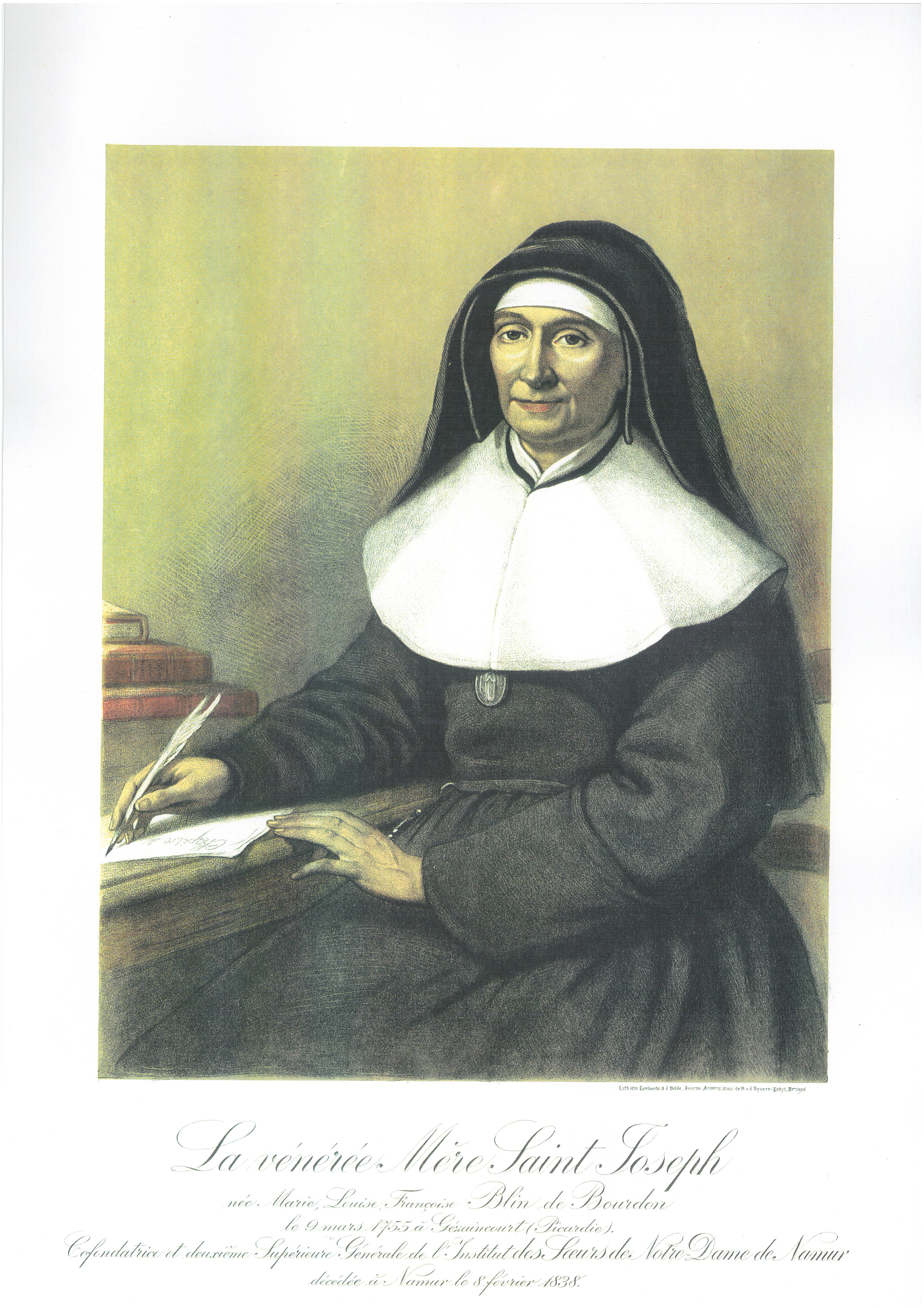
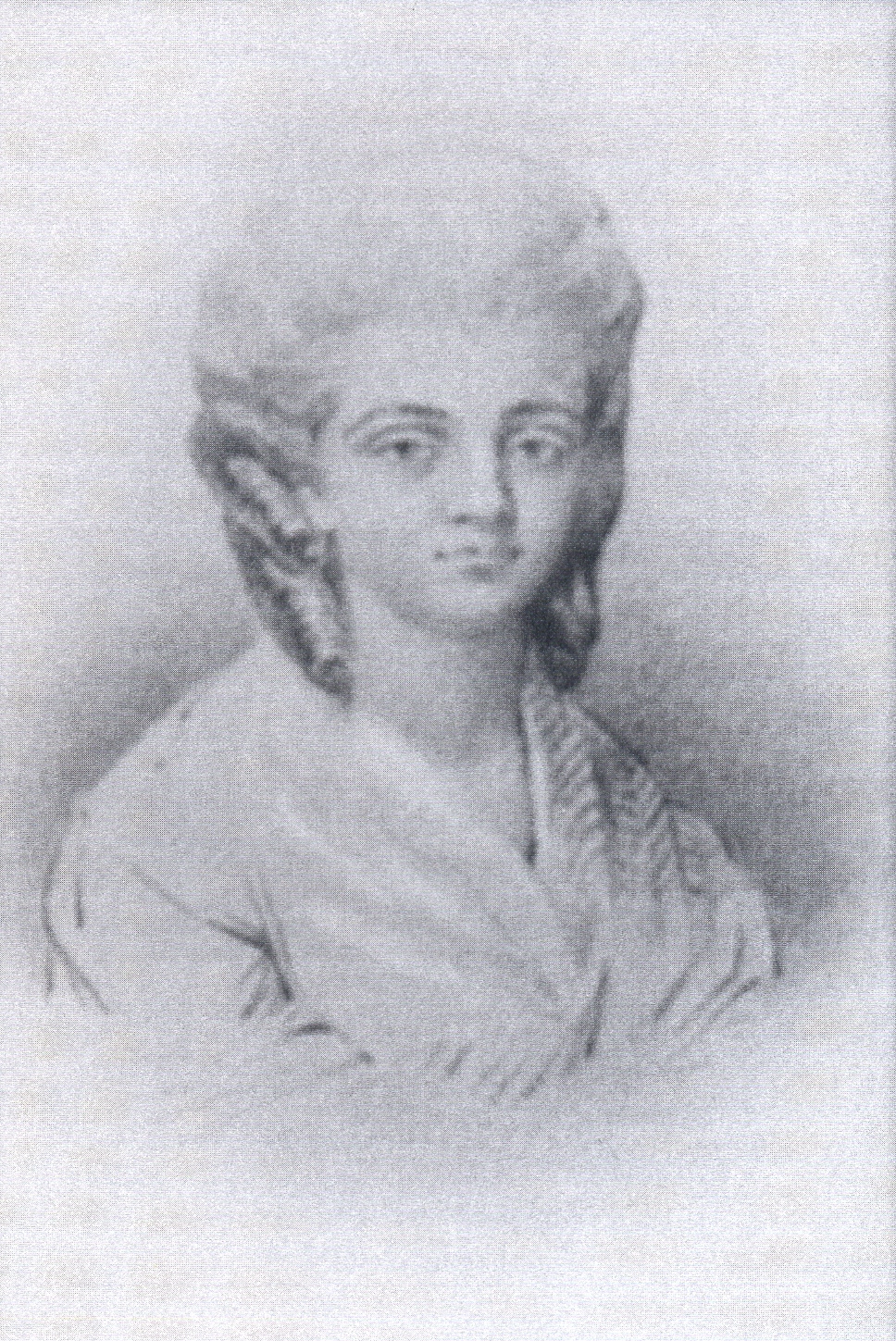
Françoise Blin de Bourdon was a native of Picardy. Her family belonged to the old nobility of France. She was the youngest child of Viscount Pierre Louis Blin de Bourdon and the Baroness Marie Louise Claudine de Fouquesolles.
William Stuttmeister, married Augustus Janke at Ralston Hall where the Sisters of Norte Dame de Namur found a home for their college. To find your bloodline piled in a grave together, invokes a mountain of literature. Indeed – it is the Deed of Many Stories! My dead, will go, where they will go. I own the Sea Beast of de Anjou and Merovee. Dan Brown and his wife, eavesdropped on our Gmail groups? Is that too a legend that took on real life?
The Notre Dame de Namur University campus developed around Ralston Hall Mansion. William Chapman Ralston built Ralston Hall shortly after purchasing the property in 1864.[17] William Ralston was a pivotal figure in the gold and silver bonanzas, which helped Ralston amass wealth. Ralston Hall was built with a steamboat gothic design on the interior, which is rumored to have been influenced by Ralston’s love of boating from a young age.[18] The interior of Ralston Hall is strikingly shaped like the inside of a boat.[18] Ralston Hall was built as an entertainment destination.[18] After William Ralston died, his business partner, William Sharon, came to control the mansion.[18] Sharon was a United States senator representing Nevada from 1875 to 1881.[18] Ralston Hall has been used for a variety of jobs throughout its history; Ralston Hall held one of the largest American weddings when William Sharon’s daughter Flora married Sir Thomas Fermor-Hesketh of England.[18] Notre Dame De Namur was chartered by the State of California in 1868 but was not affiliated with Ralston Hall until 1922.[18] The mansion was a finishing school for young women until 1898.[19] Since 1923 Ralston Hall has been affiliated with Notre Dame de Namur University.[19]
Françoise Blin de Bourdon was a native of Picardy. Her family belonged to the old nobility of France. She was the youngest child of Viscount Pierre Louis Blin de Bourdon and the Baroness Marie Louise Claudine de Fouquesolles. She received her early training at the home of her maternal grandmother. From the age of six years until she made her First Holy Communion, she attended the school of the Bernardines; she completed her education with the Ursulines of Amiens.
When Françoise was nineteen, she left Gézaincourt for Bourdon, as her parents wished her to make her debut into society. For several years she was one of the gayest members of the brilliant society of her time and was presented at the Court of Louis XVI and Marie Antoinette. For a while the charms of the world dazzled her, but she soon tired of what seemed to her a frivolous, useless life. She became more religiously oriented.
Thus her life passed happily until the Reign of Terror loosed its madness on the land. Early in 1793 her aged father was imprisoned at Amiens; a few months later she herself was dragged from her home by a frantic mob, all in the name of Liberty. She was taken to a house of detention at Amiens where she learned that her father, her brother, his wife, and child were all prisoners. Her entreaties to see them were harshly silenced. Every day a long list of victims was announced for execution. After seven months’ imprisonment, she read the names of her father and herself among the proscribed. The day set for their execution was July 29, 1794, but their lives were saved by the fall of Robespierre on the preceding day, As her grandmother had died from the effect of so many horrors, Françoise, after her release from prison, returned to the home of her brother in the Rue des Augustins.
In 1807 he took advantage of an amnesty to rejoin the French army and served in several campaigns until 1814. He rose in rank to become a general of division. During this period, he was suspected of being an agent of the Comte d’Artois and passing information to France’s enemies. Though he was notoriously anti-Napoleon and many officers did not trust him, he was employed again during the Hundred Days. Immediately after the campaign began, he deserted to the Prussian army with Napoleon’s plans. King Louis XVIII of France gave him a command in the Spanish expedition of 1823.
Promoted to Marshal of France, he was put in command of the Invasion of Algiers in 1830. However, after the July Revolution, he refused to recognize King Louis-Philippe of France and was sacked. After being involved in a plot against the new government, he fled to Portugal in 1832. He led the army of Dom Miguel in the Liberal Wars, and when the liberals won, he fled to Rome. He accepted another amnesty, this time in 1840, and died in France six years later.
There is reality, fantasy, and the business of illusion making. My dear friend Virginia – is the Lost Princess! I have talked about writing a new kind of book in this blog that is chock full of mini stories. My waitress says she would purchase Quibi.
Françoise Blin de Bourdon (Mother Saint-Joseph between 1816 and 1838).
This is the story of the great friendship between Julie Billiart, Françoise Blin de Bourdon, without which the Congregation would never have seen the light of day!
One of the gifts that the Congregation considers as its most precious is the fact that it is born of a deep friendship between two women. This is one of those friendships that can figure among the greatest in religious life.
Françoise possessed an immense capacity for friendship. We are going to speak especially of that which united her to Julie.
The story of 22 years of friendship between Julie and Françoise (between 1794-1816)
Born in the middle of the 18th century (Julie in 1751 and Françoise in 1756), in the north of France, from very different backgrounds, the first 40 years of their lives are not alike in their exterior circumstances but offer great similarities with respect to their relationship with God. They both had a rich interior life. Julie dies in 1816, after 22 years of friendship and collaboration with Françoise. The Congregation of the Sisters of Notre Dame of Namur is founded on an UNPREDICTABLE friendship between two very DIFFERENT French women. [Julie and Françoise had very different personalities: the first joyful, extroverted; the other more reserved. They also differed in their origins and education: the one from a modest milieu and who attended the village school; the other from the aristocracy with an excellent education. However, we will see how Julie and Françoise resembled one another in their way of living for God.
1. The Life of Françoise Blin de Bourdon before meeting Julie
In four words: Aristocratic, well-educated, chatelain and Carmel.
Aristocratic: A noble birth in a wealthy family, fruit of the union between the Blin de Bourdon and the Fouquesolles families. Françoise’s family was one of the oldest in Picardy, in the north of France. It traced its heritage to the eleventh century. In the Middle Ages there was an adage with respect to the name. When something was considered good, people said that it was “good as a Blin.”
Françoise Blin de Bourdon, Lady of Gézaincourt
When her parents married in 1748, her father, Pierre-Louis Blin de Bourdon, was 42 years of age and her mother, Marie-Louise-Claudine de Fouquesolles, was 17. Born on March 8, 1756, and preceded by a brother, Louis-Marie-César and a sister, Marie-Louise-Aimée, she was the third and last child and was baptized the day after her birth, on the feast of Sainte Françoise Romaine. Only 25 years of age and with two other children, 2 and 3 years old, Françoise’s mother was encouraged to leave the newborn with her parents at Gézaincourt, a vast and beautiful country manor with gardens (about 19 miles from Amiens). Aside from a few trips to Bourdon where her parents possess a chateau, she spends her childhood at Gézaincourt with her maternal grandparents, the baron and baroness de Fouquesolles. Françoise’s grandmother, with the assistance of a governess, Mademoiselle Ursula, introduces the young child to her first educational experiences, religious and secular. Françoise is raised with love. She was an obstinate and strong-willed child. * Well-educated At the age of six, Françoise became a boarder with the Benedictines in Doullens. It was there that she was confirmed when she was eight years of age. In 1768, she was sent for two or three years to the Ursulines in Amiens to complete her education. At 19, in order to prepare for her introduction into French society, she frequents the salons of Paris and is presented to the Court at Versailles. She was a friend of the sister of King Louis XVI, Madame Élisabeth.
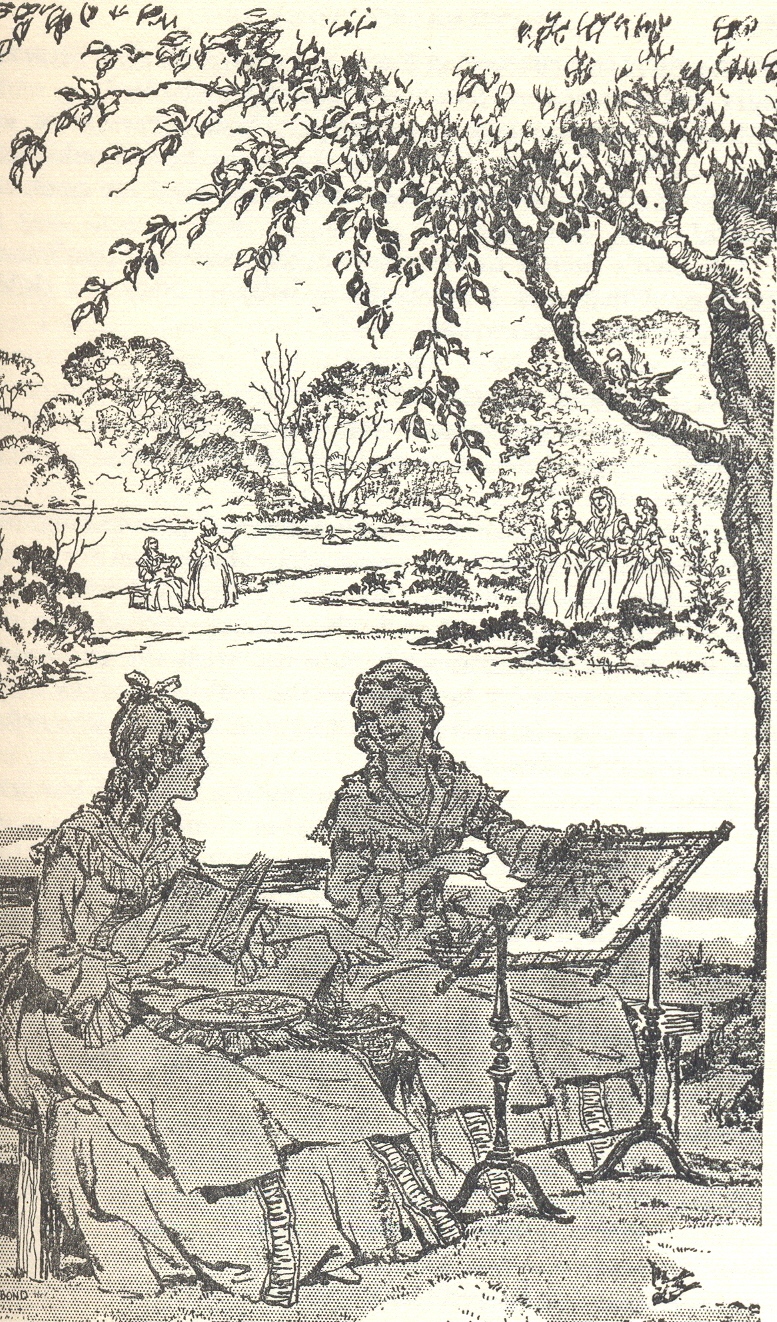
Illustration by T.J. Bond dans Mother St. Joseph by SND, Sands and Co, Glasgow, 1964.
Françoise was 25 when her sister and brother marry and she now finds herself alone with her parents at Bourdon. This is a sacrifice for her since she got along well with her brother who was a true friend and confidant. He establishs himself in Amiens where he buys a town home on the rue des Augustins.
Three years later, at age 28: her maternal grandfather and her mother died (her grandfather on February 24, 1784, and her mother on April 2). Her mother was 53 when she died, 10 months after a carriage accident.
Françoise suffered greatly from these losses.
Chatelain and Carmel:
Françoise doesn’t stay long with her father because her duty calls her to Gézaincourt. She must assist her grandmother and assume her duties as chatelain of the vast domain. She gives herself to her grandmother and the villagers and she distributes alms to the poor. There she manages the vast domain and its dependencies. She also visits the sick and cares for them by means of medicinal herbs that she cultivates; the villagers freely ask advice of the “good young lady.” The pastor later affirms that Françoise went each day to Mass, prayed at length and received communion often. [Françoise seemed to be aware that she was preparing herself to manage the future Congregation by becoming a good administrator in order to make good decisions and expand the Institute. [Cf. Mémoire de Cécile Dupont for the purpose of obtaining her Masters in History: The SND de Namur, Educational Entrepreneurs (1804-1842), Louvain-la-Neuve, 2014].
In her writings are found notes that show a deep commitment to God. In these personal notes, she had written, in 1783, “partial conversion; imperfect light” and, in 1785 (age 29), “full or complete conversion with the unshakeable resolve to remove from my life all that could separate me from my end or goal.” She wanted to enter a Carmelite monastery.
In 1789, the Revolution breaks out. Françoise, because of her social standing, will suffer terribly during the French Revolution.
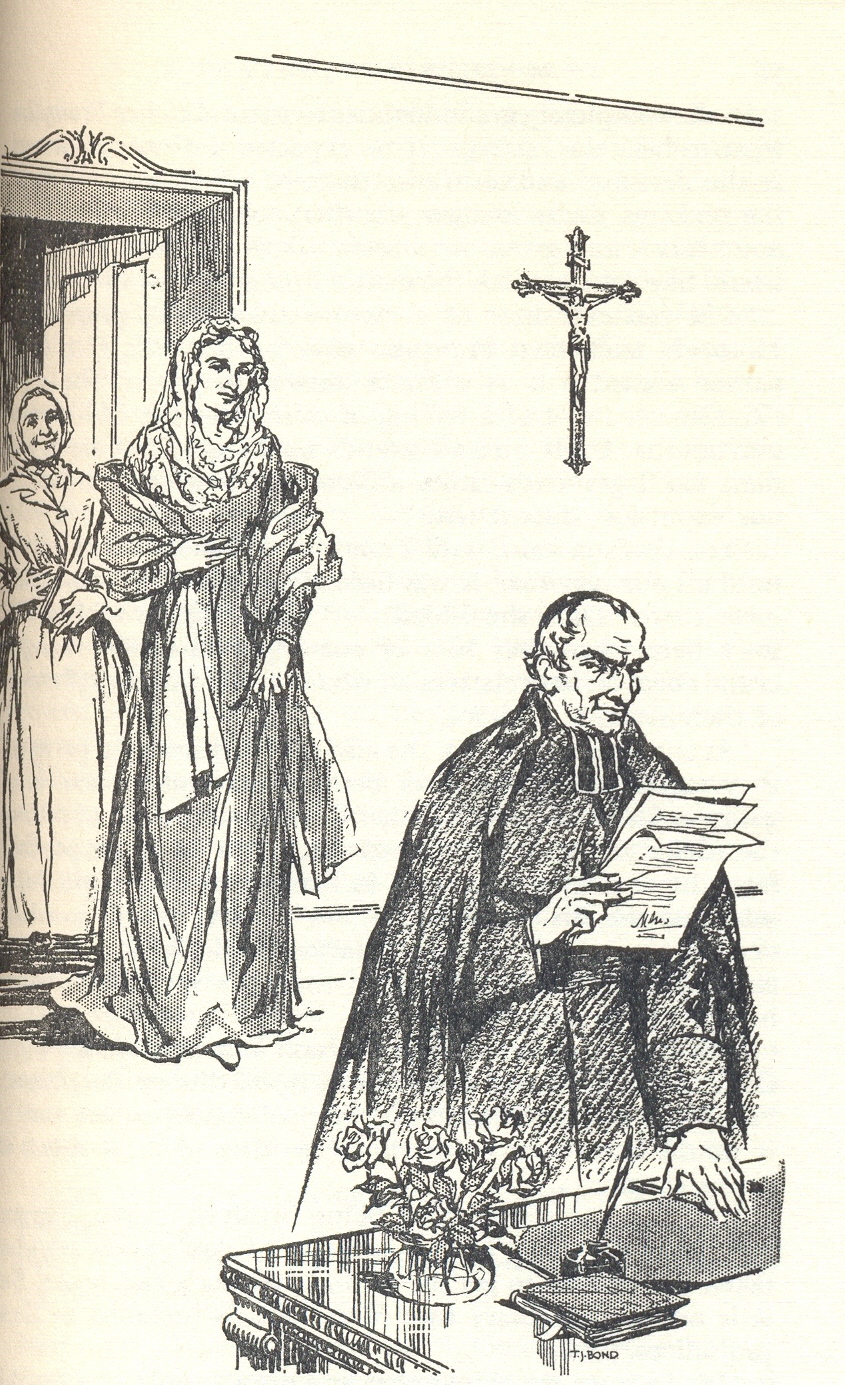
Illustration by T.J. Bond dans Mother St. Joseph by SND, Sands and Co, Glasgow, 1964.
In 1793, the members of the Blin de Bourdon family (her father, more than 80 years of age, and Françoise’s brother) were among those falsely accused of having fled the country, were imprisoned. In February of 1894, Françoise is arrested in place of her grandmother – who dies on March 18 – and is conducted to prison in Amiens. Because of overcrowding in the prisons, prisoners were given the option of begin transferred to the Carmelite monastery where the Carmelites were being held captive. Only Françoise accepted the transfer. [Françoise will not encounter them but she hears them pray.] It is only after the death of Robespierre that they will all be freed on August 3 and 4, 1794; Françoise then rejoins her brother at the Hotel Blin, in Amiens. The Viscount leaves for Bourdon; Françoise stays in Amiens. It is there that she will meet Julie.
A few words on Julie’s life: As for Julie, she suffers terribly during the French Revolution because of her fidelity to the Church and her deep faith. Forced to flee her village that she had never left, at 40 years of age, paralyzed, having lost the use of speech, having known several dwellings in Gournay-sur-Aronde and in Compiègne, she was retrieved in October of 1794 by an aristocrat well known in Cuvilly, the Countess Baudoin.
2. The Meeting
A Little after Julie’s arrival at the Hotel Blin (cf. April’s theme), Madame Baudoin proposes to Françoise that she meet Julie.
Comic of Saint Julie, Editions du Signe, 2000.
Françoise, who didn’t have too many occupations at the time, accepts. Françoise was to write later about this encounter in her Memoires:
“This young woman had leisure in abundance and was quite willing tocome, though when she found she could not understand the invalid’s labored speech the visits seemed less attractive…. Finally, in spite of a natural repugnance which she had at first experienced, a friendship grew between them, as events will show.”
Julie is immediately drawn to Françoise. She had already seen her in a vision (see the theme for the month of May) and recognizes her.
In the beginning, the encounter with Julie (43 years old) and Françoise (38) is difficult: Julie could hardly express herself and Françoise does not understand her.
It is interesting to note that it is Françoise who ministers to Julie. She makes the decision to perform an act of charity, a work of compassion. According to Saint Francis de Sales, the love of friendship is not merely a feeling but a resolute effort following a decision…. What begins with an act of compassion is transformed into one of the most beautiful examples of spiritual friendship between two women.
One of the foundations of friendship is that it should grow in time. Very quickly, then, the bonds of affection grew between the two women. Visits become more and more frequent. Both had an affinity for things spiritual.
3. In the friendship between Julie and Françoise, we can see 3 stages.
The first state is situated between 1794-1799.
The friendship begins
with a resemblance between the two women. (The two women had been tested by the SUFFERING endured during the height of the French Revolution – Julie, paralyzed, and Françoise tested by the deaths of her mother and her grandparents and by a period of terrifying imprisonment. Both emerged from their sufferings more FAITH-FILLED and committed to growth in goodness.
The friendship between Julie and Françoise is the only perfect kind of friendship, the Ancients would say: it is based on goodness or virtue. Julie and Françoise resembled one another in their goodness. And, the RECIPROCITY in the recognition of the GOOD proper to each one is evident. There is a mutual benevolence which expresses itself by the fact that each desires growth in the love of God for the other. It is a “Jesus-centered affectionate friendship.” We can say that, from the beginning, the friendship between Julie and Françoise was of a spiritual order.
Saint Augustin writes that he would feel the need to approach, to know and to bind himself in friendship to a person whose love for Christ had been proven in some trial or persecution. Such was the case for Julie and Françoise whose love for Christ had been tested before their encounter.
Soon, a little community forms around Julie’s bedside. In addition to Françoise, the daughters of Madame Baudoin invited their friends, the young women of the Méry and Doria families. Father Thomas, in hiding at the Hotel Blin, guides the group and celebrates the Eucharist. Children are baptized and confirmed in Julie’s room. But this association had only an ephemeral existence. Françoise remains as Julie’s only companion.
Françoise stays one year in Amiens.
Between 1795 and 1797, Françoise travels to Gézaincourt and to Bourdon to be near her sick father. During these two years of separation, Françoise and Julie write many letters to each other. Françoise returns to Amiens after the death of her father. The letters from Julie to Françoise are saved: 33 letters where one can discover the affection that they had for one another. They expressed their friendship. And, as Saint Francis de Sales said: the lack of communication (union of hearts) can end a friendship.
Julie quickly becomes the “Mother” in their correspondence. While Françoise is the one of social standing and the first to offer her assistance, it is Julie who becomes the spiritual director in whom there is complete trust.
After the death of her father, Françoise was free to consecrate herself to God as she wished. But, she had doubts as to the shape of the project: she was hesitating to become a Carmelite. It is then that Julie informs her what she had seen in a vision when she was hiding in Compiègne: some women religious and among them was the face of Françoise that Julie did not recognize at the time. Françoise returns to Amiens with confidence.
The end of 1797, a new “Terror” breaks out. Father Thomas, pursued into the Hotel Blin, escapes his aggressors on June 15, 1799. The next day, Father Thomas, Françoise, Julie and her niece, Felicity, seek shelter in Bettencourt. Together, they evangelize the village. Julie’s health improves and she begins to speak.
In every friendship, there is a second and a third phase:
Between 1799-1803 (this is the second stage of their friendship relationship): Happy period where they live together in Bettencourt – the friends share their interior life and each shares in the qualities of the other.
Importance of communication: ) cf. Aristotle: “”If friends are not able to be present to one another and if they are not able to communicate, the friendship will die.”) Friendship has to be worked at and takes time.
There begins the time that Saint Francis de Sales calls, “the gentle struggle of friendship”. Friendship requires frankness; misunderstandings are inevitable (and there will be some between Julie and Françoise, notably due to the distance between them and their exchange of letters when one will be in Amiens and the other at Namur).
Friendship is strengthened through many shared difficulties, patience exhibited, tenderness, consideration, sharing of burdens.
There is a visible change in Julie and Françoise’s relationship from director and directee to that of a mutually recognized equality.
In February, 1803, Father Thomas, Julie and Françoise return to Amiens. The two friends receive some orphan girls in a modest house on the rue Neuve.
The third and last stage in the development of true friendshipis its perfection: union in diversity. Friends at this point communicate every aspect of themselves becoming one of heart and soul. As Aristotle said: “One soul in two bodies.”
Testimonies abound related to the obvious union of Julie and Françoise who were in total harmony despite striking temperamental differences (cf. Memoires, Blin): “Mère Julie, in a spirit of humility and Christian prudence, which never relies on itself alone, consulted [Mother Blin] as collaborator and friend… and the two were one in heart and soul.” “Mère Julie’s character was very different from Mother Blin’s but they were so united that there was never any real disagreement between them.” Julie was rather extroverted, quick to act; Françoise was reserved, introverted.
On February 2, 1804, Julie, Françoise and Catherine Duchâtel (who will die a few months later) make their vow of chastity and commit to consecrate their life to Christian education. They take the name, Sisters of Notre Dame, and received a rule from Father Varin. Françoise, as was the custom at the time, takes the name Sister Saint Joseph.
On October15, 1805, Julie, Françoise, Victoire Leleu and Justine Garson make their religious vows. The next day, Mère Julie is elected superior general. On June 18, 1806, the statutes of the Association called Notre Dame are approved by Napoleon. The opening of free schools is authorized. Françoise brings her wealth to the Congregation.
A conflict breaks out in Amiens with the superior of the Congregation, Father de Sambucy. He demands that Sister Saint Joseph bequeath the totality of her fortune to the house in Amiens exclusively. The two foundresses refuse these propositions. Father de Sambucy skillfully influences the Bishop of Amiens, Monsignor Demandolx, and succeeds in obliging Julie to leave the diocese of Amiens on January 12, 1809.
Illustration by T.J. Bond dans Mother St. Joseph by SND, Sands and Co, Glasgow, 1964.
During this conflict, Françoise gives witness to her deep friendship for Julie (sharing of burdens).
The first Sisters of Notre Dame are established in Namur on July 7, 1807, at the request of Monsignor Pisani de la Gaude. The Bishop of Namur welcomes them with great kindness and offers them a house near the bishopric. Sister Saint Joseph is named superior of the community. Thanks to Françoise’s fortune, the Sisters buy a larger house, rue des Fossés (the actual Motherhouse). Namur become the Motherhouse of the Sisters of Notre Dame. Many schools are established.
4. After Julie’s death(After 22 years of friendship, Françoise will live another 22 years without Julie)
In 1816, after Mère Julie’s death, Mother Saint Joseph is elected superior general and will remain so until the end of her life. She faithfully continues the work of her friend; she edits the rule, completes foundations in Liège and Dinant, creates those at Thuin, Verviers, Philippeville and Bastogne.
Her great concern will be to preserve the unity of the Congregation under the Dutch regime between 1815-1830. By forbidding all foreign teaching authority, William I, is the source of many worries for Mother Saint Joseph. -King William fixes the number of sisters authorized to be in each house. -The Sisters are obliged to take an examination before a Committee of Instruction. -Françoise wants to resign as superior general in favor of a sister of Flemish origin for the good of the Congregation.
Finally, in December of 1824, she receives the document of naturalization and becomes a citizen of the Netherlands.
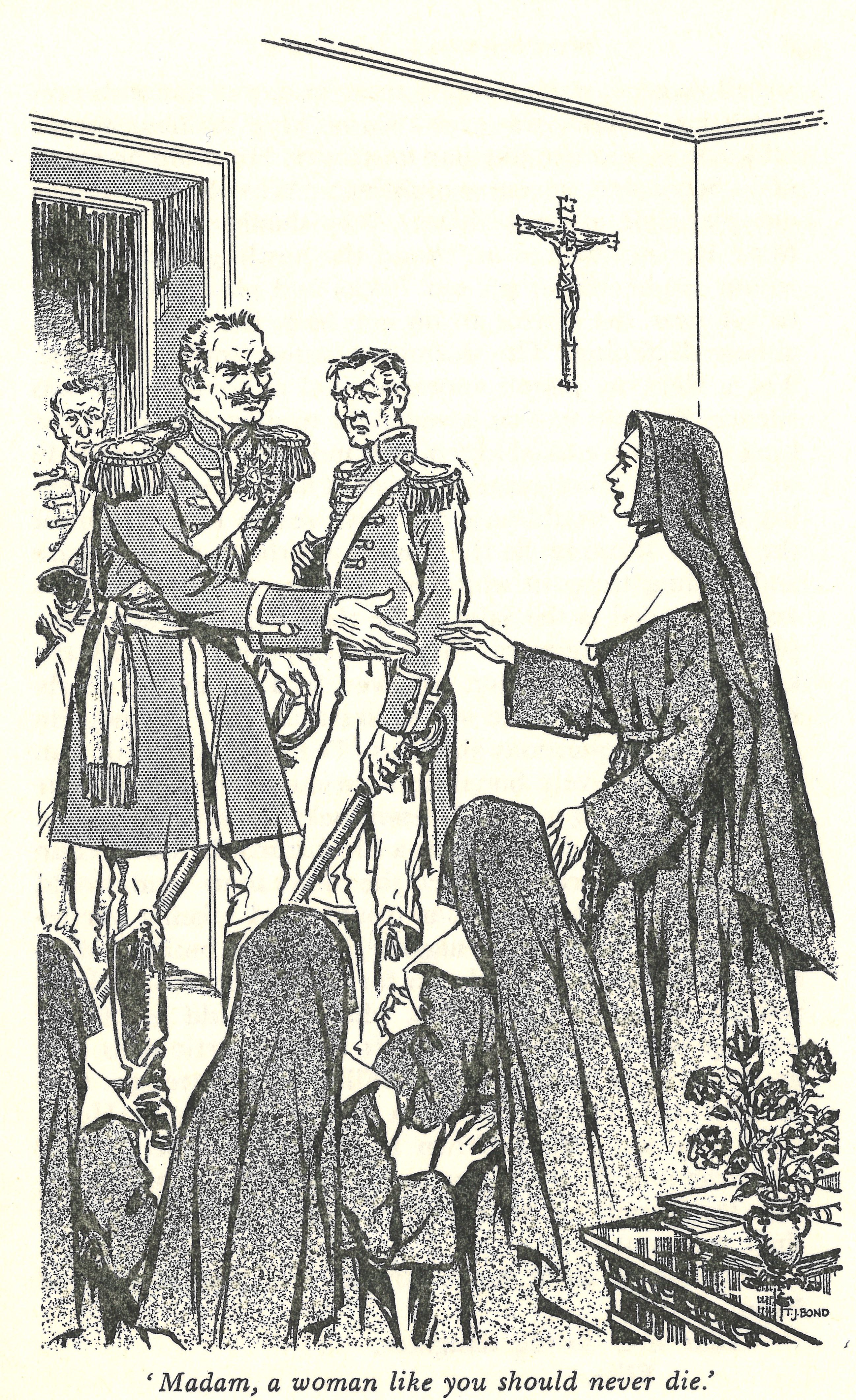
[After having caused so much worry, King William 1 comes to Namur in 1829. He visits the school and leaves saying to her “Madame, a woman like you should never die!” (cf. the Annals of the Congregation)] -Meanwhile, Mother Saint Joseph had accepted to take responsibility for hospices since the schools were no longer viable.
Mother Saint Joseph and King William I, illustrated by T.J. Bond dans Mother St. Joseph by SND, Sands and Co, Glasgow, 1964.
In 1835, in spite of the opposition of some sisters, she keeps intact the spirit of the Institute. This is what is called the great trial; a sad trial that came from her own daughters who threatened the existence of the Institute. One sister plotted the Reform of the Congregation of the Sisters of Notre Dame (18 sisters were in on the secret, one of whom was the Mistress of Novices). Their intention was to establish two membership categories: lay sisters who would be responsible for the domestic tasks and choir sisters for teaching. The intended goal of this new organization was to educate in the boarding school girls of the leisure class. This project directly targeted two of the original three essential founding purposes of the Institute: -equality of the sister -dedication to the instruction of the poor
The preservation of the general government had already earned for Julie an expulsion from Amiens.
With the assistance of Sister Ignace Goethals, Mother Saint Joseph prevailed in this struggle but at the price of great suffering. Three sisters left the Institute; the others recognized their errors and, after public reparation, were readmitted. Françoise died at Namur, at the age of 82, (February 9, 1838).
5. Conclusion
What touches us particularly with Françoise is the contrast between this woman of the nobility who tried to live simply (in the Congregation, there is no distinction between lay and choir sisters). And, this was not easy for her or her family. In Amiens, when she went into town dressed in a religious costume, this caused an embarrassment, to the discomfort of her family. Françoise came from the highest ranks of French aristocracy but she never used her fortune to exert any influence or power over others. As Sister Jo Ann Recker explains, her true power of influence resided, rather, in her ability to transform the life of others by means of friendship. And Françoise possessed a tremendous capacity for friendship. She had the unique ability to forget self and to be sincerely concerned about the welfare of the other: from her grandmother whom she loved so much, to her childhood friend, (Jeanne de Franssu with whom she remained close until her death), to her friend, Julie Billiart, and her dear sister in religion, Sister Anastasia Leleu. She was able to see the greatest good in each person she encountered. God drew Julie and Françoise together for something special. He led them to a unity in diversity to make possible the development of the Institute.
May this example of friendship between two women be a source of inspiration for you!
Ave Maria! Ave Maria! maiden mild! Listen to a maiden’s prayer! Thou canst hear though from the wild Thou canst save amid despair Safe may we sleep beneath thy care Though banish’d, outcast and reviled – Maiden! hear a maiden’s prayer; Mother, hear a suppliant child! Ave Maria!
Five days ago, I sent my daughter and her unborn child a photograph of what I believe is an angel hovering over the head of Mary Dominica who is Mary Magdalene Rosamond’ cousin. None of the women on Heather’s empowerment group, responded, this is because they are witch-base. I am fighting off witches that hover over my unborn grandchild. Kim Haffner is one of them. I suspect she has been sending pregnant Heather – poison!
I was born this day to Rosemary Rita Rosamond. None of the witches honor my mother and Heather’s grandmother. They are frauds. Many women’s empowerment groups honor the grandmother.
The piece was composed as a setting of a song (verse XXIX from Canto Three) from Walter Scott‘s popular epic poem The Lady of the Lake,[2] in a German translation by Adam Storck [de] (1780–1822),[3] and thus forms part of Schubert’s Liederzyklus vom Fräulein vom See. In Scott’s poem the character Ellen Douglas, the Lady of the Lake (Loch Katrine in the Scottish Highlands), has gone with her exiled father to stay in the Goblin’s cave as he has declined to join their previous host, Roderick Dhu, in rebellion against King James. Roderick Dhu, the chieftain of Clan Alpine, sets off up the mountain with his warriors, but lingers and hears the distant sound of the harpist Allan-bane, accompanying Ellen who sings a prayer addressed to the Virgin Mary, calling upon her for help. Roderick Dhu pauses, then goes on to battle.[4]
Schubert’s arrangement is said to have first been performed at the castle of Countess Sophie Weissenwolff in the little Austrian town of Steyregg and dedicated to her, which led to her becoming known as “the lady of the lake” herself.[5]
The opening words and refrain of Ellen’s song, namely “Ave Maria” (Latin for “Hail Mary”), may have led to the idea of adapting Schubert’s melody as a setting for the full text of the traditional Roman Catholic prayer “Ave Maria“. The Latin version of the “Ave Maria” is now so frequently used with Schubert’s melody that it has led to the misconception that he originally wrote the melody as a setting for the “Ave Maria”




















 Rosamond Press
Leave a comment