Fresh off her album of the year win at the Grammys, Beyoncé has finally revealed the dates for her much anticipated “Cowboy Carter” tour.
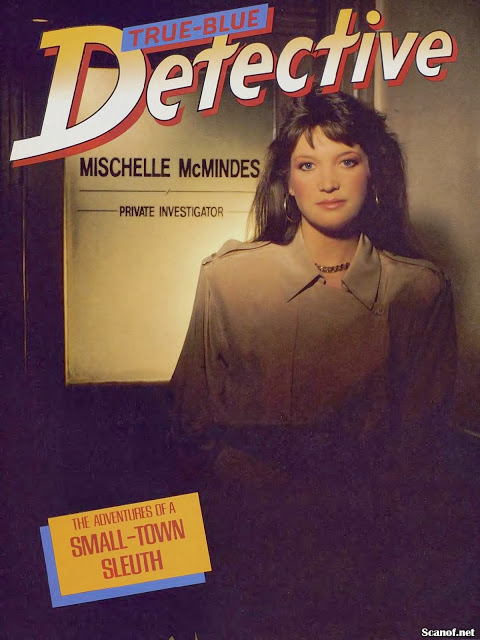
I never heard of Beyonce till I watched the Grammy. Then I read her Wikipedia. I saw a lot of booty shaking. Beyonce needs to get on the phone and have a girl to girl talk with MiSchelle McMindes –
It was around a sagebrush campfire in eastern Oregon that Kesey first heard the tale from his father – about the legendary “last go round” that took place at the original Pendleton Round Up in 1911.
Hundreds of riders were competing for the first World Championship Broncbusting title, but it was one special trio of buckeroos that provided the drama: a popular black cowboy, George Fletcher; a Nez Perce Indian cowboy, Jackson Sundown; and a fresh-faced kid from Tennessee name of Johnathan E. Lee Spain. Who would walk away with the prize money and the silver-studded saddle? When the dust cleared, everyone knew they’d witnessed something extraordinary.
Kesey has journeyed back into Oregon history to reclaim this long-remembered moment, beefed up the bare bones of fact, and whipped them into a full-blown rip-snorting Tale of the True West. Sixteen pages of rare Round Up photographs provide graphic testimony of the time. The tiny town of Pendleton is swollen to bursting that memorable weekend and bristling with colorful characters like Buffalo Bill Cody, wrestler Frank “The Cruel Crusher” Gotch, cowgirl Prairie Rose Henderson, and a formidable medicine man named Parson Montanic. From the teepees along the river to the teeming saloons on Main Street, Round Up fever blazes like a prairie fire. This story of love, sweat, and horseflesh is a unique Western, wild and wooly and full of fleas. Let ‘er buck!
This morning I woefully opened my eyes to behold the truth I did not want to see. Belle is not going admit she did anything wrong and sit down and negotiate with me, because, she knows I have seen her inner being. She had become a power-hungry political animal, who along with her SLEEPS compatriots, were feeding off the white light that the homeless emit – for thousands of years. You can read about this light in the Bible and in the spiritual work of Meher Baba who contacted a thousand Mast and gave them a bath. When Jesus enters a town square, the first people he looks for are the poor and hungry folks without a home.
As I lay there, I recall the day in front of Safeway that I realized my friend Hollis Williams was the character in my novel, Berkeley Bill Bolagard, who has appeared at the end of my life to put the finishing on my life’s story. I wondered there and then if I was going to die – soon! ‘The Gideon Computer’ is about the last Hippie standing. He is homeless. This story is inspired by my friend, Nancy Hamren, who in 1986, suggested I author the history of the Hippies because I recall so much. Six months later I meet two homeless souls, Bolagard and Little Mae in the Golden West Bar in downtown Oakland. They are homeless. Al, the bartender, allows my new friends to go in and use the bathroom to take a basin-shower when he opens at 6:oo A.M.
One morning, Mae comes out of the bathroom to see two thugs cutting Al’s throat because he refused to open the safe. She is a Modoc Indian and watches her dear friend bleed out on the floor. For week she is terrified these murderer will come and get her. When the Golden West closed, she would ask me to come sit with her under the freeway until she fell asleep on her old mattress.
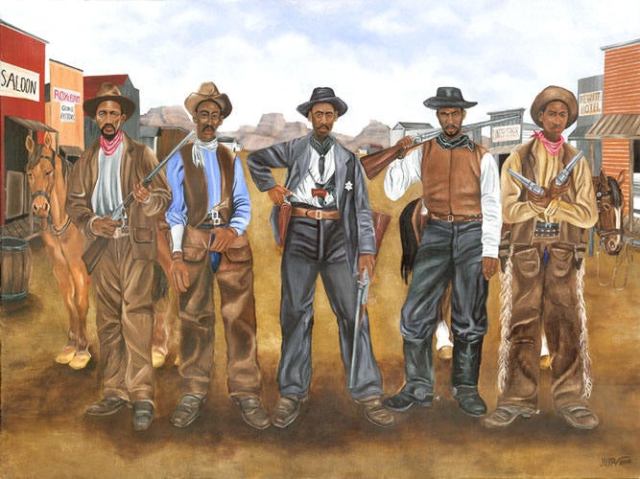
I lay there and thought about the watercolor I did of Rena that I gave to the bar. I wanted to see this beautiful girl from Nebraska looking down on real Hobos, old guys who still rode the raid into Oakland’s train yard. On the walls of the Golden West were western murals. After the earthquake, our bar was ruled unsafe, and demolished. Those murals were saved, and sit in a warehouse, these cowpokes waiting to see the sunlight, and ride the range once again. They were rendered by a famous Western Artist whom I am still trying to find the name of.
I never told Hollis about my bout with homelessness, because I was careful not to upstage him, put him on the other side of a fence. For helping him, he wanted to help me. He wanted me to get religion. I tried to tell him I already got religion, but, then I beheld the look on his face.
One evening he took me to Ken Kesey’s cousin’s house where he lived for a year. This cousin is a Christian and has a open house for the homeless and the hungry. We got there too late for the meal. Getting out of bed, I got and google and looked for that Cristian’s name. In minutes, I am beholding photos of a beautiful naked woman from Grand Island Nebraska who approached Ken Kesey about him authoring a screenplay about a famous cowboy. Chills came over me. Rena lived in Grand Island Nebraska. I was homeless when we met. This beautiful young woman lived with me a tent for fifty days. Her three sister’s were models. No homeless person has ever been so – blessed!
When I was homeless in 1996, I lived a month in a tent up in Blue River. At a AA meeting I shared the awful nightmare of how the vultures and parasite swooped down and started feeding on the body of my dead sister, the world famous artist, Rosamond. A woman in the group started crying. The chair asked why. She said she wanted to talk to me in private after the meeting.
My sponsor took me to her house where she proceed to tell me that people around me do these things because they want a taste of IMMORTALITY. She told me she had bought the rights to a Kesey novel, and had hired a writer to author a screenplay. Everything went wrong, because everyone wants this view of living forever to be seen through their eyes – only!
Belle Burch and other members of Sleeps have accused me of stalking my ex-muse. They accused me of Cyberstalking. But, it is God who is authoring this Beautiful Story. Here is the proof. I would meet the author of the Kesey script in a graveyard near the University of Oregon. He owned a three-legged dog.
How would you like to wake up to the beautiful face above each morning. I had rescued Rena in Venice California and took her up North to Oakland, where we slept in a tent in the backyard of the house I just gave up to a married couple with a newborn baby. They were homeless. For my reward, God sent me a beautiful angel to look over me. Above is the tent my beautiful friend lived in in a friends backyard. It has been two years since I found Hollis in his new home, he dying with a smile upon his face. I know his beautiful angel had come to take him home.
All my writing is protected under a special copyright for Ministers. In 1994, I founded my own church.
Jon Presco
Copyright 2014
MiSchelle McMindes and Mike Hagen piled into Hagen’s Ford Mustang and drove 325 miles west from Eastern Oregon to see Ken Kesey.
Both had high hopes as they set out from Pendleton to Kesey’s farm, about 15 minutes southeast of Eugene.
McMindes was a 26-year-old go-getter from Grand Island, Neb., a brunet beauty-pageant scholarship winner recently turned private eye. She had an idea for a movie about the quintessential Oregon sporting event—the Pendleton Round-Up, a famed annual rodeo that began in 1910. McMindes had spent months researching the Round-Up’s history and collecting photographs before teaming up with Hagen, a 46-year-old television and commercial sound engineer in Pendleton.
All they needed was a screenwriter, and Hagen knew just the guy—Kesey. Hagen had been Kesey’s fraternity brother at the University of Oregon. And in the 1960s, he was one of Kesey’s Merry Pranksters as well as a co-pilot on the LSD-fueled cross-country odyssey that Tom Wolfe chronicled in The Electric Kool-Aid Acid Test. Kesey was a natural to tell the Round-Up story. He was an Oregon literary legend and countercultural icon who knew how to spin a yarn. And he had time on his hands.
They came to him with the tall-but-true tale of how a Nez Percé Indian named Jackson Sundown, a popular black cowboy named George Fletcher (known in 1911 by a derogatory nickname), and a white Tennessee bronco-buster named Jonathan E. Lee Spain competed together during the 1911 Round-Up. A tale long familiar to Pendleton natives, it blended racial enlightenment far ahead of its time, Oregon lore and rodeo hijinks. They called the project Last Go Round.
By January 1984, McMindes and Hagen had what they thought was a deal with Kesey. And nine months later, they had a Kesey script.
Then things got messier than a loose bronco.
Nearly 25 years after their visit—and seven years after Kesey’s death—Hagen and McMindes (who changed her name sometime after 1992 to Michele Francis and who modeled, in and out of private-investigator garb, for Playboy in 1987 and 1988) are locked in a federal court battle in Portland. They’ve been sued by Kesey’s 71-year-old widow, Faye, and her four adult children for rights to the screenplay.
On Monday morning, Aug. 25, in a Portland courtroom far from both Pendleton and Kesey’s bucolic Pleasant Hill farm, U.S. Magistrate John V. Acosta questioned attorneys for both sides to clarify their positions before he made a ruling or sent the case on to a jury trial. It was the latest development in a case that has already produced dozens of filings and hundreds of pages of depositions weighing more than 10 pounds.
“The fact of the matter is that [Francis and Hagen] never acquired the rights to the screenplay,” Kesey family attorney David Aronoff said as Faye Kesey sat quietly behind him. Michele Francis’ lawyer, Michael Kratville, struck back: “We got the screenplay, he got paid for it. Done deal.”
For all the contentions, the case boils down to this: Faye Kesey is suing Francis and Hagen for the rights to a work of art that hasn’t been made yet, a movie that one Hollywood producer estimates could be filmed on a modest budget of $10 million to $12 million. But he says its allure would attract big-name actors because of Kesey’s notoriety.
Since 2000, at least three groups of producers—one from Los Angeles, another from Seattle, and Portland’s own Wieden & Kennedy ad agency—have toyed with optioning the story. And Francis’ attorney, Kratville, tells WW that several Hollywood producers are still awaiting the outcome of the case before buying the movie rights.
“You’ve got a lot of people in the L.A. area that have some interest in this outcome,” he says. “And if that interest didn’t exist, or at least if both sides didn’t think it existed, I don’t think we’d be here. I don’t think anyone would fight over just the right to put something on a shelf and say, ‘It’s ours.’”
On this point at least, there’s agreement.
“We did have people interested in doing a screenplay,” Faye Kesey said in a deposition on May 8. “And because the other people, namely the defendants, were claiming an interest in the copyright, that made it impossible to go forward.”
Among the producers who’ve shown interest in making a movie of Last Go Round, the project has acquired mythic status.
“If it ever got made, the making of it would be almost as interesting as the story itself,” says Los Angeles-based producer Stephen Fromkin, who briefly optioned the script from Francis in 2005. “It’s a really crazy intellectual property. It’s really amazing how many people have an illusion that they own a piece of it.”
For a writer who’s been dead since 2001, Ken Kesey’s name still carries a hefty shelf life.
On Aug. 19, Tom Wolfe’s Electric Kool-Aid Acid Test was reissued to celebrate its 40th anniversary, the first new edition of the book to appear in a decade. Portland director Gus Van Sant is in talks to helm a movie adaptation.
The first biography of Kesey, by Robert Faggen, is scheduled to be published soon by Farrar, Straus & Giroux. Locally, in March, Portland Center Stage director Aaron Posner staged a critically and commercially successful adaptation of Kesey’s second novel, Sometimes a Great Notion.
Kesey’s posthumous popularity is just one more chapter in a long series of aftershocks that followed an earth-shaking arrival at age 26 to the literary world with One Flew Over the Cuckoo’s Nest. He followed that trick with an even better one: putting down the pen and starting a cultural revolution on the road. In 1964, immediately after Sometimes a Great Notion, Kesey recruited his “Merry Pranksters”—characters like Mike “Mal Function” Hagen, Ken “Intrepid Traveler” Babbs and Paula Sundsten (a.k.a. “Gretchen Fetchin the Slime Queen”) for a two-month trip that was part movie shoot, part provocative stunt, and the nation’s frenzied introduction to the psychedelic age.
Crossing paths with everyone from Hunter S. Thompson to the Hell’s Angels and the Grateful Dead, Kesey cemented his status as what Wolfe called a “hipster Christ.” Along the way, while trying to edit his 40 hours of bus-trip footage, Kesey caught the movie bug.
“Kesey abandoned prose as ‘archaic’ and set off to make The Movie,” says Mark Christensen, a Los Angeles writer and former WW staffer who’s completing a study of Kesey, Timothy Leary and other ’60s narcotics gurus titled Acid Christ for Schaffner Press. “He bought into the dream, which is the old cliché of Hollywood: What I really want to do is direct. In other words, he wanted into the movie business! This was in the wave of all that French New Wave shit, where people literally believed the novel was dead, and cinema was going to be the new medium. And Kesey bought that dream.”
Then Kesey went home. After a five-month stint in jail for marijuana possession, Kesey moved with Faye into the family-owned 64-acre working dairy farm in Pleasant Hill. For the next two decades, he played host, entertainer and oracle to his many admiring visitors while writing short stories, founding the literary magazine Spit in the Ocean, teaching, and coaching wrestling.
A Stanford grad who’d waxed philosophical with William S. Burroughs and Allen Ginsberg, Kesey was also still an Oregon country boy. Visitors helped paint the bus, chop down trees, spread some hay, milk the cows. On his farm, with his rules, Kesey loved having the “home-court advantage,” says Gretchen Douglas, the former Paula Sundsten, the “Gretchen Fetchin” of the bus-trip days. He was the center of attention, a psychedelic Paul Bunyan.
“He could be quite a charming, gracious host, as long as it was understood that he was putting on a performance,” says John Tillman, one of those visitors. “He would put anyone who showed up to work.”
But Hagen and Francis were different. They came with a project. And if there was anything Kesey’s friends say he loved, it was a project—or, as Douglas says he liked to call it, “the current fantasy.”
When Francis, Hagen and Kesey talked about their Round-Up story that December of 1983, Kesey dug it. “He was very friendly that day, and very cooperative…and almost childlike,” Francis recalls in depositions taken on March 20, 2007, for the lawsuit. “He was so excited about this story.”
But Kesey was never one for paperwork. At the peak of his career, Kesey felt he had been burned in negotiations for the movie adaptation of One Flew Over the Cuckoo’s Nest. He sued Michael Douglas, Saul Zaentz and other producers for $869,000, and won an undisclosed settlement. The flap left Kesey with a lifelong disdain for the mechanics of Hollywood.
“Ken is a, you know, a kind of rebellious sort. You don’t push too hard,” Francis said in depositions. “I had been told by Mike Hagen on the way down there that Ken was notorious about refusing to sign contracts and being difficult in business arrangements, that he was very suspicious of any kind of attorneys.… One of the things he always said to me, he and Mike, ‘If you can’t make a deal on a bar napkin, you can’t make a deal.’”
The deal Kesey struck with Francis and Hagen in a follow-up meeting at Kesey’s ranch on Jan. 8, 1984, wasn’t written on a bar napkin, but it might as well have been. The agreement, which Kesey typed up on personal stationery emblazoned with a picture of his acid-test bus Further, read in its entirety:
Pleasant Hill, OR
January 8, 1984
To Whom it May Concern:
I have agreed to write a screenplay about bygone rodeo greats Jackson Sundown and Nigger George Fletcher, concerning their historic confrontation at the Pendleton Round Up in 1916 [sic]. The name of the production company that I am writing for is SUNDOWN FLETCHER INC. and the people I am dealing with are Mike Hagen and MiSchelle McMindes.
[signed]
Ken Kesey
With its vague language and no price mentioned for Kesey agreeing to write a screenplay, this letter formed the core of a dispute that would last until Faye Kesey’s current lawsuit. Had Kesey drafted a work-for-hire contract, or was he just offering McMindes and Hagen first dibs on shopping around a piece of writing he owned? Immediately, it meant Kesey put aside work on his novel Sailor Song, and Francis and Hagen paid him $5,000, with another $5,000 to come when Kesey finished the script.
By September 1984, Kesey had completed a rewrite and received his second $5,000 from Francis and Hagen, who had created a corporation called Sundown & Fletcher to fund and develop the project.
“A lot of that money went towards a party they put on at the Round-Up,” says Tillman, who attended the bash. “That was quite a blowout. There were…people who just drifted through because they knew it was a great, big party.”
The combination of Kesey’s relentless ability to self-promote and local newspapermen’s interest in a new Oregon-centric Hollywood film got Last Go Round a good bit of buzz in 1984. On Sept. 14, The Oregonian quoted Kesey as claiming that the 1985 Pendleton Round-Up might form the setting of a $10 million feature film with “cowboys, Indians and a story so good it stops the hand midway between the mouth and the popcorn box.”
But behind the scenes, there were already problems, according to depositions in Faye Kesey’s lawsuit:
Ken Kesey was less than a month into the first draft of his screenplay when his 20-year-old son, Jed, died in a January 1984 van accident on a University of Oregon wrestling trip. Kesey was devastated—and found himself unable to continue work on the screenplay.
Kesey asked Hollywood producer Irby Smith to help with the writing. But Francis says Kesey’s behavior had become erratic.
“Rest in peace and bless his soul, I liked Ken, but you never knew which Ken Kesey you were going to meet,” Francis says. “I once asked him—I asked him to return the money. He never did. Then we were back on board and we were promoting it and working together, very congenial. Then again it would fall apart again. It was really almost a manic-depressive sort of feeling project during those times.”
Gretchen Douglas, the Merry Prankster veteran who continued to maintain contact with Kesey, tells WW that his behavior fit into a lifelong pattern.
“This is Ken in a nutshell,” says Douglas, who now runs Island Cove Cafe and Market on Sauvie Island. “As soon as somebody else gets excited and has the potential to do it, his mind explodes, and he’s not interested anymore. Because he’s not in control. He’s a complete control freak.”
Then there were rough meetings, like a mid-October 1984 sitdown that Kesey refused to attend. He sent Faye instead. (“He wanted no further involvement,” Faye says in depositions.) According to Francis’ depositions, Faye Kesey told Francis that she understood the screenplay had been donated to her husband. Francis strongly disagreed, and the meeting devolved from there. “It got shrill, it got real shrill,” Francis recalls.
Faye Kesey says in depositions that her husband sent her to tell Francis that Kesey wouldn’t sign any contracts. “He thought they weren’t experienced,” she says. “He thought that the contracts showed a lack of understanding.”
Another, bigger problem: It wasn’t a good script, either, many of those close to the project said. Francis says the quality was so poor, “I didn’t want to send it out.”
“They didn’t have a shootable screenplay,” says Tillman, who was commissioned for rewrites by Katherine Wilson, a Eugene-based agent who marketed the screenplay in the early ’90s. “And saying it was ‘not good’ is putting it mildly. ‘Execrable’ would be more like it. It might have been an OK movie in the ’60s, a Guess Who’s Coming to Dinner kind of heartwarming, generational, unity kind of thing.”
Francis stopped actively pursuing the project. Wilson optioned the finished script and shopped it around Los Angeles from 1990 to 1994. On March 24, 1994, despite never reaching an ownership agreement with Kesey, Wilson partnered with Francis to file a registration for copyright (a four-to-five-month process that allows legal claim on a work for up to 75 years after the author’s death) for the 1984 Last Go Round script anyway. They listed the name of Francis’ production company, Sundown & Fletcher, as the author.
But Kesey had already moved on to another version of the Pendleton Round-Up story. In 1994, he and Ken Babbs—his old pranking partner from the acid-test days—turned Last Go Round into what would be Kesey’s last novel.
That novel, Last Go Round: A Real Western, also contained a surprise for Francis and Hagen. In the novel’s foreword, which simply thanked “MiSchelle McMindes” as a name in a list of acknowledgements, Kesey wrote he’d known the 1911 Pendleton Round-Up story all along.
“I first heard the story from my father when I was fourteen,” he wrote. “So my father told it, with the fire crackling and the beans bubbling…. A marvelous yarn.”
Ken Kesey never made his Great Western. He died Nov. 10, 2001, at 66.
After his death, Kesey’s lawyers transferred copyright of all his writings to his widow, Faye, and his four surviving children. The screenplay for Last Go Round and the novel were on that list, even though Francis and Wilson had filed a copyright for the screenplay seven years earlier.
That discrepancy made Kesey’s Last Go Round script a volatile property to shop around in Hollywood, where producers understandably prefer screenplays free and clear of legal entanglements. Complicating matters further, potential producers who were interested in adapting the novel, like Wieden & Kennedy and Seattle-based Shadowcatcher Entertainment, also thought they needed rights to the screenplay, just to be safe.
“We thought it was a stupid idea to take it on, because it was a minefield,” says David Skinner, managing partner of Shadowcatcher. “A legal minefield that we did our due diligence on and decided, as much as we love the story, we understood the business well enough to know that this would be a bad business decision…. Our conclusion was, the Kesey family needed to get their house in order before anyone could seriously look at a draft of that particular piece of intellectual property.”
On April 21, 2006, Faye Kesey sued Michele Francis, Mike Hagen and Katherine Wilson for the rights to the Last Go Round script. In late 2007, Wilson settled all claims with the Kesey estate. She got $10,000 and the right to pursue a screenplay she had authored, called Blanket of the Sun, which followed the same Round-Up characters but took place five years later. In return, she agreed not to speak to the media about the case.
No one else has signed a nondisclosure clause. But that doesn’t keep them from clamming up the moment they hear the phrase Last Go Round.
Faye Kesey still lives on the Pleasant Hill farm, in a tin-roofed barn with a wooden University of Oregon wrestling sign on the front porch and two goats grazing in a nearby pen. When WW visited last week after several phone calls went unreturned, she declined comment. “I’d rather not,” she said. “I have to go pick up my grandkids. Maybe some other time.”
Hagen lives on the outskirts of Eugene, where he deals with “real estate and rental properties.” After initially agreeing to meet with WW reporters, he stopped returning phone calls. No one answered the door at his cabin, where another Ford Mustang was parked outside.
Francis lives in Omaha, Neb., where she founded and runs Light Inc., a company that designs entertainment and political marketing. She responded to calls through her attorney.
On Monday morning, in the Federal Courthouse in Portland, U.S. Magistrate Acosta leafed through a paperback copy of the Last Go Round novel. He asked both sides to clarify their arguments before he considered their motions for summary judgment, which ask a judge to rule in one side’s favor without sending the case to a jury.
“As long as there was nothing on the table, your honor, the Keseys were happy to do nothing,” said Michele Francis’ lawyer, Kratville, who flew in from Omaha. “Once we have a real movie deal on the table, boom! They’re out of the weeds, and we’re here.”
Kesey attorney Aronoff, who arrived from Los Angeles, said Kesey’s publication of the novel proved his ownership of the material. “Mr. Kesey did the strongest thing he could do,” Aronoff said. “He published the novel. He called their bluff…and, in fact, he said, ‘Sue me if you think you own something.’ And they didn’t.”
Judge Acosta said he would “get out a written decision as soon as we can, which is not all that soon.” Kratville said he expected that however the judge or a jury ruled, the case would be appealed to the 9th U.S. Circuit Court of Appeals. “I’d be shocked if that wasn’t the case,” he said. “This is just the kickoff of a very long football game.”
A copyright lawyer unaffiliated with the case predicts Francis and Hagen will need to produce more than a one-page agreement with Kesey to win in court.
“My guess is that the Kesey family would be well within their rights to say that, absent an express agreement about who was to get the copyright to the underlying screenplay, the delivery of the manuscript to these people for the sum of $10,000 does not mean that Ken Kesey necessarily parted with the copyright to the work,” says Bill Geny, a patent and copyright lawyer in Portland. “Unless the owners of this screenplay can prove that there was agreement that Kesey was selling the copyright along with the manuscript, then they’re gonna lose.”
Kratville, Francis’ lawyer, tells WW his client was already in talks with two Los Angeles-based producers—Stephen Fromkin and Scott Maginnis—before Faye Kesey sued. “I think [they] felt very comfortable that we were the party that they needed to be talking to,” he says. Fromkin confirms this, and says he is still interested in the project.
“The money we paid her probably allowed her to hire some lawyers,” Fromkin says. “The problem with it is the baggage. It’s amazing: There’s so many people who think they own it, and there’s so many people who really do have some sort of rights to the royalties from the property—be it the Kesey estate, Michele, Mike Hagen—but they all wanted control. The problem is, none of them know how to make a movie.”
Shadowcatcher’s Skinner, who gave up on Last Go Round about four years ago, doesn’t expect to see a movie anytime soon.
“The world loves a good western,” he says. “And Kesey you could market. I think it could be wonderful. This is one that we would love to take another crack at sometime, but only if it’s free and clear. I don’t know that that’ll ever happen in my lifetime.”
For three days my good friend, Michael Dundon, and I have been having a most profound Biblical conversation, that began with experiences of Forgiveness. Michael’ brother, James Dundon, was married to my sister, Vicki Presco. They had a son, Shamus, who is in a great crisis because his mother in in assisted living and does not recognize her son, at times. Shamus is also taking care of Drew Benton who has emotional problems that have disabled her. Then, my niece Shannon showed up. She too suffers from mental illness. Shannon wants me to ride on my white horse – to Bullhead City – and perform a healing! What kind of healing she did not say. But, there is a intolerable state of family affairs going down! Oh sure, we Presco say this all time. But, it may be curtains for us. This may be our last rodeo.
After we agreed it was safe to have deep conversations again, I said something that Michael said he was going to record in his Daily Meditation book.
“When I was a boy, I wanted to be the best soldier possible. I was an expert Army Player. I had my platoon ‘The Cheetahs’. Then I wanted to be an architect, and then an artist. I believe I will die a Good General, because………I will always surrender to love!”
I will now inform Michael of the source of this – message!
A week ago my first flame and I talked about her mother bidding me to go to church and to three Billy Graham meetings. I said it was very wrong for a mother to force another mother’s child to go to a church that is contrary to that child’s religious upbringing. I was raised a Catholic. Because of the video I made about disassication, I decided to surrender to the love I will have for M – the rest of my life! If I had it to do all over again, I would have gone down on the field in the Los Angeles Coliseum, fallen to my knees, and as Graham’s ushers put their hands on me, and invoked the name of Jesus, I would move my lips, and speak from my heart……
“I surrender to Marilyn. I surrender to our mutual love! I surrender to – Love!”
If I had done this, then her mother would not have forbid me to see – whom I love- and not have threatened to have me arrested – if I tried. Who knows. We might have gotten married, and had grandchildren.
Two days after my Surrender, Marilyn calls me and tells me Kathy Wilson called her up because she is looking for more Choir singers to be down on the playing field at Autzen stadium and sing along with Garth Brooks!
“I want to be there! Can you get me there. I want to stand next to you!”
“But, you can’t sing!”
“This is true. But, I will mouth the words. I will sing from my heart!”
“You have to go to two rehearsals. There will be 800 hundred singers there!”
“Are you kidding me! I was just posting on Billy Graham’s choir we heard, that was five thousand strong! I need to be there! This will be the end of a epic religious story!”
Bigger Than Ben Hur
In 1988-89 I am trying to become a Christian. I am attending Gary Johnson’s church in highway 126, two hundred yards from the McKenzie River store. Gary is leading the Bible study at Greg Mel’s house, located twenty yards from the vacant store in Blue River that Gino bought. Michael, his wife, and three children, live three miles up the road. Vicki and Jim Dundon built a geodesic dome on John’s property, he the owner of the Log Cabin Inn.
Things are tense between Gary and I. Thirty-one years later, Michael and I talk (tensely) about what was going down. Yesterday Michael agreed. I did have a profound religious experience in the little trailer I lived in on the property he rented. Michaël agreed that God chose me to be His Messenger. I showed my friend and brother what God had shown me – in His Bible. Michael………..surrendered!
I told my kin that I did not arrive at the Truth all by myself. I was opposed, detoured, and defamed. Most of the Bible is about this – DETOUR! Sometime it can take a log time to get around obstacles, and, we often head down the wrong path. Our detours can last a lifetime or, two thousand years! The good news, is…The Historic Jesus has been found! His true mission has been recovered! It got lost! It has arrived!
Next to Gary’s beautiful church, is a wondrous grove of trees with log seats placed in a circle. Gary had mentioned it during a service saying we might hold services there. We walked into the center of God’s Church, and I was in the light!
“Gary! My friend sings in a Gospel choir. I can get this choir – here!”
I looked at Gary expecting to see his face – beaming – but he was wearing a dark frown.
“No! That won’t work. We can’t have that Gospel choir sing here!”
All of a sudden, I owned Gary’s vision. He is beholding fifty black people singing and clapping away in his Sacred Grove. Skin color really mattered! Why? Are you suggesting black folks and redwoods don’t mix? How about cowboys and loggers? All of the above?
I must write a book…………’The Best Unasked Questions In The World’. Marilyn’s choir only had one black person in it. Today, most of them look like the perfectly white church ladies. My question hit Gary like a bolt of lightning on a cloudless day. His hair was standing on end, and he was – smoken! The Lord had sent him a worthy enemy! He could never restore the Serene Scene, that he was reluctant to share with his white parishioners, because, we all missed the mark. None of us were worthy. Only a few were worthy enough to be in Gary’s garage.
If God had a garage, it would be liken to our minister’s other sanctuary. There was a place for everything, and everything was in its place. He made it moron-proof by outlining the tools on the tool board with a black felt pin. Pumps, jacks, compressors, chain saws all had their proper place to be. If you borrowed a tool, Gary made it clear he expected to see it back in their slot. He greeted you with a big grin. He had bright teeth. Gary was proud he had perfect teeth. He was raised right. He could tell, I wasn’t. He zeroed in on that. In those days, Gary never locked his garage doors. No one locked their doors.
I just searched for the name of the rack on the back of the church pew to see if it had a special name. Slot is all found. The Bible was the only tool Gary needed in his slot, his tool belt. He knew – the Bible! Gary went to Bible college.
Then one Sunday morning, Gary went off the rails and we found ourselves on a street car in Sin City. Our Man of God shared with us his desire for a nuclear war with Russia, in hope the Soviet air force would nuke San Francisco – and kill all the gay folks! Whoa – Nelly! It was a beautiful June day. I looked around at my fellow church goers. Not one of them flinched, or wore a confounded or surprised look. They heard Gary’s Wish List before. I took a peek at the Sacred Grove, and realized this is Ground Zero for the coming Battle of Armageddon. God save Gary’s Scared Grove! This was the only pure place on earth – worth saving! We were now in Gary’s Vortex of Divine Protection, where no nuclear warhead could do us harm. Gary was a Cold War Baby.
I discovered that people owned pews, even rented them. There was an alternative underground lifestyle going on in Blue River. The Last of the Hippies made their way here. Gary had to cater to it. This is why he get’s a medal. I just saw a news report on Oregon growers. Pot is legal here. I see pot pews coming to our places of worship. They will be owned by the big growers, and highly decorated!
“Come on in, and chill-out to the word of God!”
Yesterday, I considered the truth that Michael and I should have tried an intervention. Would it take place in his home, or, in Gary’s sacred garage. I surmised he had a pistol in its special place in the garage. But, he would not need a weapon. Gary was six four. He had huge hands. He would have had me and my kinfolk – by our necks – banging our heads together until they were mushy stumps!
I have to say, Gary John was a sober, chemically free Man of God. However, everybody knew it, that the minister was the craziest man on the river. And there were some crazy people up there. The sheriff never responded to anyone’s call. We were on our own. It was this truth that inspired me to record our story. Why in God’s name would five men in a small town (you can drive thru in two minutes) be taking on such huge Biblical riddles? Why us?
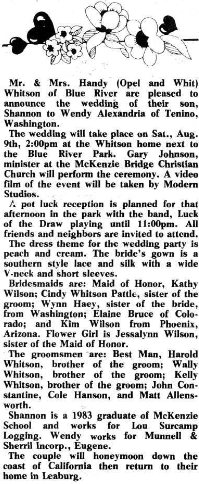
When I got sober in 1987 I read kids from the evangelical church were beating up the kids from Gary’s Christian church. Gary did not preach the Rapture, because it was a new fangled belief that he was not taught at Bible College. I found only one mention of Gary on google, and it was a piece on the marriage service he performed. A Kathy Wilson was the bride’s maid. He deserves more then this. He was my first and last Minister before I declared myself a Nazarite, and then, submerged myself in the McKenzie River, fifteen miles above Blue River.
I just heard from Dianne Dundon, that Gary did not lose his church. He had it till he died of a heart attack. The person who told me this, led the break-away church. Gary married Dianne and her second husband. I hope I am not demonizing this good man. We had a major conflict that led me to look for answers to questions that jumped out at me from the pages! At Bible study, I asked about the secret in Mark 4. Gary said this to me;
“You went over and over this passage just to trip me up!”
Gary would meet with the good ol boys at the Whitewater Café for breakfast. These men owned old family logging operations. It is allege they had Confederate roots. They did not take to minorities. They chose Gary’s church. They did not want to hear Negro Spirituals coming out of the woods as they drove down 126 in their pickups!
There is this idea going round that Yeehaw Rednecks are keepers of the Lord’s Truth. Small town folks are receiving the – right stuff. Garth Brooks brings sacred messages to these chosen one, via his music and lyrics. We were country. I recall us piling into an old station wagon to go to the food store. we agreed to be quick about it, so we can get the hell out of Springfield. We shopped at a surplus can food place with a giant rainbow on it. We couldn’t stand the bad vibes. There was a healing energy pouring down from the mountain around Blue River. We would peer into these ancient forests and see bears, cougars, and eagles. There was an old gold mine up there. We loved the feelings of being impermanent. There a power greater then ourselves – especially when the stars came out. You could feel the energy of the Milky Way. It rustled you hair a bit, and fortified your soul.
Two of the riders are no longer on this earth. I found forgiveness with Gary. There was trouble in Paradise. That’s how the Good Book begins. After exchanging some pleasant morning lines with Michael. I called him out. I said it took guts for Moses to say he had conversations with God – who showed him His backside! If we aren’t preparing ourselves to meet God – while we are alive – why read The Book! Let’s get on that horse, that only one man managed to ride? After saying this, I realized that this was the horse the Five had mounted. We were – off to see God on the Emerald Highway! This was no cakewalk.
I met Kathy Wilson in Gary’s church. I visited he at her home in Blue River.
Good Intensions Count
An hour ago I got a Big Blue thumb up from Michael when I messaged his this……
“I keep having a vision of us. The Five Horseman of Blue River, riding into the sunset. Gary, Michael, Greg Mel, Me, and Gino. Our best intentions all count. O.K. I will call you!”
Three men out of the five, suffered severely with the disease of alcoholism. Two did not. The two who did not, were deeply concerned about my brothers in AA. Would we make it? Would our sobriety, take? Would we find a Higher Power, and would that power keep us from losing – everything! EVERYTHING! We love our families, who wonder if we will remain alive for very long. This is a tough consideration. This is the road we found ourselves on. Highway 126 above Walterville, is one of the most beautiful roads in the world! I got sober in Paradise.
I just remembered Gary was at my graduation from Serenity Lane. My childhood friend, Nancy Hamren was there. They both spoke well of me. Something went wrong for me, and my sobriety. I should never have gone south, to see my family. It is a miracle I remained sober. I was not happy, and began to isolate. I read my Bible all day, for months. I was enthralled with King David capturing Goliath’s sword. I was there, with Saul on a hill, under a great tree with the Ark of the Covenant. It was like reading Tolkien.
What I discovered about Jesus’s main mission, is he ministered to people born with a disease. At the New Hope program at Serenity Lane, a special speaker lectured us on the disease factor. I looked at the twenty men, and one woman, as they took this message in. We were huddled against the ill wind, that blew hard in our faces, a cruel wind that forever blew us off course. We were a desperate crew of losers, preparing our rusty Clipper to go round the Horn. I have prayed for a……better way!
I see The Five riding into Blue River – to gospel music. We need heroes. We need Generals, who will forever surrender – to Love! This is it! It is -time!
John Presco
Copyright 2019
However, later in the same chapter, Moses requests to see God’s glory, and God replies, “I will cause all my goodness to pass in front of you, and I will proclaim my name, the Lord, in your presence. . . . But . . . you cannot see my face, for no one may see me and live” (Exodus 33:19–20). To protect Moses, God put him “in a cleft in the rock” and covered him with His hand as He passed by (verse 22). “Then,” God promised, “I will remove my hand and you will see my back; but my face must not be seen” (verse 23).
Being an A+ student born and raised in Nebraska, this bright and beautiful being had to believe in some of the propaganda-history that was dished out to her in High School. Rena had to have seen herself as the Beautiful Cattle Queen, who like Wonder Woman, was destined to protect the ‘Cattle Producers’ of Nebraska. This protection was aimed at me in her long letter she sent me two years ago. After she looked at my blog, she wrote;
“I see you are quite left-leaning. Please do not, in your urban world, be too hard on cattle producers. or, red-neck women. We are human too.”
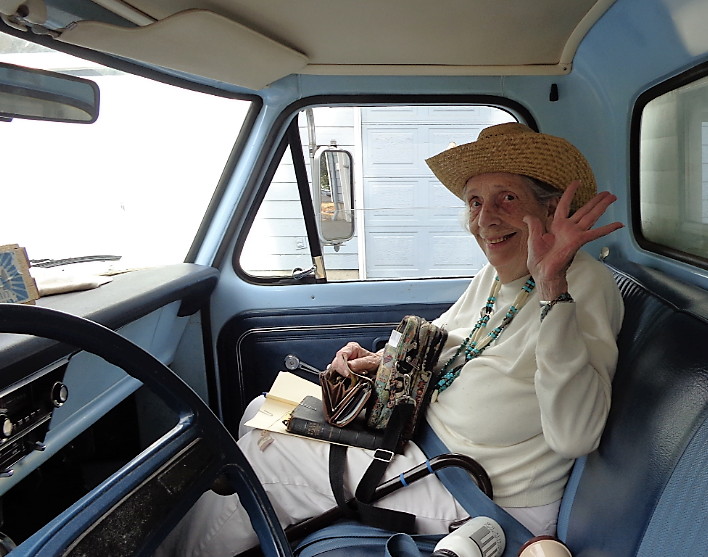
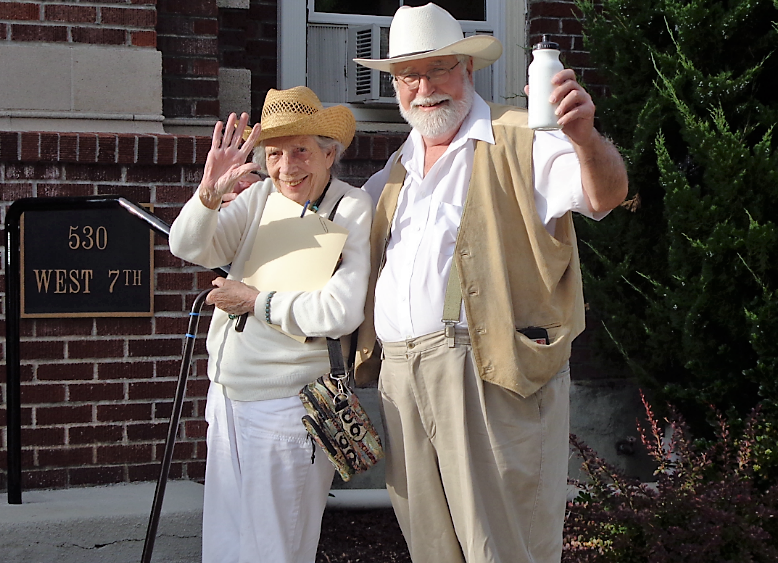
In order to prove I was human too, and my world is not that urban, I took my ninety year old neighbor to Cowboy Church. I posted pictures of us on the blog in hope Rena would see them. The old wrinkly woman’s son, a serious Rush Limbaugh Freak, called me, and ordered me to take that blog down, which I did, because he is way too serious. This was the first shot fired in the Cultural Wafare that is sweeping the land. What side are you on? There is no compromise, no middle ground.
Ann Hart Coulter wants to speak at Berkley, but…….
“It’s become an O.K. Corral of sorts for activists across the political spectrum,” Mr. Mogulof said.
I’m going to write a play (someday) called ‘Cowboy Golf. It will be The Last Round-up in perfect existentialism.
Synopsis: Four golfer tee-off at Fidler’s Green…Mark Gall, Sam Elliot, Zalensky, John Presco….Two Jews and two Gentiles. On the second hole my late friend, Alberta Hurt, appears and reminds The Four Amigos its almost time for Cowboy Church. Zelensky gets a call on his cellphone. “Shit! That fucker just blew down my T,V. tower!” “Bummer!” “You’re up. I’d use a three wood here!”
This is my ‘Waiting For Gadot’. There will be a old ragged tree up against the barbed-wire that keeps the sheep away from the golfers. The smell of feces and urine is powerful. Coming back from Cowboy Church at sundown I told Alberta we are in the movie ‘The Misfits. She had lived on a Hippie-Jesus farm outside Springfield. They were young, and soon moved away. Needing a work force, she got prisoners to come out to the farm on work furlough.
“Weren’t you sacred?”
“Sure I was. Some of these guys were tough and mean. I prayed to Jesus allot!”
I wish we had run into Sam Elliot. We would take him to our regular bisquet and gravy
“You’re up John. Hurry it up before Alberta does another time-check!”
“I’m waiting for our professor to stop analyzing his last shot – aloud!”
Alberta took me for a ride into the country to see her burial plot. Then she pointed to some ground next to her ground.
“This is for sale. I want you buried next to me!”
“FOUR!”
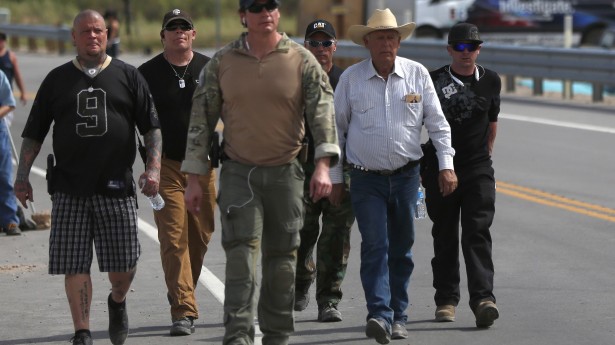
Folks will ask to playthrough because we four are locked in a very interesting conversation. One group are….The Bundy Boys!
“We are a Nation of Misfits and Troublemakers, Aunt Bertie. We are just two of them.”









 Rosamond Press


Leave a comment