The Christian Colonial Party of Righteousness put Hunter Biden on trial, and at the same time invited Netanyahu to speak before their Christian Congress – knowing he has been convicted in a World Court – or two? Are you keeping score?
Israel and the Republicans are ignoring our President’s DEMAND that the Zionist Army of YHWH honor the ‘Two State Solution’. However, our Congress has been taken over by The Nixon Colonial Missionaries, who claim all American History – in the name of Jesus! (Drats!) I say, Nixon – the other Republican Crime Boss, should be dug up out of his grave, his remains put in a rocket – then fired at the Houthi in order to render these Pirate-Rebels – UNCLEAN!
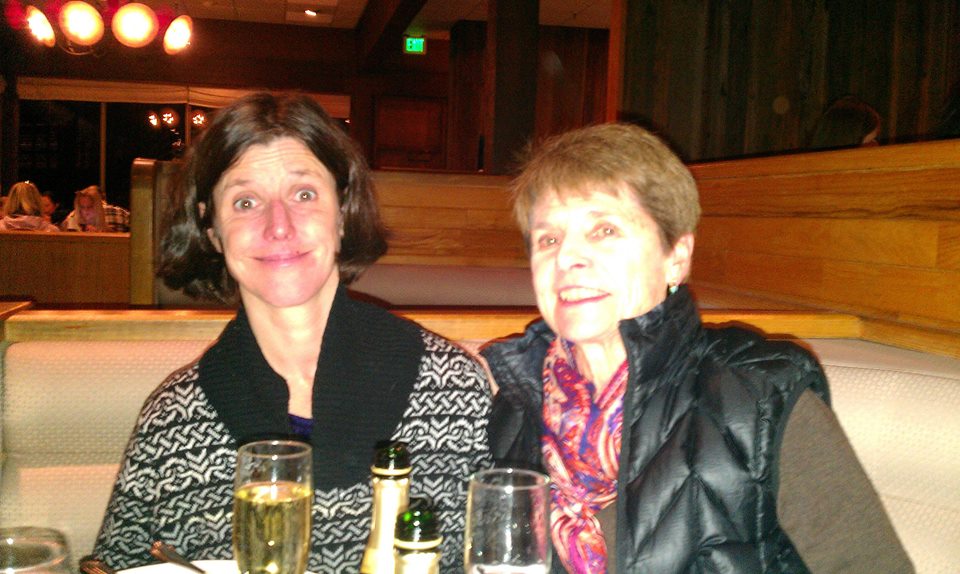
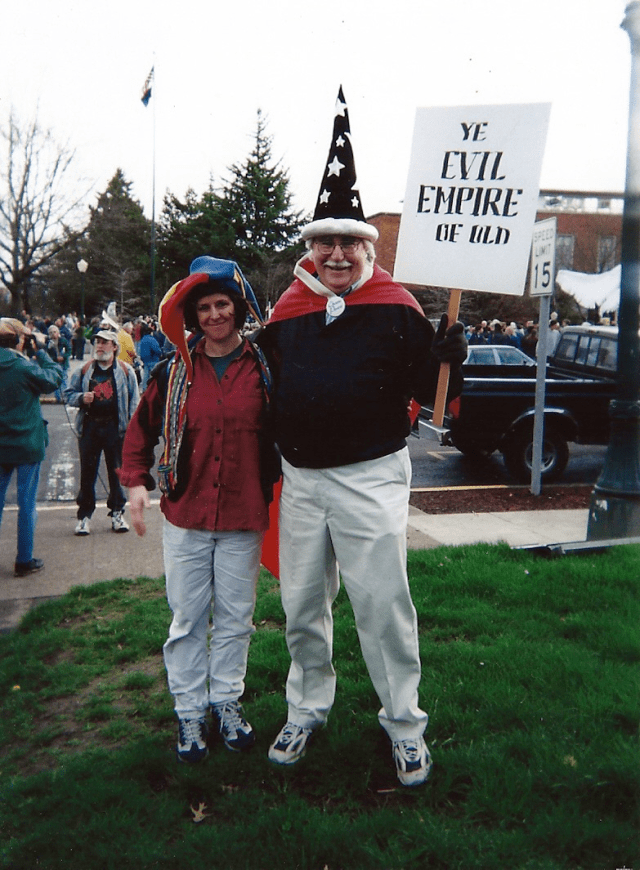
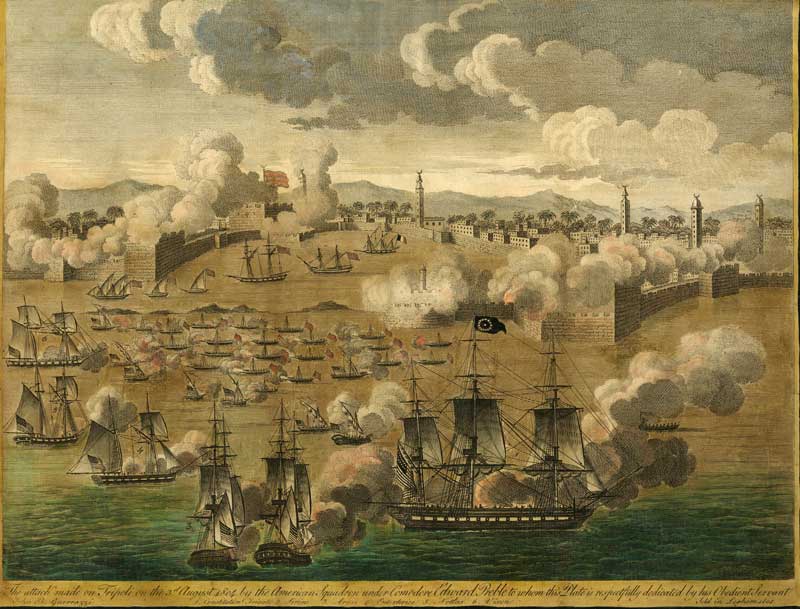
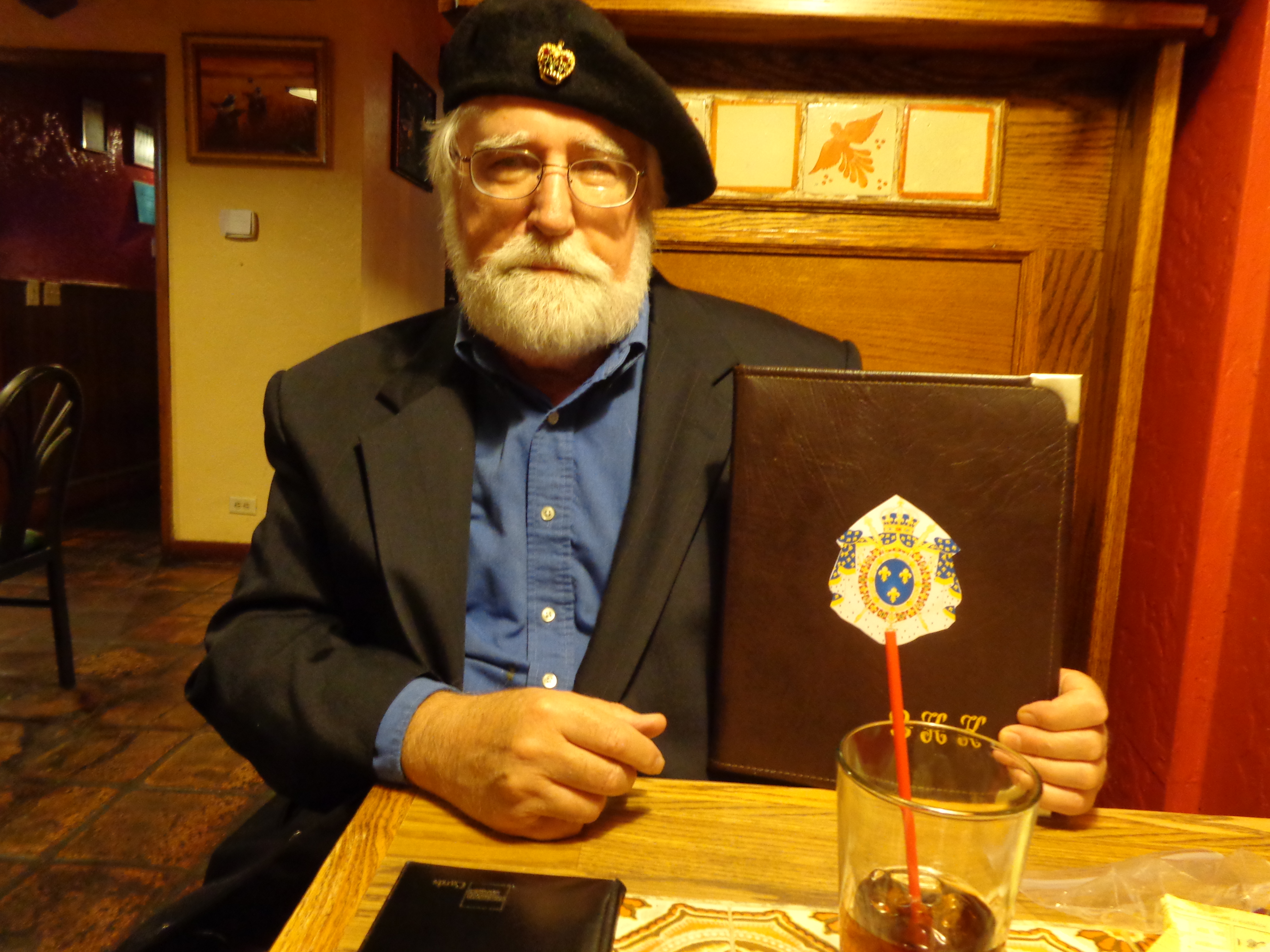
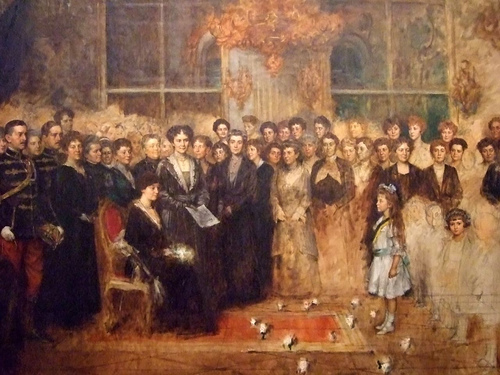
Above is a photo of my ex-fiancé with her mother, who is the great granddaughter of General de Bourmont, who led the invasion of Algiers. The Caliph there was taking sailors prisoner after capturing their merchant ships and cargo. The United States sent a squadron of ships to crush the Barbary Pirates headquartered in Tripoli. This can be considered the First American Crusade, but, our President was not a Christian. If The Zionist Crusade does not get out of the Gaza, and instead claims this Nation, then Israel will resemble Italy’s attempt to colonize Libya. I will make comparisons to the atrocities of Fascist Italy, and thus escape being titled a – ANTISEMITE! I wlll own an Iron Dome from all attacks by the Army of The Lord!
I am concerned China may strike the Houthi, that will start World War Three.
John Presco
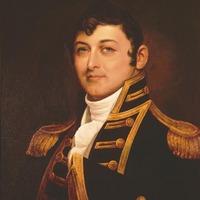
My great grandfather captained three ships that took part in the Barbary Wars after the Treaty of Tripoli was made. Adams said this to President Thomas Jefferson;”
“We ought not to fight them at all unless we determine to fight them forever,”
Bill Bennett authored a book that claims Captain Isaac Hull battled and dispatched Islamic Terrorists. Bennett, in his new book, “America, the Last Best Hope”, describes it this way:
The Ambassador answered us that it was founded on the Laws of the Prophet, that it was written in their Koran, that all nations who should not have answered their authority were sinners, that it was their right and duty to make war upon them wherever they could be found, and to make slaves of all they could take as prisoners.
In 1923, indigenous rebels associated with the Senussi Order organized the Libyan resistance movement against Italian settlement in Libya. The rebellion was put down by Italian forces in 1932, after the so-called “pacification campaign“, which resulted in the deaths of a quarter of Cyrenaica’s population of 225,000.[5] Italy committed major war crimes during the conflict, including the use of illegal chemical weapons, episodes of refusing to take prisoners of war and instead executing surrendering combatants, and mass executions of civilians.[12] Italian authorities committed ethnic cleansing by forcibly expelling 100,000 Bedouin Cyrenaicans, almost half the population of Cyrenaica, from their settlements, slated to be given to Italian settlers.[13][14]
From 1911 until the establishment of a unified colony in 1934, the territory of the two colonies was sometimes referred to as “Italian Libya” or Italian North Africa (Africa Settentrionale Italiana, or ASI). Both names were also used after the unification, with Italian Libya becoming the official name of the newly combined colony. It had a population of around 150,000 Italians.[3]
The Italian colonies of Tripolitania and Cyrenaica were taken by Italy from the Ottoman Empire during the Italo-Turkish War of 1911–1912, and run by Italian governors. In 1923, indigenous rebels associated with the Senussi Order organized the Libyan resistance movement against Italian settlement in Libya, mainly in Cyrenaica.[4] The rebellion was put down by Italian forces in 1932, after the pacification campaign, which resulted in the deaths of a quarter of Cyrenaica’s population.[5] In 1934, the colonies were unified by governor Italo Balbo, with Tripoli as the capital.[6]
An Italian drawing depicting Ottoman officials surrendering Libya to Italian colonial forces while Libyans prostrate themselves before the Italian colonial soldiers, 1912
Italian efforts to colonise Libya began in 1911, and were characterised initially by major struggles with Muslim native Libyans that lasted until 1931. During this period, the Italian government controlled only the coastal areas. Between 1911 and 1912, over 1,000 Somalis from Mogadishu, the then capital of Italian Somaliland, served in combat units along with Eritrean and Italian soldiers in the Italo-Turkish War.[8] Most of the Somali troops remained in Libya until they were transferred back to Italian Somaliland in preparation for the invasion of Ethiopia in 1935.[9]
Italian Benghazi, where the “Lungomare” (sea-walk) and many other buildings were constructed
After the Italian Empire‘s conquest of Ottoman Tripolitania (Ottoman Libya), in the 1911–12 Italo-Turkish War, much of the early colonial period had Italy waging a war of subjugation against Libya’s population. Ottoman Turkey surrendered its control of Libya in the 1912 Treaty of Lausanne, but fierce resistance to the Italians continued from the Senussi political-religious order, a strongly nationalistic group of Sunni Muslims. This group, first under the leadership of Omar Al Mukhtar and centered in the Jebel Akhdar Mountains of Cyrenaica, led the Libyan resistance movement against Italian settlement in Libya. Italian forces under Generals Pietro Badoglio and Rodolfo Graziani waged punitive pacification campaigns using chemical weapons, mass executions of soldiers and civilians and concentration camps. One-quarter of Cyrenaica’s population of 225,000 people died during the conflict.[10] After nearly two decades of suppression campaigns the Italian colonial forces claimed victory.
In 1923, indigenous rebels associated with the Senussi Order organized the Libyan resistance movement against Italian settlement in Libya. The rebellion was put down by Italian forces in 1932, after the so-called “pacification campaign“, which resulted in the deaths of a quarter of Cyrenaica’s population of 225,000.[5] Italy committed major war crimes during the conflict, including the use of illegal chemical weapons, episodes of refusing to take prisoners of war and instead executing surrendering combatants, and mass executions of civilians.[12] Italian authorities committed ethnic cleansing by forcibly expelling 100,000 Bedouin Cyrenaicans, almost half the population of Cyrenaica, from their settlements, slated to be given to Italian settlers.[13][14]
The Italian occupation also reduced livestock numbers, killing, confiscating or driving the animals from their pastoral land to inhospitable land near the concentration camps.[15] The number of sheep fell from 810,000 in 1926 to 98,000 in 1933, goats from 70,000 to 25,000 and camels from 75,000 to 2,000.[15]
From 1930 to 1931, 12,000 Cyrenaicans were executed and all the nomadic peoples of northern Cyrenaica were forcibly removed from the region and relocated to huge concentration camps in the Cyrenaican lowlands.[16] Fascist regime propaganda proclaimed the camps as hygienic and efficiently run oases of modern civilization. However in reality the camps had poor sanitary conditions and an average of about 20,000 Beduoins, together with their camels and other animals, crowded into an area of one square kilometre.[17] The camps held only rudimentary medical services, with the camps of Soluch and Sisi Ahmed el Magrun with an estimated 33,000 internees having only one doctor between them.[17]Typhus and other diseases spread rapidly in the camps as the people were physically weakened by meagre food rations and forced labour.[17] By the time the camps closed in September 1933, 40,000 of the 100,000 total internees had died in the camps.[17]
Expansion of Italian Libya: territories ceded by the Ottoman Empire in 1912 territories ceded by France in 1919 Kufra District conquered in 1919 and 1931[b] territories ceded by Britain in 1926 territories ceded by Britain in 1934 territories ceded by France in 1935
The colony expanded after concessions from the British colony of Sudan and a territorial agreement with Egypt. The Kufra district was nominally attached to British-occupied Egypt until 1925, but in fact, remained a headquarters for the Senussi resistance until conquered by the Italians in 1931. The Kingdom of Italy at the 1919 Paris “Conference of Peace” received nothing from German colonies, but as a compensation Great Britain gave it the Oltre Giuba and France agreed to give some Saharan territories to Italian Libya.[18]
After prolonged discussions through the 1920s, in 1935 under the Mussolini-Laval agreement Italy received the Aouzou strip, which was added to Libya. However, this agreement was not ratified later by France.
In 1931, the towns of El Tag and Al Jawf were taken over by Italy. British Egypt had ceded Kufra and Jarabub to Italian Libya on December 6, 1925, but it was not until the early 1930s that Italy was in full control of the place. In 1931, during the campaign of Cyrenaica, General Rodolfo Graziani easily conquered Kufra District, considered a strategic region, leading about 3,000 soldiers from infantry and artillery, supported by about twenty bombers. Ma’tan as-Sarra was turned over to Italy in 1934 as part of the Sarra Triangle to colonial Italy by the Anglo-Egyptian Condominium, who considered the area worthless and so an act of cheap appeasement to Benito Mussolini‘s attempts at an empire.[19] During this time, the Italian colonial forces built a World War I–style fort in El Tag in the mid-1930s.
In 1939 some Libyans were granted special (though limited) Italian citizenship by Royal Decree No. 70 on 9 January 1939. This citizenship was necessary for any Libyan with ambitions to rise in the military or civil organizations. The recipients were officially referred to as Moslem Italians. Libya had become “the fourth shore of Italy” (Trye 1998). The incorporation of Libya into the Italian Empire gave the Italian Army a greater ability to exploit native Libyans for military service. Native Libyans served in Italian formations from the beginning of the Italian occupation of Libya. On 1 March 1940, the 1st and 2nd Libyan Divisions were formed. These Libyan infantry divisions were organized along the lines of the binary Italian infantry division. The 5th Italian Army received the 2nd Libyan Infantry Division, which it incorporated into the 13th Corps. The Italian 10th Army received the 1st Libyan Infantry Division, which it incorporated into the reserve. The Italian Libyan infantry divisions were colonial formations (“colonial” in the sense of consisting of native troops). These formations had Italian officers commanding them, with Libyan NCOs and soldiers. These native Libyan formations were made up of people drawn from the coastal Libyan populations. The training and readiness of these divisions was on an equal footing with the regular Italian formations in North Africa. Their professionalism and ‘esprit de corps’ made them some of the best Italian infantry formations in North Africa. The Libyan divisions were loyal to Italy and provided a good combat record.[20]
Italian Zaptié camel cavalry in 1940Italian Libya as the Fourth Shore was the southern part of “Imperial Italy” (orange borders), a Fascist project to enlarge Italy’s national borders.
After the enlargement of Italian Libya with the Aouzou Strip, Fascist Italy aimed at further extension to the south. Indeed Italian plans, in the case of a war against France and Great Britain, projected the extension of Libya as far south as Lake Chad and the establishment of a broad land bridge between Libya and Italian East Africa.[21] During World War II, there was strong support for Italy from many Muslim Libyans, who enrolled in the Italian Army. Other Libyan troops (the Savari [cavalry regiments] and the Spahi or mounted police) had been fighting for the Kingdom of Italy since the 1920s. A number of major battles took place in Libya during the North African Campaign of World War II. In September 1940, the Italian invasion of Egypt was launched from Libya.[22]
Indian soldiers chat with locals in Derna, December 1941
Starting in December of the same year, the British Eighth Army launched a counterattack called Operation Compass and the Italian forces were pushed back into Libya. After losing all of Cyrenaica and almost all of its Tenth Army, Italy asked for German assistance to aid the failing campaign[23]
Wrecked Italian aircraft at the destroyed Castel Benito airport in Tripoli in 1943
With German support, the lost Libyan territory was regained during Operation Sonnenblume and by the conclusion of Operation Brevity, German and Italian forces were entering Egypt. The first Siege of Tobruk in April 1941 marked the first failure of Rommel’s Blitzkrieg tactics. In 1942 there was the Battle of Gazala when the Axis troops finally conquered Tobruk and pushed the defeated British troops inside Egypt again. Defeat during the Second Battle of El Alamein in Egypt spelled doom for the Axis forces in Libya and meant the end of the Western Desert Campaign.
In February 1943, retreating German and Italian forces were forced to abandon Libya as they were pushed out of Cyrenaica and Tripolitania, thus ending Italian jurisdiction and control over Libya.
The Fezzan was occupied by the Free French in 1943. At the close of World War II, the British and French collaborated with the small new resistance. France and the United Kingdom decided to make King Idris the Emir of an independent Libya in 1951.
Libya would finally become independent in 1951.[24]
From 1943 to 1951, Tripolitania and Cyrenaica were under British military administration, while the French controlled Fezzan. Under the terms of the 1947 peace treaty with the Allies, Italy relinquished all claims to Libya.[25] There were discussions to maintain the province of Tripolitania as the last Italian colony, but these were not successful.[citation needed]
Although Britain and France had intended to divide the nation between their empires, on November 21, 1949, the UN General Assembly passed a resolution stating that Libya should become independent before January 1, 1952. On December 24, 1951, Libya declared its independence as the United Kingdom of Libya, a constitutional and hereditary monarchy.
In 1934, Italy adopted the name “Libya” (used by the Greeks for all of North Africa, except Egypt) as the official name of the colony made up of the three provinces of Cyrenaica, Tripolitania and Fezzan). The colony was subdivided into four provincial governatores (Commissariato Generale Provinciale) and a southern military territory (Territorio Militare del Sud or Territorio del Sahara Libico):[26]
The general provincial commissionerships were further divided into wards (circondari).[26] On 9 January 1939, a decree law transformed the commissariats into provinces within the metropolitan territory of the Kingdom of Italy.[26] Libya was thus formally annexed to Italy and the coastal area was nicknamed the “Fourth Shore” (Quarta Sponda). Key towns and wards of the colony became Italian municipalities (comune) governed by a podestà.[26]
Many Italians were encouraged to settle in Libya during the Fascist period, notably in the coastal areas.[27] The annexation of Libya’s coastal provinces in 1939 brought them to be an integral part of metropolitan Italy and the focus of Italian settlement.[28]
The population of Italian settlers in Libya increased rapidly after the Great Depression: in 1927, there were just about 26,000, by 1931 44,600, 66,525 in 1936 and eventually, in 1939, they numbered 119,139, or 13% of the total population.[2]
They were concentrated on the Mediterranean coast, especially in the main urban centres and in the farmlands around Tripoli, where they constituted 41% of the city’s population, and in Benghazi 35%. Settlers found jobs in the construction boom fuelled by Fascist interventionist policies.
In 1938, Governor Italo Balbo brought 20,000 Italian farmers to settle in Libya, and 27 new villages were founded, mainly in Cyrenaica.[29]
After the campaign of reprisals known as the “pacification campaign”, the Italian government changed policy toward the local population: in December 1934, individual freedom, inviolability of home and property, the right to join the military or civil administrations, and the right to freely pursue a career or employment were promised to the Libyans.[30]
In a trip by Mussolini to Libya in 1937, a propaganda event was created where Mussolini met with MuslimArab dignitaries, who gave him an honorary sword (that had actually been made in Florence) which was to symbolize Mussolini as a protector of the Muslim Arab peoples there.[31]
In January 1939, Italy annexed territories in Libya that it considered Italy’s Fourth Shore with Libya’s four coastal provinces of Tripoli, Misurata, Bengazi, and Derna becoming an integral part of metropolitan Italy.[28] At the same time indigenous Libyans were granted “Special Italian Citizenship” which required such people to be literate and confined this type of citizenship to be valid in Libya only.[28]
In 1939, laws were passed that allowed Muslims to be permitted to join the National Fascist Party and in particular the Muslim Association of the Lictor (Associazione Musulmana del Littorio). This allowed the creation of Libyan military units within the Italian army.[32] In March 1940, two divisions of Libyan colonial troops (for a total of 30,090 native Muslim soldiers) were created and in summer 1940 the first and second Divisions of Fanteria Libica (Libyan infantry) participated in the Italian offensive against the British Empire‘s Egypt:[33]1st Libyan Division and 2nd Libyan Division.
In 1936, the main sectors of economic activity in Italian Libya (by number of employees) were industry (30.4%), public administration (29.8%), agriculture and fishing (16.7%), commerce (10.7%), transports (5.8%), domestic work (3.8%), legal profession and private teaching (1.3%), banking and insurance (1.1%).[2]
Italians greatly developed the two main cities of Libya, Tripoli and Benghazi,[34] with new ports and airports, new hospitals and schools and many new roads & buildings.
The Berenice Albergo
Also tourism was improved and a huge & modern “Grand Hotel” was built in Tripoli and in Bengasi.
The Fascist regime, especially during Depression years, emphasized infrastructure improvements and public works. In particular, Governor Italo Balbo greatly expanded Libyan railway and road networks from 1934 to 1940, building hundreds of kilometers of new roads and railways and encouraging the establishment of new industries and a dozen new agricultural villages.[35] The massive Italian investment did little to improve Libyan quality of life, since the purpose was to develop the economy for the benefit of Italy and Italian settlers.[15]
The Italian aim was to drive the local population to the marginal land in the interior and to resettle the Italian population in the most fertile lands of Libya.[15] The Italians did provide the Libyans with some initial education but minimally improved native administration. The Italian population (about 10% of the total population) had 81 elementary schools in 1939–1940, while the Libyans (more than 85% of total population) had 97.[15] There were only three secondary schools for Libyans by 1940, two in Tripoli and one in Benghazi.[36]
The Libyan economy substantially grew in the late 1930s, mainly in the agricultural sector. Even some manufacturing activities were developed, mostly related to the food industry. Building construction increased immensely. Furthermore, the Italians made modern medical care available for the first time in Libya and improved sanitary conditions in the towns.[citation needed]
The Italians started numerous and diverse businesses in Tripolitania and Cyrenaica. These included an explosives factory, railway workshops, Fiat Motor works, various food processing plants, electrical engineering workshops, ironworks, water plants, agricultural machinery factories, breweries, distilleries, biscuit factories, a tobacco factory, tanneries, bakeries, lime, brick and cement works, Esparto grass industry, mechanical saw mills, and the Petrolibya Society (Trye 1998). Italian investment in her colony was to take advantage of new colonists and to make it more self-sufficient. (General Staff War Office 1939, 165/b).[37]
By 1939, the Italians had built 400 kilometres (250 mi) of new railroads and 4,000 kilometres (2,500 mi) of new roads. The most important and largest highway project was the Via Balbia, an east-west coastal route connecting Tripoli in western Italian Tripolitania to Tobruk in eastern Italian Cyrenaica. The last railway development in Libya done by the Italians was the Tripoli-Benghazi line that was started in 1941 and was never completed because of the Italian defeat during World War II.[38]
Classical archaeology was used by the Italian authorities as a propaganda tool to justify their presence in the region. Before 1911, no archeological research was done in Tripolitania and Cyrenaica. By the late 1920s the Italian government had started funding excavations in the main Roman cities of Leptis Magna and Sabratha (Cyrenaica was left for later excavations because of the ongoing colonial war against Muslim rebels in that province). A result of the Fascist takeover was that all foreign archaeological expeditions were forced out of Libya, and all archeological work was consolidated under a centralised Italian excavation policy, which exclusively benefitted Italian museums and journals.[39]
After Cyrenaica’s full ‘pacification’, the Italian archaeological efforts in the 1930s were more focused on the former Greek colony of Cyrenaica than in Tripolitania, which was a Punic colony during the Greek period.[39] The rejection of Phoenician research was partly because of anti-Semitic reasons (the Phoenicians were a Semitic people, distantly related to the Arabs and Jews).[39] Of special interest were the Roman colonies of Leptis Magna and Sabratha, and the preparation of these sites for archaeological tourism.[39]
Tourism was further promoted by the creation of the Tripoli Grand Prix, a racing car event of international importanc
I own angst towards Ken Babbs, for the reason he hoards a cause, a voice, that some members of our generation OCCUPIED, that I now needed to wage war on OUR powerful enemies, that Babbs, and other Merry Pranksters, chose not to be aware of. I now understand I was One Voice crying in the wilderness, and there was NO ONE to help me………..But, that was not my true destiny!
I believe I am a valid and timely historian due to the people in my Family Tree, and my grasp of current – and future events. When I found out I was kin to Ian Fleming, I began my own Bond novel, that has come true, that has foreseen the events of yesterday, where Britain and U.S. military hit targets in Yemen. With the demise of the Eugene Weekly, I am the only remaining alternative newspaper. I deserve respect.
What I am say saying, is, for over twenty years ago I GOT IT RIGHT, not most of the time – but all the goddamn time! And this involved sticking my neck out every damned – and blessed day - all by myself, all alone, with no one to hold my hand, or my pecker…….when I go to take a pee!
Yemen’s Houthi rebels responded defiantly to U.S.-led strikes against them Friday, saying that the attacks had failed to cause significant damage and that they remained undeterred from launching more attacks on U.S. and international targets in the region.
The strikes—and fresh promises of retaliation—are the latest signs that conflict stemming from the Israel-Hamas war in Gaza is widening across the Middle East, with the Red Sea as a new flashpoint between Washington and the various Iran-backed groups arrayed across the region.
“All American and British interests have become legitimate targets for the Yemeni armed forces in response to the aggression,” said a statement from the Supreme Political Council of the Houthis, which controls the capital San’a and swaths of territory.
Houthi spokesman Mohammed Abdul Salam said more attacks in the Red Sea were imminent: “This isn’t going to deter us.” The attacks, primarily on shipping lanes, would continue in solidarity with Gaza following Israel’s invasion, he added.
“We’re not interested in a conflict of any kind here,” he told reporters aboard Air Force One. “In fact, everything the president has been doing has been trying to prevent any escalation of conflict, including the strikes last night.”
The move, intended to weaken the militants’ ability to continue targeting commercial vessels in the vital waterway, is being met with mixed reaction on Capitol Hill — even criticism from some Democrats in an election year when foreign policy can become a major issue.
Some lawmakers, like Senate Republican leader Mitch McConnell and House Speaker Mike Johnson, welcomed the action as necessary but overdue.
“The United States and our allies must leave no room to doubt that the days of unanswered terrorist aggression are over,” McConnell said.
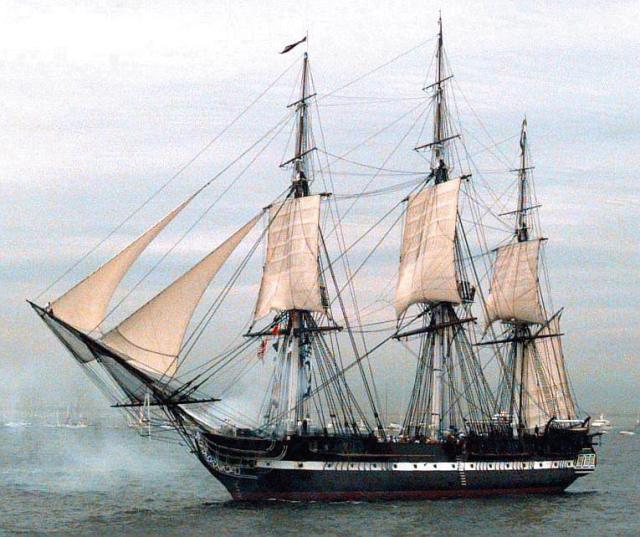
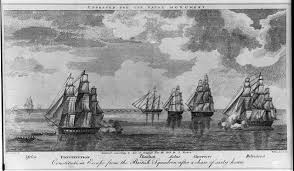
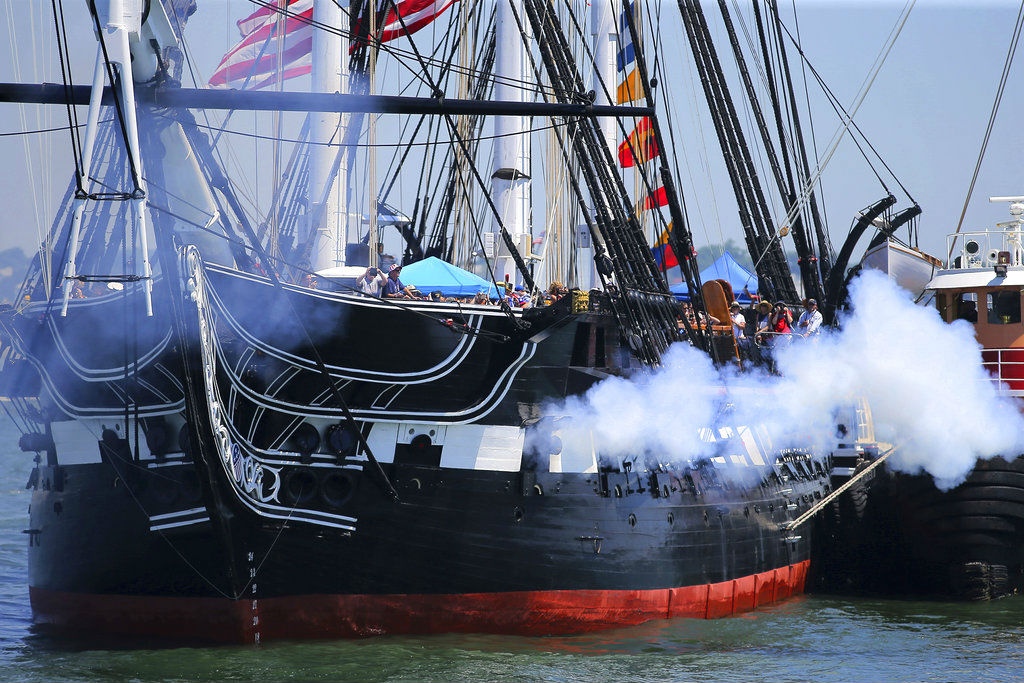
The USS Constitution heads to Castle Island in South Boston Wednesday, July 4, 2018, to fire guns in salute and to receive a salute from three military canon there. (Lane Turner/The Boston Globe via AP)
Here is another prophetic post! Instead of playing a huge role in the world, the people of the Emerald Vortex have been catering to faux leaders such as Ken Babbs, who is the ancient Pretender Wizard of Oz. Working behind the scenes, Babb’s made sure no one rose as high as he allegedly is, because he would be exposed! I got too close to Jabba Babbs who I declare – DEAD! Babbs is dead!
The Christian-right bid Trump to abandon Europe and declare cultural warfare on the Democrats and Liberals. When Biden is elected, write him and bid him to reach out to France and make her a cultural ally. Britain will follow suit, as will the New Emerald Revolution, once the old dead hippies are removed from the road.
John
“The response was unnerving. As Adams and Jefferson later reported to the Continental Congress, the ambassador said the raids were a jihad against infidels. Muslim privateers felt “it was their duty to make war upon them [non-Muslims] wherever they could be found, and to make slaves of all they could as Prisoners, and that every Mussleman [Muslim] who should be slain in Battle was sure to go to Paradise.”
The Americans now had two choices: pay tribute or fight the pirates.”
PARIS (Reuters) – France will not tolerate Turkey’s military intervention in Libya, President Emmanuel Macron said on Monday, accusing Ankara of playing “a dangerous game”.
Turkey has intervened decisively in recent weeks in Libya, providing air support, weapons and allied fighters from Syria to help the government based in Tripoli repel a year-long assault by eastern military leader Khalifa Haftar.
“I have already had the opportunity to say very clearly to President (Tayyip) Erdogan, I consider that Turkey is playing a dangerous game in Libya today and going against all of its commitments made at the Berlin conference,” Macron said alongside his Tunisian counterpart Kais Saied, referring to a peace meeting earlier this year.
“We won’t tolerate the role that Turkey is playing in Libya,” he said.
About five days ago, I added the U.S.S. Constitution to the British Fleet. Today, I add the U.S.S. Enterprise. Both warships were captained by my great grandfather. I am standing with Virginia, whose ancestor led the French invasion of Algeria. Putin is saying WE do not have any business in Syria, or the whole area. He is the latecomer.
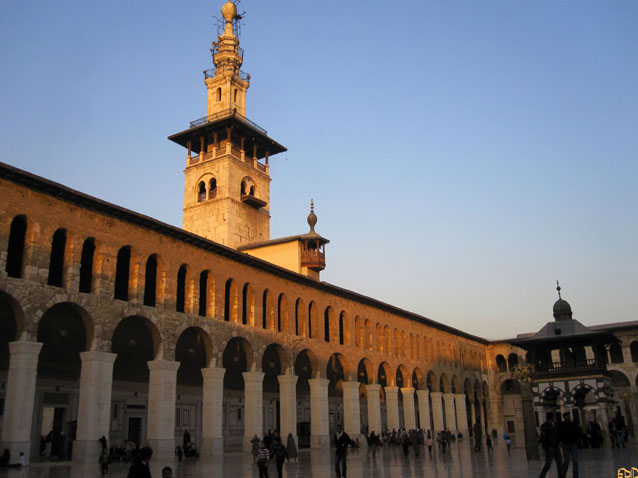
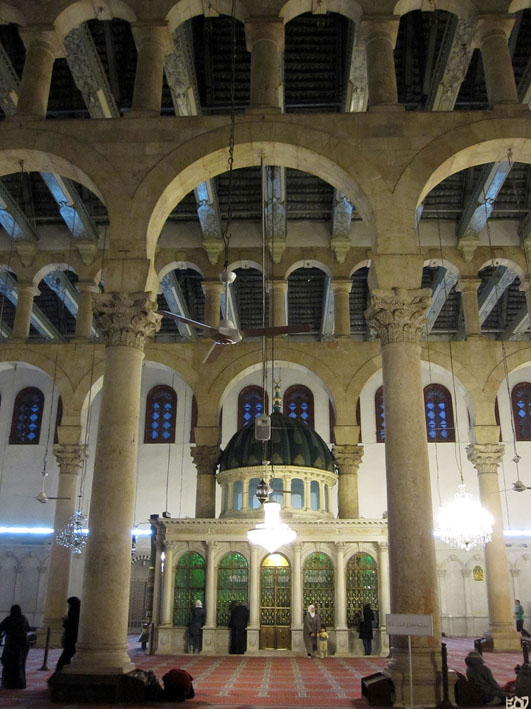
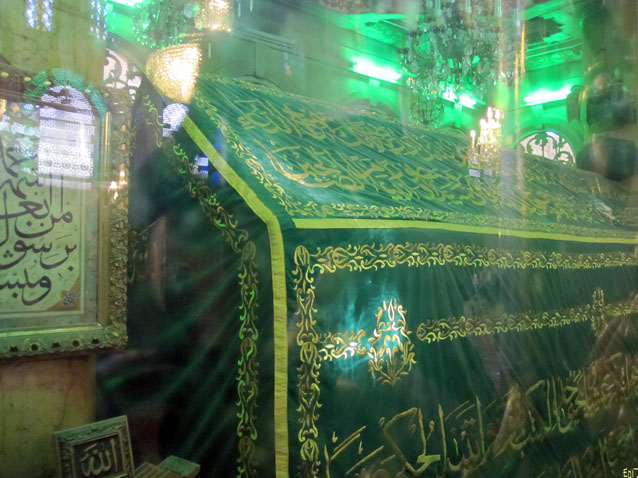
In theory, I send my Knights Templars of Rougemont, to Damascus to guard the tomb of John the Baptist. I suspect I am his – return! I have been preparing HIS WAY, in this blog.
My great grandfather captained three ships that took part in the Barbary Wars after the Treaty of Tripoli was made. Adams said this to President Thomas Jefferson;
“We ought not to fight them at all unless we determine to fight them forever,”
Bill Bennett authored a book that claims Captain Isaac Hull battled and dispatched Islamic Terrorists. Bennett, in his new book, “America, the Last Best Hope”, describes it this way:
The Ambassador answered us that it was founded on the Laws of the Prophet, that it was written in their Koran, that all nations who should not have answered their authority were sinners, that it was their right and duty to make war upon them wherever they could be found, and to make slaves of all they could take as prisoners.
“The response was unnerving. As Adams and Jefferson later reported to the Continental Congress, the ambassador said the raids were a jihad against infidels. Muslim privateers felt “it was their duty to make war upon them [non-Muslims] wherever they could be found, and to make slaves of all they could as Prisoners, and that every Mussleman [Muslim] who should be slain in Battle was sure to go to Paradise.”
The Americans now had two choices: pay tribute or fight the pirates.”
President Barack Obama called up the President of Tunisia after the terrorist attack on the Bardo Museum that was once the home of the Beys this Democracy went to war with. The United States Navy was born of this War Against Terrorism. Here is the account of Captain Hull:
UNITED STATES BRIG Argus
DERNE 28thApril 1805
SIR, I have the honor to inform you, that at 9 O.Clock in the morning of the 27th being about 10 Miles to the Eastward of the Town of Derne, with the Hornet in Company, we discovered the Nautilus at Anchor very close to the shore, which led us to suppose that Capt. Dent had fallen in with Mr. Eatons Army, as he had been sent in shore for that purpose the day before. — We made all sail for the Nautilus, and at 1/2 past 10 spoke her, and was informed by Capt. Dent that he had, had communication with Mr. Eaton the night before, and that he wished to have the field Pieces landed as soon as possible, and that Mr. Eaton intended to make an attack upon Derne as soon as he could get possession of them, being then about two and a half miles from the Town, and the Enemy having sent him a chalenge, hoisted out our Boat to send the field Pieces on shore with such supplies as Mr. Eaton was in want of, but on approaching the shore we found that it was impossible to land the Guns without hauling them up an almost perpendicular rock Twenty feet above the Boat. But with the perseverence of the Officer and men sent on this service, they effected the landing one of them, by hauling them u the steep Rock. Mr. Eaton finding that we should loose time in landing the other, sent it off again informing me that he should march for the Town as soon as he could possibly mount the field Piece that he had on shore, gave Lieutenant Evans Orders to stand close in shore, and cover the Army while they were preparing to march, in case the Enemy should come out against them, as they had already made their appearance in large numbers outside of the Town, gave Orders for the necessary preparations to be made for the attack by Sea upon the Town and Batteries, and stood down very close to the Town. — At 2 P.M. Mr. Eaton began the attack by Land, at same time the Hornet Lieut. Evans Anchored with Springs on his Cables, within One hundred Yards of the Battery of eight Guns, and commenced a heavy fire upon it.
The Nautilus took her station to the Eastward of the Hornet, at 1/2 a miles distance from shore, and opened upon the Town & Battery. The Argus Anchored without, and a little to the Eastward of the Nautilus, and began firing on the Town and Battery — The fort kept up a heavy fire for about an hour, after which the shot flying so thick about them, they abandoned it, and run into the Town and Gardens back — The Guns of the Vessels were turned on the Beach, and kept a heavy fire upon the Enemy to clear the way for the few brave Christians Mr. Eaton had with him, to enter the fort as they were gaining ground very fast though a heavy fire of Musquetry was constantly kept upon them from behind the Houses and old Walls near the shore. At about half past 3 we had the satisfaction to see Lieut. O.Bannon, and Mr. Mann Midshipman of the Argus, with a few brave fellows with them, enter the fort, haul down the Eenemys flag, and plant the American Ensign on the Walls of the Battery, and on turning the Guns of the Battery upon the Town, they found that the Enemy had left them in great haste, as they were found primed and loaded at their hand. —
Whilst our men were turning the Guns of the Battery upon the Town, Hamet Bashaw had taken possession of the back part of it, which brought the Enemy between two fires, which soon silenced them, and about four in the Afternoon we had complete possession of the Town and Fort, sent all our Boats on shore, for the purpose of carrying Amunition to the Fort, and to bring off the wounded men, as soon as possible, that they might be dressed. — Mr. Eaton gave the necessary Orders at the Fort, and went into the Town to see every thing quiet, and to make arrangements for the Towns being well guarded during the night. At half past five, he returned on board to get his wound dressed, having received a Musquet Ball thro’ his left wrist. — On collecting our men we found one killed and Thirteen Wounded, a list of which I have the honor to send you. — (Signed) ISAAC HULL
1. My great, great, great grandfather, Captain Isaac Hull directed, and engaged the enemy in America’s first War Against Islamic Terrorists.
2. Virginia Hambley’s great great, great grandfather, Louis de Bourmont, brought French legitimists before King Miguel, and recognized him a heir to the throne of France. Miquel is the grandfather of Empress Zita who fled to America when Hitler put a price on her head. Zita’s son was Otto Von Habsburg. Bourmont was in many respects similar to Jean of Arc, minus the religious visions. He was very keen on following a bloodline.
“Miguel was assisted by the French General Bourmont, who, after the fall of Charles X of France came with many of his legitimist officers to the aid of the king of Portugal (that is, Miguel).”
Louis de Bourmont backed Henry Count of Chambord as the rightful heir to the thrown of France. Louis commanded the land forces that took major cities in Algiers. When de Bourmont refused to recognize to support the “Citizen King” Louis-Philippe, he was relieved of his command. Who knows how much territory de Bourmont would have taken in the second War against Muslim Terrorist. Louis must have studied the success of Hull and William Eaton that ended with the Treaty of Tripoli that produced Article X1.
It is my intention to compose a letter the President of the United States and the U.S. Senate making them aware of Hull and Bourmont who served Nation and King, and not God/Jesus. I am seeking a attorney to help me bring a lawsuit against Tom Cotton, and the Senators who signed his letter. There is powerful evidence these men were motivated by their religious ambitions they shared with Benjamin Netanyahu. Together these men grievously interfered with the negotiations with Iran who militias have handed ISIS defeats in Iraq. Many Republicans are altering true American history in order that it be subserviant to their faux religious history. Boehner’s attorney has quit the lawsuit against President Obama who has ordered our Air Force to bomb ISIS.
Here is a letter from my kindred the Department of the Navy. He lists three Marines who shed their blood in Tunisia where there was a attack on the museum that was home to the Bey Captain Isaac Hull did battle with.
My bond with Virginia will last a lifetime. Her mother looks very much like Louis de Bourmont.




.jpg)








 Rosamond Press
_crowned.svg)
.svg)

Leave a comment