Billionaire art collectors and art-world stakeholders discussed ways to get police to disband pro-Palestine student protests at Columbia University, according to chat messages obtained by the Washington Post.
Anyone can be an artist, but, you got to be a Jew – to be a Jew? The right-wing Israeli government have been making it hard for people to become a Jew, and – be recognized as a Jewish Citizen of Israel. Jewish Israeli Citizens have protested in the streets because of changes in The Law – that are VERY EXCLUSIVE! The Art World has been – VERY INCLUSIVE! I intend to keep it that way!
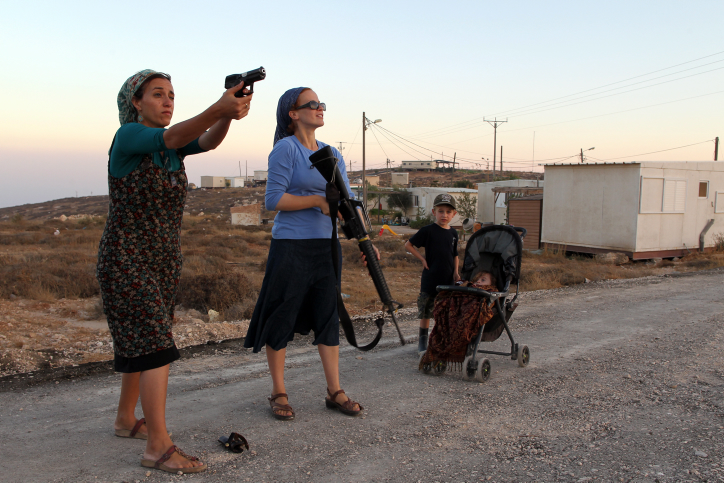
Armed Macho Right-wing Goonish Gunmen have been shooting at NON-JEWS in the West Bank – AND TAKING Palestinian land. This is what was going on – before October 7th. The Torah and the Koran have remedies for how the enemies of God-Allah should react to being rendered powerless to defend your wife and daughter from being raped – then killed!
AN EYE FOR AN EYE. Render your enemies impotent and powerless so they can not “be fruitful l and multiply. Kill their infants the Torah says! The emasculation of males in the Middle East is detailed in Holy Books. Now, it will be discussed in Art Books.
FLASH! I took a break for food, turned on the news and there is Biden protecting the Manly Honor of Netanyahu who was issued an arrest warrant by the world court who must have studied THE LAND GRAB by Jews – that incited Hamas to attack – several times! My great grandmother’ three sisters were burned alive in their cabin by Cherokee Indians that my Rosamond/Hodges family were at war with. Dorothy was spared, and raped by a chief, who made her his slave. Eventually, she became an equal member of the tribe. The Native Americans committed atrocities against the newcomers in order to fill them with utter despair – so they will go home.
QUESTION: Should American Artists HATE all Jews, or, just Billionaires who back the Germicide of the Palestinian People – according to this warrant? Maybe HATE is too powerful of a word. What I don’t like about Jews, ism they THINK AS ONE, and like to be seen as – A VERY EXCLUVE GANG! Though I have worked with Art Groups, I see myself as an Independent Artist.
In 1964 I hitchhiked to New York with a guitar and a couple of painting in my army bag. At seventeen, I lived in the Saint George Hotel and bought books at the Strand bookstore which is about four blocks from Columbia. How many artists bought art books at the Strand. I read several books on Jews escaping their oppressors. Can you think of any group of artists that went after Jews – and persecuted them?
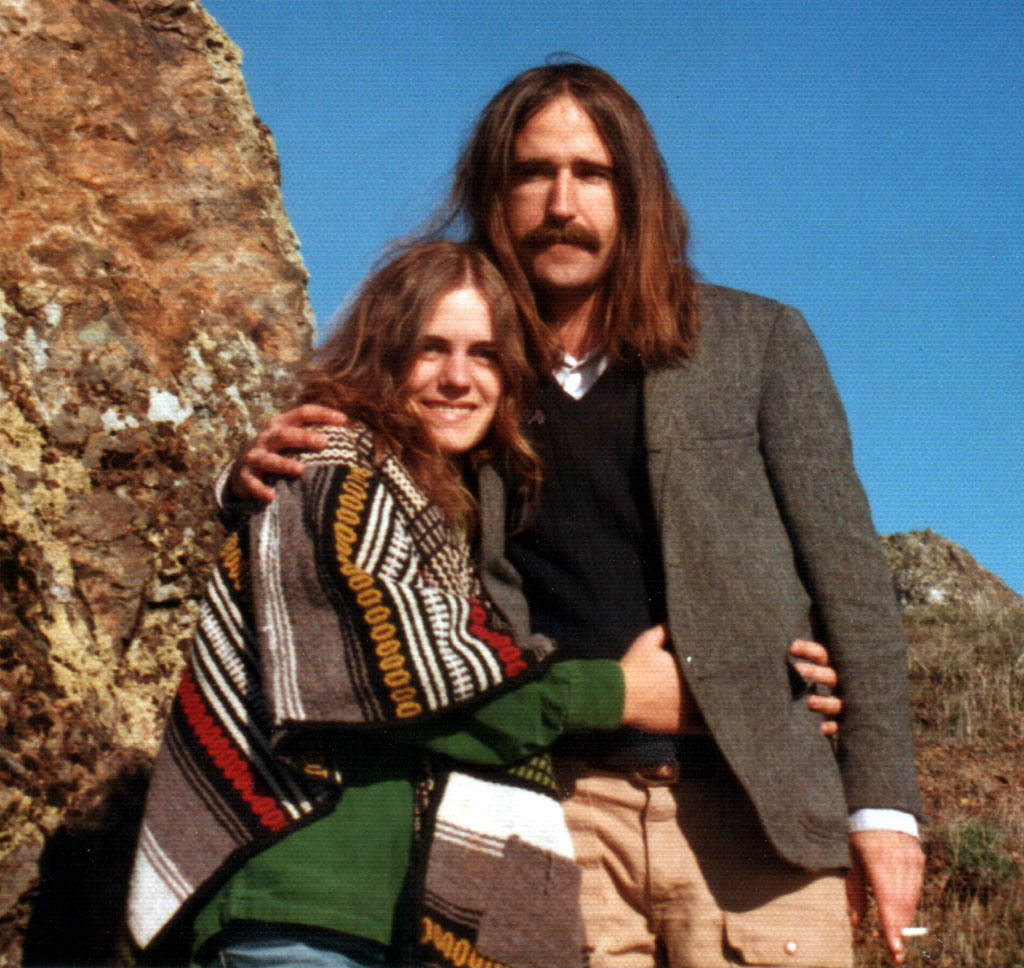
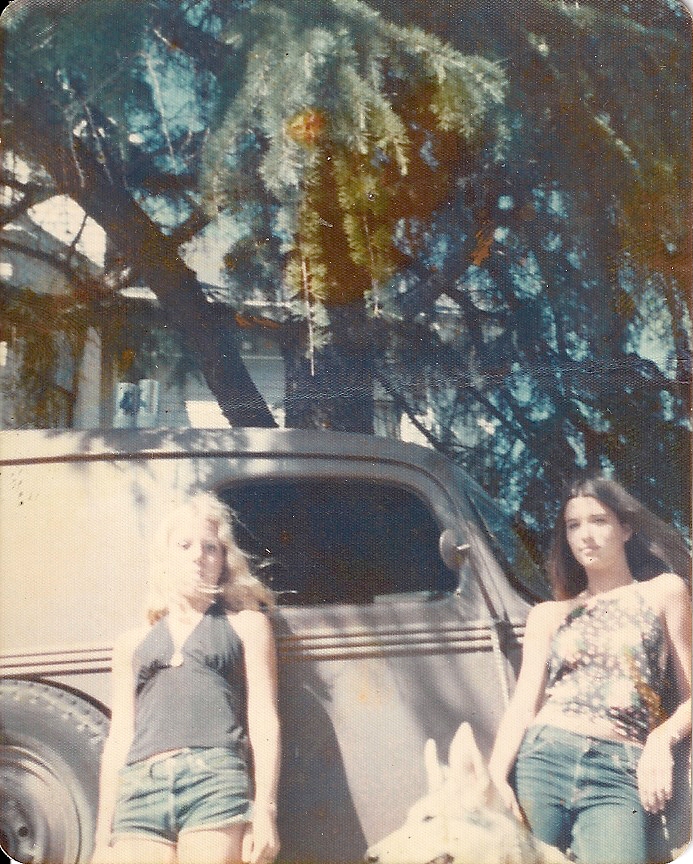
Above is a pic of me and Gloria who majored in Art. Peter Shapiro took the pics of me in front of my truck – for an album cover. We asked two girls to be in it. It was Peter’s idea to include the beer. We drank a lot. I had a lot of women. My wife was an artist. When my friend, Paul Drake, saw Mary Ann’s painting on the wall, he asked her if she had any ideas on how he cam become a Creative Person. She suggested he act. Paul is shot off the roller coaster in the movie Sudden Impact.
On this day, May 20, 2024, I suggest billionaires who don’t like the Jews contribute to, and fund, American Artists. We will not take money from folks – who hate Jews! Our desire to protect ourselves from nine million foreigner – is paramount! As a whole, American Artists – did nothing to the Jews. We are innocent! In the video below, I suggest Israel attack Italy as a payback for Romans taking away their Promised land. Leave the Art World alone!
John Presco
President: Royal Rosamond Press ‘A newspaer for the arts’
John Hodges, a resident of Abbeville District, S.C., age 67, states he entered service April 1, 1780 under command of Capt Samuel Rosamund, who commanded a beat or militia company in Ninety Six Direct, now Abbeville, S.C., and was marched t… A family legend is that the father of John Hodges was a Revolutionary soldier and while at home on furlough, his cabin was attacked by Indians, and he was killed. The legend continued that the Indians captured four Hodges daughters, bound them securely and put them inside the cabin which they prepared to burn.
However, an Indian warrior was reported attracted to one daughter, Dorothy, released her and took her with him, while the others perished in the flames.
According to the Post, the WhatsApp group was started in the wake of Hamas’s October 7 attack by a staffer of real-estate billionaire Barry Sternlicht — also an art collector, a financial supporter of the Whitney Museum of American Art, and a member of the Business Committee for the Arts at the national nonprofit Americans for the Arts. The staffer reportedly wrote to chat members that the goal was to “change the narrative” in Israel’s favor and convey “the atrocities committed by Hamas.” It drew around 100 members, many of them high-profile leaders in business and finance, such as hedge fund manager Bill Ackman, investor Joshua Kushner, and Kind Snacks founder Daniel Lubetzky.
New York City police officers raided Columbia University’s campus on the evening of April 30. (photo Maya Pontone/Hyperallergic)
Support Independent Arts Journalism
As an independent publication, we rely on readers like you to fund our journalism and keep our reporting and criticism free and accessible to all. If you value our coverage and want to support more of it, consider becoming a member today.
Billionaire art collectors and art-world stakeholders discussed ways to get police to disband pro-Palestine student protests at Columbia University, according to chat messages obtained by the Washington Post.
The messages were sent in a private WhatsApp group whose members reportedly included collector Len Blavatnik, a major benefactor of institutions including London’s Victoria and Albert Museum and Tate Modern; tech tycoon Michael Dell, who helped establish the Magnum Photos collection at the University of Texas at Austin; Daniel Loeb, art collector and former Los Angeles Museum of Contemporary Art trustee; former Starbucks CEO and momentary presidential hopeful Howard Schultz, a top Seattle art collector; and Joseph Sitt, the real-estate investorbehind Brooklyn’s Sephardic Heritage Museum and the Coney Art Walls mural initiative.
Sign up for our free newsletters to get the latest art news, reviews, and opinions from Hyperallergic.
DailyThe latest stories every weekday morning
WeeklyEditors’ picks of the best stories each week
OpportunitiesMonthly list of opportunities for artists, and art workers
On April 27, Sitt, Blavatnik, Loeb, and others attended a Zoom call with New York City Mayor Eric Adams in the wake of mass student arrests at Columbia and as a new encampment emerged on campus. Sitt wrote that Adams was “open to any ideas we have” to address the campus protests, including hiring private investigators “to then have his police force intel team work with them,” according to the Post.
“I’ll be grateful when the perpetrators are dragged off campus,” Loeb reportedly wrote in the chat that day.
Minutes of the Zoom call shared in the chat noted potential tactics to get police back on campus, including donating to Adams’s reelection campaign and using the group members’ “leverage” to influence Columbia University President Nemat “Minouche” Shafik.
Days later, New York Police Department (NYPD) officers removed and arrested dozens of student protesters who had occupied the Hamilton Hall building at Columbia, renaming it “Hind’s Hall” in honor of Hind Rajab, a child who was killed by Israeli forces in Gaza. Mayor Adams said in a press conference the next morning, “At [Columbia’s] request, we went in and conducted an operation to allow Columbia University to remove those who have turned the peaceful protests into a place where antisemitism and anti-Israel attitudes were pervasive.”
Replying to Hyperallergic‘s request for comment, Deputy Mayor Fabien Levy said NYPD was deployed to the campus “in response to specific written requests from Columbia University,” and that “the insinuation that Jewish donors secretly plotted to influence government operations is an all too familiar antisemitic trope.”
Mayor Adams “consistently stated that Columbia is a private institution on private property and that assistance would be provided only upon request,” Levy noted.
According to the Post, the WhatsApp group was started in the wake of Hamas’s October 7 attack by a staffer of real-estate billionaire Barry Sternlicht — also an art collector, a financial supporter of the Whitney Museum of American Art, and a member of the Business Committee for the Arts at the national nonprofit Americans for the Arts. The staffer reportedly wrote to chat members that the goal was to “change the narrative” in Israel’s favor and convey “the atrocities committed by Hamas.” It drew around 100 members, many of them high-profile leaders in business and finance, such as hedge fund manager Bill Ackman, investor Joshua Kushner, and Kind Snacks founder Daniel Lubetzky.
Some members of the group, the Post said, also worked with the Israeli government to coordinate university screenings of Bearing Witness to the October 7 Massacre (2023), a 40-minute film composed of footage provided by the Israeli military.
Hyperallergic has contacted the individuals named in this story for comment. In response to inquiries from the Post, a spokesperson for Blavatnik said he joined the Zoom call to understand how Adams “was thinking about the Columbia protests” and was not involved in conversations about sending private investigators. Sternlicht confirmed that the WhatsApp group was shut down in early May.
Children waiting to receive food in Khan Younis in the southern Gaza Strip last week.Credit…Agence France-Presse — Getty Images
No international tribunal has ever tried someone for the crime of using starvation as a weapon of war. So it is notable that the International Criminal Court prosecutor, Karim Khan, included this charge in his statement on Monday, when he announced he was applying for arrest warrants for Israel’s Prime Minister Benjamin Netanyahu and for defense minister Yoav Gallant.
The prosecutor also asked that arrest warrants be issued for three senior leaders of Hamas, the armed group that rules Gaza, accusing them of murder as a crime against humanity, hostage-taking, rape and torture.
Israeli settlers attack Palestinians across West Bank after shooting
Local activists says village ‘went through hours of terror’ during the attacks, and that settlers have targeted the village before
Israeli settlers gather near the settlement of Bat Ayin in the occupied West Bank on 21 June 2021, as right-wing activists and settler leaders hold marches in Area C (AFP)
Published date: 30 March 2022 16:40 BST | Last update: 2 years 1 month ago
84Shares
Israeli settlers launched multiple attacks on Palestinians and their property on Tuesday hours after a gunman killed five people in an ultra-Orthodox Jewish area in Tel Aviv.
The assailant, identified as 27-year-old Palestinian Diya Hamarshah, was later fatally shot by police.
‘We live in a state of tension and preparedness for any new attack from the settlers, and we fear for our lives’
– Nisfat al-Khuffash, activist in Marda
Local media said he was a former prisoner from the occupied West Bank city of Yabad near Jenin.
The incident has triggered settler violence in the occupied Palestinian territories.
In the village of al-Lubban al-Sharqiya, near the city of Nablus in the occupied West Bank, settlers cut down around 170 olive trees and damaged villagers’ homes and vehicles with stones, eyewitnesses told Middle East Eye.
Stay informed with MEE’s newsletters
Sign up to get the latest alerts, insights and analysis, starting with Turkey Unpacked
Villager Raja Owais told MEE that a settler bus protected by Israeli army and police vehicles stopped near his land at midnight on Tuesday. He discovered the next morning that settlers had cut down olive trees on his eight dunams (roughly two acres) of land.
The trees were planted 12 years ago and were the main source of income for his family.
“I raised these trees as I raise children… Today I feel that I have lost my children, the feeling is very painful,” he said.
Owais said his village “went through hours of terror” during the attacks, and that settlers have targeted the village before.
Israel’s week of deadly attacks: What you need to know
“The settlers use any event as a pretext to attack us. We are victims of these attacks on a daily basis… but the attacks have increased exponentially since the beginning of the year,” he said.
In the village of Marda, near the city of Salfit in the central West Bank, a group of settlers attacked a number of vehicles by smashing their windows and damaging their wheels, before fleeing.
Nisfat al-Khuffash, an activist in the village, told MEE that people from the Ariel settlement snuck into the village and attacked four vehicles. “It seemed that they were planning a larger attack, but the vigilance of the villagers prevented the attack from continuing, and the settlers fled quickly,” he said.
Settlers target the village of Marda almost every day. Their assaults often intensify when there is news of violence elsewhere.
“We live in a state of tension and preparedness for any new attack from the settlers, and we fear for our lives, especially since the settlers are armed and carry out their attacks while guarded by the Israeli army.”
Marda is surrounded by the separation wall and military gates are shut completely when there is a security incident – even far away. “The village and its people are isolated,” said al-Khuffash, “and each closure may extend for up to five days.”
Map of attacks
In the village of Qaryut, south of Nablus, settlers set up caravans on nearby land on Wednesday.
A Palestinian official in charge of settlement affairs in the northern West Bank, Ghassan Daghlas, said that the settlers set up two caravans in the Al-Batain area of Qaryut, located between the settlements of Shiloh and Eli.
A 41-year-old Palestinian, Zaki Abdel Rahim Eleiwi, was attacked by settlers near the Shavei Shomron settlement, northwest of Nablus, on Wednesday.
The director of accident and emergency at the Red Crescent in Nablus, Ahmad Jibril, said that Eleiwi, from the town of Sebastia, sustained a broken hand and was transferred to Rafidia Governmental Hospital in the city for treatment.
Israel-Palestine: Israeli settlers erect new outpost on Unesco World Heritage site
Meanwhile, two other young men from Al-Tur and Silwan in Jerusalem were wounded when settlers tried to run them over.
The attacks have concentrated on the main settlement highways across the West Bank. In Hebron, settlers from Telem and Adora, to the west, Kiryat Arba to the east of the city, and Neghut to the south, attacked Palestinian vehicles with stones, and smashed some of their windows.
Dozens of settlers, under the protection of the Israeli army, closed the main street linking the town of Ithna with the city of Hebron, and Farsh al-Hawa Road, throwing stones at vehicles.
Settlers also attacked Palestinian vehicles near Burin, south of Nablus; Burqa, northwest of the city, near the town of Sinjil, north of Ramallah and at the northern entrance to the city of Al-Bireh.
Others attacked vehicles near Deir Sharaf, west of Nablus, and at the Zaatara checkpoint, to the south of the city.
The attacks coincide with the 46th anniversary of the first Land Day, which Palestinians have marked every 30 March since 1976, when Israeli police shot dead six Palestinian citizens of Israel who were protesting against the expropriation of Palestinian land in northern Israel for Jewish settlers.
Middle East Eye delivers independent and unrivalled coverage and analysis of the Middle East, North Africa and beyond. To learn more about republishing this content and the associated fees, please fill out this form. More about MEE can be found here.
Israeli settlers with assault rifles in the West Bank on 1 July 2021 [MENAHEM KAHANA/AFP/Getty Images]
192Shares
Israeli settlers have escalated their attacks against Palestinians in the occupied West Bank.
On Sunday, at least 50 settlers placed illegal caravans in Khirbet Yanun, near Aqraba town, south of Nablus, as a prelude to seizing the land from its owners, a local official said.
The official in charge of the settlement file in the northern West Bank, Ghassan Daghlas explained that Khirbet Yanoun is already surrounded by five illegal settlements and outposts, erected on land seized from its Palestinian owners and that these outposts and settlements are expanding at the expense of Palestinians land.
In the Ein Fara area, southwest of Hebron in the southern West Bank, settlers have destroyed an irrigation network and destroyed agricultural crops.
Local resident, Nasr Hajja, said a group of settlers from the nearby illegal settlement of Adora have destroyed agricultural fields in the Ain Fara area, irrigation networks and destroyed agricultural crops, explaining that Ain Fara is a natural spring used by Palestinians to irrigate their crops.
He added that settlers constantly attack the area and set up tents and perform Talmudic prayers as well as hold loud parties there, in an attempt to seize the area to expand the neighbouring Adora settlement.
Settlers also began ploughing lands in the Makhoul area in the northern Jordan Valley as a prelude to seizing it from its Palestinian owners.
Human rights activist Aref Daraghmeh said the settlers have begun ploughing the lands in the Al-Owaisat area, east of Khallet Makhoul, explaining that the lands in the northern Jordan Valley are private properties owned by Palestinian citizens, who have not been able to access them for nearly ten years due to the actions of the Israeli occupation and settlers.
Also on Sunday, dozens of settlers stormed the Al-Aqsa Mosque, protected by Israeli police forces, and performed Talmudic prayers.
“Dorothy (Hodges) being a young, tall, attractive woman was taken by an Indian Chief before the cabin was torched. She was gone for ten years. When she returned she brought her Indian son with her.”
With warfare all around them, the Rosamond and Hodge family conducted weddings, and from their unions sprang a Nation.
Samuel Rosamond Place of Burial: Williamston, SC Birth: circa 1751 Augusta County, Virginia Death: August 11, 1814 (63) Anderson District, SC
John Hodges Rosamond Birth: September 16, 1789 Abbeville District, SC Death: May 5, 1859 (69) South Carolina Elizabeth Rosamond Birth: circa 1786 Abbeville District, SC
Most of the information about John Hodges comes from his Revolutionary War application, W10117.
John Hodges was born in 1765 in Essex Co., Virginia. He is probably the son of John Hodges of Culpeper, VA, born about 1725, and wife Elizabeth.
Apparently sometime before the Revolution, the John Hodges family moved to SC. At the age of 15, on April 1, 1780, John Hodges joined the military as a private and served about 21 months. He was widely known as “Major” John Hodges later in life, perhaps from a position in the state militia.
His Revolutionary War pension application contains the following, summarized in Annie Walker Burns’ Revolutionary War Soldiers and Other Patriotic Records of Abbeville, County, SC (Washington, DC), pp. 17-18:
John Hodges, a resident of Abbeville District, S.C., age 67, states he entered service April 1, 1780 under command of Capt Samuel Rosamund, who commanded a beat or militia company in Ninety Six Direct, now Abbeville, S.C., and was marched t… A family legend is that the father of John Hodges was a Revolutionary soldier and while at home on furlough, his cabin was attacked by Indians, and he was killed. The legend continued that the Indians captured four Hodges daughters, bound them securely and put them inside the cabin which they prepared to burn.
However, an Indian warrior was reported attracted to one daughter, Dorothy, released her and took her with him, while the others perished in the flames.
(Another version has it that the mother and two daughters died in the fire.)
Many years later, Dorothy Hodges and her Indian son returned for a visit on her promise, the story went, that she would return to her Indian husband in Alabama territory. She yielded to pleadings of relatives to remain and eventually married [ ] Rosamond. Her son attended the neighborhood school, but in his late teens went back to his father and was never heard from. Mr. and Mrs. Rosamond had children, lived for a time in Pickens, then went West, and South Carolina kin lost contact with them.
With warfare all around them, the Rosamond and Hodge family conducted weddings, and from their unions sprang a Nation. The city of Hodges South Carolina was built on what was called “the Jews land”. Then Dorothy Hodges was taken away by an Indian chief, and a child was born in the wilderness.
“The story of Dorothy being taken by Indians was so interesting, with the loss of her father and four younger sisters and all, that everybody told it faithfully. At least according to my grandfather who got it from his father and compared it to other related Hodges family’s traditions in the1930s. It was his contention that the story was true because he had letters from six different families in six different locations. Each family gave the same basic story. Dorothy being a young, tall, attractive woman was taken by an Indian Chief before the cabin was torched. She was gone for ten years. When she returned she brought her Indian son with her. He was nine when he arrived. The family talked Dorothy into staying with them. They clothed, and educated, her son in the ways of his mother. They were shocked, and unbelieving when he told them he was going back to his father.Some of them thought it was rude and disrespectful for him to leave and they couldn’t understand why he would rather live with a bunch of savages.
The boy was seventeen when he left. Dorothy stayed with her family and married the widowed brother of Sarah Rosamond. They had a family of their own. The story ends with “They had a family of their own.”John M. Robinson put Dorothy in the record as having been captured by Indians about 1781, he showed one son, no name, from the Chief. Then he shows a second husband as — Rosamond. I don’t know where he got his information. I believe it was from a tribute for General George Washington Hodges, from two books; “Moragnes in America and Related Families” by Nell H. Howard and Bessie W. Quinn, and “Greenwood County Sketches” by Margaret Watson.
![Israeli settlers with assault rifles in the West Bank on 1 July 2021 [MENAHEM KAHANA/AFP/Getty Images]](https://i0.wp.com/www.middleeastmonitor.com/wp-content/uploads/2022/04/Settlers.jpg?fit=1200%2C800&ssl=1)

 Valentina Di Liscia May 17, 2024



 Rosamond Press
Leave a comment