On the news last night someone says a soft civil war may be happening with a convoy of truck heading to Texas, Are Israeli Zionists in favor of a new Civil War? How about John Hagee?
John Presco
‘The Defender of Harvard’
https://klaq.com/army-god-convoy-border-texas/
Gold War
Posted on November 14, 2021 by Royal Rosamond Press


Gold War
An idea for a movie or series by
John Presco
Copyright 2021
Mark Twain offered Thomas Starr King and Herman Melville one of his Cuban cigars to go with their mint julip that Jessie Benton Fremont made for them and the other guests of her salon that she held at her new home in Black Point. Jessie had just introduced Brett Harte, when the conversation digressed to the scuttlebutt over the idea of General Fremont forming a nation in the west now that it was certain the South would secede from the Union. The garrison at Fort Sumpter was put on alert. With the reports coming in that a very large vein of gold was lying thirty feet under the San Joaquin River, and perhaps the whole valley cradled the largest gold deposit in the world, powerful and wealthy men were meeting with John behind closed doors. They wanted him – to grab the gold!
“Scientists are concluding a series of glaciers scraped the gold from the Sierra Foothills as they melted, and lay down a river of gold in the valley. If we don’t grab it, Napoleon may invade from Mexico – with the help of the Hapsburgs.” offered Starr, as he waved off Twain’s cigar. “I don’t smoke!”
“What is that?” Melville asked, as he saw puffs of smoke come through the haze that lingered at the Golden Gate. Then came the booms of canon.
“What the hell!” exclaimed Twain, and ran inside to get a spyglass. He emerged with General Fremont. Together they focussed on the warships that came sailing out of the mist, all cannons firing on the small fortification at the point.
“They’re flying the new flag of the Confederacy!” cried the General.
“Look! There fly the flag of Napoleon!” shouted Melville!
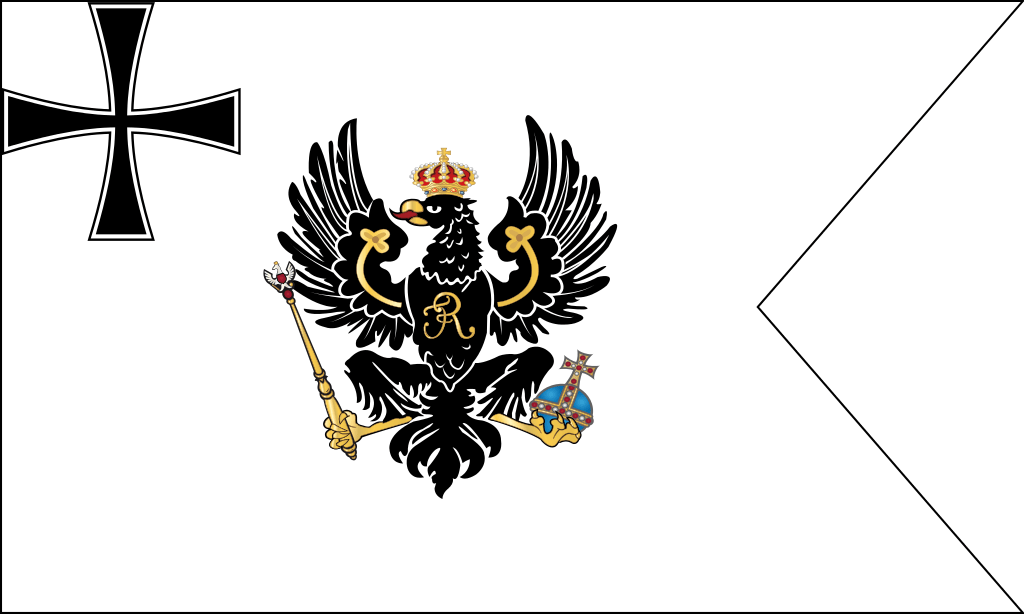
“To arms!” cried Mr. Harte, and he was given a look that went around world. At the exact same time a Prussian fleet sailed out of port in Chile. There were three frigates, and five troop transports. But what got the attention of the German colonizers, and the Native Americans, was the sight to the four ironclads that belched smoke and steam.
“Laviathans!”
Prussia had made an offer to purchase California, but the discovery of gold, and the Gold Rush, forced the military kingdom that threatened Europe, to back out the deal. But, the Prussian Royalty had a plan. Timing is everything. When Wilhelm got news of – The Firing On Fort Mason – his fleet was sighted by the citizens of Los Angeles. Many of them were German immigrants. On cue, they formed militias, and would march into the San Joaquin Valley from the South!
‘When Senator Thomas Hart Benton was informed the South had landed an army in Oakland, he told his men to send the Ozark Brigade to Oregon to meet the British force he knew would come down from Canada to fight their old foe, the Scott-Irish. There were Germans from Saint Louis in this bunch.
“Gentleman! The Gold War….has begun!”
__________________________________
Author’s Notes
Jessie Fremont ins Sunshine Magazine said the British had plans to take over the San Joaquin Valley and move tens of thousands of Irish Catholics there. Prussian offered six million dollars for California. Radical German Forty-Eighters put Lincoln in office. Lincoln put tens of thousands of Abolitionist German Immigrants in Freemont’s ‘Mountain Department’ with no Confederate army anywhere near. Did Lincoln fear the Turner Germans would throw Lincoln out of office in a coup, because he kept putting off Emancipating the slaves? Did Joseph Lane have plans to make Oregon a slave slate – and California? Did Blair have a plan to make peace with the Southern slave owners by offering them the West, and ending slavery in the Original Thirteen Colonies? The British may have promised to thwart this idea because they were putting an end to slavery all over the world.
An hour ago I read an article by Joe Ryan who asks the questions I have been asking for ten years – at least! I have wondered if my great grandfather, Carl Janke, was part of a Prussian plan to colonize California – without a purchase. Just start moving in Germans from all over the world. Much of the world’s cotton is grown in the San Joachim Valley. How close did we come to having poor Irish Catholics being the Cotton Picker of The World…Cotton Mundi. Protestant England is free of the Pope – alas! Remember Drake and the sinking of the Spanish Armada that was built with New World gold.
Mankind’s love of gold……will be with us forever!
John Presco
President: Royal Rosamond Press
Understanding General John Fremont (joeryancivilwar.com)
In the process, harking back to Frémont’s glory days as the Pathfinder, Lincoln created the “Mountain Department” and sent Frémont on an illusionary mission to nowhere, conveniently stashing on the perimeter of Virginia territory thirty thousand men. It appears that most of these men were Germans, many of whom spoke no English. Whether this fact has something to do with Lincoln’s thinking here, who knows?
Flags of the Confederate States of America – Wikipedia
The Prussian Navy was created in 1701 from the former Brandenburg Navy upon the dissolution of Brandenburg-Prussia, the personal union of Brandenburg and Prussia under the House of Hohenzollern, after the elevation of Frederick I from Duke of Prussia to King in Prussia. The Prussian Navy fought in several wars but was active mainly as a merchant navy throughout the 18th and 19th centuries, as Prussia’s military consistently concentrated on the Prussian Army. The Prussian Navy was dissolved in 1867 when Prussia joined the North German Confederation, and its naval forces were absorbed into the North German Federal Navy.
The naval preference of the last Prussian king, German Emperor Wilhelm II, prepared the end of the Prussian monarchy. The German naval buildup of the late 19th and early 20th centuries was one of the causes of World War I; and it was the mutinying sailors of the High Seas Fleet who forced the abdication of the Emperor during the German Revolution of 1918–1919. The Navy continued as the Reichsmarine (Reich Navy) and later the Kriegsmarine (War Navy), until at the end of World War II, it faced its own end.
Between the mid-1860s and the early 1880s, the Prussian and later Imperial German Navies purchased or built sixteen ironclad warships.[1][a] In 1860, however, the Prussian Navy consisted solely of wooden, unarmored warships. The following year, Prince Adalbert and Albrecht von Roon wrote an expanded fleet plan that included four large ironclads and four smaller ironclads. Two of the latter were to be ordered from Britain immediately,[8]
Confederate States Navy – Wikipedia
List of ironclad warships of Germany – Wikipedia
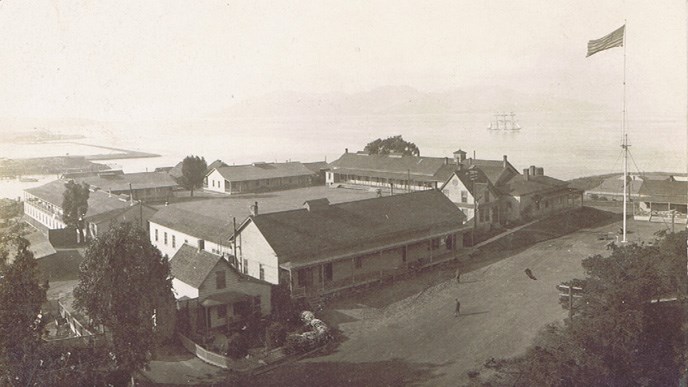
Civil War at Fort Mason
Understanding John Fremont
By: Joe Ryan

Share this:
Related
Fund My Anti-War MovementFebruary 23, 2022Liked by 1 person
The Rosamond Gold MineAugust 30, 2017With 1 comment
Owning A Divine EmpathyFebruary 22, 2012

About Royal Rosamond Press
I am an artist, a writer, and a theologian.
View all posts by Royal Rosamond Press →
This entry was posted in Uncategorized. Bookmark the permalink. Edit
← Richard Burton On Alcoholism
Disrespecting The Last Wishes of Rosamond →
1 Response to Gold War
Royal Rosamond Press says:January 4, 2022 at 8:34 pm (Edit)Reblogged this on Rosamond Press and commented:Due to Canada’s fear of successful right-wing coup in America, the battle for the Republican party, is huge! I read a letter by Jessie Benton-Fremont to a British official in Canada, assuring him her father was not pro-salvery, and thus the return of the Oregon Territory coould happen, there no chance Slave States will take root. However, the Southern Traitors have risen again, and may allow slavery in all fifty states. Will Canada. and Britian, be forced to act?The Fremonts at Black Point
Posted on September 11, 2011 by Royal Rosamond PressJessie Benton held a Salon at the Fremont home on Black Point. Hermnan Melville stayed with the Fremonts, and Bret Harte was a frequent guest. Three miles away in Belmont, William Ralston was entertaining Mark Twain in his Salon. You can see Jessie’s features in my niece, Drew Benton. How could the so called “Caretaker” of the Rosamond legacy miss all this important family history?
Jon PrescoJesse Benton Fremont by Susan Saperstein She is thought to be the real author behind the successful writings of John C. Fremont (general, senator, presidential candidate, and the Pathfinder of the West) describing his explorations. Jesse Benton Fremont (1824– 1902), Fremont’s wife, was also the daughter of Missouri Senator Thomas Hart Benton, a leading advocate of Manifest Destiny, a political movement pushing expansion to the West. And in her event-filled life, some of her happiest times were at her house in San Francisco’s Black Point area, now known as Fort Mason. The Fremonts lived there between 1860 and 1861. The prop- erty included three sides of the point, and Jesse described it “like being on the bow of a ship.” They had a clear view of the Golden Gate, so named by John when he first viewed it in 1846. Alcatraz was so close that Jesse is said to have called the lighthouse on the island her nightlight.The Spanish called the area Point San Jose and built a battery in 1797. However, cold winds and fog soon made the cannons useless. By the time the Mexicans were ruling in the 1820s, the area was known as Black Point for the dark vegetation on the land.Their house was one of six on the point. Jesse remodeled the house and added roses, fuchsias, and walkways on the 13 acres. Their home became a salon for San Francisco intellectuals. Thomas Starr King, the newly appointed minister of the Unitarian church, was a fixture for dinner and tea. Young Bret Harte, whose writing Jesse admired, became a Sunday dinner regular, as did photographer Carleton Watkins. She invited literary celebrities when they came to townó including Herman Melville, who was trying to get over the failure of Moby Dick. Conversations in her salon led to early conservation efforts when Jesse and a group including Watkins, Starr King, Fredrick Law Olmsted, and Israel Ward Raymond lobbied Congress and President Lincoln to preserve Yosemite and Mariposa Big Trees. Jesse’s husband, however, often away on business ventures, was not a regular at her gatherings.Jesse’s education was unusual for a woman of her time. She accompanied her father to the White House when he visited presidents and spent time at the Library of Congress while he was working in the Senate. In her childhood home she heard William Clark tell stories about his travels with Meriwether Lewis.The sixteen-year-old Jesse met the handsome and dashing Fremont when he worked at the mapping wing of the United States Army, where her father spent time because of his interest in Western expansion. When her parents noticed Jesse’s interest, they forbade her to see Fremont. After the two eloped, her parents stopped speaking to her, but later reconciled. Thomas Hart Benton then pushed funding for Fremont’s 1842 trip to explore the Oregon Trail. On returning from Oregon, John Fremont was required to report his findings to Congress, but suffered writer’s block. As Jesse later recalled, “the horseback life, the sleep in the open air” made him “unfit for the indoor life of writing.” She offered to write as he dictated to her, and the report with its descriptions of the western lands was a success. Succeeding expedition reports made Fremont and his scout Kit Carson famous. People heading west for gold bought copies with their supplies. Historians are mixed on who was the actual writer. One, John W. Caughey, indicated that Fremont was one of those writers who “acquired by marriage a very attractive literary style.” During an 1846 expedition to California, Fremont found himself caught between conflicting orders of feuding Army General Stephen Kearny and Navy Commodore Robert Stockton. He declared himself military governor and was subsequently arrested and court-martialed. In a strange twist of fate, Fremont asked American Consul Thomas Larkin to purchase land in the San Jose area before he left California for his trial. Larkin instead purchased land in Mariposa, where a few years later gold was discovered, making the Fremonts very rich. When Fremont lost his trial, he left the Army and headed west on another expedition. Just as the discovery of gold was announced, Jesse traveled to California to meet him, using the Isthmus of Panama route. This was something very few women did–even fewer with only a six-year-old child, her daughter Lily, as a companion. Fremont tended his business at the mines in Mariposa, and the Fremonts lived in Monterey, Bear Valley, and San Francisco at periods between 1849 and 1861. Fremont bought the house at Black Point in 1860 for $42,000. When civil war seemed likely, the Fremont family returned east for John’s new Army appointment, which lasted only a few months. (He decreed his own emancipation proclamation in Missouri, which angered Lincoln.) He lost control of his mines, and after a number of other job attempts declared bankruptcy in the 1870s. Jesse supported the family with her writing. Fremont died during a trip to New York in 1890, and Jesse died twelve years later while living in Los Angeles. Black Point was taken by the military for defense during the Civil War, and the Fremont home was demolished. One of the original six houses is used today as the Fort Mason Officers Club. Jesse filed lawsuits for compensation for the property, but the government countered that the families living on the point were squatters and produced documentation from President Millard Fillmore reserving it for military use. After Jesse’s death, her daughter continued to file claims, but the family was never reimbursed. Some of the heirs of Black Point families, including the Fremont’s great-grandson, were still pursuing legal action in the 1960s. The area was renamed for Colonel Richard Masonóappointed military governor of California in 1847 when his predecessor, Stephen Kearny, went to Washington to testify against Fremont in his court-martial. Sources: Jesse Benton Fremont, American Woman of the 19th Century, Pamela Herr
Jesse Fremont at Black Point, Lois Rather The Age of Gold, H. W. Brands You can walk the area where the Fremonts and the other Black Point families lived following the Fort Mason walk described in Stairway Walks in San Francisco by Adah Bakalinsky. Historic photos reprinted with permission, SF History Center, SF Public Library Black Point with the Fremonts house on the far right. Today this is Fort Mason land, bordered by Aquatic
 Rosamond Press
Leave a comment