
The great grandfather of Folke Bernadotte, fought Napoleon at the Battle of Leipzig – and won! He was under the command of my ancestor, Karl Schwarzenberg. This battle was fought a year after the U.S. gave Napoleon $14 million dollars for Louisiana. I am looking at the real possibility that this battle weakened the Bonaparte family that my have ha plans to invade and conquer America – using that money.
A Zionist Terrorist gang, murdered Folke Bernadotte because he presented a plan for peace as head of the United Nations. Israel, and the world, are back to that infamous day. I am calling for an investigation of the massacres and rape of women at the Nova Music Festival. Where was this festival originally going to be held, and why did it take place in a very dangerous place.
John Presco
“I saw this beautiful woman with the face of an angel and eight or 10 of the fighters beating and raping her,” recalled Saadon, a foundry shift manager. “She was screaming, ‘Stop it already! I’m going to die anyway from what you are doing, just kill me!’
“When they finished, they were laughing, and the last one shot her in the head,” he said.
Main article: White Buses
.jpg)
Upon the initiative of the Norwegian diplomat Niels Christian Ditleff in the final months of the war, Bernadotte acted as the negotiator for a rescue operation transporting interned Norwegians, Danes and other western European inmates from German concentration camps to hospitals in Sweden.
In the spring of 1945, Bernadotte was in Germany when he met Heinrich Himmler, who was briefly appointed commander of an entire German army following the assassination attempt on Hitler the year before. Bernadotte had originally been assigned to retrieve Norwegian and Danish POWs in Germany. He returned on 1 May 1945, the day after Hitler’s death. Following an interview, the Swedish newspaper Svenska Dagbladet wrote that Bernadotte succeeded in rescuing 15,000 people from German concentration camps, including about 8,000 Danes and Norwegians and 7,000 women of French, Polish, Czech, British, American, Argentinian, and Chinese nationalities. The missions took around two months, and exposed the Swedish Red Cross staff to significant danger, both due to political difficulties and by taking them through areas under Allied bombing.
:max_bytes(150000):strip_icc():format(webp)/Karl_XIV_Johan_king_of_Sweden_and_Norway_painted_by_Fredric_Westin-103523579ba944c5858c22f1cf87eed3.jpg)
On August 21, 1810, the Öretro States General elected Bernadotte crown prince and named him head of the Swedish armed forces. Formally adopted by Charles XIII, he arrived in Stockholm on November 2 and assumed the name Charles John. Assuming control of the country’s foreign affairs, he began efforts to obtain Norway and worked to avoid being a puppet of Napoleon.
Fully adopting his new homeland, the new crown prince led Sweden into the Sixth Coalition in 1813 and mobilized forces to battle his former commander. Joining with the Allies, he added resolve to the cause after twin defeats at Lutzen and Bautzen in May. As the Allies regrouped, he took command of the Northern Army and worked to defend Berlin. In this role he defeated Marshal Nicolas Oudinot at Grossbeeren on August 23 and Marshal Michel Ney at Dennewitz on September 6.
In October, Charles John took part in the decisive Battle of Leipzig which saw Napoleon defeated and forced to retreat towards France. In the wake of the triumph, he began actively campaigning against Denmark with the goal of forcing it to cede Norway to Sweden. Winning victories, he achieved his objectives through the Treaty of Kiel (January 1814). Though formally ceded, Norway resisted Swedish rule requiring Charles John to direct a campaign there in the summer of 1814.

The monument outside the Royal Palace in Oslo

Swedish troops assaulting Leipzig
Here.
Swedish troops assaulting Leipzig
In the meantime, at the behest of his officers, who felt embarrassed that they had not participated in the battle, Bernadotte gave the order for his light infantry to participate in the final assault on Leipzig itself. The Swedish jägers performed very well,[49] losing only 35 men dead and 173 wounded while capturing 647 French prisoners.[55][56]
https://en.wikipedia.org/wiki/Battle_of_Leipzig
The Battle of Leipzig[e] (French: Bataille de Leipsick; German: Völkerschlacht bei Leipzig, [ˈfœlkɐˌʃlaxt baɪ̯ ˈlaɪ̯pt͡sɪç] ⓘ; Swedish: Slaget vid Leipzig), also known as the Battle of the Nations,[14] was fought from 16 to 19 October 1813 at Leipzig, Saxony. The Coalition armies of Austria, Prussia, Sweden, and Russia, led by Tsar Alexander I and Karl von Schwarzenberg, decisively defeated the Grande Armée of French Emperor Napoleon Bonaparte. Napoleon’s army also contained Polish and Italian troops, as well as Germans from the Confederation of the Rhine (mainly Saxony and Württemberg). The battle was the culmination of the German Campaign of 1813 and involved 560,000 soldiers, 2,200 artillery pieces, the expenditure of 400,000 rounds of artillery ammunition, and 133,000 casualties, making it the largest battle of the Napoleonic Wars, and the largest battle in Europe prior to World War I.
Decisively defeated again, Napoleon was compelled to return to France while the Sixth Coalition kept up its momentum, dissolving the Confederation of the Rhine and invading France early the next year. Napoleon was forced to abdicate and was exiled to Elba in May 1814.
The three monarchs of the Coalition powers were present in the field, with Emperor Alexander I of Russia at the head of the three alongside King Frederick William III of Prussia and Emperor Francis I of Austria, and a substantial staff supported the Coalition commanders. Alexander was also the supreme commander of the Coalition forces in the eastern front of the war, while Prince Karl von Schwarzenberg of Austria was the commander-in-chief of all Coalition forces in the German theatre.[30]
Actions at Paunsdorf and Schönefeld[edit]
During that morning, Bernadotte and Blücher held a conference in Breitenfeld. It was agreed that Bernadotte’s Army of the North would pass the Parthe River at Taucha with a reinforcement of 30,000 men drawn from Blücher’s Army of Silesia. Blücher agreed to dispatch Langeron’s army corps, and to renounce his rank and his rights as army commander, putting himself at the head of his Prussians.[50] The advance of the Army of the North towards Leipzig had been slow, purportedly because Bernadotte had received word that Napoleon planned a renewed attack towards Berlin after his marshals’ failure to take the city in the battles of Großbeeren and Dennewitz.[51]
https://en.wikipedia.org/wiki/Karel_Schwarzenberg
https://en.wikipedia.org/wiki/Charles_XIV_John
Born in Pau in southern France, Bernadotte joined the French Royal Army in 1780. Following the outbreak of the French Revolution, he exhibited great military talent, rapidly rising through the ranks, and was made a brigadier general by 1794. He served with distinction in Italy and Germany, and was briefly Minister of War. His relationship with Napoleon was turbulent; nevertheless, Napoleon named him a Marshal of the Empire on the proclamation of the French Empire. Bernadotte played a significant role in the French victory at Austerlitz, and was made Prince of Pontecorvo as a reward. Bernadotte was, through marriage to Désirée Clary, brother-in-law to Joseph Bonaparte, and thus a member of the extended Imperial family.
] After the battle, Bernadotte complained to Napoleon for having, in violation of all military rules, ordered Dupas to act independently of his command, and for having thereby caused great loss of life to the Saxons, and tendered his resignation. Napoleon accepted after he had become aware of an order of the day issued by Bernadotte in which he gave the Saxons credit for their courage in terms inconsistent with the emperor’s official bulletin.[18] Accounts of Bernadotte’s role at Wagram are contradictory. While it is true that IX Corps broke on 6 July, as did other French formations, they later rallied and played a part in the victory. Moreover, Bernadotte fought with exceptional personal courage, at the head of his troops, and narrowly avoided death when attacked by Austrian cavalry. It is likely that IX Corps’ poor performance would have been forgotten, and Bernadotte would have retained his command, had he never published the controversial Order of the Day.[66] His praise for the Saxons, as well as his mild and courteous treatment of them while under his command, was never forgotten by the Saxon officers and this would later have disastrous consequences for the French when a whole Saxon division defected to Bernadotte’s Army of the North during a key moment of the Battle of Leipzig.[67]
https://en.wikipedia.org/wiki/Battle_of_Leipzig
Diplomatic fallout

The day after the murders, the United Nations Security Council condemned the killing of Bernadotte as “a cowardly act which appears to have been committed by a criminal group of terrorists in Jerusalem while the United Nations representative was fulfilling his peace-seeking mission in the Holy Land.”[49]
The Swedish government believed that Bernadotte had been assassinated by Israeli government agents.[50] They publicly attacked the inadequacy of the Israeli investigation, and campaigned unsuccessfully to delay Israel’s admission to the United Nations.[51] In 1950, Sweden recognized Israel, but relations remained frosty despite Israeli attempts to mollify Sweden, such as through the planting of a Bernadotte Forest by the Jewish National Fund in Israel.[52] At a ceremony in Tel Aviv in May 1995, attended by the Swedish deputy prime minister, Israeli Foreign Minister and Labor Party member Shimon Peres issued a “condemnation of terror, thanks for the rescue of the Jews and regret that Bernadotte was murdered in a terrorist way”, adding that “We hope this ceremony will help in healing the wound.”[53]
Ralph Bunche, Bernadotte’s American deputy, succeeded him as U.N. mediator. Bunche was successful in bringing about the signing of the 1949 Armistice Agreements, for which he received the Nobel Peace Prize.
Awards and memorials
https://en.wikipedia.org/wiki/Folke_Bernadotte
A four-man team, consisting of Yehoshua Cohen, Yitzhak Ben-Moshe (Markovitz), Avraham Steinberg, and Meshulam Makover, ambushed Bernadotte’s motorcade in Jerusalem’s Katamon neighborhood. The team left a Lehi base in a Jeep and set up a makeshift roadblock at Ben Zion Guini Square, off Hapalmach Street, and waited in the jeep. When Bernadotte’s motorcade approached, Cohen, Ben-Moshe, and Steinberg got out and approached it, while Makover, the driver, remained in the jeep. Captain Moshe Hillman, the motorcade’s Israeli liaison officer, who was sitting in the leading UN vehicle, called out in Hebrew to let them through, but was ignored. Cohen came up to Bernadotte’s sedan and fired through an open window, pumping 6 shots into Bernadotte’s chest, throat and arms and 18 into Colonel André Serot who was seated to his left, killing both.[35]
Yoni Saadon, a 39-year-old father of four, told the UK’s Sunday Times that he is still haunted by the horrific scenes he witnessed at the Nova Music festival, when the Hamas fiends slaughtered at least 364 festival-goers, including the gang-raped woman, who begged to be killed.
“I saw this beautiful woman with the face of an angel and eight or 10 of the fighters beating and raping her,” recalled Saadon, a foundry shift manager. “She was screaming, ‘Stop it already! I’m going to die anyway from what you are doing, just kill me!’
“When they finished, they were laughing, and the last one shot her in the head,” he said.
Saadon said he witnessed the gruesome act after pulling over him the body of a slain woman who had also been shot in the head — and smearing her blood on himself so it looked like he, too, was dead.
Investigation
.jpg)
As of 14 October 2023, German authorities were aware of eight of its nationals having been taken as hostage in the overall events of 7 October 2023, including the case of Shani Louk,[45] which gained great public interest.[46][47] They opened a criminal probe against unknown Hamas members to investigate “belonging to a foreign terrorist group, hostage-taking and murder“.[48][46][49]
According to reports published on 17 November, the police concluded based on interrogations and their own investigations that Hamas did not know about the festival beforehand but came across it by accident and decided to attack it.[39] Israeli security authorities suggested that Hamas likely lacked advance knowledge of the Nova Festival. Senior officials estimated that Hamas may have become aware of the event through drones or individuals parachuting, and subsequently directed terrorists to the location using their communication system.[39] According to Haaretz‘s journalist Josh Breiner, a police source said that a police investigation indicated an IDF helicopter which had fired on Hamas militants “apparently also hit some festival participants” in Re’im music festival.[50][51] The Israeli police denied the Haaretz report[52] and said they found no evidence of civilian harm resulting from the aerial activities at that location.[52][50]
https://en.wikipedia.org/wiki/Re%27im_music_festival_massacre
] The organizers switched to the site only two days before, after the original location in southern Israel did not work out.[20] Scheduled to coincide with Jewish holidays: the final day of Sukkot (6 October) and Simchat Torah (7 October),[6] the rave was billed as a celebration of “friends, love and infinite freedom”.[18] The festival site had three stages, a camping zone, and an area with a bar and food.[6] Attendees described the crowd as mostly consisting of Israelis of ages 20–40 from across the country.[8] Attendance was reported to be 3,500 but figures vary.[21][b] Security guards and police were present at the festival.[8][20]
The musical festival was one of the first targets of Hamas’ surprise attack against Israel in the early morning hours of 7 October 2023.[18] Israeli security services investigations have found it unlikely that Hamas has advanced knowledge of the attack, citing, among other evidence that the festival had been planned to run until Friday, October 6 and was only extended to Saturday the prior Wednesday.[22] One attendee stated that after cutting the electricity, a group of approximately 50 Hamas gunmen arrived in vans and sprayed gunfire in all directions.[6] Some of the Hamas gunmen who attacked the festival infiltrated Israel via motorized paragliders,[23] arriving around 6:30 am.[23][24]
King of Rome
Posted on November 23, 2023 by Royal Rosamond Press
Code of Jeanne (John) de Rougemont
Posted on February 13, 2020 by Royal Rosamond Press

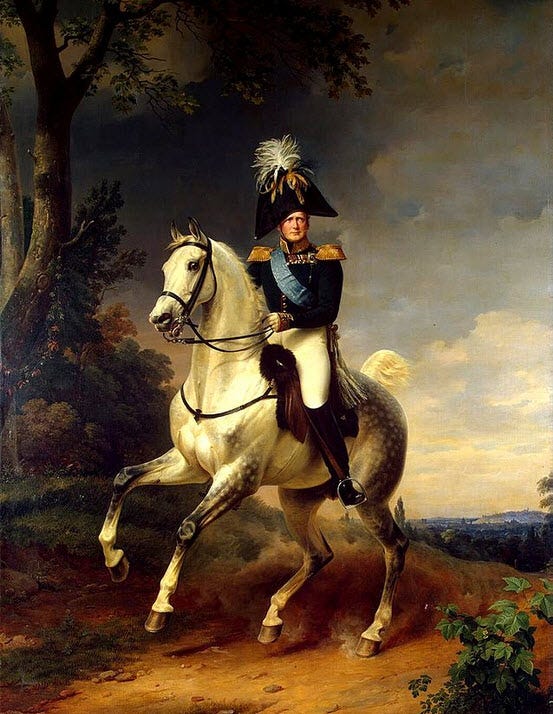
Tsar Alexander I of Russia

Marie Antoinette with her two eldest children, Marie-Thérèse Charlotte and the Dauphin Louis Joseph, in the gardens of the Petit Trianon (portrait by Adolf Ulrik Wertmüller, 1785)

Coronation of the Archduke Joseph as King of the Romans in the Imperial Cathedral of Saint Bartholomew in Frankfurt, 3 April 1764
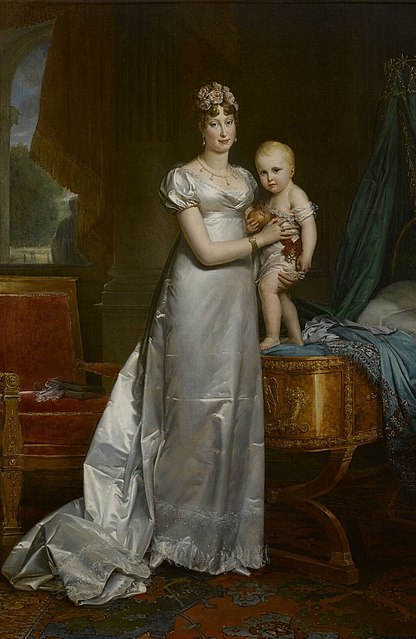
Last night I discovered Napoleon deliberately married a member of the Habsburg to make sure he had a legitimate, highly prized, heir to his throne. He married the cousin of Marie Antionette and she bore Napoleon 2. He was given the title ‘King of Rome. The Hapsburg owned the title ‘King of Romans. This is the greatest usurpation – of all time! There is not an ounce of royal blood in Napoleons veins, yet with the birth of his son – he is now related to many royal houses! How many men have held the title ‘King of Romans. Consider…..The Antichrist! Russians called Napoleon – The Antichrist!
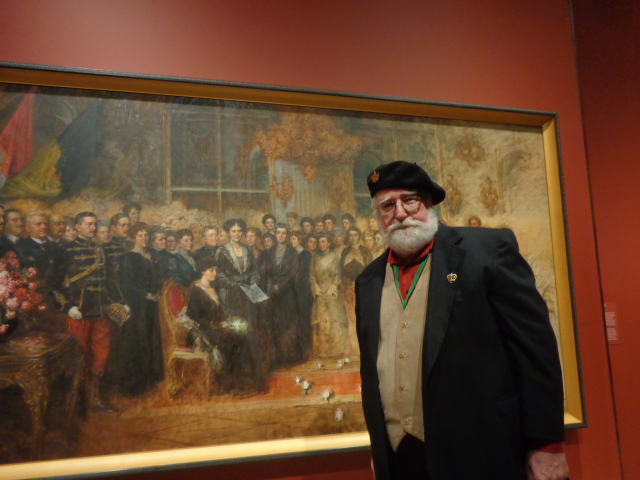
Two days ago I discovered a Knight Templar in Virginia Hambley’s tree. Jacques de Maillé died a heroic death in the Holy Land where much death and atrocities are taking place. I met Virginia in 1998 while studying the book ‘Holy Blood, Holy Grail. The authors of this book sued Dan Brown. I was battling Ian Sinclair on a yahoo-group. He got me banned from a Templar group after posting on Jean Rougemont, the Queen Mother of all the Habsburgs – and my possible ancestor! Two years ago I discovered I am related to Karl Schwarzenberg who I sent an e-mail informing him of the Last Audience of the Hapsburg painting. He and Austria do not want this painting. I declared myself the heir to the Hapsburg Empire that fled to America. On this day, November 23, 2023, (Thanksgiving) I claim the Bonaparte-Habsburg linage – that also came to America. This is the greatest genealogical coup – known to man!
The opening scene of Napoleon depicts the beheading on Marie Antionette. The closing scene shows the Emperor of France, with his son. It is now clear to me, Napoleon saw the French Revolution – THROW AWAY their royalty – and the their connection to royal houses of other nations. This royalty was there for the taking – if you could raise a powerful and effective army. I declare that army..
The Imperial Army of the Antichrist
The de Maillé family – helped defeat the army of The Great Pretender!
On Thanksgiving Day I found an account of Prince Jerome’s tour of the United States, and his meeting of John Fremont in St. Louis. Prince Bonaparte was very interested in the account of Count Leonetta Cipriani going from St. Louis with a wagon train and a herd of cattle. It appears Cipriani prepared the way for the Prince, and his wife, Princess Clotilde of Savoy. Scroll down for the mazing encounter with Fremont, who brought guns with him from France when the Civil War broker out. Prince Jerome meets Lincoln and many American Generals. Is he a secret agent for Napoleon 3?
General Grant had it out for the Habsburgs in Mexico, and may have been aware of, or, an instigator of this idea..
“Historian James McPherson notes in Battle Cry of Freedom that Francis P. Blair, Sr., a former member of Andrew Jackson’s presidential administration, concocted a scheme to stop the American Civil War and unite Union and Confederate forces to overthrow the French from Mexico. Although intriguing, President Lincoln did not give the plan much thought and wished to win the war against the Confederacy first
John Presco ‘King of Romans’
Copyright 2023
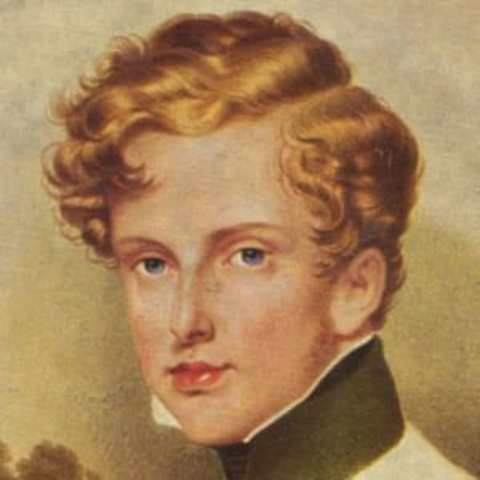
Napoleon II (Napoléon François Joseph Charles Bonaparte; 20 March 1811 – 22 July 1832) was the disputed Emperor of the French for a few weeks in 1815. The son of Emperor Napoleon I and Marie Louise of Austria, he had been Prince Imperial of France and King of Rome since birth. After the fall of his father, he lived the rest of his life in Vienna and was known in the Austrian court as Franz, Duke of Reichstadt for his adult life (from the German version of his second given name, along with a title he was granted by the Austrian emperor in 1818). He was posthumously given the nickname L’Aiglon (“the Eaglet”) after the popular Edmond Rostand play, L’Aiglon.
| Napoleon II | |
|---|---|
| King of Rome Duke of Reichstadt Prince of Parma | |
| Portrait by Leopold Bucher, 1832 | |
| Emperor of the French (more…) (disputed) | |
| Reign | 4 April – 2 May 181422 June – 7 July 1815 |
| Predecessor | Napoleon I |
| Successor | Napoleon III (1852; as Emperor) Louis XVIII (as King of France) |
| Regent | Joseph Fouché |
| Born | 20 March 1811 Tuileries Palace, Paris, French Empire |
| Died | 22 July 1832 (aged 21) Schönbrunn Palace, Vienna, Austrian Empire |
| Burial | Napoleon’s tomb, Les Invalides |
| NamesFrench: Napoléon François Charles Joseph Bonaparte | |
| House | Bonaparte |
| Father | Napoleon I, Emperor of the French |
| Mother | Marie Louise, Duchess of Parma |
| Religion | Roman Catholicism |
| Signature | |
When Napoleon I tried to abdicate on 4 April 1814, he said that his son would rule as emperor. However, the coalition victors refused to acknowledge his son as successor, and Napoleon I was forced to abdicate unconditionally some days later. Although Napoleon II never actually ruled France, he was briefly the titular Emperor of the French after the second fall of his father. He lived most of his life in Vienna and died of tuberculosis at the age of 21.
His cousin, Louis-Napoléon Bonaparte, founded the Second French Empire in 1852 and ruled as Emperor Napoleon III.
The war between Russia and France in 1812 was far more than a military conflict. At the core of this invasion by the French was a deep spiritual battle in which the Christian nation of Russia was under siege by the godless French led by the Emperor Napoleon Bonaparte. Because of many signs, there was widespread belief among the people in Russia that Napoleon was the antichrist, and a deep conviction that they were living in the last days. These events brought about a revival that swept throughout Russia, as the country sought help from God in the face of this existential threat.
https://en.wikipedia.org/wiki/King_of_the_Romans
Joseph II (German: Josef Benedikt Anton Michael Adam; English: Joseph Benedict Anthony Michael Adam; 13 March 1741 – 20 February 1790) was Holy Roman Emperor from 18 August 1765 and sole ruler of the Habsburg monarchy from 29 November 1780 until his death. He was the eldest son of Empress Maria Theresa and her husband, Emperor Francis I, and the brother of Marie Antoinette, Leopold II, Maria Carolina of Austria and Maria Amalia, Duchess of Parma. He was thus the first ruler in the Austrian dominions of the union of the Houses of Habsburg and Lorraine, styled Habsburg-Lorraine.
https://en.wikipedia.org/wiki/Antichrist
In verse 44, Daniel reveals this stone as the Kingdom of God. It will develop into a global kingdom of righteousness that will come immediately following the destruction of the Roman Empire. Daniel also says that God’s kingdom will come “in the days of these kings.”
What kings? The only king mentioned in Daniel 2 is King Nebuchadnezzar. Daniel, however, is referring to kings. These kings are represented by the ten toes of Nebuchadnezzar’s image. Read verses 42 and 43.
With Satan pulling out all stops, significant geopolitical shifting will occur. Europe will become the center of a comprehensive and intentional resurrection of the old Roman Empire. A one-world government will form, divided up into ten regions.
As the Antichrist conquers through deceptive peace, it is probable that other Western powers such as the United States, mortally weakened by the Rapture, will join this new world order.
PORTLAND, Ore. (KOIN) – Non-profit Free Speech For People sent a letter to the Oregon secretary of state on Tuesday calling for former President Donald Trump to be banned from the Oregon ballot after his involvement in the January 6 insurrection.
This challenge is the latest from Free Speech For People, which issued similar challenges in Michigan and Minnesota. The organization describes itself as a national non-partisan group that is focusing on holding insurrectionists accountable “for their role in the violent assault on American democracy.”
In their letter, Free Speech For People and Oregon Co-Counsel Jason Kafoury of Kafoury & McDougal and Daniel Meeks, argues that Trump should be disqualified from the primary and general election ballots under Section 3 of the 14th Amendment. The group is asking Secretary of State LaVonne Griffin-Valade for a temporary rule and later a declaratory ruling disqualifying Trump from the ballot.
The King of California
Posted on January 26, 2015 by Royal Rosamond Press

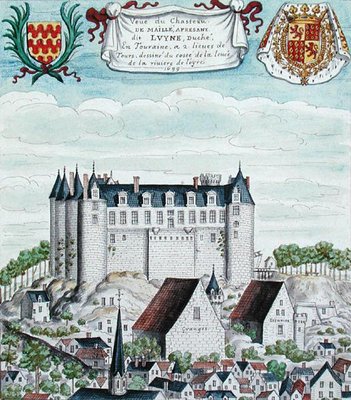
| View of the Chateau de Maille in the Tourraine |
Here
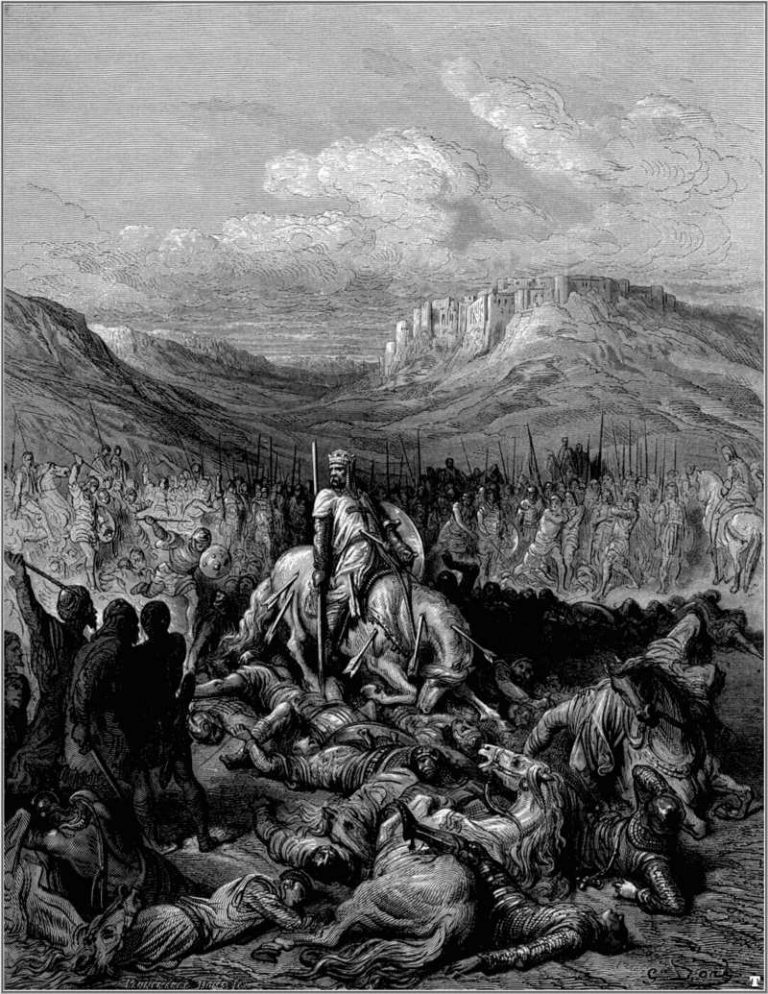
Heroic Death of Jacques de Maillé, a Knight of the Temple
FEBRUARY 14, 2019
Glorious death of Jacques de Maille Marshal of the temple by Gustave Dore.
The truce made with the king of Jerusalem was broken at the same time by both Christians and Mussulmans. Renaud de Chatillon continued his incursions upon the territories of the infidels, and only replied to the complaints of Saladin by new violations of treaties. A Mussulman army, which the sultan of Damascus had sent to the assistance of the count of Tripoli, advanced into the country of Galilee, whither five hundred knights of the Temple and St. John hastened to defend the Christian territory, and give battle to the Saracens. They were speedily overwhelmed by the numbers, and almost all perished on the field of battle. . . . Above all the rest, nothing could equal the heroic valor of Jacques de Maillé, a knight of the Temple. Mounted on a white horse, he remained alone in the field of battle, and fought on, surrounded by heaps of slain. Although hemmed in on all sides, he refused to surrender. The horse which he rode, worn out with fatigue and exhausted by wounds, sunk under him, and dragged him with him; but the intrepid knight arose, lance in hand, covered with blood and dust, and bristling with arrows, and rushed upon the ranks of the Mussulmans, astonished at his audacity; at length he fell, covered with wounds, but fighting to the last. The Saracens took him for St. George, whom the Christians believed they saw descend from heaven to join their battalions. After his death the Turkish soldiers, whom an historian calls the children of Babylon and Sodom, drew near with signs of respect to his body, slain by a thousand wounds; they wiped off the blood, they shared the rags of his clothes and the fragments of his arms, and, in their brutal excitement, evinced their admiration by actions that make modesty blush when speaking of them.
The grand master of the Templars, with two of his knights, were all that escaped from the carnage. This battle was fought on the 1st of May, 1187. In the season, says an ancient chronicle, in which flowers and roses are gathered in the fields, the Christians of Nazareth found nothing but the traces of slaughter and the mangled bodies of their brethren. They buried them in the church of St. Mary, repeating these prophetic words: “Daughters of Galilee, put on your garments of mourning; and you, daughters of Sion, weep over the ills that threaten the kings of Judah.”
:quality(70)/cloudfront-us-east-1.images.arcpublishing.com/baltimorebanner/6A5NSRNQ35C7DAVNII4IMG3ZCA.jpg)
After life’s fitful fever, French emperor Napoleon Bonaparte’s estranged family sleeps well in Baltimore.
So says the epitaph etched on Elizabeth Patterson Bonaparte’s tombstone in Green Mount Cemetery. The fever perhaps first flared when her notorious brother-in-law objected to her nuptials to Jérôme Bonaparte, Napoleon’s younger brother, on Christmas Eve in 1803. Though the marriage eventually ended in divorce, it ignited for Elizabeth what would become a decadeslong legal battle for diplomatic recognition and legitimacy for her son.
“Nature never intended me for obscurity,” the Baltimore Bonaparte once stated in a letter to her father.
Long before Baltimore’s other famous divorcée Wallis Simpson fell in love with a European ruler, Patterson’s love story did not sit well with her new family in France. Thursday’s anticipated release of the biopic “Napoleon,” directed by Ridley Scott and starring Joaquin Phoenix, has renewed interest in Elizabeth Patterson Bonaparte and her tussle with the French emperor.
General Grant and the Fight to Remove Emperor Maximilian from Mexico
Ulysses S Grant National Historic Site
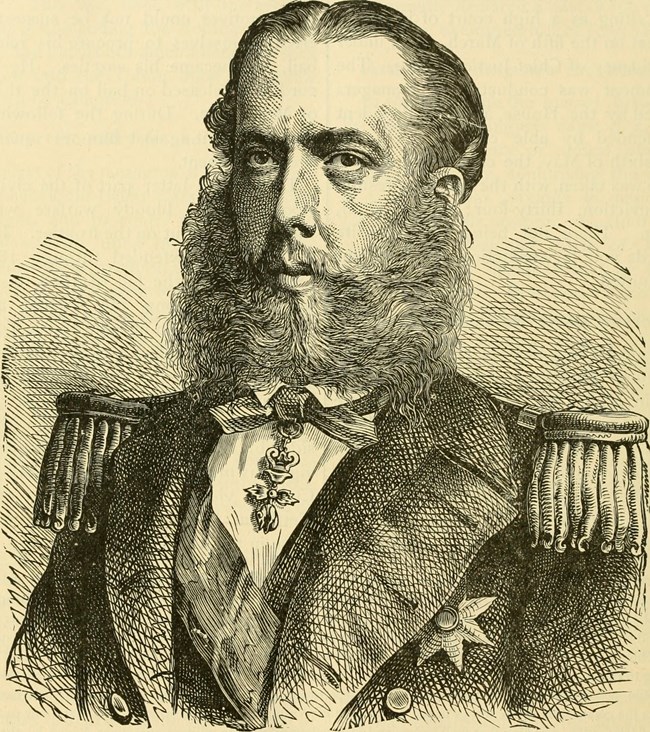
Ulysses S. Grant’s longstanding interest in Mexican affairs dated back to his service in the Mexican American War from 1846-48. During this time, Grant observed the culture and customs of Mexican society and admired its beautiful natural landscape while serving with the U.S. Army. During the American Civil War thirteen years later, Mexico found itself in a new fight for independence against France. After Confederate General Robert E. Lee surrendered his Army of Northern Virginia in April 1865, General Grant turned his focus to Mexican affairs.
In the decades following its independence from Spain in 1821, Mexico’s government faced a great deal of political instability and growing debts. These financial obligations became overwhelming, and the government stopped paying its debts to various European nations, including France, by the time the American Civil War broke out in 1861. French Emperor Napoleon III took advantage of the situation by attempting to create a French empire in Mexico. French troops mobilized for deployment to Mexico. During one French invasion on May 5, 1862, Mexican resistance fighters defeated the French at the Battle of Puebla, which is the inspiration for the popular Cinco de Mayo holiday in the United States. The French regrouped, however, and captured Mexico City. They installed an Austrian Hapsburg prince named Maximilian as Emperor of Mexico in 1864.
President Abraham Lincoln’s administration refused to recognize Maximilian and French meddling in Mexican affairs. Lincoln believed this move was a violation of the Monroe Doctrine, which warned European nations that the United States would not tolerate further meddling in Western Hemisphere countries. Conversely, the Confederacy welcomed Maximilian’s government as a possible ally in securing French recognition of the Confederacy. Although Maximilian’s presence in Mexico was unacceptable, President Lincoln had to walk a tight rope in his dealings with France.
Historian James McPherson notes in Battle Cry of Freedom that Francis P. Blair, Sr., a former member of Andrew Jackson’s presidential administration, concocted a scheme to stop the American Civil War and unite Union and Confederate forces to overthrow the French from Mexico. Although intriguing, President Lincoln did not give the plan much thought and wished to win the war against the Confederacy first. Meanwhile, Mexican resistance forces under Benito Juárez had more military successes. Maximilian needed conservative Mexican support to hold on to power, but alienated them by trying to compromise with political opponents by adopting some liberal policies. This didn’t endear him to the liberals because they viewed him as a puppet for the French.
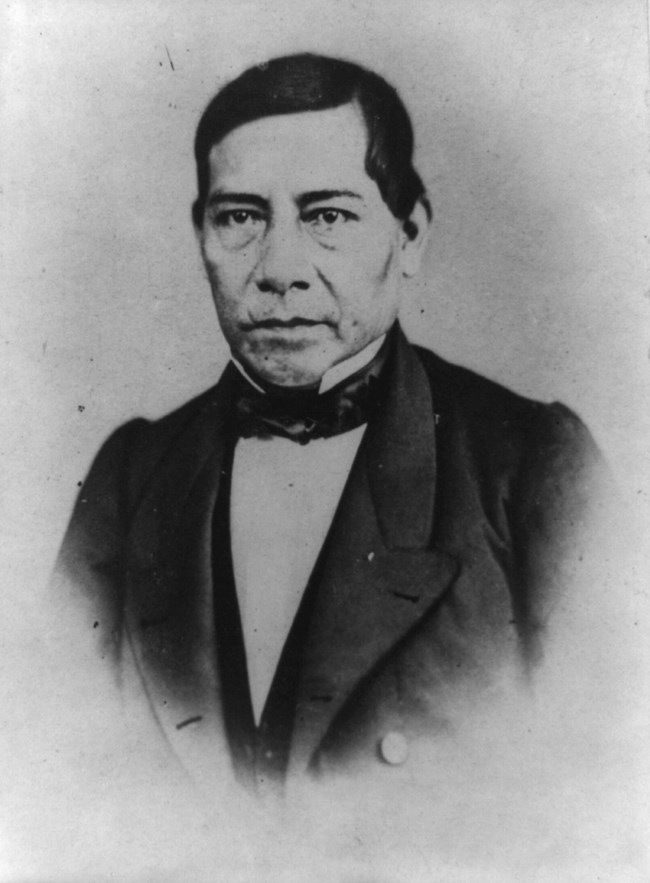
Ulysses S. Grant emerged as one of the most passionate enemies of Maximilian’s government after the American Civil War ended. In a letter to President Andrew Johnson that was written on June 19th 1865, Grant argued that “I regard the act of attempting to establish a Monarchical Government on this continent, in Mexico, by foreign [bayonets] as an act of hostility against the Government of the United States. If allowed to go on until such a government is established, I see nothing before us but a long, expensive and bloody war.” Grant then further explained his opposition to Maximilian’s government. For one, the French took advantage of the American Civil War to “overthrow Republican institutions” in Mexico. Second, the illicit trading in arms and materials of war between the Confederates and Maximilian’s government further prolonged the Civil War. “Rebels in Arms have been allowed to take refuge on Mexican soil protected by French [bayonets] . . . French soldiers have fired on our men from the South side of the [Rio Grande].”
Not everyone supported Grant’s use of the military in Mexico. Secretary of State William Seward favored diplomacy in dealing with the French. Grant had a willing ally in his subordinate, General Philip Sheridan. Grant dispatched Sheridan to Texas with around 50,000 troops to stop Confederate resistance in Texas, but his forces kept moving closer to the Rio Grande River. Grant even talked about sending liaisons from the U.S. Army to work with anti-imperialistic Mexican forces, while Sheridan talked about crossing the Rio Grande River to hasten Maximilian’s downfall. Ultimately a military battle between the U.S. and French forces in Mexico never happened. The intervention strained French resources and growing tensions with Germany drew France’s attention to events closer to home. Benito Juárez’s anti-imperialistic forces successfully defeated the French, who made a complete withdrawal from Mexico by 1867. Emperor Maximilian was also shot to death by Juárez’s forces that year. Although war with the French over Mexico never happened, Ulysses S. Grant backed up his convictions for self-determination for the people of Mexico.
Mexico during the French Intervention, 1862–1867
By the late 1850s, years of internal strife had left the young republic of Mexico fractured and deeply in debt to Europe. Seeing an opportunity to expand the French Empire in the New World, Napoleon III invaded Mexico in 1862. Ferdinand Maximilian Joseph, archduke of Austria, and his wife, Carlota, were installed as emperor and empress of Mexico in 1864.
During this time, the Commission scientifique du Mexique, established by Napoleon III to survey all aspects of the occupied country, produced numerous illustrations for scientific reports and travel narratives. In addition, souvenir images were created by and for foreign soldiers, and images of Mexico frequently appeared in the international illustrated press. Although the Second Mexican Empire was short-lived—the French army withdrew from Mexico in 1867, leaving Maximilian to face court-martial and execution—the legacy of image-making was continued by artists and photographers who remained in the country.
Symbols of Conquest
In 1863, following his successes during the siege of Puebla and other battles, François Achille Bazaine became commander of the French expeditionary force in Mexico. He is shown here on horseback wearing a flapped campaign hat and cape with his officers ranged behind him. He sits upon a jaguar pelt, once the symbol of Mexico’s Pre-Columbian rulers, alluding to France’s new role as master of Mexico.
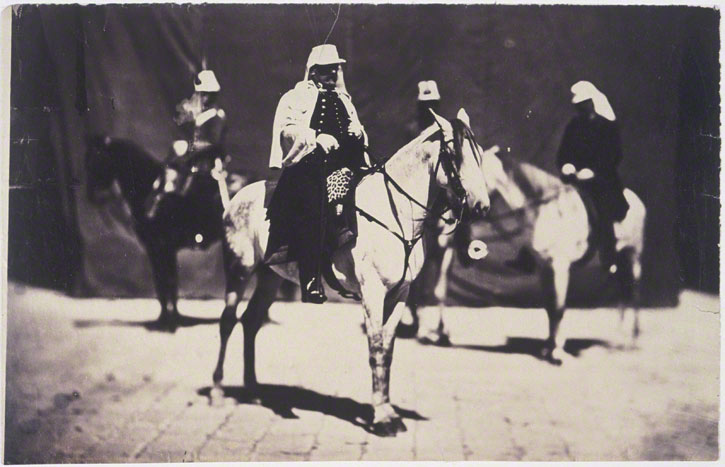
Portrait of Marshal Bazaine on Horseback, François Aubert (French, 1829–1906), 1860s. Albumen print. The Getty Research Institute, Views of Mexico during the French Intervention, 95.R.70.2
The Boban Calendar
The Commission scientifique du Mexique surveyed Mexican archaeological sites and studied French private collections, such as that assembled by Eugène Boban. The Commission’s reproduction of the Boban Calendar (ca. 1530), as this Aztec map and calendar are known, shows details that have since been lost due to deterioration of the manuscript.
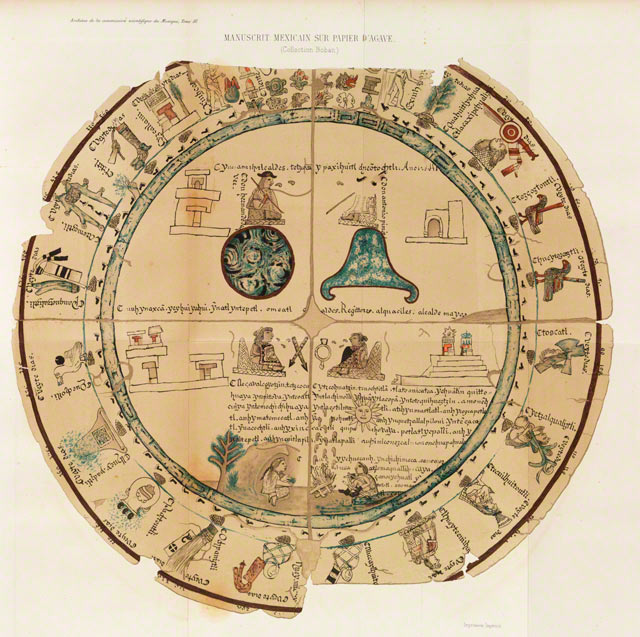
Boban Aztec Calendar Wheel by an anonymous artist. Color lithograph after original manuscript in Archives de la Commission scientifique du Mexique . . . (Paris, 1865–67), vol. 3, between pp. 120 and 121. The Getty Research Institute, 90-B38303
Hieroglyphs for the eighteen Aztec months ring the circular image, where Cortés sits on a woven throne above a blue circle representing the Lake of Mexico. Across from him sits Antonio Pimentel, the native ruler of Tetzcoco after the conquest and son of Cortés’s Indian ally, Ixtlilxochitl.
Banner image: Eastern Medicine, Einar de la Torre (Mexican, b. 1963) and Jamex de la Torre (Mexican, b. 1960), 2008. Blown glass and mixed media. Koplin Del Rio Gallery, Culver City
 Claude de MAILLÉ de LA TOUR-LANDRY
- Born in 1568
Parents
- François de MAILLÉ de LA TOUR-LANDRY, chevalier de l’Ordre du roi, baron de La Tour-Landry, seigneur de Bourmont (11e), comte de Châteauroux (1er, juin 1575), chambellan du Roi de France (8 janvier 1581), duc d’Alençon , born in 1540 – Châteauroux 36, deceased in 1598 aged 58 years old
Married February 3, 1564 (Monday), Guéméné sur Scorff 56, to - Diane de ROHAN, Dame de Gillebourg , Dame de Gilbourg , born about 1541 – Guéméné sur Scorff 56, deceased April 20, 1585 (Saturday) – Paris aged about 44 years old
Spouses, children, grandchildren and great-grandchildren
- Married to Jeanne DUGAS, born in 1573 with
- Jean Claude de MAILLÉ de LA TOUR-LANDRY 1593-1635 Married toMarie SALLÉ 1600-1686 with
 Antoinette de MAILLÉ de LA TOUR-LANDRY ca 1618-1698 Married about 1640, Nova Scotia, Canada, toAntoine BOURG 1609-1693 with :
- François BOURG 1644-1684
- Bernard BOURG 1649-1725
- Martin BOURG 1650
- Huguette BOURG 1657-1698
- René LANDRY 1619-1686 Married toPerrine BOURG with :
- René LANDRY 1634-1692
- Claude LANDRY ca 1663-1740
https://ancestors.familysearch.org/en/L5NK-J3C/jean-i-de-maill%C3%A9-de-la-tour-landry-1512-1563
When Jean I de MAILLÉ de La TOUR-LANDRY was born in 1512, in Châteauroux, Indre, Centre-Val de Loire, France, his father, Hardouin X de MAILLÉ, was 50 and his mother, Françoise de La TOUR-LANDRY, was 42. He married Anne CHABOT in 1538, in Châteauroux, Indre, Centre, France. They were the parents of at least 8 sons and 6 daughters. He died on 10 May 1563, in Charente, Poitou-Charentes, France, at the age of 51.
https://wappenwiki.org/index.php?title=House_of_Maill%C3%A9
https://wappenwiki.org/index.php/House_of_Maill%C3%A9
https://en.wikipedia.org/wiki/Ch%C3%A2teau_de_Bourmont
The family of La Tour-Landry and, later, the Maillé de La Tour-Landry, held the lands of Bourmont from the 14th century. Through an alliance in 1691 between Marie-Hélène de Maillé de La Tour-Landry (1670-1752) and Marie-Henry, Count of Ghaisne (1662-1710), it passed to the family of Ghaisne de Bourmont, who still own it.[2]
In 1771, the Château de Bourmont was the birthplace of Louis-Auguste-Victor, Count de Ghaisnes de Bourmont, architect of the French conquest of Algeria in 1830. The conquest led to him being appointed Maréchal de France (Marshal of France).[2]
In 1795, during the Chouannerie, vicomte de Scépaux established his headquarters there.[3]
Claire-Clémence de Maillé, Princesse de Condé
Claire was born on 25 February in 1628 to Urbain de Maillé, Marquis de Brézé, and Nicole du Plessis, sister of Cardinal Richelieu. The Brézés were an old noble family from Anjou and among their members was Diane de Poitiers, mistress of Henri II, who was married to Louis de Brézé.

The Marquis de Brézé was a Marshal of France, who had won plenty of glory on the battlefields, and a man of great renown. He married Nicole du Plessis in 1617 and their first child was born two years later. A son, Jean-Armand, who just like his papa won military glory. Jean-Armand was a brilliant commander and died, only twenty-seven years old, during battle.
Claire was their second born child and Cardinal de Richelieu took quite the interest in her, not just because she was his niece. Richelieu seems to have had quite the plans for her. As Claire was five years old, he arranged for her to marry a Prince du Sang. The chosen groom was Louis de Bourbon, at that time Duc d’Enghien and in direct line for the throne. Mademoiselle de Brézé, as Claire was called, was taken away from her family under the pretext of giving her a proper education and placed in the care of Madame Boutillier, the wife of the Superintendent of Finance.
As Mademoiselle de Brézé turned thirteen, she was wed in a swift to the Duc d’Enghien despite the loud protests of the groom. Louis was twenty years old and in love with a certain Mademoiselle du Vigean, Marthe Poussard. It was not his first love, he had a bit of a reputation as ladies-man and had already quite a few mistresses. Thus he protested, not wanting to marry a little girl, but it was in vain, for his father commanded him to marry Claire. The marriage was concluded at Milly-le-Meugon and celebrated at the Palais-Royal on February 11 in 1641.
Now styled Her Most Serene Highness Madame la Duchesse d’Enghien, she became a member of the Royal House of Bourbon… and liked her hubby not much more than he liked her. Nevertheless, duties were performed and their first child, Henri-Jules de Bourbon, was born in 1643. Another son, Louis de Bourbon, was born in 1652, but died the following year. Their third and last child, a daughter styled Mademoiselle de Bourbon, was born in 1657 and died not yet aged three.
The birth of Henri-Jules, did not bring the couple closer together… but the Fronde did. Louis succeeded to the title Prince de Condé upon the death of his father in 1646, becoming the First Prince of the Blood, and involved himself in the Fronde. As a result, he was disgraced and arrested in January 1650. Claire did everything in her power to help her husband and gathered his friends, leading them against Cardinal de Mazarin. The Prince did not get released until February 1651 and went into exile afterwards, Claire followed him with their son.
It was not until 1659, that Louis XIV allowed the Prince and Princesse de Condé to return to France. What little affection had grown between them, was long gone again by then. They settled at the Château de Chantilly, plagued by financial problems, but in fabulous company. The Prince invited all the great minds of France to visit him. Claire did not care too much for it.
She was homely, a little dull, very virtuous, gentle and pious. But, in 1671, she got herself involved in some strange affair. Two men, who were in her favour, got into an argument about it, during which Claire was slightly injured with a knife as she tried to intervene in the violent dispute. One of them, a man called Duval, was sentenced to the galleys, but died before he even reached the coast. Rumour had it that poison was the reason. The other, Jean-Louis de Rabutin, a distant cousin of Marquise de Sevigne, was forced into exile and settled in Transylvania, where he then became a man of brilliant military acumen.
Le Grand Condé took advantage of this strange affair and obtained the King’s permission to exile Claire by claiming she engaged in various affairs with various men over the last years. Louis XIV granted it and Claire was locked up by her hubby in Châteauroux. As Condé died in 1689, eighteen years later, his wife was still locked up, almost forgotten by everyone. The little hope Claire had to be released after the demise of her husband, who had abused her so, died as her own son, as cruel as his father, prolonged her exile indefinitely.
Claire remained locked up until the very day she died, on April 16 in 1694, and was buried at the chapel of the Château de Châteauroux.
Paneuropean Union and Virginia Hambley
Posted on October 8, 2013 by Royal Rosamond Press

 Rosamond Press


Leave a comment