
“Rabbi Ovadia Yosef charged that the Reform movement “is a collaboration with idolatry. Reform are idolaters – simply and literally.”
Everyone loves THEIR history – no matter? I descend from several German families, and I can say – I hate much of MY HISTORY due to the rise of Adolph Hitler, and the scope of his cruelty to the Jews – and others this insane demon declared his enemies- including the Gypsies! As I type, Ian Musk is getting a history lesson from Herzog that is an outrageous act of propaganda. But, is it Terrorist Propaganda? Herzog says the civilian population of Gaza was obligated to rise up against Hamas in order to prevent being bombed, and have hundreds of their children – slain!
Below is a video about Palestine and Winston Churchill that claims Churchill instigated the bombing of major cities – by both sides. Whether this was ethical, and constituted War Crimes – is still being debated! Consider the bombing of Hanoi, Using Herzog;s terrible by flawed reasoning, the German people should have rose up and put down Hitler, and thus they deserved what they got. The U.S. Government reasoned all of Southeast Asia should rise up and reject Communist leaders – to escape massive bombing that lasted almost a decade.
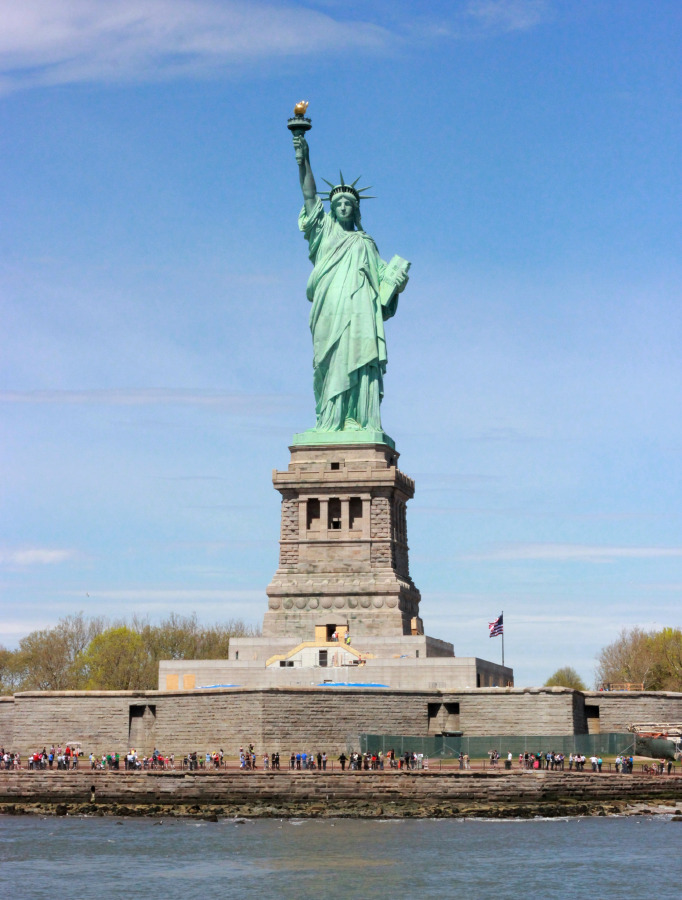
Yesterday, I discovered the Château de Mortefontaine was the main home of the House of Bernadotte, a family the Bonaparte family married into over several generations. Members of this Union came to America. How many beheld our Lady Liberty that Pat Robertson wanted torn down saying she is “Goddess Worship”. So!? Our Constitution does not FORBID IDOLERTY! And besides, Israel has a strong alliance with India because of the threat from Islamic Pakistan. They….SHARE INTELLIGENCE! Hmmmmm! Did India know Israel was going to bomb the Syrian Airport – before the U.S. knew? India is the Queen of Pagan Nations, it chock full of IDOLS!
“Historically, the punishment for idolatry was often death.”
Here is the final resting place of John the Baptist found in a mosque in Damascus. This shrine is thirty-one miles from the bombed airport. Do Orthodox Jews know of this shrine – and respect it? Or, is it a threat to them and their EXCLUSIVE teaching” John may have taught the first form of Reform Judaism, that was founded by Francis Salvador in South Carolina. Francis ran for office – and won! He is….A Son of Lady Liberty – the French Goddess? This Sephardic Jew – was a Lover of Liberty!
For a week I have been composing s letter to Governor Kotek regarding passing a bill that would not allow Trump to be on the Oregon ballot. I am going to add to this, in what can be called
A Pagan Declaration of Independence
Here are other agendas for Oregon Citizens…
- Abolish the first and second Commandant because these laws only apply to Jews, who as a whole reject the teaching of Jesus, Paul, and John. Judaism is a CLOSED religion. Someone learned Jews believe the Jews lost the Promised Land because they kept breaking 1&2. Christians were not invited to take part in….The Zionist Dream!
2. Launch an investigation into the assassination of Folke Bernadotte by Zionists.
3. Launch an investigation into the egregious intelligence failure by Israel and India.
4. Adopt a State Goddess fashioned after Lady Liberty. I suggest she be called ‘Rosamunda’
John Presco ‘The Nazarite’
“As Israel engages in a massive air campaign ahead of an anticipated full-scale ground invasion of the Gaza Strip, Israeli President Isaac Herzog said on Friday that all citizens of Gaza are responsible for the attack Hamas perpetrated in Israel last weekend that left over 1,200 people dead.
“It is an entire nation out there that is responsible,” Herzog said at a press conference on Friday. “It is not true this rhetoric about civilians not being aware, not involved. It’s absolutely not true. They could have risen up. They could have fought against that evil regime which took over Gaza in a coup d’etat.”
Prohibition of idolatry is the central tenet of the Abrahamic religions and the sin of worshipping another god other than the Lord is called idolatry.[4] Historically, the punishment for idolatry was often death.
The Bible describes how the ancient Israelites, despite being strictly warned not to do so, repeatedly engaged in idolatry and were therefore punished severely by the Lord.[5] Many of the stories in the Bible from the time of Moses to the Babylonian captivity are predicated on the choice between exclusive worship of the Lord and false gods.[6] The Babylonian exile, itself a punishment for idolatry, seems to have been a turning point after which the Jews became committed to monotheism, even when facing martyrdom before worshipping any other god.[7]
https://en.wikipedia.org/wiki/Thou_shalt_have_no_other_gods_before_me
https://www.huffpost.com/entry/israel-gaza-isaac-herzog_n_65295ee8e4b03ea0c004e2a8

Indian Adm. Robin Dhowan greets VAdm. Ram Rutberg, Commander-in-Chief of the Israeli Navy at South Block, New Delhi, 24 August 2015
Intelligence-sharing cooperation[edit]
When the Research and Analysis Wing (RAW) was founded in September 1968 by R.N. Kao, he was advised by then Prime Minister Indira Gandhi to cultivate links with Mossad. This was suggested as a countermeasure to military links between that of Pakistan and China, as well as with North Korea. Israel was also concerned that Pakistani army officers were training Libyans and Iranians in handling Chinese and North Korean military equipments.[152]
https://en.wikipedia.org/wiki/India%E2%80%93Israel_relations
John Spoke As Infant
Posted on December 25, 2018 by Royal Rosamond Press

John’s remains are being worshipped by Muslim’s in Syria.

Anti-Jewish hate is on the rise across the globe, but there is a virulent strand being generated in Israel by the Orthodox establishment directed against Reform and Conservative Jews. Last Thursday morning, after harassing Women of the Wall in the women’s section of the Kotel on Rosh Hodesh Tammuz, dozens of ultra-Orthodox extremists brazenly disrupted bar and bat mitzvah services at the egalitarian plaza of the Western Wall.

Bernadotte as Crown Prince, painting by Fredric Westin
Everyone loves THEIR history, no matter? I descend from several German families, and I can say – I hate much of MY HISTORY due to the rise of Adolph Hitler, and the scope of his cruelty to the Jews – and others this insane demon declared his enemies- including the Gypsies! As I type, Ian Musk is getting a history lesson from Herzog.
And on the day the Israeli cabinet voted to support a dedicated space for egalitarian worship at the Western Wall, Moshe Gafni, head of the Knesset’s Finance Committee, said that “Reform Jews are a group of clowns who stab the Holy Torah,” and added that “there will never, ever be recognition for this group of clowns, not at the Wall or anywhere else.” About the same time, Rabbi David Yosef, son of the late revered Rabbi Ovadia Yosef charged that the Reform movement “is a collaboration with idolatry. Reform are idolaters – simply and literally.”
Israel’s bombing of Syria’s Aleppo International Airport on Tuesday was the second time it had been attacked in less than a week.
The latest aerial attack – which Syria’s foreign ministry described as a “war crime” – damaged the runway, taking it out of service.
Château de Mortefontaine, Mortefontaine, Oise, Hauts-de-France
Built between 1600 and 1630, for Philippe Hotman (d.1643), Seigneur de Plailly-Montmélian, whose father (the French Ambassador to Switzerland) bought the estate in 1570. It remained a seigneurial manor until it was purchased in 1798 by Napoleon‘s brother, Joseph-Napoléon Bonaparte (1768-1844) and his wife Marie-Julie Clary as their new home. It was here that the Convention of 1800 was signed that ended a two year quasi naval war fought in the Caribbean between France and the United States….
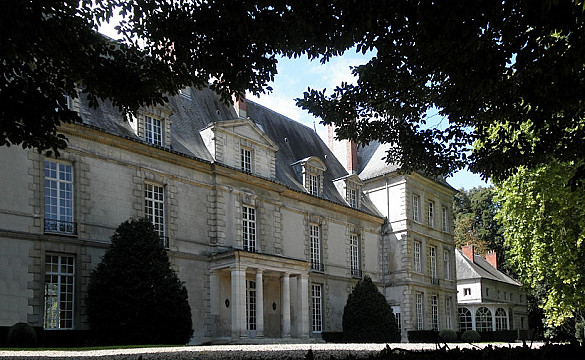
https://fr.wikipedia.org/wiki/Ch%C3%A2teau_de_Mortefontaine
https://en.wikipedia.org/wiki/Julie_Clary
Marie Julie Clary (26 December 1771 – 7 April 1845), was Queen of Naples, then of Spain and the Indies, as the wife of Joseph Bonaparte, who was King of Naples from January 1806 to June 1808, and later King of Spain and the Spanish West Indies from 25 June 1808 to June 1813.
Early life[edit]
Marie Julie Clary was born in Marseille, France, the daughter of François Clary (Marseille, St Ferreol, 24 February 1725 – Marseille, 20 January 1794), a wealthy silk manufacturer and merchant of Irish heritage, and his second wife (married on 26 June 1759) Françoise Rose Somis (Marseille, St. Ferreol, 30 August 1737 – Paris, 28 January 1815). Her sister Désirée Clary, six years younger, became Queen of Sweden and Norway when her husband, Marshal Bernadotte, was crowned King Charles XIV John of Sweden (Charles III John of Norway). Their brother, Nicolas Joseph Clary, was created 1st Comte Clary and married Anne Jeanne Rouyer[citation needed] (their granddaughter would be the first wife of Joachim, 4th Prince Murat).
https://en.wikipedia.org/wiki/D%C3%A9sir%C3%A9e_Clary
Be a ‘Parte’ of the Past and Present at Point Breeze
- By Rebekah Schroeder
- May 17, 2023 Updated May 19, 2023
- Comments

The Gardener’s House in Bordentown is the only building that remains standing from the time when Joseph Bonaparte, the exiled King of Naples and Spain, erected his extravagant estate at Point Breeze. Ahead of its opening to the public as a long-awaited Discovery Center this May, the renovated structure has received the royal treatment and will be a place where visitors can learn about the historic and natural narratives of the land.

Despite Point Breeze’s eras occupied by the Lenape Native Americans, a British politician, an entrepreneur, and several religious organizations, these stories were often blown past with the same swiftness suggested in the name—in favor of the former monarch, who was the older brother of Napoleon Bonaparte—rather than comprehensively told.
But the property that was once on the verge of being redeveloped has more chapters to come thanks to a collaboration of community conservation efforts from the City of Bordentown, the State of New Jersey‘s Green Acres Program, and the nonprofit D&R Greenway Land Trust, which partnered to purchase it in late 2020 from the Society of the Divine Word, or Divine Word Missionaries, its prior owner of 80 years.
D&R Greenway is the Princeton-based land preservation group that oversaw and funded the reconstruction of Bonaparte’s circa 1820 Gardener’s House, the two-story structure they bought in addition to one of the 60 available acres. With upcoming exhibitions and events, the environmental entity will operate the Discovery Center at Point Breeze as an extension of their commitment to protecting natural open space throughout New Jersey.
Linda Mead is the president and CEO of D&R Greenway, which is now finalizing their informational materials alongside Miles Truesdell III, the creative director and photographer of Leigh Visual Imaging in Princeton. Truesdell is responsible for the design and installation of the image-based panels covering everything from archeology to horticulture, incorporating additional research by the D&R curatorial team.

D&R Greenway will debut these displays during their gala on Sunday, May 7, a fundraiser and garden party offering the first chance to take a docent-led tour of the Discovery Center from 4 to 6 p.m. Be ready to browse the historic vegetable and herb garden they restored last year, which grows 27 heritage varieties reflective of what was planted in the 1820s.
Johan Firmenich is set to be awarded the 2023 Donald B. Jones Conservation Award for his leadership on Mountain View Road in Montgomery Township during the program. For tickets or more information, see the D&R Greenway website at drgreenway.org.
The celebration at Point Breeze will recognize the region as part of the ancestral home of the Lenni Lenape, known as “Lenapehoking,” first stewarded 13,000 years ago.
Named after the upward winds that rise from where Crosswicks Creek flows into and joins the Delaware River, this site sits at the confluence of the two waterways and is the southern access point to the Abbott Marshlands, a central New Jersey expanse of wetlands, woods, and diverse wildlife. As the grand unveiling of Point Breeze approaches on Saturday, May 20, the Discovery Center looks to reestablish the “spiritual connection” between the earth’s resources and its inhabitants, just as the “original people” (a literal translation for Leni Lenape) once did.

During the program, guests can enter the Discovery Center for a recommended yet voluntary $10 donation from 1 to 5 p.m. and attend a ribbon-cutting ceremony with key figures in the restoration saga, including a Native blessing by Lenape Nation of Pennsylvania storyteller Barbara “Bluejay” Michalski. Summer hours will then be on subsequent Thursdays and Sundays from noon to 4 p.m.
Mead suggested typing “Divine Word Missionaries” into the GPS rather than the address to avoid being sent downtown, then entering the estate at 101 Park Street and following the dirt road to the right. Bordentown has relocated its new municipal building complex with administrative offices and a city hall in the heart of the huge property, which will also be the site of the new police station.
As part of this evolution of civic engagement that culminated in the $4.6 million joint sale, the remaining state-owned land will continue serving as a public park that Mead hopes to see flourish and instruct visitors on exactly what the project protects.
Trained as a lawyer and diplomat, Joseph Bonaparte became the King of Naples when his younger sibling Napoleon, the ruthless French military commander who would declare himself the First Consul of France and emperor, rose to power.

In Naples, Joseph was relatively respected and admired, but Napoleon soon grew disappointed in his performance. He was deposed in favor of his younger sister Caroline’s husband, Joachim Murat, and made to govern Spain in the aftermath of the French invasion. Although Joseph ended the Spanish Inquisition, he failed to reclaim any semblance of his former popularity and would later abdicate the position—after making multiple offers of his own to do so—just before his brother’s Waterloo 1815 defeat.
As the allied troops encroached on Paris, Joseph left his French residence at the Château de Mortefontaine and escaped from Europe in the hull of a ship without his wife, Marie Julie Clary, surrounded by casks of wine and with papers designating him as an “M. Bouchard.”
Joseph renamed himself “Comte de Survilliers,” or “Count of Survilliers,” after the title of a petite property near his Mortefontaine residence, but he was swiftly recognized and encouraged to seek political asylum from President James Madison; while Madison rejected an official meeting with him, he permitted Joseph to stay as long as he did so discreetly.
Joseph settled in Bordentown the following year and purchased Point Breeze from Stephen Sayre, a merchant, the former High Sheriff of London, and later the private secretary of Benjamin Franklin. While in England, Sayre’s fervent support for American independence culminated in his arrest for “high treason” for an alleged kidnapping plot against King George III, a charge he was acquitted of.
Napoleon had personally recommended that Joseph find an area between Philadelphia and New York to settle, which made Point Breeze an optimal spot for him to live a lavish lifestyle away from prying eyes; he did so by building an enormous, three-story mansion of palatial grandeur that made any initial secrecy somewhat of a moot point for the ex-monarch.
He would ultimately own more than 1,800 acres in the surrounding area, which included the estate where he lived from 1816 to 1832 before returning to London and then splitting his time between the two until 1839, when he left Point Breeze for the last time before his death.
The home touted what was regarded as both the earliest and most expansive major art gallery, including a copy of the oil painting “Napoleon Crossing the Alps” by Jacques-Louis David, as well as one of the first to implement landscape design. He was also known to have the largest collection of books in the country in his private library, which comprised over 8,000 volumes—even more than the Library of Congress did.

Bonaparte erected numerous buildings and fixtures, both scenic and functional, on the bluff, such as a large belvedere observation tower to take in the view, bridges, a temple, and a massive European-style garden. To take care of everything and execute Joseph’s vision, the “picturesque” Point Breeze required an exorbitant number of laborers and maintenance workers, many of whom also lived on the grounds.
Gorgeous statuaries, fountains, and Etruscan vases populated Point Breeze in as much abundance as the diverse animal and plant life did, demonstrating how deeply Joseph, who was often hands-on and wore a coating of dirt he thought mightier than any crown, preferred his pastimes of “beautification” above all else.
Napoleon astutely predicted his brother’s American lifestyle in a quote that would prove true even in spite of setbacks: “He will be a bourgeois American and spend his fortune in making gardens.”
On January 4, 1820, the first mansion caught fire as Joseph returned from New York, with neighbors rushing to retrieve his belongings and nearly securing all the valuables that could be safely saved.
Richard F. Veit, Ph.D., a Monmouth University professor, historian, and archaeologist, has overseen the onsite excavations in 2007 where the first mansion was and in 2021 near the Gardener’s House, which resulted in the recovery of at least 20,000 artifacts.
This loss, according to Veit and Michael J. Gall’s 2011 “Archaeological Examination of Joseph Bonaparte’s Point Breeze Estate” report via the Abbott Marshlands website, led Joseph to start the process of building his second home. He then converted the estate’s preexisting horse stables closer to Park Street into an aesthetic resembling an “Italian villa,” a contrast to the other mansion’s neoclassical design.

Another addition was that Bonaparte also devised a system of underground tunnels to better maneuver across the vast estate, which connected to the waterway for commerce and transportation as well as to provide a potential escape route.
Yet, because of Julie Clary’s poor health, Joseph’s wife never came to live at Point Breeze and remained in Europe, while his daughters, Zénaïde and Charlotte, arrived a few years later—the former with naturalist Charles Lucien, a collaborator of John James Audubon who would become known as the “father of American descriptive ornithology.”
The son of Joseph and Napoleon’s younger brother, Lucien Bonaparte, Charles Lucien married his cousin, Zénaïde, which made him Joseph’s nephew and son-in-law. The couple lived in the “Lake House,” a new abode by the second mansion.
During this time, Joseph added more lodging for guests in the “Wash House,” as well as a residence for his gardener on the eastern side of the property, the “Gardener’s House.” Although the latter building’s exterior was initially a combination of brick and wood with a smooth white stucco that matched Joseph’s second home, the textured design was added during Divine Word’s ownership of the site.

From the garden at the rear of what will now be the Discovery Center, the vestiges of the great orchard can be seen in the distance, leaving only a few trees in their place. After officially opening in October of last year, the space will be used for varieties of plants from Bonaparte’s era, including several indigenous crops that the Lenape cultivated.
Gardener and land steward Lara Periard, who will also be the manager of the Discovery Center, researched the plants and aligned the plots according to the original ones from the historic 1847 map of the site with oversight from an advisory committee comprised of members like Val Sassaman, Joel Dowshen of Bordentown City, and Rebecca Wilkinson Flemer of the Princeton Nurseries Family.

D&R’s Land and Property Steward, David Seiler, is also a carpenter with experience in historic renovations who designed and built the wooden fence to keep any animals, such as deer, from perusing the plants inside.
They began planting what they could in the fall of 2022, but being prepared at the start of the growing season this time around has enabled them to use more of the space for spring produce, Mead added, and she is especially looking forward to the squash and corn.
An arch indicates where the Gardener’s House’s back door and a flight of steps, one of which was discovered underground, would have been. Divine Word Missionaries donated a statue of St. Joseph, the patron saint of workers, families, travelers, and others who represent the diversity of individuals linked with Point Breeze, that presides over the native plants and French lavender growing nearby.
Originally founded as a center of camaraderie and study for anyone looking to pursue a religious profession, Divine Word changed courses to a high school seminary in the 1940s, expanding over the years with more facilities until Harris Hays Hammond’s mansion—which the prior owner had opulently transformed from the estate of Henry Beckett—caught fire in 1983.
This damage to the chapel and residence area marked the school’s closure, but thanks to its insurance policy, Divine Word was reimbursed for the losses and, following some litigation, was able to remodel the former classroom building and turn it into a residence for active and semiretired missionaries.
On the way into the house, there is a walkway made of recycled bluestone recovered from the second Joseph Bonaparte mansion, which has since been integrated into the patio and path as a starting point for tours, Mead said. This way, she added, those coming to the estate can “walk in the footsteps of history.”
The two bronze sturgeon statues at the front of the property are by sculptor Kate Graves, Mead explained. Gesturing to the rocks around the signature sycamore tree, she said they remind her of Hammond, the investor and wealthy financier who owned the property from 1911 until he lost it in the 1929 stock market crash—at which point the bank repossessed it and it remained empty for more than a decade.

His father was mining engineer John Hays Hammond, who acquired his fortune in South Africa through deep-level gold and diamond mining operations alongside British imperialist and 7th Prime Minister of the Cape Colony, Cecil Rhodes. Rhodes was the controversial figure who, together with Hammond and colonial administrator Leander Starr Jameson, is known for the “Jameson Raid,” a failed 1895–96 insurgency intended to incite British and American foreign workers to revolt against the then-South African (or Transvaal) Republic.
As a result, Hammond, a co-conspirator with the Reform Committee, was tried for high treason in a similar fashion to former Point Breeze resident Sayre. His death sentence was commuted to a $125k fine upon release, after which he returned to America, according to a TIME Magazine article from 1937.
Harris Hays Hammond continued his father’s legacy as the owner of Dominguez Oil Fields Co. in California and the New Jersey centrifuge manufacturer Laughlin Filter Corp. He hired stonemasons to erect a Chinese water garden at the end of the property with waterfalls and a tunnel system that called to mind Bonaparte’s own, as the exhibit materials explain. The magical, almost fairylike aesthetics of the grotto area once encircled the perimeter of a swimming pool that Harris’ brother, inventor John Hays Hammond Jr., made his own history in.

Hammond Jr. was a torpedo of a force renowned as the “Father of Radio Control,” whose pioneering work became the basis for contemporary radio remote controls. He acquired “over 400 patents” in his career, expanding science, communication, and even naval warfare equipment with missile guidance systems that are still in use today—and, according to Mead, he tested that very technology in the Point Breeze rock garden swimming pool.
When they lowered the sturgeon sculptures onto the ground using a crane and remote control, Mead said, it felt like a full-circle moment.

The large, life-sized fish, based on a taxidermy sample from the New Jersey State Museum, is located on the property’s left side and points to the Delaware River, while the smaller one, known as the “baby sturgeon,” is on the opposite. The two pieces, which flank the Gardener’s House as it faces the road, will be a reference point for visitors and staff alike to meet at the Discovery Center.
D&R Greenway began working on the Gardener’s House in the summer of 2021, and while the current structure is not an exact recreation of the original house, according to Mead, they hoped to instead “create a historical interpretation of the building” that will tell stories about the layers of land through a design evoking the period of its creation.
The main entrance was outfitted with paneled mahogany double doors based on historic drawings, which also showed two trees where the solitary sycamore now is.

Two flags will adorn the outside pole, with the first being specially made for the estate and representing the three Lenape clans—turtle, wolf, and turkey—designed by Eric Labacz, who was connected to Mead through Adam DePaul of Temple University. Truesdell is working on the other, which will have a crest symbolizing Joseph Bonaparte’s role at Point Breeze.
Stepping inside, the Gardener’s House illustrates the entryway Joseph Bonaparte made into the political, scientific, and artistic scene of Bordentown that welcomed him. The orientation area to the right is the “People of Point Breeze” room, which starts with the Lenape and highlights how the landscape of the estate has evolved over time.
Mead emphasized that this project would not have been possible without the work of former mayor James “Jim” Lynch, whose spirited involvement helped safeguard the open space from turning into housing complexes or warehouses.
Lynch was concerned about severing this connection to local history and the potential health dangers these facilities posed, as the Delaware River supplies clean drinking water to approximately 15 million people.
Thanks to care from those such as director-manager Father Poole and Rev. Martin H. Padovani, the latter of whom spent 60 years at Point Breeze and holds the record for the longest assignment there, Divine Word shared the same vision D&R Greenway had and approved the sale.

Through the “People of Point Breeze” room is the “Gardener’s Kitchen,” which has only been lightly updated with a deep sink perfect for washing produce and an 1830 Morris Tasker iron bake wall oven, which hangs next to a still life of vegetables by artist Paulette Z. Hill. She used the same list of produce compiled by Val Sassaman and the Bordentown Historical Society‘s vice president, Doug Kiovsky, to scout farmers’ markets for uncommon crops like white eggplants, with this array of agriculture originating in an 1830s edition of horticulturist Bernard McMahon’s (or M’Mahon’s) “American Gardener’s Calendar.”
When they started work on the Gardener’s House, Mead noted that most of the building was outdated, with drop ceilings, shag carpeting, and dusty drapes, as a result of changes Divine Word made in the 1960s. These also carried over to the left room, now known as the “Crown Jewels Gallery,” where non-bearing walls separated a path to the bathroom and the living spaces for the retired priests, four of whom were still living at Point Breeze until 2020.

After taking those down, the curatorial team discovered the antique, hand-printed wallpaper underneath and restored the picture rails, which are now present in every room but perhaps the most regal in the “Crown Jewels Gallery.”
In the exhibit materials, Veit wrote that the title of the space comes from the legend of when the former king, before coming to America, fled to and secretly buried crown jewels in Switzerland—as well as solitaire diamonds, rubies, emeralds, pearls, fashionable items of value like collars and epaulets, swords, belts, and more—then sent Louis Mailliard, his secretary, personal assistant, and “closest confidant,” to fetch them.

During his voyage, Mailliard purportedly tried to persuade Joseph’s family to accompany him at his request, according to Shannon Selin, author of “Napoleon in America,” a work of historical fiction based on her independent Bonaparte research.
Empty-handed in terms of additional guests but certainly not treasures, Mailliard returned to America, and Joseph was able to finance his lavish lifestyle. He spent time in Hamilton’s Bow Hill mansion, rented a townhouse in Philadelphia, and purchased 150,000 acres in upstate New York around what is now called Bonaparte Lake.
The inaugural set of revolving exhibits will be displayed at least through the end of 2023 and showcase paintings of prominent spots, or “the Jewels of Point Breeze,” that align with D&R Greenway’s interpretation that “the land and the resources,” such as the fruit orchards, rock garden, carriage bridge, and the view from atop the Bordentown bluffs, hold the true value.

The interior of the cabinet illuminates pieces portraying magnolias, chamomile, and even Joseph’s favorite, artichokes, in collaboration with the Garden State Watercolor Society.

Wendy Kvalheim, a member of D&R’s Board of Trustees and the president of Mottahedeh, a distributor of porcelain, ceramic, and china and design firm, donated the display cases in the Gardener’s House that showcase artifacts both donated and discovered.
The carved wooden duck decoys downstairs, created by Bob White and on view courtesy of collector Jay Vawter, bear the likenesses of local bird species like gadwall, wigeon, and canvasback. Also included are three ceramic tile Divine Word panels from the religious group’s annual gala, which each portray a different building and are labeled with the year of their creation; several archaeological finds from Veit’s digs; and a ceremonial tool that belonged to a priest from New Guinea.
Additional materials and literature on where people can go to learn more, Mead explained, include the Tulpehaking Nature Center in Mercer County, the NJ State Museum, D&R Greenway’s TravelStorys tours on the Delaware River and Abbott Marshlands, the Bordentown Historical Society’s exhibit on Joseph Bonaparte, and more.
The bathrooms are even named after the two closest bodies of water to Point Breeze—the Delaware River Water Closet downstairs and the Crosswicks Creek Water Closet on the second floor—that serve as additional, yet unconventional, opportunities for learning.
Enhanced interior features highlight the historic components that culminate at Point Breeze. The house’s windows, for example, are now sporting Empire-style curtains from Nancy Robinson-Long and Bert Kerstetter of Calico Corners in Yardley, which were based on photographs of 1820s French drapes.
An American brass fixture greets guests at the entrance, along with an Italian blown glass piece named “Vento” (“wind”) that floats over the staircase like the grass at Point Breeze and complements the Spanish chandelier on the top floor.

The origin of the second piece is especially relevant because Joseph and Napoleon Bonaparte were both born on the island of Corsica, as Mead explained, the former as Giuseppe di Buonaparte on January 7, 1768, before France would conquer Corsica that same year. When Napoleon came into the world in 1769, he was technically French, not Italian, despite the nationality of his parents; thus, “Vento” represents Joseph’s dual Italian and French identities.

Pass under the third chandelier, a Spanish one commemorating Joseph Bonaparte’s time as ruler of the country, and enter the “Walk Through Time” room to the left of the staircase. This chronicles the colonial age of Point Breeze through timelines on the walls that also delve into the other owners that succeeded Joseph Bonaparte:
Thomas Richards and his wife Anna Bartram, the granddaughter of botanist John Bartram; Beckett, the British Consul at Philadelphia, described as “a fervent Francophobe” who destroyed Bonaparte’s second mansion to erect a “modern” residence of his own; the Vincentian Fathers of Philadelphia, an all-male Roman Catholic society of apostolic life who used it as a short-lived summer retreat; Hammond; and finally, Divine Word from 1940 to 2020.

Another figure of focus here is Mailliard, Joseph’s “right hand man” for 36 years after the two met at Mortefontaine. It was there that Mailliard also came to know his future wife, Marguerite Angelique Redet, and married her at the castle. The couple worked and lived together at Point Breeze until Redet gave birth to a son, Adolphe, but she died just days later. Because of this heartbreak, Mailliard’s relatives raised Adolphe, and he remained by Joseph’s side without ever finding another love.

In a Community News Service exclusive, Mead shared that the room’s mantel, the only original one left in the entire home, will be reunited with the visage of its most famous former tenant and display a never-before-seen 1819 French portrait of Joseph Bonaparte above the fireplace. This 19th-century art piece by Louis Goubaud was recently restored and had been privately held for years until the William S. Mailliard family learned of D&R Greenway’s work at Point Breeze and offered to loan it for a three-year period.
The exhibits in the “Natural World” room on the upper right were funded by a bequest from the estate of Gene Gladston, a D&R Greenway trustee whose legacy of birding and land preservation endures via the space’s materials on environmental education—where a humble library represents Bonaparte’s enormous literary landscape.
The bottom shelf of the display case features types of Native American patterned pottery fragments, more of Veit’s artifacts from 2007, an arrowhead collection, and large stone tools on loan from Monmouth University.
There is also contemporary work by Jane “Walkingstick” Roop, a Cape May-based artist who is a member of the Lenape tribe of Pennsylvania and creates wood carvings and animal beadwork. As an environmentalist herself, Roop advocates for clean water and maintaining trails, the latter of which inspired her to turn cedar branches into walking sticks similar to those utilized in ceremonies by Lenape Chiefs, according to the exhibit materials.

Dr. Daniel Druckenbrod of Rider University is responsible for the several dated tree core samples that reveal one dating back to 1756 and another from an 1830s-era fallen ash tree that lived from 1830 to 2016 and was originally planted on Bonaparte’s estate. These are joined by two circa 1956 porcelain cardinals from English artist Dorothy Doughty, whose work was noted for its lifelike qualities, and Greg Pedersen wood carvings of a Prothonotary Warbler and Indigo Bunting, all of which are on loan from Vawter.
Mead pointed out that three of the paint colors adorning the rooms—a soft beige tan in the “People of Point Breeze” room, the peach tone on the walls north of the “Time” room with a big window perfect for taking in a scenic view of the sights and spring maple trees, as well as the blue-green in the Ecology and Nature Room—are matched to the ones they uncovered in the process of restoring the house that have been there for many years.
Truesdell, a Pennington native who has lived in Mercer County his entire life, said learning about the full history of Point Breeze was an “eye opener” for him. In his perspective, the most challenging aspect of the exhibit process has been tying all of the elements together in a cohesive way that marries the global and local connections within Point Breeze’s legacy.
After 26 years spent apart, Joseph Bonaparte returned to Europe and reunited with Julie before he died of complications from an earlier stroke on July 28, 1844, in Florence, Italy, at the age of 76. Charles Lucien and Zénaïde’s son, Joseph Lucien Bonaparte, inherited the estate from his grandfather and sold many of the possessions before Richards came into the picture.
But Bonaparte is only one brushstroke of the Point Breeze portrait, with years of community-wide conservation converting each structure, whether debris or salvaged, into a synthesis of historic and natural knowledge.
Mead shared that a conversation with her Lenape advisors crystallized this important takeaway for her, which is that the land has been here before us and will be here after us, and with every generation come new stewards who will shape its future.
Humans have survived by cherishing this relationship, Mead noted, and so she has always felt a similarly strong pull towards preservation—and to do her part in layering these stories against the landscape of the Discovery Center at Point Breeze.
Jewish Revolutionary War Hero
Posted on December 20, 2011 by Royal Rosamond Press




Francis Salvador was attacked and killed by Cherokee Indians, whom may be my kinfolk. Francis led an Exodus of Sephardic Jews from England to South Carolina, and was a leader of Reform Judaism who were anti-Zionists.
Smauel Roseman/Rosamond fought the Cherokee before he fought the British. He was a scout or Francis Marion who Mel Gibson played in the movie ‘The Patriot’. Mr. Martin owns a tomahawk that he came to own during the Cherokee wars. He had three sons that have the same name as my Rosamond kindred, Samuel, Benjamin, Nathan. Two Rosamonds took the name Francis Marion.
The Rosamond and Hodges family, intermarried. Dorothy Hodges was taken by a Cherokee chief, and had a son by him. Did this chief kill Salvador, who descends from King David?
The Hodges family owned some of the “Jews Land” owned by Salvador’s kindred. Our kindred, and their history are entwined in Biblical Hisotry and the mission of the Zionists.
Below is a photo of ‘Plantation Point’ where my acre of land promised to me by a descendant of King David, and kin of Salvador, is found. I believe the Sephardic Jews took an oath on this land that they would never return to Zion. One could say this a Thanksgiving.
I believe I am the Messiah of the Jews born four days after the Zionist tricked the President of the United States into believing he was Cyrus. God was furious at this deception. Thousands of stars fell from the heaven. I am born of the Dragon found in Rebelations.
Repent! And return in spririt to God’s Little Acre, for He is prepared to mend the rent in the three religions born of the Seed of Abraham.
Jon the Nazarite Judge
Jon the Nazarite
Early Reform Judaism was also anti¬Zionist, believing the Diaspora was necessary for Jews to be “light unto the nations.” Nevertheless, a number of Reform rabbis were pioneers in establishing Zionism in America, including Gustav and Richard Gottheil, Rabbi Steven S. Wise (founder of the American Jewish Congress) and Justice Louis Brandeis. Following the Balfour Declaration, the Reform movement began to support Jewish settlements in Palestine, as well as institutions such as Hadassah Hospital and the Hebrew University.
As the years passed, a reevaluation took place in which many members of the Reform movement began to question the “reforms” that were made. By 1935, the movement had begun to return to a more traditional approach to Judaism-distinctly Jewish and distinctly American, but also distinctively non¬Christian. Starting with the Columbus Platform in 1937, many of the discarded practices were reincorporated into the Reform canon, and constitute what is now called “Modern” Reform Judaism, or more succinctly, Reform Judaism. The platform also formally shifted the movement’s position on Zionism by affirming “the obligation of all Jewry to aid in building a Jewish homeland….”
By the time of the American Revolution, about 200 Jews lived in Charles Town. Most of them supported the patriot cause since they enjoyed greater religious and political freedom in the colonies than they had in England. Francis Salvador embraced these freedoms and became a staunch defender of independence.
The nephew of a wealthy merchant in London, Salvador came to South Carolina in 1773. By 1774, he had become a planter, acquiring land and thirty slaves. Although he had only recently lived in England, Salvador was a strong supporter of the colonists’ cause. He became a propagandist, traveling around the colony trying to convince farmers to support the colonies in their dispute with Mother England. He was chosen to serve in the first provisional congress in South Carolina in 1774; he remained in the state’s assembly after it had declared independence, helping to draft South Carolina’s constitution.
Salvador was the first practicing Jew to serve in a legislative body in America. When fighting broke out in South Carolina in 1776, the 29-year-old Salvador joined the local militia, but was soon killed by British-allied Indians (above). In City Hall Park in downtown Charleston, there is a memorial plaque for Salvador, which reads “An Englishman, he cast his lot with America; True to his ancient faith, he gave his life for new hopes of human liberty and understanding.”
Portrait of
Abraham
Mendes
Seixas,
ca. 1795 During the revolution, many of the young Jewish men of Charles Town fought for independence. In fact, so many Jews served in a particular company in the Charles Town Regiment, perhaps as many as 28, that it became known informally as the “Jew Company.” These companies were formed based on where the men lived, and since so many Jews lived around King Street, most ended up in the same company. Abraham Mendes Seixas was born in New York but moved to Charles Town in 1774. When the war broke out, he became a captain of a Charles Town militia company. After the city was captured by the British, Seixas was banished from Charles Town when he refused to sign a loyalty oath. Seixas went to Philadelphia and was soon followed by many other Charles Town Jews who were seeking to escape British control. After the war, Seixas and other Jews returned to the city that was now known as Charleston.
When the second Provincial Congress assembled in November 1775, Salvador urged that body to instruct the South Carolina delegation in Philadelphia to vote for American independence. Salvador played a leading role in the Provincial Congress, chairing its ways and means committee and serving on a select committee authorized to issue bills of credit to pay the militia. Salvador was also part of a special commission established to preserve the peace in the interior parts of South Carolina, where the English Superintendent of Indian Affairs was busily negotiating treaties with the Cherokees to induce the tribe to attack the colonists.
When the Cherokees attacked settlements along the frontier on July 1, 1776, massacring and scalping colonial inhabitants, Salvador, in an act reminiscent of Paul Revere, mounted his horse and galloped nearly thirty miles to give the alarm. He then returned to join the militia in the front lines, defending the settlements under siege. During a Cherokee attack early in the morning of August first, Salvador was shot. He fell into some bushes, where he was subsequently discovered and scalped. Salvador died forty-five minutes later. Major Andrew Williamson, the militia commander, reported of Salvador that, “When I came up to him after dislodging the enemy and speaking to him, he asked whether I had beaten the enemy. I told him ‘Yes.’ He said he was glad of it and shook me by the hand and bade me farewell, and said he would die in a few minutes.”
His friend Henry Laurens reported that Salvador’s death was “universally regretted,” while William Henry Drayton, later Chief Justice of South Carolina, noted that Salvador had “sacrificed his life in the service of his adopted country.” Dead at twenty-nine, never again seeing his wife or children after leaving England, Salvador was the first Jew to die waging the American Revolution. Ironically, because he was fighting on the frontier, he probably did not receive the news that the Continental Congress in Philadelphia had, as he urged, adopted the Declaration of Independence
Francis Salvador, along with the DaCosta family of London, hoped to settle poor Jews and their own family members in the New World. They sent 42 Jews to Savannah with the original settlers in 1733. When Spain attacked Georgia in 1740, most of the Jewish families fled to Charleston, fearing the Spanish Inquisition. Jews from London began arriving in Charleston in the 1730s, and were later joined by Jews from Germany, the Netherlands and the West Indies. Francis Salvador was the only Jew to settle on the frontier. The Salvador and DaCosta families in London bought 200,000 acres (810 km2) in the new district of Ninety-Six (known as “Jews Land”), and began to populate it.[2] The Salvador family was financially ruined by the Lisbon earthquake of 1755 and subsequent failure of the East India Company, retaining their land in South Carolina and little other wealth.[3] Francis Salvador bought 7,000 acres (28 km2), and moved there in 1773, intending to send for his wife, Sarah, and their children as soon as he was able.
20. Benjamin Rosamond was born 1790 in , Greenwood Co., Sc, and died BEF 16 May 1859 in Attala Co., Ms. He was the son of 40. James Rosamond and 41. Lettice, Mrs Rosamond.
21. Susannah Hill died 20 Oct 1828 in Abbeville Co., Sc.
Children of Susannah Hill and Benjamin Rosamond are:
10. i. James Rosamond was born ABT. 1808 in Abbeville District, Sc. He married Tobitha, Mrs Rosamond. She was born ABT. 1802 in South Carolina.
ii. John Rosamond was born ABT. 1809 in Abbeville District, Sc. He married Sarah Graham ABT. 1831 in South Carolina. She was born 23 Jun 1811 in Sc.
iii. Thomas Henry Rosamond was born 19 Oct 1811 in Abbeville District, Sc, and died 1886. He married Sarah Mays ABT. 1846, daughter of Matthew Mays and Lucretia Rogers. She was born 3 Apr 1825 in Abbeville District, Sc.
iv. Benjamin, Jr. Rosamond was born ABT. 1814 in South Carolina. He married Elizabeth, Mrs Rosamond, daughter of Alvin Phillip Rosamond and Jettie Bass.
v. Samuel Rosamond was born 1815 in Abbeville District, Sc. He married Frances C. Morrison. She was born ABT. 1822 in South Carolina.
vi. William Addison Rosamond was born 17 Sep 1819 in Abbeville District, Sc, and died 29 Nov 1900 in Weldon, Houston County, Texas. He married Martha Canzada Coleman in Kosciusko, Attala County, Mississippi. She was born ABT. 1828 in South Carolina, and died 2 Sep 1898 in Weldon, Houston County, Texas.
vii. Joseph Rosamond was born 1825 in South Carolina, and died AFT. 1870. He married Joseph1825, Mrs Rosamond.
viii. Nancy Narcissus Rosamond was born 20 Oct 1828 in Abbeville County, Sc, and died 17 Jun 1921 in , Choctaw Co,,Ms. She married William Wright Bowie 1844, son of Hezekiah Bowie and Lucinda Elizabeth Simms. He was born 3 Oct 1822 in , , Sc, and died 2 Feb 1910.
A Nathan Rosamond is known to been in Maryland in 1739, and there is a will for a Nathan Rosamond in Chester County, PA dated 1742.
The American Revolution in South Carolina
________________________________________
Capt. Samuel Rosamond*
Known Regiment(s) Associated With: Known Year(s) as a Captain:
Ninety-Six District Regiment 1777-1778
Upper Ninety-Six District Regiment 1778-1782
The Americanization of Reform Judaism
The introduction of Reform into American Judaism is usually associated with the arrival of intellectual German-speaking Jews fleeing Europe’s failed republican revolutions of 1830 and 1848, and with German-born rabbis such as David Einhorn of Baltimore and Isaac Mayer Wise of Cincinnati. However, the first stirrings of American Reform had native roots in Congregation K. K. Beth Elohim in Charleston, South Carolina.
In December 1824, led by Isaac Harby, forty-seven Charleston Jews petitioned the leaders of Beth Elohim for major changes in the Shabbat service. At that time, Beth Elohim followed the Spanish and Portuguese minhag (customary ritual), which the leadership saw as the service used by observant Jews since the time of the Second Temple. The dissidents asked that each Hebrew prayer in the service be immediately followed by an English translation; that new prayers reflecting contemporary American life be added; that the rabbi offer a weekly sermon – in English – that would explain the Scriptures and apply them to everyday life; and that services be shortened.
Descended from a Sephardic family that had fled Spain for Portugal then Morocco, London and Jamaica before moving to Charleston in 1782, Isaac Harby was an unlikely Reformer. Harby’s father Solomon married Rebecca Moses, the daughter of one of South Carolina’s leading Jewish families. Born in 1788, Isaac became a noted teacher, playwright, literary critic, journalist and newspaper editor.
Harby demonstrated little interest in religion in his younger years, but in the early 1820s he became alarmed by organized Protestant efforts to convert American Jews and the emergence of anti-Semitism in politics. Harby wanted his fellow Charleston Jews to defend Judaism from its critics and themselves from proselytizers, but worried that they knew too little about their religion, were ill-tutored in Hebrew or other languages, could not understand the traditional Spanish and Portuguese rituals at Beth Elohim and were thus defenseless against the Protestant challenge.
Harby and his fellow reformers thought that services at Beth Elohim had to become more “American” — frankly, more like services those in surrounding Protestant churches. They wished to worship no longer, as they put it, as “slaves of bigotry and priestcraft,” but as part of the “enlightened world.” The leaders of Beth Elohim refused to consider their petition, citing the congregation’s constitution, which required that at least two-thirds of the membership join in any call to amend synagogue rituals or practices. In response, the reformers created an independent “Reformed Society of Israelites for Promoting True Principles of Judaism According to Its Purity and Spirit.”
Meeting at a separate site, the Reformed Society of Israelites wrote its own prayer book, introduced music into the service and worshipped without head coverings. Harby became an active leader of the Society, serving as orator and, in 1827, as president. On the first anniversary of the reform petition, he delivered a lengthy and eloquent address explaining the Society’s goals, which he circulated widely as a pamphlet. Though understandably the pamphlet received a mixed reception within the Jewish community, many non-Jewish readers praised it. Even octogenarian Thomas Jefferson wrote to say that he found the reforms proposed “entirely reasonable,” though confessing that he was “little acquainted with the liturgy of the Jews or their mode of worship.”
While the Reformed Society of Israelites flourished for a few years, the leaders and loyal members of Beth Elohim never ceased their relentless criticism and ostracism of the reformers, and many members became discouraged as their families split apart on religious grounds. Harby left Charleston for New York in 1827, profoundly affected by the premature death of his wife that year (Harby himself died suddenly in 1828). Other reform leaders either died or drifted away. Although the Society never officially disbanded, it ceased to exist sometime after the mid-1830’s. Most members rejoined KKBE.
However, the spirit of reform in Charleston did not die with Harby. When an accidental fire destroyed Beth Elohim in 1838, the congregation met to plan its rebuilding. The remaining reformers seized their opportunity and thirty-eight members petitioned the trustees that “an organ be erected in the synagogue to assist in the vocal part of the service.” The “Great Organ Controversy,” as it came to be known, split the congregation as nothing previously. The synagogue leadership again turned down the request, claiming that playing the organ during services would violate the injunction against labor on Shabbat. Following the by-laws, the reformers convened a general meeting of the congregation. After much debate, a two-thirds majority reversed the leadership’s decision.
Beth Elohim became the first synagogue in America to install an organ. This break with the orthodox minhag opened the way for other changes in the ritual, many of which had been requested a decade earlier by the Reformed Society: confirmation classes for boys and girls, abandoning the second day of festival observances and, eventually, family seating rather than the separation of men and women.
This time, the defeated traditionalists split away to form a new congregation, which they called Shearith Israel, “the Remnant of Israel.” Beth Elohim thereafter evolved at the forefront of Reform Judaism in America.
The influences on Charleston’s reformers were clearly native, not imported from Germany. They sincerely believed that Judaism in America could not survive if it could not modernize to combat conversion. The traditionalists argued, in turn, that such a watered-down Judaism was itself assimilated bend recognition. The debate between American reformers and traditionalists begun in Charleston in 1824 continues.
 Rosamond Press
Leave a comment