My ex-wife and I have made amends. I have been in therapy, and had a breakthrough in dealing with my PTSD.
Dear Britt and Mary Ann. I am deeply sorry I abandoned you. Last week I was able to return to Anderson Street where an attempt was made on my life. A female black lab was killed and its blood smeared on the wall. When Eric attacked his mother, I got a bad laceration on my hand when I seperated them. I was taken to emergency after Eric’s father picked him up. I had stiches. When this man said my wife had it coming, I was on my way to Boston. That he was a attorney, and he sent a attorney to question me about my intentions, I am back in court with a lawyer for the Mafia. They wanted us out of the building they just bought and turned off the heat in the January. Judge Boutillini ruled in my favor. When I saw him presiding over the Child Custody case, I went into shock. I believe he was relocated to Oakland due to death threats. He bumped our attorney who was in line for a Judgeship. The Feds must have gotten involved. What are the odds?
When I left my appartment I hung my star and crescent ring on a nail and drew a swastika on a Islamic drawing I was doing. My neighbors were Black Islamic radicalisms who defended a black squatter who raped my friend, a fifteen year old Roanoke Indian in the hall of the building I almost got murdered in. Only later did it occur to me these ex-allies thought the Mafia did away with me. Did they contact the police, and did the Judge hear of this?
Then there is Diva, my female black lab that you loved so much Britt.
I have to stop here and go back to bed. PTSD drains all your energy. This is why I had to go. I was not in my body. I could not express what I was going through. We were in such a crisis. I would only add to the chaos. I was afraid Mary Ann would lose custody.
John Presco
Continued:
Judge B kept looking at me from the bench trying to make me. My hair was shorter. There you were Britt with your attorney. You were working hard to – get it right! I felt for you. You were thirteen, and the only innocent one in the courtroom. I took attorney M aside and told him I knew the judge and was involved in a horrible Mafia trial where an attempt was made on my life. He blew a gasket. He was having a huge side battle with Judge B and if this came out – during the trial – it would have made M look bad. He never talked to me. Now he wants to get rid of me. He tells me to keep quiet. When it came time for me to get in the witness chair, I asked M, if I got an annulment, would I have to testify? He produced the papers, and I signed.
I made a video yesterday where I talk about why I felt so ashamed of the death of that puppy. I blamed myself. When the Judge said he was going to issue a bench warrant, and after I testified, he ordered the bailiff to take me upstairs and handcuff me to his desk. A half hour later he comes upstairs and sits on his desk.
“Do we know each other?”
“I don’t think so.”
“You look familiar. Did you ever appear before me?”
“No!”
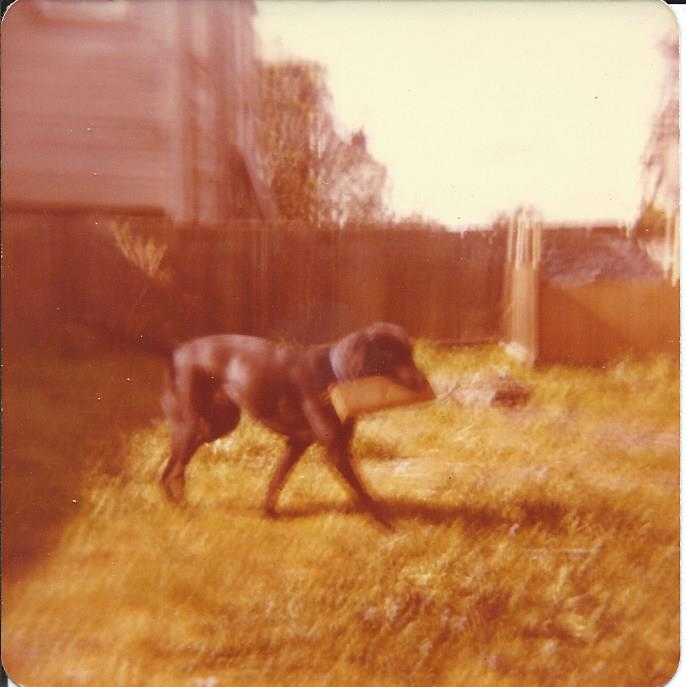
Sometime after this I went and got drunk after being sober a year. When you dropped Diva off at my trailer in Oregon, we were so happy to see each other. I felt so bad that I seperated her from you Britt. You had become so close. You lost us both – after your told the Judge you preferred to be with me – rather than with your father. You got hammered. I have never stopped feeling for your plight.
I saw Diva as the puppy who was killed by the Mafia. They did not want any puppy to own that title. They gave up 40 Anderson Street. I will put that video on Youtube.
Diva was aware when I left my body. I drank myself blotto to avoid arriving at where I go now. Coming home from the bar at the Log Cabin Inn I stumbled as I came through the forest. I lie there looking up at the brilliant stars. I wanted off the planet. I felt myself rising up. I did not hold on – but tried to help. Then, Diva came and put her front legs on me. She held me down. She did not want me to leave her.
I have thirty-three years of sobriety. If I had it to do over again I would have told Judge Boutilini the truth. I almost did in the elevator when he told me he had caught two prisoners scaling down from the jail on bed sheets. He told me he went out on the roof with his gun – and captured them! I was afraid he would freak and pull out his gun!
“I used to live at 40 Anderson Street in Boston. I appeared before you. My attorney introduced me to Mayor White who said this as he shook my hand; It took a lot of guts to stand up to those people!”
At this time I was convinced that life, God, and all of humanity was not going to cut me a break. But it did when I came to plant you a vegetable garden. I loved you two dearly, and still do. Perhaps the Judge would have shook my hand as we emerged from the elevator, and bid the court to help me – as a survivor! I wish I had gotten into therapy.
The Gideon Computer Atop Beacon Hill | Rosamond Press
Defying the Boston Mafia | Rosamond Press
Killing The Artist Rosamond | Rosamond Press
Paintings of Mary Ann Tharaldsen – YouTube
Defying the Boston Mafia
Posted on February 12, 2014by Royal Rosamond Press


Above is me in 1971. I lived on Beacon Hill in this apartment building. I had unlimited guts. I took on the whole world.
In 1971 my attorney told those who refused to move out of our home on 40 Anderson Street, a four story building on Beacon Hill, to move to the top floor for our safety. I was in a legal battle with the brother-in-law of the head of Boston’s Mafia, and they were losing. This guy was a top-notch attorney. The owner of the grocery store down the street who liked me, said;
“They want their building back. They will hurt you.”
When I heard the door being kicked in on the main floor, I rushed downstairs to find the door to the old managers apartment knocked off its hinges. Then I heard the awful sound of the squatter’s three month old black lab having its throat cut. I shouted;
“Get out there!”
There was silence, and then this question;
“Are you the manager?”
“Yes! Get out!”
“You come in here!”
“We got something for you!” said the second voice.
My Beautiful Former Wife
Posted on August 13, 2013by Royal Rosamond Press

I found a recent photo of my former wife yesterday, and felt a stirring down below even though she in seventy-six. This is a beautiful and handsome woman, then and now. When you have made beautiful love to a woman, it stays with you – at least with me.
Mary Ann looks like she’s out of central casting. Here is the Celtic, or Nordic Grandmother of the Hero who has good intentions because he has formed a close bond with her after his mother was killed by the Bad Guy. If you did a DNA test of Mary Ann and Rena, you would find them kindred, because my ex descends from Eric the Red – and Oden! We are looking at the Daughters of Oden here, folks!
I have told several of my therapists;
“I have been in the middle of a lot of gun-play in my life.”
“Were any shots fired?”
“No! But, there was a lot of threats.”
One of these threats came from Robert Delano’s good buddy who went on a road trip in my Chrysler Newport, and flipped out. At my mother’s house he found a rifle in the closet, and ordered a young girl to get in my mother’s bedroom so he could rape her. Of course, I was elected by Robert and Keith to go save her.
“It’s your Mom’s house.”
I walked in and found this creep pointing a gun at the girl who was pulling off her jeans.
“You don’t want to do this.” I said calmly. And, he spotted a chess set – all ready to go.
“Do you play chess?” He asked.
“Sure. Do you want to play a game?”
“Yeah.”
He put the rifle down. The young girl pulled up her pants, and crept quietly into the living room. I had forty minutes to lose this chess game, before my mother came in the door from work to have her lunch – at high noon!
Robert was with us on the Road Trip to Winnemucca, where Rena, Robert, and James became afraid of me, I no longer being perceived as a Hero – as planned!
The strangest gun-play I was ever in, was when the judge in our child custody battle told me he jumped out on the roof of the courthouse to apprehend two criminals trying to escape by climbing down sheets. Boutillini got the drop on them with his revolver. He was my judge in my Mafia case in Boston. One could say I was, and still am ‘The Hippie James Bond’.
There are photos of my brother and I sitting on a horse with Tex Ritter who has his hands raised, because we are pointing a gun at him.
Jon Presco
“You’re just a victim of circumstances?” Judge Boutillini said to me as he looked into my eyes, trying to discover what I was concealing.
On the advice of my wife’s attorney, I did not tell the Judge who oversaw the child custody case of Britt Thoraldson that he presided over the case in Boston, when I took the Mafia to court – and won! They lost because they sent two goons to kill me, and – they failed. I was alive, and in a room on Beacon Hill with Mafia attorneys – negotiating a deal. They hated my long hair, and the truth I looked just like Jesus.
Boutillini unlocked the handcuffs that the bailiff had put on me when I was held in contempt of court for not showing up for our last court date. I was trying to conceal from the court I was on Social Security for being mentally unsound, I no table to function properly after I died on LSD, I one of the Guinea Pigs of LSD manufacturer whom I knew personally. I was afraid my wife would lose her thirteen year old daughter who I drove across country in a 1979 Ford Thunderbird. And now it is revealed I am mad, a killer on the road – or something like that! How could this “mother” expose her daughter to a Manson wanna-be? Rather then risk that I asked Maryanne for a divorce. We had known each for a two months before we got married, and after he son Eric attacked my wife in front of me, the six month child custody battle had taken its toll.
Going Into Shock & PTSD
Posted on August 12, 2013by Royal Rosamond Press


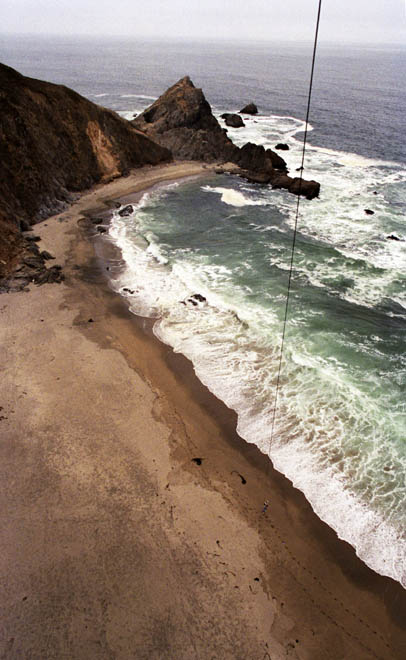

In 1987 I returned to McLure’s Beach and climbed the rock I fell on. I was utterly alone. There was no one in the parking lot, and thus no one for miles. I had gone thru the New Hope Program and had a year of sobriety. I had been in hypnotherapy. I had to do this.
I had not climbed but thirty feet, and was heading for the bridge, when I came upon a plaque nailed into the rock.
“6 KNOWN DEATHS”
This plaque was not there in 1967, and the thought that six people who came after me, met their death, was otherworldly. I was entering The Land of the Known Dead. I thought about the collective grief of their families. Their tears had come here. I closed my eyes, took some deep breaths, told myself I can do this, and proceeded.
I do not think Keith and James knew I was going into shock, because they were in shock at seeing me wounded. The powerful dose was incapacitating. We could not walk. Like a heavy gravity we were pinned to the sand. We could only watch and wait until the inital impact subsided.
After James tried to wash my wound, and after I got soaking wet, I told him to leave me be. He went and sat with Keith about fifty feet away. I sat at the edge of the water listening to the strange sound that the gravel made as each wave receded. It sounded like many engines. All of a sudden landing craft were coming out of the ocean, and I was in the a middle of horrendous battle. A young man fell next to me, mortally wounded. When he died, and with his last breath, he uttered his last word;
“Mother!”
I believe I was that soldier.
I watch that scene from Saving Private Ryan where the captain goes into a tunnel of silence. The engine of war is grating up and down my backbone. My teeth are chattering. I can not make it stop.
Jon
http://wrybread.com/gametone/leftcoast/mcclures.shtml
Acute stress reaction (also called acute stress disorder, psychological shock, mental shock, or simply shock) is a psychological condition arising in response to a terrifying or traumatic event. It should not be confused with the unrelated circulatory condition of shock, or the concept of shock value.
Circulatory shock, commonly known simply as shock, is a life-threatening medical condition that occurs due to inadequate substrate for aerobic cellular respiration.[1] In the early stages this is generally an inadequate tissue level of oxygen.[2]
The typical signs of shock are low blood pressure, a rapid heartbeat and signs of poor end-organ perfusion or “decompensation/peripheral shut down” (such as low urine output, confusion or loss of consciousness). There are times that a person’s blood pressure may remain stable, but may still be in circulatory shock, so it is not always a sign.[3]
Circulatory shock is not related to the emotional state of shock. Circulatory shock is a life-threatening medical emergency and one of the most common causes of death for critically ill people. Shock can have a variety of effects, all with similar outcomes, but all relate to a problem with the body’s circulatory system. For example, shock may lead to hypoxemia (a lack of oxygen in arterial blood) or cardiac arrest.[4]
One of the key dangers of shock is that it progresses by a positive feedback mechanism. Once shock begins, it tends to make itself worse, so immediate treatment of shock is critical to the survival of the sufferer.[3]
Jules Siegel Playboy Article
BenProfane at aol.comBenProfane at aol.com
Thu May 25 23:06:58 CDT 1995
- Previous message: fried Pork
- Next message: Jules Siegal Playboy Article
- Messages sorted by: [ date ] [ thread ] [ subject ] [ author ]
Hello All!
      Here is the much requested playboy article re TRP. Unlike, Ron Churgin
(thsspce) I am a sucker and asked my local library if they had a copy of the
1977 March Playboy, particularly the Siegel article. After the person on the
other end snickered a little, he said he would check. Sure enough, they had
it. And even more unbelievably, it contained the article I was looking for
(can you believe it, someone really is searching for a playboy article, maybe
that saying about playboy articles is true?). Anyway, it was even worse when
I showed up at the library. As soon as I asked for the reserve copy in my
name, they immediately knew who I was and gave me looks (you pervert, why lie
about it, just say you want to see the issue). In fact, one lady (b*&ch)
actually scowled at me. Well, enough of my tale and on w/ the story. Please
forgive for those who don't want this, it is fairly long, though not as long
as GR.

First Five Pages (next five sent shortly hereafter)
_________________________________________________________

WHO IS THOMAS PYNCHON... AND WHY DID HE TAKE OFF WITH MY WIFE? Shedding a
little light on the most famous author-recluse since j. d. salinger

memoir
By JULES SIEGEL

THOMAS RUGGLES PYNCHON, JR.,  is the most famous invisible writer since J. D.
Salinger, the most admired since B. Traven, the most difficult since James
Joyce. When his first novel, V., was greeted with thundering critical
applause in 1963, Time sent a photographer to find him in Mexico City.
Pynchon fled to Guanajuato, then an eight-hour bus ride into the mountains,
and has eluded all subsequent attempts to get his picture. In 1974, New York
magazine scored a mini-coup by publishing a photo taken of him while he was
in college.

Pynchon did not show up at the 1974 National Book Awards luncheon to receive
his prize for his third novel, Gravity's Rainbow, co-winner in the fiction
category with Isaac Bashevis Singer's  A Crown of Feathers. His publisher
sent, in his stead, double-talking comedian Irwin Corey, who bills himself as
"the world's greatest expert on everything" and who accepted the prize with
what New York Times reporter Steven R. Weisman described as "a series of bad
jokes and mangled syntax that left some people roaring with laughter and
others perplexed."

Weisman speculated that this was "evidently intended to make fun of the fact
that the Pynchon novel, while hailed as a work of genius, also left many of
its readers confused and baffled by its encyclopedic references and
intricate, fantastic style."

Confused though the literary world may be by the mysterious Pynchon and his
labyrinthine allegories, he has received unprecedented acclaim. V. won the
William Faulkner Prize. His second novel, The Crying of Lot 49, took the
Rosenthal Award in 1967. Gravity's Rainbow was the unanimous nomination of
the Pulitzer fiction jury in 1974, but the advisory board of eminent
journalists disagreed, calling the book "obscene," "unreadable" and
"overwritten." The trustees skipped the prize entirely that year.

In 1975, Pynchon declined the William Dean Howells Medal of the American
Academy of Arts and Letters, given every five years for a distinguished work
of fiction, breaking silence with a brief note saying he know he ought to
accept the gold medal as a hedge against inflation, but no, thanks, anyway.
The academy said it would hold it for him in case he changed his mind.

Although he has never had a best seller, Pynchon's books have been
commercially successful. there are more than half a million copies of V. in
print. Somewhere back of that pile of paper and ink there is a question mark
named Thomas Pynchon, location unknown, of no fixed address, his biography a
mere few sentences, physical description unavailable. Who is Thomas Pynchon,
really? Why is he hiding? Does he exist at all, or is he no more than an
elaborate hoax of the Age of Paranoia, like the hallucinatory inventions of
Argentina's blind fabulist, Jorge Luis Borges? Who is Thomas Pynchon and what
does he mean?

	*

Everyone has his own fantasy of success. I once had no greater hope than to
publish a learned paper on 17th Century English songs in The Proceedings of
the Modern Language Association. Somewhere in the blank fog of time there is
a scholar writing a learned paper on Thomas Pynchon. To him I offer this
footnote: In Mortality and Mercy in Vienna, Pynchon's first published short
story, the protagonist is one Cleanth Siegel. My second wife, the former
Virginia Christine Jolly of San Marino, California, tells me that the
character represents me. I have noticed the coincidence of name but do not
recognize myself. Possibly it is a me I have never been able to examine very
well, the back of my neck, or the dream of Gabriel Garcia Marquez, whose
essential quality is that it cannot be remembered.

Be that as it may, I did attend Cornell in 1954. The boy in the next room was
Thomas Ruggles Pynchon, Jr. If there are any correspondences to be found in
that or anything else that follows, I leave them to Chrissie and the
scholars.

Tom Pynchon was quiet and neat and did his homework faithfully. He went to
Mass and confessed, though to what would be a mystery. He got $25 a week
spending money and managed it perfectly, did not cut class and always got
grades in the high 90's. He was disappointed not to have been pledged to a
fraternity, but he lacked the crude sociability required for that. Besides,
he had his own room at Cascadilla, one of the more pleasant dormitories, not
tight College Tudor tile but pre-Civil War Victorian, high-ceilinged and
muted. Fraternity houses offered neither the charm nor the privacy, and he
was, if anything, a very private person.

Pynchon was then already writing short stories and poems, but he did not hand
them about very much. I remember one story that had something to do with a
broken pitcher of beer. I once saw some French quatrains in what looked like
his hand-- small, regular, precise engineer's manuscript. He later denied
ever having done anything like that. Maybe they were a girl's, but I never
met her, as far as I know.

I have seen photographs of William Faulkner that made me think of Tom. He was
very tall-- at least 6'2"-- and thin but not skinny, with a pale face, fair
eyes and a long, chiseled Anglo nose. He was ashamed of his teeth and did not
smile much. Many years later, writing to me from Mexico City, where he was
having extensive and painful dental restoration done, he described them as
"misshapen choppers" and said they had determined his life in some
unspecified way that seemed very important to him.

His wit was terrifically bold for such an otherwise cautious personality. He
could carry a tune well and made up ribald parodies of popular songs, which I
seem to remember-- surely I am imagining this-- were accompanied on a
ukulele. From the musical notations in the back of T. S. Eliot's The Cocktail
Party, he puzzled out for me the tune of One-Eyed Reilly, which we sang
together one beer-soaked night in joyous disharmony and stole an old wooden
rocking chair off someone's porch and tossed it into the interior court of
Cascadilla Hall. It landed upright on the roof of a covered crosswalk and
rocked itself quiet. Possibly it is still there.

When his parents came to visit, he introduced his mother this way: "Jules,
this is my mother. She's an anti-Semite. I just didn't want my children to
surround themselves with Jews." I remember her as an exceptionally beautiful
woman, all cut glass, ivory and sable. I believe she had been a nurse, had a
lot of Irish in her and was a Catholic. Though Mr. Pynchon was a Protestant,
she raised their children in her own faith. Tom was the oldest. Then came
Judith, about five years younger. The youngest was John.

I had more contact over the years with Mr. Pynchon than with Tom's mother,
but he is less clear: curly, lightish hair, red nose, very friendly and
tolerant. He was commissioner of roads for the town of Oyster Bay, Long
Island, and Tom worked with the road crews in the summer. Mr. Pynchon later
became supervisor of the town of Oyster Bay and is now an industrial
surveyor. The Pynchons lived in a very plain New England frame house on
Walnut in East Norwich, its most notable furnishings some excellent Colonial
portraits of ancient Pynchons.

It is an old American family, dating back to william Pynchon, one of the
founders and principal citizens of Springfield, Massachusetts, who left
England March 29, 1630, with John Winthrop's fleet, accompanied by his wife
and three daughters. His son, John, seems to have come over later on a
different ship. The Pynchons are prominent in New England historical
literature. William and John were magistrates and military officers. Their
court record has survived and has been published in a carefully annotated
edition by Harvard University Press, with a frontispiece portrait of William
Pynchon. There are Tom's eyes and a lot of his nose and shape of face.

William Pynchon is remembered for his role in the witch trials, in which he
appears to have been a relatively moderate force, and for his highly
controversial book The Meritorious Price of Our Redemption, a protest against
the rigid Calvinistic theology of his time, evidently the first by an
American author. It was officially censured by the General Court, which
ordered a rebuttal written, summoned Pynchon to explain himself and directed
the book burned by the executioner in the Boston market place. Soon
afterward, William Pynchon returned to England, leaving John to supervise the
family's substantial holdings in the New World. He died October 29, 1662, and
was buried in the churchyard at Wraysbury.

Although John Pynchon was an important man in his own time, an increasing
obscurity gathered about the name. The Pynchons were Tories during the
Revolution but loyal citizens of the republic afterward. By the time
Nathaniel Hawthorne wrote The House of Seven Gables, in which a Pynchon
appears in a not very attractive characterization, it seems that the family
was virtually unknown. To Hawthorne's surprise, however, surviving Pynchons
vigorously protested. In a letter dated May 3, 1851, Hawthorne apologized and
wrote that he thought no great damage had been done, "but since it appears
otherwise to you, no better course occurs to me than to put this letter at
your disposal, to be used in such manner as a proper regard your family honor
may be thought to demand."

Of the fate of the Pynchon family fortune, not much is to be found. they were
gentry in England and gentry here. In the first half of the present century,
the Wall Street Firm of Pynchon & Co. went under with scant attention, except
for the comment of a Morgan partner that "these ripe apples must fall." When
I knew them, the Pynchons appeared to be in relatively modest circumstances
hardly in want.

Though there are some well-known and evidently quite prosperous Pynchons--
notably, the original Thomas Ruggles Pynchon-- to be found in the standard
biographical dictionaries and encyclopedias, the two most illustrious are
separated by more than 300 years, covering the entire history of the nation.
Indeed, it is not pure hyperbole to suggest that, in some measure, William
Pynchon of Springfield and Thomas Pynchon of modern literary fame define the
spectrum of our intellectual history. The records of the Pynchon family are
easily accessible to any competent researcher. Curiously enough, no
commentator on the younger Pynchon's work seems to have made the connection
with his ancestor.

	*

How close were Tom and I at Cornell? It is hard to say, really. We were
friends, maybe at some points best friends, very much alike in some important
ways. We were both writers, both science students-- he in electrical
engineering, I in premed-- both quite solitary and shy. Like him, I had no
luck fraternity row. Unlike him, I was not diligent, was careless with money,
attended class rarely, hardly got grades at all, much less high ones. One
weekend between sessions, we hitchhiked from Ithaca to Ann Arbor, Michigan,
where I wanted to see a girlfriend named Esther Schreier at the University of
Michigan. If you think that name is dissonant, try Esther Chachkis, which is
what she became when she married. It was blinding cold. We crossed Canada at
night. Ann Arbor was sodden with stale snow. Esther had the flu and was not
in a very romantic mood, though pleased to see me. Tom refused a date for
himself and spent the evening at the observatory. On the way back, we got
stranded on the bridge between Detroit and Ontario for about eight hours
waiting for a ride, freezing outside between brief shelters in the relative
warmth of the men's room until the guards took pity on us and invited us into
their hut and got us a ride.

This time, we blasted across the barren winter reaches with a wild pair of
couples in a sedan and a pickup truck who played tag with the two vehicles in
the darkness before dawn at speed upwards of 80 mph, sometimes turning their
headlights off to ensure surprise. One of us-- I forget which-- left his bag
in the car when they let us off in Buffalo. Tom remembered the first name of
one of the men and that he worked for cab company. We had to wait a couple of
hours or more in a White Tower Hamburger stand until the cab companies'
telephones were answered. Then we tracked them down and got the bag back. It
took us most of the day to get back to Ithaca. Tom began talking with the
Southern Colonel's accent, not only to me but also to everyone we met. Before
long, I was pleading with him to stop.

Not long after that, I dropped out of school and went into the Army, winding
up in the Military Intelligence service in Korea, where I received a letter
from Pynchon informing me that he, too, had left school and now was-- I
laughed out loud at the piquant turn of speech-- "a jolly jack-tar." He
returned to Cornell, an English major this time, where Vera Nabokov thinks
she remembers grading his papers for her husband's class. Of Vladimir
Nabokov, Pynchon told me only that his Russian accent was so thick he could
hardly understand what he was saying. I did not return to Cornell but went,
instead, to Hunter College.

I saw Pynchon occasionally in New York. Once he took me down to Greenwich
Village to the Cafe Bohemia, where Max Roach was playing. It was the only
band I ever heard in which the drums carried the melody. The Modern Jazz
Quartet and the Kent Micronite Filter commercial were about as much modern
music as I could handle. Pynchon, however, was deeply into the mysteries of
Thelonious Monk. On religious grounds, I excused myself from attending chapel
with him at the Five Spot to hear "God" play. I was an atheist.

Tom came down to the Bronx to my engagement party, helped do the massive load
of dishes and stayed overnight with us. In June 1958, Mr. Pynchon arranged
for the marriage ceremony to be performed by a Federal district court judge
in Massepequa, Long Island, and I went out to East Norwich to take care of
the final details. Judith was there, 16 and more than fair. I blushed with
lust and wondered shy I was getting married. When the appointed day came, we
arrived at the judge's mansion to find his worship in a tuxedo. It seemed
that a few days earlier, another young couple named Siegel had come to him
and asked to be married. Thinking it was us, he had done so and crossed our
name off his appointment calendar. Fortunately-- is that the right word?--
Tom arrived early and intercepted the judge, who was getting ready to go off
to a diner. The marriage proceeded as planned. Phyllis DeBus became Mrs.
Jules Siegal. Pictures were taken. In one of them, there was Tom, bearded,
wearing a charcoal-grey suit. Perhaps Phyllis still has that picture. We were
divorced less than four years later, our marriage a victim of deep family
tragedies. I think of her occasionally with great affection and a certain
longing. She was so wonderful a lover, generous and easily aroused,
but I was too callow then to appreciate her.

Tom visited us when we were living in Queens, once helping us move from one
apartment to another, playing a wastepaper basket as a conga drum in the back
of the rented step van. Another time, he came down from Ithaca with his
girlfriend, Ellen Landgraben, a coed at Cornell. It was a forbidden love. She
was Jewish and her parents objected to Tom. It was my job to drive her out to
Hewlett and pretend that I had brought her from school. At the last minute, I
forgot to remove my shiny wedding band. I don't know if they noticed, though.
 Rosamond Press
Leave a comment