
Capturing Beauty
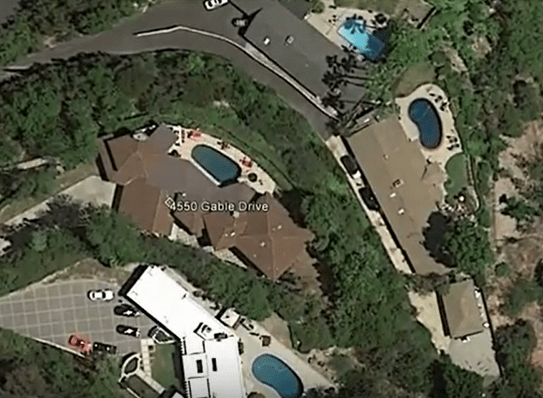
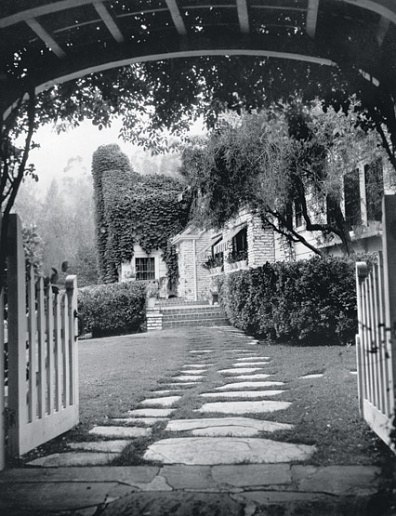
Last night I was talking to my man Spookie Noodles who calls me from Irving Street. I keep asking him to send me pics and short videos taken with his phone so I can feature them in a column. I had no idea I would be blogging on where Christine and Garth lived, as did the actor, Rick Partlow. We talked about doing a miniature Film School. We talked about my preparing a presentation to Qubi. Then we talked about shit going wrong, and how America is losing its MOXIE that was known in all parts to the world.
“Who were these Hollywood Writers that invented the American Tough Guy who was our Ambassador?”
Well, I found one, if not – HIM! Synchronicity is at work. Spooky even did a imitation of Little Caesar. I did Edward G. Robinson. We mentioned Hammet and Royal teaching Gardner how to write.
After being traumatized by Female Stalkers who wanted to castrate my creativity, and with just one session with my new woman therapist, I am able to continue looking at my late sister’s achievements in a new light. When my niece Shannon Rosemond and I conversed a few days ago I made a point to mention Rosemary and her sister Lilian, seen here smoking cigarettes at the Rooney house. These two sister dated Errol Flynn. I wanted Shannon to know I consider her the Heir of the Rosamond Women. Back to Tara!
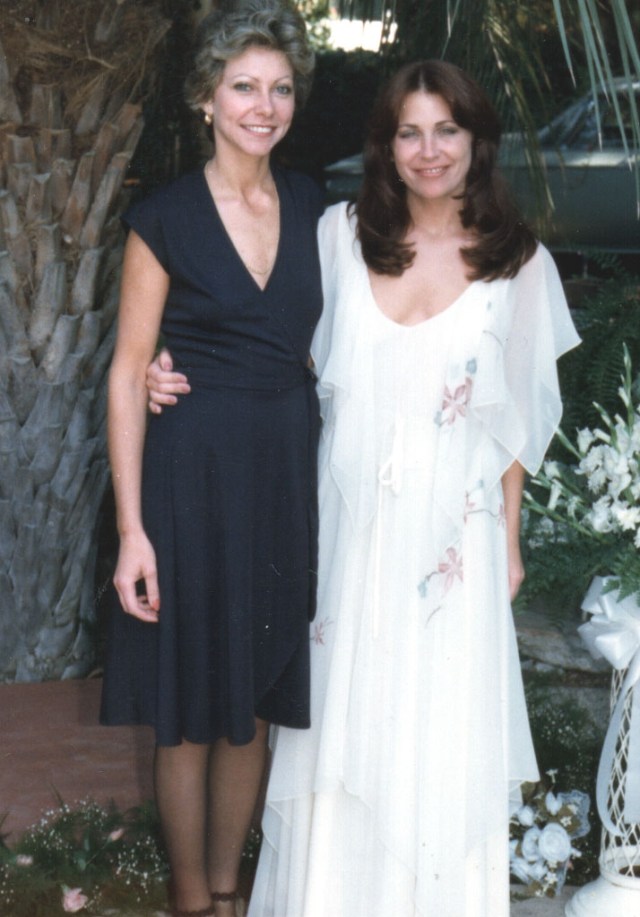
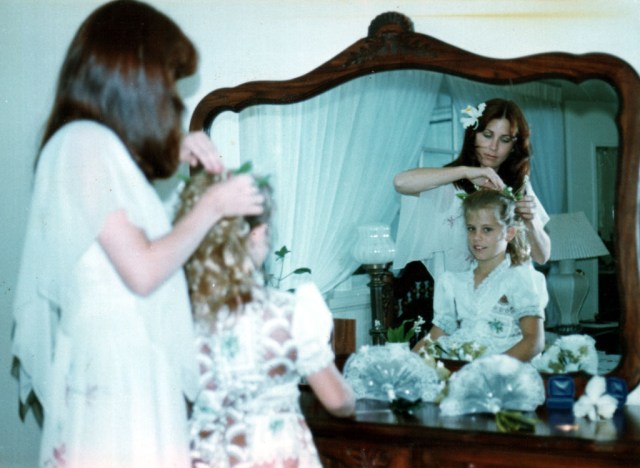
My lover made that shirt from scratch. Smoking a cigarette – Hollywood Style – with the Rosamond Sisterhood! Christine got married to Rick. That’s Rafael Fouquette. We should have become lovers, but, Christine forbid it. She was a airline hostess. We should have had children. That’s what Christine was afraid of. I would have about three Presco brats that the famous Rosamond would have to deal with in her complex self-image.
John Presco
Copyright 2020
William Riley “W. R.” Burnett (November 25, 1899 – April 25, 1982) was an American novelist and screenwriter. He is best known for the crime novel Little Caesar, the film adaptation of which is considered the first of the classic American gangster movies.
Contents
Early life[edit]
Burnett was born in Springfield, Ohio. He left his civil service job there to move to Chicago when he was 28, by which time he had written over 100 short stories and five novels, all unpublished.
Writing career[edit]
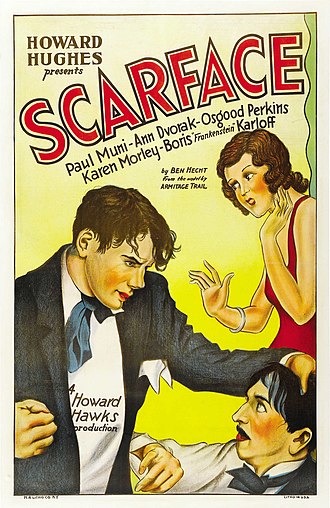
In Chicago, Burnett found a job as a night clerk in the seedy Northmere Hotel. He found himself associating with prize fighters, hoodlums, hustlers and hobos. They inspired Little Caesar (novel 1929, film 1931). Little Caesar’s overnight success landed him a job as a Hollywood screenwriter. Little Caesar became a classic movie, produced by First National Pictures (Warner Brothers) and starring the unknown Edward G. Robinson. The Al Capone theme was one he returned to in 1932 with Scarface. Burnett had won the 1930 O. Henry Award for his short story “Dressing-Up” published in Harper’s Magazine in November 1929.
Burnett kept busy, producing a novel or more a year and turning most into screenplays (some as many as three times). Thematically Burnett was similar to Dashiell Hammett and James M. Cain but his contrasting of the corruption and corrosion of the city with the better life his characters yearned for, represented by the paradise of the pastoral, was fresh and original. He portrayed characters who, for one reason or another, fell into a life of crime. Once sucked into this life they were unable to climb out. They typically get one last shot at salvation but the oppressive system closes in and denies redemption.
Burnett’s characters exist in a world of twilight morality — virtue can come from gangsters and criminals, malice from guardians and protectors. Above all his characters are human and this could be their undoing. In High Sierra (1941), Humphrey Bogart plays Roy Earle, a hard-bitten criminal who rejects his life of crime to help a crippled girl. In The Asphalt Jungle (1949), the most perfectly masterminded plot falls apart as each character reveals a weakness. In The Beast of the City (1932), the police take the law into their own hands when the criminals walk free due to legal incompetence, foreshadowing Dirty Harry by almost 40 years.
Film work[edit]
Burnett worked with many of the greats in acting and directing, including Raoul Walsh, John Huston, John Ford, Howard Hawks, Nicholas Ray, Douglas Sirk, and Michael Cimino, John Wayne (The Dark Command), Humphrey Bogart, Ida Lupino, Paul Muni, Frank Sinatra, Marilyn Monroe, Steve McQueen and Clint Eastwood. He received an Oscar nomination for his script for Wake Island (1942) and a Writers Guild nomination for his script for The Great Escape. In addition to his film work he also wrote scripts for television and radio.
Later years[edit]
In later years, with his vision declining, he stopped writing and turned to promoting his earlier work. In his career he achieved huge popularity in Europe, where his anti-hero ideology was enthusiastically embraced.
On his death in 1982, in Santa Monica, California,[2] Burnett was interred in the Forest Lawn Memorial Park Cemetery in Glendale, California.[3]
Critical reception[edit]
Heywood Broun described Burnett’s novel Goodbye to the Past as “written with all the excitement of Little Caesar, and ten times the skill”.[4]
Works[edit]
Novels[edit]
- Little Caesar (Lincoln MacVeagh/The Dial Press – 1929)
- Iron Man (Lincoln MacVeagh/The Dial Press – 1930)
- Saint Johnson (Lincoln MacVeagh/The Dial Press – 1930)
- The Silver Eagle (Lincoln MacVeagh/The Dial Press – 1931)
- The Beast of the City (Grosset & Dunlap – 1932) [not properly a Burnett novel; credit on the book reads “novelized by Jack Lait, from the screen story by W.R. Burnett”; the book was published concurrently with the release of the M-G-M film, circa March 1932]
- The Giant Swing (Harper – 1932)
- Dark Hazard (Harper – 1933)
- Goodbye to the Past: Scenes from the Life of William Meadows (Harper – 1934)
- The Goodhues of Sinking Creek (Harper – 1934)
- Dr. Socrates (O’Bryan House Publishing LLC – 2007) [Originally serialized in Colliers Weekly Magazine in 1935]
- King Cole (Harper – 1936)
- The Dark Command: A Kansas Iliad (Knopf – 1938)
- High Sierra (Knopf – 1941)
- The Quick Brown Fox (Knopf – 1943)
- Nobody Lives Forever (Knopf – 1943)
- Tomorrow’s Another Day (Knopf – 1946)
- Romelle (Knopf – 1947)
- The Asphalt Jungle (Knopf – 1949)
- Stretch Dawson (Gold Medal – 1950). The film Yellow Sky (1948) was based on an early version of the novel.
- Little Men Big World (Knopf – 1952)
- Adobe Walls: A Novel of the Last Apache Rising (Knopf – 1953)
- Vanity Row (Knopf – 1952)
- Big Stan (Gold Medal – 1953) – written under pseudonym “John Monahan”
- Captain Lightfoot (Knopf – 1954)
- It’s Always Four O’Clock (Random House – 1956) – written under pseudonym “James Updyke”
- Pale Moon (Knopf – 1956)
- Underdog (Knopf – 1957)
- Bitter Ground (Knopf – 1958)
- Mi Amigo: A Novel of the Southwest (Knopf – 1959)
- Conant (Popular Library – 1961)
- Round the Clock at Volari’s (Gold Medal – 1961)
- The Goldseekers (Doubleday – 1962)
- The Widow Barony (Macdonald – 1962)
- The Abilene Samson (Pocket Books – 1963)
- Sergeants 3 (Pocket Books – 1963)
- The Roar of the Crowd: Conversations with an Es-Big-Leaguer (C.N. Potter – 1964)
- The Winning of Mickey Free (Bantam Pathfinder – 1965)
- The Cool Man (Gold Medal – 1968)
- Good-bye, Chicago: 1928: End of an Era (St. Martin’s – 1981)
Short stories[edit]
- Round Trip (1929)
- Travelling Light (1935)
- Dressin-up (1949)
- Vanishing Act (1955)
Filmography[edit]
- Little Caesar (1930) – script
- The Finger Points (1931) – script
- Iron Man (1931) – based on novel
- Law and Order (1932) – based on novel Saint Johnson
- Beast of the City (1932) – script
- Scarface (1932) – script
- Dark Hazard (1934) – based on novel
- The Whole Town’s Talking (1935) – script and based on short story “Jail Break”
- Dr. Socrates (1935) – based on short story
- 36 Hours to Kill (1936) – based on short story “Across the Aisle”
- Wine, Women and Horses (1937) – based on novel “Dark Hazard”
- Wild West Days (1937) – from novel Saint Johnson
- Some Blondes Are Dangerous (1937) – based on novel Iron Man
- King of the Underworld (1939) – based on short story “Dr Socrates”
- The Westerner (1940) – uncredited contribution
- The Dark Command (1940) – from his novel
- Law and Order (1940) – from his novel
- High Sierra (1941) – novel, co-script
- The Get-Away (1941) – script
- Dance Hall (1941) – from his novel The Giant Swing
- This Gun for Hire (1942) – script
- Bullet Scars (1942) – uncredited remake of “Dr Socrates”
- Wake Island (1942) – script
- Crash Dive (1943) – story
- Action in the North Atlantic (1943) – script
- Background to Danger (1943) – script
- San Antonio (1945) – story, script
- Nobody Lives Forever (1946) – based on novel, script
- The Man I Love (1946) – uncredited contribution to script
- The Walls of Jericho (1948) – uncredited contribution to script
- Belle Starr’s Daughter (1948) – story, script
- Yellow Sky (1948) – based on novel
- Colorado Territory (1950) – uncredited remake of High Sierra
- The Asphalt Jungle (1950) – based on novel, uncredited contribution
- Iron Man (1951) – based on novel
- The Racket (1951) – script
- Vendetta (1951) – script
- Law and Order (1953) – based on novel Saint Johnson
- Arrowhead (1953) – based on novel
- Dangerous Mission (1954) – script
- Night People (1954) – uncredited contribution to script
- Captain Lightfoot (1955) – based on novel, script
- Illegal (1955) – script
- I Died a Thousand Times (1956) – based on novel High Sierra, script
- Accused of Murder (1957) – based on novel Vanity Row, script
- Short Cut to Hell (1957) – remake of This Gun for Hire
- The Badlanders (1958) – based on novel The Asphalt Jungle
- The Hangman (1959) – uncredited contribution to script
- September Storm (1960) – script
- The Asphalt Jungle, television series, 13 episodes (1961) – scripts
- The Lawbreakers (1961) – script
- Sergeants Three (1962) – story, script
- Cairo (1963) – from novel The Asphalt Jungle
- The Great Escape (1963) – script
- Four for Texas (1963) – uncredited contribution to script
- The Jackals (1967) – remake of Yellow Sky
- Ice Station Zebra (1968) – uncredited contribution to script
- Stiletto (1969) – uncredited contribution to script
- Cool Breeze (1972) – from novel The Asphalt Jungle
- Thunderbolt and Lightfoot (1974) – uncredited remake of Captain Lightfoot
 Rosamond Press
Leave a comment