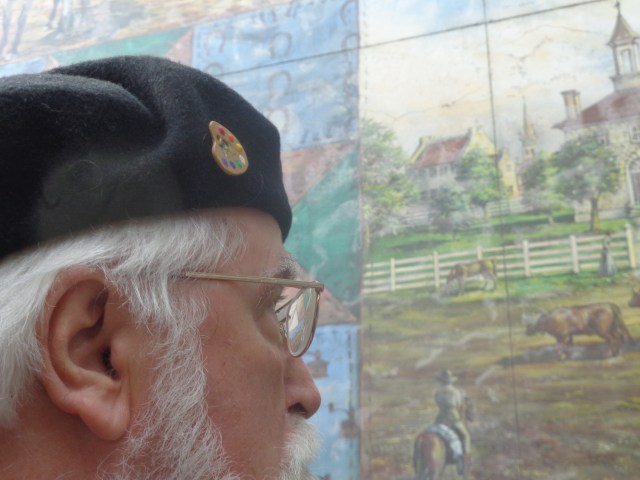


Kim Hafner and Krista have been psychically attacking me for a year. They launched a sneak attack via my sister’s biography. She is a Benton, kin to John and Jessie Fremont. These witches are Russian Agents. This is for real! Add it up! This is why they did not want me to call the police. Ian Fleming is in my family tree. It’s on! At close quarters!
When I handed Kim Hafner my sister’s bio I told her not to share it with any of our neighbors. I suspect Krista read it. She and her lover have been reading this blog that Kim made them aware of. How could this lover have formed such a strong opinion that I am a lunatic – who should be locked up? He was willing to get into a fight with me, and I don’t even know his name. This is exactly why I did not want Kim to share any of my information. There are real – dangerous nuts out there!
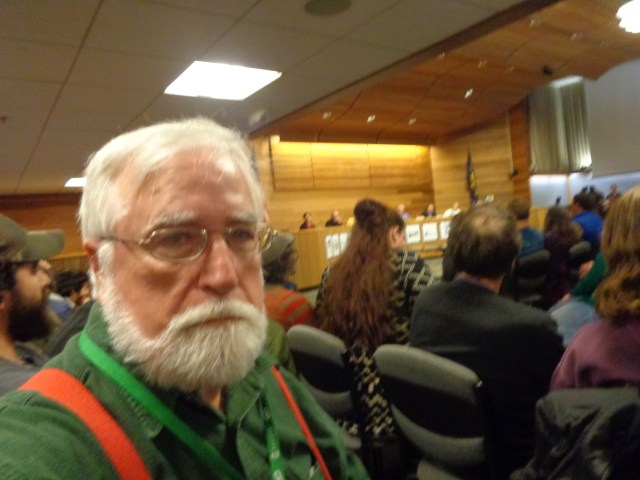
Kim Hafner is a INSTIGATOR who said Alley warned “us” about me. They are WITCHES! This is me at City Hall sitting behind Wiccan Gwendolyn who tried to take over Kesey Square. Zane Kesey is sitting near by. He opposed them! I have been on the bus with Ken. Nancy Yogurt is my childhood friend. My evil neighbors – summoned witches!

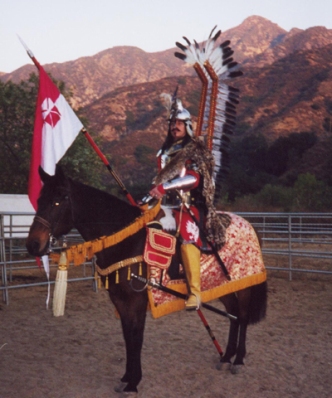
John and Jessie Benton had a Calvary of bodyguards, half who were Native Americans. Many of them were Hungarian Hussars! I hear Gabriel blowing his bugle! History and Truth is on my side!
Charge!
John ‘The Nazarite’


The First Battle of Springfield or Zagonyi’s Charge was a battle of the American Civil War that occurred on October 25, 1861, in Greene County, Missouri. It was the only Union victory in southwestern Missouri in 1861.[4]
Contents
Prelude[edit]
Having accomplished little since taking command of the Western Department with headquarters in St. Louis, Maj. Gen. John C. Frémont formulated a plan to clear Maj. Gen. Sterling Price‘s Confederates from the state and then, if possible, carry the war into Arkansas and Louisiana. Leaving St. Louis on October 7, 1861, Frémont’s combined force eventually numbered more than 20,000. His accompanying cavalry force, numbering 5,000 men and other mounted troops, included Maj. Frank J. White’s Prairie Scouts and Frémont’s Body Guards under Maj. Charles Zagonyi. Maj. White became ill and turned his command over to Zagonyi. These two units operated in front of Frémont’s army to gather intelligence.
Facing Fremont’s large advancing Union army, Missouri State Guard Major General Sterling Price ordered a withdrawal from Springfield, Missouri. Other MSG forces organizing nearby attempted to link up with the Price’s army at Springfield, only to find the place had already been abandoned.[5]
Opposing forces[edit]
Union[edit]
- Fremont’s Bodyguards: Major Charles Zagonyi
- Major Frank White’s Prairie Scouts
- Casualties: 85
Confederate[edit]
- Missouri State Guard: Colonel Julian Frazier
- Casualties: 132[6]
Battle[edit]

Map of Springfield I Battlefield core and study areas by the American Battlefield Protection Program.
As Frémont neared Springfield, the local state guard commander, Colonel Julian Frazier, sent out requests to nearby localities for additional troops. Frémont camped on the Pomme de Terre River, about 50 miles from Springfield. Zagonyi’s scouting column, though, continued on to Springfield, and Frazier’s mixed force of 1,000 to 1,500 infantry and cavalry prepared to meet it.
Zagonyi’s combined force of 326 men approached Springfield on the Mt. Vernon Road.[7] Frazier set up an ambush along the road that Zagonyi traveled. Zagonyi ordered a charge from the timbered bottomland of today’s Jordan Creek, exhorting his men with “We have been called holiday warriors for the pavements of St. Louis…Let the watchword be ‘Fremont and the Union.’”[8] After three charges the Confederates fled in disorder. Zagonyi’s men continued into town, hailed Federal sympathizers and released Union prisoners. Leery of a Confederate counterattack, Zagonyi departed Springfield before night, but Frémont’s army returned, in force, a few days later and set up camp in the town.
Casualties and aftermath[edit]
Union casualties were reported as 15 killed, 27 wounded, and 10 missing/captured for Fremont’s Body Guard, and 33 killed, wounded and missing/captured for White’s command, for a total of 85.[9] Confederate casualties are unknown but estimated as 133.[10]
In mid-November, after Frémont was sacked and replaced by Maj. Gen. David Hunter, the Federals evacuated Springfield and withdrew to Sedalia and Rolla. Federal troops reoccupied Springfield in early 1862 and it was a Union stronghold from then on.
Károly Zágonyi, (Szatmar, Hungary, 1826 – ?)[1] known in the U.S as Charles Zagonyi, was a former Hungarian military officer who served in the American Civil War as an aide to John C. Frémont and commander of his bodyguard at the rank of major, effective September 19, 1861.
Hungarian Revolution[edit]
Charles Zagonyi served originally as a first lieutenant in the Hungarian Revolutionary Army during the 1848-1849 revolt. General Josef Bem assigned him to lead a picked company of cavalry. In such capacity he saved Bem’s life, was captured, and imprisoned for two years by the Austrians.[1]
American Civil War[edit]
On July 2, 1851 Zagonyi arrived in the United States. He worked in New York and Philadelphia as a house painter. He served as a riding master in a Boston school operated by a fellow Hungarian emigre. Here he met and married a German-American lady by the name of Amanda Schweiger.[2]
At the outbreak of the Civil War, Zagonyi offered his services to New York, but was rejected. He was invited to Missouri by Alexander Asboth where he was introduced to General John C. Fremont. Fremont assigned him to create and command his personal bodyguard. Zagonyi’s force was modeled on the well disciplined Polish Hussars. Zagonyi “personally selected the matched bay mounts” and designed the dark blue uniforms and hats of Hussar style. The men carried themselves proudly. They were equipped with German cavalry sabers and revolvers.[3]

First Battle of Springfield or Zagonyi’s Charge on October 25, 1861
On October 25, 1861, during the First Battle of Springfield, Zagonyi with 300 mounted men rashly charged into Springfield, Missouri, routing the Confederates. The charges proved costly in terms of casualties and the major lacked the forces to hold the city of the Union after dark. He withdrew, abandoning the city and his wounded to the secessionist forces. Zagonyi’s charge would become famous, but his refusal to give credit to other attached forces alienated many fellow officers. Fremont’s army would regain control of the town on October 27, and it would remain under Union control for the rest of the war.[4]
Zagonyi was sidelined after Fremont was removed from command. Fremont’s Bodyguard was mustered out of service in November 1861 despite being three year volunteers.
Fremont was restored to command in the Shenandoah Valley as commander of the Mountain District encompassing West Virginia, eastern Kentucky, and East Tennessee. Fremont again utilized Zagonyi as his cavalry commander, promoting him to colonel. Stonewall Jackson and his Confederates outmaneuvered and outfought Fremont’s much larger force during the Valley Campaign. Following this final Fremont debacle, General John Pope was assigned to command all of the U.S. troops in northern Virginia. Fremont resigned rather than serve under Pope, and Zagonyi withdrew from service.[5]
Postwar[edit]
Zagonyi returned to New York after the war and served as temporary president of the Hungarian Society there. In 1867 he attempted to return to Hungary, but lacked the money for the trip. A disputed 1871 article indicates he was the owner of a tobacco shop in Pest, Hungary.[6] Another says he was never heard from again after 1867.[2]
Zagonyi Park in Springfield, Missouri is named for Zagonyi and his famous charge there. There is a marker in the park that describes the charge.
 Rosamond Press
Leave a comment