

The Dark Loves of Nurse Rattched
Idea for HBO of Movie
Nurse Rattched had a terrible fear of getting pregnant and giving birth to a Mongolian idiot. She visited the ward where the worst cases were kept, and had nightmares for a year. So, she had her tubes tied, even though she only had sexual intercourse a dozen times a year. She had the reputation for being frigid. At thirty-six she understood she was on her way to being an old maid. But, once her fear was gone, Lucile Ann Rattched – became a sex fiend! She couldn’t get enough. She got bored with her steady lovers. She wanted one night stands. The trouble was, she lived in the small town of Napa California that was devoid of a nightlife, and the bars were saloons for cowboys, who were bum fucks, they often too drunk to get it up.
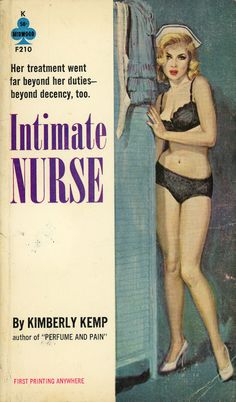
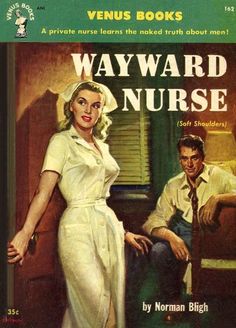
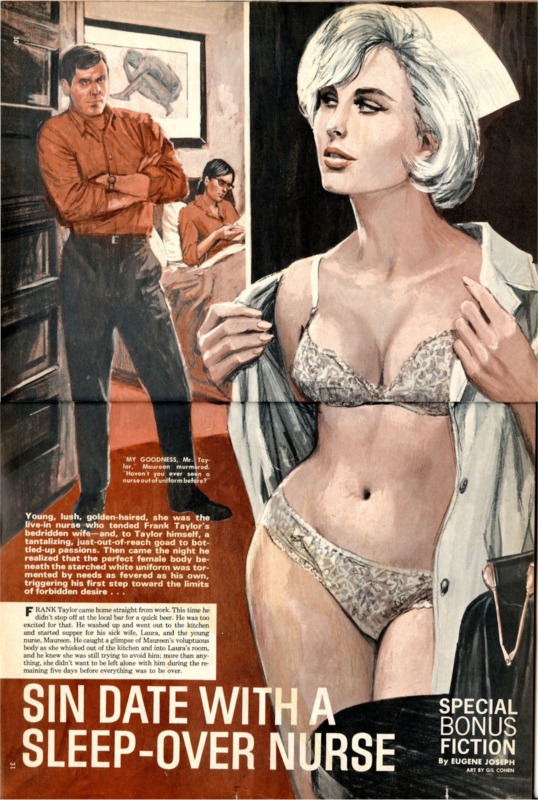
She realized that the best men in Napa, were already taken. That’s when she came up with the idea to be a Intimate Nurse as a second job. The plan was to make the Lady of the House come down with a serious illness. She ordered a Fever Drug from India, and put an ad in the paper.
She picked her victims carefully. She stalked the local Piggly Wiggly market and if she was a woman who was robust and happy as a lark, because she is getting it at least once a night, she made her move.
“Excuse me. But, I couldn’t help notice your suffering from a little hair loss. I’m a Intimate Nurse. I think you may have the Guadalajara Gung that one gets from eating to much citrus from Mexico. This medicine is made only for women. Don’t give it to your children, or your husband.”
John Presco
Over its 138-year existence, political correctness has played a huge role in the name of that large institution on the south side of the city of Napa.
In the beginning, it was the Napa Insane Asylum, and early maps marked its location with the words “Insane Asylum.”
Later, the name was changed to Napa State Hospital, but, to local citizens, it was called Imola. Today, it’s still officially Napa State Hospital but locals refer to it as Napa State — like it’s a state college.
Regardless of what it’s called, the institution has played an important role in the state’s hospital system, and an even more important role locally. Throughout its long existence, it has been one of Napa’s major employers.
Back in the old days, BW (before wine), Napa and Napa Valley were noted not for agriculture but for the insane asylum. Tell folks you were from Napa and their immediate response was, “Who let you out?” Our Napa High athletic teams, when playing out of town, were especially vulnerable to such taunts from the fans of our opponents.
Many of Napa’s citizens, including yours truly, worked at what I still refer to as Imola. My first full-time job after graduating from Napa High in 1948 was as an “attendant” working on the wards taking care of the patients. (Back in those days, they were caringly referred to as patients. Now they are called “residents.” More PC.)
Then, the hospital was housed primarily in the four-story, stone, castle-like, Gothic structure complete with seven towers. The towers were visible from rooftops in downtown Napa.
According to the hospital’s website, the facility was built to ease overcrowding at the Stockton Asylum, the first state hospital.
Construction started in 1872, and the first two patients, from San Francisco, were admitted in 1875.
The website advises that initially 192 acres were purchased from a land grant owned by General Mariano Vallejo. Eventually, through land acquisition, the acreage would total more than 2,000 acres. It stretched from the Napa River to the ridgeline east of today’s Skyline Park.
Over the years, the landholdings were reduced. Napa Valley College, Kennedy Park and Skyline Park now occupy what was once the agricultural and wilderness areas of hospital land.
The hospital was almost totally self-supporting. It had its own dairy, pig farm, poultry ranch, vegetable gardens and orchards. It had its own kitchens and bakery and even had an underground railroad where meals and bakery goods were transported to the wards on rail cars.
 Rosamond Press
Leave a comment