
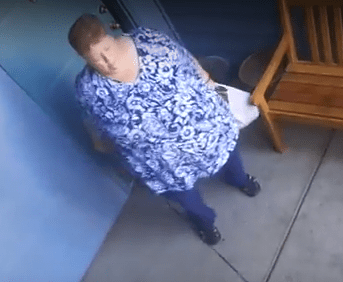
Kim Hafner got hysterical and ran in the house after I told her LSD was not a killer that drove people insane. Did she ever prescribe addicting pain killers to people, that are killing a thousand a month? Patrice worked at Napa with mentally ill people. Very few people have died on LSD. Dark Daughter probably told Light Mommy she talked to the LSD Devil and was going to launch a Holy Mommy Crusade to get me out of Springfield.
Tens of thousands of alcoholics have been put in mental wards. That many have died due to ingesting a legal dose. Colleges have hazed students to death using alcohol. The Hafners are full of shit, and pray for the Rapture and death of a billion non-believers. Fuck the “wrath of God”. What drugs are these bozo-heads on? They went gaga over a few Biblical verses. Bible-Acid?
John Presco
https://en.wikipedia.org/wiki/Alcoholism
About the study
Here we found that the psychedelic experience can be in some ways unpleasant and psychosis-like, but that anxiety tends to be low and a positive mood and ‘blissful state’ more common. Importantly, we also found that self-reported optimism and openness were increased 2 weeks after LSD, while delusional thinking was not, suggesting that the positive effects on personality/outlook linger while the psychosis-like effects do not.
Taken together, the findings suggest: 1. that that the immediate effects of psychedelics can be quite different from their longer-term effects, and 2. that the longer-term effects may be clinically relevant and support the idea of using LSD in the treatment of mood disorders such as depression.
In addition, the study addresses the apparent paradox of psychedelics, where the experience can be unpleasant and accompanied by fear/paranoia but can also lead to profound benefits to well-being in the long run. How can the same compound be both a model of, and yet a treatment for, psychopathology? This study takes the first step towards finding an answer.
Addiction isn’t limited to the people using just the illegal opioids, like heroin. Misuse of prescription opioids is a huge part of the epidemic. Misuse includes people with a prescription not taking it as prescribed–taking too many pills at once, for example–or people without a prescription taking pills they get from a family medicine cabinet, friends, random strangers at a party or drug dealers selling pills illegally.
Taking opioids at too high of a dose, or for too long a period of time, increases the risk of addiction, overdose, and death. The likelihood of using opioid painkillers long-term spikes after just five days of use. Five. And because of this, a lot of people are dying. In 2016, more than 42,249 people died of opioid overdoses in America–more than 115 people every day. And that’s 115 too many.
Can you really die from taking too much LSD, a popular psychedelic drug? A new mini-documentary answers the question as “no” but with some caveats. It’s very unlikely to die from an actual overdose of LSD but there could be other damage or dangers from this powerful and unpredictable substance. You may not die but you could overdose, experiencing such things as panic attacks, severe depression, seizures and erratic behavior.
With the average dose of LSD ranging between 40 to 500 micrograms (μg), overdose effects have been recorded at doses from 1,000 to 7,000 micrograms. Even the strongest users are unlikely to come in contact with such an amount of LSD, according to the filmmaker behind the documentary.
Check out the documentary here:
There have been few documented cases of death attributed to an LSD overdose since the discovery of the drug in 1943. One happened recently, in August 2017, at the Lightning in a Bottle music festival in California. The death of the 20-year-old Baylee Gatlin was initially blamed on LSD, although the coroner report later said LSD was not responsible. LSD could have contributed but the cause of death was ruled to be multi-organ failure, hyperthermia and dehydration. Audible484, the author of the documentary, thinks it is also possible she died from a research drug, misrepresented as LSD.
Dr. David Nichols, an expert on hallucinogens, told the San Luis Obispo Tribune, “It’s just not logical or reasonable to conclude that she is the first of 30 million people who have safely taken LSD to have died (from that small amount). It’s not possible. There is something else. They did not analyze what they should have analyzed.”
Earlier in 2017, the death of a teenager in Canada was also linked to LSD. After taking LSD with a friend, the 19-year-old Henry Suggitt exhibited bizarre behavior before losing consciousness. Paramedics were unable to resuscitate him. The post-mortem exam revealed that he had 1.3μg of LSD for every 1 mL of blood and 31mg of alcohol per 100ml of blood, with the coroner stating that “the medical cause of death of Henry Suggitt was one of LSD toxicity.”
Also of note is the 2015 death of Arthur Cave, the 15-year-old son of the musician Nick Cave, who fell from a cliff after taking LSD. His death was not from an overdose, but more indicative of the kind of dangerous situations taking LSD can create for some.
In recent years, microdosing with LSD has caught on with some people who take smaller doses (10μg, for example) to feel sharper.
The World Health Organization estimates that as of 2010 there were 208 million people with alcoholism worldwide (4.1% of the population over 15 years of age).[9][10] In the United States, about 17 million (7%) of adults and 0.7 million (2.8%) of those age 12 to 17 years of age are affected.[11] It is more common among males and young adults, becoming less common in middle and old age.[3] It is the least common in Africa, at 1.1%, and has the highest rates in Eastern Europe, at 11%.[3] Alcoholism directly resulted in 139,000 deaths in 2013, up from 112,000 deaths in 1990.[21] A total of 3.3 million deaths (5.9% of all deaths) are believed to be due to alcohol.[11] It often reduces a person’s life expectancy by around ten years.[22] In the United States, it resulted in economic costs of $224 billion USD in 2006.[11]
 Rosamond Press
Leave a comment