
I finally got caught up and went back to read some of the articles I posted. I am not a James Bond Fan. My interest in Bond peeked with the discovery he is kin to Talitha Getty. To discover one of my great grandfathers knew John Dee, fits with the claim I died, and came back to life. One person suggested I am a Walk-on. I am just learning about Fleming. This article took an immense amount of pressure on me, and I feel I have gained a brother, a kindred spirit in Ian, a name that means John. My mother wanted my name to be spelled Jon. This post in under construction.
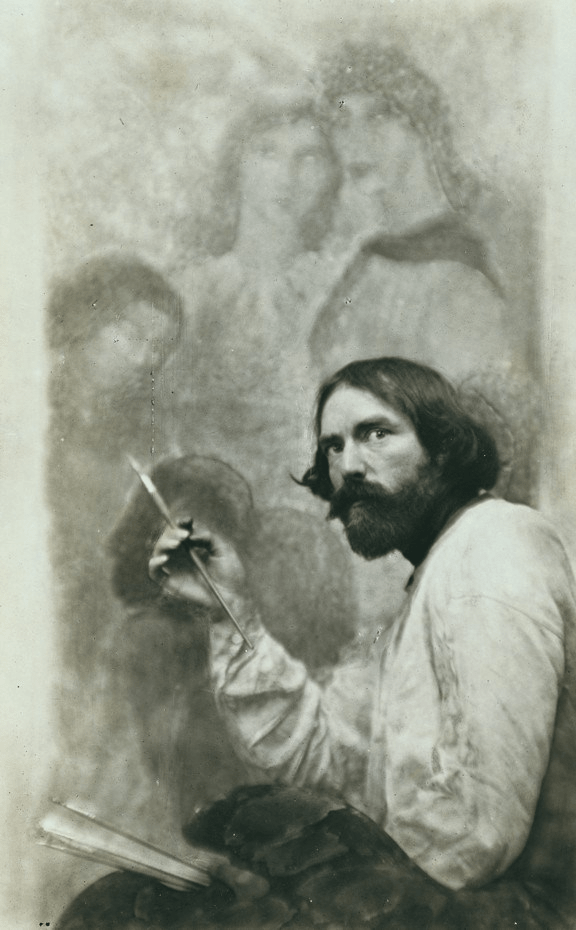
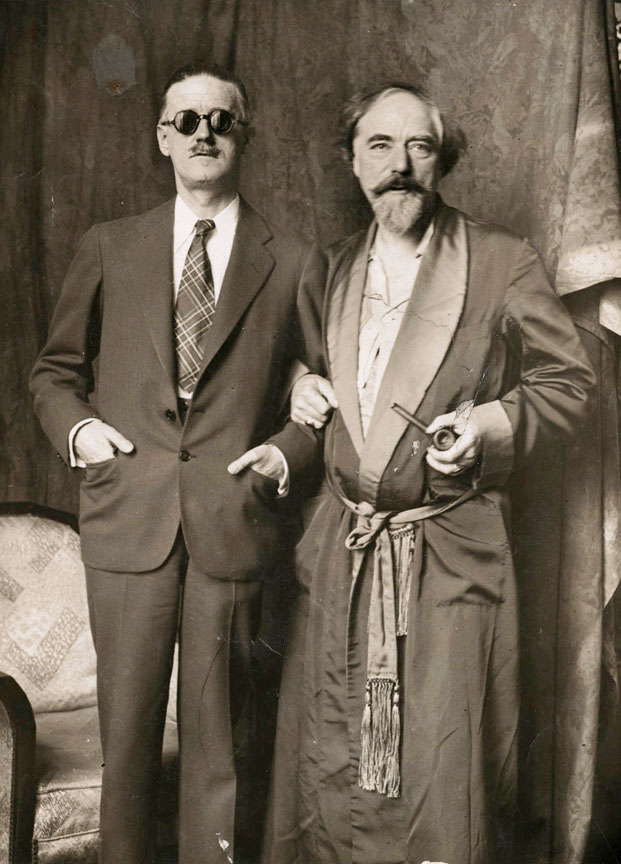
Augutus John and Ian Fleming were close to Aleister Crowley.
John Presco 007
The Sorcerer
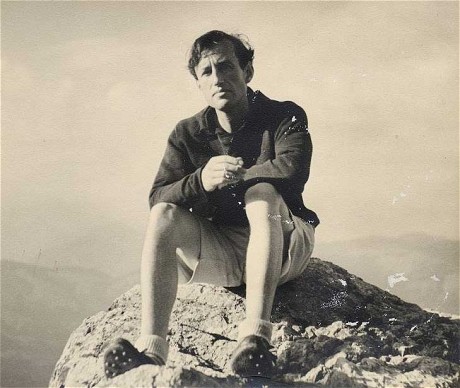
Ian Fleming, Aleister Crowley, and How the Occultists Won the War
https://www.lashtal.com/forums/topic/crowleys-last-letter-to-augustus-john/
Vanessa Hoffman’s occult interests, and the exposure she gave him along these lines, may indeed have first piqued Fleming’s own interest in the occult, but rather strangely, it was Maxwell Knight who had direct prior involvement with one of England’s most notorious occultists, the infamous Aleister Crowley. Crowley himself had worked as an informant during the war, much like Hoffman, and after being introduced to Fleming, the two were purported to have dined together a number of times at the Cavendish Hotel. It was Rosa Lewis, owner of the exclusive establishment at 82 Jermyn Street (which, its worth noting, was very close to a residence Crowley had at the time) who claimed that she had actually served Crowley and Fleming on a number of occasions in 1941. During these dinnertime talks at the stately Cavendish, the beginnings of an alleged wartime project, referred to later by Fleming as “Project Mistletoe” (a reference to the mythical character Balder of Valhalla), began to formulate precisely how occult influence over the Nazis might be used to Britain’s advantage.
According to McCormick’s biography on Fleming, this eventually resulted in the completion of an elaborate magical ritual in Ashdown Forest, in which Crowley, joined my Maxwell Knight and, of course, Ian Fleming, dressed an effigy made to resemble Hess; the ensuing ceremony had been intended at invoking the restless Hess by magical means; however, the sole testimony to this event ever having transpired can be attributed to the late Amado Crowley, who had claimed, in addition to being Crowley’s illegitimate son and protégé, that he had literally been present at the ritual itself. While there is little doubt that Knight, Fleming, and Crowley had indeed shared involvement with regard to intelligence operations during the war, little supporting evidence exists for the so-called “fireworks display” said to have taken place in Ashdown Forest.
https://www.lashtal.com/forums/topic/crowleys-last-letter-to-augustus-john/
I found this in Augustus John’s Chiaroscuro – Fragments of Autobiography: First Series (Jonathan Cape, 1952) p. 82
Here follows the last letter from him, received shortly before his death. The hierophant speaks again. I found it unanswerable.
‘Netherwood’
The Ridge
Hastings.
27th September, 1947
Ex Castro Ann lxxl[sic]
Nemoris Inferioris Sol in O° Libra
Care Frater,
Do what thou wilt shall be the whole of the Law.
The greetings of the Equinox of Autumn!
The Word of the Equinox is brilliance (Ring settled on the last five letters.) AL. I 64.
The Oracle of the Equinox is time (AL II 36)
The Omen of the Equinox is VIII Pî (love)
Love is the law, love under will.
Yours fraternally,
9° = 2 A[sic]
The John Dee/007 Connection
James Bond Creator Ian Fleming and the Secrets of Queen Elizabeth’s “Merlin”

What do the mystical Dr. John Dee and the spy James Bond have in common? A lot more than meets the eye.
Dr. John Dee was a sixteenth century alchemist, magician, and Christian cabalist who so entranced Queen Elizabeth that she even had Dee run her astrological chart to pick the most propitious day and time for her coronation. His home at Mortlake contained more books than any private library in England as well as a magic mirror that, it was said, would astound all who dared look at their reflection. When he wasn’t in England he traveled the continent to the courts of emperors and princes. He was also a spy.
England was a hotbed of political intrigue when Elizabeth took the throne. Plots and counterplots, assassinations, and threats of war were constant. She needed those she could count on to keep her on the throne. Francis Walsingham was Elizabeth’s chief spymaster. He seemed the right man for the job as his motto was Video et taceo, “See and be Silent.” The Queen trusted very few individuals and wanted her intelligence reported directly. Dee reported only to the Queen and Walsingham. The Queen would sign her dispatches to Dr. Dee as “M,” just as James Bond’s boss. Dee referred to himself as agent “007” preceding James Bond’s code name by nearly four centuries. The Earl of Leicester, a very important member of the court, who had been tutored by Dr. Dee as a child, would use a similar code. He marked his secret correspondence with two dots, or two number “0”s representing eyes. Dee would address his correspondence to the Queen with a heading “For Your Eye’s Only.”
John Dee had a great influence on his world. It was he who convinced the Queen she had rights in the Americas. It was he whose texts on navigation went beyond science and envisioned a British world ruled by a British navy long before the age of Imperialism. He made strides in the sciences but never received the credit for his work as he had also delved into the black arts and alchemy.
Dee, along with Sir Francis Bacon, is considered at least the inspiration for, if not the co-founder of, the Rosicrucian brotherhood. Because the brotherhood was not an organization in Dee’s time, there was no established organization or rules, officers, or even members. It was what it claimed to be, a brotherhood of “Invisibles,” and for good reason. To be a visible proponent of any science condemned by the Church could shorten one’s life expectancy considerably. Many of the texts of the Rosicrucians were written anonymously or with pen names like the famous Christian Rosenkreutz. A coded device Dee used on his writings called the “Monas hieroglyphica” is shared by one of the earliest known Rosicrucian writings, Confessio Fraternitatis.
There is a considerable amount of certainty that the Rosicrucian brotherhood played a great part in Dee’s role as Elizabeth’s spy. His position of court mystic, his connection to the “Invisibles” and his gifts that bordered on the supernatural, at least in appearance, would help in admitting him to the esoteric circles of Europe. He left for the continent at age twenty, and his travels included a stint working for the Muscovy Company advancing Anglo-Russian trade.
Ian Fleming’s biography has numerous similarities, including considerable evidence that the same esoteric studies and connection to the Rosicrucian brotherhood played a role in the life of James Bond’s creator.
Fleming was born into an immensely wealthy Scottish family. His grandfather, Robert Fleming, had started managing money as a sideline to his mercantile business, then in 1873 he created a family bank. The bank would survive a century and eventually be sold to Chase Manhattan Bank (now J.P. Morgan Chase) for $7.7 billion dollars. Grandfather Robert’s fortune might have relieved his heirs from needing an occupation, but Ian went to work for Reuters while his brother Peter became a well-known travel writer. From an early age Ian was inspired by the mystical arts. His father had been killed in the First World War and his mother, Evelyn St. Croix-Rose (Rosy Cross?) was not close to him.
His education started at the Durnford School near the estate of the Fleming family, whose motto was “The World is Not Enough.”
After a less than stellar performance at Eton and Sandhurst, Fleming’s mother sent him to the continent at about the same age as John Dee. There, in Austria, he studied Jung’s works on both alchemy and psychology with the Adlerian disciple Forbes Dennis.
Alfred Adler was an Austrian doctor who broke with Freud and split the science of psychology in half. Freud booted out anyone who had agreed with Adler. Adler favored feminism and introduced the concept that the dynamics associated with masculine and feminine principles were the key to understanding human psychology. This theme, as well as Fleming’s association with semi-occult circles, would find its way into his spy novels.
Fleming’s circle also included England’s Bloomsbury Set, a group of writers, intellectuals, and artists whose works greatly influenced the twentieth century: economist Maynard Keynes, author E.M. Forster, feminist writer Virginia Woolf, and scholar Lytton Strachney of Cambridge. Several were also members of the “Cambridge Apostles,” a group of twelve men that included Keynes, Forster, and Strachney as well as the spy Anthony Blunt. Their influence on Fleming might have been strong, but it ended as the war exposed two of them, Anthony Blunt and Lewis Daly, as spies against their own country during the First World War. Later the London Morning Post broke the story of the Bloomsbury Set celebrating the Black Mass. Soon after, their ranks were reduced by two suicides and otherwise premature deaths. Fleming’s reputation was unscathed by his connections.
He soon left England and traveled the world for Reuters and the Times. At nearly the same age, again, as Dr. Dee, Fleming went to Russia. It is certain that by 1939 when he was sent to Moscow he was acting officially as part of British intelligence. He was soon given the title Lieutenant Commander in the Royal Navy, as would his avatar James Bond. Dee of course had been instrumental in setting up the Royal Navy.
One of Fleming’s most important roles was in coming up with a defense plan for Gibraltar. His secret code name was Operation Goldeneye. It had an occult meaning referring to the third or inner eye that was necessary to achieve the higher plane of understanding, gnosis. The name of the operation would later serve as the name for his home on the lush island of Jamaica and of the Bond movie of that name.
He played a role in tricking Rudolf Hess into flying to England. He knew Hess was a student of astrology and could be lured to England through the mystical arts. He consulted with the most renowned of Europe’s occultists, the Great Beast himself, Aleister Crowley. A plan was devised to lure Hess through a bogus horoscope. In January of 1941 an astrologer who was secretly a British intelligence agent convinced Hess of the need to meet the Duke of Hamilton. As a result of trickery and astrology, Hess parachuted into the hands of the RAF and was captured. This began a purge of occultists in Nazi Germany which was no small matter as the Nazi party was full of those who espoused neo-paganism, theosophical occultism mixed with a mystical desire for racial purity.
Crowley’s role was limited as he was not trusted in the mission, but he would anyway be resurrected in Casino Royale as Chiffre, a word implying Cipher.
Fleming was not the only spy interested in magic and the occult. Even the logo of the MI5 contained a pyramid and an “all-seeing eye.”
Possibly Fleming’s most important work was in being sent to the United States to participate in setting up a joint American-British intelligence network. America was not looking to get into the war against Germany. Parties like America First advocated isolationism while others even leaned towards the Fascists. British intelligence was on a mission to change all that. They took an active role in courting the politicians and the media and on occasion worked against those who worked against Roosevelt’s aid policies. The role was more often diplomatic than physical, but there were occasions that sparked Fleming’s interest that led to the creation of James Bond.
The British MI6 and the early OSS (then known as the COI) were housed in Rockefeller Center. Also housed there was the Japanese consul general’s office. Fleming participated in a late night break-in with a safecracker. They opened the offices, opened the safe, copied all the Japanese codebooks, and relocked the offices just in time. Fleming would also use this adventure in Casino Royale, and his role would earn Bond his “00” designation.
Thanks to his role as a spy, he became enamored by the odd gadgets used in spycraft and always carried a commando knife and a trick fountain pen that fired tear gas. He also was fond of the adventure.
After the war Fleming went back to journalism. He also wanted to write, and his contract as a journalist gave him two to three months each year to work on his fiction writing. One of his fellow spies had been Ivar Bryce, who had bought a home in Red Hills, Jamaica, and would find Fleming a property there as well. His fellow boss Bill Stephenson who had headed British intelligence in the United States along with author Noel Coward were regular visitors. Coward described the décor as temple-like with numerous snakes depicted on the walls. There for at least two or three months each year, Fleming settled down to write.
There are numerous theories for much of what has gone into or influenced Fleming’s work. His main character shares initials with the two pillars of Freemasonry, Joachim and Boaz. Such pillars have appeared in Masonic temples everywhere, and for centuries.
His tales can be read on two levels. Author Umberto Eco would remark that all of Fleming’s novels had a similar formula plot. “M” would give Bond a mission. The villain would appear to Bond or Bond to the villain. Next, a woman would appear to Bond. Bond would possess her. Later the villain would take Bond. Finally Bond would be victorious and unite again with the woman. Philip Gardiner in The Bond Code would compare this to the alchemist’s true goal of finding or transforming himself.
In many of Bond’s adventures, he finds the codes behind many of the characters created by Fleming. Often they translate into a loosely coded story of good overcoming evil, the light overcoming the darkness, and only after gnosis is achieved. Fleming even made a statement that James Bond was a Manichean. This refers to the followers of Mani whose “heresy” of dualism so disturbed the Church. Mani’s influence would last until the purge of the Cathars in the thirteenth century and beyond.
In Mani’s dualistic world, it is a constant battle of Evil and Good. Evil in the Bond novels is personified as Le Chiffre, Mr. Big, Hugo Drax, Kanaga, and Baron Samedi. The last refers to a Voodoo cult figure, an “Invisible,” or a dark angel. The evil characters are eventually defeated by Bond with the help of his female companions. The female names have an occult theme as well but represent knowledge or the search for gnosis. Solitaire (the tarot reader and fortune teller), Gala Brand (merry fire), Vesper Lynd (night born), and Vivienne (a life-giving goddess) take the role of the feminine side, along with those of more comical names, the lighter side of Bond created characters like Pussy Galore from people he knew. “Pussy” was the nickname of his neighbor and occasional lover Blanche Blackwell.
After a heart attack, he declared “I have always smoked and drank and loved too much….Then I shall have died of living too much.” A second heart attack made his prediction come true, claiming his life on August 12, 1964. He was only 56.
While he lived as a man of the world, he is buried in Sevenhampton, a small English village two miles from a bus stop. His grave is marked by an obelisk atop four stones.

 Rosamond Press
Leave a comment