
I conclude Jesus was a Samaritan Prophet descended from Omri the King of Israel. Omri’s family tree is disappeared, and the name of the tribe he hails from. Why? I believe he is the “landowner”. There is a bitter argument about the “cornerstone” . When Jesus says this, he identifies himself as a Samaritan Prophet. He is the Guardian Watchtower of the Torah.
“Therefore I tell you that the kingdom of God will be taken away from you and given to a people who will produce its fruit. 44 Anyone who falls on this stone will be broken to pieces; anyone on whom it falls will be crushed.”
After talking with the woman at the well under the great oak tree, she goes into Shechem and brings Rabbis to put Jesus to the test. He passes. A donkey or colt if brought for their Savior to sit upon when he is brought into Shechem. The Samaritans cry;
“Hosanna!”
On this day, the Lord has bid me to take His Kingdom away from the Jews and Christians who defile God’s Kingdom by saying Trump of the Dark Tower is a messiah because he is going to place a cornerstone in Jerusalem when the U.S. Embassy is built. Trump and Netanyahu look the other way as protesting Palestinians are mowed down. The Deed to Israel, as given by President Truman, is revoked. The land belongs to the Palestinians. Jesus’ prophecy is fulfilled!
In the account of Josephus, the Roman quisling, he lied when he said the Samaritans were armed. Did the new Emperor of Rome hear the complaint of Samaritan emissaries who accused Pontius Pilate of wholesale slaughter. Pilate was a master augur as was Mark Anthony who put Herod’s brother of the throne of Judea. Herod’s offspring would be very threatened by the Rebirth of the Northern Kingdom in Shechem and would want Pilate to destroy a Samaritan Religious Movement that is REJECTED by the Jews, along with the Samaritan ‘Savior of the World’.
A simple genealogy includes place of birth, that keeps on changing. Why say ‘Jesus of Nazareth Galilee’? This confusion hides this……..’Jesus of Samaria’. Now we have a ‘Historic Jesus’ as well as ‘Real Motive For Murder’. The lie that Jesus wanted to die for our sins, was invented in the last hundred years. If this was true, why not go straight to the cross, and let his Jewish disciples in on it? Were they Samaritan Disciples who knew Jesus much be crucified so Pagans can be without sin? Why not crucify a Irishman – for your sins? O’Neill of Dublin died for your sins, so you can be without sin – over and over again!
Alas the severely anti-Semitic teaching of Paul – is dead! Good riddance! Now that we know there were rival Children of God, and rival temples, the insane idea that the God of the Jews (and Samaritans) disguised Himself in his His human form so His Chosen People would REJECT HIM – is gone with the wind! I suspect the Judaizers that Paul hated were Samaritans. They tried to stop him from making Gentiles – Jews – without they having to follow Mosaic Laws – that Paul gets rid of. God told Abraham to make all the peoples of the world His Children. Any such mission would have to get the approval of the Children of Abraham, and not Roman or Celtic priests of Paul.
https://en.wikipedia.org/wiki/Judaizers
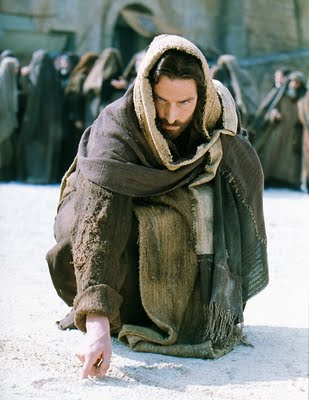
Long ago I took note that the questioning of the Pharisees produced many of Jesus’ words. I suspected this was Friendly Questioning, that I now believe came from Samaritan Rabbis. I believe they brought a woman accused of adultery to Jesus – as a test! Only I passed this test after two thousand years!
Below is a Christian commentary that does not have a clue – as do Jesus’s Disciples? This is the continuing anti-Semitism Paul introduced after he hunted down the Samaritans, and chased them into Damascus. He could not get rid of them, for they were the Ten Tribes scattered throughout the Diaspora that John the Baptist baptized. So, Saul-Paul altered the teaching. Saul altered the truth! All religions from him – are dead!……………..crushed under the Samaritan Stone!
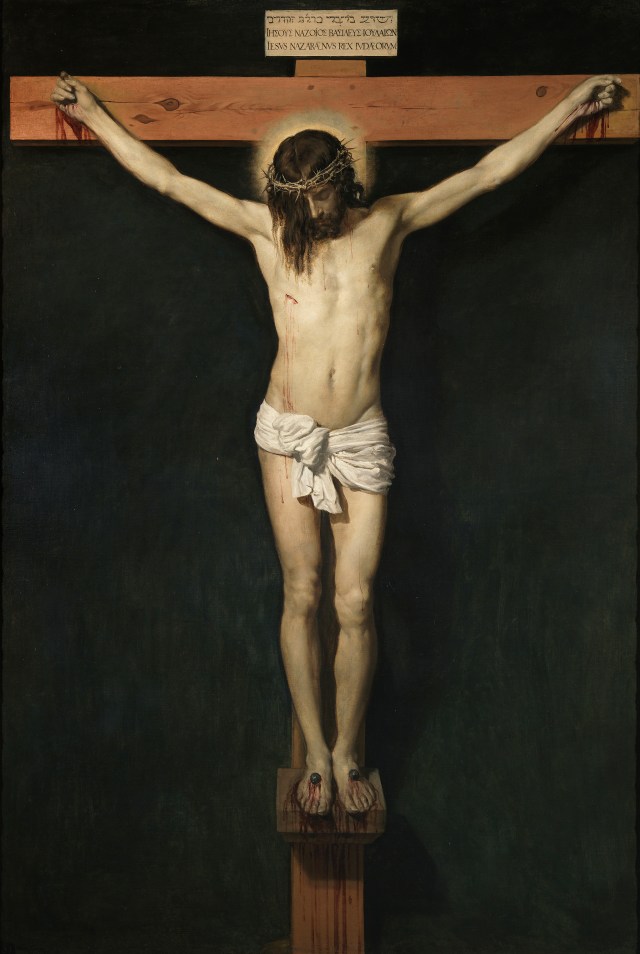
Pilate was no friend of the Jews, or the Samaritans. Herod was a Edomite. Pilate had Samaritans slaughtered as they climbed Mount Gerizim with the incarnate of Moses. I believe he murdered Jesus the Samaritan, and was recalled to Rome for excessive violence against Saints. Now we can read what is written above Jesus’ head……..
“THE SAMARITAN SAVIOR OF WORLD”
Jesus was hated by the Jews, the Herodians, the Romans, and the false followers of Paul, who tortured Samaritans in order to get them to denounce their Savior. He was not saved by a blinding light. Today, his murderous thugs fly the Confederate flag, and wave assault rifles. Children are being insulted by evangelical liars. They are cast out of the Kingdom of the Tower of Truth!
Truth will save the world!
So be it!
Jon ‘The Nazarite’
Copyright 2018
https://en.wikipedia.org/wiki/Omri
The Parable of the Tenants
33 “Listen to another parable: There was a landowner who planted a vineyard. He put a wall around it, dug a winepress in it and built a watchtower. Then he rented the vineyard to some farmers and moved to another place. 34 When the harvest time approached, he sent his servants to the tenants to collect his fruit.
35 “The tenants seized his servants; they beat one, killed another, and stoned a third. 36 Then he sent other servants to them, more than the first time, and the tenants treated them the same way. 37 Last of all, he sent his son to them. ‘They will respect my son,’ he said.
38 “But when the tenants saw the son, they said to each other, ‘This is the heir. Come, let’s kill him and take his inheritance.’ 39 So they took him and threw him out of the vineyard and killed him.
40 “Therefore, when the owner of the vineyard comes, what will he do to those tenants?”
41 “He will bring those wretches to a wretched end,” they replied, “and he will rent the vineyard to other tenants, who will give him his share of the crop at harvest time.”
42 Jesus said to them, “Have you never read in the Scriptures:
“‘The stone the builders rejected
has become the cornerstone;
the Lord has done this,
and it is marvelous in our eyes’[h]?
43 “Therefore I tell you that the kingdom of God will be taken away from you and given to a people who will produce its fruit. 44 Anyone who falls on this stone will be broken to pieces; anyone on whom it falls will be crushed.”[i]
45 When the chief priests and the Pharisees heard Jesus’ parables, they knew he was talking about them. 46 They looked for a way to arrest him, but they were afraid of the crowd because the people held that he was a prophet.
It is widely held that Paul accused Judaizers of teaching that observance of the Abrahamic ritual was necessary to be justified and hence saved, i.e. Legalism, (see also Circumcision controversy in early Christianity and for a counterview, see New Perspective on Paul). The relationship of Paul of Tarsus and Judaism is still disputed today. These groups taught that Gentile followers of Jesus needed to become Jewish proselytes and by so doing also observe the various requirements of the written Torah.
https://www.cnn.com/2018/04/01/politics/bernie-sanders-gaza-protests-cnntv/index.html
Flavius Josephus, Jewish Antiquities 18.85-89
The Samaritan nation too was not exempt from disturbance. For a man who made light of mendacity and in all his designs catered to the mob, rallied them, bidding them go in a body with him to Mount Gerizim, which in their belief is the most sacred of mountains. He assured them that on their arrival he would show them the sacred vessels which were buried there, where Moses had deposited them.
His hearers, viewing this tale as plausible, appeared in arms. They posted themselves in a certain village named Tirathana, and, as they planned to climb the mountain in a great multitude, they welcomed to their ranks the new arrivals who kept coming.
But before they could ascend, Pilate blocked their projected route up the mountain with a detachment of cavalry and heavily armed infantry, who in an encounter with the first comers in the village slew some in a pitched battle and put the others to flight. Many prisoners were taken, of whom Pilate put to death the principal leaders and those who were most influential among the fugitives.
When the uprising had been quelled, the council of the Samaritans went to Vitellius, a man of consular rank who was governor of Syria, and charged Pilate with the slaughter of the victims. For, they said, it was not as rebels against the Romans but as refugees from the persecution of Pilate that they had met in Tirathana.
Vitellius thereupon dispatched Marcellus, one of his friends, to take charge of the administration of Judaea, and ordered Pilate to return to Rome to give the emperor his account of the matters with which he was charged by the Samaritans. And so Pilate, after having spent ten years in Judaea, hurried to Rome in obedience to the orders of Vitellius, since he could not refuse. But before he reached Rome, Tiberius had already passed away.
Judaism[edit]
In Jewish liturgy, the word is applied specifically to the Hoshana Service, a cycle of prayers from which a selection is sung each morning during Sukkot, the Feast of Booths or Tabernacles.[3] The complete cycle is sung on the seventh day of the festival, which is called Hoshana Rabbah (הושענא רבא, “Great Hosanna”).[6]
Christianity[edit]
“Hosanna” was the shout of praise or adoration made in recognition of the Messiahship of Jesus on his triumphal entry into Jerusalem,[3] “Hosanna! Blessed is the one who comes in the name of the Lord!”[7] It is used in the same way in Christian praise.
Baba Rabba, literally “The Great Father”, was one of the greatest of the Samaritan High Priests. He is believed to have lived during the late third and early fourth century AD; Cohen puts his birth at 288 and his death at 328.[1]
The son of the Samaritan High Priest Nethanel III, Baba Rabba was probably born in Shechem. Little is known about his life. According to later Samaritan works, he was a religious reformer and together with the scholar Marqah helped codify Samaritan liturgy and worship. He appears to have had connections with the Roman authorities, and may have exercised some temporal authority over the Samaritan community, which appears to have been relatively autonomous during this period. One chronicle places his death at 362 in Constantinople.
Baba Rabba’s reign is remembered as a golden age by Samaritans to this day. Tales of his piety and miracle-working are a mainstay of Samaritan folklore.
Festivals and Observances[edit]
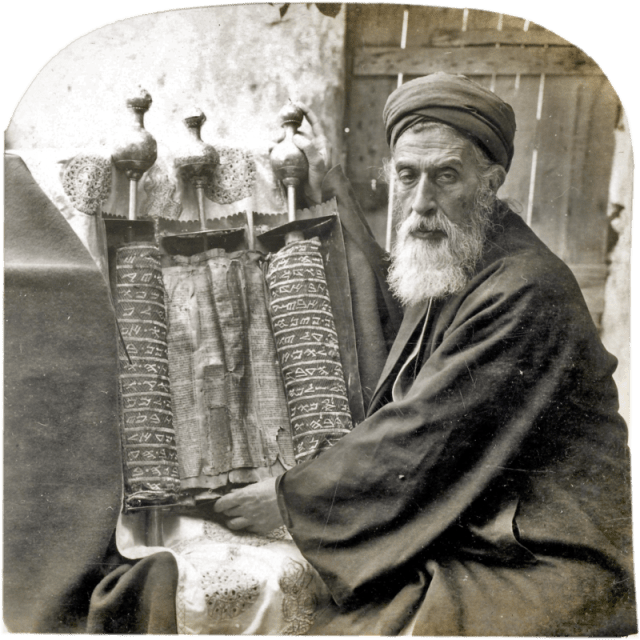
The Samaritans have retained an offshoot of the Ancient Hebrew script, a High Priesthood, the slaughtering and eating of lambs on Passover eve, and the celebration of the first month’s beginning around springtime as the New Year. Yom Teru’ah (the Biblical name for “Rosh Hashanah“), at the beginning of Tishrei, is not considered a New Year as it is in Rabbinic Judaism. The Samaritan Pentateuch differs from the Jewish Masoretic Text as well. Some differences are doctrinal: for example, the Samaritan Torah explicitly states that Mount Gerizim is “the place that God has chosen” to establish His name, as opposed to the Jewish Torah that refers to “the place that God chooses“. Other differences are minor and seem more or less accidental.
Passover is particularly important in the Samaritan community, climaxing with sacrificing up to 40 sheep. The Counting of the Omer remains largely unchanged, however the week before Shavuot is a unique festival celebrating the continued commitment Samaratinism has maintained since the time of Moses. Shavuot is characterized by nearly day-long services of continuous prayer, especially over the stones on Gerizim tradition attributes to Joshua. During Sukkot, the sukkah is built inside houses as opposed to traditional outdoor settings. The restrictions of Yom Kippur are more universal in Samaritanism, with even breastfeeding and the feeding of children being disallowed, and the separation of gender during services is never enforced.
“Guardians/Keepers/Watchers” (of the Torah),
https://www.franciscanmedia.org/the-rift-between-jews-and-samaritans/
 Why the Hatred Between the Jews and Samaritans?
I have been perplexed by the rift between the Samaritans and the Jews and their hatred mentioned in the New Testament. One incident is at Jacob’s well.
Yet in one of the parables it is a Samaritan who takes care of the victim who was beaten. Is there anywhere in the Old Testament that records the breaking down of Abraham’s and/or Jacob’s progeny?
Imagine the hatred between Serbs and Muslims in modern Bosnia, the enmity between Catholics and Protestants in Northern Ireland or the feuding between street gangs in Los Angeles or New York, and you have some idea of the feeling and its causes between Jews and Samaritans in the time of Jesus. Both politics and religion were involved.
According to the Encyclopedic Dictionary of the Bible (McGraw Hill) by Louis F. Hartman, C.SS.R., feelings of ill will probably went back before the separation of the northern and southern Jewish kingdoms. Even then there was a lack of unity between the tribes of Jacob.
After the separation of Judah and Israel in the ninth century, King Omri of the Northern Kingdom bought the hill of Samaria from Shemer (1 Kings 16:24). He built there the city of Samaria which became his capital.
It was strong defensively and controlled the valley through which the main road ran between Jerusalem and Galilee. In 722 B.C. the city fell to the Assyrians and became the headquarters of the Assyrian province of Samarina. While many of the inhabitants of the city and the surrounding area of Samaria were led off into captivity, some farmers and others were left behind. They intermarried with new settlers from Mesopotamia and Syria.
Though the Samaritans were condemned by the Jews, Hartman says they probably had as much pure Jewish blood as the Jews who later returned from the Babylonian exile.
The story of both Israel’s and Samaria’s failures in keeping to the way of Yahweh is partly told in Chapter 17 of the Second Book of Kings. There, too, the sacred author tells how the king of As-syria sent a priest from among the exiles to teach the Samaritans how to worship God after an attack by lions was attributed to their failure to worship the God of the land. Second Kings recounts how worship of Yahweh was mixed with the worship of strange gods.
When Cyrus permitted the Jews to return from the Babylonian exile, the Samaritans were ready to welcome them back. The exiles, however, despised the Samaritans as renegades. When the Samaritans wanted to join in rebuilding the Temple in Jerusalem, their assistance was rejected. You will find this in the Book of Ezra, Chapter Four.
With the rejection came political hostility and opposition. The Samaritans tried to undermine the Jews with their Persian rulers and slowed the rebuilding of Jerusalem and its temple. Nehemiah tells us (Nehemiah 13:28-29) that a grandson of the high priest, Eliashib, had married a daughter of Sanballat, the governor of the province of Samaria.
For defiling the priesthood by marrying a non-Jewish woman, Nehemiah drove Eliashib from Jerusalem–though Sanballat was a worshiper of Yahweh. According to the historian Josephus, Sanballat then had a temple built on Mount Garizim in which his son-in-law Eliashib could function. Apparently this is when the full break between Jews and Samaritans took place.
According to John McKenzie in his Dictionary of the Bible, the Samaritans later allied themselves with the Seleucids in the Maccabean wars and in 108 B.C. the Jews destroyed the Samaritan temple and ravaged the territory. Around the time of Jesus’ birth, a band of Samaritans profaned the Temple in Jerusalem by scattering the bones of dead people in the sanctuary. In our own era which has witnessed the vandalism of synagogues and the burning of black churches, we should be able to understand the anger and hate such acts would incite.
The fact that there was such dislike and hostility between Jews and Samaritans is what gives the use of the Samaritan in the Parable of the Good Samaritan (Luke 10:29-37) such force! The Samaritan is the one who is able to rise above the bigotry and prejudices of centuries and show mercy and compassion for the injured Jew after the Jew’s own countrymen pass him by!
It is with those centuries of opposition and incidents behind their peoples that we can understand the surprise of the Samaritan woman (John 4:9) when Jesus rises above the social and religious restrictions not just of a man talking to a woman, but also of a Jew talking to a Samaritan.
You can find more about the story of the rift between Jews and Samaritans in the various biblical dictionaries and commentaries, and scattered through the historical and prophetical books of the Old Testament.
Jesus Enters Jerusalem as King of Israel
The scene now shifts from a private setting to a public setting. Given the tensions and expectations that have been growing (cf. 10:39-42; 11:46-57; 12:11), Jesus’ entry into Jerusalem is very dramatic. By openly entering the city where he is a marked man he takes the first step toward the final confrontation.
Passover was one of the three feasts that Jews were supposed to attend in Jerusalem, and consequently the population of Jerusalem swelled enormously at this time. As this great crowd is beginning to gather from around Israel and the larger world of the diaspora, news about Jesus is spreading, and people are wondering whether he will come to the feast (11:55-56). On Sunday, the day after the party in Bethany at which Mary anointed Jesus, news arrives that Jesus is on his way to Jerusalem (v. 12), and a crowd of pilgrims, presumably those who had been wondering if he would come, goes out to meet him. Mary’s private expression of emotion is now matched by the crowd’s public outpouring of enthusiasm.
They shout Hosanna! Blessed is he who comes in the name of the Lord! (v. 13). These are lines from one of the Psalms of Ascents (Ps 118:25-26) sung as a welcome to pilgrims coming up to Jerusalem. As such, this is an entirely appropriate thing to do as Jesus is coming up to Jerusalem. But there is more involved here. The cry of Hosanna! is a Hebrew word (hoshi`ah-na) that had become a greeting or shout of praise but that actually meant “Save!” or “Help!” (an intensive form of imperative). Not surprisingly, forms of this word were used to address the king with a need (cf. 2 Sam 14:4; 2 Kings 6:26). Furthermore, the palm branches the people carry are symbolic of a victorious ruler (cf. 1 Macc 13:51; 2 Macc 10:7; 14:4). Indeed, in an apocalyptic text from the Maccabean era, palms are mentioned in association with the coming of the messianic salvation on the Mount of Olives (Testament of Naphtali 5). The cry of Hosanna! and the palm branches are in themselves somewhat ambiguous, but their import is made clear as the crowd adds a further line, Blessed is the King of Israel! (v. 13). Clearly they see in Jesus the answer to their nationalistic, messianic hopes. Earlier a crowd had wanted to make Jesus king (6:15), and now this crowd is recognizing him as king in the city of the great King. Here is the great dream of a Davidic ruler who would come and liberate Israel, establishing peace and subduing the Gentiles (cf. Psalms of Solomon 17:21-25).
Jesus responds by finding a young donkey to sit on (v. 14), thereby making a mess of the picture they were creating. He should have found a horse to ride on or made use of some other symbol of power. Instead he paints from a different palette. His action undercuts their nationalism and points in a different direction, evoking an image from the Prophets: Do not be afraid, O Daughter of Zion; see, your king is coming, seated on a donkey’s colt (v. 15; from Zech 9:9). He is indeed king, but not the sort of king they have in mind.
John says the disciples did not make the connection with the passage from Zechariah at the time: At first his disciples did not understand all this. Only after Jesus was glorified did they realize that these things had been written about him and that they had done these things to him (v. 16). The word translated realize is emnesthesan, “remember,” the same word used to describe their recollection and insight into the cleansing of the temple (2:22). At the time they were caught up in the swirl of events and did not really understand what was going on. From what we know of them elsewhere, they probably shared the nationalistic hopes of the crowd (for example, Acts 1:6). The disciples and the crowd thought they were honoring Jesus, and they were. But they did not really understand the true meaning of what was happening nor even what they were saying. They did not put the events of Jesus’ entry into Jerusalem and the Scripture together, so they did not grasp what had taken place until after Jesus had been glorified. They needed to see the revelation at it greatest in the death and resurrection of Jesus and to have the help of the Spirit who was not available to them until after the glorification (7:39) before they understood the significance of these events (cf. 15:26; 16:13-14).
The meaning of what takes place is conveyed through both the Scripture shouted by the crowd at the time and the Scripture that occurred to the disciples later. The crowd shouted, “Help!” and “Save!” and Jesus has come precisely to help and save them, though it will not be through the political liberation the crowd expects. The crowd chants a line from a Psalm of Ascent: Blessed is he who comes in the name of the Lord! (v. 13, from Ps 118:26). This line applies to Jesus in a way it never had to anyone else before. Jesus is the one who makes known the Father and has come in the Father’s name (5:43), and he desires that the Father’s name be made known (17:6, 26). So of him it is uniquely true that he comes in the name of the Lord. This expression is one way of summarizing his whole mission.
The crowd, in their messianic, nationalistic fervor, adds another line not found in the Psalm of Ascent: Blessed is the King of Israel! (v. 13). This acclamation ties together the whole of Jesus’ ministry up to this point, signaled by the word Israel. Apart from this verse, the words Israel and Israelite occur only in the first three chapters. John the Baptist’s witness to Israel (1:31) finds its initial response in the confession of Nathanael, a true Israelite (1:47), when Nathanael confesses Jesus to be the Son of God, the King of Israel (1:49). Nathanael stands in marked contrast to Nicodemus, a teacher of Israel (3:10), who is unable to understand earthly things, let alone heavenly things. So the first three chapters are characterized by a concern with the initial witness to Israel, and this motif now finds its fullness in this crowd’s acclamation of Jesus as the King of Israel. Jesus is indeed King of Israel, and this motif now comes to the fore as the story nears its end (cf. 18:33-39; 19:3, 12-15, 19-21). His kingdom, however, far transcends Israel’s boundaries. “What honor was it to the Lord to be King of Israel? What great thing was it to the King of eternity to become the King of men?” (Augustine In John 51.4). Augustine’s language is too dismissive to be true to John at this point, but he does help us keep the Johannine perspective on the identity of the one entering Jerusalem.
The crowd is probably not aware that the line they have added to the acclamation is an echo of another passage that further contributes to the depth of revelation concerning Jesus in this story: “The Lord, the King of Israel, is with you; never again will you fear any harm” (Zeph 3:15). The context in Zephaniah is of the future time of peace when Jerusalem is no longer at war–the lame and the scattered have been brought home, and even the Gentiles have been purified so that they might call on the name of the Lord (3:9-20). The hallmark of this time is the Lord’s own presence (3:15, 17). For Zephaniah, as for this crowd, such a scene was the anticipated outcome of the final battle with the Gentiles, which would liberate Israel once and for all. But John has shown that the realities described by Zephaniah are already taking place in the midst of Israel through the ministry of Jesus, though in a very different manner. Key themes in Zephaniah’s description are heard also in the previous chapters in John. In particular, the bringing together of both Jew and Gentile was said to be the work of the Good Shepherd (10:4, 16), and the picture of life in the messianic kingdom is alluded to in Jesus’ promise of abundant life (10:10), which was then further revealed in the raising of Lazarus (chap. 11). Thus, the crowd’s nationalistic agenda is thrown into relief. “They should not be acclaiming him as an earthly king, but as the manifestation of the Lord their God who has come into their midst (Zeph 3:17) to gather the outcast” (Brown 1966:462). If they had eyes to see what Jesus was doing and ears to hear what he was saying they would find in him the fulfillment of their desires, though without the nationalistic element.
The Scripture passage that occurs to the disciples later is also, like the acclamation of the crowd, a composite text. The first part, Do not be afraid, O Daughter of Zion (v. 15), probably comes from the passage we have just examined in Zephaniah (3:16). The exhortation not to fear is very common in Scripture, but the Zephaniah passage is the closest to the full expression in John (Brown 1966:458). Thus, the crowd’s acclamation and this later Scripture are tied together in John through Zephaniah, though not in the thinking of those in the midst of the event. The magnificent picture of eschatological peace in Zephaniah is behind this lack of fear. The fulfillment of this promise of peace is taking place right before the eyes of this crowd, though they do not know it.
The rest of the quote comes from Zechariah: “Rejoice greatly, O Daughter of Zion! Shout, Daughter of Jerusalem! See, your king comes to you, righteous and having salvation, gentle and riding on a donkey, on a colt, the foal of a donkey” (Zech 9:9). As with the Zephaniah passage, this verse from Zechariah foresees the coming of the messianic age of peace, when the war-horses are taken from Jerusalem and the king will reign “from sea to sea and from the River to the ends of the earth” (Zech 9:10). John has abbreviated the citation, and he probably did this for the sake of simplicity rather than in an effort to exclude the themes of righteousness, salvation and gentleness. Donkeys and mules were used by important persons and kings in the Old Testament (for example, Judg 10:4; 12:14; 2 Sam 13:29; 18:9), including David himself (1 Kings 1:33), but the contrast in this context in Zechariah 9 is between the warhorses (v. 10) and the donkey on which the king rides (v. 9) is a striking image of humility. The king is righteous, blameless in the eyes of the law, which reminds one of the controversies in this Gospel over who is the true disciple of Moses. The “having salvation” is a form that could be either passive or reflexive (Niphal, nosha`). This means that this king has himself been delivered by God (passive) or that he shows himself to be a deliverer (reflexive)–either sense is true of Jesus as revealed in this Gospel. Thus, by riding on a donkey, Jesus connects with a rich picture of the messianic king, thereby providing insight for interpreting his own identity and plans as he enters Jerusalem on this particular Sunday at the time of Passover.
John gives us a report on both the crowd and the opponents, as he does elsewhere in this Gospel. The repetition of the word “crowd” (ochlos) is a little awkward (Jn 12:17-18). Verse 18 reads literally, “Because of this the crowd went out to meet him, because they heard he had done this sign,” which makes it sound like what was described in verse 12. The NIV has the right sense–the number of people gathering around Jesus was continuing to grow, spurred on by the report by those who had seen the raising of Lazarus (vv. 17-18). Despite the awkward expression, this is an important note for John to add, for it continues to connect the raising of Lazarus to what is now going on. John does not let us forget that the one who is heading toward his death is the Lord of life.
While the crowds build, the Pharisees, on the other hand, are getting more and more upset. The translation See, this is getting us nowhere (v. 19) is too weak. The verbs are in the second-person plural, capturing the mutual condemnation they are throwing at one another: “You guys see that you are doing no good.” The crowd around Jesus is so large that they conclude, Look how the whole world has gone after him! (v. 19). This exaggeration expresses their dismay and frustration, but of course it is also yet another example in John of people’s words being more significant than they realize.
A series of different people are coming to Jesus. First, we heard just before the triumphal entry that “many of the Jews were going over to Jesus and putting their faith in him” (12:11). Second, the Pharisees speak of the world (v. 19 ) probably because they are seeing even Jews from the diaspora, who are in town for the feast, being attracted to Jesus. But the world that God loves and for which he sent his Son (3:16) includes all humanity. Representatives of the third group, the Gentiles, appear in the next section as some Greeks who are seeking Jesus arrive. The Good Shepherd is indeed gathering his flock from the whole world (10:16) in fulfillment of the prophecies of the universal messianic kingdom such as those found in Zechariah and Zephaniah. Jesus continues to form his community apart from the official structures of Judaism. The same witness to Jesus that disturbs the leaders might have instead encouraged them to reconsider their rejection of Jesus and come to him for life. But they continue in their hardened position against Jesus, rejecting his love for them.
 Rosamond Press
Leave a comment