I want to use the Walden-Czernin family in my new Ian Fleming-like novel, titled ‘The Royal Janitor’. Do I need permission? Best to ask – but whom?
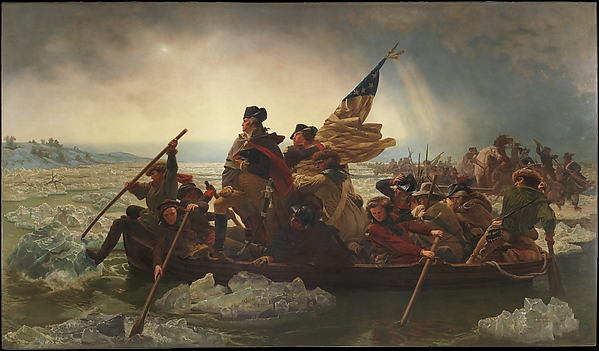
My protagonist will be fifty-four years of age. Her name is – Serena Victoria Walden – the descendant of the most famous UNKNOWN quisling in western history. He was a lieutenant in the British army who hated the Hussite Germans who had oppressed the Bohemian branch of the Walden family. That’s Walden holding the American flag. He begat a Walden lineage in America. His father declared him dead upon learning he was a traitor. This is why Baron Walden is said to be “without issue”. However, his papers and letters were preserved, and handed to Serena when she got married. She worked as a janitor after the death of her husband and daughter. Then, she was told the good news, she owned half of London along with her cousins she did not know she had. She was invited to her first Royal Wedding. No historian wants to inform the American People we were invaded by Germany. Serena was invited to meet Churchill on his deathbed. He gave her one of his paintings, saying;
“Your ancestor led the one man Bohemian invasion of America! I am honored to meet his great, great, ancestor! Fuck the Germans!”
Of course this is a legend. Winston died in 1965 when Serena was one years of age. Never the less, it remains as his last parting shot.
Jon Presco
https://en.wikipedia.org/wiki/Ottokar_Czernin
https://en.wikipedia.org/wiki/Czernin
The family is descended from the clan of “Drslavici”, like several other Bohemian families. The first known bearer of the family name was “Comes” and Camerarius regis (1199–1212) Cernin de Chudenic (11?? – 12??). The name of the family refers to the town of Chudenice in western Bohemia, which was in their possession from the 13th century until 1945.
On 18 May 1607, the Czernin family was elevated to the Reichsfreiherrenstand with the title “Freiherr von Chudenitz” (Baron of Chudenitz, svobodný pán z Chudenic) and, on 15 March 1623, to the Reichsgrafenstand with the title of “Reichsgraf von Chudenitz” (Count of Chudenitz, hrabě z Chudenic).
In 1716, Franz Josef, Count Czernin von und zu Chudenitz received permission from the Emperor to the hereditary title of “Regierer des Hauses Neuhaus” (Ruler of the House of Hradec).[1]
Today, most members of the Czernin family live in the Czech Republic, Austria, and the United Kingdom.
Hessians /ˈhɛʃənz/[1] were 18th-century German auxiliaries contracted for military service by the British government.[2] They took their name from the German states of Hesse-Cassel and Hesse-Hanau. The British hired Hessian troops for combat duty in several eighteenth century conflicts, but they are most widely associated with combat operations in the American Revolutionary War (1775–1783).
About 30,000 German soldiers fought for the British during the American Revolutionary War, making up a quarter of the troops the British sent to America.[3] They entered the British service as entire units, fighting under their own German flags, commanded by their usual officers, and wearing their existing uniforms. Since more than 50% of the German troops came from Hesse-Cassel and Hesse-Hanau, Americans use the term Hessians to refer to all German troops fighting on the British side,[2][4], a form of synecdoche. The remainder were rented from other small German states.
American Patriots presented the soldiers as foreign mercenaries with no stake in America. Many of the men were press-ganged into Hessian service. Deserters were summarily executed or beaten by an entire company.[5] Hessian prisoners of war were put to work on local farms.
https://en.wikipedia.org/wiki/George_Washington%27s_crossing_of_the_Delaware_River
https://en.wikipedia.org/wiki/Czech_National_Revival
On a sweltering evening last June, the Sir John Soane’s Museum threw a party to celebrate the opening of Bob the Roman, an exhibition devoted to architect Robert Adam. By the standards of the museum it is a flashy affair – champagne, smoked-salmon canapés. Why all the fuss?
There were no celebrities present, no Royals, not even a famous architect. You would never have known that the guests of honour were two unassuming ladies in late middle age – the Hon Jessica White and the Hon Camilla Acloque who, along with their two sisters, the Hon Susan Buchan and the Hon Hazel Czernin, had sponsored the exhibition.
They could easily afford it: these four aristocratic women are the daughters of the late Lord Howard de Walden. When he died in 1999, his daughters inherited a quarter each of some 92 acres of London, stretching between Regent’s Park and Oxford Street, including Harley Street, Wimpole Street, Marylebone High Street and Cavendish Square. Their estate includes Chandos House, one of the finest Adam buildings in the country, currently undergoing restoration.
So Peter Czernin, the 37-year-old only son of the Hon Hazel Czernin, really doesn’t need to work. ‘But I have to work,’ says Mr Czernin. ‘I’m ambitious.’ He, wife Lucinda and their children recently returned from LA where he spent eight years working as a film producer. Back in Britain, he’s set up a film company and is making an adaptation of the P G Wodehouse novel Piccadilly Jim, written by Julian Fellowes and starring Sam Rockwell, Brenda Blethyn, Frances O’Connor and Allison Janney.
One day, however, Mr Czernin, along with his five sisters and their ten cousins, will control a considerably larger budget than the millions being lavished on this film – the Howard de Walden estate is estimated to be worth some £1,150 million. It is entirely family-owned. Mr Czernin’s mother regularly appears in the Rich Lists, not too far behind the Duke of Westminster, Lord Cadogan and other major London landowners. ‘We see those lists and roar with laughter – they’re always wildly inflated,’ says Mr Czernin, keen to play down his mother’s wealth. He is similarly low-key about the considerable influence that his family wields over the development of Central London – ‘The minute you’ve got some crusty toff telling everyone what to do is the minute it will all go wrong.’ And it’s true the estate is run much like any other large corporation.
But ultimately, much of London is still owned by ‘toffs’ – a handful of grand families control the freeholds to great swathes of our capital. These vast estates have been handed down over hundreds of years, and earlier generations laid out many of London’s most beautiful squares, decreeing that the rendering be painted white, the railings black and so on. A handful of heirs and heiresses are waiting in the wings, ready to inherit much of the city. Very little is known about most of them, and that is how they like it.
At the top of the pile is Hugh Grosvenor, the only son of Gerald Grosvenor, the Duke of Westminster and the richest man in Britain. The 12-year-old is the principal heir to the Duke’s vast estate, which includes 100 acres of Mayfair and 200 acres of Belgravia. This land is so expensive that, in 2002, the Grosvenor Group sold a 65sq ft parking space in Mayfair for £65,000, and when Estates Gazette Group published its first rich list last year, it valued the Duke’s London estate at a staggering £5.5 billion.
The Duke is relatively open about his own life and has appeared on Desert Island Discs talking about, among other things, his wretched time at Harrow. But he is extremely protective of his four children and refused to send them to boarding school, enrolling them first at a state primary school, then a private day school near the family home of Eaton Hall near Chester.
While his son will take the largest share of the family fortune, his three daughters will also inherit considerable trust funds, and in the past the Duke has expressed concern about gold-diggers. So he was probably not best pleased to see his eldest daughter, Lady Tamara Grosvenor, at number ten in Tatler’s Little Black Book of eligible dates. Last year, Tamara, 24, dated the English polo player Henry Brett, though her current romantic status is a mystery. Having studied theology at Newcastle University, she undertook work experience at her father’s company last year, but now works outside the family firm. The middle sister, 22-year-old Lady Edwina, is still a student and counts Prince William among her social circle (the Duchess is his godmother, Princess Diana was her godmother). There is also an little sister, 11-year-old Viola.
Though the two older girls are said to be down-to-earth and good fun, they have also been brought up to be wary. ‘They have an inner circle of friends whom they’ve known for years and who don’t make a big deal about their wealth,’ says someone who knows both sisters. Their father’s attempts to, as he put it, ‘remove the silver spoon from their mouths’ have largely paid off, reports this friend. ‘I know people who can be appallingly rude in shops and restaurants, but you’d never catch Tamara or Edwina behaving that way – it’s been drummed into them that they’re very fortunate.’
After the Duke of Westminster’s spread, the next largest London estate belongs to the 8th Earl Cadogan, who can walk from Peter Jones to Harrods on his own land.
The estate, worth £1.275 billion, covers over 90 acres between Knightsbridge and Albert Bridge on the Thames, and includes Cheyne Walk, Cheyne Gardens, Cadogan Square and the newly developed Duke of York’s Square on the King’s Road. All of this land came into the family through marriage in the 18th century.
The Earl’s own marriages have not always been so wise. He has been married three times, and in 1994 he went through an acrimonious divorce from Jennifer Rae, the owner of an etiquette agency. The marriage was ridiculed by Sacha Baron Cohen (alias Ali G) when he posed as a Kazakhstani TV presenter trying to learn about English high society.
Two years ago, Earl Cadogan hit the headlines again when he opposed the development of four luxury houses in Chelsea Manor House on the grounds that the land was intended to be used for the working classes. So far, his eldest son and heir, 37-year-old Edward Cadogan, Viscount Chelsea, has kept a lower profile. He was educated at St David’s College, Llandudno, then served with the RAF in the first Gulf war. No longer in the forces, he now lives at the family’s 2,000-acre Scottish estate, Snaigow, with his wife and children. Officially, Viscount Chelsea plays no role in the family business. ‘He doesn’t play an active role – his father doesn’t think he has enough knowledge yet,’ says a spokeswoman for the Cadogan Estate. ‘But he comes into the office sometimes and shows a keen interest in what’s going on.’ The estate, she notes, is actually run by chief executive Stuart Corbyn. ‘You could almost call Lord Cadogan a figurehead.’
A familiar refrain from the big estates, this is slightly disingenuous, suggests Mark Cooper of Estates Gazette Group. ‘It’s a hierarchical system, and it comes down to Earl Cadogan or whoever. These people and their heirs will wield a lot of influence in a general way on the shape of London, because they’re the biggest of the property companies. The person taking the big cheques out is the one who counts.’
So why all the secrecy? ‘They’re worried about the adverse publicity, just from the vastness and scale of their wealth. It’s the ultimate fat-cat story, isn’t it?’ he points out.
That certainly is how Earl Cadogan’s tenants in Chelsea have sometimes seen it. A number of famous residents have joined campaigns against his rent-review policies, and at one point ‘Wanted’ posters featuring the slogan Rachman Cadogan, along with his picture and private telephone number, were plastered around the estate.
Perhaps this explains why Viscount Portman, the 45-year-old owner of the £1.07 billion Portman Estate, spends much of his time in Australia. But that isn’t to say that he doesn’t keep a keen eye on his London spread, which dates back to the mid-16th century when Henry VIII gave the land to Lord Chief Justice Portman. The estate consists of 100 acres around Portman Square and Oxford Street, and includes the Cumberland Hotel. Viscount Portman also owns a 3,000-acre Herefordshire estate, an Antiguan holiday home and a Sydney mansion. Eventually, the bulk of this fortune, and control of the estate, will pass to the Hon Luke Portman, the Viscount’s 19-year-old son by his first marriage to Caroline Steenson. (There are two more sons, Matthew, 13, and Daniel, eight, from his second marriage to Brazilian beauty Patricia Martins Pim.) Though he is Britain’s most eligible teenager, Luke Portman has managed to keep an extremely low profile, and his name rarely appears on the society pages. He may yet cause a splash as his father’s half-brother, Justin Portman, has done, marrying 21-year-old Natalia Vodianova, a Russian supermodel born into poverty. Justin, 34, is a fixture of the Notting Hill social scene.
The same is not quite true of the Hon William Stanhope and his sister Serena (wife of Viscount Linley), the children of Viscount Petersham, and grandchildren of the Earl of Harrington. William will eventually inherit the family title, and a significant proportion of the £100-million fortune, including a large chunk of South Kensington (Serena is also expected to inherit a large sum). The Hon William, 36, is a venture capitalist, mountaineer and eco-campaigner. Handsome and eccentric, he used to drive round London in a leopard-skin-upholstered hearse and once donned a rhino outfit for the Save the Rhino campaign. His wife of two years is Candida Bond, a sculptress and model who was plucked from nowhere to become the face of Chanel.
They were married in a Cotswold church, decorated with vegetables, before 460 guests including Bryan Ferry and Tara Palmer-Tomkinson. Home is now the family’s 200-acre Scottish estate, Crimonmogate, parts of which they rent out for weddings. Though happy to stick his head above the parapet in certain respects, the Hon William is tight-lipped on the subject of the London estate. ‘Naturally I have my own set of opinions on the thing, but I’d rather not comment,’ he says cagily. ‘Why don’t you talk to the larger estates?’
His inheritance is, in any case, some way off, since the estate is still in the hands of his 81-year-old grandfather, the Earl of Harrington. It will then pass to 59-year-old Viscount Petersham, an adventurous man who marked his 1983 divorce from his first wife, Virginia Freeman Jackson, the mother of his two children, by sailing round the world, stopping off in Fiji to marry his girlfriend, blonde former showjumper Anita Fuglesang.
That a handful of aristocratic families still own much of London may seem to confirm that Britain is a class-bound nation in thrall to the past. Yet it’s a mistake to think that these families could suddenly decide to change the face of London. Most of these estates consist of conservation areas and listed properties and, in any case, it is these very families that imposed the strict regulations in the first place. ‘It’s ownership that created everywhere from Siena to New Town, Edinburgh, to the great estates of London,’ points out George Ferguson, the president of the Royal Institute of British Architects. ‘What’s remarkable is the weakness of a planning system not based on ownership. These families actually made London what it is. They’re able to use their power of ownership still – but I’m not implying that’s a bad thing.’
Perhaps he’s right. You won’t, after all, see much pebble dash in Mayfair.
Thomas Scott-Ellis, 8th Baron Howard de Walden

Thomas, 8th Baron Howard de Walden
Thomas Evelyn Scott-Ellis, 8th Baron Howard de Walden, 4th Baron Seaford (9 May 1880 – 5 November 1946), was an English peer, landowner, writer and patron of the arts.
Lord Howard de Walden was also a powerboat racer who competed for Great Britain in the 1908 Summer Olympics.
Contents
[hide]
Early life[edit]
Thomas Ellis was born in London on 9 May 1880.[1] He was baptised with the name of Thomas Evelyn Ellis, and was known within his family as “Tommy”. Educated at Eton College and the Royal Military College, Sandhurst, in 1917 he assumed the surname Scott-Ellis by Royal Licence.[2]
Military career[edit]
Commissioned into the 10th Hussars, he saw military service as a Lieutenant in the Second Boer War before retiring from active service in August 1902.[3] Scott-Ellis resumed military service during World War I, being promoted Major in the Royal Tank Corps.[4]
Collecting and interests[edit]
After succeeding to his family titles in 1899 he inherited further estates in 1901, including property in Marylebone, London and earned the title of ‘Britain’s wealthiest bachelor’. He took a lease on [Audley End House], [Essex] which had once belonged to his ancestors, in 1904 but reportedly never felt settled there. The artist Auguste Rodin created a bust of Lord Howard de Walden in 1906 which is held in the collection kept at the Rodin Museum.[5] In 1911, in preparation for his marriage, he leased Chirk Castle, Denbighshire, which became his main residence after WWI until 1946, and where he learned the Welsh language; he later served as president of the Campaign for the Protection of Rural Wales from 1931 to 1945.[6]
Lord Howard de Walden became a keen heraldist and genealogist, as well as amassing one of the most extensive collections of British armour, most of which is now on display at Dean Castle, Kilmarnock.[7] As a crew member of the Dylan he participated in the first and only motor boat competitions at the Olympics 1908 in London.[8] His steam yacht, Branwen, 135 feet (41 m) length overall, launched 28 October 1905 was the first vessel built at the John I. Thornycroft & Company’s Woolston yard.[9][10]
In 1914 he provided financial support for the creation of Crab Tree Club in London and also in that year he was one of the people “blessed” in Wyndham Lewis‘s Blast magazine.
Lord Howard de Walden was also an author, who produced several plays under the pseudonym of T. E. Ellis.[11]
Dispute with John Lewis[edit]
John Lewis of the eponymous department store on Oxford Street engaged in a protracted legal dispute with De Walden, his ground landlord, over the Holles Street premises. The litigation went through the courts for twenty-three years and cost Lewis £40,000. At one point John Lewis was sent to Brixton Jail for contempt of court, and De Walden sued him for libel following his erection of placards at his stores. The case was eventually settled amicably.[12]
Family[edit]

In 1912, Lord Howard de Walden married Margarita van Raalte (CBE, DStJ, died 1974);[13] herself a collector of antiquities. Their children were:
- John Osmael Scott-Ellis, 9th Baron Howard de Walden (27 Nov 1912 – 9 July 1999) married firstly Irene Gräfin von Harrach, daughter of Hans-Albrecht Graf von Harrach and Helene Gräfin von und zu Arco-Zinneberg, on 21 August 1934. He married secondly, Gillian Margaret Buckley, daughter of Cyril Francis Stewart Buckley and Audrey Burmester, in 1978 (see Viscount Mountgarret)
- Hon. Bronwen Mary Scott-Ellis (b. 27 November 1912 – 2003) married The Hon. James Louis Lindsay, son of the 27th Earl of Crawford and Constance Lilian Pelly, on 26 April 1933
- Hon. Elisabeth Gwendolen Scott-Ellis (b. 5 December 1914 – 1976) married, firstly, Lt-Cdr Serge Orloff-Davidoff,[14] son of Count Alexis Orloff-Davidoff, on 24 July 1935. She married, secondly, Bernard Wheeler Robinson (died 1997), son of Dr. Wheeler Robinson, on 31 October 1959.
- Hon. (Essylt) Priscilla Scott-Ellis (15 Nov 1916 – 8 March 1983) married José Luis de Vilallonga y Cabeza de Vaca, marqués de Castellbell, on 27 September 1945 (see Marqués de Castellbell)
- Hon. (Margaret Irene) Gaenor Scott-Ellis, JP (b. 2 June 1919 – 2002) married Lieut. Richard Heathcoat-Amory, son of Lt.-Col. Harry Heathcoat-Amory JP DL and Evelyn Stanley, on 18 July 1938 (see Earl Bathurst)
- Hon. Rosemary Nest Scott-Ellis (b. 28 October 1922) married George Fitzroy Seymour JP DL, of Thrumpton, Nottinghamshire,[15] on 1 June 1946 (see Miranda Seymour FRSL)
Lord Howard de Walden died, aged 66, on 5 November 1946 in London,[1] being succeeded in the family titles by his son, John Osmael Scott-Ellis.
 Rosamond Press
Leave a comment