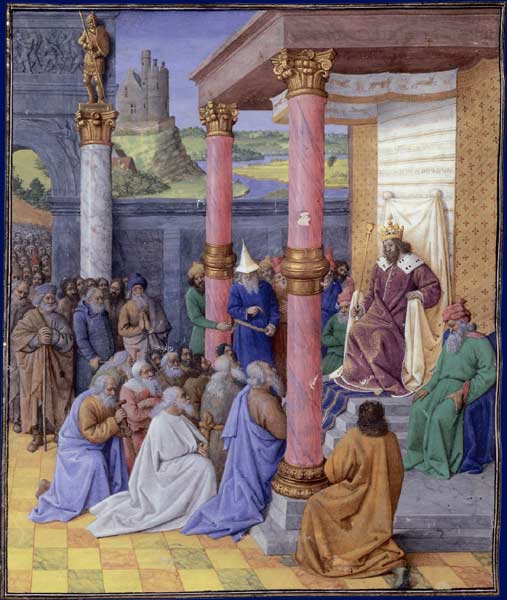
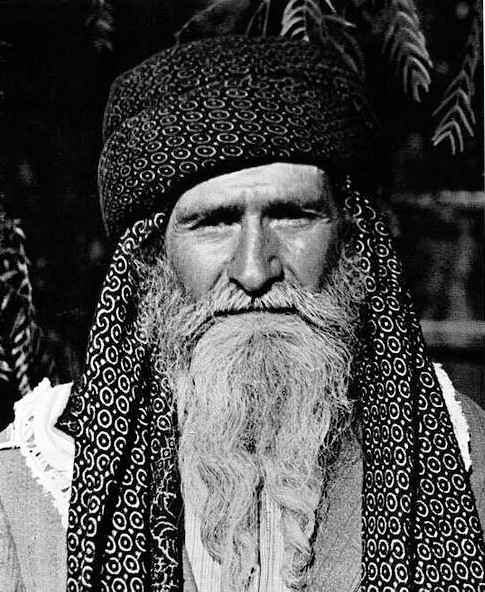

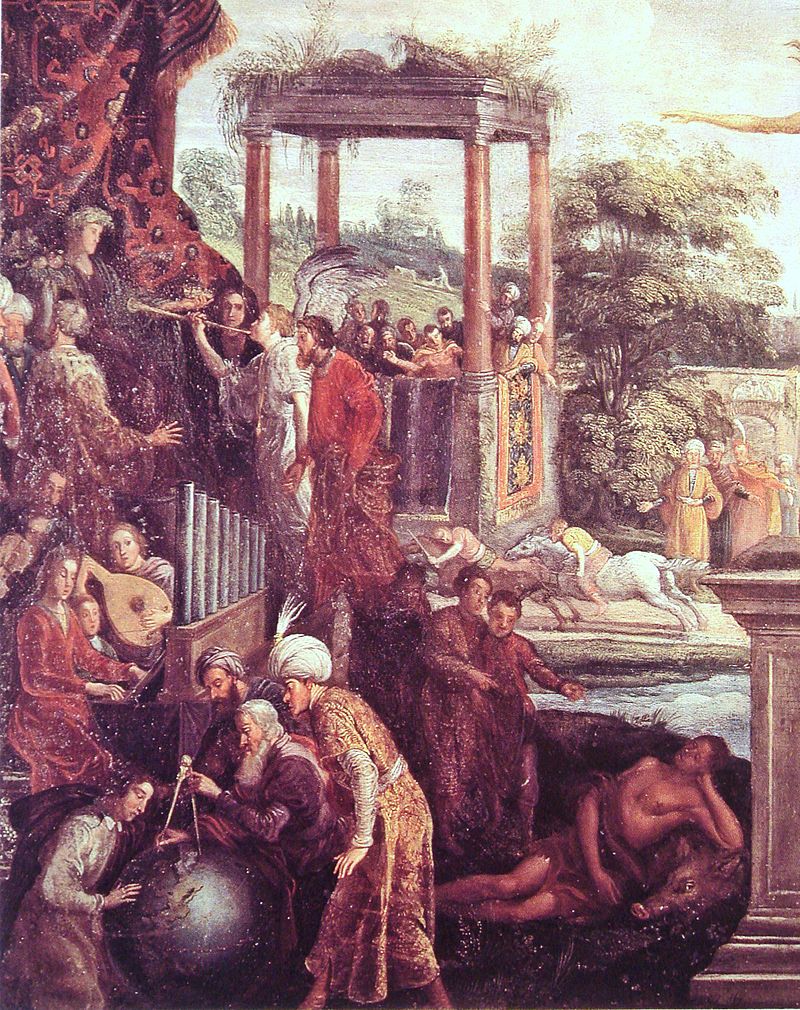
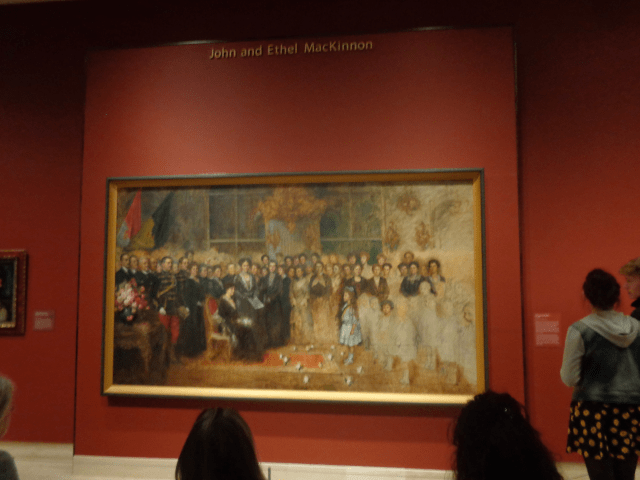

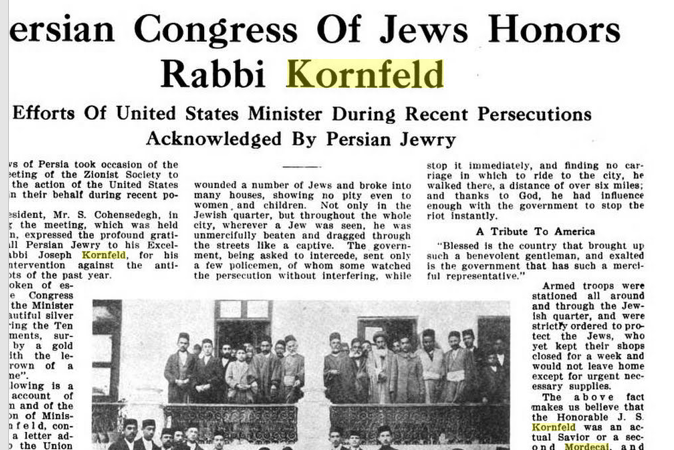
I just found a Habsburg-Persian connection with someone in the ‘Last Audience’ painting. This is profound! My work with Meher Baba is near completion. I am calling for a New Reformation in order to put an end to the Evangelical End Time Insanity invented by John Darby. We can form a realistic cosmology that will combat Radical Islam on all fronts. The Kurds are key.
Jon Presco ‘The Nazarite’
Charles V made overtures to the Safavid Empire to open a second front against the Ottomans, in an attempt at creating a Habsburg-Persian alliance. Contacts were positive, but rendered difficult by enormous distances. In effect, however, the Safavids did enter in conflict with the Ottoman Empire in the Ottoman-Safavid War, forcing it to split its military resources.[41]
Meher Baba (born Merwan Sheriar Irani; 25 February 1894 – 31 January 1969) was an Indian spiritual master who said he was the Avatar,[1][2][3] God in human form.[4][5]
Merwan Sheriar Irani was born in 1894 in Pune, India to Irani Zoroastrian parents. At the age of 19, he began a seven-year spiritual transformation.[6][7] During this time he contacted five spiritual masters before beginning his own mission and gathering his own disciples in early 1922, at the age of 27.[8]
From 10 July 1925 to the end of his life, Meher Baba maintained silence, communicating by means of an alphabet board or by unique hand gestures.[9][10][11] With his mandali (circle of disciples), he spent long periods in seclusion, during which time he often fasted. He also traveled widely, held public gatherings and engaged in works of charity with lepers, the poor and the mentally ill.
In 1530 Charles, attempting to bring about a reformation within the Roman Catholic Church through the convocation of a universal council, also tried to find a modus vivendi with the Protestants. The Roman Catholics, however, condemned the Augsburg Confession—the basic confession of the Lutheran doctrine faith presented to Charles at the Diet of Augsburg—and responded with the Confutation, which met with Charles’s approval. The final decree issued by the Diet accordingly confirmed, in somewhat expanded form, the resolutions embodied in the Edict of Worms of 1521. That, in turn, caused the Protestant princes to close ranks in the following year in the Schmalkaldic League. Faced with renewed Turkish onslaughts, the emperor granted some concessions in return for armed support against the enemy. In 1532 a large army under Charles’s personal command faced Süleyman’s forces before the city of Vienna, but the order to give decisive battle was withheld. Instead, the emperor returned to Spain in 1533, leaving his brother Ferdinand behind as his deputy.
https://en.wikipedia.org/wiki/Ferdinand_II_of_Aragon
https://rosamondpress.com/2014/10/20/the-magi-jews-and-sufis-of-kurdistan/
https://en.wikipedia.org/wiki/Habsburg%E2%80%93Persian_alliance
https://en.wikipedia.org/wiki/Charles_V,_Holy_Roman_Emperor
Asenath Barzani, also Asenath Barazani[1] (1590–1670), was a renowned Kurdish Jewish woman who lived in Iraq. Her writings demonstrate her mastery of Hebrew, Torah, Talmud, Midrash, and Kabbalah.
She is considered the first female rabbi of Jewish history by some scholars; additionally, she is the oldest recorded female Kurdish leader in history.[2]
“I never left the entrance to my house or went outside; I was like a princess of Israel … I grew up on the laps of scholars, anchored to my father of blessed memory. I was never taught any work but sacred study.”[5]
In spite of the financial problems, she successfully ran the yeshivah which continued to produce serious scholars, including her son, whom she sent to Baghdad, where he continued the dynasty of rabbinic scholars.[4] Her few extant writings demonstrate a complete mastery of Hebrew, Torah, Talmud, Midrash, as well as Kabbalah, and her letters are not only erudite, but also lyrical.[4] After her death, many Jews made pilgrimages to her grave in Amadiyah in Northern Iraq,[8] where her father is also buried
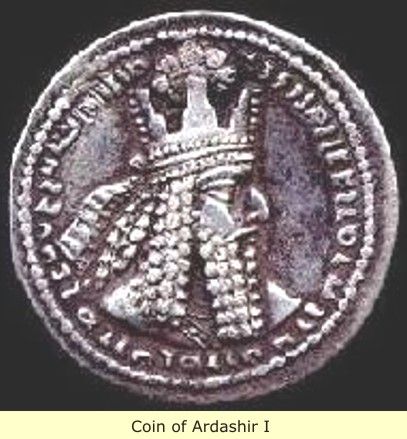
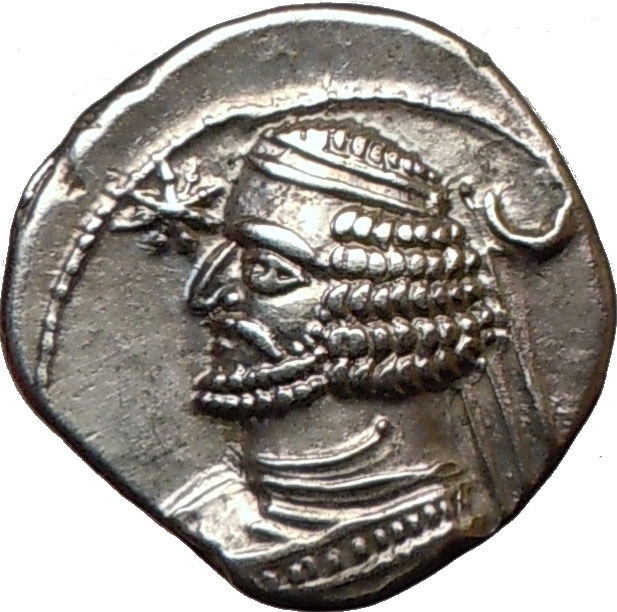
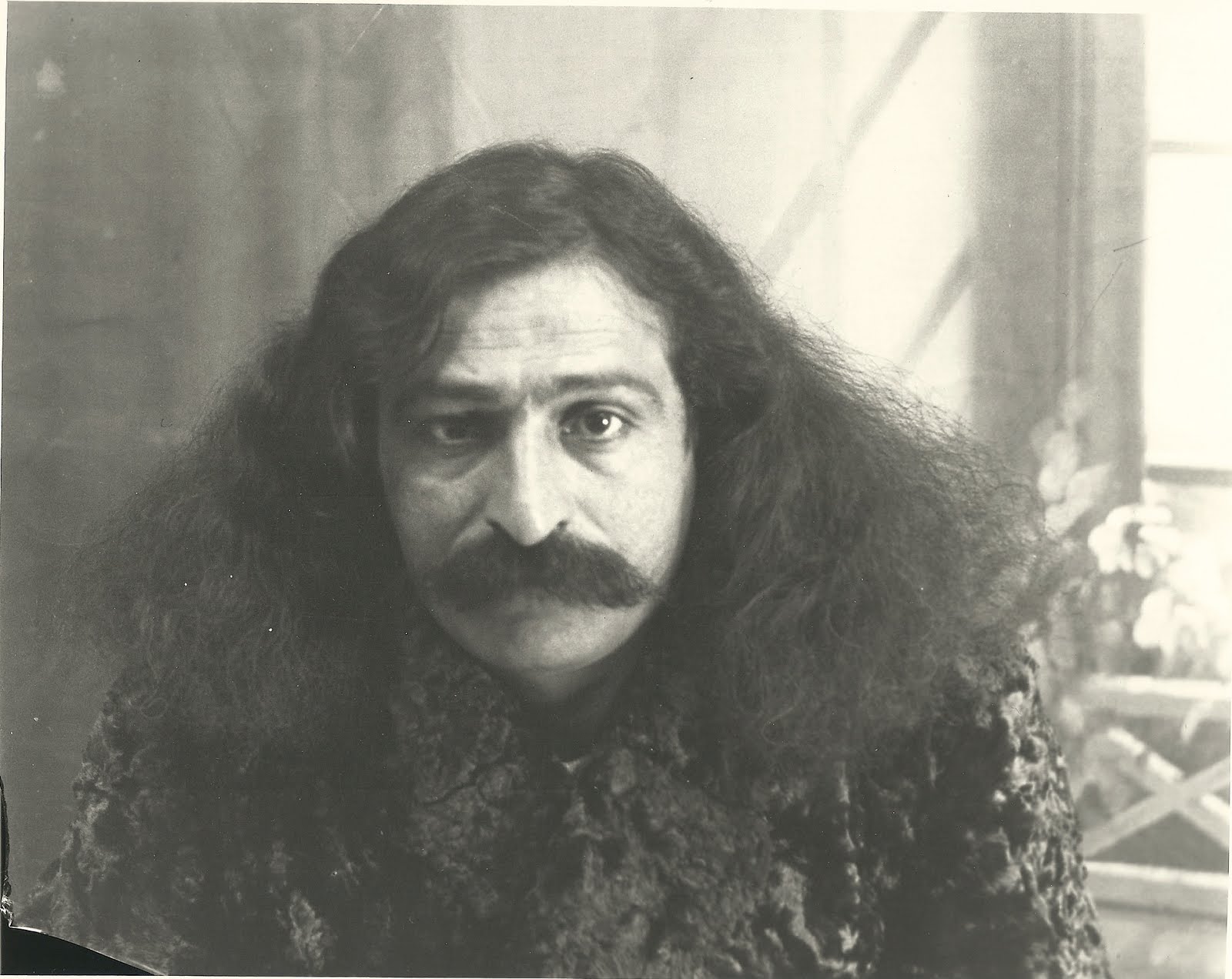
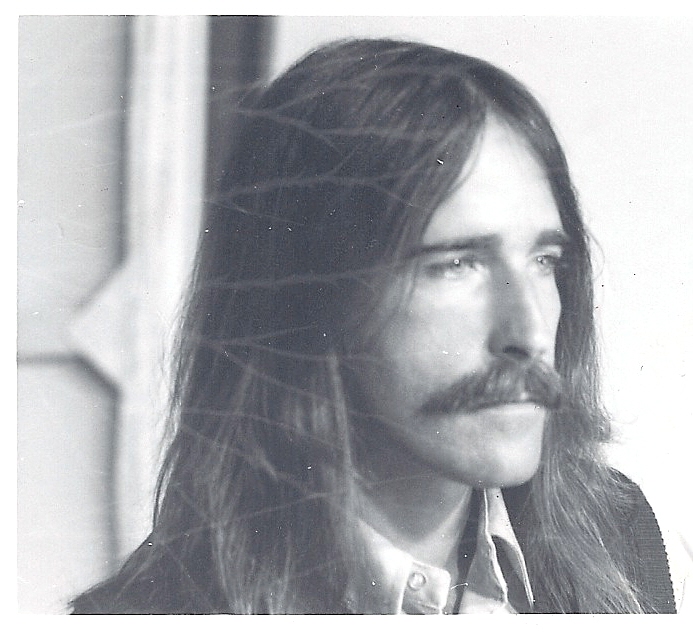
For a month I have been asking Kurds and Jews what there connection is. I finally found time to look for myself, and, I have found what I have been seeking for twenty-seven years. For fifteen years I have been following the Star on the crowns of the Comet Kings who have led me to Kurdistan where a battle between good and evil is taking place. Since 1967 I have been a follower of Meher Baba whose father was a Dervish and a Sufi teacher. Baba founded a restored Sufi order in California.
I have arrived at the end of my very long novel ‘Capturing Beauty’ that I hope will form a bond between Baba Lovers around the world, and the brave Kurdish People who I believe have been anointed by the Avatar to dissolve the last attempt of the Darkness to overcome the world. Here is the connection the Kurdish People have been wanting with the United States of America, who has come to rescue of the defenders of Kobane. I will be linking the fight of the Kurdish Patriots to the Patriots in my family tree.
Jon the Nazarite
Since December 22nd I have posted a true prophecy. From Baba’s castle in Iran, I wondered if the Parthian Magi looked at the stars high in the mountains. The next day, comet Lovejoy appear in the heavens on December 23rd. I then posted on the Parthians war against Rome for the temple, the sons of Queen Helena of Adiabene, fighting along Jewish Saints and Nazarites, killing Roman troops because their mother was a famous Nazarite who gifted the Temple with a large golden Menorah, and golden words on the judged of Sotah, the woman accused of adultery.
Two days ago I blogged on the study that says Pharamond was the grandson of a Parthian, who married Rosamond, and begat the Merovingian Long-haired Kings of France, who some say are kindred of Mary Magdalene and Jesus, who fled to France. The Rosamond name will forever be associated with this legend of Mary Magdalene, and Mary, the mother of Jesus, who is sometimes called ‘The Rose of the World’.
Jon Presco
Copyright 2012
https://rosamondpress.com/2014/10/05/the-nazarite-church-of-the-eastern-star/
https://rosamondpress.com/2012/10/01/the-sons-of-the-nazarite-queen-war-with-rome/
https://rosamondpress.com/2012/03/23/babas-magi-castle-and-comet-lovejoy/
https://rosamondpress.com/?s=witherspoon
https://rosamondpress.com/2012/03/22/jesus-pharamond-rosamond-meher-baba/
On December 23, at 7:26 A.M. I found this essay that says Joachem and Anna, the parents of Mary, are the Parthian Prince Nakeb Adiabene, and his wife, Parthian Princess Grapte Kharax. They pray to the God of the Jews for a child, for Grapte’s womb has been shut. This is the Nazarite birth of Hanah and Elizabeth. Did this royal coupl eof Adiabene take the vow of the Nazarite, as did Queen Helena of Adiabene. Has the hidden truth been reborn this day?
“A Jewish merchant named Ananias, from whom the couple had bought much jewelry—among other wares—convinced the royal couple to convert to Judaism, and to pray to the god of the Jews (Yahweh, Jehovah), “who will surely bless them with an offspring.” The persuasion was successful, and Prince Adiabene is given the name Joachim in the Jewish religion, and his wife becomes Anna.”
I have been called mad, and forsaken by my family. I do not know if this essay speaks the truth. What I do know, is, I was childless, and then God gifted me with a child – after I took the vow of the Nazarite.
Jon the Nazarite
“A recent ABC News article May 19, 2004 noted that according to the
Armenian and Italian researchers the “Symbol on his crown that
features a star with a curved tail may represent the passage of
Halley’s comet in 87 BC. Tigranes’ could have seen Halley’s comet
when it passed closest to the Sun on Aug. 6 in 87 BC according to the
researchers, who said the comet would have been a ‘most recordable
event’ — heralding the New Era of the brilliant King of Kings.com·et
(kŏm’ĭt) n. “
https://rosamondpress.wordpress.com/2012/03/21/starry-crowns-of-the-comet-kings/
http://en.wikipedia.org/wiki/Hazrat_Babajan
Barzani was given the title Tanna’it, a rare honour for a Jewish woman. The title of Tanna’it, and her role as head of a yeshiva a rabbinical school, is not equivalent to being a rabbi, and hence she is regarded as a rare example of a female Rabbinical Teacher (but not an actual rabbi which equals a judge) in pre-20th century traditional Judaism.
Legends[edit]
There are many Kurdish stories and legends about her and miracles she performed,[9] including the one described in “A Flock of Angels”.[10]
In local folklore her gender plays a central role, while in life it did not seem to have presented a problem. Many of the stories which allude to her supernatural powers were found in amulets. These include her ability to limit her childbearing to two children so that she could devote herself to her studies, and the ability to ward off an intruder in order to prevent him from raping her by loudly calling out holy names.[9]
A Flock of Angels[edit]
According to the legend, her father often appeared in Barzani’s dreams, revealing dangers to her and telling her how to avert them. On one such occasion, she went to Amêdî where she convinced the Jews to celebrate Rosh Hodesh, the new moon, outdoors, as had been their custom before they were threatened by hostile gentiles.[10]
As they proceeded with the celebration, there were shouts and they saw flames shoot up into the sky. The synagogue had been set on fire, with all the sacred books and scrolls in it. After Barzani whispered a secret name she had learned from her father, the people saw a flock of angels descending to the roof of the synagogue. The angels beat the flames with their wings, until every last spark had been put out. Then they rose up into the heavens like a flock of white doves and were gone. And when the smoke cleared, everybody saw that not only none of the Jews had been hurt since the congregation had been outdoors, but that another miracle had taken place: the synagogue had not burned, nor were any of the
Torah scrolls touched by the flames. After that miracle, the Jews of Amêdî were not harassed by the gentiles for a long time. Gratefully, they renamed the synagogue after her, and the legend ends with the words “and it is still standing today”.[11]
http://www.jewishvirtuallibrary.org/kurdistan
Persian Jews or Iranian Jews (Persian: یهودیان ایرانی, Hebrew: יהודים פרסים) are Jews historically associated with the Persian Empire, whose successor state is Iran.
Judaism is the second-oldest religion still practiced in Iran (after Zoroastrianism). The Biblical Book of Esther contains references to the experiences of the Jews in Persia. Jews have had a continuous presence in Iran since the time of Cyrus the Great of the Achaemenid Empire. Cyrus invaded Babylon and freed the Jews from Babylonian captivity. The history of immigrant Jews in Iran goes back more than 3,000 years, during which time they were part of a multiconfessional society which included adherents of several other religions.
Today, the vast majority of Persian Jews live in Israel and the United States, especially in Los Angeles, Beverly Hills and on the North Shore of Long Island. According to the latest Iranian census, the remaining Jewish population of Iran was 8,756 in 2012,[3]
Main article: History of Jews in Iran
The beginnings of Jewish history in the area of present-day Iran date back to late biblical times. The biblical books of Isaiah, Daniel, Ezra, Nehemiah, Chronicles, and Esther contain references to the life and experiences of Jews in Persia. In the book of Ezra, the Persian kings are credited with permitting and enabling the Jews to return to Jerusalem and rebuild their Temple; its reconstruction was affected “according to the decree of Cyrus, and Darius, and Artaxerxes king of Persia” (Ezra 6:14). This great event in Jewish history took place in the late sixth century BCE, by which time there was a well-established and influential Jewish community in Persia.
Jews in ancient Persia mostly lived in their own communities. Persian Jews lived in the ancient (and until the mid-20th century still extant) communities not only of Iran, but also the Armenian, Georgian, Iraqi, Bukharan, and Mountain Jewish communities.[7][8][9][10][11]
Some of the communities have been isolated from other Jewish communities, to the extent that their classification as “Persian Jews” is a matter of linguistic or geographical convenience rather than actual historical relationship with one another. Scholars believe that during the peak of the Persian Empire, Jews may have comprised as much as 20% of the population.[12]
According to Encyclopædia Britannica: “The Jews trace their heritage in Iran to the Babylonian Exile of the 6th century BC and, like the Armenians, have retained their ethnic, linguistic, and religious identity.”[13] But the Library of Congress‘s country study on Iran states that “Over the centuries the Jews of Iran became physically, culturally, and linguistically indistinguishable from the non-Jewish population. The overwhelming majority of Jews speak Persian as their mother language, and a tiny minority, Kurdish
The Parthian Empire was based on a loosely configured system of vassal kings. The lack of rigidly centralized rule over the empire had drawbacks, for instance, allowing the rise of a Jewish robber-state in Nehardea (see Anilai and Asinai). Yet, the tolerance of the Arsacid dynasty was as legendary as that of the first Persian dynasty, the Achaemenids. One account suggests the conversion of a small number of Parthian vassal kings of Adiabene to Judaism. These instances and others show not only the tolerance of Parthian kings, but are also a testament to the extent at which the Parthians saw themselves as the heir to the preceding empire of Cyrus the Great. So protective were the Parthians of the minority over whom they ruled, that an old Jewish saying tells, “When you see a Parthian charger tied up to a tomb-stone in the Land of Israel, the hour of the Messiah will be near”.
The Babylonian Jews wanted to fight in common cause with their Judean brethren against Vespasian; but it was not until the Romans waged war under Trajan against Parthia that they made their hatred felt; so, the revolt of the Babylonian Jews helped prevent Rome from becoming master there. Philo speaks of the numerous Jews resident in that country, a population that was likely increased by immigrants after the destruction of Jerusalem. In Jerusalem from early times, Jews had looked to the east for help. With the fall of Jerusalem, Babylonia became a kind of bulwark of Judaism. The collapse of the Bar Kochba revolt likely also added to Jewish refugees in Babylon.
In the struggles between the Parthians and the Romans, the Jews had reason to side with the Parthians, their protectors. Parthian kings elevated the princes of the Exile to a kind of nobility, called Resh Galuta. Until then they had used the Jews as collectors of revenue. The Parthians may have given them recognition for services, especially by the Davidic house. Establishment of the Resh Galuta provided a central authority over the numerous Jewish subjects, who proceeded to develop their own internal affairs.
https://en.wikipedia.org/wiki/Persian_Jews
Tanna’it Asenath Barzani, who lived in Mosul from 1590 to 1670, was the daughter of Rabbi Samuel Barzani of Kurdistan. She later married Jacob Mizrahi Rabbi of Amadiyah (in Iraqi Kurdistan) who lectured at a yeshiva.[13] She was famous for her knowledge of the Torah, Talmud, Kabbalah and Jewish law. After the early death of her husband, she became the head of the yeshiva at Amadiyah, and eventually was recognized as the chief instructor of Torah in Kurdistan. She was called tanna’it (female Talmudic scholar), practiced mysticism, and was reputed to have known the secret names of God.[14] Asenath is also well known for her poetry and excellent command of the Hebrew language. She wrote a long poem of lament and petition in the traditional rhymed metrical form. Her poems are among the few examples of the early modern Hebrew texts written by women.[15]
Immigration of Kurdish Jews to the Land of Israel initiated during the late 16th century, with a community of rabbinic scholars arriving to Safed, Galilee, and a Kurdish Jewish quarter had been established there as a result. The thriving period of Safed however ended in 1660, with Druze power struggles in the region and an economic decline.
KURDISTAN, region in the Middle East, divided among three countries: <!– @ @ –> *Turkey <!– @@ –> , <!– @ @ –> *Iraq <!– @@ –> , and <!– @ @ –> *Iran <!– @@ –> . The majority of the Muslim population of Kurdistan lives in Turkey, another part in Iran, and the smallest part in Iraq. In contrast, the Jews of Kurdistan – until their great exodus in 1950–51 – lived mainly in the Iraqi region (146 communities), some in the Iranian region (19 communities), and only a few in Turkey (11 communities). There were also a few Jews in the Syrian region and other places (11 communities). There are no accurate statistics on the Jews of Kurdistan. It has been estimated that before the establishment of the State of Israel there were between 20,000 and 30,000 Jews living there. Kurdish Jews also lived in the Diyala province of Iraq, especially in the town of <!– @ @ –> *Khanaqin <!– @@ –> , the number of Jews varying between 1,689 in 1920; 2,252, 1932; and 2,851, 1947. The Jews of Mosul speak Arabic and some also understand Turkish and Kurdish. For this reason, some scholars do not reckon them among the Kurdish Jews, even though they resemble them somewhat in their way of life. They form a separate unit known by the name Miṣlawim.
In Iraq
HISTORY
An ancient tradition relates that the Jews of Kurdistan are the descendants of the Ten Tribes from the time of the Assyrian exile. The first to mention this was <!– @ @ –> R. *Benjamin of Tudela <!– @@ –> , the 12th-century traveler who visited Kurdistan in about 1170 and found more than 100 Jewish communities. In the town of <!– @ @ –> *Amadiya <!– @@ –> alone, there were 25,000 Jews who spoke the language of the Targum (Aramaic) and whose numbers included scholars. The traveler <!– @ @ –> *Benjamin <!– @@ –> the Second, who visited Kurdistan in 1848, also mentioned this tradition and added that the Nestorian (Assyrian) tribes were also descendants of the Ten Tribes and that they practiced Jewish customs. According to his assumption, they were descendants of Dan and Naphtali. There is no doubt that Halah and Ḥabor (modern Khabur), the river of Gozan (II Kings 17:6) – the places to which Shalmaneser, the king of Assyria, exiled the tribes – are in the vicinity of Kurdistan. During the Second Temple era the kingdom of <!– @ @ –> *Adiabene <!– @@ –> was situated in this region; its inhabitants, together with their king, Monobaz, and his mother Helena, converted to Judaism in the middle of the first century. It may be presumed that there are descendants of these proselytes among the Jews of Kurdistan. <!– @ @ –> *Onkelos <!– @@ –> translated Harei Ararat as “the mountains of Kardu” (Gen. 8:4); he also translated Mamlekhot Ararat as “the Kingdom of the land of Kardu” (Jer. 51:27). Josephus mentions the “mountains of Kurdukhim” (Ant. 1:93). In the Talmud it is related that “one accepts proselytes from the Kardus” (Yev. 16a).
An ancient popular tradition states that among the Assyrians of northern Iraq there were many families of Jewish origin and these were forcibly converted to Christianity more than 500 years ago. They still observe special Jewish customs, have not assimilated among the Christians, marry among themselves, and are afraid of revealing their origin in front of the Christians. Another popular tradition states that many of the descendants of the Ten Tribes who were exiled to this region by the kings of Assyria converted to Christianity. In 38 villages of Iraqi Kurdistan there were hundreds of Jews who claimed descent from the tribe of Benjamin and who possessed a holy book in Kurdish. They lived in the provinces of Mosul, Kirkuk, and Khanaqin. Some of them emigrated to <!– @ @ –> *Afghanistan <!– @@ –> and the Caucasus. During the middle of the seventh century – at the time of the Arab conquest – the treaty of conquest was signed in the town of Dabil, on the Armenian border, with the “Magians [Zoroastrians] and the Jews” (according to al-Balādhurī, Futūḥ al-Buldān (1318 A.H.), 280; Yāqūt, Muʿjam, S.V. Dabīl). From this it is ascertained that there was another Jewish community in addition to that of Mosul and possibly that of Irbil.
During the 12th century two messianic movements arose in the neighborhood of the town of Amadiya: that of Menahem b. Solomon ibn Ruḥi (or Dugi) and that of <!– @ @ –> David *Alroy <!– @@ –> . Some scholars regard these as one movement. There is no clear information available on the situation of the Jews during the 13th–15th centuries. From the beginning of the 16th century, however, information gradually becomes more available. The statistics provided by various travelers of different periods indicate great fluctuations over short periods of time in the Jewish population of every town and village. At times, the Jewish population increased or decreased by several hundred within four or five years. The cause for this was the instability of their economic and security situation; consequently, they often migrated from the smaller villages to the larger ones and from there to the large towns. Every pogrom caused the local Jews to flee to neighboring communities – for long or short periods – until the danger was past. In the 20th century the use of motor vehicles was an important reason for the removal of commerce from the smaller centers to the larger ones. Since there were no official statistics, the travelers relied solely on estimates.
The Jews under the British occupation (1917–21) enjoyed full rights of equality and freedom as well as a feeling of security. The majority of the Jews considered themselves as British citizens. Some grew rich, others were employed in the British administration, especially in Baghdad and Basra. They were interested in the continuation of British rule, and they expressed this in 1918, only a week after the armistice went into effect, when the Jewish community of Baghdad presented a petition to the civil commissioner of Baghdad, asking him to make them British subjects. Twice again, in 1919 and 1920, the Jews of Iraq appealed to the British high commissioner and asked him not to allow an Arab government to come to power or at least to grant British citizenship to the Jewish community en masse. The British authorities rejected this request, and the Jews were eventually appeased by personal assurances that ample guaranties would be afforded. However, when in April 1930 the League of Nations decided to adopt the mandate, the Jewish leaders decided to support the establishment of an Iraqi state under the British Mandate.
The Jews were given further assurances by Amir Faysal (1883–1933), who was the leading British candidate for the Iraqi throne. The new monarch-to-be made numerous speeches, including one before the Jewish community of Baghdad on July 18, 1921, one month before his coronation, in which he emphasized the equality of all Iraqis, irrespective of religion.
King Faysal continued to maintain cordial personal relations with individual members of the Jewish elite through his 12-year reign. As his first finance minister, he appointed Sir Sasson Heskel, the only Jew who ever held cabinet rank in Iraq. Four members represented the Jews in the Iraqi parliament. In 1946 their number increased to six. In the Senate Menahem Salih Daniel represented them and after him his son, EzraDaniel .
Because of their generally superior educational qualifications, Jews and Christians could be found in the civil service during the first decade of the kingdom while it was still under the British Mandate. However, as early as 1921, a strong Arab nationalist element rejected the employment of foreigners and non-Muslims. This opposition intensified after Iraq had gained full independence in 1932 and became even stronger after the death of Faysal the following year.
Iraqi Jews did not know the kind of antisemitism that prevailed in some Christian states of Europe. The first attempt to copy modern European antisemitic libels was made in 1924 by Sādiq Rasūl al-Qādirī, a former officer in the White Russian Army. He published his views, particularly that of worldwide conspiracy, in a Baghdadi newspaper. The Jewish response in its own weekly newspaper, al-Misbah, compelled al-Qādirī to apologize, although he later published his antisemitic memoirs.
At that time the press drew a clear dividing line between Judaism and Zionism. This line became blurred in the 1930s, along with the demand to remove Jews from the genealogical tree of the Semitic peoples. This anti-Jewish trend coincided with Faysal’s death in 1933, which brought about a noticeable change for the Jewish community. His death also came at the same time as the Assyrian massacre, which created a climate of insecurity among the minorities. Iraqi Jewry at that time had been subject to threats and invectives emanating not only from extremist elements, but also from official state institutions as well. Dr. Sāmī Shawkat, a high official in the Ministry of Education in the pre-war years and for a while its director general, was the head of “al-Futuwwa,” an imitation of Hitler’s Youth. In one of his addresses, “The Profession of Death,” he called on Iraqi youth to adopt the way of life of Nazi Fascists. In another speech he branded the Jews as the enemy from within, who should be treated accordingly. In another, he praised Hitler and Mussolini for eradicating their internal enemies (the Jews). Syrian and Palestinian teachers often supported Shawkat in his preaching.
The German ambassador, Dr. F. Grobba, distributed funds and Nazi films, books, and pamphlets in the capital of Iraq, mostly sponsoring the anti-British and the nationalists. Grobba also serialized Hitler’s bookMein Kampf in a daily newspaper. He and his German cadre maintained a great influence upon the leadership of the state and upon many classes of the Iraqi people, especially through the directors of the Ministry of Education.
The first anti-Jewish act occurred in September 1934, when 10 Jews were dismissed from their posts in the Ministry of Economics and Communications. From then on an unofficial quota was fixed for the number of Jews to be appointed to the civil service.
Pro-Palestinian, anti-British, anti-Jewish, and anti-Zionist sentiments rose to new heights in Iraq in 1936. The Arab general strike and the revolt, which erupted in Palestine that year, gave the conflict a new centrality in Arab politics. The atmosphere in Baghdad became highly charged. The Committee for the Defense of Palestine circulated anti-Jewish pamphlets. Over a four-week period, extending from mid-September to mid-October, three Jews were murdered in Baghdad and in Basra. A bomb, which however failed to explode, was thrown into a Baghdadi synagogue on Yom Kippur (September 27). Several other bombs were thrown at Jewish clubs, and street gangs roughed up a number of Jews.

 Rosamond Press
Leave a comment