


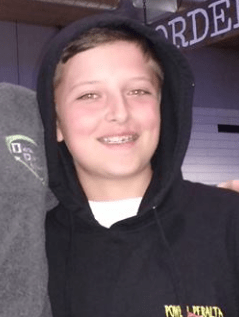
When Rena bid me to be kind to Cowboys, I thought of my Bohemian Cowboys. Murray, Kimberly, and Daryl kept their secret from me, that they were wooing and flattering my daughter and grandson – behind my back – lest I inform Tyler he is being seduced by stalkers, weak pretenders to his birthright, who depict me as a insane ugly monster. These Pretenders pretend they are upholders of Family Tradition as they turn a daughter against her father, and a grandson against his grandfather.
Jon Presco
http://www.historyfiles.co.uk/KingListsEurope/BarbarianBoii.htm
Boii (Early Celts)
 The Boii were a Celtic tribe that was located to the north of the Alps and east of the Rhine, in what became eastern Germany and western Czech Republic. Although the extent of their territory is unknown, it clearly formed part of a very powerful and very extensive Celtic kingdom, one which apparently dominated many of the other Celts and may even have held some kind of high kingship over them. The tribe must have been vast by later first century BC terms, emerging into history from the north-eastern heartland of Celtic Hallstatt culture, and probably played a role in spreading the subsequent La Tène culture farther north-eastwards. The latter culture was still extant during the tribe’s recorded existence.
The tribe’s name translates as ‘cow’, making them the original ‘cowboii’! The root word ‘bo’ means ‘cow. For the origin of that sound, a best guess is that the proto-Indo-European sound ‘kw’ was retained somehow among Germanic speakers (in violation of Grimm’s law), but changed to a ‘p’ among second wave sound changes among Celtic-italic speakers. Then the ‘p’ would have hardened into a ‘b’ sound, although this is an educated guess. So ‘cow’ (Anglo-Saxon ‘cu’) is ‘bo’. It suggests a tribe that was not on the front line of Celtic expansion, one that was generally settled and more concerned with livestock than conquests. Most Indo-European groups were great pastoralists, and the Cimmerians, more Indo-Europeans who may even have influenced Celtic culture and speech, are linked to the Biblical Gomer, another name which translates as ‘cow’.
Less reliable guesses that have been bandied about include suggesting that ‘boii’ meant something along the lines of ‘the terrible’ and that it could refer to the stature of its people and the weaponry they used. Iron Age remains have shown that they fought using huge double-handed swords that would require a fairly hefty stature to wield, and this is sometimes used as confirmation of ‘the terrible’ as a translation of their name. However, cows came before iron swords (or any swords at all), and remained an important part of Celtic life and culture even into medieval Irish and Welsh history. Tales of cattle rustling have been preserved to the present day, showing how important these beasts were (and of course still are). An early Celtic tribe that was named ‘cow’ would have signified their basic relationship with the animals, and perhaps their dominance in terms of that relationship and the size of their herds.
The Boii were one of the biggest players in Roman relations with the Celts in the centuries prior to Julius Caesar’s campaigns in Gaul. They appear to have undergone an expansionist period in the fourth or third centuries BC which saw pockets of them establish new homelands in several regions across Europe. It can be hard to pinpoint which pockets were established at this time and which were established following the tribe’s takeover by Germans at the very end of the first century BC, but there is one group that can be connected to the earlier period with certainly, simply because the Romans were nearby to record their presence. This group of Boii managed to get as far south as Bologna, near Ravenna, in the fourth century BC. They intermixed with the dominant Etruscans, but were later defeated and subjugated by Rome. By the first century BC, they had been forcibly integrated into the Roman republic, although they retained elements of their language which have survived to the present day. More detail on Boii migrations is covered in the Dispersal section of this page.
(Information co-authored by Edward Dawson, and additional information from The La Tene Celtic Belgae Tribes in England: Y-Chromosome Haplogroup R-U152 – Hypothesis C, David K Faux, from The History of Rome, Volume 1, Titus Livius, translated by Rev. Canon Roberts, and from External Links: The Works of Julius Caesar: Gallic Wars, Perseus Digital Library, and Polybius, Histories. Other major sources listed in the ‘Barbarian Europe’ section of the Sources page.)
 Rosamond Press
Leave a comment