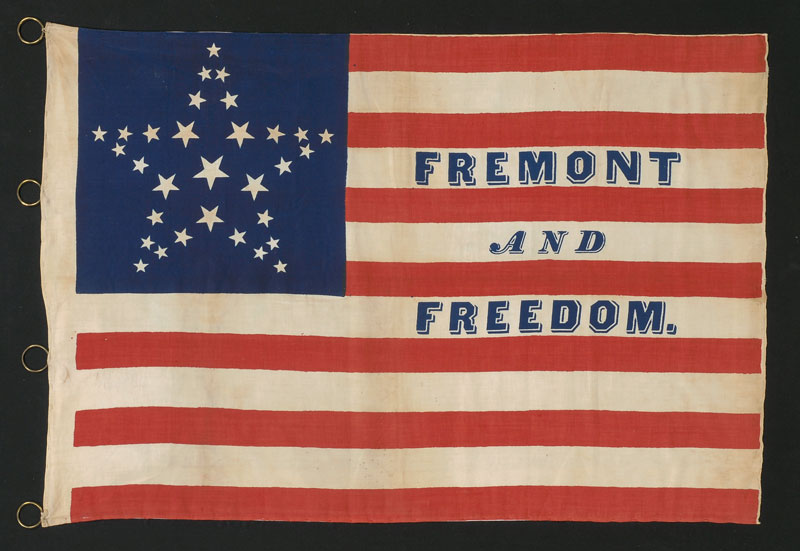
With the oppression of the First Amendment, I hereby declare the present administration Null&Void. The Repon Party is the true party, and will hold press conferences.
Jon Presco
A lot of the talk on this site recently has focused on retaking the House despite Gerrymandering that allowed Republicans to retain the House despite losing the popular vote.
Yesterday, David Brin wrote an article, “A modest proposal to neutralize gerrymandering” that proposes a possible way for average voters (or at least, members of the minority party in a given district) to counter some of the hyper partisanship that these districts have produced.
While the title may lead you to assume that it is just satire, the idea makes a lot of sense.
Now consider: Gerrymandering lumps birds-of-a-feather till each district is “owned” by one party or another. Democratic voters in a Republican-owned district – or Republicans in a Democratic-owned district – will never cast a vote of legislature in the only election that matters: the majority party’s primary.Unless…
…unless you hold your nose and re-register with whatever party owns your district. This holds, whether you’re a Democrat in a Republican district, or vice versa.
If your district is gerried to contain mostly Republicans, then it should be represented by a conservative person. But, as someone living in the district, you deserve to have some say in which conservative it will be! A Tea Party radical? Or a genteel negotiator, like Goldwater or Buckley?
It is not a tactic that has ever come to my mind. Which is not to say that it is a novel idea that hasn’t been studied. But the more I think about it, the more it makes sense.
Obviously, the emphasis is not on doing this to try to make the opposing party have to front the weaker candidate. We are talking about districts that are theoretically in the safe territory, so even if the candidate who wins the primary is the “weaker” of the two, they would still theoretically beat the opposing party’s challenger.
But in the reality of our current political climates, where the red districts are seeing centrists facing Tea Partiers (think Michele Bachmann’s district), don’t Democrats at least want to know that if they have to be represented by a Republican, that they’re not going to be complete batshit wingnuts?
A lot of the discussion I have seen on this article has focused on whether or not gerrymandering makes all that much difference, or whether or not there are better ways to ensure voters are represented.
First of all, these arguments aren’t really relevant to this idea. Nobody is saying this is an ideal system. But given the realities of our current political system, does it make sense or not?
It requires no legislation, court action or leadership from our sclerotic political caste. Mere citizens – one at a time — could neutralize gerrymandering.
That’s the real point of this idea.
Second of all, what we should really be asking is, would it work? Would it do what it intends to do? What are some unintended consequences.
If you are a Democrat in a solidly-red or gerrymandered district, what difference does it make to register as a Republican? You will have a vote in the primary election that actually matters in your district. And once the general election rolls around you can still vote on whomever you want.
At least this way, if you are stuck in a district where a Republican will likely win, at least you will now have a chance to make sure it will be the lesser of two evils.
I’m not saying this should immediately become the overriding tactic for the upcoming midterms. For example, we still need time to see how much of an effect the recent government shutdown will have on them, as it’s possible that it and the threat of the next one may also play a factor in the gerrymandered districts. This is coming from the same professor who determined that if the elections were held today, Nancy Pelosi would have her gavel back.
At the very least, I think this is an approach that should get some more scrutiny. Would it work? What are some of the possible drawbacks? I have not yet seen many rational critiques of this approach.
This is not so much about engineering wins for Democrats, although this could plausibly be done by actually trying to get the Tea Party crazy to win the primary, assuming they would be too partisan to win in the general election. Perhaps that seems like a valid tactic, and I’m sure there are people who would make that case, although to me it seems too much like playing with fire. After all, what happens if they actually do win the general?
This is about making sure the crazies have one less recourse to mess with our political system. The primaries have been their most effective method to date, to run amok in their own party but also in our government as a whole. This is a way to take that out of their arsenal, without relying on the same politicians who created this mess and can’t even keep the government functioning.
This may be dismissed by some as a weird harebrained scheme. But who cares if it’s weird. It’s only weird if it doesn’t work.
http://www.redstate.com/diary/creinstein/2016/06/25/12-million-democrats-voted-republican-primaries/
<img
src="http://b.scorecardresearch.com/p?c1=2&c2=21057668&c3=&c4=&c5=&c6=&c15=&cv=2.0&cj=1"
/>
12 Million Democrats voted in the Republican Primaries
DIARY / Michael Harrington // Posted at 6:19 pm on June 25, 2016 by Michael Harrington
Share on Facebook
Share on Twitter
After a lot of work I have finished my math calculations. A simple effort will show that from 2000 to 2008 there was a change in Primary votes of 10-12 million. Ten million more Republicans and 12 million less Democrats. But this is child’s play. Getting deeper, examining States with close polling prior to the registration requirements, States with a clear winner in polls prior to registration change requirements, and you can set patterns.
Using 2000 and 2008 as baselines, the conclusion was staggering. Trump only got about 3.3 million Republican Votes. The rest are Democrats, approximately 12 million of them.
I also found via my studies by going back to 1992 that this behavior is not new, in fact even when there is a tight contest about 5% will “strategically vote” in the Republican Party primary/caucus. Even more disturbing is that it appears that there may be even a 5% not normally detectable, of Republicans who only vote Democrat. Aka plants that we always knew existed.
In some circumstances the vote differences were so extreme that it defies explanation. Only for one election did I not find good information, and that being an incumbent versus a challenger I could ignore it safely.
Of 31 million who voted in the Republican Primary 38% approximately were Democrats.
Even in Oregon, a Closed Primary, we saw 110,000 change registration in time, and my calculations are approximately 80,000 voted for the perceived weakest candidates. They chose our Presidential Candidate, they chose our US Senate Candidate, and they chose our Governor Candidate. Ironically they did not vote strongly down ticket including for Secretary of State, and this assisted in my efforts to calculate the percentage who actually voted versus those who did not.
http://www.cbsnews.com/news/why-are-people-changing-their-party-affiliation-this-election-cycle/
http://www.dailykos.com/story/2013/10/21/1249444/-Democrats-it-s-time-to-register-as-Republicans
 Rosamond Press
Leave a comment