“IS IT TRUE?
How true is Khaled Sheikh Mohammed’s claim about Al Qaeda’s original plan to attack nuclear installations? It certainly rings true. The Sunday Times said Mohammed was an uncle of Ramzi Yousef, now serving a life sentence for the first attack on the World Trade Center in 1993. Yousef’s group had trained near Three Mile Island and threatened to attack “nuclear targets”. Well before 11 September 2001 Yousef apparently also had the idea of hijacking an aircraft and crashing it into the Pentagon.”
Tom Ridge was the Governor of Pennsylvania where Three-Mile-Island is located. I suspect he knew about these terrorist threats before 911, and is why he was chosen to be first head of Homeland Security. These threats were played down, and kept in the dark, lest – they work! Al-Qeuda knew they made these threats, and is why Bush invaded Iraq and Afghanistan under the pretense Saddam had nuclear weapons and would use them on the West. This is a fantastic cat and mouse game, a Liar’s Contest to conceal the truth Al-Queda could blow plants across America, thus, they were/are…..A NUCLEAR POWER! The Taliban wanted to be recognized as a nation and send wrestlers to the Olympics.
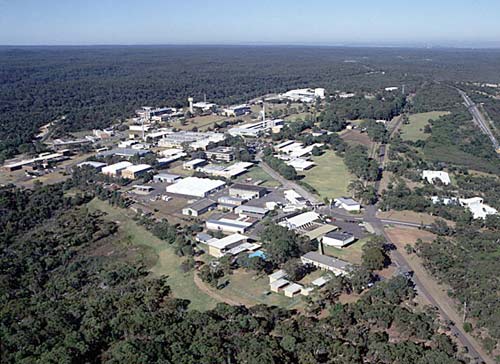
Several years ago I wrote my Congressman, Peter Defazio, about Al-Queda’s attempt to blow a nuclear plant in Sydney during the Summer Olympics of 2000. He sent my e-mail to homeland security who wrote me a letter – that lied about there being a threat. Why the cover-up? Bush and his cronies were promoting nuclear power all over the world that entailed getting investors – who would back out if they knew Bin Laden might blow a plant, creating a public outcry against nuclear plants, thus, Laden would be victorious.
A study in the 90s concluded nuclear plants were vulnerable to hijacked airliners, thus, the possibility terrorists would use airliners as a bomb was consider before September 11, 2001. Bush was playing games with Laden – and lost!
“Far fetched? Perhaps, but perhaps not. The London Sunday Times ran a
circumstantially convincing article on October 21, 2001 that Flight 93 may well
have been heading for Three Mile Island. The Washington Post reported on October
30 that an Osama bin Laden associate named Salahuddin Khaled, jailed in
Afghanistan, said that the September 11 hijackers should have flown into a U.S.
nuclear power plant. The International Atomic Energy Agency has admitted that no
commercial reactors in the world are designed to withstand the impact of a large
jetliner at high speed with a load of fuel.”
All Sept. 11 did was turn a theoretical possibility into a felt danger. All it did was supply a credible cast of characters who hate us so much they would thrill to the prospect of actually doing it — and, most important in rethinking the probabilities, would be happy to die in the effort. All it did was give our nightmares legs.
And of the many nightmares animated by the attacks, this is the one with pride of place in our experience and literature — and, we know from his own lips, in Osama bin Laden’s aspirations. In February, Tom Ridge, the Bush administration’s homeland security chief, visited The Times for a conversation, and at the end someone asked, given all the things he had to worry about — hijacked airliners, anthrax in the mail, smallpox, germs in crop-dusters — what did he worry about most? He cupped his hands prayerfully and pressed his fingertips to his lips. ”Nuclear,” he said simply.
(September 13, 2002) Several European newspapers have reported that in an interview with a journalist from Al-Jazeera, two top Al Qaeda commanders said that the original plan for the attacks carried out on 11 September 2001 was to target two unnamed nuclear power stations. Apparently fearing that such an attack “might get out of hand”, Al Qaeda chose other targets instead.(573.5434) WISE Amsterdam – On 8 September, the Spanish El Mundo and the UK Sunday Times ran stories in which Al-Jazeera journalist Yosri Fouda described how he interviewed two Al Qaeda leaders, Khaled Sheikh Mohammed and Ramzi Binalshibh. Both men are on the FBI’s most wanted list, and the U.S. has offered a US$25 million reward for them.
Fouda described how he had to go to great lengths to meet the men, flying first to Islamabad, then to Karachi where he stayed two days in a run-down hotel. Eventually, after meeting various intermediaries, he was blindfolded and taken in the trunk of a car to meet Mohammed and Binashibh.
The date of the interview is unclear – June according to The Associated Press, August according to The Guardian. Al-Jazeera had decided to wait until Thursday 12 September to broadcast the interview as part of their coverage of the anniversary of the terrorist attacks.
In the interview, Mohammed described himself as the head of the Al Qaeda military committee and said that Binalshibh was the coordinator of the 11 September attacks, which he called “Operation Holy Tuesday”.
| IS IT TRUE? How true is Khaled Sheikh Mohammed’s claim about Al Qaeda’s original plan to attack nuclear installations? It certainly rings true. The Sunday Times said Mohammed was an uncle of Ramzi Yousef, now serving a life sentence for the first attack on the World Trade Center in 1993. Yousef’s group had trained near Three Mile Island and threatened to attack “nuclear targets”. Well before 11 September 2001 Yousef apparently also had the idea of hijacking an aircraft and crashing it into the Pentagon. Reuters, 10 September 2002; WISE News Communique 554.5315, “US attacks: The Three Mile Island connection” |
Targeting nuclear installations
Mohammed said that when Al Qaeda first decided two and a half years ago to launch a suicide attack in U.S. territory, the original plan was to attack a couple of nuclear installations. However, they then decided against it for fear it would “get out of hand” (or “get out of control”, according to the English version).
Mohammed refused to be more specific, saying “you do no need to know more at this stage. Anyway, it was decided to abandon the idea of attacking nuclear targets – for now”.
Fouda asked, “What do you mean by ‘for now’?”
” ‘For now’ means ‘for now’ “, replied Mohammed, implying that nuclear installations might be considered as Al Qaeda targets in future. He added that there is no lack of people willing to carry out suicide attacks for what he called Al Qaeda’s “Department of Martyrs”.
If Mohammed’s claim is true, it leaves the nuclear industry and regulators in a tough dilemma. If they try to talk down the possible impact of terrorist attacks on nuclear installations, this might remove Al Qaeda’s objection to carrying out such an attack up till now for fear it would “get out of hand”. Yet if they admit the horrific truth of the possible consequences of an attack, the nuclear industry would put its own future under threat.
Their current strategy seems to be a combination of bluffing and cover-up (see “Protecting nuclear installations by ‘bluff and cover’?” in this WISE/NIRS Nuclear Monitor). They try to talk up a “nuclear renaissance”, while at the same time doing their best to play down or hush up studies that show the true scale of the danger to nuclear installations from terrorism.
This seems to apply not just to anti-nuclear groups, but also to the U.S. Nuclear Regulatory Commission (NRC) itself. The “Fact Sheet” for reporters dated 5 September 2002 merely states that the NRC has studies underway to investigate potential vulnerabilities of facilities to deliberate aircraft crashes.
However, according to a “Platts Nuclear News Flash” dated 6 September 2002, the NRC has finished an initial assessment of power reactor vulnerabilities to a deliberate aircraft attack and is developing measures that would mitigate potential damage.
The scope of vulnerability research has been broadened to include other types of installations, but “beyond that, the agency has said little about the studies” according to Platts. An unnamed NRC official did admit that the pace of NRC activities has been “a little methodical and slow” for some legislators. Nevertheless, the NRC apparently believes it has accomplished a lot.
In reality, a lot of what has been “accomplished” since 11 September 2001 serves only to increase risks: approving Yucca Mountain despite the “Mobile Chernobyl” transports this entails, shipping plutonium across the country, extending the licenses of existing reactors and developing fast-track licensing procedures for new reactors.
Still, when the nuclear lobby accuses anti-nuclear groups of helping terrorists by spreading “scare stories”, we can say: maybe we did help terrorists such as Al Qaeda to realize the extent of the dangers involved and step back from attacking nuclear installations – “for now”.
Our task now is to stop plans to build new nuclear installations and get existing installations safely closed down, since as we said in last December’s NIRS Nuclear Monitor, in the nuclear age, security means ending the nuclear age.
Targeting nuclear installations
Mohammed said that when Al Qaeda first decided two and a half years ago to launch a suicide attack in U.S. territory, the original plan was to attack a couple of nuclear installations. However, they then decided against it for fear it would “get out of hand” (or “get out of control”, according to the English version).
Before 9/11, the administration virtually ignored numerous warnings about our lack of preparedness for terrorist attacks. They came from two independent commissions, security experts such as Richard Clarke and Rand Beers, and members of the intelligence transition team who advised the new administration that further attacks on our soil were quite possible. (We had been repeatedly attacked abroad, in coordinated attacks upon two of our African embassies, our base in Saudi Arabia, the U.S.S. Cole, and at home, in the first attack upon the Twin Towers in NYC.) As late as March 2004 the White House was continuing to say that it had made counterterrorism its top priority upon coming into office in January 2001. For example White House spokesman Scott McClellan, echoing similar comments from top Administration officials, said that “this Administration made going after al Qaeda a top priority from very early on,” according to a press briefing on March 22, 2004.
But the White House admitted that in the face of increased terror warnings before 9/11 it only once convened its task force on counterterrorism before 9/11. President Bush himself admitted that he “didn‘t feel the sense of urgency” about terrorism before 9/11, despite repeated warnings that Al Qaeda could be planning to hijack airplanes and use them as missiles. 3 This negligence came at roughly the same time that the vice president held at least ten meetings of his Energy Task Force and attended at least six meetings with Enron executives, presumably more pressing business than convening the task force.
Similarly, Newsweek reported that internal government documents disclosed that, before 9/11, the Bush Administration moved to “de-emphasize” counterterrorism. As one of many pieces of evidenceNewsweek notes that when “FBI officials sought to add hundreds more counterintelligence agents” to deal with the problem, “they got shot down” by the White House. 4 The very day before the 9/11 attack, Attorney General John Ashcroft rejected an increase of fifty-eight million dollars the FBI requested to finance 149 new counterterrorism agents, 200 analysts, and fifty-four more translators. He also proposed that a Department of Justice program designed to provide equipment and training for first responders in the event of a terrorist attack be cut by sixty-five million dollars. 5 The president’s national security leadership met formally nearly 100 times in the months prior to the September 11 attacks, yet terrorism was the topic during only two of those sessions. Richard Clarke’s “urgent” memo asking for a meeting of top officials on the imminent al Qaeda threat was not acted upon for almost eight months.
Finally, the White House threatened to veto efforts putting more money into counterterrorism, tried to cut funding for counterterrorism grants, delayed arming the unmanned airplanes that had spotted Bin Laden in Afghanistan, and terminated a highly classified program to monitor al Qaeda suspects in the United States. Many of these failures are cited by the report of the 9/11 Commission, but one surprising admission did not make it into the report: Scott McClellan, while saying al Qaeda was a top priority from the beginning, in the same press briefing on March 22, 2004 mentioned a previously forgotten report from April 2001 (four months before 9/11) that shows the Bush Administration officially declared it “a mistake” to focus “so much energy on Osama bin Laden.” 6 Even when warned of imminent attacks in August of 2001, President Bush did not say “this is very serious; I want daily briefings on this and let the other relevant agencies know how seriously this must be taken.” Instead, he told the 9/11 Commission that he was “heartened” to learn that seventy full field office investigations were underway, and presumably that would take care of things and was the end of the matter. 7
In contrast, in 1999, fearing a “millennium” attack (with much less evidence than we had in the months prior to 9/11), President Clinton shared his Presidential Daily Briefings with up to twenty-five people (while President Bush limited it to six), activated resources abroad, foiling some attacks, and activated resources at home. Airlines and airports were kept on alert, the border guards alerted, and one terrorist was apprehended and linked to Al Qaeda. 8 At least some dots were connected as a result of attention from the White House.
A flurry of documents, including White House press releases dug up by the press and critics of the administration and released in the spring of 2004, indicated that immediately after the 9/11 attack there were three major initiatives by the White House. The first was an invasion of Afghanistan, to destroy bin Laden’s base and training ground; next was preparation for an invasion of Iraq, which had been on the agenda since the Bush administration took office in January 2001, according to many commentators. Protection from terrorist attacks here in the U.S. was a distant third. Even the pursuit of bin Laden in Afghanistan was not aggressive.
Fleischer), ADMITTTED that the
White House needed to gin up the terrorist alerts to quell the rising Congressional demands for a hearing on how
9/11 happened. In short, we were scared half to death to save Bush’s hide, because if the American public ever
realized that he didn’t do anything to prevent the hijackings, even though he was warned, he might be in a little
hot water — as in impeachment — for a change.
Of course, the media being what it is — and Tom Daschle being the “red state” Democrat he is (sort of our “Silent
Cal”) — Rove succeeded in getting the calls for a 9/11 investigation derailed at the time.
Not long after that explosion of terrorist alerts subsided somewhat, an FBI agent was about to testify before
Congress that the Bush FBI refused to authorize an investigation of the man (Moussaoui) some argue was
supposed to be the 20th hijacker, prior to September 11th. If the FBI had examined his computer, they might very
well have obtained information sufficient to prevent the hijackings. Well, lordy me, barely did the conscientious
FBI agent start testifying before Congress when the White House announces that it is proposing to establish a
Department of Homeland Security and — in the same breath — that the Democrats are impairing national security
by holding up passage of the bill to create the department.
http://www.curezone.org/forums/fm.asp?i=582397
|
Rove Secretly Shipping Three Mile Island To Iraq |
POSTED: December 22, 2003
THE FEDERAL government raised the nation’s terror alert level to orange (high) yesterday, saying the threat is “perhaps greater now than at any point” since the Sept. 11, 2001, attacks.
But Secretary of Homeland Security Tom Ridge also told Americans to keep holiday plans, use common sense, and report suspicious activity.
Information from credible sources suggests “that extremists abroad” are anticipating attacks “that they believe will either rival or exceed Sept. 11,” Ridge said, at a rare and hastily planned press conference yesterday at his department’s headquarters.
Ridge also said the al Qaeda terrorist network still sees airplanes as viable weapons and is trying to find security gaps in the United States and abroad.
In response, Pennsylvania Gov. Rendell said security has been increased at the state’s airports, bridges and nuclear power plants.
“With the advent of the orange threat level, I ask everyone to continue to be aware of what is going on around them and in their communities,” Rendell said.
At the orange level, the state coordinates security efforts with military and law-enforcement agencies, takes additional precautions at public events, prepares to work at alternate sites or with a dispersed workforce, and restricts access to essential personnel.
http://thebulletin.org/sites/default/files/NRCsDirtyLittleSecretHirschLockbaumLymanMay2003.pdf
https://www.hsaj.org/articles/174
LONDON — A sweeping, multi-year
 Rosamond Press
Leave a comment