




There is chance I am heir to the British throne. But first…………
The question that still goes unanswered, is where Christine Rosamond Benton got her talent? The ‘Caretaker-Usurper’ employs two ghost writers to disqualify me and our mother, Rosemary Rosamond, and will sit upon the Rosamond de Carmel throne with the backing of ‘The Silent Ones’ my kindred who offered nothing to the ‘The Story of the Rose of the World’. Not one word do we read from Christine’s daughters, yet they receive some monies generated by ‘The Caretaker’ . Vicki Presco told me Drew and Shannon are unhappy with their Major Domo, Stacey Pierrt-Simmons, for not making them more money by promoting Rosamond’s image. Vicki said very little about her sister. When I asked Mark Presco why he didn’t contribute to Tom Snyder’s biography, he said;
“I couldn’t think of anything nice to say about her.”
Mark made sure he was a member of the Inner Circle, where he can bask in Rosamond’s limelight. My seventeen year old daughter and her mother disappeared from my life in order to be next to Mark and Vicki to be in ‘The Glow’ and next to the ‘Rosy Money Tree’. I was titled ‘Mad’ because I did not buy the disappearance of the Wind&tide, and am obsessed with royal genealogies – because I am not taking my meds! Never mind my art toured the world when I twelve and sixteen. We four Presco Children understood we were kept in the dark about our father’s history.
As for my newspaper, ‘Royal Rosamond Press’ it contributed nothing the Rosamond’s legacy, and thus will NOT receive one God Damn Dime. Never mind there exist no explanation for Christine becoming a World Famous Artist, and her brother the owner of a ‘Newspaper For the Arts’. How could anything creative rise from the Battling Prescos, the ‘War of the Roses’ fought between our parents, Victor William Presco, and Rosemary Rosamond Prescos? We should have been ‘Axe Murderers’ . Do you suspect there is some Genetic Quality lurking in our Family Tree. Royal Folks have been patrons of Art and Literature from a thousand years. Consider the Royal Courts.
VICTOR and ROSA
“What is in a name?” Study this name
VICTOR EMANUEL FELIX STUTTMEISTER
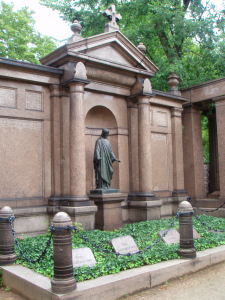
There has to be an explanation for the grandeur of the Stuttmeister tomb in Berlin. The Stuttmeisters went to Chile, then San Francisco. If they were kin to Victor Emanuel, and Jacobite ‘Pretenders’ to the throne of England, then you would not want to talk about it lest folks think you a “MAD”. The name VICTOR spans four generations in my family, counting Victoria, my surviving sister.
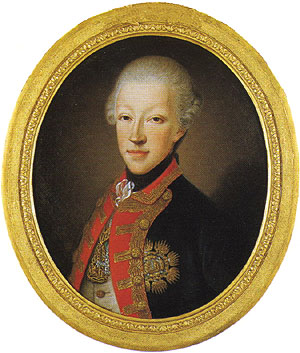
https://en.wikipedia.org/wiki/Charles_Emmanuel_IV_of_Sardinia
“Victor Emmanuel did have Stuart descent, but at the time of his accession to the throne of Italy at least 80 living persons were ahead of him in the Jacobite succession, including his mother.”
https://en.wikipedia.org/wiki/Charles_Felix_of_Sardinia
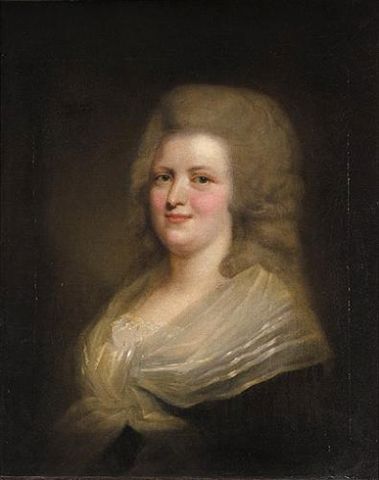
Charles Felix died in 1831 after a reign of ten years. Maria Cristina lived the rest of her life in Turin, Naples, Agliè and Frascati, and died in Savona, Liguria. She was buried beside her husband in the Basilica of Superga, Great Mausoleum, Savoy Crypt, Turin, Piedmont, Italy. The couple had no children.
When Virginia Hambley got down on one knee and proposed marriage to me, she was glimpsing ‘The Invisible Kingdom’. If we do get married, then OUR CLAIM to the throne of Britain would be stronger for she is of the House of Bourbon. Her ancestor led the restoration of the sons of Marie Clotilde of France to the throne of France.
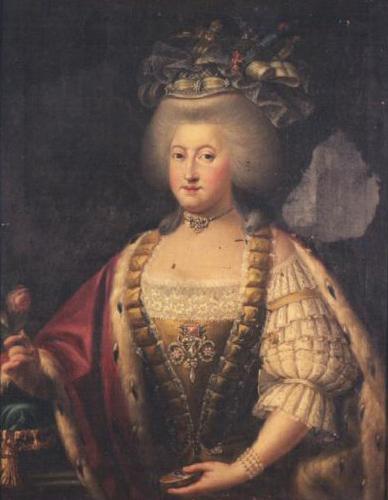
“She was the younger sister of Louis XVI of France and later the wife of Charles Emmanuel IV of Sardinia. “
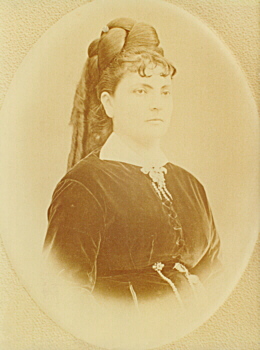
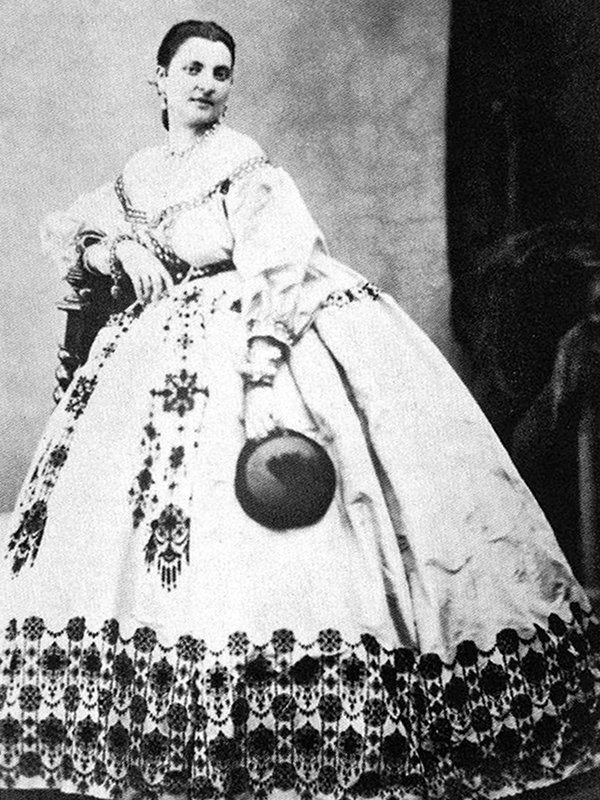
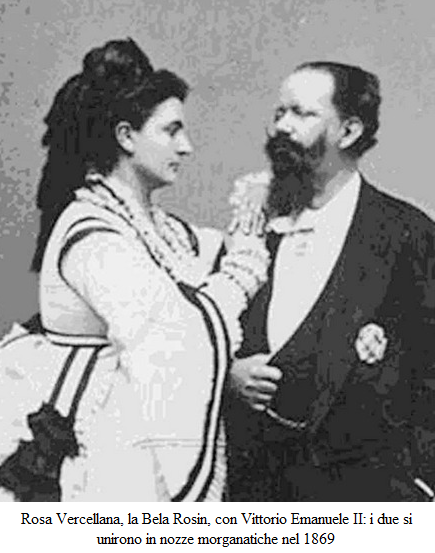
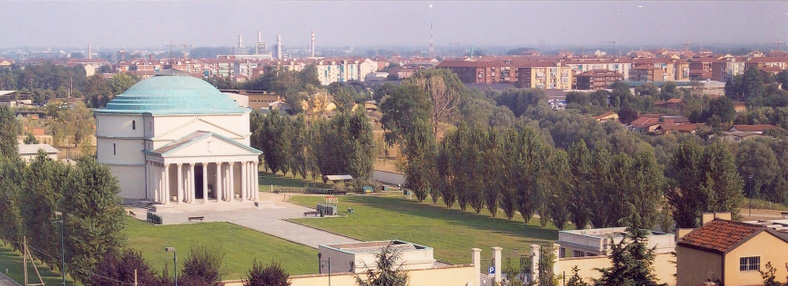
I believe Christine and my experimentation with LSD brought out ‘The Invisible Royal Bloodline’ hidden within. We were not told of our Royal Bloodline, lest we be called mad by our fellow Americans. This morning I found her ‘My Sleeping Beauty’. Here is the mosoleum of “Rosa Vercellana, 1st Countess of Mirafiori and Fontanafredda (3 June 1833 – 26 December 1885), commonly known as ‘Rosina’ and, in Piedmontese, as La Bela Rosin, was the mistress and later wife of Victor Emmanuel II, King of Italy, but never Queen of Italy.
La Bela Rosa’s tomb was looted by commoners looking for jewels. Her husband was allied with the Prussians against the Papal Army. Kings always form a blood alliance with their allies to ensure the loyalty of the offspring to ‘The Cause’. She was a Mary Rose. She – awakens with a kiss…… from her kin.
I am a ‘Pretender’ to the throne of Britain, and the island Sardinia. I am behind my grandson, Tyler Hunt, and support all his endeavors. He will create a Dynasty.
Jon Presco
Copyright 2016
The Jacobite succession is the line through which the crown in pretence of England and Scotland and Ireland (France also claimed) has descended since the flight of James II & VII from London at the time of the “Glorious Revolution“. James and his Jacobite successors were traditionally toasted as “The King over the Water”.
https://en.wikipedia.org/wiki/Jacobite_succession
https://en.wikipedia.org/wiki/Rosa_Vercellana
Maria Rosa Teresa Aloisia
As the Savoy family refused to allow her to be buried next to her husband in the Pantheon, her children had a mausoleum built for her in a similar form (if on a smaller scale) in Turin, next to the road to the Castello di Mirafiori. The circular, copper-domed,neoclassical monument, surmounted by a latin cross and surrounded by a large park, was designed by Angelo Dimezzi and completed in 1888.[5][7]
In 1970 it was purchased by the Turin city council from a descendant of Rosa Vercellana for the sum of 132 million lire. The park was opened to the public two years later but almost immediately the mausoleum was broken into and the remains of Vercellana and her descendants were mutilated by people searching for jewels. Further acts of vandalism took place over subsequent years and the structure fell into a state of dereliction. Major restoration work was carried out at the start of the twenty-first century and the park was re-opened to the public in 2005.[5]
https://en.wikipedia.org/wiki/Pretender
A pretender is one who maintains a claim that he is entitled to a position of honour or rank, which may be occupied by an incumbent (usually more recognised), or whose powers may currently be exercised by another person or authority. Most often, it refers to a former monarch, or descendant thereof, whose throne is occupied or claimed by a rival or has been abolished.[1][2]
The term “claimant” is sometimes preferred, but the term “pretend” in itself is not pejorative in this context. The original meaning of the English word pretend comes from the French word prétendre (and before that, the Latin praetendo meaning “to stretch out before”[3]), and originally meant “to put forward, to profess or claim”. A pretender was, therefore, simply one who put forward or professed a claim to a title or, in modern terms, a claimant. Only later did the word acquire its modern sense of professing or claiming falsely.
Marie Clotilde died on 7 March 1802. Charles Emmanuel was so moved by her death that he abdicated on 4 June 1802 in favour of his younger brother, Victor Emmanuel. Marie Clotilde de France was buried in the Church of Santa Caterina a Chiaia in Naples. Pope Pius VII, who had personally known Marie Clotilde, declared her venerable on 10 April 1808, the first step to her beatification.
When the House of Bourbon was restored after the fall of Napoleon in 1814, her two surviving brothers acceded to the throne of France: the comte de Provence as King Louis XVIII from 1814 to 1824, and the comte d’Artois as King Charles X from 1824 to 1830.
7. AGNES EMMA HEDWIG STUTTMEISTER – International Genealogical Index / GE
Gender: Female Christening: 06 SEP 1856 Sankt Petri, Berlin Stadt, Brandenburg, Preussen
8. ALBERTUS FRIEDERICH STUTTMEISTER – International Genealogical Index / GE
Gender: Male Christening: 11 JUL 1745 Jerusalem, Berlin Stadt, Brandenburg, Preussen
9. DOROTHEA SOPHIA STUTTMEISTER – International Genealogical Index / GE
Gender: Female Christening: 03 AUG 1807 Jerusalem, Berlin Stadt, Brandenburg, Preussen
10. EMILIE FRIEDRICKE STUDTMEISTER – International Genealogical Index / GE
Gender: Female Christening: 26 JAN 1806 Sankt Nikolai, Berlin Stadt, Brandenburg, Preussen
11. AMALIE CHARLOTTE JOHANNE ELISABETH STUTTMEISTER – International Genealogical Index / GE
Gender: Female Christening: 06 MAR 1860 Sankt Petri, Berlin Stadt, Brandenburg, Preussen
12. FRIEDRICH HEINRICH STUTTMEISTER – International Genealogical Index / GE
Gender: Male Christening: 30 JAN 1862 Sankt Elisabeth, Berlin Stadt, Brandenburg, Preussen
13. JOH. CARL STUTTMEISTER – International Genealogical Index / GE
Gender: Male Christening: 20 AUG 1747 Jerusalem, Berlin Stadt, Brandenburg, Preussen
14. JOHANNES HERMANN STUTTMEISTER – International Genealogical Index / GE
Gender: Male Christening: 04 MAY 1826 Friedrichswerder Berlin, Brandenburg, Preussen
15. CARL HEINRICH STUTTMEISTER – International Genealogical Index / GEDr.
Gender: Male Christening: 15 APR 1805 Sankt Nikolai, Berlin Stadt, Brandenburg, Preussen
16. CATHARINA DOROTHEA STUTTMEISTER – International Genealogical Index / GE
Gender: Female Christening: 02 AUG 1743 Jerusalem, Berlin Stadt, Brandenburg, Preussen
17. VICTOR EMANUEL FELIX STUTTMEISTER – International Genealogical Index / GE
Gender: Male Christening: 07 MAR 1861 Sankt Petri, Berlin Stadt, Brandenburg, Preussen
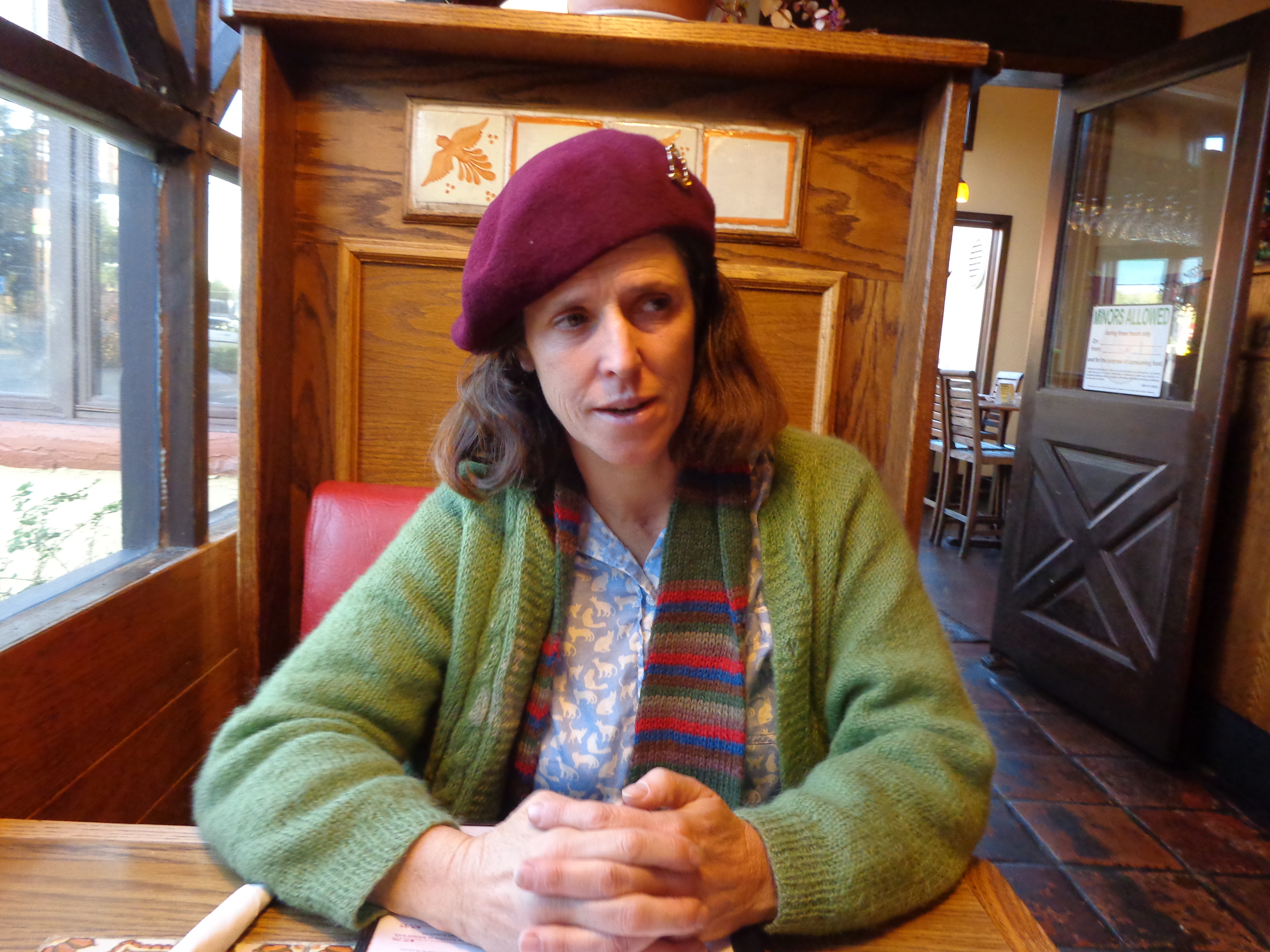

The Jacobite succession is the line through which the crown in pretence of England and Scotland and Ireland (France also claimed) has descended since the flight of James II & VII from London at the time of the “Glorious Revolution“. James and his Jacobite successors were traditionally toasted as “The King over the Water”
https://en.wikipedia.org/wiki/Charles_Emmanuel_IV_of_Sardinia
https://en.wikipedia.org/wiki/Charles_Felix_of_Sardinia
http://madmonarchist.blogspot.com/2014/05/monarch-profile-king-charles-felix-of.html
Marie Clotilde of France[3][4] (Marie Adélaïde Clotilde Xavière; 23 September 1759 – 7 March 1802), known as Madame Clotilde, was a French princess who became Queen of Sardinia as Clotilda in 1796. She was the younger sister of Louis XVI of France and later the wife of Charles Emmanuel IV of Sardinia. She was politically active and acted as the de facto first minister of her spouse during his reign.[5]
Fils de France (French pronunciation: [fis də fʁɑ̃s], Son of France) was the style and rank held by the sons of the kings and dauphins of France. A daughter was known as a fille de France (French pronunciation: [fij də fʁɑ̃s], Daughter of France).
The children of the dauphin, who was the king’s heir apparent, were accorded the same style and status as if they were the king’s children instead of his grandchildren.[1]
In 1774, Marie Clotilde was engaged by her brother King Louis XVI to Charles Emmanuel, Prince of Piedmont, eldest son of Victor Amadeus III of Sardinia and of his wife Maria Antonia Ferdinanda of Spain. The match between Marie Clotilde and Charles Emmanuel was part of a wider scheme of marriages. Charles Emmanuel’s younger sister, Marie Joséphine, had married Marie Clotilde’s older brother, the Count of Provence in 1771. In 1773, another of Charles Emmanuel’s sisters, Marie Thérèse, had married Marie Clotilde’s youngest brother, the Count of Artois. Marie Clothilde did not wish to marry, but adjusted herself to the will of her brother, asked the princess de Lamballe about the personality of her intended spouse and was taught Italian in order to fulfill her role as eventual Queen of Sardinia.
In 1796, upon the accession of her husband to the throne, Marie Clotilde became the Queen of Sardinia. On 6 December 1798, the French First Republic declared war on Sardinia. Charles Emmanuel was forced to abdicate all his territories on the Italian mainland and to withdraw to the island of Sardinia.
During their reign in exile from mainland Sardinia, the couple traveled between the Italian states as well as their own provinces – such as the island of Sardinia in 1800 – and upheld diplomatic relations with the hope of being restored to Turin. During this period, Marie Clothilde served as the spokesperson, de facto chief Councillor and first minister of Charles Emmanuel[13] and in fact handled the Sardinian government in exile, demonstrating both diplomatic skill and a steady support for Charles Emmanuel, who refused to abdicate his office as long as she was alive, despite the demands of his brothers to do so.[14] Despite her political activity, however, Marie Clothilde always played down her personality, both publicly and privately, as this was considered more befitting of her pietas.[15] Charles Emmanuel and Marie Clotilde lived in Rome and then in Naples as guests of the wealthy Colonna family. Marie Clotilde nursed her husband’s aunt Princess Maria Felicita of Savoy through her last illness in Naples in 1801.
Marie Clotilde died on 7 March 1802. Charles Emmanuel was so moved by her death that he abdicated on 4 June 1802 in favour of his younger brother, Victor Emmanuel. Marie Clotilde de France was buried in the Church of Santa Caterina a Chiaia in Naples. Pope Pius VII, who had personally known Marie Clotilde, declared her venerable on 10 April 1808, the first step to her beatification.
When the House of Bourbon was restored after the fall of Napoleon in 1814, her two surviving brothers acceded to the throne of France: the comte de Provence as King Louis XVIII from 1814 to 1824, and the comte d’Artois as King Charles X from 1824 to 1830.
Victor Emmanuel[edit]
In the early twentieth century Frederick Rolfe claimed that King Victor Emmanuel III of Italy was the rightful King of England, as heir to the Kings of Sardinia.
In 1831 the male descendants of Victor Amadeus II of Sardinia and his wife Anne Marie d’Orléans, a niece of James II, died out and the Savoy succession – but not the Jacobite succession – passed to a distant cousin (with no Stuart ancestry), because the succession in the Kingdom of Sardinia was governed by the Salic Law, which does not recognize claims by or through a female. England and Scotland have never been subject to the Salic Law (if they were, the succession could not have passed to the house of Savoy, nor in fact could the House of Stuart have inherited the thrones of either Scotland or England, as their claims in the two kingdoms derived, respectively, from Marjorie Bruce and Margaret Tudor). Rolfe may not have understood this.
Victor Emmanuel did have Stuart descent, but at the time of his accession to the throne of Italy at least 80 living persons were ahead of him in the Jacobite succession, including his mother.
Elizabeth II[edit]
In his book The Highland Clans, Iain Moncreiffe of that Ilk claimed that Elizabeth II of the United Kingdom “is the lawful Jacobite sovereign of this realm”. Moncreiffe made the following argument:
… by the fourteenth century it had become common law (in both England and Scotland) that a person who was not born in the liegeance of the Sovereign, nor naturalised, could not have the capacity to succeed as an heir …. In Scotland, this law was modified in favour of the French from the sixteenth century, but was otherwise rigorously applied until the Whig Revolution of 1688, after which it was gradually done away with by the mid-nineteenth century. It was precisely because of this law that Queen Anne found it necessary to pass a special Act of Parliament naturalising all alien-born potential royal heirs under her Act of Settlement of the throne. But, of course, from the Jacobite point of view, no new statute could be passed after 1688 …. The nearest lawful heir of the Cardinal York in 1807 was, in fact, curiously enough, King George III himself, who had been born in England (and therefore in the technical liegance of James VIII).
Under Moncreiffe’s theory, however, James VI of Scotland could never have succeeded as James I of England in 1603. This problem, recognized in 1603, had been circumvented at the time of James’s accession by the ahistorical assertion that Scotland and England had been “anciently but one” kingdom, and that the succession of the Scottish monarch to the throne of England was a “reuniting” of two parts of a single kingdom, i.e., that Scotland was not really a foreign country – a concept emphasized by James’s insistence on the use of the name Great Britain for the united realms of England and Scotland.
It was not common law but a 15th-century statute that restricted the English crown to those in the liegeance of the Sovereign, and that statute was supplanted by the Acts of Succession passed in Henry VIII’s reign. Additionally, Jacobites believe that the royal succession is determined by God and by hereditary right, not by Parliament. For instance, most Jacobites recognise Mary, Queen of Scots as having been the rightful Queen of England – a clear violation of the aforementioned law, which in their view is overridden by Mary’s hereditary rights (as granddaughter of Margaret Tudor), and the illegitimacy[8] of Elizabeth I.[9][10][11]
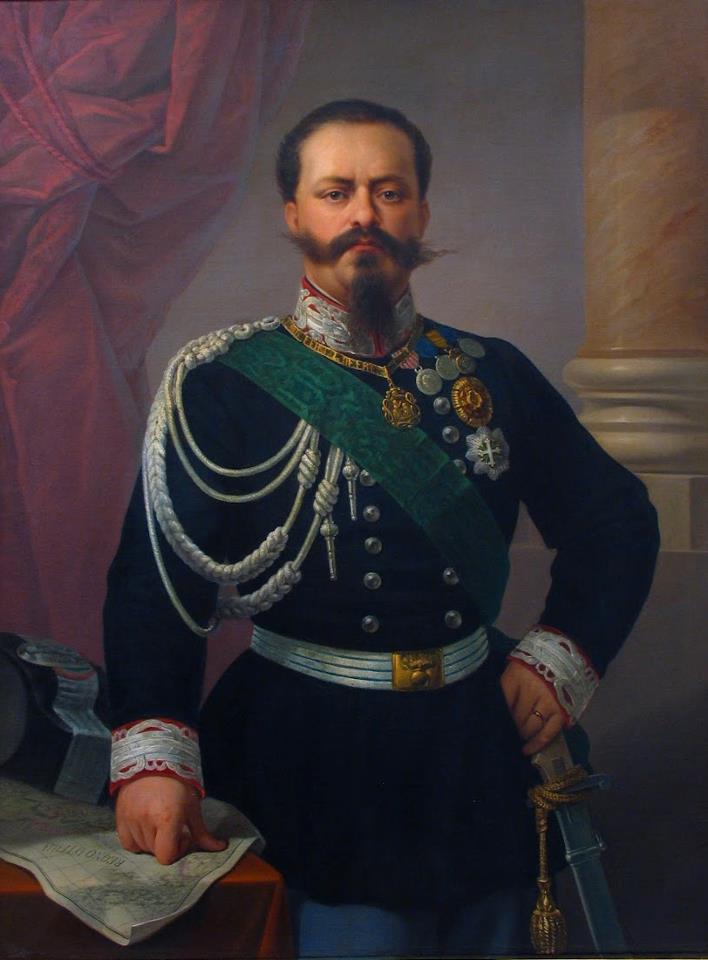
Victor Emmanuel was born the eldest son of Charles Albert, Prince of Carignano, and Maria Theresa of Austria. His father succeeded a distant cousin as King of Sardinia-Piedmont in 1831. He lived for some years of his youth inFlorence and showed an early interest in politics, the military, and sports. In 1842, he married his cousin Adelaide of Austria. He was styled as the Duke of Savoy prior to becoming King of Sardinia-Piedmont.
https://en.wikipedia.org/wiki/Victor_Emmanuel_II_of_Italy
Later that same year, Victor Emmanuel II sent his forces to fight the papal army at Castelfidardo and drove the Pope into Vatican City. His success at these goals led him to be excommunicatedfrom the Catholic Church. Then, Giuseppe Garibaldi conquered Sicily and Naples, and Sardinia-Piedmont grew even larger. On 17 March 1861 the Kingdom of Italy was officially established and Victor Emmanuel II became its king.
In 1866 Victor Emmanuel allied himself with Prussia in the Third Italian War of Independence. Although not victorious in the Italian theater, he managed anyway to receive Veneto after the Austrian defeat in Germany.

Tomb of Victor Emmanuel II at the Pantheon
In 1870, after two failed attempts by Garibaldi, he also took advantage of the Prussian victory over France in the Franco-Prussian War to capture Rome after the French withdrew. He entered Rome on 20 September 1870 and set up the new capital there on 2 July 1871, after a temporary move to Florence in 1864. The new Royal residence was the Quirinal Palace.
Rosa Vercellana, 1st Countess of Mirafiori and Fontanafredda (3 June 1833 – 26 December 1885), commonly known as ‘Rosina’ and, in Piedmontese, as La Bela Rosin, was the mistress and later wife of Victor Emmanuel II, King of Italy, but never Queen of Italy.
As the Savoy family refused to allow her to be buried next to her husband in the Pantheon, her children had a mausoleum built for her in a similar form (if on a smaller scale) in Turin, next to the road to the Castello di Mirafiori. The circular, copper-domed,neoclassical monument, surmounted by a latin cross and surrounded by a large park, was designed by Angelo Dimezzi and completed in 1888.[5][7]
In 1970 it was purchased by the Turin city council from a descendant of Rosa Vercellana for the sum of 132 million lire. The park was opened to the public two years later but almost immediately the mausoleum was broken into and the remains of Vercellana and her descendants were mutilated by people searching for jewels. Further acts of vandalism took place over subsequent years and the structure fell into a state of dereliction. Major restoration work was carried out at the start of the twenty-first century and the park was re-opened to the public in 2005.[5]
 Rosamond Press
Leave a comment