


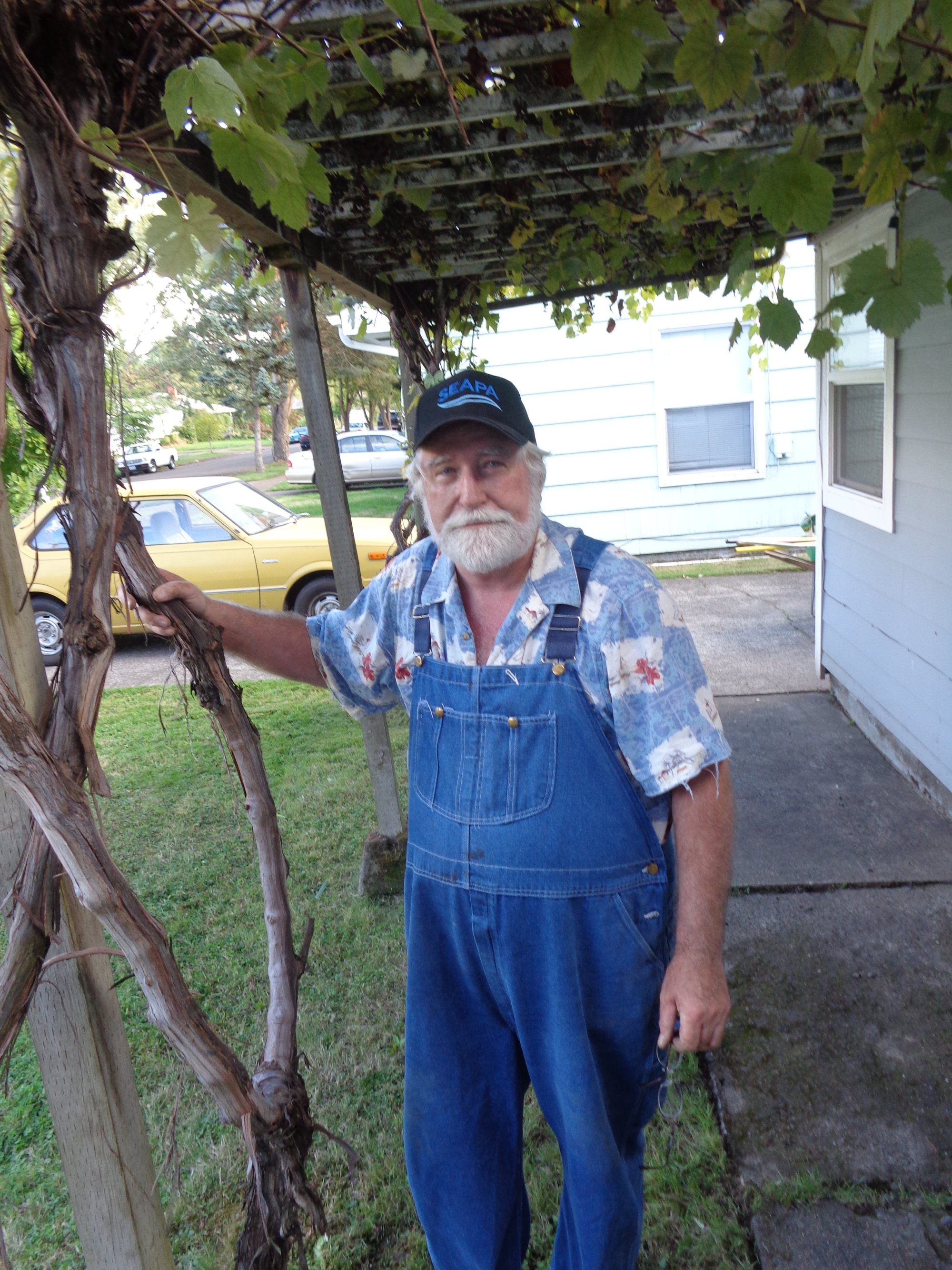




“I will see that instant until I die,
that instant—too much for tears!
when I cried out: “The child that I had just now—
what! I don’t have her any more!”
Victor Hugo
I watched the movie ‘Les Miserables’ and was blown away by the genius of Victor Hugo to come in as the Author-God, the Phantom of the Opera, to tell this revolutionary story.
After posting that Belle was “Sub-Rosa” I realized I was Sub-Rosa – too! I surfed the channel and found this version.
https://en.wikipedia.org/wiki/Les_Mis%C3%A9rables_(1998_film)
I kept hearing this question:
“Who are you?”
“I am Monsieur Madeleine!”
“I beg your pardon! Did you say Magdalene?”
Hit it maestro!
According to Baigent and Leigh, Victor Hugo was a Grand Master of the Priory de Sion, and thus a descendant of Jesus and Mary Magdalene. It is said these Masters often took the name Jean. Monsieur Madeleine is running a cloth industry where the Bohemian Grissettes worked. Sometimes these young women would work as prostitutes on the side. This is what Fantine is accused of. She dies, Jean adopts her daughter, Cossette (Belle) who falls in love with a the radical Marius (Ambrose) who heads the ABC (Sleeps)
Madeleine is a feminine given name. It is a form of Magdalene, well-known because of Saint Mary Magdalene. In the United States, this name often appears under the spelling Madeline.
Victor Hugo has Jean and Cosette find sanctuary in a Magdalene asylum. His factory looks like one of these refuges for prostitutes. Victor is putting his great story in the middle of the Mary Magdalene legend, where his adopted daughter is raised. He declares he does everything for Cosette and Marius.
The Rosamond Family were many generations Weavers. My grandfather, Frank Rosamnd, married Mary Magdalene Wieneke, who is now Mary Magdalene Rosamond. My daughter and her family reject the arduous genealogical work I did before they came into my life. I have put theories before authors who published books on the Priory de Sion – years before Dan Brown published his book. I told many people by grandfather was named Victor Hugo Presco whose father came from Bohemia.
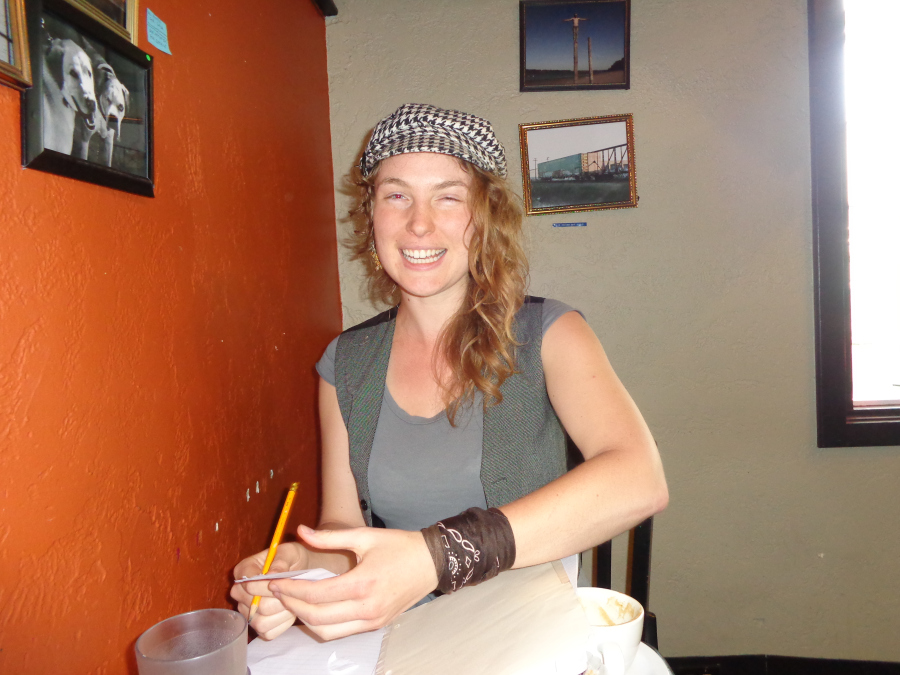
I am on the trail of Fair Rosamond, as Sleeping Beauty, when I met Belle in Ken Kesey Square. I JEAN VALJEAN am looking for the heir to my Bohemian history. We talk about a collaboration. Belle tells me she is a good editor. She agrees to pose for me. I want to capture her on canvas. I wrote this poem hours after meeting her and telling her she is Botticelli’s Venus. Botticelli was a Grand Master of the Priory de Sion. I now suspect I am Jon-Jean…..the present Grand Master!
Today, I am free of the slanderous accusation of Alley Valkyrie that Belle may have given her seal of approval, so she could continue working Sub-Rosa amongst the homeless, The Miserable. Two weeks before I met Belle, I declared myself the Sheriff of Brownsville after learning it had no sheriff. On my way to the New Zone Gallery I spotted a group of homeless folks in Ken Kesey Square. Realizing I was avoiding the homeless after the death of my homeless friend (I paid for his funeral) I crossed the street and turned on my camera. Who is the author of our story? It is very possible a Grisette offered to be Victor Hugo’s Muse, and, together they authored the greatest book of all time. It is this possibility, that they disguised successfully for all these years, they becoming the Detective Subrosa, to see how airtight their……….Love Story!
“Here’sssssss Johnny!
Jon-Jean Presco
Copyright 2016
In the first quarter of the 19th century, Grisette also came to refer more specifically to the independent young women, often working as seamstresses or milliner’s assistants, who frequented bohemian artistic and cultural venues in Paris. They formed relationships with artists and poets more committed than prostitution but less so than a mistress. Many grisettes worked as artist’s models, often providing sexual favours to the artists in addition to posing for them.
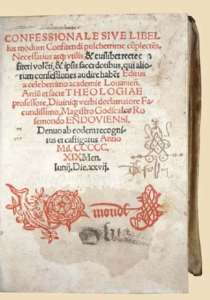

This James (or Jacob, for these names were once interchangeable) was the son of Hans Ulrich Rosemond, born 1623, a weaver; who was a son of Hans, a weaver, born
1581; who was a son of Fred Rosemond, born 1552, a weaver, member of town council and a local captain; who was the son of another Hans whose date of birth is not known, but he too, was a weaver and became a citizen of Basle in 1534. His father was Erhart de Rougemont who bought in 1495 “the house called Rebleuten-Zunft in Basle in the
Freistrasse.’
The word grisette (sometimes spelled grizette) has referred to a French working-class woman from the late 17th century and remained in common use through the Belle Époque era, albeit with some modifications to its meaning. It derives from gris, (French for grey), and refers to the cheap grey fabric of the dresses these women originally wore. The 1694 edition of the Dictionnaire de l’Académie française described a grisette as simply “a woman of lowly condition”. By the 1835 edition of the dictionary, her status had risen somewhat. She was described as:
“a young working woman who is coquettish and flirtatious.”[1]
This usage can be seen in one of Oliver Wendell Holmes’ early poems ‘Our Yankee Girls’ (1830):
“the gay grisette, whose fingers touch love’s thousand chords so well…”.[2]
In practice, “young working woman” referred primarily to those employed in the garment and millinery trades as seamstresses or shop assistants, the few occupations open to them in 19th century urban France, apart from domestic service.[3] The sexual connotations which had long accompanied the word are made explicit in Webster’s Third New International Dictionary (1976) which lists one of its meanings as a young woman who combines part-time prostitution with another occupation. Webster’s quotes an example from Henry Seidel Canby‘s 1943 biography of Walt Whitman:
In the first quarter of the 19th century, Grisette also came to refer more specifically to the independent young women, often working as seamstresses or milliner’s assistants, who frequented bohemian artistic and cultural venues in Paris. They formed relationships with artists and poets more committed than prostitution but less so than a mistress. Many grisettes worked as artist’s models, often providing sexual favours to the artists in addition to posing for them. During the time of King Louis-Philippe they came to dominate the bohemian modelling scene.[6] Although the grisette models were perceived to be adventurous, independent, and living only for moment, they sought not only economic support, but also emotional and artistic support in their relationships with bohemian men.[7] Jenny, whose story is recounted by Jules Janin in his essay “La Grisette,” is a prototypical grisette in this sense, initially choosing to model only for artists whom she considers geniuses and declining more lucrative offers to become the lover of bourgeois or even aristocratic men. Janin considered the grisettes an integral part of the bohemian artistic scene, but viewed their sexual mores somewhat negatively and suggests that their independence was only superficial:
“Art is the grand excuse for all actions that are beyond vulgar. It is art that purifies everything, even a poor young woman’s submission of her body.”[8]
The grisette as part of the bohemian sub-culture was a frequent character in French fiction of the time. She is personified as Rigolette in Eugene Sue’s The Mysteries of Paris, as Fantine in Victor Hugo’s Les Misérables and Marthe in George Sand‘s Horace, as well as in the protagonist in Alfred de Musset’s Mademoiselle Mimi Pinson: Profil de grisette. Notable examples in British and American fiction are Trilby in George Du Maurier‘s novel of the same name, and Marie in Edgar Allan Poe’s short story “The Mystery of Marie Roget“. Du Maurier based large parts of Trilby on his experiences as a student in Parisian bohemia during the 1850s. Poe’s 1842 story was based on the unsolved murder of Mary Cecilia Rogers near New York City. Poe translated the setting to Paris and Mary Rogers to a young grisette, Marie Roget. Subtitled “A Sequel to ‘The Murders in the Rue Morgue‘”, it was the first detective story to attempt the solution of a real crime.[9] Possibly the most enduring grisette of all is Mimi in Henri Murger’s novel (and subsequent play) Scènes de la vie de Bohème, the source for Puccini‘s famous opera La bohème.
https://rosamondpress.com/2012/01/14/history-of-the-rosamond-family/
Jean Valjean came from a poor peasant family of Brie. He had not learned to read in his childhood. When he reached man’s estate, he became a tree-pruner at Faverolles. His mother was named Jeanne Mathieu; his father was called Jean Valjean or Vlajean, probably a sobriquet, and a contraction of voila Jean, “here’s Jean.
“Here’s Johnny!”
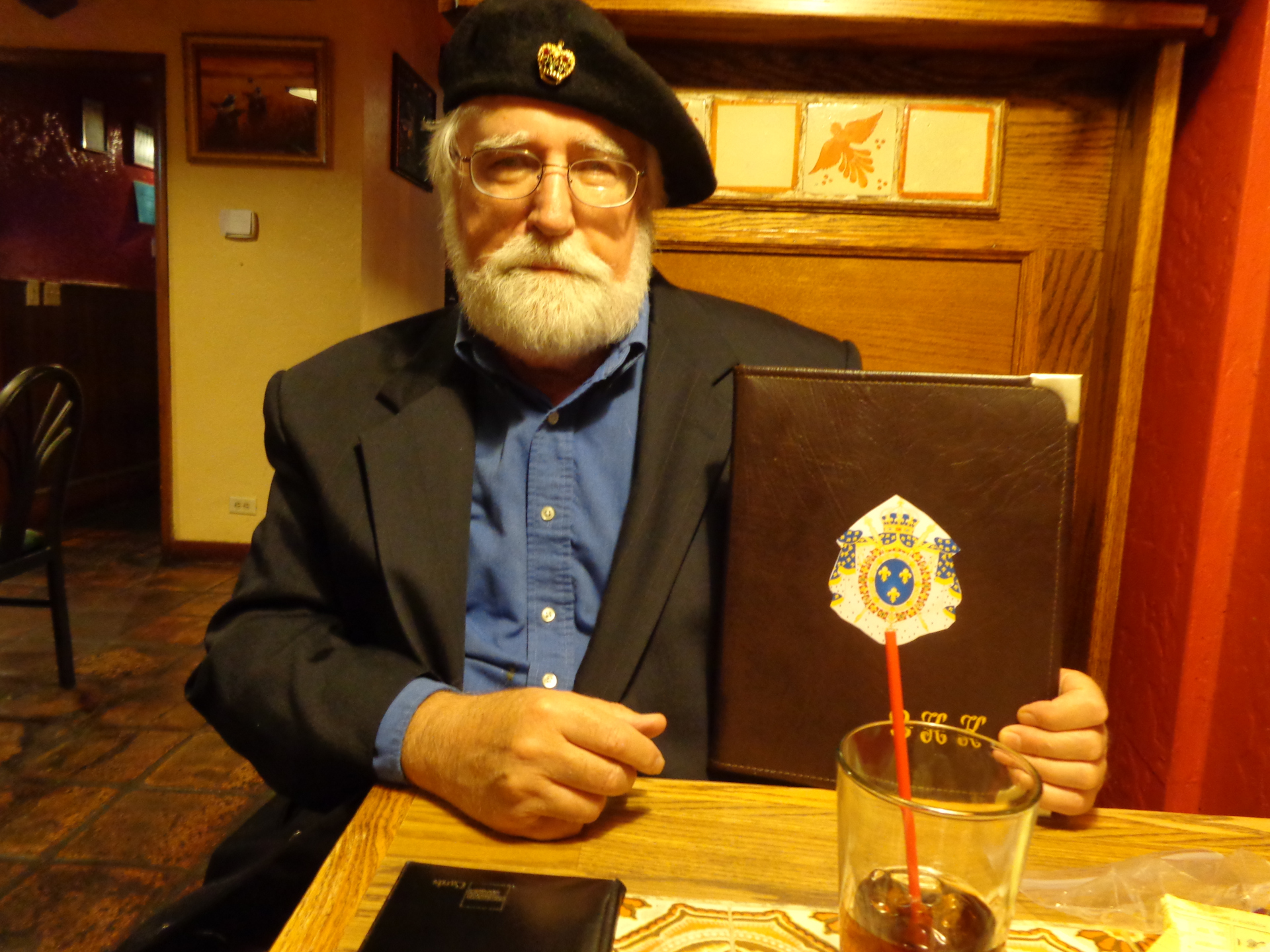


Here is my poem dedicated to my Magdalene Muse.
La Belle Rose
by
Jon Gregory Presco
Dedicated to my Muse, Belle Burch
Poetry is the Truth
When I was a gifted youth
I do not recall if I studied the artist Sandro Botticelli.
When a man
I wrote my version of ‘The Birth of Venus’
and did a painting of my muse
coming out of the sea.
I must have neglected this great Renaissance Artist,
and his beloved Muse – until now!
But, Since I beheld her, my Belle
and compared her to Simonetta Cattaneo de Candia Vespucci,
do I now behold all the clues of the petals
and the thread
that have brought me through the labyrinth of time,
to adore her once again.
https://en.wikipedia.org/wiki/Grisette_(person)
Madeleine is a feminine given name. It is a form of Magdalene, well-known because of Saint Mary Magdalene. In the United States, this name often appears under the spelling Madeline.
https://en.wikipedia.org/wiki/Madeleine_(name)
http://www.historyversusthedavincicode.com/chaptertwentythree.htm
https://en.wikipedia.org/wiki/Priory_of_Sion
Magdalene asylums, also known as Magdalene laundries, were institutions from the 18th to the late 20th centuries ostensibly to house “fallen women“, a term used to imply female sexual promiscuity or work in prostitution. Asylums operated throughout Europe and North America for much of the nineteenth and well into the twentieth century, the last one closing in 1996. The institutions were named after the Biblical figure Mary Magdalene, in earlier centuries characterised as a reformed prostitute.
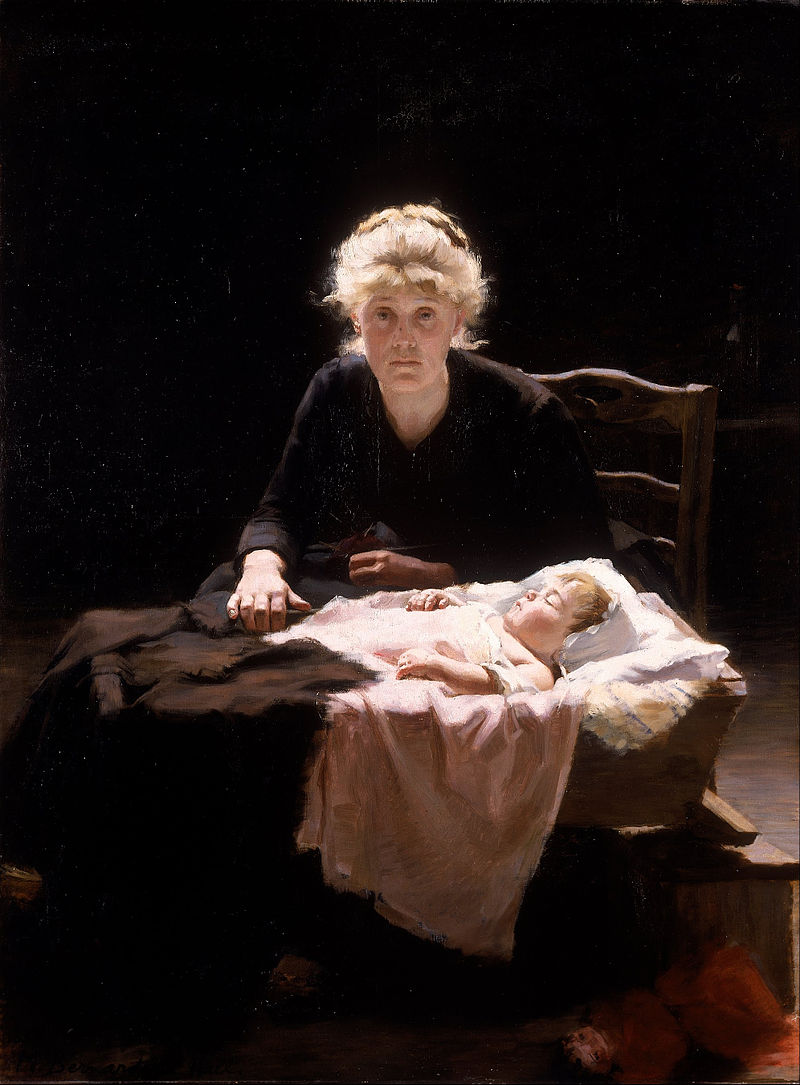


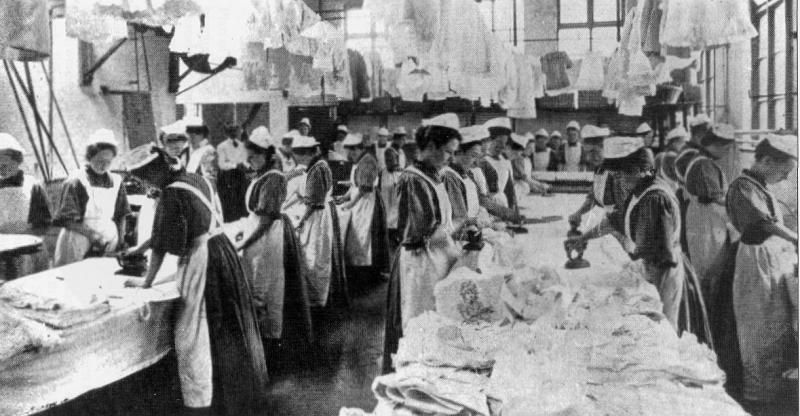
https://en.wikipedia.org/wiki/Magdalene_asylum
https://rosamondpress.com/2011/09/02/victor-hugo-presco/
https://rosamondpress.com/2012/01/14/history-of-the-rosamond-family/
Marius Pontmercy (French pronunciation: [maʁjys pɔ̃mɛʁsi]) is a fictional character, one of the protagonists of Victor Hugo’s 1862 novel Les Misérables. He is a young student, and the suitor of Cosette. Believing Cosette lost to him, and determined to die, he joins the revolutionary association Friends of the ABC as they take part in the 1832 June Rebellion. Although not a member of the group, the ties of friendship bring him close in. Facing death in the fight, his life is saved by Jean Valjean, and he subsequently weds Cosette, a young woman whom Valjean had raised as his own.[1
https://en.wikipedia.org/wiki/Marius_Pontmercy
The Friends of the ABC (French: Les Amis de l’ABC) is a fictional association of revolutionary French republican students featured in Victor Hugo‘s Les Misérables. In French, the name of the society is a pun, in which abaissés (the “lowly” / “abased”), is pronounced [abese], very similar to A-B-C ([ɑ be se]). Their members represent a wide variety of political viewpoints, ranging from communist agitation to advocacy for democracy to supporting the levellers and more, but on 5 June 1832 they all join the popular insurrection known as the June Rebellion and organize the construction of a massive barricade. Hugo brings them into the narrative when Marius Pontmercy, one of the novel’s principal characters, attaches himself to the group without becoming one of them. With their fight led by Enjolras, all of the members of the group die during the rebellion.
Characters Jean Valjean and Gavroche both also fight with the student rebellion, with Valjean barely making it out alive and Gavroche passing away. The central story is also told in the musical version of Les Misérables.
https://en.wikipedia.org/wiki/Victor_Hugo
Hugo’s oldest and favourite daughter, Léopoldine, died at age 19 in 1843, shortly after her marriage to Charles Vacquerie. On 4 September 1843, she drowned in the Seine at Villequier, pulled down by her heavy skirts, when a boat overturned. Her young husband also died trying to save her. The death left her father devastated; Hugo was travelling with his mistress at the time in the south of France, and first learned about Léopoldine‘s death from a newspaper he read in a café.[5]
He describes his shock and grief in his famous poem À Villequier:
Hélas ! vers le passé tournant un œil d’envie,
Sans que rien ici-bas puisse m’en consoler,
Je regarde toujours ce moment de ma vie
Où je l’ai vue ouvrir son aile et s’envoler!
Je verrai cet instant jusqu’à ce que je meure,
L’instant, pleurs superflus !
Où je criai : L’enfant que j’avais tout à l’heure,
Quoi donc ! je ne l’ai plus !
Alas! turning an envious eye towards the past,
inconsolable by anything on earth,
I keep looking at that moment of my life
when I saw her open her wings and fly away!
I will see that instant until I die,
that instant—too much for tears!
when I cried out: “The child that I had just now—
what! I don’t have her any more!”
He wrote many poems afterwards about his daughter’s life and death, and at least one biographer claims he never completely recovered from it.[citation needed] His most famous poem is probably Demain, dès l’aube, in which he describes visiting her grave.
Hugo’s religious views changed radically over the course of his life. In his youth, he identified as a Catholic and professed respect for Church hierarchy and authority. From there he became a non-practicing Catholic, and increasingly expressed anti-Catholic and anti-clerical views. He frequented spiritism during his exile (where he participated also in many séances conducted by Madame Delphine de Girardin),[14][15] and in later years settled into a rationalist deism similar to that espoused by Voltaire. A census-taker asked Hugo in 1872 if he was a Catholic, and he replied, “No. A Freethinker“.[16]
After 1872, Hugo never lost his antipathy towards the Catholic Church. He felt the Church was indifferent to the plight of the working class under the oppression of the monarchy. Perhaps he also was upset by the frequency with which his work appeared on the Church’s list of banned books. Hugo counted 740 attacks on Les Misérables in the Catholic press.[17] When Hugo’s sons Charles and François-Victor died, he insisted that they be buried without a crucifix or priest. In his will, he made the same stipulation about his own death and funeral.[18]
Euphrasie
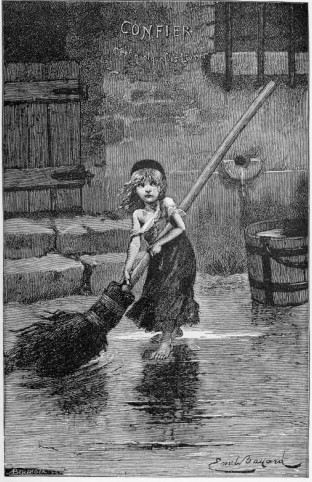
Cosette is a fictional character in the novel Les Misérables by Victor Hugo and in the many adaptations of the story for stage, film, and television. Her given name, Euphrasie, is only mentioned briefly. As the orphaned child of an unmarried mother deserted by her father, Hugo never labels her with a surname. In the course of the novel, she either presents herself or is mistakenly identified as Ursule, the Lark, or Mademoiselle Lanoire.
She is the daughter of Fantine. After her mother leaves her to be looked after by the Thénardiers, she becomes an exploited and victimised child. Rescued by Jean Valjean, who raises her as if she were his own family, she grows up in a convent school to become a radiant and innocent young beauty. She falls in love with Marius Pontmercy, a young lawyer. Valjean’s struggle to protect her while disguising his past drives much of the plot until Valjean recognizes he must allow Cosette her own life—”that this child had a right to know life before renouncing it”[1]— and must surrender to her romantic attachment to Marius.
 Rosamond Press
Leave a comment