
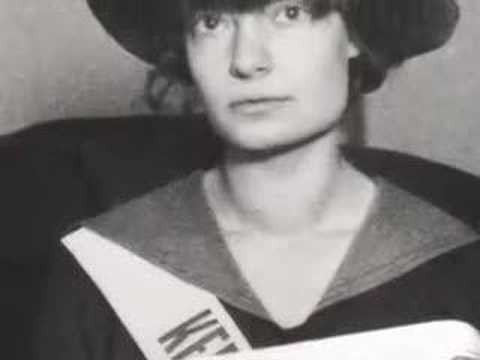
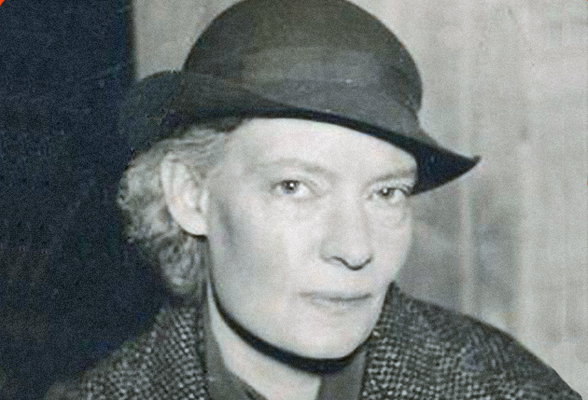
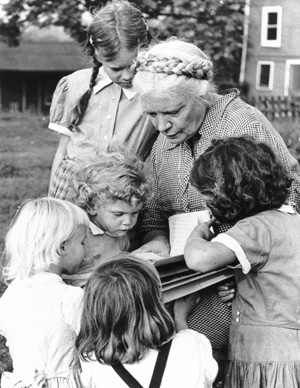
Dorothy Day lived in Oakland as a child. I can not find out where. This is typical of other famous folks who lived in Oakland, like Gertrude Stein and Jack London. It took some digging. I have devoted thousands of hours to writing this blog, and have not received one red cent. Dorothy got a penny for her Catholic Worker. It is said she was inspired to feed the homeless most of her life because her family tended to the refugees that fled to Oakland after the San Francisco Earthquake. She had read London. Being from Oakland was a compass for her as she developed her Life’s Work.
With the mention 0f Dorothy Day by Pope Francis, all my hard work now has validity, and my isolation and ostracization by friends and family, is over. For twenty-eight years I searched for the historic Jesus, and found him as a Moabite King of Gleaners who cursed a fig tree because the owner did not leave figs on it for the poor.
“‘When you reap the harvest of your land, do not reap to the very edges of your field or gather the gleanings of your harvest. Leave them for the poor and for the foreigner residing among you. I am the LORD your God.” Leviticus 23
No other theologian came close to figuring out why Jesus cursed this tree after two thousand years of trying. My find blows away the lie that the Jews crucified Jesus because they did not recognize him as their Savior-Messiah. The masses knew exactly what Jesus was doing and why. Even foreigners got the message. What need of Saul-Paul who said God-given Jewish laws are no longer applicable ? ‘The Poor’ knew their Torah because it was full of Social Justice. Aliens knew they could get a fair shake in Judea.
As for all those other riddles that Christian Church leaders point to as evidence of a non-Jewish, and somehow divine messages destined for Gentiles, I have solved many of them as well, employing the Torah and the teaching of the Jews – who heard no riddles from Jesus’ lips.
Only a Gentile in Europe would have a problem, because, they didn’t know the Torah. That Jesus would become the messenger of the Super Rich, the Confederacy, and Wall Street Harpies, is a testimonial as to how clever the followers of Saint Paul were. The reign of these devil-spirits came to an end yesterday when Saint Francis told the world whom he admires. I would have chosen John and Jessie Fremont over Lincoln.
Why did a Beatnick Bohemian Artist-Hippie born in Oakland discover this profound truth, that winged home to Capitol Hill, were Francis gives a Gleaner’s Jubilee message. Did all those Catholic Scholars alas figure it out, or, did one of them discover this blog? John Boehner resigned today after receiving the Pope’s message. The selfish Tea Party crazies were about to launch a coup. These neo-Confederates wave aborted fetuses on a stick in hope they will get more tax-cuts. They are followers of Judas because they use defunding Obamacare as the flag to rally their racists forces – against!
There are no God-given laws against abortion, but there is God’s own words telling His Children to take care of the widows and poor. Paul Wyrich invented the abortion issue to counter Civil Rights laws. To use God to make false laws – is Treason against God! To shut down the Federal Government so it can not fund the Social Safety Net – is TREASON!
Dorothy reminds me of the women that Meher Baba gathered around him to help complete his spiritual work.
https://rosamondpress.com/2014/12/24/saint-francis-and-the-perfect-master-2/
https://rosamondpress.com/2014/09/04/meher-baba-and-saint-francis-2/
Jon Presco
“She spent several months in Greenwich Village, where she became close to Eugene O’Neill, whom she later credited with having produced “an intensification of the religious sense that was in me”.
At first she walks in the city to witness the experience of the poor, and as she describes it in her autobiography, this walking is marked as a time of searching. In Jack London’s Martin Eden she discovers a character, modeled after London, who experiences extreme poverty but who has a deep appreciation of beauty. Martin Eden finds the great love of his life in a woman whose perfect beauty is suddenly marred when her lips are stained with fruit over a picnic lunch. Eden’s world falls apart as the stain of the real shows through, exposing the lie upon which he has grounded himself. His impoverishment is a condition he had devoted his life to escaping and then in an instant he realizes impoverishment is the human condition.
Born in 1897, Dorothy Day was 8 years old when she lived through the San Francisco earthquake of 1906. In the aftermath of the seismic shock, she watched as people reached out to help each other — pitching tents, giving clothing, making food. “While the crisis lasted people loved each other,” she wrote in her autobiography. “It was as though they were united in Christian solidarity. It makes one think of how people could, if they would, care for each other in times of stress, unjudgingly in pity and love.”
Here is the account of Baba’s spiritual contact with Saint Francis.
“Finally we arrived at Assisi at 5 P.M. to find a rather agitated Herbert waiting for us, because we were three hours late in arriving. After a rather restless and depressing week, he had made most successful arrangements for Baba’s retirement (which he tells in much better words than mine).
“Several kilometers from the town, up in the hills on the slopes of Monte Subasio, lies the famous Hermitage of Carceri built by St. Francis and his fellow monks. Below in the woods are several small caves or retreats where people go for meditation. Herbert discovered one of these half-protected by an outside wall. He had hidden this with branches so that it was difficult to find.
“This was one that was actually used by St. Francis himself. At 6:30 P.M. we had a light meal at the Windsor Hotel and drove in a car most of the way. The last part we walked on foot and, finally, scaled a low wall and plunged into the woods led by Herbert down an intricate winding path.
“The cave we found was an ideal spot and perfectly suited to Baba’s requirements. Herbert had thought out everything with such care that there was nothing left to be desired. Herbert is always very meticulous and careful in all he undertakes. The light was beginning to go a little as we entered the woods. It was just after sunset. I remember the birds and their song dying away gradually.
We settled Baba in and he told us that no one must look at him and, above all, not to touch him.
“It was arranged that Herbert and Chanji were to keep watch outside the cave during the night, to be relieved by Kaka and myself at 9 o’clock the next morning. Baba said that Kaka and I were to go to mass at 7 A.M. the next morning and then we were to kiss the Tomb of St. Francis. We bade them goodnight and found our intricate way out of the woods.
http://mudroomblog.com/dorothy-day-saint-with-thorns/
Dorothy Day, Obl.S.B. (November 8, 1897 – November 29, 1980) was an American journalist, social activist, Christian socialist and Catholic convert. She advocated the Catholic economic theory of distributism. In 1917, Day was imprisoned as a member of Alice Paul’s Silent Sentinels, and in the 1930s she worked closely with fellow activist Peter Maurin to establish the Catholic Worker Movement, a pacifist movement that continues to combine direct aid for the poor and homeless with nonviolent direct action on their behalf. As part of this movement, she co-founded the Catholic Worker newspaper in 1931, and served as its editor from 1933 until her death in 1980. Day joined the Benedictine Order as an oblate to foster her spiritual life.
The Catholic Church has opened the cause for Day’s possible canonization, which was accepted by the Holy See for investigation. Due to this, the Church refers to her with the title of Servant of God.
She spent several months in Greenwich Village, where she became close to Eugene O’Neill, whom she later credited with having produced “an intensification of the religious sense that was in me”.[16] She had a love affair of several years with Mike Gold, a radical writer who later became a prominent Communist.[17] She maintained friendships with such prominent American Communists as Anna Louise Strong, and Elizabeth Gurley Flynn, who became the head of the Communist Party USA.
Initially Day lived a bohemian life. In 1920 or 1921, just after ending an unhappy love affair with Lionel Moise and having an abortion, she married Berkeley Tobey in a civil ceremony. She spent a year with him in Europe removed from politics, focusing on art and literature, and writing an semi-autobiographical novel, The Eleventh Virgin (1924), based on her affair with Moise. In its “Epilogue”, she tried to draw lessons about the status of women from her experience: “I thought I was a free and emancipated young woman and found out I wasn’t at all … [F]reedom is just a modernity gown, a new trapping that we women affect to capture the man we want.”[18] She later called it a “very bad book”.[19] The sale of the movie rights to the novel gave her $2,500, and she bought a beach cottage as a writing retreat in Staten Island, New York.[20] Soon she found a new lover, Forster Batterham, an activist and biologist, who joined her there on weekends. She lived there from 1925 to 1929, entertaining friends and enjoying a romantic relationship that floundered when she took passionately to motherhood and religion.[21]
Dorothy Day was born on November 8, 1897, in the Brooklyn Heights neighborhood of Brooklyn, New York. She was born into a family described by one biographer as “solid, patriotic, and middle class”.[1] Her father, John Day, was a Tennessee native of Scots-Irish heritage, while her mother, Grace Satterlee, a native of upstate New York, was of English ancestry. Her parents were married in an Episcopal church in Greenwich Village.[2] She had three brothers and a sister. In 1904, her father, who was a sports writer devoted to horse racing, took a position with a newspaper in San Francisco. The family lived in Oakland, California, until the San Francisco Earthquake of 1906 destroyed the newspaper’s facilities and her father lost his job. From the spontaneous response to the earthquake’s devastation, the self-sacrifice of neighbors in a time of crisis, Day drew a lesson about individual action and Christian community. The family relocated to Chicago.[3]
Day’s parents were nominal Christians who rarely attended church. As a young child, she showed a marked religious streak, reading the Bible frequently. When she was ten she started to attend an Episcopal church, after its rector convinced her mother to let Day’s brothers join the church choir. She was taken with the liturgy and its music. She studied the catechism and was baptized and confirmed in that church.[4]
Day was an avid reader in her teens, particularly fond of Upton Sinclair‘s The Jungle. She worked from one book to another, noting Jack London‘s mention of Herbert Spencer in Martin Eden, and then from Spencer to Darwin and Huxley. She learned about anarchy and extreme poverty from Peter Kropotkin, who promoted a belief in cooperation in contrast to Darwin’s competition for survival.[5] She also enjoyed Russian literature in university, especially Dostoesvky, Tolstoy, and Gorky.[6] Day read a lot of socially conscious work, which gave her a background for her future; it helped bolster her support for and involvement in social activism.
https://en.wikipedia.org/wiki/Dorothy_Day
He praised one as a man of prayer, the other for her “passion for justice.” But many Americans might need a reminder about two of the people Pope Francis discussed in Congress on Thursday: philosopher Thomas Merton and activist Dorothy Day.
The two Catholics were mentioned alongside two other, more famous names: Abraham Lincoln and Martin Luther King Jr.
Calling them “four representatives of the American people,” Pope Francis lauded Day, King, Lincoln and Merton for using their dreams of justice, equal rights, liberty and peace to make America a better place.
Francis made the remarks in a speech to Congress in which he said, “I am convinced that we can make a difference.”
Here are some details about Day and Merton, for anyone who needs an introduction — or a refresher:

Dorothy Day, founder of the Catholic Worker Movement, was mentioned by Pope Francis on Thursday. She’s seen here in 1960. AP hide caption
itoggle caption AP
Dorothy Day, founder of the Catholic Worker Movement, was mentioned by Pope Francis on Thursday. She’s seen here in 1960.
AP
Born in 1897, Dorothy Day was a pacifist who protested wars and fought for social justice for those living in poverty.
In 1933, Day founded the Catholic Worker Movement, using her passion and energy to transform a tiny, 1-cent newspaper (most of which she wrote) into an organization that today includes soup kitchens in cities across America and aid centers around the world.
From a 1971 interview with Day, cited in a PBS biography:
“If your brother is hungry, you feed him. You don’t meet him at the door and say, ‘Go be thou filled,’ or ‘Wait for a few weeks, and you’ll get a welfare check.’ You sit him down and feed him. And so that’s how the soup kitchen started.”
In recent years, many members of the Catholic left have been urging sainthood for Day, even though some of her friends and supporters said she wouldn’t have cared.
“The important thing wouldn’t be that,” former Catholic Worker editor Patrick Jordan told PBS. “The important thing would be how well are we doing the work that we’re supposed to be doing, you know? How well are we living a gospel life?”
The pope’s inclusion of Day in Pope Francis’ speech is also notable because she had an abortion early in her life — something that’s become more controversial as her supporters have pushed for canonization.
Thomas Merton, who lived from 1915 to 1968, was a convert to Catholicism (just as Day was) whose writings attracted a wide following, thanks to his blend of spiritual openness and human intelligence, and his skills as a writer and poet.
Merton was a Trappist monk who rubbed shoulders with world figures ranging from the Dalai Lama to Martin Luther King. He was also an advocate for contemplation who became well-known for exploring other religions outside of Christianity — in particular Zen Buddhism.
The author of dozens of books, Merton wrote about a dizzying array of subjects, from historical theology to issues that define modern life in America, such as nuclear weapons and civil rights.
For the last 27 years of his life, Merton lived at the Abbey of Gethsemane in Kentucky, where he wrote his famous autobiography The Seven Storey Mountain (1948) and the powerful depiction of a religious life in Seeds of Contemplation (1949).
Merton’s later works included the wide-ranging Conjectures of a Guilty Bystander (1965) and Zen and the Birds of Appetite (1968).

 Rosamond Press
Leave a reply to Royal Rosamond Press Cancel reply