


So Ahab sent word throughout all Israel and assembled the prophets on Mount Carmel. Elijah went before the people and said, “How long will you waver between two opinions? If the Lord is God, follow him; but if Baal is God, follow him.”
As for being the “Elijah to come,” Herbert Armstrong may have fulfilled some of Elijah’s roles (Malachi 3:1-3; 4:5-6), but as time goes on, it seems he did not completely fulfill the type. In fact, Jesus in Matthew 17:10-13 shows that John the Baptist fulfilled the type. If this type is dual, another “Elijah” will arise before Christ’s second coming to prepare the way for His return and the establishment of the Kingdom of God.
Thibault de Rougemont established the Carmelite Order at Vienna. Several archbishops of Besancon were de Rougemonts, and many were their direct kin. Here is the ritual of the Brotherhood that they say existed 900 years before Jesus was born. The Rougemonts were Knights Templar, owners of the Shroud of Turin, and founders of the Order of Saint George de Rougemont. The Carmelites founded a priory on Mount Carmel where Elijah conducted cosmic warfare with the prophets of Baal, not unlike the battle depicted during the End of Days that Armstrong predicted would come with the End Time Elijah. Am I he, a descendent of the Rougemont family?
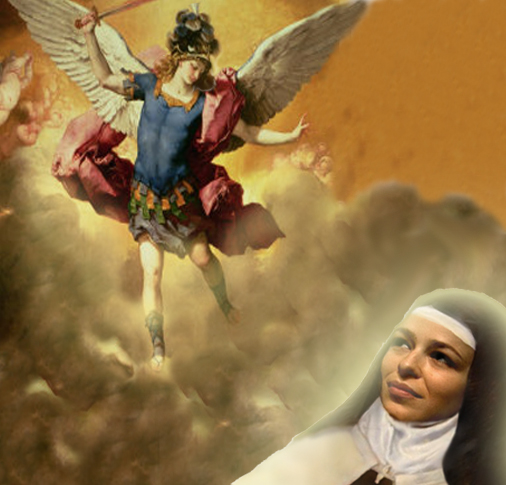
My sisters saw a blue angel in their room when they were ten and six. Members of my family who were sisters of Franciscan Order, also had visions. One of them founded Briarcliff College. Godeschalk Rosemondt was the Master of Leuven university.
Jon ‘The Nazarite’
In the 15th century the civil administration of the town of Leuven, with the support of John IV, Duke of Brabant,[12] a prince of the House of Valois, made a formal request to the Holy See for a university.[13]
Pope Martin V issued a papal bull dated 9 December 1425 founding the University in Leuven as a Studium Generale. This university was institutionally independent of the local ecclesiastical hierarchy.
https://en.wikipedia.org/wiki/Old_University_of_Leuven
“Before Mr. Armstrong came on the scene in the late 1920’s, Christ’s true WAY had been all but lost. The Sardis Church was holding on to only three fundamental truths of all the truth that the first century Church had. The Church was dying. It needed RESTORING.
Mr. Herbert W. Armstrong was used in the end time to fulfill many prophetic scriptures. How do we know this? We now can look back at the recent HISTORY of God’s Church and see that the PROOF is in the FRUITS! It’s all right there as documented history. And many or most of us have lived to witness these things. So there is irrefutable proof that Mr. Armstrong fulfilled the Elijah role, as well as several other offices or “types” as an end-time fulfillment.”
Article IV – Each year the knights of Saint-Georges will be
assembled in Besancon, the day indicated, in the room of the
Carmelite friars which was built for this purpose. Article V – As
MISTERS of the Magistrate of the town of Besancon have habit to send
two their aldermen wraps violet of it, with the secretary, to
compliment the assembly, one will send them to receive with the
first door of the cloister of the Carmelite friars, by two knights
who will introduce them into the room, where one will prepare to
them two armchairs with the left of the governor; and their finished
compliment, the same knights renew them to the place where they will
have received them; and the following day the governor will send two
knights to thank the magistrates. They will be received with the
entry of the town hall and will be renewed in the same way.
Carmelite tradition traces the origin of the order to a community of hermits on Mount Carmel,[4] that succeeded the schools of the prophets in ancient Israel although there are no certain records of hermits on this mountain before the 1190s. By this date a group of men had gathered at the well of Elijah on Mount Carmel. These men, who had gone to Palestine from Europe either as pilgrims or as crusaders, chose Mount Carmel in part because it was the traditional home of Elijah.[5] The foundation is believed to have been dedicated to the Blessed Virgin Mary. (The Carmelites were forced to leave the site, and the Holy Land, in 1291, and the original conventual buildings were destroyed several times, but they were able to return in the nineteenth century, when a monastery of Discalced Carmelite friars was built close to the original site under the auspices of Fr. Julius of the Saviour and consecrated on 12 June 1836.)
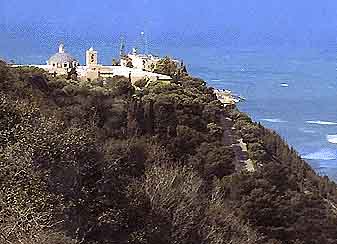
The Discalced Carmelite Order also built the priory of Elijah (1911) at the site of Elijah’s epic contest with the prophets of Ba’al (1 Kings 18:20-40). The monastery is situated about 25 kilometers south of Haifa on the eastern side of the Carmel, and stands on the foundations of a series of earlier monasteries. The site is held sacred by Christians, Jews and Muslims; the name of the area, is el-Muhraqa, an Arabic construction meaning “place of burning”, and is a direct reference to the biblical account.
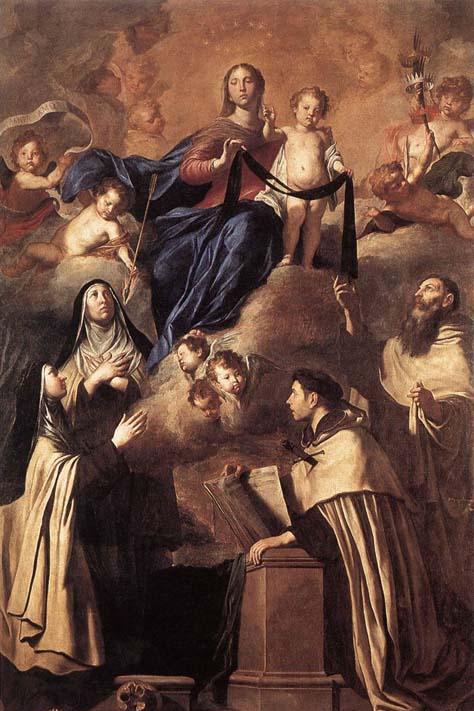
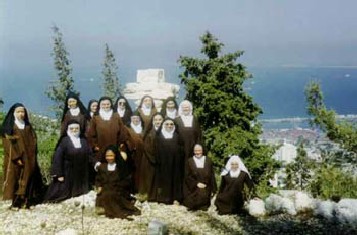
Among the various Catholic orders, Carmelite nuns have had a proportionally high ratio of visions of Jesus and Mary and have been responsible for key Catholic devotions.
From the time of her clothing in the Carmelite religious habit (1583) until her death (1607) the life of Saint Mary Magdalene de Pazzi is said to have had a series of raptures and ecstasies.
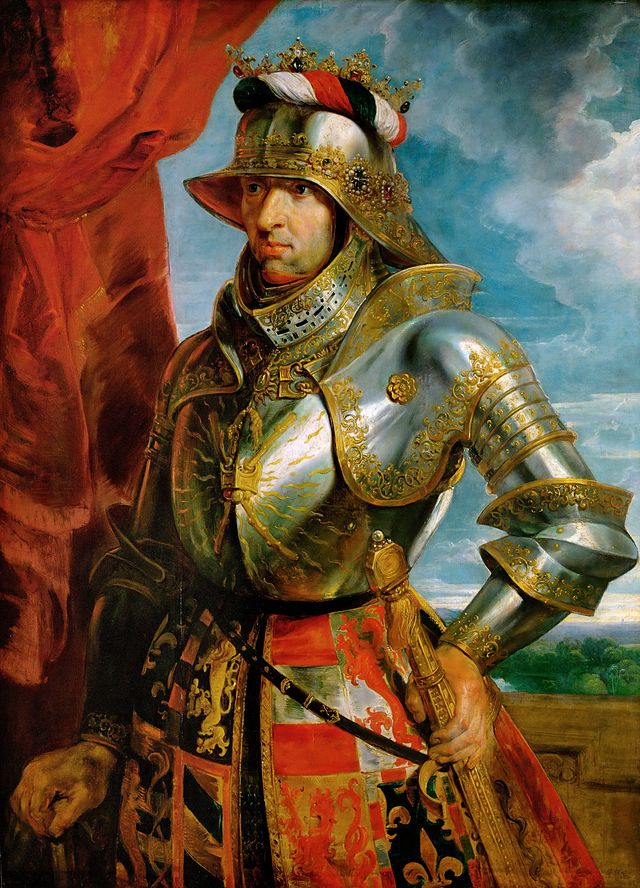
the first brotherhood of Saint-Georges, instituted by Guillaume of Vienna, that of Rougemont continued to remain with a new glare, by taking completely the
character, the statutes and the ceremonial of an order of knighthood, under the immediate protection of the Maximilien emperor and all the other sovereigns, under the domination desquelsla frank (comté was placed.
https://en.wikipedia.org/wiki/Maximilian_I,_Holy_Roman_Emperor

http://www.british-history.ac.uk/vch/london/vol1/pp507-510
https://rosamondpress.com/2012/11/30/the-buriel-place-of-the-lords-of-rougemont/
http://www.cgg.org/index.cfm/fuseaction/Library.sr/CT/PERSONAL/k/868/Elijah-John-Baptist.htm
http://asbereansdid.blogspot.com/2008/06/herbert-w-armstrong-end-time-elijah.html
http://www.rogerswebsite.com/articles/Elijah-and-the-Two-Witnesses.pdf
http://www.holdfast2allthings.org/id10.html
http://www.memodoc.com/articles-saint_georges.htm
http://www.euraldic.com/txt_saint-georges_s3.html
http://www.euraldic.com/txt_saint-georges.html
Order and noble brotherhood into Frank-comté. Philippe the Good,
duke of Burgundy, instituted, the year 1430, the order of Fleece-in
Or. But while limiting to twenty-four only the number of the
admitted knights, it gave birth to a sharp jealousy among all the
gentlemen from the two Burgundies, which, by their birth and their
row, had the right to aspire to the same honor. Guillaume of Vienna,
lord de Saint-Georges, one of the most famous lords of Burgundy,
which, the first, had received the order of Fleece-in Or of the
hands of this prince, wanting to provide a compensation to the
offended clean love of the nobility of the two Burgundies, proposed
with this one, of the approval of Philippe the Good, the institution
of a noble brotherhood, under the patronage of Saint-Georges, whose
decoration, representing the gold effigy of this saint, owner of the
knighthood, would be suspended with a ribbon similar to that of
Fleece-in Or, and of which the evidence of admission would be those
of a life of name and weapons, without known origin. The first
assembly or chapter of this brotherhood took place in the church of
Augustins de SaintGeorges, the year 1430. It elected there for chief
and governor Guillaume of Vienna, his founder. It held then its
chapters in Seurre. One year after the institution of this
brotherhood, Philibert de Molans, Burgundian gentleman, having
finished the construction of a vault close the parish church of
Rougemont, in the intention to lock up relics of Saint-Georges
there, that as of the year 1390 it had brought back theHoly one,
convened all the gentlemen, his/her parents, neighbors and friends,
to attend with the blessing of this vault, and the installation of
the mounting which contained these invaluable relics. Offices were
founded in the honor of Saint-Georges as of this first assembly,
which renouvele constantly since, with the birthday of this saint;
and a few years after, the wars which followed the death of Charles
the Bold one and the meeting of the fine duchy of Burgundy to the
crown of France having put to the first brotherhood of Saint-
Georges, instituted by Guillaume of Vienna, that of Rougemont
continued to remain with a new glare, by taking completely the
character, the statutes and the ceremonial of an order of
knighthood, under the immediate protection of the Maximilien emperor
and all the other sovereigns, under the domination desquelsla frank
(comté was placed. At the time of the conquest of this province,
Louis XIV maintained the order of Saint-Georges in his existence and
his honors, and even condescended to substitute the ribbon of his
kind of the Holy Spirit for that of Fleece-in Or. The evidence of
nobility for the admission in this brotherhood was of sixteen
districts, by going up the paternal side up to nine degrees. It was
also necessary, to be allowed, to have been born or have
possessionné into Frank-comté. The governor or chief was elected
with life by the general assembly of the knights. Since 1589, one
added to the old statutes the oath of living and dying in the
catholic religion, and fidelity with the legitimate sovereign. The
decoration of the order consists of Saint-Georges with horse, boring
its lance a dragon, the gold whole. It is attached to the buttonhole
by a celestial blue moirué ribbon.
de Vienne Henriette femme d’Humbert de Rougemont,
ensuite de Jean de Rye 1449
de Vienne Gérard seigneur de Ruffey
de Vienne Henriette femme d’Humbert de Rougemont,
ensuite de Jean de Rye 1449
de Vienne Gérard seigneur de Ruffey 1499
de Vienne Claude seigneur de Clervent 1525
de Vienne Guillaume baron de Chevreaux 1544
de Vienne Henri baron de Chevreaux
http://gilles.maillet.free.fr/histoire/famille_bourgogne/famille_rougemont_faucogney.htm
BROTHERHOOD OF SAINT-GEORGE . She was instituted in the county of
Burgundy, l’an 1390 by Philibert de Molan, lord partly of Rougemont.
He was the first head, under the title of barristers president; the
fellow-members take their row according to l’ordre of their
reception in THE BROTHERHOOD without regard to dignities of which
some d’entre them could be covered; they mutually make vSu s’aider
s’ils are made prisoners, and to take care of the interests of the
widows and the orphans, to which effect one names each year of the
police chiefs, during l’assemblée general.
In 1569, one added to the old statutes that the fellow-members would
make oath of living and dying in the catholic religion, and in
l’obéissance and tender due to their legitimate sovereign; and l’on
gave to the barristers president the title of governor.
This company had during a time the name of BROTHERHOOD of Rougemont,
because Philibert de Molan fixed it in this country, in 1431. Its
assemblies were held above in l’église Large Carmelite friars of
Besancon.
The members of this association must show sixteen districts of
nobility; their distinctive mark is SAINT-GEORGES with horse, boring
its lance a dragon , the whole d’or and attached to the buttonhole
of their dress by a moire celestial blue ribbon.
http://tinyurl.com/oqz3t
PRESENTATION of the NOBLE BROTHERHOOD of the knights of Saint-George
in the county of Burgundy
“the NOBLE BROTHERHOOD OF the KNIGHTS OF Saint-George” of Éric Thiou.
14 X 20 cm, 235 pages, 37 ?
The brotherhood of Saint-Georges was one of rare voluntary
associations gentlemen of a French province under Ancien Régime. The
study of this brotherhood is made in three times. First of all the
study criticizes testimonys on the brotherhood, then the study of
the political role of the brotherhood through a lawsuit with the
Parliament of Besancon, and the attitude of the knights of George
Saint at the time of the Revolution. Finally the statutes of the
brotherhood and the list of the knights are analyzed under all their
aspects. In conclusion, the instruction of the intendant, the
lawsuit and the analysis are compared to try to characterize the
dichotomy and the conflict between two types of nobility in Franche-
Comté and France at the XVIIIe century. The last part of this work
consists of a dictionary prosopographic of all the knights of Saint-
Georges who lived between 1679 and 1789.
With – Small history of the brotherhood
The noble association of the knights of Saint-Georges was founded in
Rougemont about the year 1300 by the sovereigns of the county of
Burgundy to gather Burgundian gentlemen of former knighthood. Their
badge at that time was a medal representing holy George with horse
embanking a dragon, suspended with a gold chain. This brotherhood
was destroyed at the end of XIVe century by the wars. She was
restored by Philibert of MOLLANS(3), knight comtois who would have
brought back Holy Land of the relics of Saint-Georges. He
consequently thought of offering them to the nobility of the county
of Burgundy. He thus joins together about 1435 or 1440, a certain
number of knights comtois to honour these relics in a vault which he
had with the castle of Rougemont. And it solved to celebrate each
year the festival of a saint, that the nobility regarded as its
owner, because it was knight and that one represented it with horse
armed with a lance. Philibert of MOLLANS was undoubtedly the first
governor of the order elected by the body of the knights.
Consequently, the largest lords of the country hastened to be made
receive in the brotherhood, and were assembled each year in the
vault of Rougemont on April 22, takes care of the George Saint.
Philippe the Good authorized the order to carry the suspended medal
to a red ribbon following the example that of the Golden Fleece. In
1648, the brotherhood settled in Besancon and not in Dole, then
capital county of Burgundy, indeed the brotherhood had already a
political role while being opposed to the Parliament of Pares. A
room in the tower of Montmartin was granted to him by a treaty with
the town of Besancon, as well as the exemption of the housing of
people of war for the knights residing in Besancon. The knights of
Saint-Georges were besides only noble city of Besancon has to profit
from this inappreciable privilege. However, it seems to have met
several times at Vesoul, city which has as Saint-Georges patron
saint. Then on April 25, 1661, the brotherhood is assembled in
Salins and decides that henceforth it will meet in Besancon, with
the convent of the Large Carmelite friars, rested by a fellow-
member: Jean of VIENNA. After the conquest, Louis XIV decided to
tolerate the brotherhood, in spite of his resistance to the invader.
He made it possible even to the knights to carry their medal of
Saint-Georges suspended to a blue moire ribbon like that of the
order of the Holy Spirit, this in order to adapt has lower cost part
of the nobility comtoise, which would provide him executives devoted
for its army. Besides Louis XV & Louis XVI, continued the policy of
the Sun king with regard to the brotherhood, they addressed to the
company portraits the them same ones, in foot, where one could
read: “Given by the king the knights of George Saint of his county
of Burgundy.”. These portraits like that of the prince of COP,
special guard of the brotherhood decorated the superb room with the
Large Carmelite friars of Besancon, unfortunately destroyed at the
time of the Revolution. The plank of the woodworks of the room was
decorated series of the blasonnés ecus of the alive knights, with
their confined inscriptions of their four districts, which one
descended at the time of their death to be carried in ceremony with
the church, then suspended with their row in the nave where one saw
a great number of it which had decorated a long time the vault with
Rougemont. The church which was papered blazons of the knights of
George Saint was also paved of their tombs, “as if they had wanted
to join together in this place emblèmes of human vanity to the
testimony of his nothing”. At the time of the general assembly of
April 25, 1768, new statutes were written, they will be studied here.
B – Organization of the brotherhood
The brotherhood was organized by statutes written at the general
assembly of April 25, 1768, you will find these statutes below.
1 – Statutes of reception
Article Ier – in the knighthood only gentlemen of name and weapons
will be allowed, which, after having shown their nobility, in the
form and manner prescribed hereafter, will lend the oath….,
between the hands of the governor of the province, in case that it
is present at the assembly, or between the hands of the governor of
the knighthood; they will oblige of more than non-seulement observe
these statutes, but still those which will be done in the future,
nevertheless these statutes and ordinances would have been
deliberated in their absence or against their opinion.
Article II – All the gentlemen applicants with being allowed with
the number of the knights, will be held to submit request to the
general assembly, to have police chiefs, and to join to their
request, the inventory of all their titles, with their family trees,
painted and blasonnées; so that the inventory having been read, and
the family tree examined by all the knights composing the assembly,
the governor takes the voices of each one to know in particular if
the titles carried in the inventory appear sufficient to prove
required, and to obtain police chiefs; in which case it will be
given by it two to the plurality of the voices.
Article III – The gentlemen applicants will give between the hands
of the police chiefs named their titles, inventory and family tree,
six weeks before the following assembly, where they will have to
submit a report of it, with less however that the sixteen districts
of the applicants were not already sworn in this knighthood; in
which case the police chiefs will be able to submit their
report/ratio of the day at the following day, in the same assembly.
Article IV – The applicants will justify their nobility of sixteen
districts, knowledge: four paternal great-great-grandfathers and
great-great-grandmothers, and four maternal great-great-grandfathers
and great-great-grandmothers, noble, not anoblis of their head, and
without it being derogated there by their descendants; going up
their nobility at a hundred and thirty years for the fifteen
districts of alliance; and as for the stem, or name of presented,
the proof will go until the tenth ascending one, presented not
included/understood; which proof will be done by production of
sufficient titles, and such as they are given in the following
article.
Article V – The titles which must be used for the aforementioned
proof just as with that of filiation, are the extracts baptistaires,
the wills, the divisions, the marriage contracts, the acts of
convocation to the banns and arriere-bans, the appearances at the
assemblies of noble, the acts of faith and homage, the old
inscriptions on public monuments, the epitaphs, employment, services
and qualifications of rider or knight, and all other acts approved
in sovereign justices.
Article VI – The drawn copies on the originals will not be taken
any, which they were not collated in the presence of the police
chiefs with the examination of the proof, or appointed somebody of
their share on this subject.
Article VII – The copies which will come from the foreign provinces,
though collated and legalized, will not make any faith, unless they
are not supported and are supported by certificates of the
sovereigns, republics, room of the nobility to the states, run of
Parliament, room of the accounts; all other certificates being
insufficient.
Article VIII – The districts of nobility which will not have been
sworn in this knighthood, will be it by four knights; and those
which will have been it, will be sworn by two knights only.
Article IX – All the evidence made in stem will not be started
again, but one will go up them only to the already proven common
stem.
Article X – No applicant will be received that it is not known for
catholic, subject of the king, born or domiciled in the province of
Franche-Comté, man of probity without reproach, pleasant with the
company, of the sixteen years age, that it does not lend the oath in
accordance with the present statutes, after which the governor of
the order will give him the accodance according to the chevaleresque
form, will give in hand the cross-belt and the decoration of the
knighthood of Saint-Georges, and will exhortera it to continue to
live as a gentleman and faithful vassal of its sovereign.
Article XI – The whole filiation of the received knights, and
Christian names of all ascending the and ascending ones to the great-
great-grandfathers and great-great-grandmothers inclusively, and the
tenth ascending one in stem, or name of presented, will be recorded
with each reception; and will be held the new receipt to leave with
the secretariat its family tree, and the inventory of its produced
titles, to rest with the files of the order, and y to have recourse
where necessary.
Article XII – the new receipt will pay 300 pounds with the treasurer
of the order, unless his/her father or some of his/her brothers were
not already received, in which case it will be exempted to pay them;
if not it will deliver them before lending the oath.
Article XIII – If a knight knew some defects in the evidence of the
gentleman claiming, which can prevent it from being allowed with the
number of the knights, it will be obliged in honor to deliver
opinion of them to the assembly, in time that the police chiefs will
submit their report/ratio; and the secrecy will inviolablement be
kept of all that will occur in the assemblies. Article XIV –
Statutes of this kind obliging the knights only with the service of
God and that of the sovereign, those which will have qualities
required there will be received, though covered with another that
and order of knighthood, relative with the former practices and
habits of the order. Article XV – One will admit in the
aforementioned knighthood two ecclesiastics, of each noble college
of the province, to represent there, where necessary, the interests
of their chapters, which always were supported and protected by the
knights from Saint-Georges; these ecclesiastics applicants with
being received in the order, will make the accustomed evidence
there, though they already inserted them in the chapters of which
they are members. 2 – Attributes and badges of the brotherhood a)
The large seal – the files of Doubs has a large round seal of 34
Misters Voici the description of this seal: In the field, asénestré
Saint-Georges, vêtu with the antique and horse, plant his sword in
the throat of a dragon that its horse presses with the feet. Around:
SIGIL. NOBIL. SEQUAN. D. GEORGIO. DICATAE. b) The badge – the
knights or fellow-members of Saint-Georges carried originally to the
collar, then with the buttonhole, fixed by means of a suspension
brace and of a ring at a cord or a blue moire ribbon like that of
the order of the Saint Spirit, of a quarter of ell of length, a
small equestrian figure of George saint, out of gold or money gilded
c) the armorial bearings – mouths with a George saint of gold. d)
The stick – Every year, the brotherhood named a kind of prosecutor
called barristers president who carried a richly engraved money
stick, surmounted by a statuette of George Saint to horse. 3 – The
oath – Here the oath that all the knights at the time of their
admission were to lend to the brotherhood, and this between the
hands of the governor of the county of Burgundy, or in the event of
absence of this one between those of the governor of the order:
ASK: Don’t you promise on the saints Gospels of God and your honor,
to profess in all and everywhere the catholic, apostolic and Roman
faith? ANSWER: Thus, I swear it and promise ASK: Don’t you as
promise to be faithful subject of the King, to seek on any occasion
its glory, to prevent as no wrong is made to him, from employing for
this purpose your life until the last moment, and to observe the
statutes of the order? ANSWER: Thus, I swear it and promise ASK:
Don’t you promise in accordance with the statutes about lending
support and help to your brothers in arms, and to comprise you in
all in the aforementioned order as valiant knight, honest and
valiant knight? ANSWER: Thus, I swear it and promise This oath
gathers in its centre all the values of the chivalrous ideal, the
defense of the catholic faith, fidelity towards the sovereign, his
service, the mutual mutual aid of the knights, and the assistance of
their widows and their orphans. This lent oath, the governor gave
the accodance to the new knight according to the chivalrous form
while giving to him in hand the cross-belt and the medal of the
knighthood of Saint George, it exhorted it with being a vassal
faithful gentleman of its sovereign. It is to be announced that the
new member was to pour a kind of contribution of 300 pounds to the
treasurer of the order, has less than his father or his/her brother
was not already received. 4 – Statutes of internal order Article I –
In all times the nobility assembled under the invocation of Saint-
Georges, will be chaired and controlled by one of its members,
elected official with the plurality of the voices, which will carry
the title of governor. This load will be with life Here the list of
the governor of about a 1678 to 1790: – Claude-Louis of FALLETANS –
1674-1700 – Charles-César, marquis of SAINT-MAURIS – 1701-1704 –
Frederic-Eléonore of POITIERS of RYE – 1705 – 1713 – Jean-Christian,
marquis of WATTEVILLE – 1714-1724 – Antide-Marie of PRA – 1725-1756 –
Pierre, marquis of GRAMMONT – 1757-1790
Article II – The death of the governor of the order has suddenly
arrived, the election of its successor will be done next general
assembly to the; and until the time of this election, the most
former knight of those which make the council, will make the
functions of governor. Article III – It will be held each year a
general assembly first Sunday after the festival of Saint-Georges,
unless, for essential reasons, this assembly is not delayed, which
will be determined by Messrs of the council; and the secretary, by a
circular letter, will inform MM the knights of the day of this
assembly, and will invite them to go there. Article IV – Those of
the knights who could not be at the general assembly, will be
obliged to excuse itself by a letter with the body, or addressed to
the one of the private individuals, who will propose with the
company the excuse of his fellow-member; the assembly will judge
validity or insufficiency of the reasons suggested; if they are not
found sufficient, one will write to the knight who would have
excused himself, to invite it to be more regularly at the
assemblies; and if, on light pretexts, it continued to go away some,
it would be striped number of the knights. Article V – It will be
named every year, by row of seniority, a knight with the title of
barristers president, under the authority of the governor; it will
be charged with all the expenses of the aforementioned assembly,
which were regulated and evaluated with five hundred books that it
will give to the treasurer of the order to be employed with the
aforesaid expenses. The secretary will have attention to inform in
time that of the knights which will have to succeed the barristers
president, at the nearest assembly. Article VI – The knights of
Saint-Georges being supposed being always the police chiefs of the
evidence of the various colleges of nobility and the noble chapters
of the province, the assembly will occupy themselves primarily of
all that can interest them, and will name, as a need would be, of
the police chiefs to take care of the maintenance of their rights
and prerogatives.
Article VII – If one of the knights were done prisoner, all the
others will be obliged to contribute of all their capacity to his
widening, provided however which it was not stopped for crime of
divine and human lese-majesty: they will prevent, as much as it will
be in them, that it is not made any wrong to the widows, children,
pupils or minors of the died knights, of which they will be held to
look after the interests like the their clean ones; and for this
purpose it will be named in the general assembly of each year, two
knights in each one of large the bailliages of the province, to take
care of it. Article VIII – With the death of a knight, each one,
after being informed of its death, will be held to make say three
masses for the safety of its heart. Article IX – The various
quarrels which could occur between the knights, on the rights, rows
and prerogatives concerning the order, will be decided by the
general assembly; or if the thing pressed, by the governor of the
knighthood, with his council, or by three knights of which the parts
would be appropriate; which judgements all the knights are obliged
to leave it, under penalty of to be striped number of the knights;
and to maintain a perfect union, all are invited, in case which it
occurs between them of the difficulties on the reason for the
interest, to refer itself some to the decision of three knights, the
choice of the parts, or named by the body, in case which the parts
cannot be appropriate this choice. Article X – If the difficulties
or quarrels were on point of honor, the first among the knights who
will be informed of it, will be held to make efforts to prevent the
ways in fact, and will inform the governor of the knighthood without
delay, so that this one delivers opinion of them to the governor or
ordering province, and that it can receive from them the orders
necessary. Article XI – So that the general assemblies are made with
the decency and the order necessary, if it happened that a knight,
in these assemblies, had some disagreement or quarrel with one of
its fellow-members, he was decided that those which would fall into
these lacks of consideration, would remain for always excluded from
the body. Article XII – If it could happen that a knight, by his bad
conduct, or actions which would wound the honor and probity, put
himself in the case of to make himself unworthy of the title of
knight (who supposes a control without reproach and a probity with
any test), he would be striped number of the knights, and forever
excluded from the body.
Article XIII – In all the important businesses of the order, after
they will have been discussed exactly, the knights will give their
vote by tickets which will be opened by one of the secretaries, in
the presence of two knights named by the assembly. Article XIV –
When it acts of the reception of an applicant, one will opinera
there by poll, and not aloud; with the reserve of the police chiefs
to the examination of the evidence, which will be obliged, after
their report/ratio, of saying their feeling aloud. Article XV – As
in the interval of a general assembly at the other, it can arrive
goods of the events which require decision or of the sudden
instructions, the general assembly will name a council to work with
the particular businesses during the course of the year: this
council, which will be composed knights designated by the body, will
be assembled in the governor of the knighthood if it is at the city,
or at oldest of the appointed police chiefs. Article XVI – Police
chiefs assembled then of convocation made by governor or old, will
be able to act in things which requires celerity, and will pay to
assembly general more next, all that will have been done in the
particular assemblies, of which it will be preserved notes by the
secretary, which will also preserve and bring back all the letters
which will have been written during the course of the year. Article
XVII – There will be two officers in the knighthood, which will be
elected in the general assembly with the plurality of the voices:
the first of these officers, that it will be appointed chancellor,
will have to be an ecclesiastic, who will make a speech in all the
general assemblies, where it will represent with all the knights the
obligations to which them birth and the oath which they lent engages
them; the second will be the treasurer. He will be also chosen, with
the plurality of the voices, two secretaries.
5 – Statutes of ceremonial Article I – All the times that the
general assembly will be held, the governor and the knights of Saint-
Georges will appoint four knights of their body to the governor or
ordering province, to invite it and request it to attend the
assembly, in order to be pilot there that one conforms to it in all
to the intentions and sights of the founders of the knighthood.
Article II – If the governor or ordering province wants to attend
these assemblies, the four appointed knights will accompany it
instead of the assembly, where it will take the row and the meeting
due to his load and the sovereign which it represents, which is the
chief of the knighthood. Article III – The archbishops and bishops,
knights of the order, will be drawn from their row of reception, in
consideration of their dignities joined together with that of
knight, and will immediately have meeting after the governor of the
order, in armchairs placed at its left and with the top of the
table, and the other knights will sit each one with their row of
reception. With the first vespers, it will be free audits
archbishops and bishops to be there, like with the processions, and
to the case that they met there, they will go to the left of the
governor, which will have to be covered, like in all the great
ceremonies, of the large coat of the order (which will have to be of
a fabric of gold mouchetée of black, with trailing tail), and with
the church they will have each one a similar armchair with his, and
the second places as in the room will occupy. The day of the
solemnity of the festival of Saint-Georges, the archbishops and
bishops will officiate pontificalement when they judge it by the
way; for the offerings the knights will go, with the foot of the
furnace bridge, kiss the relics between the hands of the archbishop
or bishop which will pontifiera, which will be able to have sat in
an armchair. With vespers, the knight who will have to succeed by
his row of seniority as barristers president to his predecessor,
will take again, at the same place, of the aforesaid archbishop or
bishop, the stick of the order. In the absence of the governor, his
armchair will remain vacant in its place, and the archbishop of
Besancon, if he is knight, will continue to occupy his, and will
chair it; in this case, will propose, collect the voices, will
opinera the last, and will receive the oaths, and this, in
consideration of its quality of archbishop diocesan joined together
with that of knight; hearing for that only the foreign archbishops
and bishops who could be allowed thereafter with the number of the
knights, can prevail itself of this payment, which is made only in
favour of the archbishop of Besancon, when it is number of the
knights.
The aforementioned archbishops and foreign bishops will be only
drawn from their rows, and will have their places after the
archbishop of Besancon; and in the event of absence of the governor
and the archbishop of the Besancon, oldest secular of the body will
chair, and the aforementioned archbishops and foreign bishops,
knights, will have their places between them, according to the row
of their dignities and reception, immediately after the president.
Article IV – Each year the knights of Saint-Georges will be
assembled in Besancon, the day indicated, in the room of the
Carmelite friars which was built for this purpose. Article V – As
MISTERS of the Magistrate of the town of Besancon have habit to send
two their aldermen wraps violet of it, with the secretary, to
compliment the assembly, one will send them to receive with the
first door of the cloister of the Carmelite friars, by two knights
who will introduce them into the room, where one will prepare to
them two armchairs with the left of the governor; and their finished
compliment, the same knights renew them to the place where they will
have received them; and the following day the governor will send two
knights to thank the magistrates. They will be received with the
entry of the town hall and will be renewed in the same way. Article
VI – At the time of the first day of the assembly, PP Carmes will
come in procession to the door from the room to lead the knights to
their church, where these monks will sing solemn vespers. Article
VII – The knights will follow two to two, and will be called aloud
by one their secretaries, by their names and nicknames, while
starting with the last of the list without their giving aucuns
titles, in order to keep between them the equality. Article VIII –
Vespers being finished, the monks, outgoing ch?ur of the
aforementioned church, will come in the same way in procession to
the place where the knights will be placed, and will bring back them
to the entry of their room, in the same order that it is known as
above.
Article VIII – Vespers being finished, the monks, outgoing ch?ur of
the aforementioned church, will come in the same way in procession
to the place where the knights will be placed, and will bring back
them to the entry of their room, in the same order that it is known
as above. Article IX – The following day all the knights will be
assembled in their room, at seven hours of the morning, there to
work with the businesses of the body, and to hear the report/ratio
of all that will have done during the course the year in their
council, either for their common interests, or for those of the
abbeys of nobility of the province, as well of men as girls. Article
X – After having worked up to ten hours, PP. Carmelite friars will
come in procession to lead the assembly to the large-mass; what will
be done with the same ceremonies, and in the order explained above.
Article XI – All the knights will go to the offertoire and will be
called as it is known as above, with the difference which one will
begin with the governor, the barristers president, and then the most
former knights; at the end of the mass, they will be renewed by the
monks to the door of their room, in the same order as the previous
day. ……………. Article XIV – Vespers being finished, the
aforementioned monks will sing the vigils of dead for the rest of
the hearts of the knights deceased; after which the knights will be
taken back in the same order and ceremony marked above. Article XV –
The next morning, all the knights will turn over to seven hours in
their room, where, after having completed the common businesses,
they will send four deputies to the governor or ordering province if
it is not present, for him to say that the company being about to
separate, they come to him to ask whether it does not have anything
to order for the service of the king. Article XVI – Each year one
will name eight knights who will form between them a council with
the governor, to work with the businesses which will be able to
arrive during the year; after which the monks will come in
procession to take the knights in their room, and will lead them, in
same order and ceremony that above, with the large-mass which must
celebrate for the knights deceased.
Article XVIII – The finished mass, the monks will make the same
prayers, ceremonies and encensements around the representation and
burning vault, that if the body of late were present; all the
knights will make him also the same honors; then they will be
renewed by the monks in their room like the previous days; and after
each knight will have signed the book of the deliberations which
will have been taken in the assemblies, they will separate. Article
XIX – And so that the gentlemen who compose the chapters of nobility
of the province, can surely address to the knights of Saint-Georges
interested in the conservation of these abbeys and other colleges of
nobility of the province, those which will form the council will be
assembled with the governor of the order in their room, every
following Sunday the festivals of saint Barthélemy, holy Martin and
purification of Our Injury, to deliberate there on the businesses
which will arise; and with the case which these festivals fall
Sunday, it will be Sunday that this council will be assembled. Will
be able nevertheless the governor, or the most former knight of the
council, to convene the assemblies of the aforesaid council all the
times that it it will believe necessary, and that the businesses
will require it.
http://www.memodoc.com/articles-saint_georges.htm
Before Mr. Armstrong came on the scene in the late 1920’s, Christ’s true WAY had been all but lost. The Sardis Church was holding on to only three fundamental truths of all the truth that the first century Church had. The Church was dying. It needed RESTORING.
Mr. Herbert W. Armstrong was used in the end time to fulfill many prophetic scriptures. How do we know this? We now can look back at the recent HISTORY of God’s Church and see that the PROOF is in the FRUITS! It’s all right there as documented history. And many or most of us have lived to witness these things. So there is irrefutable proof that Mr. Armstrong fulfilled the Elijah role, as well as several other offices or “types” as an end-time fulfillment.
However there are still some today that say that Mr. Armstrong couldn’t have fulfilled the role of the end-time Elijah because “too much time has passed” since his death. Some even say they are still waiting for Elijah to come. And some others have claimed to be the Elijah themselves recently during this Laodicean era. But as mentioned above referring to those two scriptures, when one meditates on what they really mean and WHO they refer to, it becomes clear that these two scriptures are very closely connected and intertwined, and they are speaking to us today!
So let’s briefly address the arguments in the above mentioned paragraph. First, has it really been “too much time” since Mr. Armstrong’s death, in order for him to have fulfilled the Elijah role? Well, it’s only been 20 years, going on 21 soon. How long is that to God? If we know the scriptures we should say, NOT LONG at all! It’s not even time enough to “blink” according to God who is not limited by time and who inhabits eternity! Now there are many scriptures that should come to mind about how long a “day” is to God, or how long “a thousand years” is. This should begin to show something about how God views time, and how it differs from the way we humans view it. See, time “runs out” on us, but it NEVER runs out on God.
Now we should also consider what the purpose of the Laodicean time period is and also the prophesied “great falling away” from the truth. The last command that Christ gives us during the Philadelphia era is to HOLD FAST TO WHAT YOU HAVE! To hold fast IMPLIES that it will be at least a struggle and that perhaps some “time” would be involved in this process of what we were to hold fast to.

 Rosamond Press
Leave a comment