
It looks like Chris’s illustrious family is involved in the controversy over the German Roots of the House of Windsor, and their association with the Nazis.
Prince Philipp’s ancestry is the direct result of King Christian 111 usurpation of the Catholic Church by the seven Protestant Bishops he anointed, one being Johan Wandel. Queen Elizabeth pays special attention to this Protestant Hegemony, it her duty that she fulfilled when she married Prince Philipp who descends from Danish Kings who once held the title ‘King of the Wends’. Johan was a Wend.
This lineage formed an alliance with the Republic of Texas that was colonized by a cousin of Queen Victoria. The Monroe Doctrine addressed this attempt to spread the Protestant German-Danish Dutch hegemony into the New World.
Jon Presco
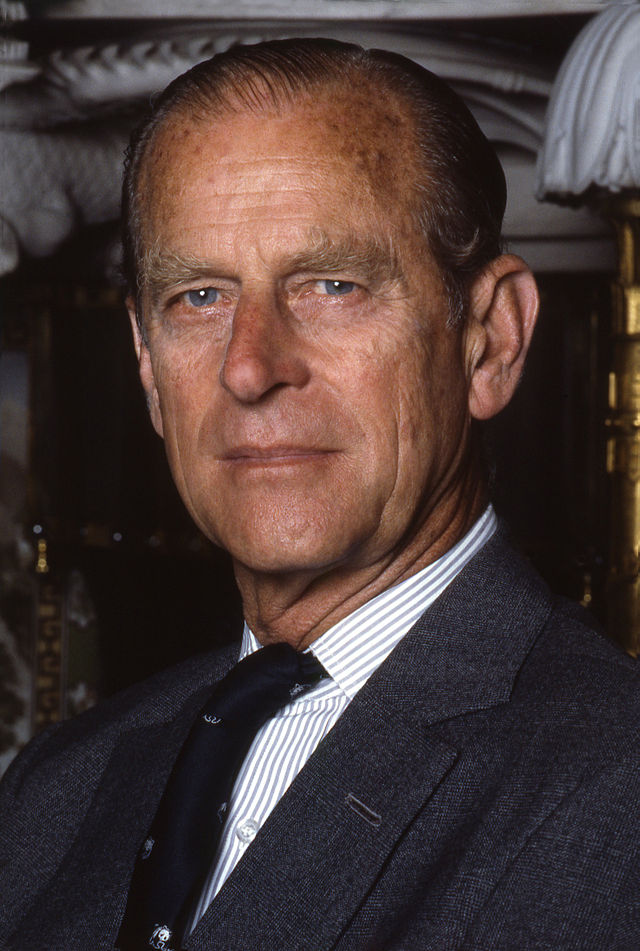
When Mohamed Al Fayed told the Diana inquest on Monday that Prince Philip was a Nazi whose family name was Frankenstein, or something like it, he was being – shall we say – a little unfair.
The Harrods owner claims the 86-year-old Duke of Edinburgh was the mastermind behind the international conspiracy to murder Diana by setting a French MI6 agent, armed with a dog and a battered Fiat Uno, on a collision course with her Mercedes in Paris on August 31 1997. “It’s time to send him back to Germany,” he said.
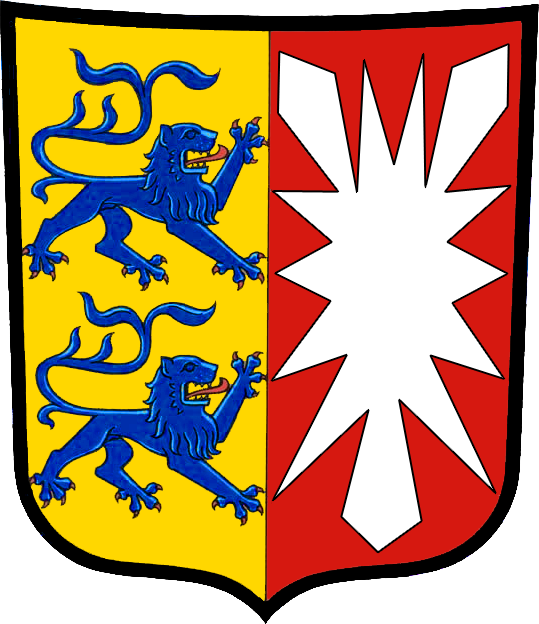
The duke isn’t actually named after a character in Mary Shelley’s 19th-century novel, though he is part of a family whose royal roots spread right across Europe. He is a descendant of the Danish-German house of Schleswig-Holstein-Sonderburg-Glucksburg, whose members have provided bespoke royalty to Denmark, Norway and Greece. Philip was himself born Prince Philippos of Greece and Denmark on June 10 1921 on Corfu. He certainly has a lot more German than Greek blood and does speak German.
While it is true that all four of his older sisters married German aristocrats – and were thereby barred from attending his marriage to Princess Elizabeth in 1947 – it is not true that he was brought up by Nazis, during his peripatetic and genuinely impoverished childhood. His mother, who became a Greek Orthodox nun, sheltered a Jewish family in occupied Athens.
Philip served throughout the war in the Royal Navy, taking part in the battle of Crete and the Allied invasion of Sicily. He became a naturalised British subject in 1947 and took the name Mountbatten, an Anglicised version of his mother’s family name of Battenberg.
In the light of Fayed’s allegations, Ian Burnett QC, counsel for the coroner, told the inquest it would have been “rather surprising” if Harrods had kept its royal warrant. “I don’t care,” said Fayed.
· This article was amended on Monday February 25 2008. The name Mountbatten, which Prince Philip adopted when he became a naturalised British subject, is an Anglicised version of his mother’s family name of Battenberg, not Battenburg as we had it in the article above. This has been corrected.
http://www.britannia.com/history/biographies/philip.html
In 1836, the United States government objected to Britain’s alliance with the newly created Republic of Texas on the principle of the Monroe Doctrine. On December 2, 1845, U.S. President James Polk announced to Congress that the principle of the Monroe Doctrine should be strictly enforced and that the United States should aggressively expand into the West, often termed as Manifest Destiny.
http://www.cnn.com/2013/06/14/world/europe/britain-prince-william-india/
Queen Elizabeth II is the male-line great-granddaughter of Edward VII, who inherited the crown from his mother, Queen Victoria. His father, Victoria’s consort, was Albert of Saxe-Coburg and Gotha; hence Queen Elizabeth is a patrilineal descendant of Albert’s family, the German princely House of Wettin. (Other notable members of this house are King Albert II of Belgium and former King Simeon II of Bulgaria.) Traced as far as possible, Elizabeth’s male-line ancestry stretches back to Theodoric I, Count of Wettin; see Patrilineal descent of Elizabeth II.
Elizabeth is directly descended from many British royals: from the House of Stuart, from Mary, Queen of Scots; Robert the Bruce, and earlier Scottish royal houses; from the House of Tudor, and earlier Irish and English royal houses stretching back as far as the 7th century House of Wessex: one member of Wessex being Aethelflaed of Wessex’s younger sister, Elfthryth.
As a great-great-granddaughter of Queen Victoria, she is related to the heads of most other reigning and non-reigning European royal houses. Through her great-grandmother Queen Alexandra, she is descended from the Danish royal House of Schleswig-Holstein-Sonderburg-Glücksburg, a line of the North German house of Oldenburg, one of the oldest in Europe. (Other members of the House of Glücksburg include Elizabeth’s husband, Prince Philip, Duke of Edinburgh, as well as Queen Margrethe II of Denmark, King Harald V of Norway, Queen Sofía of Spain and former King Constantine II of Greece—each of whom is also descended from Queen Victoria; one of her many cousins is King Juan Carlos I of Spain, also a great-great-grandson of Victoria.) Likewise, Elizabeth is descended from John William Friso, Prince of Orange, and his wife, Princess Marie Louise of Hesse-Kassel, who are the most recent common ancestors to all reigning European monarchs.[1]
History of Schleswig-Holstein
The term “Holstein” derives from Old Saxon, Holseta Land, (Holz and Holt mean wood in modern Standardised German and in literary English respectively). Originally, it referred to the central of the three Saxon tribes north of the Elbe river, Tedmarsgoi, Holstein, and Sturmarii. The area of the Holstein was between the Stör river and Hamburg, and after Christianization their main church was in Schenefeld. Saxon Holstein became a part of the Holy Roman Empire after Charlemagne’s Saxon campaigns in the late eighth century. Since 811 the northern frontier of Holstein (and thus the Empire) was marked by the river Eider.
The term Schleswig takes its name from the city of Schleswig. The name derives from the Schlei inlet in the east and vik meaning inlet or settlement in Old Saxon and Old Norse. The name is similar to the place-names ending in the “-wick” or “-wich” element along the coast in the United Kingdom.
The Duchy of Schleswig or Southern Jutland was originally an integral part of Denmark, but was in medieval times established as a fief under the Kingdom of Denmark, with the same relation to the Danish Crown as for example Brandenburg or Bavaria vis-à-vis the Holy Roman Emperor. Around 1100, the Duke of Saxony gave Holstein, as it was his own country, to Count Adolf I of Schauenburg.
Schleswig and Holstein have at different times belonged in part or completely to either Denmark or Germany, or have been virtually independent of both nations. The exception is that Schleswig had never been part of Germany until the Second Schleswig War in 1864. For many centuries, the King of Denmark was both a Danish Duke of Schleswig and a German Duke of Holstein. Essentially, Schleswig was either integrated into Denmark or was a Danish fief, and Holstein was a German fief and once a sovereign state long ago. Both were for several centuries ruled by the kings of Denmark. In 1721 all of Schleswig was united as a single duchy under the king of Denmark, and the great powers of Europe confirmed in an international treaty that all future kings of Denmark should automatically become dukes of Schleswig, and consequently Schleswig would always follow the same order of succession as the one chosen in the Kingdom of Denmark.
http://en.wikipedia.org/wiki/Schleswig-Holstein
http://www.bibliotecapleyades.net/sociopolitica/esp_sociopol_blacknobil09.htm
 Rosamond Press
Leave a comment