
 Two weeks before Thanksgiving, I tried to engage a female friend in some role playing. I suggested she be a woman Magi. She felt that she may be embarrassed in front of our royal friends. The comet Ison was supposed to appear on this feast day.
I then began to have an exchange with my friend, Amy, an artist who proved to be too wild.
When I went to my mailbox on January 9th. I got my magical letter from Rena. She also sent me a Christmas card depicting the three Magi and a bright star. This letter might have been in my box on the 6th. – Epiphany Day – that I celebrated by myself. On Christmas I had been very depressed because I did not hear from my grandson. Coming from an extremely abusive family, I learned how to make magic, and not woe. This is how I survived, and survive, the ongoing abuse and abandonment by my family, who are not magical, and take out their abandonment on me, the Family Scapegoat. My grandson deserves to know his magical grandfather.
Here is the beginning of my letter to Rena where I discuss a tiny speck of glitter I found on the first page. It had come from the card she sent, but, I didn’t know it then. It tripped me out. When I sent my letter, I scraped off some glitter on to page one, so that when Rena reads about the tiny little star I saw, she will behold, one, two, then – many little stars! I wanted to trip-out my dear Muse, who was lost in orbit for forty-four years, but has come around again.
The comet Ison burned up in the sun, but, a tiny speck of it made it to earth.
MESSAGE RECIEVED!
Where are you this moment? Is there a road, a sign, I must follow?
“Here I am!”
Jon Presco
http://en.wikipedia.org/wiki/Epiphany_(holiday)
Dear Rena
About ten this evening I put on my slippers and went to get my mail. I pulled a bundle out and noticed your letter nestled in a packet. On the walk back to my apartment I took a peek and noticed the beautiful handwriting, and the name “Rosemond”. There was this energy pouring from the envelope and flowing up my arm. When I opened it and saw the name “Bozeman” I began to cry. For several minutes I sobbed, let go tears of great relief as if you were my child who had been kidnapped, or lost, for all these years. And, now…..you are found.
In the history of letter writing, and receiving, I don’t think anyone was ever so moved. Then, I opened the envelope and read; “Here I am”.
If these were the only words this letter contained, then I had way more then enough to read for the rest of my days. My cup runneth over.
Before I discuss the content, I found something when I read your letter the second time. In the white-out on page one there was the faintest speck of green glitter. It sparkled at me like a distant star. It was the essence of you to go with “Here I am!” It went with the date the letter was written – Christmas Eve. I saw the star making its way from your tree, to the snow in your poem, and then to me. It was so full of life. It was the promise of a completely happy life that has eluded you and I since we can remember.
Epiphany (feeling)
From Wikipedia, the free encyclopedia
Jump to: navigation, search
This article is about the feeling. For the feast day, see Epiphany (holiday).
An epiphany (from the ancient Greek ἐπιφάνεια, epiphaneia, “manifestation, striking appearance”) is an experience of sudden and striking realization. Generally the term is used to describe scientific breakthrough, religious or philosophical discoveries, but it can apply in any situation in which an enlightening realization allows a problem or situation to be understood from a new and deeper perspective. Epiphanies are studied by psychologists[1][2] and other scholars, particularly those attempting to study the process of innovation.[3][4][5]
Epiphanies are relatively rare occurrences and generally follow a process of significant thought about a problem. Often they are triggered by a new and key piece of information, but importantly, a depth of prior knowledge is required to allow the leap of understanding.[3][4][6][7] Famous epiphanies include Archimedes’s discovery of a method to determine the density of an object (“Eureka!”) and Isaac Newton’s realization that a falling apple and the orbiting moon are both pulled by the same force.[8][6][7]
The word epiphany originally referred to insight through the divine.[9][10] Today, this concept is used much more often and without such connotations, but a popular implication remains that the epiphany is supernatural, as the discovery seems to come suddenly from the outside.[9]
The word’s secular usage may owe some of its popularity to James Joyce, who expounded on its meaning in the fragment Stephen Hero and the novel A Portrait of the Artist as a Young Man. Referring to those times in his life when something became manifest, a deep realization, he would then attempt to write this epiphanic realization in a fragment. Joyce also used epiphany as a literary device within each short story of his collection Dubliners as his protagonists came to sudden recognitions that changed their view of themselves or their social condition and often sparking a reversal or change of heart. For the philosopher Emmanuel Lévinas, epiphany or a manifestation of the divine is seen in another’s face (see face-to-face).
From “L’atmosphere” book of 1888
In traditional and pre-modern cultures, initiation rites and mystery religions have served as vehicles of epiphany, as well as the arts. The Greek dramatists and poets would, in the ideal, induct the audience into states of catharsis or kenosis, respectively. In modern times an epiphany lies behind the title of William Burroughs’ Naked Lunch, a drug-influenced state, as Burroughs explained, “a frozen moment when everyone sees what is at the end of the fork.” Both the Dadaist Marcel Duchamp and the Pop Artist Andy Warhol would invert expectations by presenting commonplace objects or graphics as works of fine art (for example a urinal as a fountain), simply by presenting them in a way no one had thought to do before; the result was intended to induce an epiphany of “what art is” or is not.
Process[edit]
Despite its popular image, epiphany is the result of significant work on the part of the discoverer, and is only the satisfying result of a long process.[11] The surprising and fulfilling feeling of epiphany is so surprising because one cannot predict when one’s labor will bear fruit, and our subconscious can play a significant part in delivering the solution; and is fulfilling because it is a reward for a long period of effort.[4][11]
Myth[edit]
A common myth predicts that most if not all innovation occur through epiphanies.[6] Not all innovations occur through epiphanies; Scott Berkun notes that “the most useful way to think of an epiphany is as an occasional bonus of working on tough problems”.[7] Most innovations occur without epiphany, and epiphanies often contribute little towards finding the next one.[7] Crucially, epiphany cannot be predicted, or controlled.[7]
Although epiphanies are only a rare occurrence, crowning a process of significant labor, there is a common myth that epiphanies of sudden comprehension are commonly responsible for leaps in technology and the sciences.[6][7] Famous epiphanies include Archimedes’ realization of how to estimate the volume of a given mass, which inspired him to shout “Eureka!” (“I have found it!”).[3] The biographies of many mathematicians and scientists include an epiphanic episode early in the career, the ramifications of which were worked out in detail over the following years. For example, allegedly Albert Einstein was struck as a young child by being given a compass, and realizing that some unseen force in space was making it move. A similar flash of holistic understanding in a prepared mind was said to give Charles Darwin his “hunch” (about natural selection) during The Voyage of the Beagle. Another famous epiphany myth is associated with Isaac Newton’s apple story.[4] Though such epiphanies might have occurred, they were almost certainly the result of long and intensive periods of study those individuals have undertaken, not a sudden, out-of-the-blue, flash of inspiration on an issue they have not thought about previously.[6][7]
Epiphanies can be distinguished by a (usually spiritual) vision, as epiphanies are often triggered by irrelevant incidents or objects.[8][12]
In religion[edit]
Further information: Epiphany (holiday), theophany, and hierophany
In Christianity, the Epiphany refers to a realization that Christ is the son of God. Western churches generally celebrate the Visit of the Magi as the revelation of the Incarnation of the infant Christ, and commemorate the Feast of the Epiphany on January 6. Traditionally, Eastern churches celebrated Epiphany (or Theophany) in conjunction with Christ’s baptism by John the Baptist and celebrated it on January 19; however, many have begun to adopt the Western custom of celebrating it on January 6, the twelfth day of Christmas.[13] Protestant churches often celebrate Epiphany as a season, extending from the last day of Christmas until Ash Wednesday.
In more general terms, the phrase “religious epiphany” is used when a person realizes his faith, or when he is convinced that an event or happening was really caused by a deity or being of his faith. In Hinduism, for example, epiphany might refer to Arjuna’s realization that Krishna (incarnation of God serving as his charioteer in the “Bhagavad Gita”) is indeed representing the Universe. The Hindu term for epiphany would be bodhodaya, from Sanskrit bodha ‘wisdom’ and udaya ‘rising’. Or in Buddhism, the term might refer to the Buddha finally realizing the nature of the universe, and thus attaining Nirvana. The Zen term kensho also describes this moment, referring to the feeling attendant on realizing the answer to a koan.
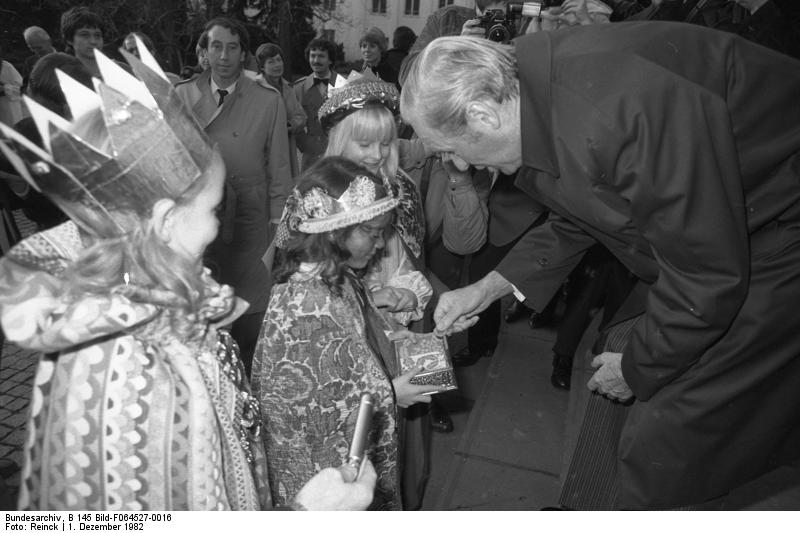
Epiphany, commonly known as Three Kings’ Day in the United States, is on January 6. It celebrates the three wise men’s visit to baby Jesus and also remembers his baptism, according to the Christian Bible’s events. The United States (US) Virgin Islands observe the day as a public holiday.
What do people do?
People from the US Virgin Islands celebrate Three Kings’ Day to emphasize and maintain their heritage and culture, especially on the island of St Croix where the day features parades, bands, food, music, and other types of entertainment. Although it is not a public holiday in other parts of the United States, many Christians take part in Epiphany activities such as:
Star processionals on the Sunday closest to January 6 for church services
Parties or get-togethers to clean up homes after the festive season and put away Christmas decorations.
Treasure hunts to find a figure of the Christ child.
Epiphany luncheons, parties and celebrations among churchgoers.
And Sunday school activities for children that focus on Epiphany, such as creating the star that led the wise men to Bethlehem.
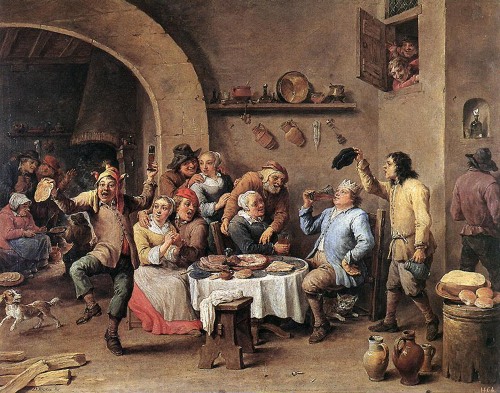
Epiphany marks the beginning of the Mardi Gras season in Louisiana. It is customary to bake king cakes during this time of the year. These cakes may include a small trinket (such as a baby doll) inside. The person who gets the piece of cake with the trinket receives various privileges or obligations. For example, they may be requested to provide the next king cake. The interval between Epiphany and Mardi Gras is sometimes known as “king cake season”.

 Rosamond Press
Leave a comment