 “If all of this is true, was Glastonbury The First Christian Church thanks to Phoenician Christians?”
Is Arimathea – Aramea?
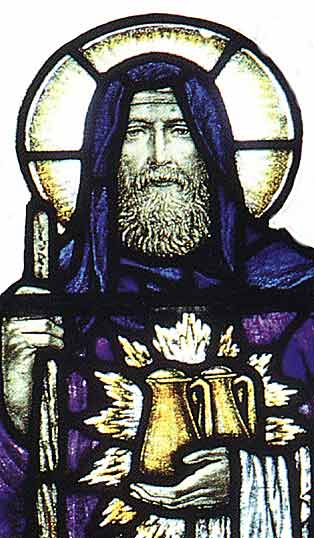
Joseph of Arimathea is said to have been involved in the tin mines of Cornwall with the Phoenicians. Did he worship Baal before he was converted? Did he want Jesus’ body so he could conduct a Baptism of the dead?
Joseph is shut up in a sealed tomb and is freed by Jesus and taken to his home. He goes to France with Lazarus and Mary Magdalene, and, owns the Holy Grail. Good riddance to these perplexing folks. Let the French have them – then the Brits get a turn!
Jon Presco
The strong tradition tying Joseph of Arimathea with Glastonbury and the Phoenician tin trade with Cornwall may have strong thread of truth that ties them together. The only known sailors who came from the Eastern Mediterranean to Britain were Phoenician. Hence, the elementary conclusion is that Joseph of Arimathea, if he really made the trip(s), must have done it on Phoenician ships.
If this hypothesis is accepted, further reading on the subject could be accommodated. However, some claims and details seem far fetched but are presented herewith for your consideration despite their implausibility.
Below, the account is presented as is even though the author does not necessarily agree with this presentation in its totality.
However, for historical reference presents this some what irrefutable point of evidence:
Historians William of Malmesbury, Maelgwyn of Llandaff and Polydore Vergil all place Joseph of Arimathea at Glastonbury. Even the four Church councils of Pisa 1409, Constance 1417, Sienna 1424 and Basle 1434, mention that “the Churches of France and Spain must yield in points of antiquity and precedence to that of Britain as the latter Church was founded by Joseph of Arimathea immediately after the passion of Christ.”
Joseph of Arimathea, Tin Merchant
According to the Talmud, Joseph of Arimathea was said to have been an uncle of the Virgin Mary, being a younger brother of her father. He gained his wealth as an importer in the tin trade, which existed between Cornwall and Phoenicia.
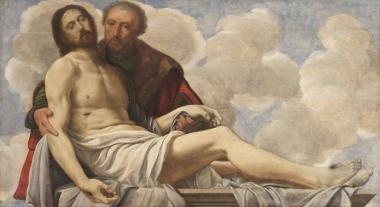
Joseph along with St. John buried Jesus after the crucifixion. Joseph, in the tin trade, made a lot of trips to Britain, where being a rich merchant made close contact with royalty; namely Kings Beli, Lud, Llyr and Arviragus, who gave Joseph and his companions some 2000 acres of land, tax free. Arviragus would become God’s “Protectorate” for the Cradle of Christianity, Glastonbury. Caradoc, Pendragon of England, would become God’s “Protectorate” of the fledgling English Church.
Joseph of Arimathea was a man of refinement, well educated, and one who possessed many talents, had extraordinary political and business ability. He has been called one of the richest men in the world. He learned about that tin trade from the Phoenicians, which then was akin in importance to that of steel today. They had been bringing ore from England for centuries. Joseph was well educated, a member of the ruling political body of the whole country. In St. Jerome’s translation, Joseph’s official title is given as ‘Nobilis Decurio’, a minister of mines for the Roman empire, with direct access to Pilate himself. He was no slouch. How better to protect Jesus, after Joseph the carpenter died, and insure the seeding and growth of the Gospel in England.
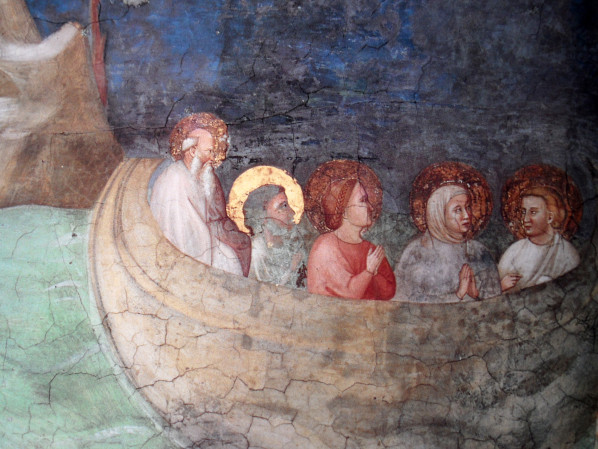
The basic story of Joseph’s trip to England varies in some details from account to account. But the bare facts are that Joseph, with many disciples traveled from the holy land by Phoenician boat and landed at Marseilles (a Phoenician trading post), in the Vienoise province of the Gauls (France). From there he went on to England established seminaries and sent out missionaries. In his “Ecclesiastical Annals”, Cardinal Baronius, Curator of the Vatican library, gives this account. “In that year the party mentioned was exposed to the sea in a vessel without sails or oars. The vessel drifted finally to Marseilles and they were saved. From Marseilles Joseph and his company passed into Britain and after preaching the Gospel there…”
How many of the disciples were with Joseph of Arimathea during his short stay in Gaul, before going on to England, is hard to say. Various existing records agree in part with the Cardinal Baronius record, naming among the occupants of the castaway boat Mary Magdalene, Martha, the hand-maiden Marcella, Lazarus whom Jesus raised from the dead, and Maximin the man whose sight Jesus restored. Other records state that Philip and James accompanied Joseph. Others report that Mary, the wife of Cleopas, and Mary, the mother of Jesus, were also in the boat. Here’s Cardinal Baronius’ complete list of passengers:
•St. Mary, wife of Cleopas
•St. Martha
•St. Lazarus
•St. Eutropius
•St. Salome
•St. Cleon
•St. Saturninus
•St. Mary Magdalene
•Marcella, the Bethany sisters’ maid
•St. Maximin
•St. Martial
•St. Trophimus
•St. Sidonius (Restitutus)
•St. Joseph of Arimathea
Philip was waiting for the travelers in France. There is testimony asserting his commission in Gaul, all of which alike state that he received and consecrated Joseph, preparatory to his embarkation and appointment as the Apostle to Britain.
Although there are some who would argue for France being first, most records agree that Britain, at Glastonbury was the Root of the Christian movement. One would expect that history would show that the missionary activities would flow out of the well-spring of Christianity. And well does history record this. The Gaulic records state that for centuries the Archbishops of Treves and Rheims were all Britons supplied by the mother church at Glastonbury-Avalon. St. Cadval, a famed British missionary, going out from Glastonbury, founded the church of Tarentum, Italy, A.D. 170 four hundred years before the time of St. Augustine and at least fourteen years after King Lucius Christianized all of Britain in A.D. 156!
Converts literally flooded into Glastonbury for conversion, baptism, instruction and missionary assignment. Philip sent, from Gaul alone, one hundred sixty disciples to assist Joseph and his team with the crowds. And it is surely known that helpers were sent from other places beside France.
One of the first to go out from Glastonbury was Mary and Martha’s brother Lazarus. He headed straight back to Marseilles where he held the Bishopric for seven years. But that was only natural. France was a Family Thing for the Bethany household. Mary and Martha both lived out their lives, preaching and teaching in the south of France. “The Coming of The Saints,” by Taylor is a good book on the subject.
Many famous names are recorded as having been associated with Glastonbury-Avalon:
•Sidonis, Saturninus, and Cleon taught and supported other missionaries in Gaul, then returned to Britain.
•Martial’s parents, Marcellus and Elizabeth were there along with St Zacchaeus.
•Parmena, disciple of Joseph, was appointed the first Bishop of Avignon.
•Drennalus, helped Joseph found the church at Morlaix. He was then appointed to Treguier as it’s first Bishop.
•Beatus founded the church in Helvetia, after receiving his baptism and education at Avalon.
•Beatus was baptised by St. Barnabas, the brother of Aristobulus, sent in advance by St. Paul to Britain. He is referred to in scripture as Joses, the Levite.
•Mansuetus was consecrated the first Bishop of the Lotharingians A.D. 49, with his See at Toul. He also founded the church at Lorraine.
Historical note:
Mansuetus was a constant visitor to Rome after Claudia had married Pudens. He was a friend of Linus, the Bishop of Rome, and brother of Claudia. After the death of St. Clement, Mansuetus became the third official Bishop of the British Church at Rome. Thus we have three disciples of Avalon, instructed by St. Joseph, to become, in succession, Bishops of Rome.
Iltigius, in “De Patribus Apostolicis”, quotes St. Peter as saying; “Concerning the Bishops who have been ordained in our lifetime, we make known to you that they are these. Of Antioch, Eudoius, ordained by me, Peter. Of the Church of Rome, Linus, son of Claudia, was first ordained by Paul, and after Linus’s death, Clemens the second, ordained by me, Peter.”
If all of this is true, was Glastonbury The First Christian Church
Thanks to Phoenician Christians (more history on Joseph)
In Lionel Smithett Lewis’ St. Joseph of Arimathea at Glastonbury indicates “It is certain that Britain received the Faith in the first age from the first sowers of the Word. Of all the churches whose origin I have investigated in Britain, the church of Glastonbury is the most ancient.”: wrote sir Henry Spelman in his Concilia, and again he wrote in the same work: “We have abundant evidence that this Britain of ours received the Faith, and that from the disciple of Christ Himself, soon after the Crucifixion of Christ.”
Robert Parsons, the Jesuit, in his Three Conversions of England, admits that : “The Christian religion began in Britain within fifty years of Christ’s ascension.” His co-religionist, the very learned Alford, in his Regia Fides says: “It is perfectly certain that, before St. Paul had come to Rome, Aristobulus was absent in Britain.” The discreet Fuller goes so far as to say: “If credit be given to these ancient authors, this Church without competition was senior to all Christian churches in the world.” “Britain,” wrote the erudite Polydore Vergil, “partly through Joseph of Arimathea, partly through Fugatus and Damianus, was of all kingdoms the first that received the Gospel.” It is a matter of distinct interest that Cardinal Pole, twice over, when solemnly reconciling England to the Pope and the Church of Rome, at the beginning of Queen Mary’s reign, claimed that Britain was the first country to be converted to Christianity.
The Venerable Bede, writing about AD 740, says: “The Britons preserved the Faith which they had received under King Lucius uncorrupted, and continued in peace and tranquility until the time of the Emperor Diocletian.”
It will be noticed that two distinct events are spoken of above: (1) The foundation of the Church in England by the Disciples of Christ. (2) The acceptance of Christianity by the British Nation under Good King Lucius about AD 170. Britain was the first of all nations to accept Christianity as its national religion. Few people realize that this is why the British King is called “our Most Religious King”. Not many realize that the superior dignity and antiquity of our national Church has been decided by Church Councils. The Councils of Pisa in 1409, Constance in 1417, Sienna in 1424, and Basle in 1434. It was there contended that the Churches of France and Spain must yield in points of antiquity and precedence to that of Britain, as the latter Church was founded by Joseph of Arimathea immediately after the Passion of Christ.
Gildas the Wise, the earliest Christian historian (AD 425-512) distinctly says that the Light of Christ shone here in the last year of the reign of Tiberius Caesar, that is AD 37. This falls in with the claim recorded above, which gave precedence to British Bishops at the Church Councils on the ground that Britain was converted “immediately after the Passion of Jesus Christ”. It fits in also with the statements of Fuller and Polydore Virgil already recorded that the Church of Glastonbury was the Senior Church of the world; with Sir Henry Spelman’s words that Britain received the Faith soon after the Crucifixion; with Alford’s statement that Aristobulus was in Britain before St. Paul went to Rome; with the observance by the Greek Church of the martyrdom in Britain of Our Lord’s disciple, St. Simon Zelotes, on May 10, AD 44 (a date supported by Cardinal Baronius; and with Hippolytus’ (born about AD 160) inclusion of that Apostle in his lists as “Bishop of the Britons”. All these are testimony to the year AD 37 as marking the coming of the first Mission.
Joseph of Arimathea was the protector of that valorous little band of disciples during the perilous years following the crucifixion, the indefatigable head of the Christian underground in Judea, and the guardian of Christ’s only earthly treasure, – His mother.
The Jewish elders then captured Joseph, and imprisoned him, and placed a seal on the door to his cell after first posting a guard. Joseph warned the elders:
The Son of God whom you hanged upon the cross, is able to deliver me out of your hands. All your wickedness will return upon you.
Once the elders returned to the cell, the seal was still in place, but Joseph was gone. The elders later discover that Joseph had returned to Arimathea. Having a change in heart, the elders desired to have a more civil conversation with Joseph about his actions and sent a letter of apology to him by means of seven of his friends. Joseph travelled back from Arimathea to Jerusalem to meet with the elders, where they questioned him about his escape. He told them this story;
On the day of the Preparation, about the tenth hour, you shut me in, and I remained there the whole Sabbath in full. And when midnight came, as I was standing and praying, the house where you shut me in was hung up by the four corners, and there was a flashing of light in mine eyes. And I fell to the ground trembling. Then some one lifted me up from the place where I had fallen, and poured over me an abundance of water from the head even to the feet, and put round my nostrils the odour of a wonderful ointment, and rubbed my face with the water itself, as if washing me, and kissed me, and said to me, Joseph, fear not; but open thine eyes, and see who it is that speaks to thee. And looking, I saw Jesus; and being terrified, I thought it was a phantom. And with prayer and the commandments I spoke to him, and he spoke with me. And I said to him: Art thou Rabbi Elias? And he said to me: I am not Elias. And I said: Who art thou, my Lord? And he said to me: I am Jesus, whose body thou didst beg from Pilate, and wrap in clean linen; and thou didst lay a napkin on my face, and didst lay me in thy new tomb, and roll a stone to the door of the tomb. Then I said to him that was speaking to me: Show me, Lord, where I laid thee. And he led me, and showed me the place where I laid him, and the linen which I had put on him, and the napkin which I had wrapped upon his face; and I knew that it was Jesus. And he took hold of me with his hand, and put me in the midst of my house though the gates were shut, and put me in my bed, and said to me: Peace to thee! And he kissed me, and said to me: For forty days go not out of thy house; for, lo, I go to my brethren into Galilee.
—Gospel of Nicodemus. Translated by Alexander Walker
According to the Gospel of Nicodemus, Joseph testified to the Jewish elders, and specifically to chief priests Caiaphas and Annas that Jesus had risen from the dead and ascended to heaven and he indicated that others were raised from the dead at the resurrection of Christ (repeating Matt 27:52–53). He specifically identified the two sons of the high-priest Simeon (again in Luke 2:25–35). The elders Annas, Caiaphas, Nicodemus, and Joseph himself, along with Gamaliel under whom Paul of Tarsus studied, travelled to Arimathea to interview Simeon’s sons Charinus and Lenthius.
 Rosamond Press
Leave a comment