 “Baptism for the dead, vicarious baptism or proxy baptism today commonly refers to the religious practice of baptizing a person on behalf of one who is dead—a living person receiving the ordinance on behalf of a deceased person.”
In Matthew there is the very odd account of Jesus’ arrest where a young man is grabbed by a “posse” led by priests. As he runs away, the linen that he is wrapped in is unraveled. It is time this Nazarite unravel the lie and reveal The Truth!
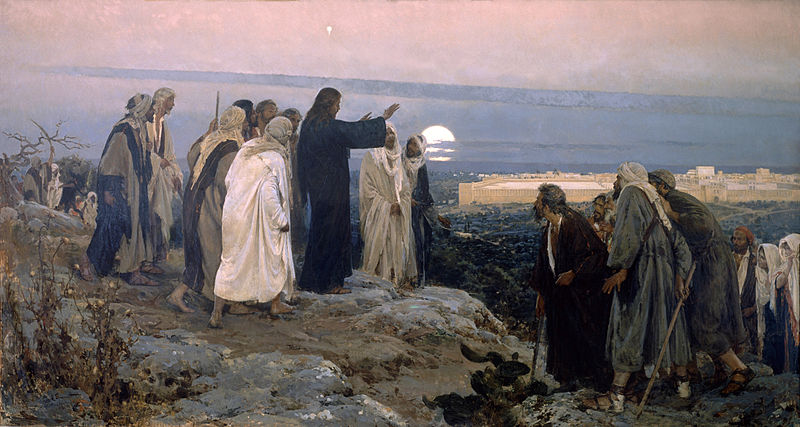
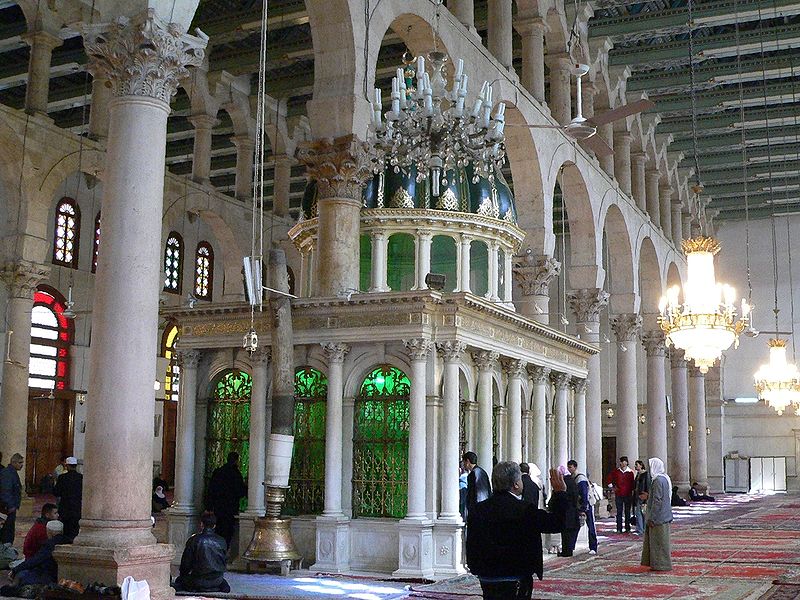
Jesus is performing a Baptism for the dead – in proxy! This ritual was performed by the Mandaeans and the Aramaeans who had a temple on Mount in Damascus that the Umayyad Mosque was built over. One stone remains of this temple where I suspect John the Baptist’s father ministered. In this mosque is the shrine of John the Baptist. The Nazarites are associated with the Mandaeans, and I will now reveal they, and the Aramaeans were Nazarite Judges that ruled Canaanland from the “high places”.
“Have you come out with swords and clubs to arrest me as though I were a guerrilla? Day after day I was with you in the Temple teaching, and you did not arrest me. But let the scriptures be fulfilled.” All of them deserted him and fled. A young man was following him, wearing nothing but a linen [cloth]. They caught hold of him, but he left the linen [cloth] and ran off naked. (Mark 14:48-52)
What Jesus is saying is, the Aramaean Nazarites were the ancient enemy of the Jews since the reformation of King Hezekiah who produced a false covenant and fake genealogies that put the House of David on the throne of God – forever!
The Aramaean Nazarites objected, and became the enemy of House of Judah.
What Jesus is saying he was not arrested as a Zealot guerilla, but, is now arrested as he reveals he is the embodiment of a Aramaean High Priest after John the Baptist ‘The Nazarite for Life’. Nazarites are forbidden to get near a dead body, and rather than be deprived of the normal ritual other Jews enjoy in preparing their dead, they chose a proxy.
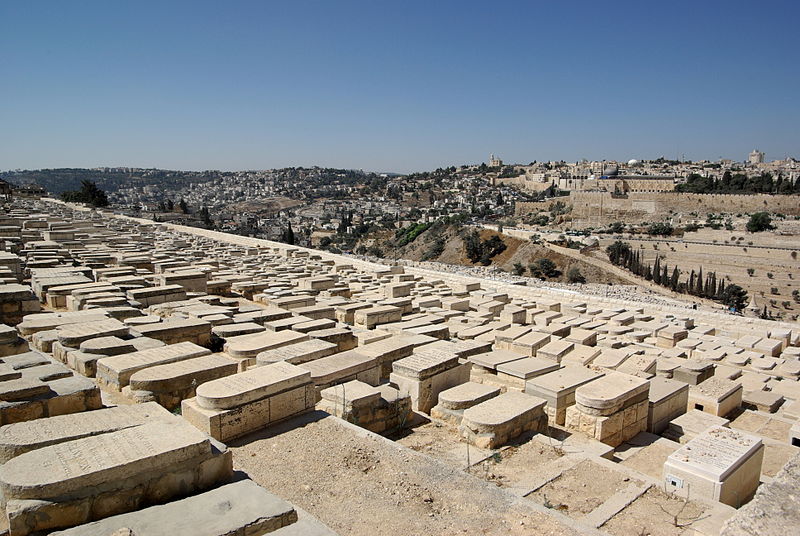
Many Jews are buried on the Mount of Olives because they believe the Messiah will come her first, and raise the dead into God’s kingdom.
This explains the incident at Jesus’ tomb where the priests ask Pilate to post guards so the Aramaean Nazarite can not baptize the body of Jesus – in proxy – because the Aramaeans are the enemies of certain Jews in power, and of the Romans who will do battle with the Nazarites and turn their temple for the Canaanite Thunder God into their temple for their thunder god – Jupiter!
Many of these Aramaeans were forced to convert to Islam, but, some refused. Al-Qaeda is attacking the Aramaean Nazarites in Syria. They were attacked after Bush invaded Iraq. This is it! This is what millions of Christians claim they have been waiting for. There is no one else for any good Christian to attack, or, defend. This is ‘The Battle’ describes in the Olivet Discourse.
Enjoin this battle – or be left behind!
Jon the Nazarite
http://en.wikipedia.org/wiki/Olivet_discourse
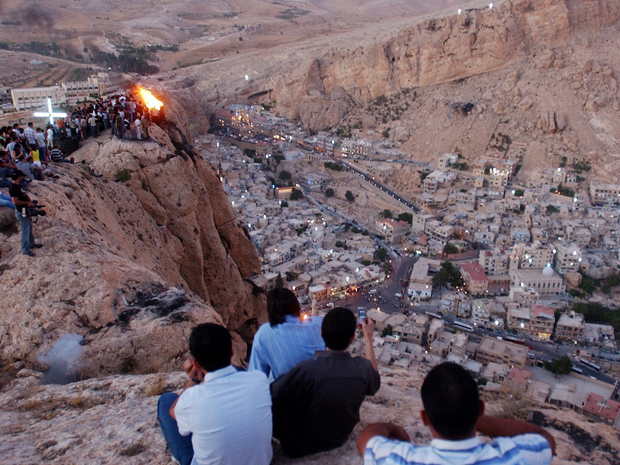
The sound of artillery reverberated Thursday through a predominantly Christian village north of Damascus as government troops and al-Qaeda-linked rebels battled for control of the mountainside sanctuary.
The hit-and-run attacks on the ancient village of Maaloula, one of the few places in the world where residents still speak Aramaic, the original language of Christ, highlighted fears among Syria’s religious minorities about the growing role of extremists among those fighting in the civil war to topple President Bashar al-Assad’s regime.
The fighting came as President Barack Obama’s administration pressed the U.S. Congress for its authorization of a military strike against the Assad regime, while the president arrived at a G-20 summit in Russia expected to be overshadowed by Syria.
Many Jews have wanted to be buried on the Mount of Olives “since antiquity,” based on the Jewish tradition (from the Biblical verse Zechariah 14:4) that when the Messiah comes, the resurrection of the dead will begin there.[27]
Baptism for the dead is best known as a doctrine of the Latter Day Saint movement, which has practiced it since 1840. It is currently practiced by The Church of Jesus Christ of Latter-day Saints (LDS Church), where it is performed only in dedicated temples, as well as in several (but not all) other current factions of the Latter-day Saint movement. Those who practice this rite view baptism as an indispensable requirement to enter the Kingdom of God, and thus practice Baptism for the Dead to give those who have died without ever having had the opportunity to receive baptism the opportunity to receive it by proxy.
http://en.wikipedia.org/wiki/Baptism_for_the_dead
http://en.wikipedia.org/wiki/Mandean
Mandaeism or Mandaeanism (Modern Mandaic: Mandaʻiūtā (מנדעיותא); Arabic: مندائية Mandāʼīyah/Mandāʾiyyah; Persian: مندائیان Mandâ’iyân) is a gnostic religion[1] (Aramaic manda means “knowledge,” as does Greek gnosis) with a strongly dualistic worldview. Its adherents, the Mandaeans, revere Adam, Abel, Seth, Enosh, Noah, Shem, Aram and especially John the Baptist, but reject Abraham, Moses and Jesus of Nazareth.[2][3]
There was probably some synthesis with pre Islamic Arab migrants (and possibly Greeks and Phoenicians also), and the Nabatean civilisation of what is today Jordan and southern Syria had a mixed Aramean-Arab identity. From the 2nd century AD they began to adopt Christianity in increasing numbers, and by the 4th century the population was largely Christian.
Origins in Christianity[edit source | editbeta]
Tertullian (Against Marcion 10) attributes the practice of 1 Corinthians “baptised for the dead” to the Marcionites, and Epiphanius of Salamis (Panarion 28) to Cerinthus, as the custom of baptizing dead bodies and giving the Eucharist to them[8] has sometimes been interpreted as baptism for the dead. Thus John A. Tvedtnes, a Hebrew and early Christian scholar at Brigham Young University writes:
“
That baptism for the dead was indeed practiced in some orthodox Christian circles is indicated by the decisions of two late fourth century councils. The fourth canon of the Synod of Hippo, held in 393, declares, “The Eucharist shall not be given to dead bodies, nor baptism conferred upon them.” The ruling was confirmed four years later in the sixth canon of the Third Council of Carthage.[9]
”
John Chrysostom (Homilies 40) alleges a similar practice among the Marcionites of the same century: if one of their followers who was being prepared for baptism died before receiving baptism, the dead person’s corpse was addressed with the question whether he wished to be baptized, whereupon another answered affirmatively and was baptized for the dead person.[10] In the same passage, explained Paul’s mention of people being “baptized for the dead” as a reference to the profession of faith in their own future resurrection that Christians made before being baptized.
1 Corinthians 15:29[edit source | editbeta]
In the context of insisting that “in Christ shall all be made alive .. Christ the firstfruits; afterward they that are Christ’s”,[11] Paul wrote in 1 Corinthians 15:29: “Else what shall they do which are baptized for the dead, if the dead rise not at all? why are they then baptized for the dead?” Different views have been expressed on the meaning of the phrase “baptized for the dead”, and on whether Paul gave his approval to the practice.
Meanings of the verb baptizein[edit source | editbeta]
The Greek verb in Paul’s phrase “baptized for the dead” is baptizein, which in Jewish Greek has a wider reference than “baptism”, applying primarily to the masculine noun baptismos “ritual washing”[12] The verb occurs four times in the Septuagint in the context of ritual washing, baptismos: Judith cleansing herself from menstrual impurity, Naaman washing seven times to be cleansed from leprosy, etc.[13] In the New Testament only, the verb baptizein can also relate to the neuter noun baptisma “baptism”, a neologism unknown in the Septuagint and other pre-Christian Jewish texts.[14] This broadness in the meaning of baptizein is reflected in English Bibles rendering “wash,” where Jewish ritual washing is meant, for example in Mark 7:4, which states that the Pharisees “except they wash (Greek “baptize”), they do not eat”,[15] and “baptize” where baptisma, the new Christian rite, is intended. The older ritual washing use of baptizein is relevant in the context of funerals since any Jew coming into contact with the dead body must undertake ritual washing.[16] During the Second Temple and early Rabbinical period the regulations on “ritual washing” (Greek masculine noun baptismos) expanded and multiplied. This is documented in the Halakhah Tractate Yadayim[17] and Dead Sea Scrolls[18] Peter Leithart (2007) suggests that Paul’s comment “why do they..” is an analogy between baptism (i.e. neuter concept noun baptisma) with Jewish ritual washing (i.e. masculine concrete noun baptismos) for contact with the dead following the Mosaic regulations in Numbers 19.[19] The phrase “ritually washed for the dead” does not occur in intertestamental literature, but a possibly related idea of prayer for the dead occurs in 2 Maccabees. Since the New Testament idea of “baptism” (Greek baptisma), the rite of baptism, is not mentioned in the verse, it is open to interpretation whether the verb baptizein refers to “ritual washing” (Greek baptismos) or “the rite of baptism” (Greek baptisma) or is an analogy between both.[20]
The Naked Young Man in Mark 14:51-52
Then Jesus said to the posse
The Greek word I have translated “posse” is apokritheis, from the verb apokrinomai, which, in the Christian Testament, meant to respond to certain present circumstances. The roots are apo, derived from, and krinw, to judge or call to account. It seemed to me that “posse” was a better translation than “interlocuters” or “respondents.”
Similarly, the word that is usually translated as “bandit” was lestes. In the first century, lestoi described men who lived in the hills and survived by robbery and plunder. Many were indeed brigands, but many were there as resistance fighters against the Romans.
Although Mark does not mention just who the men were who had been sent to arrest Jesus, we must not forget that it was the holiest night of the Jewish year, and good Jewish men would be at home sleeping off the four cups of wine they had drunk for their Passover suppers — or, even if they were running around the mountainside in the middle of the streetlight-less night, these pious men were forbidden by Jewish law to carry weapons on a holy night.
Therefore the posse must have consisted of Roman soldiers. Since the hour was approximately midnight, the Romans must have been seeking no ordinary bandit; they must have considered Jesus the first-century equivalent of Robin Hood.
[sent to arrest him], “Have you come out with swords and clubs to arrest me as though I were a guerrilla? Day after day I was with you in the Temple teaching, and you did not arrest me. But let the scriptures be fulfilled.” All of them deserted him and fled. A young man was following him, wearing nothing but a linen [cloth]. They caught hold of him, but he left the linen [cloth] and ran off naked. (Mark 14:48-52)
http://www.extremelysmart.com/insight/accurate/Mark_14_51-52.php
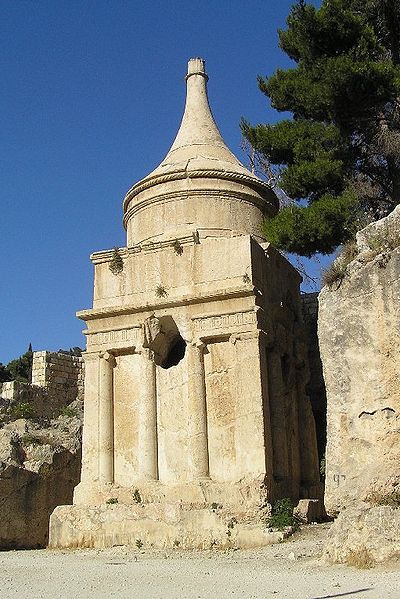
From Biblical times until the present, Jews have been buried on the Mount of Olives. The necropolis on the southern ridge, the location of the modern village of Silwan, was the burial place of Jerusalem’s most important citizens in the period of the Biblical kings.[2] There are an estimated 150,000 graves on the Mount, including tombs traditionally associated with Zechariah and Absalom. On the upper slope, the traditional Tomb of the Prophets Haggai, Zechariah and Malachi is situated. Notable rabbis buried on the mount include Chaim ibn Attar and others from the 15th-century to present.
Mandaeans appear to have settled in northern Mesopotamia, but the religion has been practised primarily around the lower Karun, Euphrates and Tigris and the rivers that surround the Shatt-al-Arab waterway, part of southern Iraq and Khuzestan Province in Iran. There are thought to be between 60,000 and 70,000 Mandaeans worldwide.[5] Until the 2003 Iraq war, almost all of them lived in Iraq.[6] Many Mandaean Iraqis have since fled their country (as have many other Iraqis) because of the turmoil created by the War on Terror and subsequent rise in sectarian violence by Muslim extremists.[7] By 2007, the population of Mandaeans in Iraq had fallen to approximately 5,000.[6] Most Mandaean Iraqis have sought refuge in Iran, {source} with fellow Mandaeans there. Others have moved to northern Iraq. There has been a much smaller influx into Syria and Jordan, with smaller populations in Sweden, Australia, the United States and other Western countries.
The Mandaeans have remained separate and intensely private—reports of them and of their religion have come primarily from outsiders, particularly from the Orientalist Julius Heinrich Petermann, Nicolas Siouffi (a Yazidi), and Lady Drower. An Anglican vicar, Rev. Peter Owen-Jones, included a short segment on a Mandaean group in Sydney, Australia, in his BBC series, Around the World in 80 Faiths.
Occasionally, Mandaeans are called Christians of Saint John, based upon preliminary reports made by members of the Discalced Carmelites mission in Basra during the 16th century.
The Umayyad Mosque, also known as the Great Mosque of Damascus (Arabic: جامع بني أمية الكبير, Romanization Ğām’ Banī ‘Umayya al-Kabīr) or formerly the Basilica of Saint John the Baptist (Greek: Βασιλική του Αγίου Ιωάννη του Βαπτιστή, transliteration Basilike tou Agíou Ioánne tou Baptiste), located in the old city of Damascus, is one of the largest and oldest mosques in the world. It is considered by some Muslims to be the fourth-holiest place in Islam.[1][2]
After the Arab conquest of Damascus in 634, the mosque was built on the site of a Christian basilica dedicated to John the Baptist (Yahya). The mosque holds a shrine which today may still contain the head of John the Baptist, honored as a prophet by both Christians and Muslims alike, and is believed to be the place where Isa (Jesus) will return at the End of Days. The tomb of Saladin stands in a small garden adjoining the north wall of the mosque.
Damascus was the capital of the Aramaean state Aram-Damascus during the Iron Age. The Arameans of western Syria followed the cult of Hadad-Ramman, the god of thunderstorms and rain, and erected a temple dedicated to him at the site of the present-day Umayyad Mosque. It is not known exactly how the temple looked, but it is believed to have followed the traditional Semitic-Canaanite architectural form, resembling the Temple of Jerusalem. The site likely consisted of a walled courtyard, a small chamber for worship, and a tower-like structure typically symbolizing the “high place” of storm gods, in this case Hadad. One stone remains from the Aramaean temple, dated to the rule of King Hazael, has survived and is currently on display in the National Museum of Damascus.[3]
The Temple of Hadad-Ramman continued to serve a central role in the city, and when the Romans conquered Damascus in 64 CE they assimilated Hadad with their own god of thunder, Jupiter.[4] Thus, they engaged in a project to reconfigure and expand the temple under the direction of Damascus-born architect Apollodorus, who created and executed the new design.[5] The symmetry and dimensions of the new Greco-Roman Temple of Jupiter impressed the local population. With the exception of the much increased scale of the building, most of its original Semitic design was preserved; the walled courtyard was largely left intact. In the center of the courtyard stood the cella, an image of the god which followers would honor.[4] There was one tower at each of courtyard’s four corners. The towers were used for rituals in line with ancient Semitic religious traditions where sacrifices were made on high places.[6]
The shrine of John the Baptist (or Yahya) inside the mosque’s prayer hall
The sheer size of the compound suggests that the religious hierarchy of the temple, sponsored by the Romans, wielded major influence in the city’s affairs.[7] The Roman temple, which later became the center of the Imperial cult of Jupiter, was intended to serve as a response to the Hebrew temple in Jerusalem. Instead of being dedicated to one god, the Roman temple combined (interpretatio graeca) all of the gods affiliated with heaven that were worshipped in the region such as Hadad, Ba’al-Shamin and Dushara, into the “supreme-heavenly-astral Zeus”.[8] The Temple of Jupiter would attain further additions during the early period of Roman rule of the city, mostly initiated by high priests who collected contributions from the wealthy citizens of Damascus.[7] The eastern gateway of the courtyard was expanded during the reign of Septimius Severus (r. 193–211 CE).[9]
By the 4th century CE, the temple was especially renowned for its size and beauty. It was separated from the city by two sets of walls. The first, wider wall spanned a wide area that included a market, and the second wall surrounded the actual sanctuary of Jupiter. It was the largest temple in Roman Syria.[10] Towards the end of the 4th century, in 391, the Temple of Jupiter was converted into the Cathedral of Saint John by the Christian emperor Theodosius I (r. 379–395). During its transformation into a Christian cathedral it was not immediately dedicated to John the Baptist; this was a later association, which came about in the 6th century. Legend had it that Saint John’s head was buried there.[11] It served as the seat of the Bishop of Damascus, who ranked second within the Patriarchate of Antioch after the patriarch himself.[12]
The Arameans, or Aramaeans, (Aramaic: ܐܪ̈ܡܝܐ, ארמיא ; ʼaramáyé) were a Northwest Semitic semi-nomadic and pastoralist people who originated in what is now modern Syria (Biblical Aram) during the Late Bronze Age and the Iron Age. Large groups migrated to Mesopotamia where they intermingled with the native Akkadian (Assyrian and Babylonian) population. A large proportion of Syriac Christians in modern Syria still espouse an Aramean identity to this day, though few now speak the Western Aramaic language.
The Arameans never had a unified nation; they were divided into small independent kingdoms across parts of the Near East, particularly in what is now modern Syria. After the Bronze Age collapse, their political influence was confined to a number of Syro-Hittite states, which were entirely absorbed into the Neo-Assyrian Empire by the 8th century BC.
By contrast, the Aramaic language came to be the lingua franca of the entire Fertile Crescent, by Late Antiquity developing into the literary languages such as Syriac and Mandaic. Scholars have used the term “Aramaization” for the process by which the Akkadian/Assyro-Babylonian peoples became Aramaic-speaking during the later Iron Age.[1]
The origin of the Arameans is still uncertain, arising from the limited amount of evidence regarding the mention of Arameans in Mesopotamian inscriptions as well as a few descriptive incidents with a woman named Rebekah from the book of Genesis in the Bible.
Nomadic pastoralists have always been a feature of the Middle East, but their numbers seem to vary according to climatic conditions and the force of neighbouring states inducing permanent settlement. The period of the Late Bronze Age seems to have been one of increasing aridity, weakening neighbouring states, and inducing transhumance pastoralists to spend longer and longer periods with their flocks. Urban settlements diminished in size, until eventually fully nomadic pastoralist lifestyles came to dominate the region. These highly mobile, competitive tribesmen with their sudden raids were a continued threat to long distance trade and interfered with the collection of taxes and tribute. In the early 14th century BC, much of Israel was under Arameans rule for eight years according to the Biblical Book of Judges, until Othniel defeated the forces led by Chushan-Rishathaim, the King of Aram-Naharaim. Other entities mentioned in the Hebrew Bible include Aram Damascus and Aram Rehob
The Arameans were, in the 11th century BC, established in Syria. The Bible tells us that Saul, David and Solomon (late 11th to 10th centuries) fought against the Aramean kingdoms across the northern frontier of Israel: Aram-Sôvah in the Beq’a, Aram-Bêt-Rehob and Aram-Ma’akah around Mount Hermon, Geshur in the Hauran, and Aram-Damascus. An Arameans king’s account dating at least two centuries later, the Tel Dan Stele, was discovered in northern Israel, and is famous for being perhaps the earliest non-Israelite extra-biblical historical reference to the Israelite royal dynasty, the House of David. Farther north, the Arameans were in possession of Hamath on the Orontes and were soon to become strong enough to dissociate with the Neo-Hittite bloc.
Aramaeans in later antiquity and modern times[edit source | editbeta]
Arameans continued to be the majority population in their homeland (most of modern Syria and part of south central Asia Minor) until well after the Arab Islamic conquest of the 7th century AD. A number of Aramaean kingdoms sprang up in the region, the most important being Palmyra and to a lesser degree the Osroene kingdom.
There was probably some synthesis with pre Islamic Arab migrants (and possibly Greeks and Phoenicians also), and the Nabatean civilisation of what is today Jordan and southern Syria had a mixed Aramean-Arab identity. From the 2nd century AD they began to adopt Christianity in increasing numbers, and by the 4th century the population was largely Christian.
After the Arab Islamic conquest of the region in the 7th century AD, Arameans gradually became a minority in their homelands, the language was gradually replaced by Arabic, as ever increasing numbers of Arabs, (together with Turkic and Iranian peoples) began to move into the region. Those indigenous Arameans who converted to Islam rapidly lost their Aramean identity, intermixed with the Arab rulers and essentially became culturally Arabs.
However, a sizeable proportion of the population of Syria (approximately 10% – 15%) retained Syriac Christianity and still identify as Arameans-Syriacs, retaining Aramaic as a liturgical language. A small section of these people, now limited to the Anti-Lebanon mountains in Syria, has remained Western Aramaic speaking to this day.
Arameans are mostly defined by their use of the West Semitic Old Aramaic language (1100 BC–AD 200), first written using the Phoenician alphabet, over time modified to a specifically Aramaic alphabet.
As early as the 8th century BC, the Aramaic language competed with the East Semitic Akkadian language and script in Assyria and Babylonia, and thereafter it spread throughout the Near East in various dialects. By around 800 BC, Aramaic had become the lingua franca of the Neo Assyrian Empire. Although marginalized by Greek in the Hellenistic period, Aramaic in its varying dialects remained unchallenged as the common language of all Semitic peoples of the region until the Arab Islamic conquest of Mesopotamia in the 7th century AD after which it was gradually superseded by Arabic.
The late Old Aramaic language of the Neo-Assyrian Empire, Neo-Babylonian Empire and Achaemenid Persian Empire developed into the Middle Aramaic Syriac language of Persian Assyria which would become the liturgical language of Syriac Christianity. The descendant dialects of this branch of Mesopotamian Aramaic (which still retains a number of Akkadian loan words) still survive as the spoken and written language of the ethnically Mesopotamian Assyrians to this day, and is found mostly in Iraq, Iran, northeast Syria, southeast Turkey, Armenia, Georgia, southern Russia and Azerbaijan, as well as in diaspora communities in the west, particularly the USA, Canada, Australia, Sweden and Great Britain. The Western Aramaic dialect of the Arameans themselves is now only spoken by tiny minorities in one or two villages in Syria. Mandic is spoken by up to 75,000 speakers of the ethnically Mesopotamian Gnostic Mandean sect, mainly in Iraq and Iran. A number of Jews, particularly those originating in Iraq, and to a lesser degree Iran and Syria, retain Aramaic as a spoken tongue, however this is largely being eroded by Hebrew.

 Rosamond Press
Leave a comment