


I read ‘Edie’ in 1982, the year it was published. I saw the parallels to the Rosamond family that grew up in Ventura by the Sea. The Rosamond and Sedgwick families have been plagued by mental illness and suicide. Since my sister’s death in 1994 I have been disqualified from owning any part of Rosamond’s artistic legacy, because I am mentally ill. So was Christine whose 270 page autobiography was excluded from the fake biography because her writings are “the ideations of a woman who was not well”
Who said folks don’t want to read the crazy stuff a world famous artist pens? Who? I want a name!
For ten years I have been authoring my story titled ‘Capturing Beauty’. Warhol wove a web that captured Edie. He put her in his lofty labyrinth and watched his butterfly, wither. The web I weave will capture all the beauty in the world. I own the Sleeping Beauty legend.
The latest exclusion from the Rosamond family due to mental illness was ministered by my daughter, Heather Hanson, and her boyfriend of three months, she insisting I was so mentally ill that any attempt to defend myself from her accusations, was proof I did not deserve monies from SSI. I am somewhat pleased that my ingnorant daughter invented a catch twenty two. Heather only agreed to continue as my Trustee – if I signed a notorized letter saying I would never write about her, my grandson, Bill Cornwell, Patrice, Linda, Flip, Matt, and other members of HER family. Was I allowed to write about – me?
This of course is extortion, withholding monies from the mentally ill – until they do your bidding! Consider the movie ‘Girl With The Dragon Tattoo’. My daughter can not grasp the truth folks want to read, see, and hear crazy stuff about whacky artists. And, if she went along with my insane ideations, this might translate to cold hard cash in her bank account.
Edie titled herself an “Artist” and hung with the Beats of Harvard who no doubt emulated what was going on in Gwenich Village New York, and San Francisco – then there is Berkeley. Edie was an Aries, the fiery Muse of Andy Warhol, who I never liked. I saw him and his work as the Non-Artist of Un-art. He was a great Actor born of peasant stock. He wanted to be a regal person surrounded by an entourage. He wanted to be Edie. Warhol wanted to be a Hollywood Star, like Elizabeth Rosemond Taylor, whose step-daughter, Carie Fisher, wrote a screenplay about Christine Rosamond – that the usurpers can not sell – because my sister’s mental illness is blamed for everything that went wrong with THEIR dream.
Christine was Bob Dylan’s neighbor when she lived in Woodland Hills. They would babysit each other’s child. It was here Christine gave me credit for her success, a truth no one wants to accept, because it disqualifies the non-artists, the, un-artists, who perceive there is a big pile of gold nuggets just under the dirt. Just brush aside the mental illness, the drugs, the Beatniks and Hippies, and – its all THEIRS!
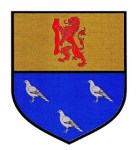
Edie Sedgwick descends from the Dutchman, Jesse de Forest, who was a Huguenot Walloon. The Rosamond family were Huguenots from Holland, our cote of arms reading “Duke of the Woods”. Edie was called “Princess” because of her illustrious family background that added to her mystique, her appeal to those at the vanguard of the hip east coast scene. The de Forest family appear to have founded Greenwhich Village. The highest paid artist in the world, Andy Warhol, would have not noticed Edie, if it were not for the crown she wore, and the title she owned ‘Princess of New York’. In the story of Sleeping Beauty, the Princess is named Rosamond.
For the last fourteen years I have spent two thousand hours delving into genealogies. My family and friends believe I am wasting my time,and, more the likely I am a parasite trying to attach myself to Rosamond’s success via a stupid family tree. How they attached themselves to Rosamond’s Artistic Legacy, is of course – SANE!
Consider the truth that a candidate for the office of President of United States is a prophet in the Mormon cosmology that takes genealogies very seriously, and, if elected, may be swayed by Who’s Who in the whacky Mormon church. Mitt Romeny acts like he and his family are titled royalty. King Mitt did not even know how to grocery shop, stand in a check-out line like the rest of us. I, and millions of folks, think Mitt is mentally ill. Fifty million evangelicals are having trouble with voting for Romney, because he is not one of them, not a follower of the weird cosmology invented by the Plymouth Brethren, that my friend, Ed Corbin, the Artist and Harvard graudate, is kin to. Ed appeared drunk on stage with Jack Keuroac when the King of the Beat Writers came to speak at this illustrious institution of higher learning, that Edie attended. Did Ed meet Edie?
Jon Presco
Copyright
Jessé de Forest (1576 – October 22, 1624) was the leader of a group of Walloon Huguenots who fled Europe due to religious persecutions. Jessé de Forest emigrated to the New World, where he planned to found New-Belgium. He died before reaching what is now New York, but his family (including Hendrik de Forest) settled in Long Island, where it is remembered by the name of Forest Park, which in turn gave its name to the community of Forest Hills, Queens.[1]
Contents [hide]
1 Background
2 New-Belgium
3 Legacy
4 References
5 Other sources
6 External links
[edit] BackgroundJessé de Forest was born in Avesnes (County of Hainaut, now Nord, France). The family name originated from the village of Forest in the canton of Landrecies near Avesnes. (A Sports Illustrated article incorrectly claims[2] that Jessé was a son of the French king Henri IV.) Around 1609 he left Avesnes for Sedan and Montcornet before settling in Leiden, Holland.
In Leiden, he moved to obtain the right to emigrate with his own and other Walloon families to the New World. During his stay, he also met Pilgrim Fathers, future passengers of the Mayflower. De Forest served with Prince Maurice of Nassau as a lieutenant and captain.[3]
On February 5, 1621, Jessé de Forest sent a petition, to Dudley Carleton, 1st Viscount Dorchester, English ambassador to The Hague. It applied for permission to settle about fifty Walloon and French Huguenot families that planned to follow the Puritans to America (then called the West Indies) in Virginia. De Forest asked to dispose over a territory of eight English miles radius. Known as the Round Robin, this document is now preserved in the British Public Record Office. On August 11, 1621, the Virginia Company gave an agreement in principle, but raised some restrictions. The worse one was the refusal to have the settlers dwell together in one autonomous colony. De Forest declined the proposition.
[edit] New-BelgiumIt was de Forest’s desire to establish a Colony in the New World, so that the Walloons could practice their Reformed Protestant Christianity without persecution. He then sought permission from the Dutch to establish a colony in what is now New York City. He was granted permission. He assembled approximately 60 families of Walloons and Dutch Protestants for the settlement in New Amsterdam, New Netherland. The first permanent settlers would arrive in New Amsterdam during May 1624 (without de Forest).
The foundation of the Dutch West India Company in 1621 had given rise to multiple opportunities. In 1581, Philip II of Spain had prohibited commerce within his realm with Dutch ships, including in Brazil. Since the Dutch had invested large sums in financing sugar production in the Brazilian Northeast, a conflict began for control of the area. Proposing his services and those of his fellow countrymen to the Dutch West India Company, de Forest informed them that a group of families practicing various trades had the opportunity to emigrate to America. The States of The Netherlands, realizing the importance of such an opening for future colonization, immediately consulted the Directors of the Company, who were meeting in The Hague.
On August 27, 1622, after efforts delivered by Willem Usselincx and Jessé de Forest, the latter finally received the authorization to emigrate with other families to the West Indies. Left on reconnaissance for the coasts of Guyana in 1623, Jessé de Forest died on the Oyapock River bank (present borderline between Brazil and French Guyana), on October 22, 1624. His daughter Rachel and his sons Isaac and Henri and other family members joined New-Belgium ten years later in the territories surrounding the future New York City.[4]
[edit] Legacy
Walloon Monument in Battery Park, NYCToday, there is a Monument in Battery Park, New York City called the Walloon Settlers Memorial. That monument was given to the City of New York by the Belgian Province of Hainaut in honor of the inspiration of Jessé de Forest in founding New York City. Baron de Cartier de Marchienne, representing the government and Albert I, King of Belgium, presented the monument to Mayor John F. Hylan, for the City of New York May 18, 1924. There is also a monument in Jessé de Forest’s honor in Avesnes, France, the College Jesse de Forest and Jesse de Forest Avenue.[5]
Alice Delano de Forest Sedgwick was born into a wealthy Long Island family in 1908. Her father was rich enough that he was able to lose many millions of dollars during the stock market crash in 1929. She married Francis Minturn Sedgwick, also from a well-connected family, in 1929. Two years later in 1931 she gave birth to the first of her eight children, Alice. Her last child, Susana, was born in 1945. Of the eight progeny, the most well known, was her sixth child, a daughter Edith, better known as Edie born in 1943. Edie Sedgwick achieved meteoric but brief fame in the late 1960s when she was associated with the artist Andy Warhol.
Eccentricity must be hereditary. Alice, according to her oldest child, would wear a “Chinese mandarin coat, exquisitely embroidered and satin pajamas” to dinner. This daughter describes her mother as a “kind of Mediterrannean mother” meaning she would turn her cheek to her husband’s infidelity and indiscretions. Alice’s youngest child, Susana, has observed that maybe her mother “had all those children because [her husband] wanted to have a little tribe to show everybody. We were paraded around a bit, just to show the guests the children, that’s what it was.”
Alice ate special foods because she had a variety of allergies. Also, in her twenties during mastoid surgery a nerve was inadvertantly severed. The result was that the right-side of Alice’s face sagged and her smile was lopsided.
Alice’s fourth child, Francis Minturn, known as “Minty” committed suicide in March, 1964. In January, 1965 her second-born and first son, died from injuries sustained in a motorcycle accident on New Year’s Eve. On November 16, 1971 Alice’s seventh child, Edie, died of a drug overdose.
Following her departure from Warhol’s circle, Sedgwick began living at the Chelsea Hotel, where she became close to Bob Dylan. Dylan’s friends eventually convinced Sedgwick to sign up with Albert Grossman, Dylan’s manager. Sedgwick and Dylan’s relationship ended when Sedgwick found out that Dylan had married Sara Lownds in a secret ceremony – something that she apparently found out from Warhol during an argument at the Gingerman Restaurant in February 1966.
According to Paul Morrissey, Sedgwick had said: “‘They’re [Dylan’s people] going to make a film and I’m supposed to star in it with Bobby [Dylan].’ Suddenly it was Bobby this and Bobby that, and they realized that she had a crush on him. They thought he’d been leading her on, because just that day Andy had heard in his lawyer’s office that Dylan had been secretly married for a few months – he married Sara Lownds in November 1965… Andy couldn’t resist asking, ‘Did you know, Edie, that Bob Dylan has gotten married?’ She was trembling. They realized that she really thought of herself as entering a relationship with Dylan, that maybe he hadn’t been truthful.”
Several weeks before the December 29, 2006 one-week release of the controversial film Factory Girl, described by The Village Voice review as “Edie for Dummies.” The Weinstein Company and the film’s producers interviewed Sedgwick’s older brother, Jonathan, who asserted that she had “had an abortion of the child she was (supposedly) carrying by Dylan.” Jonathan Sedgwick, a retired airplane designer, was flown in from Idaho to New York City by the distributor to meet Sienna Miller, who was playing his late sister, as well as to give an eight-hour video interview with details about the purported liaison between Edie and Dylan, which the distributor promptly released to the news media. Jonathan claims an abortion took place soon after “Edie was badly hurt in a motorcycle crash and sent to an emergency unit. As a result of the accident, doctors consigned her to a mental hospital where she was treated for drug addiction.” No hospital records or Sedgwick family records exist to support this story. Nonetheless, Edie’s brother also claimed “Staff found she was pregnant but, fearing the baby had been damaged by her drug use and anorexia, forced her to have the abortion.” However, according to Edie Sedgwick’s personal medical records and oral life-history tape recorded less than a year before her death for her final film, Ciao! Manhattan, there is credible evidence that the only abortion she underwent in her lifetime was at age 20 in 1963.
Throughout most of 1966, Sedgwick was involved in an intensely private yet tumultuous relationship not with Bob Dylan, but with Dylan’s closest friend, Bob Neuwirth. During this period, she became increasingly dependent on barbiturates. Although she experimented with illegal substances including opiates, there is no evidence that Sedgwick ever became a heroin addict. In early 1967, Neuwirth, unable to cope with Sedgwick’s drug abuse and erratic behavior, broke off their relationship.
Sedgwick auditioned for Norman Mailer’s play The Deer Park, but Mailer thought she “wasn’t very good… She used so much of herself with every line that we knew she’d be immolated after three performances.”
20 April 1943, Santa Barbara, California, USA
Date of Death
16 November 1971, Santa Barbara, California, USA (barbiturate overdose)
Birth Name
Edith Minturn Sedgwick
Nickname
Princess
Height
5′ 4″ (1.63 m)
Mini Biography
Edie Sedgwick was a bright social butterfly whose candle of fame burned brightly at both ends. Born into a wealthy White Anglo-Saxon Protestant family of impressive lineage, Edie became a “celebutante” for her beauty, style, wealth and her associations with figures of the 1960s counterculture.
Edie was born in Santa Barbara into a prominent family plagued by mental illness. Her father, Francis Minturn Sedgwick (1904-1967), was a local rancher who had experienced three nervous breakdowns prior to his 1929 marriage to Alice Delano De Forest, Edie’s mother. Francis also suffered from bipolar disorder, and his doctors told Alice’s father, the Wall Street financier Henry Wheeler De Forest, that the couple should not have any children. They eventually had eight: Edie was the fourth of five daughters and the second-to-last of the Sedgwick children born from 1931 to 1945. Edie later told fellow Warhol superstar Ultra Violet that both her father and a brother had tried to seduce her when she was a child. She once found her father in flagrante delicto with another woman, and after she tried to tell her mother about his offense, her father denounced her as insane and called the doctor. In Edie’s confession to Ultra Violet, she claimed, “They gave me so many tranquillizers I lost all my feelings.”
The Sedgwicks were an old line of WASPs whose lineage included Judge Theodore Sedgwick (1746-1813), who had served as the Chief Justice of the Supreme Judicial Court of Massachusetts and later Speaker of the House of Representatives in the time of George Washington. The Judge’s wife, Pamela Dwight Sedgwick (1753-1807), had lost her sanity during mid-life. The roots of the mental illness that plagued the Sedgwick family likely extend as far back as Pamela Dwight Sedgwick.
Edie was raised on a 3,000-acre ranch in the Santa Ynez Valley, bought with money inherited from Alice’s father. The family fortunes improved even further in the early 1950s, when oil was discovered on the ranch. The Sedgwick children were educated in a private school constructed on the ranch, and given daily vitamin B shots by a local physician.
Despite their prosperous, Edie’s upbringing was plagued with trauma. Her brother Minty was an alcoholic by age fifteen and eventually committed suicide at the Silver Hill Hospital in New Canaan, Connecticut in 1964, the day before his twenty-sixth birthday. Her other brother, Bobby, also was troubled by psychiatric problems and was institutionalized after suffering a nervous breakdown in the early 1950s while attending Harvard. He crashed his motorcycle into a bus on New Year’s Eve 1964 and died two weeks later.
The DeFreest/DeForest Family History
The family name originated from the village of Forest in the canton of Landrecies near Avesnes, France. The first record of the de Forest family was published in 1660 by Jean le Carpentier in his history of Cambresis in which he mentions Hubert de Forest, a Chevalier of the First Crusade in 1096. Between 1111 and 1120, Gerard de Forest witnessed a gift made by the Countess of Flanders and the Durchess of Lorraine in St. Amanden-Pevele. In 1171, Hugues de Forest and his brother Gilles made a gift of land to the Abbey of Marchiennes. A little later, in 1180, the Chevalier Ansel de Forest of Cambresis is mentioned as having sold “church tenths”. Records of 1221 mention Gautier de Forest as Provost of Quesnoy and Bailli of Ghent. Seven years later, in 1228, Walter de Forest was Bailli of the Counties of Flanders and Hainaut, and a Pierre de Forest is mentioned in records of 1233. In 1383 to 1384 the records of the Count of Hainaut speak of purchasing two pigs from Jehan de Forest at a feast held in honor of St. Jehan in Quesnoy. There are other references to Jehan de Forest during this same period. In 1408, Thomas de Forest was taxed in the domain of Forest, and in 1436 there is mention of a freehold held by the Abbey and acquired from Thomas de Forest. In 1466, Pierre de Forest is mentioned in connection with several houses, fields and lands. In 1491, there is mention of Gilles, Gaspard and Melchoir de Forest.
Melchoir de Forest I, son of Gaspard de Forest b. 1450, Mother unknown, was born 1472, was a Jure d’Avesnes in 1517. He was a Sheriff or Alderman in Avesnes, Hainaut County in 1517 and in 1519. He was considered a wealthy man, and a large land holder.
Melchoir de Forest II, son of Melchoir de Forest I, was born 1497. He was Jure d’Avesnes in 1526 to 1527. He married Jacquelin Bronchin. He was a brother of “Maistre Jehan de Forest, pretre” and “notaire apostalique (acte du 18 Mai, 1541), Chaplain de St. Pierre de Louvain en 1562”. Considered a wealthy man, he owned land and a house on the Marche (border) which he gave to his daughter, Marguerite de Forest Levacq; a house at Guersignies, sold on October 3, 1545, and at Avesnalles-St. Denis, a small field of land, as well as annuities and other property. He lived in the Sottiere, a land bordering on the Brotherhood of St. Jean.
Melchoir de Forest III, son of Melchoir de Forest II, was born 1521. He married in 1541, Catherine du Fosset. He was a member of the brotherhood of St. Nicholas in 1543, and in 1562 was Sheriff of Avesne.
Jean de Forest, son of Melchoir de Forest III, was born 1543. He married Anne Maillard. Jean’s brother Gilles was a prominent Canon of the Catholic Church. Jean left Avesnes around 1598, at the time of the Edict of Nantes, and moved to Sedan. Jean de Forest is my 10th Great Grandfather.
Jesse de Forest, son of Jean de Forest, was born in 1576. On Sunday, September 23, 1601, he married Marie du Cloux. After living in Sedan briefly, Jesse moved to Montcornet in 1609, and later moved to Leyden, Holland where he made his home on the Breedestraet. Jesse served with Prince Maurice of Nassau, as a Lieutenant and Captain. Jesse de Forest is my 9th Great Grandfather
In 1621, the Walloons and Huguenots of Leyden, Holland planned to follow the Puritans to America (then called the West Indies). Jesse de Forest was acclaimed the leader and spokesman for the band when the exiles approached the British Ambassador at The Hague regarding their settling in Virginia. The English turned down his petition to establish a colony in Virginia. It was Jesse’s desire to establish a Colony in the New World, so that the Walloons could practice their Reformed Religion without persecution. He then sought permission from the Dutch to establish a colony in what is now New York City. He was granted permission. He assembled approximately 60 families of French Speaking Walloons and Dutch for the settlement in New Amsterdam, New Netherland. The first permanent settlers arrived in New Amsterdam May 1624. Today, there is a Monument in Battery Park, New York City called the Walloon Settlers Memorial. That monument was given to the City of New York by the Belgian Province of Hainaut in honor of Jesse’s inspiration in founding New York City. Baron de Cartier de Marchienne, representing the Belgian King and Government, presented the monument to Mayor John F. Hylan, for the City of New York May 18, 1924. There is also a monument in Jesse’s honor in Avesnes, France, the College Jesse de Forest and Jesse de Forest Avenue.
Click here for an interesting link to the Founding of New York City
Click here to see pictures of the Monument in Avesnes, France
Isaac DeForest, Jesse’s son, arived from Leyden, Holland, March 5, 1637. Isaac made the voyage aboard the ship, Rensselaerwyck. This ship was jointly owned by Isaac’s uncle, Gerard DeForest, and Killian Van Rensselaer. Also arriving in New Amsterdam with Isaac, was his brother Hendrick DeForest and his sister Rachel DeForest. Hendrick died shortly after his arrival, on July 26, 1637. Isaac DeForest is my 8th Great Grandfather.
Philip DeForest, Isaac’s son was born July 28, 1652 in New Amsterdam. Philip eventually settled in Beverwyck, NY. Today, Beverwyck is now known as Albany, NY. Philip DeForest is the founder of the Albany branch of DeForests. Philip DeForest is my 7th Great Grandfather.
Philip did have three brothers that carried on the DeForest name in Connecticut, New York City and Long Island, NY. Isaac DeForest was born April 25, 1655 in New Amsterdam and continued to live and raise his family in New Amsterdam. Hendrick DeForest was born September 9, 1657 in New Amsterdam and is the founder of the Long Island branch. The last born David DeForest, born September 7, 1669 in New York City was the founder of the Stratford, Connecticut branch.
It was in Greenbush, NY, across the Hudson River from Albany, that most of the DeFreest family had lived. On February 23, 1855, Greenbush was divided into North Greenbush and Clinton. On April 14, 1858 Clinton was renamed East Greenbush. DeFreestville is located in the southern portion of North Greenbush. This section of town was originally known as Blooming Grove, but because there was already a Blooming Grove, NY located in Orange County, to avoid confusion, this area was renamed DeFreestville around 1830. It is in honor of the DeFreest family that the Hamlet of DeFreestville received its name. The other Hamlet located within North Greenbush is Wynantskill. Wynantskill is located in the Northeastern section of North Greenbush.
Sometime around 1800 the name DeForest transformed to DeFreest in Rensselaer County, New York. For some reason, the vast majority of the DeForest family in Rennselaer County changed the spelling of the name to DeFreest. Did they intentionally change it, or was it just misspelled one day and just past on that way, or, did they spell the name the way it was pronounced? Why did so many members of the DeForest family choose to change the spelling to DeFreest? Why the name transformed to DeFreest is a little bit of a mystery.
When you go to the local cemeteries you can see just how many DeFreests were in the area. I have been to just about all of them and it is amazing to see just how many DeFreests were in this small area. Blooming Grove Cemetery in DeFreestville is a small cemetery, but has about 169 DeFreests interred there. You can also find a few headstones that have the name spelled DeFriest and also a couple of DeForests. Oakwood Cemetery in Troy, NY is another Cemetery that has many many DeFreests interred. My 3rd. Great Grand parents, Rev. David R. DeFreest and his wife Mary W. Martin, are interred in Oakwood. Oakwood is a very large cemetery. The other very large cemetery that has many many DeFreests interred is Albany Rural Cemetery. There is a plot of DeFreests in Albany Rural Cemetery that is right next to the Grave of President Chester A. Arthur. Evergreen Cemetery next to the Wynantskill Reformed Church in North Greenbush is a very small cemetery, but has quite a few DeFreests interred there. East Greenbush Cemetery, next to the Greenbush Reformed Church in East Greenbush is small but contains many DeFreests as well. There is also several smaller cemeteries in the area that have DeFreests interred as well. For whatever the reason, DeFreest became the common spelling of the DeForest name in Rensselaer County New York.

 Rosamond Press
Leave a comment