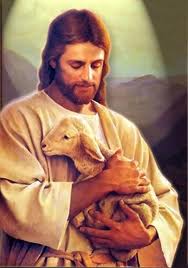
 Is Paul guilty of a hate crime? He seems to be very selective in his victims. They were all followers of Jesus. Thus, it stands to reason, Paul hated Jesus, with a passion, and took out his hated on those he loved, and loved in return. However, this hateful serial killer never addresses his deep seeded hatred for Jesus. Paul never says; “I understand why so many Christians hate me with a passion. I would hate me too! This is why I will try to be extra humble, and merciful, unto members of my church who lost family members due to my murderous actions”
Instead, we get……………
“How dare you hate me and disobey me just because I hated your Lord. I will spare no one since you insist I provide you with proof Jesus is only speaking through me – just me!”
Who did Paul truly hate? The article below says Paul was a member of the Sanhedrin, the very folks who had Jesus arrested and – EXECUTED! Why did the Sanhedrin hate Jesus? The answer is found in Timothy, who dismisses women priests – who had to follow Jesus! One such woman was, Mary, the mother of John Mark, who had a falling out with Paul, when Barnabas suggested to Paul, he accept John-Mark as a Bishop with a special mission.
I suspect Paul’s real target was Mary, and other women who Jesus personally ordained as Apostles. These women must have put Paul in a jealous rage – when these women were made second wave Apostles – over him! This is the “innovation: that Joseph Flavius speaks of that led to the War with Rome over the temple. It looks like the Sanhedrin hated these Women Apostles, with a passion – and their genealogies that proved the wrong priesthood was serving in Herod’s hated temple.
This is why the Sahadrin sent Paul unto them, he a secret agent bent on discovering the identities of these women – and the heads of Jesus’ church – not Paul’s church! When did Paul persecute the church? Did his rage boil over – after he was made one with ‘The Way’? When Paul found out the Inner Cricle were women kin to Jesus and his brothers, he had to believe there was a great conspiracy under way, even a usurption of the Herodian Kings and Queens in order to found a pure Judaic Kingdom, once more. This is why Paul tells un-named kings to take it easy, don’t worry – and be happy! What did these kings give Paul in return for his – leniency?
“Get behind me – Satan!”
Paul says he put women in prison and tortured and degraded them in order to get them to denounce their Lord, but, that makes no sence. Paul who was a Pharisee knew this was blaspheme in itself. He tortured women to get them to renounce they are Ministers and Rabbis of God – and Jesus! In John 17 it appears Jesus is adressing his women Apostles, joining them to the secret name of God, that Cohen Prieshood – owned! Saul of Tarsus, the Sahadrin, and the false Herodian priesthood – WANTED THAT NAME! They didn’t get it. The saints they boiled in oil, died with smiles on their face!
Amen!
John Presco
Copyright 2012
But I would have you know, that the head of every man is Christ; and the head of the woman is the man; and the head of Christ is God. 1 Corinthians 11:3
Wives, submit yourselves unto your own husbands, as it is fit in the Lord. Colossians 3:18
Wives, submit yourselves unto your own husbands, as unto the Lord. For the husband is the head of the wife, even as Christ is the head of the church: and he is the saviour of the body. Ephesians 5:22-23
The Church Fathers based prohibition against woman priestesses not only on the earliest Jewish and Christian traditions, but also by scriptural dictates.
The prohibition against women preaching can be found in 1 Timothy 2:12 (KJV):
“But I suffer not a woman to teach, nor to usurp authority over the man, but to be in silence”.
This prohibition is also found in 1 Corinthians 14:34-35 (KJV):
34:
“Let your women keep silence in the churches: for it is not permitted unto them to speak; but they are commanded to be under obedience, as also saith the law.
35:
“And if they will learn any thing, let them ask their husbands at home: for it is a shame for women to speak in the church”.
According to some interpretations, the same Mary was also among the women that on Easter morning went to the tomb to anoint Jesus’ body with spices. Matthew 28:1 calls her “the other Mary” to distinguish her from Mary Magdalene, while Mark 16:1 uses the name “Mary of James”, most probably derived from James the Less. The Latin version of that name, Maria Iacobi, is often used in tradition. Stephen S. Smalley (1982) says that it is “very probable” that Mary of Clopas is Mary the mother of James son of Alphaeus.[1] Both “Clophas” and “Alphaeus” may be Greek spellings of the Aramaic name Hilfai.
In John 19:25 Mary of Clopas appears immediately after the expression “His mother’s sister”. Therefore, Mary is often seen as the sister of Jesus’s mother, despite the awkwardness of having two sisters bearing the same name. However, other interpretations distinguish between two different persons, one being “His mother’s sister” and the other being “Mary of Clopas”. Still, other interpretations make Mary of Clopas not the sister but the cousin of Jesus’ mother, as Hebrew or Aramaic had no specific word for cousin, or her sister-in-law, as Clopas was considered the brother of Joseph.
THE ACCEPTANCE OF SAUL OF TARSUS IN THE JERUSALEM CHURCH
Then the church throughout Judea, Galilee and Samaria enjoyed a time of peace. It was strengthened; and encouraged by the Holy Spirit, it grew in numbers, living in the fear of the Lord. (Acts 9:31)
The church enjoyed peace, blessing, and prosperity because they were being built up. They were continuing to grow spiritually because of their intake and application of Bible truth. This spiritual growth caused the Holy Spirit to become their source of encouragement, comfort, and motivation. The Jerusalem Church was a dynamic local church before legalism set in and neutralized the congregation. It was not a matter of fear, worry and anxiety on the part of these advancing believers. They were reluctant to give the right hand of fellowship to Saul of Tarsus though he had been genuinely converted.
He had been baptized and had already spent three and one half years in the Arabian Desert being taught by the Lord Jesus Christ in His resurrection body (called a Christophany). The Lord Jesus left the right hand of the Father, came down to the Arabian Desert and taught the Apostle Paul. There are several occasions when the Lord Jesus appeared on the earth to teach apostles. He did it twice with Paul in the temple and He did it with John on the Isle of Patmos. These were all Christophanies.
These are three special appearances of the Lord Jesus Christ after His resurrection, ascension and His present session. One appearance was to communicate Bible truth to the Apostle Paul so he could be the great apostle to the gentiles and take the message of salvation and Bible truth to the regions beyond. However, many believers were very reluctant to associate with Paul because of his past.
But Saul began to destroy the church. Going from house to house, he dragged off men and women and put them in prison. (Acts 8:3)
The disciples in Jerusalem were also afraid to associate with Saul of Tarsus because of his history of persecution of Christians. Saul was one of the chief members of the Sanhedrin, the Jewish supreme court composed of the Pharisees and the Sadducees. Remember, members of the Sanhedrin were practicing operation confiscation. Agents working for the Sanhedrin would approach believers in Jerusalem and pose as Christians and say they had received Christ as their Messiah. They would profess that Christ was the Messiah of Israel, the Savior of the world and that they had accepted him as such. After the Christians accepted these agents of the Sanhedrin who were faking conversion, they would learn all they could regarding the church members and their possessions. These agents would then report to the Jewish supreme court who would confiscate everything that the Christians owned. They were totally dispossessed!
You can understand why they were very distrustful of Saul of Tarsus. He was not only a chief member of the Sanhedrin, but the chief persecutor of the Church. He thought he was doing God a great favor by killing Christians and imprisoning those that he could not kill. He was holding the cloaks of those who stoned Stephen to death.
You can understand why they wanted to wait a little longer to see if Saul was genuinely converted. However, they failed to realize that Barnabas had already checked out Saul and his true conversion to Christianity. Later, because of their trust in Barnabas, the great son of encouragement, they would accept the Apostle Paul on the word of Barnabas. Do you have the kind of encouraging lifestyle that fellow believers would trust someone else based on your word? Does your lifestyle really reflect the Lord Jesus Christ? Your spiritual lifestyle example can be the most fantastic quality of encouragement to other believers.
THE UNCONDITIONAL LOVE OF BARNABAS TOWARDS OTHERS
The disciples in Jerusalem (Peter, John, and James, who is the pastor-teacher of the church) were very unsure about associating with Saul of Tarsus. That was until Barnabas came into the picture demonstrating his great qualities of encouragement.
When he came to Jerusalem, he tried to join the disciples, but they were all afraid of him, not believing that he really was a disciple. But, Barnabas took him and brought him to the apostles. He told them how Saul on his journey had seen the Lord and that the Lord had spoken to him, and how he had in Damascus preached fearlessly in the name of Jesus. (Acts 9:26-27)
Paul had openly expressed his belief in the Lord Jesus Christ and that he believed that Jesus Christ was the God-Man Savior as well as the Messiah of Israel. Members of the Jerusalem Church had seen several people fake conversion. The agents of the Sanhedrin had faked conversion for personal gain of that which was confiscated. It is understandable why Saul needed someone to verify his genuineness.
This incident regarded Saul, who would later be known as the Apostle Paul, shows another reason why Barnabas was an encourager. He had a basic concern for people, particularly when they were being rejected by others. He was willing to trust Saul when no one else in Jerusalem would. Barnabas was such an encourager and had such care and concern for others, especially those rejected by others, that he was willing to trust them when others did not. Again, here is the important principle that the actions of Barnabas were rooted in unselfishness. He truly possessed a maximum unconditional love toward all the brethren – including Saul of Tarsus.
BARNABAS’ WILLINGNESS TO BECOME VULNERABLE
Barnabas really laid his reputation on the line in recommending acceptance of Saul who had a reputation as the chief persecutor of the Church. All Barnabas saw was a man in need of help. He saw a man he believed was sincere and genuinely a believer. Barnabas knew that he could assist in this situation. You must understand that Barnabas did not naively trust Saul, but trusted Saul based upon knowledge. Barnabas had the facts. Barnabas knew what had happened to Saul because he took the time to find out.
Barnabas realized that Saul had seen the Lord Jesus Christ on the Damascus Road and that he had talked with him. Barnabas knew there had been conversation and communication resulting in Saul’s conversion. He had learned all about Saul’s being led into the area where he was baptized, the Damascus Road confrontation by Jesus Christ, and how he had spoken out boldly in the name of the Lord Jesus Christ in Damascus. The important principle of encouragement here is to act only upon the facts. Take the time to learn before acting.
Saul had a reputation of honesty. Barnabas knew this. Even before Saul of Tarsus was converted, he was a man of his word. When he believed the Christians were the enemy of God and that he was doing God a favor by wiping them out, he meant it and was sincere in his error. He was sincerely wrong. His word was his bond. Barnabas learned that he had a reputation for being a man of honesty. He knew that having been converted and having received doctrinal training from the Lord Jesus Christ himself, that Saul was a man worthy of the trust of the saints in Jerusalem.
So Saul stayed with them and moved about freely in Jerusalem, speaking boldly in the name of the Lord. He talked and debated with the Grecian Jews, but they tried to kill him. When the brothers learned of this, they took him down to Caesarea and sent him off to Tarsus. (Acts 9:28-30)
All the believers in Jerusalem could think about were the failures of people in the past. They did not want to trust them because of their past failures. They did not want to recognize that people can and do change. Saul the proud one and the arrogant one had become Paul the little one, the grace oriented one, the one who was characterized by maximum humility. Barnabas knew this. He realized that people could change. Barnabas was a person who was willing to get involved in other peoples lives. He was willing to invest the time to find out what was really true and then to act upon that knowledge. You must remember that even if you have what you think are all the facts, you must exercise an element of trust.
Barnabas was willing to believe in Saul (who would later become Paul) primarily because Barnabas believed in people and he did not permit the exceptions to disillusion him and destroy his capacity to trust. Barnabas had a maximum capacity for unconditional love of other people. He was spiritually self-sustained and even trusted people who had failed him. He did not become disillusioned and discouraged because other people had let him down. The actions of Barnabas revealed a willingness to become vulnerable, if necessary, to convince the Jerusalem Church to trust the Apostle Paul.
BARNABAS AS UNSELFISHNESS PERSONIFIED
Barnabas was indeed unselfishness personified. Barnabas’ attitude and actions in Jerusalem were a consistent part of his life. Several years after this defense of Saul, Paul and Barnabas were called by the Holy Spirit to serve together as missionaries on the first missionary journey. There was a young man whose name was John Mark who was a nephew of Barnabas. John Mark’s mother is Mary in the Book of Acts who had a church in her home.
When this had dawned on him, he went to the house of Mary the mother of John, also called Mark, where many people had gathered and were praying. (Acts 12:12)
Did you know that the first 500 years of the Church Age were characterized by local churches meeting in church member’s homes? There was no such thing as a church meeting in a so-called sacred building. This activity began with Constantine who made Christianity the religion of the state. He brought in all of the paganism of Roman theology, the systems of pantheons and the worship of many gods and amalgamated the whole thing together. He believed all services should be held in one building. That is where it all began.
Home Bible classes follow a tradition that started in the first century A.D. Mary had a church in her house. Philemon had a church in his house.
Day after day, in the temple courts and from house to house, they never stopped teaching and proclaiming the good news that Jesus is the Christ. (Acts 5:42)
With a home’s informal atmosphere, Bible doctrine can be communicated with that close eyeball-to-eyeball contact. The environment is very conducive to an open attitude where you feel like you can come up to the pastor-teacher and ask questions about what was taught. These surroundings allow fellowship with fellow believers after class and can be a great blessing. This is a part of the fellowship of the Body.
In the church at Antioch there were prophets and teachers: Barnabas, Simeon called Niger, Lucius of Cyrene, Manaen (who had been brought up with Herod the tetrarch) and Saul. (Acts 13:1)
Prophecy was a pre-Canon spiritual gift. Early Church Age men who had been given the temporary spiritual gift of prophecy by the Holy Spirit at salvation could, under the ministry of the Holy Spirit, receive divine revelation and communicate it to the local churches which met in different houses. This was a stop-gap measure before the completion of the Canon of Scripture. Teachers had the gift of teaching that is mentioned in the Book of Romans.
But thanks be to God that, though you used to be slaves to sin, you wholeheartedly obeyed the form of teaching to which you were entrusted. (Romans 6:17)
This is different from the pastor-teacher who is the highest authority and leader within each local church. The prophets and teachers in Antioch were called Niger, Lucius of Cyrene, Manaen (who had been brought up with Herod the Tetrarch) and Saul. They were ministering to the Lord and fasting. The term “fasting” here is the temporary cessation of certain normal activities to concentrate on a crash program in Bible study and prayer. They were going to be there under the ministry of the Spirit for a short time and so these men who had teaching gifts, like Barnabas and Saul, were spending maximum time in study and prayer even to the elimination of certain bona fide functions in life, like eating. They were spending maximum time in Bible study and prayer to communicate and to get the information out to these baby believers in the church in Antioch.
While they were worshiping the Lord and fasting, the Holy Spirit said, “Set apart for me Barnabas and Saul for the work to which I have called them.” So after they had fasted and prayed, they placed their hands on them and sent them off. (Acts 13:2-3)
This is still the pre-Canon period of the Church Age when the voice of God was still a bona fide means of giving divine direction. The voice of God stopped between 96 to 100 A.D. because the entire Word of God was completed. The completed Canon of Scripture became the only rule and the only norm and standard for faith, doctrine and conduct. Since the Canon of Scripture was completed and circulated, God has not conveyed truth to mankind by any other means since that time.
Acts 13:2-3 indicates what was to be Paul’s first missionary journey. The “laying on of hands” is not a special miraculous operation where they laid hands on someone who was thereby healed or received some special shot of divine power. This was simply a ritual of identification. The Antioch Church leadership identified with Saul and Barnabas because they felt that God the Holy Spirit had selected them to carry this special work of evangelism on this missionary journey. By laying on of hands, they showed that they, as a local church, were identified with them. They were conveying their support of them through their prayers, giving and assisting them.
You may never become a missionary, but when you pray for your missionaries or give financial support to your missionaries, you are “on the mission field with them.” You are on the mission field with your missionaries through your prayers and through your gifts. You are identified with them.
The two of them, sent on their way by the Holy Spirit, went down to Seleucia and sailed from there to Cyprus. When they arrived at Salamis, they proclaimed the word of God in the Jewish synagogues. John was with them as their helper. (Acts 13:4-5)
This is the background for the first missionary journey. A short time after they began their evangelistic tour when the going got tough, the tough didn’t get going – John Mark left them and returned to Jerusalem.
From Paphos, Paul and his companions sailed to Perga in Pamphylia, where John left them to return to Jerusalem. (Acts 13:13)
THE ACTIONS OF BARNABAS
Paul and Barnabas completed the trip without John Mark. John Mark did not return to Jerusalem because of failure. He was not spiritually mature enough to be giving out all of this tough service. The rigors of missionary life, ministering, and serving to Paul and Barnabas were too much for him at this early spiritual stage. He decided to go back to Jerusalem to take in more of the Word of God so later, once spiritually mature, he would be able to serve with the correct motivation based on God’s grace. Sometime later, Paul and Barnabas agreed to return to the recently established churches and Barnabas suggested that they again take John Mark. He, now more spiritually mature, became a wonderful positive contribution to the apostolic ministry.
Some time later Paul said to Barnabas, “Let us go back and visit the brothers in all the towns where we preached the word of the Lord and see how they are doing.” Barnabas wanted to take John, also called Mark, with them, but Paul did not think it wise to take him, because he had deserted them in Pamphylia and had not continued with them in the work. They had such a sharp disagreement that they parted company. Barnabas took Mark and sailed for Cyprus, but Paul chose Silas and left, commended by the brothers to the grace of the Lord. He went through Syria and Cilicia, strengthening the churches. (Acts 15:36-41)
Paul disagreed sharply with Barnabas about allowing John Mark to join them. The Greek word paroxusmos means to insist unequivocally and dogmatically in the negative. Paul was originally rejected by the Jerusalem Church. Barnabas was the only one who went to bat for him and so encouraged him and the congregation that the entire congregation accepted Paul. Now, Paul has the same opportunity to be an encouragement to John Mark, but will not. Arrogance from the old sin nature was genetically very strong in Paul and that led him to be impulsive. He remembered that John Mark had failed and returned to Jerusalem. He did not want to take another chance on him.
Barnabas had taken many chances with Paul and had even laid his reputation on the line for Paul. The congregation in Jerusalem had not wanted to accept Saul of Tarsus. He was a member of the Sanhedrin and chief persecutor of the Church. Following salvation, intake and application of the Word of God takes time to transform a believer from the inside out. It took some time even with Paul. Saul, the great one became Paul the little one because of the influence of Bible doctrine and the encouragement of Barnabas in his life.
Paul had a chance to encourage someone and refused. Barnabas wanted to give John Mark another chance. If Barnabas had not given John Mark another chance, who knows what might have happened to this young man? He might have become so discouraged that he would have given up on Christianity entirely. If you have the opportunity to encourage someone, it might be the exact right time for you to make the difference in someone’s life. Barnabas was right there on the scene to give encouragement to John Mark. Paul and Barnabas are mature believers and both want the will of the Lord to be accomplished.
God overruled the situation and caused all things to work together for good so that in the second missionary journey Paul will take Silas and be a source of great encouragement to Silas. Barnabas will take John Mark and go back and retrace steps through Cypress and other churches from the first missionary journey and be that continued source of much needed encouragement to John Mark. Paul is right and Barnabas is right. Paul becomes an encouragement to Silas. This encouragement was so much so that when they were imprisoned, they were sharing the happiness of God, singing hymns, rejoicing, and praising the Lord in the dungeon in chains. These led to the conversion of the Philippian jailor and his entire family. Paul encouraged Silas. Barnabas encouraged John Mark.
Who are you encouraging right now? Or, do you have an attitude that is so prevalent among some believers today? Do you feel you are part of the grace minority? Do you feel you are grace-oriented and, as such, the doctrinal elite? Do you feel your intake of doctrine, your special vocabulary and theological terminology (which no one can understand) makes you the only one who is right? Does that sound like an attitude of unconditional love? Is that attitude encouraging to other believers? There is no elite in the Royal Family of God! As you grow spiritually and develop that unconditional love of the brethren, you will be right in the place where God can use you – possibly at the crossroads in someone else’s life.
People are at crossroads in their lives at many points. When they apply Bible truth to that major decision and stand back and wait for God’s perfect grace timing, they have prepared themselves for the correct response to it. As a result, they accept God’s decision based on Bible truth communicated in their local church. This is a critical time for encouragement from other believers. This encouragement helps them through the tough times. This is the type of emphasis in local churches that will turn this nation around. It will not be because of people who are just sitting back and taking in doctrine and never doing anything for anyone else. It will not be because of people avoiding helping other believers and never supporting evangelistic outreach efforts. It will not be because of people never witnessing to others such as the immigrants from Latin, Oriental or Arab nations that may live near them.
We can have such a prejudice against people from other nations. Many times, it is wrong how they have come into this nation. Many have the attitude that they do not love America, but America’s money. They send it to their home countries instead of contributing to America. They should understand the heritage of the United States of America. They must become Americans first. They must become patriotic. I cannot think of a better way for a foreigner to become patriotic than for someone to lead him to Christ and expose him to divine truth. That is what will make the difference. So many of us have the attitude that we want our priesthood, but not our ambassadorship. You cannot have one without the other. When you function correctly under your priesthood, you will fulfill your ambassadorship. Part of your ambassadorship is helping other believers and unbelievers.
There have always been people considered undesirable by other people. This includes the so-called “homeless people.” Most of these people can be turned around and made into contributing and responsible citizens of the United States of America through their exposure to the Gospel, the Laws of Divine Establishment and Bible doctrine. This change will come from their soul’s growth and edification after they receive Christ as Savior.
The issue is not whether they have homes. Homes have been built for them, but most do not want to live in them. They want to live in the park where everyone can see their poor pitiful plight. They are loaded with self-pity. These people are losers. That is the attitude of a bum. Thank God for people like Barnabas. Always ready and able to give a person another chance. If he had not done that with John Mark, who knows what may have happened to this young man?!
And we know that in all things God works for the good of those who love him, who have been called according to his purpose. (Romans 8:28)
Although both Paul and Barnabas were right from divine viewpoint, Paul did not acknowledge that John Mark deserved another chance until much later. It is fantastic to see how the Word of God transformed Paul who later acknowledged to Timothy the contribution made by John Mark.
For I am already being poured out like a drink offering, and the time has come for my departure. I have fought the good fight, I have finished the race, I have kept the faith. Now there is in store for me the crown of righteousness, which the Lord, the righteous Judge, will award to me on that day–and not only to me, but also to all who have longed for his appearing. (2 Timothy 4:6-8)
Paul knew that he was under dying grace. He was passing the colors or the light on to Timothy. We are to be light bearers. It’s like someone at the Olympics carrying the flame and passing on the torch to someone else. Paul was passing on the light to each one of us just as he passed it on to Timothy.
2 Timothy 4:6-8 indicates that Paul had reached and retained spiritual maturity. The term “that day” refers to the Day of Christ or the Rapture of the Church. If you love the Rapture of the Church, it means that you love the Lord Jesus Christ because you know you are going to see Him face to face. You will then begin to enjoy forever that perfect resurrection body which He will give you at that time. He will impute all the wonderful blessings and rewards to that eternal, perfect, indestructible and sinless resurrection body!
Only Luke is with me. Get Mark and bring him with you, because he is helpful to me in my ministry. (2 Timothy 4:11)
John Mark indeed contributed to the work of the Lord. In the Gospel of Mark, everything is related to Peter’s account of the incarnation of our Lord. Peter related his account to John Mark who, under the inspiration of the Holy Spirit, wrote down everything that God wanted us to know in that gospel. The Gospel of Mark is the gospel of action and the shortest of the gospels. It is the gospel that emphasizes action, service, and production. That is what John Mark was to Barnabas and Paul. John Mark was one who served. He was loyal and faithful and was a great source of encouragement to the very man who rejected him after his first failure. John Mark became a wonderfully mature believer. He knew what it meant to forgive and had completely forgiven Paul. Because of this grace attitude, they could have wonderful fellowship with each other where John Mark ministered to Paul when Paul was under dying grace.
PERSONAL APPLICATIONS INVOLVING TRUST OF OTHERS
Our reluctance to trust others and to defend them may be because we have often dealt with untrustworthy people.
Saul of Tarsus was a member of the Sanhedrin which was composed of the Pharisees and the Sadducees. Saul was a chief member because he was a supreme court justice in the Sanhedrin. He believed he was doing God a great favor and service by killing Christians. Those who he could not martyr, he had hauled off to prison. He had a very bad reputation from the Christians’ point of view. This made it very hard for members of the Jerusalem Church to accept him.
Barnabas was there to point out the fact of Saul’s conversion. He also conveyed to members of the Jerusalem Church everything that followed Saul’s conversion on the road to Damascus. Barnabas maintained that Saul deserved an opportunity as a believer to minister to the unsaved. We must remember that many times we are reluctant to defend people and come to their defense because we have been “burned” in the past by other people whom we had erroneously trusted. We should avoid depending on untrustworthy people until we see significant evidence of change of attitude and action. We, like Barnabas, must not let experiences keep us from trusting others.

 Rosamond Press
Leave a reply to Royal Rosamond Press Cancel reply