


With the discovery of the Rougemont Templars, I and my family are at the bullseye of all these Templar controversies. I am the target of pretenders and usurpers.
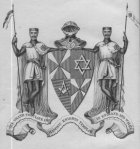
Above is a illustration of a drunk’s progress employed by the Good Templars who spread Abstinence all over the world. Am I being called to restart this order due to the alcoholism that all but destroyed my family? I have refounded the original Nazarite Church of God and bid folks to take the Nazarite Vow. This is more then a historic and religious excercise.
Jon the Nazarite
heresy/
http://www.templeofmysteries.com/the-knights-templar/the-johannite-heresy/
Another candidate for the gnostic heresy at the heart of the Templars is that they – or the inner circle – were Johannites.
Baigent, Leigh and Lincoln, discussing the Templars’ alleged worship of the head-shaped Baphomet idol, write:
recent speculation had linked the head, at least tentatively, with the severed head of John the Baptist; and certain writers have suggested that the Templars were ‘infected’ with the Johannite or Mandaean heresy – which denounced Jesus as a ‘false prophet’ and acknowledged John as the true Messiah. In the course of their activities in the Middle East the Templars undoubtedly established contact with Johannite sects, and the possibility of Johannite tendencies in the Order is not altogether unlikely. But one cannot say that such tendencies obtained for the Order as a whole nor that they were a matter of official policy.
One of the suggested origins of the name ‘Baphomet’ is that it derives from ‘Baptist’ or ‘baptism’. Indeed, some of the Templar knights told the Inquisition that the head-idol was the head of John the Baptist.
This idea was taken up by Lynn Picknett and Clive Prince, who argue in The Templar Revelation (1997) that Johannitism was the great secret of the Templars.
Johannites – as the above quote shows – consider that John the Baptist was the ‘true Christ’ and the Jesus was a usurper of his role and authority. They are still represented today by a people known as the Mandaeans – the world’s only surviving gnostic religion – who were, until the Gulf War, largely confined to the southern marshes of Iraq and Iran,
New Testament
The Johannites are mentioned in brief passages of the New Testament, in arguments over who is the true Messiah between Jesus and John the Baptist.
In Luke 7:18 – 23 John (who, we are told, has earlier met Jesus and fallen at his feet) sends a message to Jesus saying “Art thou he that should come or do we wait for another?” Shortly after this John is killed apparently to appease the whim of Salome.
Some Johannites believe that Christ and/or his followers killed John and took over the church that he had created. This belief is called the Great Heresy.
[edit] Gnostics
The Johannites are a sect of Gnostics who acknowledge John the Baptist as the prophesized [[Messiah that was to come before the greater Messiah, and Jesus Christ as the greater Messiah. The Church itself was founded by St. Bernard. The Church believes that Christ passed down his Gnosis to John the Divine and Mary Magdalene, who some also believe to be the equivalent of Jesus as the Daughter of Sophia and Venus/Aphrodite.
[edit] Knights Templar
The Knights Templar were secret adherents to Johannism when they came upon documents in Solomon’s Temple and made Mary Magdalene their patroness.
Is there any basis to these claims? Here is what it is apparently true: there was indeed an Order of Sion based on Mt. Sion, and according to a papal bull of the 12th century, it had monasteries and abbeys elsewhere in Palestine (in particular, Mount Carmel), in southern Italy (Calabria), and in France. There is little in the official histories linking Godfroi to this order, but he is said to have founded the Order of the Holy Sepulchre, whose relationships to these other orders (the Temple and Sion) are unclear. And the official histories do not indicate any overlap between these monks and the soldier-monks of the Knights Templar. The Order seems to have occupied its “mother” abbey, Notre Dame de Sion/St. Mary of Mt. Zion, built on the foundations of the original apostolic Cenacle or Coelaneum, up until around 1291 or so, when like many Crusader holdings, it was overwhelmed by the Moslem onslaught. It actually was in the hands of the Franciscans for several more centuries, until it finally was lost to Christian ownership and was converted to a mosque.
I have found interesting links between the Order de Sion and the Carmelites. St. Berthold, the founder of the Carmelites, also originated from Calabria. Fra Lippi, a tutor of Botticelli, who is listed as a PoS GM, lived in Calabria and was known as “The Carmelite”. Crotone in Calabria was the home of the Pythagorean school, and Pythagoras is said by Iamblichus to have visited Mount Carmel. Calabria was the “stomping grounds” of Joachim of Fiore and Giordano Bruno. Most interestingly, recent archaeological articles suggest the Essenes had encampments on both Mount Carmel and Mount Zion. St. Therese of Liseux turns up in a number of “PoS churches”, and she took her name both from Theresa of Avila, a Discalced Carmelite and mystic, and Therese of Lidoine, a Carmelite nun who was murdered by the Revolutionary Terror in Compeigne.
However, historians Mark Oxbrow, Ian Robertson,[19] Karen Ralls and Louise Yeoman[20] have each made it clear that the Sinclair family had no connection with the Medieval Knights Templar. The Sinclairs’ testimony against the Knights at their 1309 trial is not consistent with any alleged support or membership. In “The Templars and the Grail”[21] Karen Ralls states that among some 50 who testified against the Templars were Henry and William Sinclair.
The Order of the Solar Temple is one infamous example of a “neo-Templar” group, founded in 1984, that claimed descent from the original Knights Templar; there are several other self-styled orders that also claim to be descended from, or revivals of, the Templar Order. One such organization is the Sovereign Military Order of the Temple of Jerusalem (SMOTJ), an ecumenical Christian society based on the traditions of the medieval Knights Templar and principles of chivalry. However, the order is not a genuine order of chivalry, having neither official state recognition nor a head of state as sovereign. SMOTJ was created in 1804 and is dedicated to the preservation of the holy sites in and around Jerusalem, charitable works, and antiquarian research. In 2001, the most prominent faction of the SMOTJ was recognized by the United Nations as a non-governmental organization.
Some people point out a few assumed similarities between Knights Templar and Switzerland.[22] This is mainly because of the similar flags, the Knights, a square cross flared at the ends, and the modern Flag of Switzerland, a square cross, without flared ends. Also, the Knights were known for their banking.
Ultimately, throughout history and to this day, various organizations have tried to claim links to the original Templar order. To date, none of these claims is historically verifiable nor widely accepted in academia.
Discoverers of the New World
Though the Knights Templar were officially disbanded in the early 14th century, some believe that the Templars, who are claimed to have possessed a sizable fleet of ships at La Rochelle (though there is no trace of their existence in any historical record[30]), may have fled to the New World by following old Viking routes, making one of the pre-Columbian voyages to America.[28] In Portugal, the Knights Templar did not disband, but simply changed their name to Knights of Christ. In 1492, this group is alleged to have provided the navigators for Christopher Columbus’ journey, and the Order’s cross was featured prominently on the sails of his ships, however there is no actual evidence to support this.
[edit] Legendary associations with other Orders
‘Well of Initiation’: architecture based in Templar, Rosicrucian and Masonic symbolism at the “Quinta da Regaleira” (1892-1910), Sintra, Portugal.
Further speculation revolves around the Templar’s association with other Orders. This matter is additionally confused because some Orders, such as the Freemasons, started adopting Templar symbols and traditions in the 18th century. (See: Knights Templar (Freemasonry)) Another modern (but much smaller) order that claims Templar ancestry is the Sovereign Military Order of the Temple of Jerusalem.
Conspiracy theorists claim that the Knights Templar stored secret knowledge, linking them to myriad other subjects: the Rosicrucians, the Cathars, the Priory of Sion, King Arthur and the Knights of the Round Table, the Hermetics, the Ebionites, the Rex Deus, lost relics or gospels of James the Just, Mary Magdalene or Jesus (such as a “Judas Testament”), King Solomon, Moses, and, ultimately, Hiram Abif and the mysteries of ancient Egypt. This, in turn, has contributed to the Knights Templar having several influences on popular culture.
[edit] Skull and crossbones
A Masonic legend speaks of three Templars searching the site of Jacques de Molay’s burning and finding only his skull and femurs. These they took with them and allegedly were used as the impetus to create the first Jolly Roger flag of Piracy, so that they would never forget.[citation needed] This same symbol is used today by the Yale Skull and Bones society.
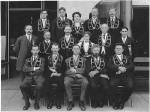
The IOGT International (formerly known as the International Organisation of Good Templars and International Order of Good Templars and the Independent Order of Good Templars) is an international non-governmental organisation working in the field of temperance. It is based in Sweden, a country which had very strict alcohol policies and laws in the past.
Contents
[hide]
1 History
2 Member organisations
3 References
4 Further reading
5 External links
[edit] History
The IOGT originated as one of a number of fraternal organizations for temperance or total abstinence founded in the 19th century and with a structure modeled on Freemasonry, using similar ritual and regalia. Unlike many, however, it admitted men and women equally, and also made no distinction by race.

 Rosamond Press
Leave a reply to Royal Rosamond Press Cancel reply