“The man old in days will not hesitate to ask a small child seven
days old about the place of life. For many who were first will
become, last, and they will become one and the same.
He who seeks me will find me in children from seven days old, for
there concealed, I shall in the fourteenth age be made manifest.”
These passages have everything to do with John the Baptist speaking when he was eight days old, and Jesus speaking in the Koran when he emerged fro his mother’s womb.
Bishop Hippolytus tells us that
“…they [the Naassenes] hand down an explicit passage, occurring in the Gospel inscribed according to Thomas, expressing themselves thus: ‘He who seeks me will find me in children from seven years old; for there concealed, I shall in the fourteenth age be made manifest’.”
God bid me to become a Nazarite so I can do battle with the new day Sacarii who backed by are waging a holy war against Liberals and Democrats from the Republican Party founded by my kindred, John Fremont, Jessie Benton and radical secular Germans and Jews who fled Europe as Forty-Eighters. Some people close to me have labeled me “nuts” in regards to my very real prophecies, and my call for Zionist Jews and Evangelicals to get out of my kinfolk’s party!
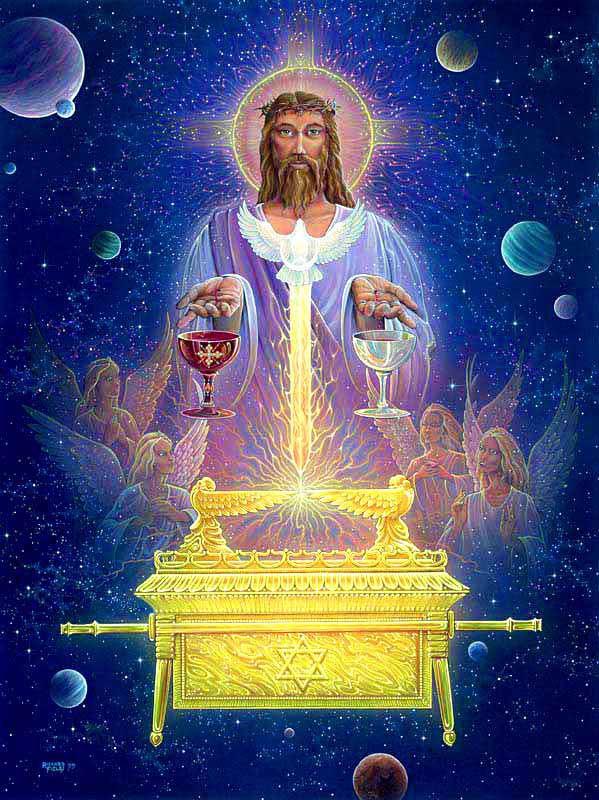 s
s
Get out!
Jon Presco
Netanyahu’s nemesis
And he is banking on the Christian religious extremists in the United States to topple his nemesis Obama this November.
Indeed, 2012 could become the year of religion. In Israel, the wider Middle East and the United States, religious leaders and religious parties will play a central role in political developments and the faith and faith-related policies of candidates will become a major election issue and primary consideration for many voters. Netanyahu is certainly banking on that – but it could backfire on him drastically. The campaign against undue Haredi influence in the Knesset and religious extremism on the streets and buses of Israel could gather steam and lead to a public momentum that would chip away secular votes from Netanyahu and the right-wing block.
After much uproar and delay, the bringing to justice of the whole eight hundred some-odd who were arrested in Sproul Hall had finally gotten off the ground in early March, 1965. The main disagreements revolved around whether we were to be tried collectively or as individuals. The opening statement was made by the district attorney, J. Frank Coakley, who wanted blood.195 “He shall be called a Nazorean”
“He shall be called a Nazorean” [1]
It is interesting that the prophecy recorded about Christ in the gospel called Matthew can not be found in the Old Testament. “He shall be called a Nasorene!” in Matthew 2:23 is nowhere to be found in it. There is a verse that speaks of a Nazor, or branch, coming out of the stem of Jesse, but nothing that says someone will be called a Nazorean or even a Nazor, or “branch”.
The compiler of Matthew goes to great lengths to portray Jesus as a fulfillment of Jewish expectation and prophecy; and it would be amazing if he or she made the blunder of inserting a quote not found in the texts. Yet the anonymous author or authors of expanded Matthew did indeed make at least one such blunder, for they misquoted a prophecy:
“So cavalier is Matthew with his ‘quotations’ from the prophets that he even wrongly attributes one quote: in referring to Judas’s “thirty pieces of silver” (27.3,10) he maintains that the prophecy of ‘Jeremiah’ had been fulfilled – and yet it is ‘Zechariah’ (11.12-13) who used the phrase! [2]
Jerome, who died in 420 AD, wrote:
“To these (citations in which Matthew follows not the Septuagint but the Hebrew original text) belong the two: “Out of Egypt have I called my son” and “For he shall be called a Nazaraean.” [3]
Apparently this quote was once in the Jewish scriptures, but was later edited out because of its use by Christians. As amazing as it sounds, there are many examples of this type of deletion by the rabbis, various lines being deleted from Jeremiah and other Jewish scriptures for just this very reason. Medieval documents exist that threaten punishment on anyone among the Jews who publishes older versions of texts containing prophecies used by Christianity.
Implications
The Nazorean canon and the Jewish canon were distinct. Each group observed something they both called the Law of Moses, but this was not a common law shared by both. The Law of Moses for the 5 Jewish sects was defined by the Old Testament Scrolls and the Old Testament Prophets. The Law of Moses for the Nazoreans and Essenes was defined by the Nazorean and Essene scrolls. These texts, and religions, were so different, and the Laws of Moses based on these distinct canons were so different, it is unfortunate that they both referred to their practices by the same name. There is, of course, a good reason for this which we shall go into in greater detail later. The simple answer is that the Nazoreans had the original simple Nazorean Law of Moses and their scrolls of light long before the Jewish version came along. The Jewish version of the Law, along with the Jewish Old Testament, came along long after the Nazorean one was well established. That is why the Nazoreans had an ancient saying that says: “Nazoreanism is older than Judaism.” They made statements like this because they believed that the Judaic religion and scriptures were actually of a late date, pseudipigraphic forgeries, fostered upon the people of Judea by the Persians when they were in control of the Jerusalem area in the fifth century BC. They went on to say that the Torah of Moses was actually written by someone called Tavish, and that the Jews pretended to find it hidden in the Temple when they returned from Persian exile when in reality they had brought the new creation with them. The Nazorean scrolls even tell us that the Jewish priests were aware of the true author of the Torah, for they informed the father of John the Baptist that he was a descendant of his:
“The man who has inscribed the Torah, named the great Tavish, has arisen from your ancestry.”[4]
Another account has more detail:
“The Jews were of the children of Ruha and Adam. Their great men were the children of Ruha; Moses was Kiwan, and Abraham was Shamish. They traveled and traveled until they came to ‘Ur shalam (Jerusalem), which they called “Uhra shalam’, ‘The-road-is-complete’. They wanted books and Melka d Anhura said, ‘A book must be written that does not make trouble for the Mandai’, and they sent one of the melki-T’awus Melka (I.e. Peacock King) to write the Torat (Old Testament).” [5]
Nazoreans, who never left Palestine, had a continual tradition and history going back for centuries. They knew that the supposed priests on the payroll of Persia were introducing a totally novel and new religion and set of writings when they read the Torah for the first time to the crowds of Jerusalem in 445 BC. They also knew that the stories about Old Testament heroes and prophets were being made up as well, despite the Persians use of names recognized by the Nazoreans. Epiphanius tells us of the Nazoreans:
“They have the holy names of patriarchs which are in the Pentateuch, up through Moses and Joshua the son of Nun, and they believe in them – I mean Abraham, Isaac, Jacob, and the earliest ones, and Moses himself, and Aaron, and Joshua. But they hold that the scriptures of the Pentateuch were not written by Moses, and maintain that they have others.”
The beliefs of the Nazorean Essenes, or Naassenes, are spoken of by another hostile historian named Hippolytus. Extracts from Book V of his Refutation of all Heresies tells us the following:
“What the assertions are of the Naasseni, who style themselves Gnostics (Mandai), and that they advance those opinions which the Philosophers of the Greeks previously propounded, as well as those who have handed down mystical (rites), The priests, then, and champions of the system, have been first those who have been called Naasseni, being so denominated from the Hebrew language, for the serpent is called naas (in Hebrew). Subsequently, however, they have styled themselves Gnostics, alleging that they alone have sounded the depths of knowledge. [6]
It should be noted that Naasseni is possibly a compound word derived from the union of the term Nazorean and Essene, echoing the fact that the Essenes and Nazoreans became one sect after the teachings of Elchasai about 100 AD. The Naasseni, being anti-torah, did not necessarily reject their association with snakes however, for they knew that thru word puns their name could be so understood. In ancient times the serpent was seen as an aspect of the Mother Goddess, and was identified with health, wisdom and healing. They also did not object to this symbol since they saw the snake in the Eden story as being an allegory of Yeshu who taught Adam and Eve to reject the false commands of the false god Yahweh and instead seek for gnosis from the tree of Knowledge. This was a common belief among all Gnostics whose origin goes back to the Nazoreans:
“These (Naasseni), then, according to the system advanced by them, magnify, (as the originating cause) of all things else, a man and a son of man. These are the heads of very numerous discourses which (the Naassene) asserts James the brother of the Lord handed down to Mariamme.. . . . For the promise of washing is not any other, according to them, than the introduction of him that is washed in, according to them, life-giving water, and anointed with ineffable ointment (than his introduction) into unfading bliss.” [7]
Hippolytus speaks here of James, the brother of Yeshu, as taking over leadership of the Nazoreans after his death, and then turning it over to Mariamme, who is Miryai, or Mary Magdalene the sought for one. He also writes:
“. . . And concerning this (nature) they hand down an explicit passage, occurring in the Gospel inscribed according to Thomas, expressing themselves thus: “He who seeks me, will find me in children from seven years old; for there concealed, I shall in the fourteenth age be made manifest.” . . . . “[8]
Hippolytus tells us here that the Gospel of Thomas, which exists today and which does indeed contain this quote in the beginning, was used by the Nazorean Essenes. We shall quote this entire gospel in a later chapter.
Thus is a portion of the fragment of Naassene philosophy preserved by Hippolytus. In it we learn that the Nazoreans were not afraid to make use of and identify with ancient controversial symbols like the serpent, nor were they hesitant to interpret scriptural passages in a very mystical and tantric manner. It might be a little tedious to go into the details of just what they meant by these ideas, but it should be plain from reading the full fragment that this sect had a very evolved metaphysical philosophy that they received from Yeshu, through his successor James, and thence from Miryai of Magdala. Some of these traditions and teachings were even older than Yeshu, going back to Yeshu’s predecessors like Yuhana, Anush, Bihram and others.
The precious Ginza that Yeshu read warns us against accepting the Old Testament prophets:
“I now, the resounding Messenger, say to you: Listen not on the speech of the lying prophets who pretend to be true seers and who claim for themselves a likeness to the three Uthras who have gone forth in the world. Your radiance is no radiance, your mantel is no true mantel. Some from them are vested in garments of darkness, bedecked with robes of darkness, and your odor is odious and rotten.” [9]
All ancient Nazorean Essenes looked with great suspicion on the authenticity of the New, as well as the Old Testaments. Their position on the Bible was summed up by the Gnostic Bishop Faustus about 400 A.D. Faustus tells us that the New Testament is not pure and that one should be careful what one receives from it. He warns that it was not written by either Christ or His Apostles, but nameless men many years later:
“We have proved again and again, the writings are not the production of Christ or of His apostles, but a compilation of rumors and beliefs, made, long after their departure, by some obscure semi-Jews, not in harmony even with one another, and published by them under the name of the apostles, or of those considered the followers of the apostles, so as to give the appearance of apostolic authority to all these blunders and falsehoods.” [10]
From Manichaean sources we know that early true followers of Yeshu did not accept the New Testament as authentic. The following quote from an Arabic manuscript points out the origin of these dubious texts in a manner consistent with the position of the Nazorean Essenes.
“And the Romans said: “Go, fetch your companions, and bring your Book .” The Christians went to their companions, informed them of what had taken place between them and the Romans and said to them: “Bring the Gospel, and stand up so that we should go to them.” But these companions said to them: “You have done ill. We are not permitted to let the Romans pollute the Gospel. In giving a favorable answer to the Romans, you have accordingly departed from the religion. We are therefore no longer permitted to associate with you; on the contrary, we are obliged to declare that there is nothing in common between us and you;” and they prevented their taking possession of the Gospel or gaining access to it. In consequence a violent quarrel broke out between the two groups. Those mentioned in the first place went back to the Romans and said to them: “Help us against these companions of ours before helping us against the Jews, and take away from them on our behalf our Book.” Thereupon the companions of whom they had spoken fled the country. And the Romans wrote concerning them to their governors in the districts of Mosul and in the Jazirat al-Arab. Accordingly, a search was made for them; some were caught and burned, others were killed.
“As for those who had given a favorable answer to the Romans they came together and took counsel as to how to replace the Gospel, seeing that it was lost to them. Thus the opinion that a Gospel should be composed was established among them. They said: “the Torah consists only of narratives concerning the births of the prophets and of the histories of their lives. We are going to construct a Gospel according to this pattern.
“Everyone among us is going to call to mind that which he remembers of the words of the Gospel and of the things about which the Christians (Nazoreans?) talked among themselves when speaking of Christ.” Accordingly, some people wrote a Gospel. After them came others who wrote another Gospel. In this manner a certain number of Gospels were written. However a great part of what was contained in the original was missing in them. There were among them men, one after another, who knew many things that were contained in the true Gospel, but with a view to establishing their dominion, they refrained from communicating them. In all this there was no mention of the cross or of the crucifix. According to them there were eighty Gospels. However, their number constantly diminished and became less, until only four Gospels were left which are due to four individuals. Every one of them composed in his time a Gospel. Then another came after him, saw that the Gospel composed by his predecessor was imperfect, and composed another which according to him was more correct, nearer to correction than the Gospel of the others.” [11]
The following quote from the same source on the falsification of the record of the New Testament is in full accord with ancient Nazorean beliefs:
“As for the prodigies and miracles which as the Christians claim (were worked) by him, all this is baseless. He himself did not claim (to have worked) them. Nor is there in his time or in the generation which followed any disciple who claimed (that Jesus had worked miracles). This was first claimed only a very long time after his death and after the death of his (direct) disciples; similarly the Christians have claimed that the Jew Paul (has worked miracles and this) in spite of his being known for his tricks, his lying and his baseness; they have done the same for George and for Father Mark, and they do the same at all times with regard to their monks and nuns. All this is baseless.’[12]
——————————————————————————–
[1] Christian Bible, Matthew 2:23
[2] Kenneth Humphreys
[3] Jerome, De Viris Inlustribus 3
[4] Mandaean Book of John the Baptist.
[5] The Mandaeans of Iraq and Iran By E.S. Drower Clarendon Press, Oxford,1937 (Reprint Leiden:E.J. Brill 1962) page 257-258 Narrator: a priest (Drower gives no name)
[6] Hippolytus. Extracts from Book V of his Refutation of all Heresies
[7] Extracted From Book V Of Refutation Of All Heresies By Hippolytus
[8] Extracted From Book V Of Refutation Of All Heresies By Hippolytus
[9] Ginza Rba
[10] Faustus, Contra Faustus Manicheun
[11] The Establishment Of Proofs . . . By ‘Abd Al-Jabbar
[12] The Establishment Of Proofs . . . By ‘Abd Al-Jabbar
 Rosamond Press
Leave a comment