

I wept to learn of her fate, a widow raising two children, alone, without the man she loved.
After being her knight in shining armour, her savior, we rode with my friend and his young daughter, north, to Oakland. On the way we stopped in Santa Barbara and walked to the beach to see the sea. Rena didn’t go to the water’s edge, but sat behind a dune reading a book. She was not very talkative. She was like a beautiful statue that had come alive, but was not quite mortal. Her profound beauty was other worldly, unapproachable. I approached.
“You don’t like the ocean, do you?” as ventured. Rena lowered the book she was reading.
“How did you know?”
“You have your back to the ocean and are reading a book. It seems to me someone who grew up in Nebraska would be very exited to behold the Pacific ocean. What are you reading?”
“Jane Eyre.”
Forty one years later I realize that his book is the key to Rena’s soul, and a part of my soul that has pursued her to the end of the earth, for this is where we met.
Rena (Irene) Christiansen was not raised with her three older sisters who became models, but with her Grandmother. She did not like her sisters. They didn’t treat her as one of them. I could not get Rena to talk about her parents. She did tell me about the time her high school principle shamed her, alone, in his office where this beautiful young woman was summoned.
Sitting across from him he lay these photographs on the desk. Rena looked at them. They were of her taken from under the bleachers by this educator who then gave Rena lessons on how short her skirt was, how it exposed too much of her, and thus was a great distraction. Rena gave this creep a look, and walked out. captured Beauty.
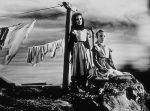
I have been reluctant to say Rena was seventeen when we were together, camping in a tent for fifty days. She told me she was eighteen, but I caught her in a lie when she told me she had skipped a grade. She was a straight A student. She was very bright, but, she was a prisoner of her beauty. Like Rapunzel, she lived in a tower. Her grandmother was her keeper. She grew up without a mother, a father, and siblings. I had a powerful glimpse of her growing up – before a mirror! All alone – with this creature. And now she is free. Now she is saved!
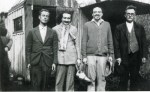
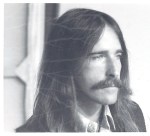
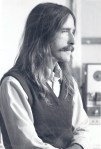
I was her mentor, a young man twenty four years of age. I was like an older father, perhaps a father, who told her about Meher Baba, the ‘Compasionate Father’ from India.
“I wanted to go to India.” I told Rena.
We lived in a tent on a mountain, and watched the sun set each evening. Then here come the stars.
For years I was ashamed I was homeless when we met. I wondered if I had a home, a keep, then she would not have left to attend college. I was her teacher. I am captured in her book.
Jon Presco
Copyright 2011
Thinking she will make a suitable missionary’s wife, St. John asks Jane to marry him and to go with him to India, not out of love, but out of duty. Jane initially accepts going to India, but rejects the marriage proposal. Jane’s resolve begins to weaken when she mysteriously hears Mr. Rochester’s voice calling her name.
It is a novel often considered ahead of its time due to its portrayal of the development of a thinking and passionate young woman who is both individualistic, desiring for a full life, while also highly moral. Jane evolves from her beginnings as a poor and plain woman without captivating charm to her mature stage as a compassionate and confident whole woman. As she matures, she comments much on the complexities of the human condition. Jane also has a deeply pious personal trust in God, but is also highly self-reliant. Although Jane suffers much, she is never portrayed as a damsel in distress who needs rescuing. For this reason, it is sometimes regarded as an important early feminist (or proto-feminist) novel.[2]
The novel begins with a ten-year-old orphan named Jane Eyre who is living with her uncle’s family, the Reeds, as her uncle’s dying wish. Jane’s parents died of typhus. Jane’s aunt Sarah Reed does not like her and treats her like a servant. She and her three children are abusive to Jane, physically and emotionally. One day Jane gets locked in the red room, where her uncle died, and panics after seeing visions of him. She is finally rescued when she is allowed to attend Lowood School for Girls.
Jane arrives at Lowood Institution, a charity school, with the accusation that she is deceitful. During an inspection, Jane accidentally breaks her slate, and Mr. Brocklehurst, the self-righteous clergyman who runs the school, brands her as a liar and shames her before the entire assembly. Jane is comforted by her friend, Jane travels through England using the little money she had saved. She leaves her bundle of her possessions on the coach and has to sleep on the moor, trying to trade her scarf and gloves for food. Exhausted, she makes her way to the home of Diana and Mary Rivers, but is turned away by the housekeeper. She faints on the doorstep, preparing for her death. St. John Rivers, Diana and Mary’s brother, saves her. After she regains her health, St. John finds her a teaching position at a nearby charity school. Jane becomes good friends with the sisters, but St. John is too reserved.
There was also a Theosophical center called the Temple of the People in nearby Halcyon, founded in 1904 with the intent of preparing for the arrival of the next incarnation of the Avatar, but there is no record of Baba visiting it.(21)
http://www.makara.us/05ref/01books/tt_intro.htm
Halcyon, California is an unincorporated community of approximately 125 acres (0.5 km²) in San Luis Obispo County, California, located just beyond the southern border of the city of Arroyo Grande. It was founded in 1898 as a Theosophist intentional community and is the home and headquarters of a religious organization, The Temple of the People (not to be confused with Jim Jones and the Peoples Temple).
The ZIP Code is 93420. The community is inside area code 805.
Contents
[hide]
• 1 History
• 2 Chronological overview
• 3 References
• 4 External links
[edit] History
The Temple of the People was founded in Syracuse, New York in 1898 by William Dower and Francia LaDue, members of the Esoteric Section of the Theosophical Society. It was moved to Halcyon in 1903. Dower, who was a medical doctor, and LaDue founded the Halcyon Hotel and Sanatorium, where all manner of ailments including tuberculosis were treated and which remained open until 1949. Other members of the Temple followed Dower and LaDue to Halcyon from Syracuse, and made their living through farming, poultry, and handicrafts.
Land continued to be acquired by the Temple, whose holdings were at one time much more extensive than present-day Halcyon. A town plan was laid out by the Temple Home Association, which subdivided a portion and sold or leased out home sites. A print shop was established to produce a monthly magazine (which is still published), the Artisan, as well as other Theosophical literature. A general store and post office opened in 1908.
LaDue, who took the moniker “Blue Star”, led the Temple as its first Guardian in Chief until her death in 1922. Just afterward, the Blue Star Memorial Temple building, named in her honor and designed by architect Theodore Eisen of Los Angeles, was constructed in 1923. Dower served as the second Guardian until his death in 1937. Pearl Dower served as the third Guardian, during whose tenure the William Quan Judge Library was established, until her death in 1968. Harold Forgostein served as the fourth Guardian until his death in 1990. Eleanor Shumway has served as the fifth Guardian since that time.
Notable persons involved with Halcyon and the Temple include composer and pianist Henry Cowell (see also The Tides of Manaunaun), Irish poet and fiction writer Ella Young, and mystic poet and community leader John Varian (1863-1931); Varian’s sons Russell (1898-1959) and Sigurd (1901-1961), who spent part of their childhood in Halcyon, invented the klystron, an important microwave amplifier tube, and founded the Varian electronics empire. Sigurd Varian also was a founding member of the Ladera cooperative community in northern California.
Halcyon today contains fifty-two smallish homes, of which thirty are owned by the Temple, as well as several small buildings used by the Temple, and just over one hundred residents. Almost all residents earn their living outside the community.
The Temple continues to function today as a small but international non-denominational religious society with headquarters at Halcyon. Weekly services at Halcyon are held on Sundays in the Blue Star Memorial Temple building, as well as a fifteen-minute healing service held there every day at noon.
The Theosophical Society was officially formed in New York City, United States, in November 1875 by Helena Blavatsky, Henry Steel Olcott, William Quan Judge and others. Its initial objective was the “study and elucidation of Occultism, the Cabala etc.”[2] After a few years Olcott and Blavatsky moved to India and established the International Headquarters at Adyar, in Madras (Chennai). They were also interested in studying Eastern religions, and these were included in the Society’s agenda.[3] After several iterations the Society’s objectives evolved to be:
1. To form a nucleus of the universal brotherhood of humanity without distinction of race, creed, sex, caste, or colour.
2. To encourage the study of comparative religion, philosophy, and science.
3. To investigate the unexplained laws of nature and the powers latent in man.
The Society was organized as a non-sectarian entity. The following was stated in the Constitution and Rules of the Theosophical Society, “Article I: Constitution”:
4. The Theosophical Society is absolutely unsectarian, and no assent to any formula of belief, faith or creed shall be required as a qualification of membership; but every applicant and member must lie in sympathy with the effort to create the nucleus of an Universal Brotherhood of Humanity.[4]
The Society reformulated this view in a resolution passed by the General Council of the Theosophical Society on December 23, 1924.[5]
[edit] The Hidden Masters
One of the central philosophical tenets promoted by the Society was the complex doctrine of The Intelligent Evolution of All Existence, occurring on a Cosmic scale, incorporating both the physical and non-physical aspects of the known and unknown Universe, and affecting all of its constituent parts regardless of apparent size or importance. The theory was originally promulgated in the Secret Doctrine, the 1888 magnum opus of Helena Blavatsky.[6] According to this view, Humanity’s evolution on Earth (and beyond) is part of the overall Cosmic evolution. It is overseen by a hidden Spiritual Hierarchy, the so-called Masters of the Ancient Wisdom, whose upper echelons consist of advanced spiritual beings.
Blavatsky portrayed the Theosophical Society as being part of one of many attempts throughout the millennia by this hidden Hierarchy to guide humanity – in concert with the overall Intelligent Cosmic Evolutionary scheme – towards its ultimate, immutable evolutionary objective: the attainment of perfection and the conscious, willing participation in the evolutionary process. These attempts require an earthly infrastructure (such as the Theosophical Society) which she held was ultimately under the inspiration of a number of Mahatmas, members of the Hierarchy.[7]
Mahātmā
From Wikipedia, the free encyclopedia
(Redirected from Mahatma)
Jump to: navigation, search
For other uses, see Mahatma (disambiguation).
Mahatma is Sanskrit for “Great Soul”. It is similar in usage to the modern Christian term saint. This epithet is commonly applied to prominent people like Mohandas Karamchand Gandhi, Jyotirao Phule and Branch Rickey. Rabindranath Tagore is said to have accorded, or popularised, this title for Gandhi.[1]
The term is also used to refer to adepts, or liberated souls.
Contents
[hide]
• 1 Theosophy
• 2 Divine Light Mission
• 3 Rarity of mahatmas
• 4 Footnotes
• 5 References
• 6 External links
[edit] Theosophy
The word, used in a technical sense, was popularised in theosophical literature in the late 19th century when Madame Helena P. Blavatsky, one of the founders of the Theosophical Society, claimed that her teachers were adepts or Mahatmas who reside in Asia.
According to the Theosophical teachings, the Mahatmas are not disembodied beings, but highly evolved people involved in overseeing the spiritual growth of individuals and the development of civilisations. Blavatsky was the first person in modern times to claim contact with these Adepts, especially the “Masters” Koot Hoomi and Morya.
In September and October 1880, Blavatsky visited A. P. Sinnett at Simla in northern India. The serious interest of Sinnett in the Theosophical teachings of Mme. Blavatsky and the work of the Theosophical Society prompted Mme. Blavatsky to establish a contact by correspondence between Sinnett and the two adepts who were sponsoring the society, Koot Hoomi and Morya.
From this correspondence Sinnett wrote The Occult World (1881) and Esoteric Buddhism (1883), both of which had an enormous influence in generating public interest in theosophy. The replies and explanations given by the Mahatmas to the questions by Sinnett are embodied in their letters from 1880 to 1885, published in London in 1923 as The Mahatma Letters to Sinnett. The Mahatmas also corresponded with a number of other persons during the early years of the Theosophical Society. Many of these letters have been published in two volumes titled Letters from the Masters of the Wisdom, Series 1 and Series 2.
There has been a great deal of controversy concerning the existence of these particular adepts. Blavatsky’s critics have doubted the existence of her Masters. See, for example, W.E. Coleman’s “exposes.” More than twenty five individuals testified to having seen and been in contact with these Mahatmas during Blavatsky’s lifetime.[2] In recent years, K. Paul Johnson has promoted his controversial theory about the Masters.
After Blavatsky’s death in 1891, numerous individuals have claimed to be in contact with her Adept Teachers and have stated that they were new “messengers” of the Masters conveying various esoteric teachings.[3] Currently various New Age, metafferent from those described by Theosophical writers.[4][5]
[edit] Divine Light Mission
The Divine Light Mission (DLM) was a Sant Mat-based movement begun in India in the 1930s by Hans Ji Maharaj and formally incorporated in 1960. The DLM had as many as 2,000 mahatmas, all from India or Tibet, who taught the DLM’s secret meditation techniques called “Knowledge”. The mahatmas, called ‘realised souls’,[6] or “apostles”, also served as local leaders.[7] After Hans Ji’s death in 1966 his youngest son, Prem Rawat (known then as Guru Maharaj Ji or Bagyogeshwar), succeeded him. The young guru appointed some new mahatmas, including one from the United States. In one notable incident, a prominent Indian mahatma nearly beat a man to death in Detroit for throwing a pie at the guru.[8] In the early 1980s, Prem Rawat replaced the Divine Light Mission organization with the Elan Vital and replaced the mahatmas with initiators. The initiators did not have the revered status of the mahatmas and they were drawn mostly from Western followers.[6] In the 2000s, the initiators were replaced by a video in which Rawat teaches the techniques himself.
[edit] Rarity of mahatmas
Vedas say, that association of great soul is very rare: “the association of a mahatma is very rare, and yet it is available to a sincere seeker.”[9] Krishna also speaks about this in Bhagavad-Gita: “After many births and deaths, he who is actually in knowledge surrenders unto Me, knowing Me to be the cause of all causes and all that is. Such a great soul is very rare.”[10
The Temple of the People as “a voice crying in the wilderness”,
bas long been pleading with man, as the Guardians of the Temple in
past ages have pleaded with each race, to make straight the way of
[TT 500] the Lord. From time to tune there is thrown on the world
screen, here an etching, there a vivid outline, and in the mort secret
place a broad full picture whereon “the open eyed” atone could gaze
and understand. Bounden eyes have been unbound, blind eyes have
been opened to the vision of the future . that future which is even
now, in part, of the part, and which stretches on in the sight of those
who have caught that vision to inconceivable heights beyond, where
now dwell the redeemers of this dark star.
No tongue of man or angel car ever tell the story of the richness
of the sacrifices made, or the glories of unselfishness to which man
has risen and which even now are paving the way for the coming of
the Angel of Enlightenment. Nor car human eye read the story graver
on that world screen by the stylus of mortal anguish in this one short
cycle ; the story is too great, too far beyond the power of words to
express ; it loses something transcendental in the mere effort to
express it in words. It is part of the great Vision which car only be
seen and read by those who have won the power by sacrifice and
anguish to throw open the shrine in their own hearts and read correctly
the record of their own life experiences. Only a few more steps out of
Eternity into Time remain to be taken by the “Son of Man” ere the
brightness of the Vision be revealed to “His own” who are still in
embodiment, as it now is to the innumerable hosts on the other side of
Life’s torrent . the souls that were driver thence by the lash of a great
desire. Having caught a glimpse of the vision there was no more rest
for them on earth. They only asked for the privilege of making the
last, the supremest, sacrifice, if so be they might complete some
infinitesimal figure of the grand total.
http://www.makara.us/05ref/01books/tt1_201-210.htm
 Rosamond Press
Leave a comment