


“Did you happen to see my mother while you were dead?”
I knew then I was just a conduit, a disposable tube in which my dead sister’s genetic material was jettisoned to my daughter via her mother in order to produce a Super Star. The dead grand mother plays an important role that I am not privy to, I not a member of the divine family. Nor am I allowed on stage – or back stage! I am the janitor at the school auditorium. I am good ol Joe leaning on my mop while I behold her, then, it’s back to work.
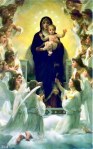
My daughter’s grandmother was a schizophrenic who was severely beaten by her alcoholic husband, and ended up committing suicide by jumping off a cliff in LA. Come to think of it, I did see her, she being attended to by a flock of butt-naked cherubs.
” Mary was a virgin and that Jesus was conceived by the Holy Spirit. These gospels, later tradition and current doctrine present Jesus’ conception as a miracle involving no natural father, no sexual intercourse, and no male seed in any form, but instead brought about by the Holy Spirit.”
My daughter’s mother got to meet her new boyfriend before I did, and thus he was warned I would be there, I Parasite, waiting outside Carnegie Hall, the crazed stumble-bum looking for a hand-out, and thus needs his ass kicked if I dare approach Mother & Child.
I knew making my immacutlate daughter resoncible for the pee-stain would be the end of us, thus, I put it off for four months.
Today, I am free, because I declared I want nothing to do with my daughter, or her son. The stage is allllllll theirs!
Jon Presco
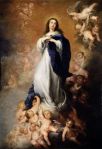
The proclaimed Roman Catholic dogma states “that the most Blessed Virgin Mary, in the first instance of her conception, by a singular grace and privilege granted by Almighty God, in view of the merits of Jesus Christ, the Saviour of the human race, was preserved free from all stain of original sin”.[
Answer: A stage mother (or father) is a term for the mother of a performing child. The parent is usually responsible for driving the child to auditions and rehearsals, making sure the child is on time to performances, and managing the child’s performance-related needs and requirements.
A stage parent plays a very important role, especially when the child is young. However, the term sometimes has a negative connotation. Some people associate the term with an obnoxious, annoying person who is trying to live out his or her own unrealized dreams through the child. A stage parent often demands special treatment for the child, or appears to place too much pressure on the child to succeed. If the child begins to feel too much pressure, he or she may begin to dislike the activity, claiming that it’s just “not fun anymore.”
In order to avoid becoming annoying stage mothers or fathers, parents need to avoid putting undue pressure on their children to be “the best” and simply allow them to have fun learning their chosen activity. If the child ever decides to try an alternative activity, the parent should be open to the suggestion and honor the child’s individual aspirations. Forcing a child to learn something he or she dislikes will only foster resentment in the long run. Children mostly need praise and approval from their parents…everything else will follow.
1. Are You Living Vicariously Through Your Children?
Perhaps once or twice, as you took your young daughter to her umpteenth ballet recital or hoisted your son up onto the back of a horse for his riding lesson, the thought crossed your mind that you are enjoying this more than they are.
Is it wrong to want to offer your children a taste of the things you once so heartily desired?
Of course not. That is, if they want those things too.
Yet, if your wishes, wants and dreams begin to crowd out those of your children, you may have a problem on your hands. This type of vicarious living, in which your children may never get to develop their own interests or grow into their own people, is not what being a parent is all about.
You may be living vicariously through your children if you:
o Talk more about their activities than they do
o Are more emotionally invested in their activities than they are (did you cry when your daughter lost the science fair, while she just brushed it off?)
o Constantly give your child instruction and critiques of their activities and life
o Feel your status or self-esteem rides on your child’s achievements
o Say “we” to describe your child’s life (“We need to practice more so next time we’ll win.”)
Keep in mind that most children aim to please their parents. So if they sense that their involvement in an activity makes your day, they will likely continue for your benefit. That is not to say, however, that over time they will not begin to resent you for it. And, in the long-run, when your child grows older he will definitely not appreciate having sacrificed his own childhood to make up for yours.
If you sense that you may be trying to live out the life you’ve always wanted through your children, there is good news. There’s still time for you to accomplish your goals, and you don’t need to pressure your child into doing it for you.
“When you live vicariously through others you sometimes can get great enjoyment,” says Hale Dwoskin, CEO and director of training of Sedona Training Associates. “However, at other times your living through others is based on a feeling that you cannot accomplish what you choose or have what you want. This is often just a belief that living through others is only masking.”
The key to giving up vicarious living in favor of truly living is to let go of the doubts, fears, or guilty feelings that are holding you back. For instance, if you’ve always wanted to be a chef, what’s stopping you from doing it? Most likely, your own apprehension.
So instead of telling yourself that you ‘can’t,’ it’s time to start saying ‘I can.’ The Sedona Method can help you to release the negative ‘what ifs’ that are sabotaging your efforts at living the life you want.
“The best way to add vigor and excitement to your life is to live it for yourself — moment to moment,” Dwoskin says. “Meanwhile, let go of any beliefs or memories that are telling you that you can’t, or shouldn’t, live life fully.”
Why Parents Live Vicariously Through Their Children
Some parents may suffer from low self esteem and vow to not let their children make the same mistakes they made as a youngster. While this sounds like a noble undertaking, it also negates the child’s developing ability to think for themselves and points to an unhealthy need for parental control. In some cases, the parent is simply unaware of her or his own needs, and seeks to make up for a perceived but undefined lack simply by controlling every aspect of the relationships around; this of course leads to the eventual dismantling of a relationship’s healthy foundation.
The virgin birth of Jesus is a tenet of Christianity and Islam which holds that Mary miraculously conceived Jesus while remaining a virgin. The term “virgin birth” is commonly used, rather than “virgin conception”, due to the tradition that Joseph “knew her not till she brought forth her firstborn son”.[1] This doctrine was a universally held belief in the Christian church by the 2nd century,[2] and is upheld by Anglicanism, the Church of the East, Eastern Orthodoxy, Oriental Orthodoxy, Protestantism and Roman Catholicism. It is included in the two most widely used Christian creeds, which state that Jesus “was incarnate of the Holy Spirit and the Virgin Mary” (the Nicene Creed)[3] and was “born of the Virgin Mary” (Apostles’ Creed),[4] and was not seriously challenged, except by some minor sects, before the Enlightenment theology of the 18th century.[2]
The canonical gospels of Matthew (Matthew 1:18)[1:18] and Luke[1:26-35] say that Mary was a virgin and that Jesus was conceived by the Holy Spirit. These gospels, later tradition and current doctrine present Jesus’ conception as a miracle involving no natural father, no sexual intercourse, and no male seed in any form, but instead brought about by the Holy Spirit.[5][6][7][8] In Roman Catholic and Eastern and Oriental Orthodox usage, the term “virgin birth” means not only that Mary was a virgin when she conceived and gave birth, but also that she remained a virgin throughout her life, a belief attested since the 2nd century.[9] (See Perpetual virginity of Mary).
The general Christian doctrine of the virgin birth of Jesus (i.e., Mary’s virginal conception of Jesus) is not to be confused with the Roman Catholic doctrine of her Immaculate Conception, which concerns instead her mother’s conception of Mary. This is thought to have occurred in the normal way, not miraculously. What the Roman Catholic doctrine of the Immaculate Conception holds is that, when Mary herself was conceived, she came into existence without the “stain” (Latin, macula) of original sin.[10]
Mary’s virginity at the conception of Jesus is also a tenet of Islam.[11][12] Muslims refer to Jesus with the matronymic Jesus son of Mary (Isa bin Maryam), a term repeatedly used in the Qur’an.[13]

 Rosamond Press
Leave a comment