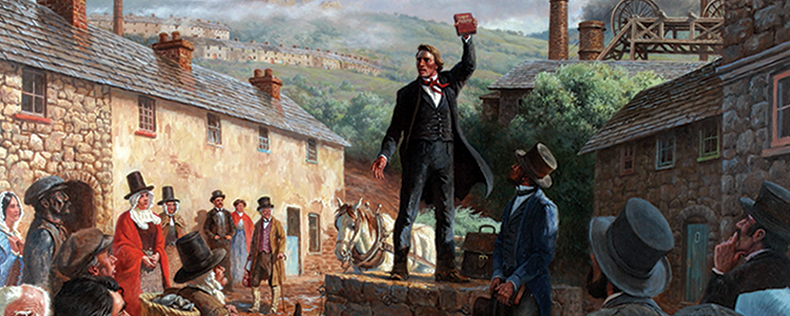
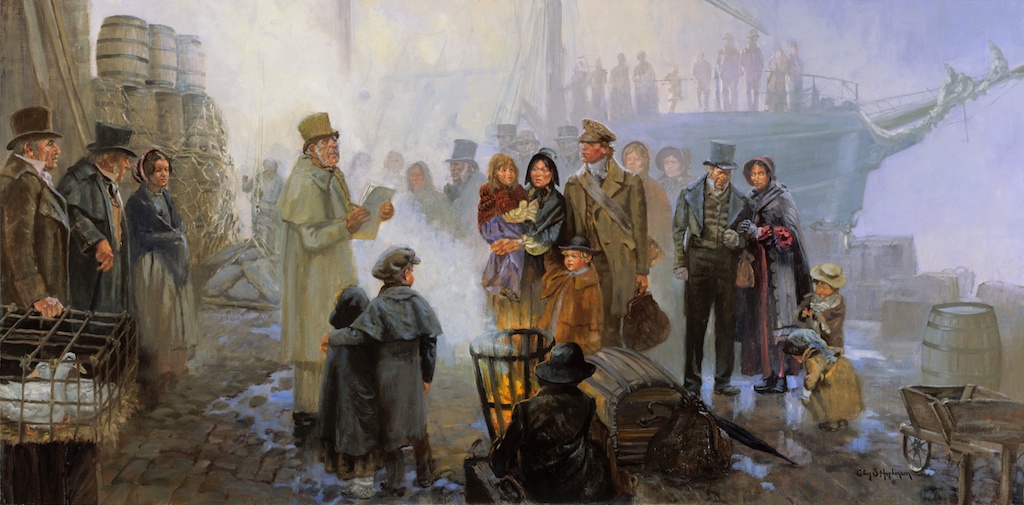
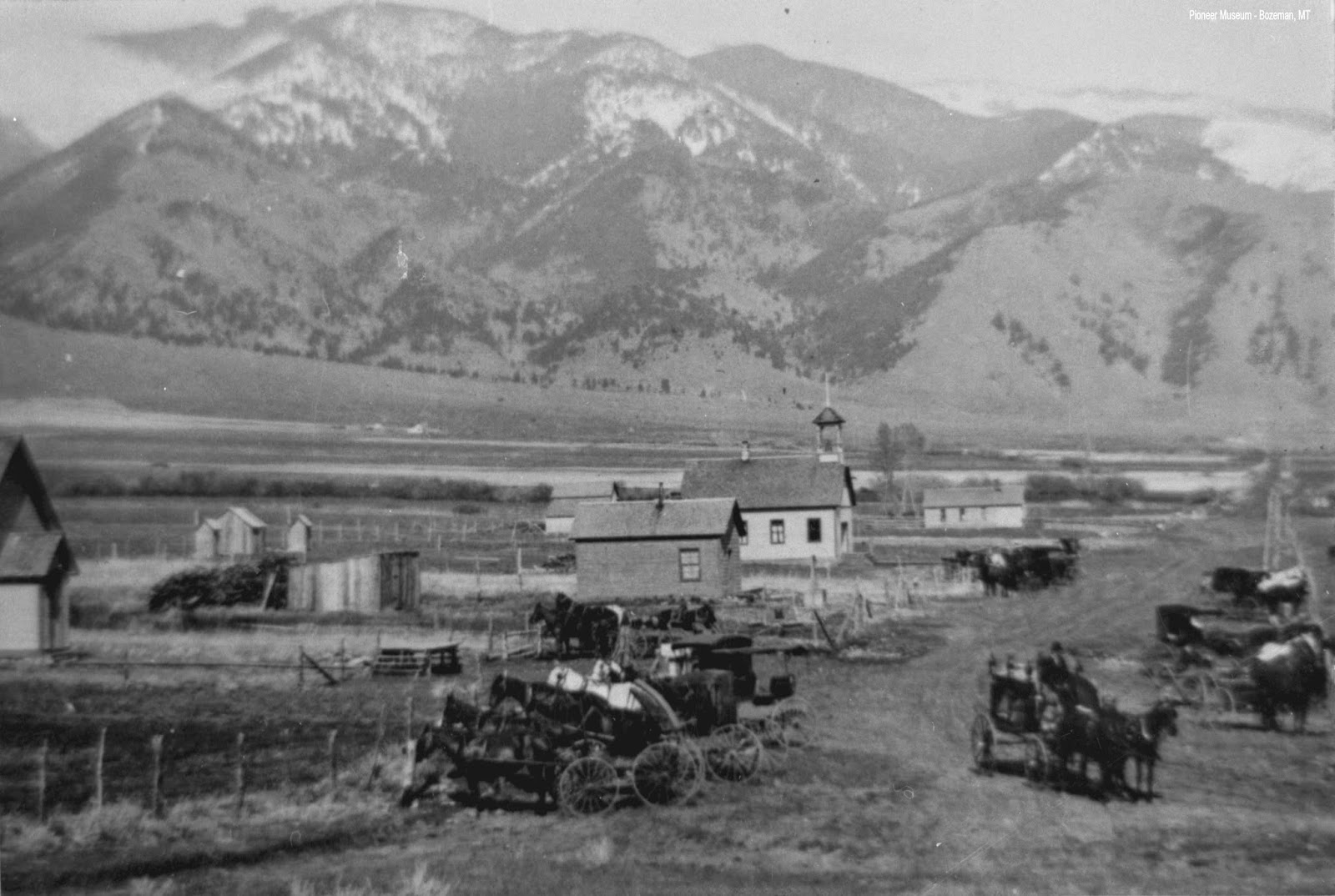
There have been a thousand books written about the Priory of Sion and a secret lineage of Jews. Hubert Armstrong was a proponent of British Israelism, as is the Orange Lodge. . The Rees family played a big role in the history of Wales. Whether I and other members of the Reese family are kin to Nesta Rhys, may never be proven. To behold paintings of possible kin on an Exodus to America, is a mind blower, considering some members of the Reese family ended up in Montana where my very beautiful muse lives.
My ex-wife, Mary Ann Tharaldsen, descends from Eric the Red. She claims her ancestors discovered America before Columbus.
https://rosamondpress.com/2013/09/07/eric-the-reds-daughter/
Eirik Thorvaldsson, known as Erik the Red, is remembered in medieval and Icelandic saga sources as having founded the first Norse settlement in Greenland. “The Red” most likely refers to his hair color. The Icelandic tradition indicates that he was born in the Jæren district of Rogaland, Norway, as the son of Thorvald Asvaldsson. Erik therefore also appears as Erik Thorvaldsson. Erik’s father Thorvald was exiled from Norway for the crime of manslaugher and he settled in Iceland.
A week ago I discovered the folklore of Madoc, who came to America in order to escape the war that King Henry Fits-Empress waged against the Royalty of Wales. Eventually, Henry would sign a peace treaty with Rhys ap Gruffydd who had been waging battles over castles with Walter Clifford, the alleged father of Rosamond Clifford. However, I suspect she was a Rhys, a Reese, and thus my ancestor. That the Royal House of Windsor descends from the Lords of Rhys and Tudor, renders these words I author, the real Game of Thrones.
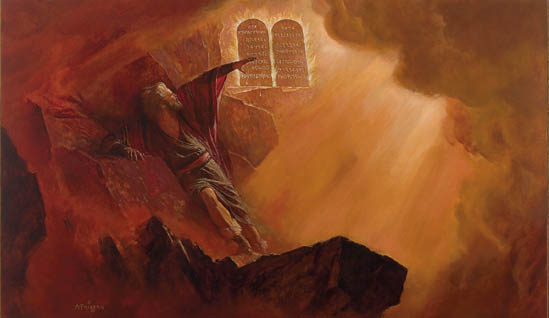
Members of my Reese family came to America on a ship captained by Dan Jones who was given the “final prophecy” of Joseph Smith. I will contact the Mormons to see if they will fund my EPIC movie. That is Jones standing on a crate in the painting above. Did he tell the Reese family that Jesus came to America? Did the Mormon Jesus go searching for the Lost Ten Tribes? The Zebulon tribe were master sailors, as were the Vikings.
“The Book of Mormon tells of the resurrected Jesus Christ and His visit to His faithful followers in ancient America. After His visits to His disciples in the Old World, He descended out of heaven and appeared to His followers in ancient America.
The Book of Mormon describes how, during His visit, Jesus Christ healed their sick, taught them His gospel, blessed their children, and called twelve disciples to organize His Church in the Americas.”
https://rosamondpress.com/2015/06/07/the-reese-family-of-Bozeman/
Our family genealogist, Leland Eugene Rosemond said this about Fair Rosamond in his book published in 1938;
““In the Southern states among those identified with our line in
Ireland, the form “Rosamond” prevails as it does in England and
Canada, but the legends of “Fair Rosamond” Clifford which popularized
it there have no significance for us. It is, in one form or another,
the name of towns, but inquiry has developed that our family had
nothing to do with giving them. “
This is no longer the case with Royal Rosamond’s kinship to the Reese-Rhys family of Wales. What if Henry funded Madoc’s voyage, he interested in ending the feuds and uniting Wales. Henry was surrounded by Knights Templar. Did Henry bid Templars to go with Madoc, who secreted aboard a great treasure?
Then, there is the Second Exodus! Yes! We are talking about a Welsh Exodus that in part ends up in Bozeman. Two branches of a European Tree came to America, and they meet in my genealogical tale. We are talking about Welsh Pilgrims! When I go to Bozeman I will follow in Royal Rosamond’s footsteps at City Hall.
In my lessons I will try to solve the great mystery as to why Moses was not allowed to enter Zion. This has to do with how the Ten Tribes got lost.
Jon Presco
Copyright 2015

“The Church had great missionary success in Wales during the 1840’s and 1850’s, and many thousands of Welsh converts immigrated to America, heading West with Brigham Young as a part of the great Mormon Migration, which began in 1847. Today it is estimated that approximately twenty percent of the population of Utah is of Welsh descent.
As the message of the restoration spread throughout Wales, many Saints eagerly asked, “Pa bryd y cawn fyned i Seion?”, which means “When may we go to Zion?” The new converts sought to follow the counsel of their leaders to leave “Babylon” (Wales) and go to “Zion” (Utah)

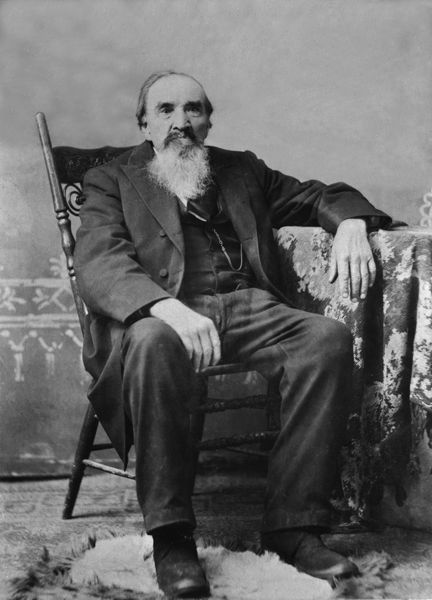
History of Thomas J. Rees and wife, Margaret Davis
| Thomas John and Margret Davis Rees |  |
One young couple who joined the LDS Church in Merthyr Tydfil during the early 1840s was Thomas John Rees and his wife, Margret Davis. Thomas came from an Anglican background, but Margret had been raised in a nonconformist household. Thomas was a coal miner. The couple was married at Merthyr Tydfil in September 1836. Thomas was twenty. Margret was seventeen. At the time of their marriage, Margret was a schoolteacher. According to two of their grandchildren, Thomas was illiterate when they met, and Margret later taught him to read and write.
Margret’s nonconformist background seems to have drawn her to the message of the LDS missionaries. Margret was one of the first LDS converts in south Wales, being baptized on 11 July 1843. Thomas was baptized eight months later, on 10 February 1844. At the time of Thomas’ baptism, the couple had three children, two boys, Henry and Alfred, and a daughter named Ann. Henry was the oldest, being six years old. Margret gave birth to Sarah, their fourth child, in May 1844. Five additional children–Eleanora, Helena, Nephi, Maria, and Lenora–would be born into the family at Merthyr Tydfil between 1846 and 1856. The youngest boy, named Daniel, died as an infant in 1855.
Feeding his family on a miner’s wages must have proved difficult for Thomas, especially in the depressed economy of the 1840s. One evidence of the family’s poverty is the early age at which Henry, the oldest son, entered the colliery. Henry began working in the coal mines by the time he was nine. Another evidence of their poverty was the length of time the family remained in Merthyr Tydfil after joining the LDS Church. The concept of gathering with the Saints in America was a preeminent part of the message taught by the Mormon missionaries in nineteenth century Britain. The converts were encouraged to save their money in anticipation of emigration. Despite their dedication to the gospel, the Rees family remained in Merthyr Tydfil for more than twelve years before joining the company led by Captain Dan Jones in 1856.
The cost of emigration by handcart in the 1850s was approximately nine pounds per person. With the birth of each child, the cost of emigration increased for Thomas and Margret. While attempting to save funds for their anticipated emigration to Zion, the Rees family continued to be active and involved in local Church affairs. For example, in 1846, Thomas attached his name to a published letter that denounced the activities of an apostate in the Merthyr Tydfil area. Later Thomas served as President of the White Lion Branch. All of the Rees children were baptized as they reached their eighth year, beginning with Henry in June of 1845. Their third son was named Nephi, for the Book of Mormon prophet.
One incident, dating from 1848, demonstrates how deeply Thomas and Margret were committed to the Church. In a letter written to the Welsh Church periodical, Prophet of the Jubilee, Thomas described the miraculous healing of his son Henry, after a colliery accident.
Two months ago, my eleven-year-old boy was crushed between the trams in Cyfarthfa Colliery, so that the bones of his leg were broken in two places. He was carried to my house; and according to the rules of the works, the doctor hired by the works came there soon, and set the bones in place, and put splints around the leg. The doctor said the bones were broken in two places. Soon after the doctor left I administered to the boy . . . and he was eased of all pain at that time, and the boy testified that he was completely well, and earnestly begged to take off the splints and get up from his bed; but we refused him this, lest we be punished by the doctors, as we and several other Saints who had been divinely healed had been threatened. The third day the doctor visited him again, and after looking at the leg, with great surprise he testified that the bones had knitted already. Again the doctor admitted that the bones had been broken in two places, and that he had never seen such healing before . . . [Henry] begged every day to get up and go outside, assuring us that he was quite well. Then we allowed him to go around, provided he took a stick in his hand and took care not to let the doctor see him outside . . . On the eleventh day the doctor came and asked where the boy was. My wife answered that he was in the field playing with the boys . . . [The doctor] refused to take off the splints, nonetheless. The next day the boy went past the shop of the doctors on his way to Merthyr, and they looked at him through the window in astonishment, and as soon as they took the splints off his leg, the boy went back to work completely well, where he has been working since that time until the present.
Faith promoting incidents of this type worked to strengthen the resolve of the family to gather with the Saints in Utah.
Name: Nesta “the Helen of Wales” Verch Rhys Tudor
- Given Name: Nesta “the Helen of Wales” Verch Rhys Tudor
- Suffix: Heiress Carew,Prss Wales
- Title: Heiress Carew,Prss Wales
- Sex: F
- Birth: 1073 in Dynevor Castle,Llandyfeisant,Carmarthenshire,Wales
- Death: BEF 1136 in Caenarvonshire,Wales
- Ancestral File #: 8XJ2-WR
- Note:
He [Gerald de Windsor] married Nest, daughter of Rhys ap Tudor Mawr,PRINCE OF SOUTH WALES (e ). The date of his death is not known,presumably before 1136. [Complete Peerage X:10-11, (transcribed by Dave Utzinger)]
(e) In 1106, when Owen ap Cadugan carried her off, two of her sons and a daughter by Gerald de Windsor were taken with her, the sons being returned later to their father. By Stephen, constable of Cardigan (query after Gerald’s death), Nest bore a son, Robert FitzStephen, and by Henry I a son Henry (killed 1158), father of Meiler FitzHenry, which Robert and Meiler were later brothers-in-arms of the Geraldines inIreland.
********
Nest (who also [in addition to Gerald fitz Walter] had by Stephen,Constable of Cardigan, a son (Robert fitz Stephen) and by Henry I another son (Henry, killed 1158, father of Meiler fitz Henry), daughter of Rhys ap Tudor Mawr, Prince of South Wales. [Burke’s Peerage, p. 1679]Known as the most beautiful woman in Wales. She had many lovers. In Christmas 1108 Owain ap Cadwgan of Cardigan came to visit Gerald and Nesta. He so lusted after her that he, that night, attacked the castle and carried her off and had his way with her. This upset Henry I [King of England] so much that the incident started a war.
Source:www.dcs.hull.ac.ukShe was stunningly beautiful, called the Helenof Wales. She was th e daughter of the last king of independent Deheubarth, she was the mistress of Henry I, king of England,and had a son by him Robert DeCarn, Earl of Dorchester and Gloucester. Henry I took the throne away from his brother in 1100. She was the wife of Geraldde Windsor,Constable of Pembroke, she was romantically abducted by Owain ap Cadwgan,son of the Prince of Powys, and is generally supposed to have had any number of other romantic liaisons. She was the fo under of more dynasties than is polite to mention. Thousands of Welsh children today are still refered to as Nest in her honour.
************
Alternate name found in GEDCOM file: Nesta Princess of DEHEUBARTH, Nesta verch Heiress of Carew Rhys, Nesta verch, Heiress of Carew Rhys[001.ged]
*********BIOGRAPHY: Princess Nesta was a very remarkable woman. She is sometimes referred to as the “mother of the Irish invasion” since her sons, by various fathers, and her grandsons were the leaders of the invasion. She had, in the course of her eventful life, two lovers, two husbands, and many sons and daughters. Her father is quoted as saying that she had 10 children as a result of her matrimonial escapades, eight sons and two daughters, among them William fitzGerald de Windsor. One of her lovers was King Henry I of England. Some years before she married Gerald, her father, the fierce old Prince of South Wales, was fighting the English under Henry, (then the Prince and later King). Henry succeeded in taking the lovely Nesta as hostage. By this royal lover, she had two sons; Meyler fitzHenry and the celebrated Robert of Gloucester. It would seem that Gerald, busily engaged in military business, could have had no peace about his wife, since she was clever as well as beautiful, and every warrior seems to have fallen in love with her. In 1095, Gerald led an expedition against the Welsh on the borders of what is now Pembrokeshire. In 1100, he went to Ireland to secure for his lord, Arnulf Montgomery, the hand of the daughter of King Murrough in marriage. He was the first of the Geraldines to set foot in Ireland, where they were later to rule like kings. Later, Arnulf joined in a rebellion against the King, was deprived of his estates and exiled in 1102. Then the King granted custody of Pembroke Castle to Gerald. Later, he was appointed president of the County of Pembrokeshire.
BIOGRAPHY: But it was Nesta that occupied the center of their stage during their marriage. Her beauty continued to excite wonder and desire throughout Wales. At Christmas in 1108, Cadwgan, Prince of Cardigan, invited the native chieftains to a feast at Dyvet (St. David’s). Nesta’s beauty was a subject of conversation. She excited the curiosity of Owen, the son of Prince Cadwgan, who resolved to see her. She was his cousin, so that the pretense of a friendly visit was easy. He successfully obtained admission with his attendants into Pembroke Castle. Her beauty — it was even greater than he expected — excited his lust. He determined to carry her off! In the middle of the night, he set fire to the castle, and his followers surrounded the room where Gerald and Nesta were sleeping. Gerald was awakened by the noise and about to discover the cause, but Nesta, suspecting some /treason, persuaded him to make his escape. She pulled up a board and let her husband escape down a drain by a rope. Then Owen broke open the door, seized Nesta and two of her sons, and carried them off to Powys, leaving the castle in flames. Owen had his way with Nesta, (historians say that one of her ten children was his), though whether she yielded from desire or force was uncertain. But at her request, Owen hastened to send back the two sons to Gerald. When King Henry heard of Nesta’s abduction, he was furious. He regarded it as an injury almost personal, since Gerald was not only his steward, but his particular friend. The abduction of Nesta led to a war, which resulted in her return to her husband, and Owen fled to Ireland. Gerald took a conspicuous role in the fighting. In 1116, Henry ordered Owen, who had returned to Wales, to apprehend Gruffuyd, son of Rhys ap Tewdyr. As he passed through a wood on his march to join up with the royal forces, Owen seized some cattle. The owners of the cattle, as they fled, met Gerald, Constable of Pembroke. Gerald was also on his way to join the royal forces. When the cattle owners requested his assistance, he was only too delighted to have the opportunity for revenge for the insult to his honor done by Owen’s abduction of Nesta. He lost no time in pursuing Owen, found him, and a skirmish followed. Owen was slain, an arrow piercing his heart, and Gerald’s honor was avenged.
BIOGRAPHY: Gerald died about 1135, leaving three sons and a daughter by Nesta. They were: Maurice, one of the principal leaders of the Irish invasion in 1169; William, ancestor of the families of Carew, Grace, Fitzmaurice, Gerald, and the Keatings of Ireland; David, who became bishop of St. David’s; and Angareth, wife of William de Bari, and mother of the historian, Gerald Cambrensis. Nesta married again. Her second husband was Stephen, Constable of Cardigan, by whom she had one son, Robert fitzStephen. Nesta’s children and their descendants constituted a menace to the English rule of Wales. Royal Welsh blood mingled with the blood of the nobles of Normandy in all the half-brothers, sons of Gerald of Windsor and Stephen of Cardigan. Bastard or legitimate, they were turbulent princes in a /troubled land. Now fighting the Welsh natives, now allying themselves with their cousin, Nesta’s brother Gruffuyd, the unconquered Prince of Wales, on whose head Henry had set “a mountain of gold”, they remained a constant source of /trouble to the King, an ever-present threat to his security.
BIOGRAPHY: And so they fought, these Norman barons, and they went on fighting. It was the able and ambitious Henry II, one of England’s really great kings, (the Henry of “Becket” and “Lion in Winter”), the father of Richard the Lionhearted and John of the Magna Carta, who was to find a solution. He was to give these Norman adventurers a free hand in Ireland. It was thus that the Norman invasion of Ireland came about, and the Geraldines arrived in 1169.
Data Files For Nov/06/2004/ Weber/Weaver/Sanders/Lay/Cobb/Harris/Lee/Presidents/Kings/Noel/Adam
*********Nest (who also [in addition to Gerald fitz Walter] had by Stephen,Constable of Cardigan, a son (Robert fitz Stephen) and by Henry I anotherson (Henry, killed 1158, father of Meiler fitz Henry), daughter of Rhysap Tudor Mawr, Prince of South Wales. [Burke’s Peerage, p. 1679]
Known as the most beautiful woman in Wales. She had many lovers. InChristmas 1108 Owain ap Cadwgan of Cardigan came to visit Gerald andNesta. He so lusted after her that he, that night, attacked the castleand carried her off and had his way with her. This upset Henry I [King ofEngland] so much that the incident started a war.

 Rosamond Press
Leave a comment