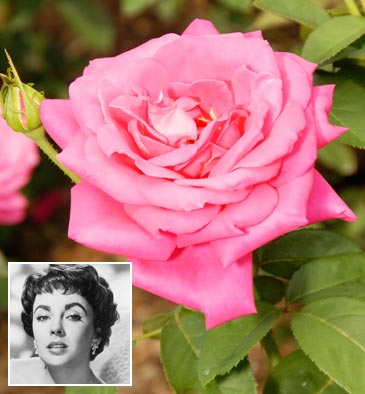
“I remember complaining, ‘Why isn’t anybody doing anything? Why isn’t anyone raising money?’” asked Elizabeth. “And it struck me like lightning: ‘Wait a second, I’m not doing anything.’” But she would. Elizabeth Taylor had a plan of action.
“I decided that with my name I could open certain doors, that I was a commodity in myself—and I’m not talking as an actress. I could take the fame I’d resented and tried to get away from for so many years—but you can never get away from it—and use it to do some good. I wanted to retire, but the tabloids wouldn’t let me. So I thought, If you’re going to screw me over, I’ll use you.”
When alas I confronted Bill Cornwell about the giant urine stain on the back seat of the car I rented in Arizona, he said this with a mocking laugh;
“Maybe you peed in that back seat!”
He then went on to say I was too crazy to recall if I lost control of my bladder. I have twenty five years of sobriety. Cornwell, a heavy drinker, then said he feared for his life when I drove the car.
“Bill, I never drove that car!”
“Yes you did!”
“No I didn’t!” I told this maniac who was nursing a hangover every day I saw him.
The drunkard, Bill Cornwall called me up a year ago to announce;
“You are about to lose your daughter and grandson!”
“Why is that?”
“You got tired on the trip to the Grand Canyon!”
People who have HIV get very tired. I understood that the adult who peed in that back seat suffered from the disease of alcoholism like my late sister did, the world famous artist, Rosamond. Our kindred, Elizabeth Rosemond Taylor, also suffered from alcoholism. Liz went to the Betty Ford clinic in order to get sober. She then did a twelfth step by her generous support of HIV research. Her step-daughter, Carrie Fischer, wrote a screenplay about Rosamond, and her family that did not sell. Carrie also was treated for alcoholism and drug abuse.
The Christiian-right invented their crusade against abortion in order to trump the Civil Rights Movement, give evangelicals a sence of purpose so they will become Republicans and vote against Democrats and the REAL PROBLEMS people all over the world suffer from. Ryan and Romney are backing the outrageously evil sickness of Murdoch who said God gifts rape victims with sacred embryos. R&R will be defunding many worthy causes in order to feed their religious addicts – like one feeds chickens in a coop. HIV programs will take a huge hit. Above is a woman being strong armed and arrested when she spoke out against the cut of HIV programs. Soon, all the women in America will come under the scrutiny of Big Brother Jesus when it becomes illegal for all women to do what they will with their bodies.
Christine Rosamod was raped at work. She got a job as a waitress in order to raise her young daughter by herself. She was afraid to get another job, and got on welfare. This victim was a parasite, one of the 47%. Christine took up art in order to get off welfare because she did not get enough funds to keep her family from going hungry. She began to drink heavily because she suffered from PTSD.
If my knidred, Elizabeth Rosemond Taylor, were alive, she would lead all women as the modern day Joan of Arc, against those parasites who attach themselves to aborted embryos, the hungry in soup kitchens, those afflicted with HIV, and female sexuality, so that they may own power over millions.
This Morral Cop plan has never worked – anywhere! The Taliban shot a young girl for trying to better herself. Paul Ryan will be handing out death sentences – shooting victims in the face! This is an evil Catholic Devil risen from the dead in hell!
Above is Liz holding up a condom. I hear her say;
“Hey Ryan! This condom is for you. Put it on your black viper tongue and stop poisoning the Kingdom of God!”
Ryan is one of the vipers that Jesus spoke of, those who think they can enter the Kingdom via law-making. Anybody who would fake helping the poor by washing dishes that were already cleaned by a poor volenteer, is the epitome of the self-righteous evil that Jesus came to confront – in their face!
Jon the Nazarite
“I remember complaining, ‘Why isn’t anybody doing anything? Why isn’t anyone raising money?’” asked Elizabeth. “And it struck me like lightning: ‘Wait a second, I’m not doing anything.’” But she would. Elizabeth Taylor had a plan of action.
“I decided that with my name I could open certain doors, that I was a commodity in myself—and I’m not talking as an actress. I could take the fame I’d resented and tried to get away from for so many years—but you can never get away from it—and use it to do some good. I wanted to retire, but the tabloids wouldn’t let me. So I thought, If you’re going to screw me over, I’ll use you.” Elizabeth’s plan to use the media could only work. They had followed her every move for decades, and by attaching her name to the AIDS crisis, they would have to acknowledge it. Elizabeth Taylor would breakdown the stereotypes associated with the disease and enlighten an ignorant world. AIDS was not a gay man’s disease. AIDS has the potential to affect everyone and no one can hide from it.
Elizabeth Taylor’s first order of business was the AIDS Project Los Angeles’ Commitment to Life dinner. She was approached by APLA to lend her support to the event in January 1985. Not only did Elizabeth agree, but she and her publicist, Chen Sam, also planned the dinner from a small office they rented. “I didn’t want to be honorary. I wanted to actually do the work, make the phone calls, because this was going to be a toughie.” Elizabeth again saw the bigotry surrounding the disease when she tried to recruit longtime friends and peers to lend their support for the dinner. “I have never had so many ‘no’s said to me,” remembered Elizabeth, “They didn’t want to come to the evening, didn’t want to be associated. Some very big names [said no].” Elizabeth also said that “People not only slammed doors in my face and hung up on me, but I received death threats. Something happened to the world, and I think it was massive fear.” However, Elizabeth ignored the senseless threats and pushed forward.
While planning the APLA dinner, the disease became even more personal for Elizabeth. In July 1985, it was revealed that Elizabeth’s friend and two-time costar, Rock Hudson, was dying of AIDS. This only helped to further fuel her desire to overcome the dreaded disease. Elizabeth would discover that AIDS had ravaged his body and mind so much that he didn’t know her when she came to see him. It was during this time that Elizabeth spent time with Dr. Michael Gottleib, Hudson’s doctor. Dr. Gottleib was one of the true heroes in the early days of the AIDS crisis. “He has taken no credit for anything,” said Elizabeth. “He’s remained quiet as a mouse, and he is the one that people should be thanking.” The lack of a medicinal treatment for Hudson was one thing, but the way he was being treated by the press and the public was awful. Elizabeth’s daughter-in-law, Aileen Getty, recalled reading through letters that were sent to the actor saying that he deserved the disease, and it was God’s way of punishing him. But even with the hateful ignorance of public opinion, AIDS finally had an identity. AIDS now had a face.
On September 19, 1985, the inaugural Commitment to Life dinner was finally held. 2,500 people packed the Bonaventure Hotel and although it initially proved difficult, Elizabeth’s peers in the entertainment industry did lend their support. Elizabeth’s old friend Sammy Davis Jr., was among the first to agree, and Burt Reynolds emceed. Other luminaries such as Abigail Van Buren, Cyndi Lauper, Rod Stewart, Stevie Wonder and Cher all appeared. That night Elizabeth spoke emotionally of a crisis that was dividing a population. “Never has a disease left so many helpless, leaving loved ones and families reaching out only to frustration and fear”. Also read were statements on behalf of Rock Hudson and President Reagan. The evening was a success and one million dollars of desperately needed funds were raised that evening. But it would be too late for Rock Hudson. Less than two weeks later, Hudson was dead.
An important announcement was also made that September. Elizabeth knew that if there was to be any sort of breakthrough, the clout of the entertainment industry would have to align with those in science. The result was amfAR, an amalgamation of Dr. Michael Gottlieb’s National AIDS Research Foundation and Dr. Mathilde Krim’s AIDS Medical Foundation. Elizabeth would be amfAR’s Founding National Chairman. amfAR was also pioneered by Chen Sam, Bill Misenhimer, Dr. Arnold Klein, and David Geffen. The foundation benefited greatly in those early days from a $250,000 windfall left by Rock Hudson. amfAR would prove to be a leader in the fight, and the organization stood tall alongside other heroes like Ryan White, Larry Kramer, and Elizabeth Glaser.
The Advocate” this morning did a quick but not exhausting view of Paul Ryan’s record on LGBT rights. The Human Rights Campaign has often given him a zero and at best 10% when it rated members of Congress on LGBT issues.
In addition, 66% of the time Ryan has fought programs related to the AIDS Drugs Assistance Program (ADAP). Ryan has voted to allow people with pre-existing conditions (such as HIV/AIDS) not to be covered by insurance.
Once he voted for ENDA then immediately voted against it in final form. He recently declared there was no need for it. Here are key votes that Ryan has made regarding LGBT issues.
U.S. Representatives Paul Ryan (R-WI) and Dennis Kucinich (D-OH) don’t have much in common when it comes to politics. Kucinich is a very liberal Democrat who’s leaving Congress this January after being defeated in a primary election by a more moderate colleague. Ryan is a conservative leader and now the Republican Party’s presumptive candidate for vice president. A dozen years ago, however, the two men found one thing they could agree on—killing the National Ignition Facility (NIF), a multibillion dollar laser fusion project at the Department of Energy’s (DOE’s) Lawrence Livermore National Laboratory in California.
Kucinich wanted to cut construction funds for NIF because it would help sustain the nation’s nuclear arsenal, which he thinks should be eliminated. Ryan, in his first term, took a more pragmatic view: DOE hadn’t explained how it was going to deal with “amazing mismanagement problems,” “phenomenal cost overruns,” and extensive delays. “Let us watch our taxpayers’ dollars,” Ryan said on the House of Representatives floor in June 2000.
Ryan didn’t win that battle, although today the fusion project is still wrestling with many of the issues he highlighted. But the fight helped shape his reputation for attacking government spending programs that he feels are wasteful. And it marked a relatively rare case in which the Wisconsin politician took an active, high-profile position on a specific issue of interest to the scientific community.
Live Chat: How Human Were Neandertals? Thursday 3 p.m. EDT
A review by ScienceInsider of Ryan’s 14-year career in Congress suggests he holds some strong views on the role of the federal government in funding and regulating research and innovation. In particular, although Ryan has expressed strong support for government funding of basic science, his critics argue that a 10-year budget roadmap he authored—if enacted—would substantially slow future spending on fundamental studies.
At the same time, Ryan is no fan of investments in nonmilitary applied research, particularly in the energy technology arena. The private sector can do a better job of picking “winners and losers,” he says. Meanwhile, Ryan’s stands on a variety of other issues—including opposing human embryonic stem cell research and questioning climate change science—have put him at odds with some researchers.
Here’s a rundown on Ryan’s record on a range of science and technology topics:
Long-term federal spending
Ryan is best known for his work as a member of the House Budget Committee, which he now chairs. Following a time-honored tradition, Ryan has used his post to champion annual budget blueprints designed to highlight policy differences between the two major parties on taxation and spending. These blueprints typically lack detail (as ScienceInsider’s Jeffrey Mervis noted about Ryan’s 2013 budget plan, which was released in March), aren’t enforceable, and are typically full of questionable economic assumptions. But Ryan’s plans have sparked extensive debate, especially his proposals for remaking social welfare programs, such as the Medicare health insurance program for the elderly.
The implications of his plan for federal research spending are harder to nail down, although science advocates are plenty nervous. In large part, that’s because it calls for slowing the overall growth of federal spending over the next decade, particularly in what is known as “nondefense discretionary spending.” That is the roughly 15% share of the total federal budget that includes the four biggest civilian research agencies: the National Institutes of Health (NIH), NASA, the National Science Foundation (NSF), and DOE’s Office of Science.
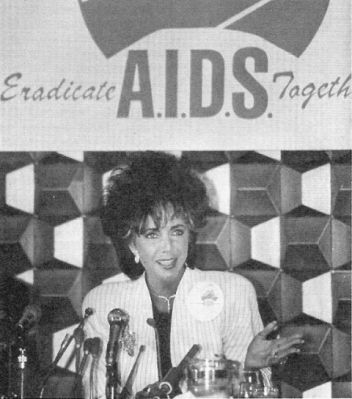
“I have to show up because it galvanizes people. [They] know . . . I’m not there to sell or gain anything. I’m there for the same reason they are: to get something done.” The discovery of HIV/AIDS not only changed the world forever, but also the life and purpose of Dame Elizabeth Taylor. Elizabeth was the first person in the entertainment industry to stand up and take charge when few were willing to listen, and even fewer were willing to help. “Elizabeth did something when it required real courage,” said Elton John. Since then she has remained at the forefront of the battle against this disease, a loyalty that has earned her the name the “Joan of Arc of AIDS.”
Her much-publicized personal life included eight marriages and several life-threatening illnesses. From the mid-1980s, Taylor championed HIV and AIDS programs; she co-founded the American Foundation for AIDS Research in 1985, and the Elizabeth Taylor AIDS Foundation in 1993. She received the Presidential Citizens Medal, the Legion of Honour, the Jean Hersholt Humanitarian Award and a Life Achievement Award from the American Film Institute, who named her seventh on their list of the “Greatest American Screen Legends”. Taylor died of congestive heart failure in March 2011 at the age of 79, having suffered many years of ill health.





 Rosamond Press
Leave a comment