
Capturing Beauty
The insane President of the End Time Rapture may have delivered the most famous line in British Military History.
The question I put forth, was Starmer and MI6 aware of the Israeli plan to strike Iran
ALL BY IT’S LONESOM – KNOWING THIS WOULD CAUSE IRAN TO ATTACK U.S.?
Did British Intelligence make an assement that Israel’s desire to attack Iran – with out the help of the U.S. would cause a spike in the price of oil and gasoline, and thus
WAS NOT A GOOD IDEA?
Starmer has said Britain did not take part in the U.S.-Israeli assault on Tehran because any British military action must have a “viable, thought-through plan” and he did not believe in “regime change from the skies.”
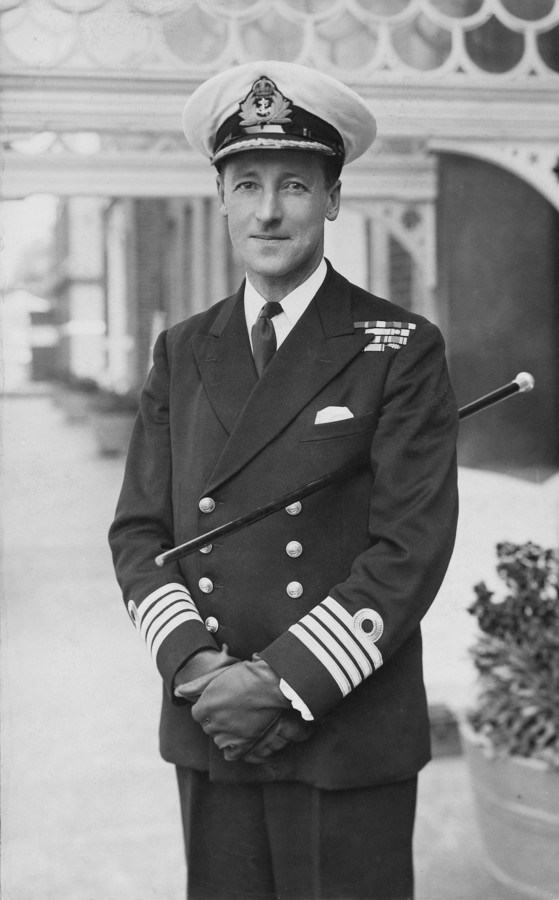
Above us a pic of the late Commander Ian Easton, of the British Dfence Staff Washington, that was created by FDR and Churchill – so that there would forever exist a BOND between Britain and America, that would meet the next Cloud of War
TOGETHER!
Trump and the End Time Christians – demanded our President
BREAK THAT BOND
Why?
Easton is turning over in his grave. Below is Rena Easton, whose pic I used to begin a painting of Fair Rosamond, who I associated with Helen of Troy, becaise her lover, King Henry the second claimed he…….
DESCENDED FFOM THE TROJANS
Henry also claimed he knew where King Arthur is buried.
I and this historical blog, Royal Rosamond Press, had been anointed by
THE GRAIL
…..when the End Time Maniac is voted out of office!
So be it!
I AM JOHN
Trump says UK’s Starmer is no Winston Churchill after rift over Iran strikes
By Nandita Bose, Trevor Hunnicutt and Kate Holton
March 2, 202611:38 PM PSTUpdated March 3, 2026

- Summary
- Trump criticises Starmer again over Iran support
- ‘This is not Winston Churchill,’ Trump declares
- UK bases can now be used for defensive action
- Starmer says he must act in Britain’s interest
WASHINGTON/LONDON, March 3 (Reuters) – President Donald Trump castigated one of the United States’ closest allies on Tuesday, comparing Prime Minister Keir Starmer unfavorably to Winston Churchill over Britain’s limited support for U.S. strikes on Iran.
“This is not Winston Churchill that we’re dealing with,” Trump said at the White House, referencing Starmer’s legendary World War Two predecessor.
The Reuters Iran Briefing newsletter keeps you informed with the latest developments and analysis of the Iran war. Sign up here.
The Oval Office comments were Trump’s third broadside against Starmer this week as Washington’s campaign of air strikes against Iran stoked concerns among some U.S. partners who see the war as reckless and a violation of international law.
Advertisement · Scroll to continue
Trump and his aides have long scolded European allies over their immigration policies, lower-than-pledged military spending and hostility to far-right movements. And Trump’s often tepid support for Ukraine and his threats to seize Danish territory have raised fears in Europe about the stability of a transatlantic alliance facing growing threats from Russia.
TRUMP’S COMPLAINT OVER IRAN STRIKES
Starmer has said Britain did not take part in the U.S.-Israeli assault on Tehran because any British military action must have a “viable, thought-through plan” and he did not believe in “regime change from the skies.”
But he has since allowed the U.S. to use UK bases to launch what he called limited and defensive strikes to weaken Tehran’s capabilities, after Iran hit U.S. allies in the region with drones and missiles. On Monday, a British base in Cyprus was hit by a drone that Cypriot officials said was likely launched by Iran-backed Lebanese group Hezbollah.

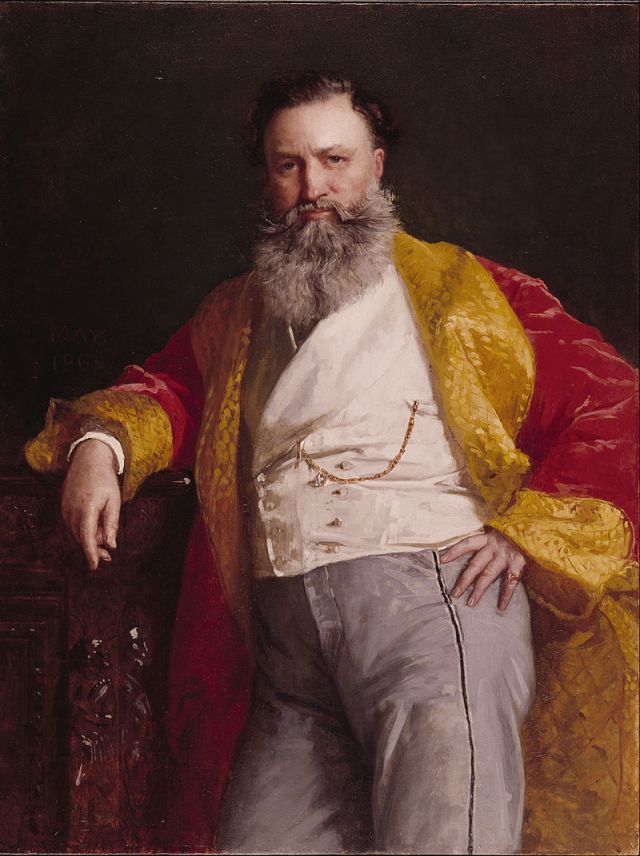
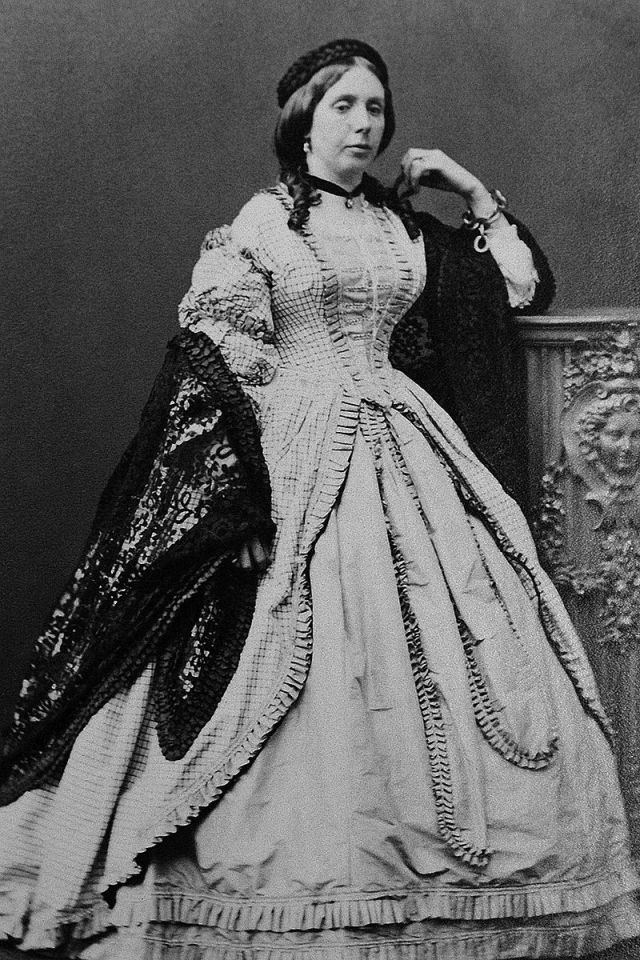
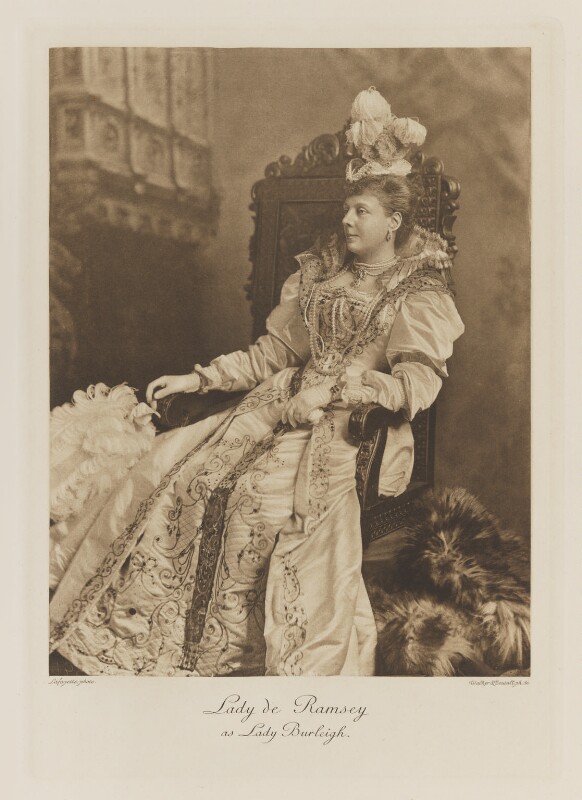
The author of the Oera Linda books, is not known – for sure! However, it is said a murderer revisits the scene of his/her crime, and, a clue is left behind. In this case let us look at the two main protagonists of this Atlantean tale, Jon, and Rosamond. Now, combine the names. Is this too easy?
A man married to a woman with a Rose name, can assume the name Rosamond. My mother was Rosemary Rosamond. Several of her kindred assumed the name of Francis Marion, ‘The Swamp Fox’ who Samuel and James Rosamond fought under in the War of Independence – from the royalty of Britain – where the Maze of Blenheim Palace is found.
A week ago I found Rosamund Jane Frances Spencer-Churchill. Her mother named her after Fair Rosamond who was kept in the Maze at Woodstock. Follow the Clue of the Red Thread………….Henry Brevoort, Washington Irving, and, Sir Walter Scott.
I am the Great Sleeper from the past – and future! I, Jon Francis Marion Rosamond, designed Atland – that has risen, as I have risen! I have come to show you the Lost Way! I am looking for a great attorney of law so that I might come to own the 1.7 billion dollar fortune gathered in the Beryl Buck Foundation – that I know she wants me to own, so we, can build our dream!
Isaac Singer was an actor in plays. His son, Paris Singer was Isadora Duncan’s lover. The president of Singer built Fair Rosamond’s castle on Dark Island. Very wealthy people associated with the Vanderbilt’s, have been constructing the Frisian Atlantis – and they know not what they do! Only the Master Builder can bring all the pieces together! My blog is my book, and The Project. I am a Genetic Architect.
I found my kindred soul in the video below. Frisians and Swan Brothers. The Rosamond family fought alongside William of Orange, and came to Canada and the United States where we lived in Appalachia and adopted Hillbilly names. Bennett Rosamond was the Grand Master of the Orange Lodge in Canada.
Jon Francis Marion Rosamond
Copyright 2017
http://www.sexualfables.com/the_woman_in_the_bower.php
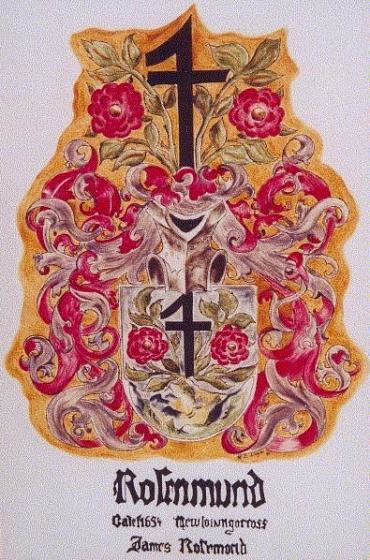
Marion Francis Rosamond
Found 10 Records, 8 Photos and 29,157 Family Trees
Born in Carroll, Mississippi, USA on 13 Sep 1848 to Benjamin Rosamond and Jane Rogers. Marion Francis married Sarah Jane Hodges and had 5 children. Marion Francis married Fannie A Rosamond and had 2 children. He passed away on 1934 in Lovelady, Texas, USA.
Family Members
http://www.biographi.ca/en/bio/rosamond_bennett_13E.html
https://rosamondpress.com/2017/01/25/rose-of-the-world-abbey/
http://www.loyalorangeusa.com/
-
Loyal Orange Institution of the United States of America
-
About the Loyal Orange Institution – USA
The Orange Order in the United States is a religious, charitable and patriotic American fraternity. The Grand Orange Lodge of the United States was organized in 1868, less than eighty years after the formal institution of the Orange Fraternity in Loughgall, Northern Ireland, in 1795.
-
Origins of the Order in the US
The spirit of Orangeism was planted in the United States as soon as the first groups of Ulster immigrants began arriving in significant numbers after 1719. This stream of pioneers, arriving as soon as thirty years after the Battle of the Boyne, brought with them the knowledge that they owed their very existence to Prince William of Orange. Their first settlement was in Londonderry, New Hampshire. Fresh arrivals throughout the 1700s spread quickly along the frontier and left their mark on the American landscape with hundreds of places named after towns and regions they had left in Ulster.
-
Scots-Irish
At a very early stage these immigrants from Ulster were given the name Scotch-Irish. While they had embarked on ships leaving ports such as Larne and Derry, it was obvious to the colonial authorities that they were not Irish. So they were called Scotch-Irish, and this name is proudly borne by Ulster-Americans to the present day.
-
Hillbillies?
Some of these early settlers were known as Hillbillies because of their veneration and respect for William of Orange. So far as we know, the Hillbillies did not have organized lodges, but lodges began to appear in the United States in the early 1800s and resulted in the formation of the Grand Lodge of the USA in 1868.
https://www.youtube.com/watch?v=5rLdxIo9J_Q&t=133s
https://en.wikipedia.org/wiki/William_III_of_England
William III (Dutch: Willem; 4 November 1650 – 8 March 1702),[2] also widely known as William of Orange, was sovereign Prince of Orange from birth, Stadtholder of Holland, Zeeland, Utrecht, Gelderland, and Overijssel in the Dutch Republic from 1672, and King of England, Ireland, and Scotland from 1689 until his death. It is a coincidence that his regnal number (III) was the same for both Orange and England. As King of Scotland, he is known as William II.[3] He is sometimes informally known in Northern Ireland and Scotland as “King Billy“.[4]
KALTA AND THE ORIGINS OF THE CELTS
This chapter is the story of Rosamond, Kalta and the early years of Minerva however standard history has very little to say about these historical personages. Their influence on the course of Europe and the Mediterranean was enormous, affecting everything that has followed for thousands of years. Of Rosamond nothing is known except for a namesake, Fair Rosamond, the mistress of King Henry II who has been endowed with many legends and dubious stories beyond her station.
https://rosamondpress.com/2017/10/04/downfall-of-the-house-of-vanderbilt/
We now come to the History of Jon.
Jon, Jôn, Jhon, Jan, are all the same name, though the pronunciation varies, as the seamen like to shorten everything to be able to make it easier to call. Jon—that is, “Given”—was a sea-king, born at Alberga, who sailed
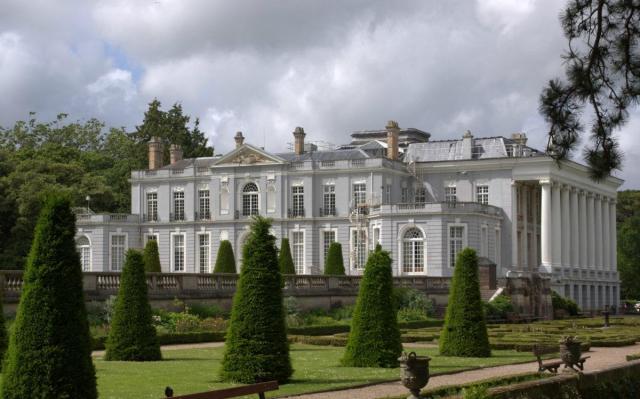
Around 1871 the Fernham estate in Paignton was purchased by Isaac Singer, the founder of the Singer Sewing Machine Company. The old buildings on the site were demolished and he commissioned a local architect, George Soudon Bridgman, to build a new mansion as his home. As part of the designs, Singer instructed Bridgman to build a theatre within the house. Bridgman was at that time being apprenticed by a young Frank Matcham who had just returned from London where he had been studying architecture in a surveyors office.[1] In an edition of The Builder, dated 1873, Matcham was named in the request for tender section as being the accepted party to work alongside Bridgman on the Oldway Mansion project.[2] The architectural historian Gorel Garlick considers it entirely possible that Matcham was given sole responsibility by Bridgman for the theatre’s design because of his educational experiences in London.[1] Singer spared no cost in terms of Oldway Mansion’s construction; he sourced the finest materials from around the world and instructed Bridgman to design the interior in exuberant French style. Garlick notes that it was highly likely that Singer’s exuberance would have influenced someone as architecturally impressionable as Matcham whose later theatres used such extravagant decoration.[1] The work was completed in 1873;ref name=NHLEHouse>Historic England, “Oldway Mansion (house) (1195207)”, National Heritage List for England, retrieved 2 October 2017 </ref> Singer died on 23 July 1875, shortly before work on the original mansion was completed.[3]

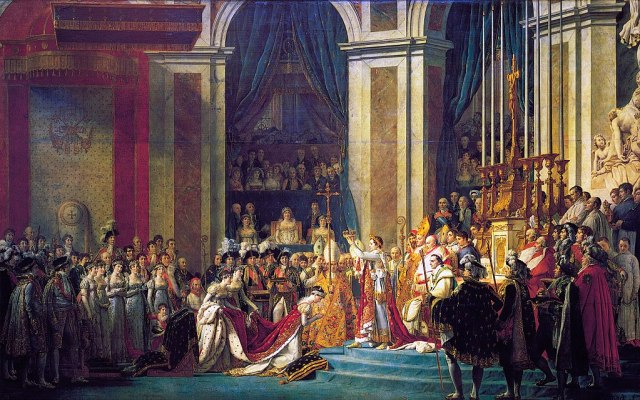
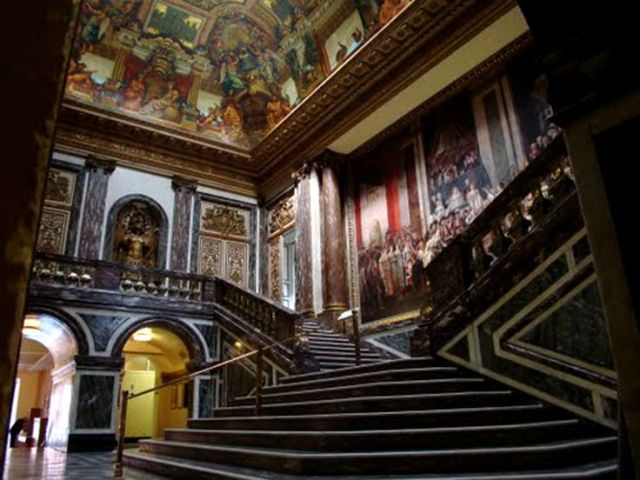
The grand staircase at Oldway Mansion with The Crowning of Josephine by Napoleon after David.
Paris Eugene Singer, Isaac Singer’s third son, supervised the alterations at Oldway Mansion between 1904 and 1907.[4] The rebuilding work was modelled on the Palace of Versailles,.[5] and the eastern elevation of the building was inspired by the Place de la Concorde in Paris.[6] The interior of the building is noted for its grand staircase made from marble and balusters of bronze..[5] The ceiling of the staircase is decorated with an ornate painting based on an original design for the Palace of Versailles for Louis XIV by the French painter and architect Charles Le Brun.[5]
Above the grand staircase there is a reproduction of the first version of Jacques-Louis David‘s painting The Crowning of Josephine by Napoleon..[5] The original was purchased by Paris Singer in the late 19th century. The painting was sold to the French government in 1946 and now hangs in the Palace of Versailles.[7][5] The reproduction at the mansion, which is in the same place as the original, is a copy made by Rutters Scanachrome and was unveiled in 1995.[8]
The gallery on the first floor is a reproduction of the Hall of Mirrors in Versailles, and is floored in parquet.[5] The gallery leads into the ballroom, which contains walls of gilt panelling and mirrors. Above the fireplace there is an oil painting of Louis of Bourbon dating from 1717.[5]
http://www.darklanecreative.com/blog/isadora-duncan-and-paris-singer
https://en.wikipedia.org/wiki/Oldway_Mansion
https://en.wikipedia.org/wiki/The_Coronation_of_Napoleon
Margietje Aertse Bogart formerly Vanderbilt

Ancestors 
Descendants 
Aert (Aart) van der Bilt formerly van de Bilt aka Vanderbilt
Ancestors
Descendants
Frances Anne Spencer-Churchill, Duchess of Marlborough VA (15 April 1822 – 16 April 1899) was an English noblewoman, the wife of British peer and statesman John Spencer-Churchill, 7th Duke of Marlborough. One of her sons, Lord Randolph Churchill was the father of Prime Minister Sir Winston Churchill. She had a total of 11 children, and her principal home was the monumental Blenheim Palace, which she rejuvenated with her “lavish and exciting entertainments”,[1] and transformed into a “social and political focus for the life of the nation”.[2] She was invested as a Lady of the Royal Order of Victoria and Albert[3] for her efforts at famine relief in Ireland.
http://www.sexualfables.com/the_woman_in_the_bower.php
Contents
[hide]
Family[edit]
Lady Frances Anne Emily Vane was born on 15 April 1822 at the Duke of St Albans’s house in St James Square, London, the eldest daughter of Irish-born Charles William Vane, 3rd Marquess of Londonderry and heiress Lady Frances Anne Vane-Tempest. At her baptism, Arthur Wellesley, 1st Duke of Wellington stood as her godfather.[4] She had three brothers, including George Vane-Tempest, 5th Marquess of Londonderry, and two younger sisters. She had an older half-brother Frederick Stewart, 4th Marquess of Londonderry, by her father’s first marriage to Lady Catherine Bligh.
Marriage and issue[edit]
On 12 July 1843 at St. George Street, Mayfair, Lady Frances married John Spencer-Churchill, Marquess of Blandford. Upon her marriage she was styled Marchioness of Blandford. The couple made their principal home at the Spencer-Churchill family seat of Blenheim Palace in Woodstock, Oxfordshire.
The marriage produced 11 children:
- George Charles Spencer-Churchill, 8th Duke of Marlborough (13 May 1844 – 9 November 1892)
- Lord Frederick John Winston Spencer-Churchill (2 February 1846 – 5 August 1850)
- Lady Cornelia Henrietta Maria Spencer-Churchill (17 September 1847 – Upper Brook Street, Mayfair, London, 22 January 1927), married 25 May 1868 Ivor Bertie Guest, 1st Baron Wimborne, by whom she had issue.
- Lady Rosamund Jane Frances Spencer-Churchill (died 3 December 1920), married 12 July 1877 William Fellowes, 2nd Baron de Ramsey, by whom she had issue
- Lord Randolph Henry Spencer-Churchill (13 February 1849 – 24 January 1895), married 15 April 1874 Jennie Jerome, father of Sir Winston Churchill and John Strange Spencer-Churchill.
- Lady Fanny Octavia Louise Spencer-Churchill (29 January 1853 – 5 August 1904), married 9 June 1873 Edward Marjoribanks, 2nd Baron Tweedmouth, by whom she had issue.
- Lady Anne Emily Spencer-Churchill (Lower Brook Street, Mayfair, London, 14 November 1854 – South Audley Street, Mayfair, London, 20 June 1923), married 11 June 1874 James Innes-Ker, 7th Duke of Roxburghe, by whom she had issue.
- Lord Charles Ashley Spencer-Churchill (1856 – 11 March 1858)
- Lord Augustus Robert Spencer-Churchill (4 July 1858 – 12 May 1859)
- Lady Georgiana Elizabeth Spencer-Churchill (10 St James’s Square, St James’s, London, 14 May 1860 – 9 February 1906), married 4 June 1883 Richard George Penn Curzon, 4th Earl Howe, by whom she had issue.
- Lady Sarah Isabella Augusta Spencer-Churchill (1865 – 22 October 1929), a war correspondent during the Boer War; married 21 November 1891 Lt. Col. Gordon Chesney Wilson (son of Sir Samuel Wilson, MP)

An 1880 engraving of Blenheim Palace
Duchess of Marlborough[edit]
On 1 July 1857, her husband succeeded to the title of 7th Duke of Marlborough, and from that date henceforth, Frances was styled Duchess of Marlborough. She was a commanding and hot-tempered woman described in The Complete Peerage as a “woman of remarkable character and capacity, judicious and tactful”. Her face had more strength than beauty and her eyes were either warm or hard, never lacklustre.[5]
She ruled Blenheim Palace and its household with an iron hand; yet it was she who rejuvenated the palace with her lavish and gay entertainments which she herself organised; transforming the palace “into a social and political focus for the life of the nation”.[2]
She was a domineering yet devoted mother; both of her surviving sons’ marriages were a disappointment to her. Her eldest son George married a woman described as stupid, pious and dull,[5] while her youngest and favourite son, Lord Randolph earned her displeasure by marrying, against the wishes of both herself and the Duke, American socialite Jennie Jerome, whom Frances openly disliked.[6]
Frances and her husband refused to attend Lord Randolph and Jennie’s wedding at the British Embassy in Paris, which took place on Frances’s 52nd birthday. Like the rest of the 19th-century British aristocracy, the Marlboroughs regarded American women as “strange and abnormal creatures with habits and manners something between a Red Indian and a Gaiety Girl“.[5] When the newly-wed couple moved to their home in Curzon Street in London, Frances arrived to help Jennie pay her first visits to the leaders of London society. She lent her some of her own jewels for the occasion, and the two women travelled in the Marlborough family coach.[7] Frances featured largely in the lives of the younger members of the family, including her grandson Winston, to whom she often acted as a substitute mother.[2]
From 1876 to 1880 her husband served as Lord Lieutenant of Ireland. As the result of her diligent efforts at famine relief in which she displayed humanity, proficiency and leadership that served to avert the effects of the 1879 Irish potato famine, she was invested as a Lady of the Order of Victoria and Albert by Queen Victoria.[2]

https://www.geni.com/people/Rosamund-Spencer-Churchill/6000000004868692184
https://www.geni.com/people/Daisy-Decazes-Fellowes/6000000013939716046
https://www.geni.com/people/Rosamond-Gladstone/6000000013940542675
Rosamond Daisy Gladstone (Fellowes) |
|
| Birthdate: | January 16, 1921 (77) |
| Birthplace: | United Kingdom |
| Death: | December 8, 1998 (77) Palm Beach, Florida, United States |
| Immediate Family: | Daughter of Reginald Ailwyn Fellowes and Daisy (Decazes) Fellowes Ex-wife of Capt. James Gladstone and Tadeusz Maria Wiszniewski Mother of <private> Gladstone; <private> Wiszniewski and Diana Wiszniewska Half sister of Ermeline Isabelle Edmée Séverine de Castéja; Jacqueline Marguerite Kraus and Isabelle Marguerite Jeanne Pauline de La Moussaye |
|---|---|
https://en.wikipedia.org/wiki/Oldway_Mansion
Lord Randolph Churchill, the youngest surviving son of Frances and the Duke
Last years[edit]
She became a widow in 1883, lost her eldest son, George, in 1892, and on 24 January 1895, her only surviving son, Lord Randolph Churchill, died at her London home in Grosvenor Square. She never stopped mourning Randolph, and harboured much resentment against his wife, whom she had never liked and now criticised for behaviour unbecoming a grieving widow.[citation needed]
Death[edit]
Frances died at Blenheim on 16 April 1899, the day after her 77th birthday, having outlived five of her eleven children. She was buried on 21 April 1899 in the family vault beneath Blenheim Chapel. Her grandson Sir Winston Churchill wrote of her: “She was a woman of exceptional capacity, energy and decision”.[5]
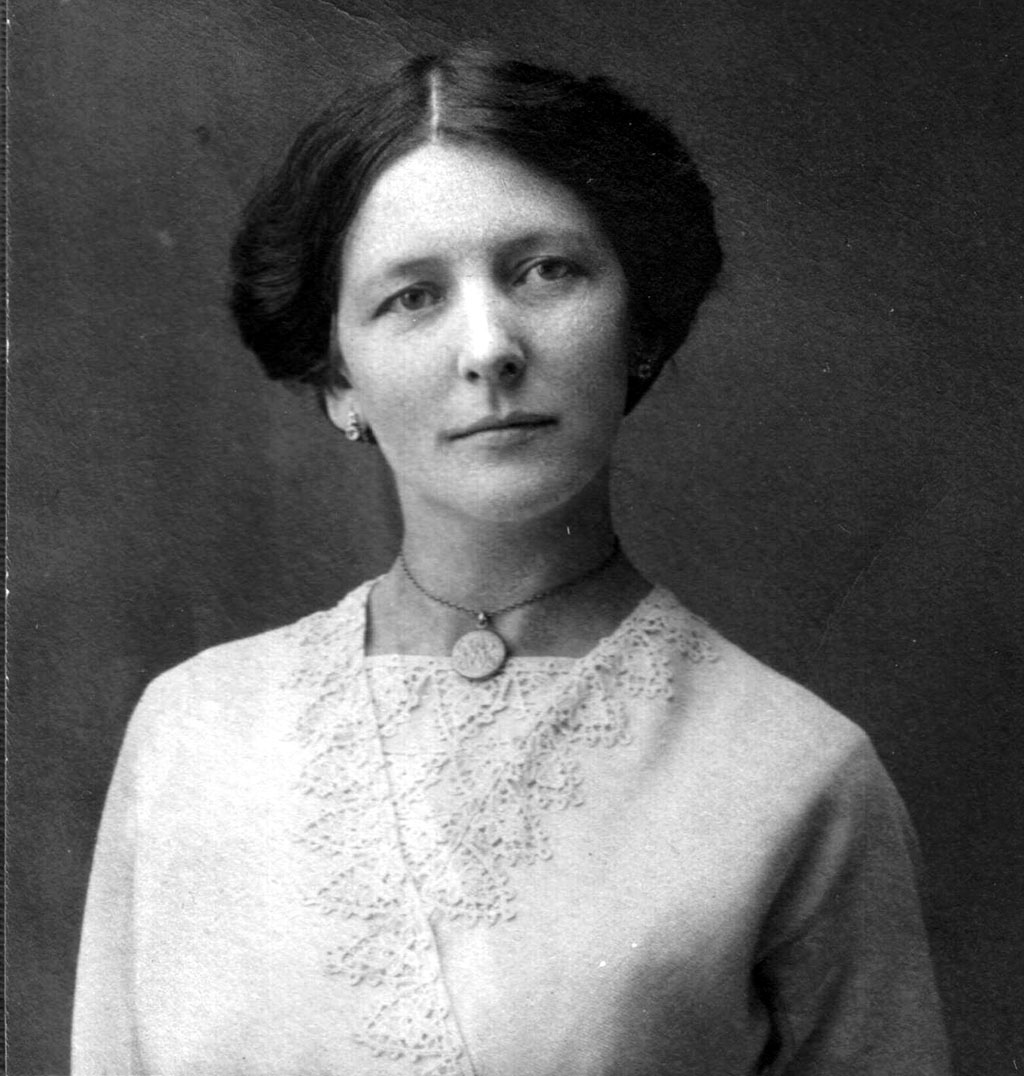
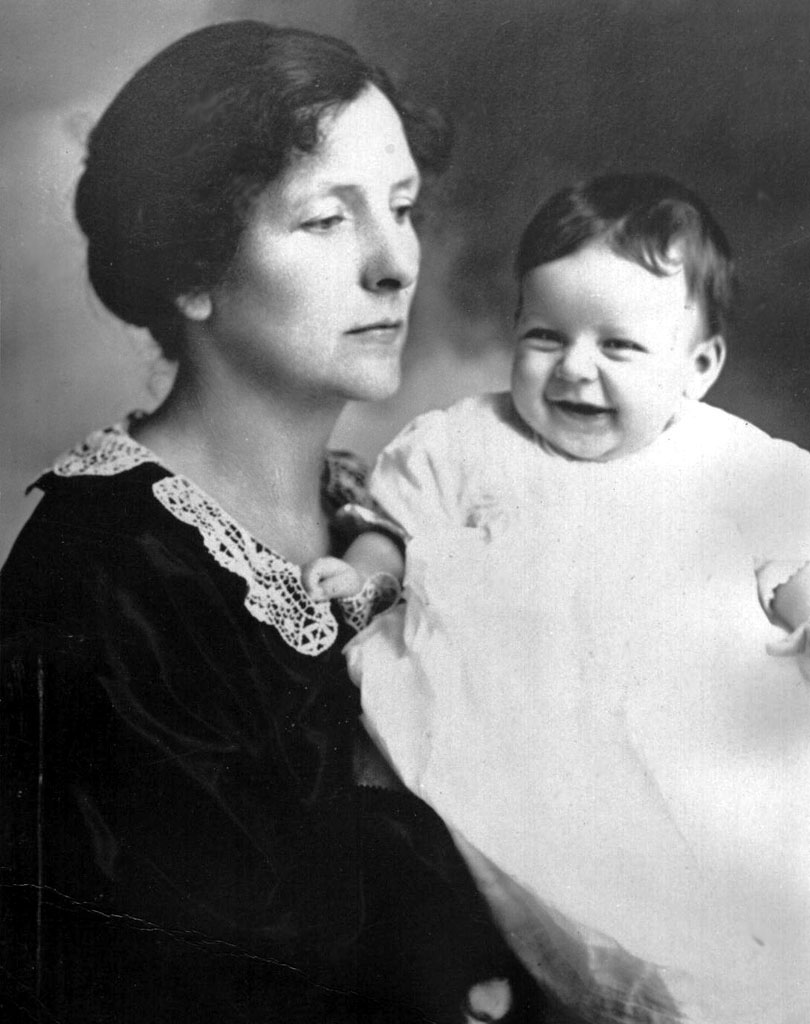



My grandmother, Mary Magdalene Rosamond, was a Folk-Mother who raised her four beautiful daughters on her own after banishing her husband, Royal Rosamond, from the Rosamond home in Ventura By The Sea, because as a poet and writer, he was a poor bread-winner. Dreamers were one more mouth to feed during the Depression, and Royal became a Wanderer upon the earth. He never came home again.
My first girlfriend. Marilyn Godfry, looked like Mary, as did Rena. I worship women.
Jon
“At this time Rosamond the Mother, who had done all in her power by
gentle means to preserve peace, when she saw how bad it was, made
short work of it. Immediately she sent messengers throughout all the
districts to call a general levy, which brought together all the
defenders of the country. The landsmen who were fighting were all
caught, but Jon with his seamen took refuge on board his fleet,
taking with him the two lamps, as well as Minerva and the maidens of
both the citadels. Helprik, the chief summoned him to appear; but
while all the soldiers were on the other side of the Scheldt, Jon
sailed back to the Flymeer, and then straight to our islands. His
fighting men and many of our people took women and children on board,
and when Jon saw that he and his people would be punished for their
misdeeds, he secretly took his departure. He did well, for all our
islanders and the other Scheldt people who had been fighting were
transported to Britain.
Jon, John, Jhon, Jan, are all the same name, though the pronunciation
varies, as the seamen like to shorten everything to be able to make
it easier to call. Jon – that is, “Given” – was a sea-king, born at
Alberga, who sailed from the Flymeer with a fleet of 127 ships
KALTA AND THE ORIGINS OF THE CELTS
This chapter is the story of Rosamond, Kalta and the early years of
Minerva however standard history has very little to say about these
historical personages. Their influence on the course of Europe and
the Mediterranean was enormous, affecting everything that has
followed for thousands of years. Of Rosamond nothing is known except
for a namesake, Fair Rosamond, the mistress of King Henry II who has
been endowed with many legends and dubious stories beyond her
station. Kalta is not remembered but the Celts who were named after
her have various “historical” descriptions.
http://permalink.gmane.org/gmane.culture.templar.rosemont/1988
http://frisianalliance.webs.com/orderofpriestesses.htm
Order of Priestesses
The judiciary of Friesland shall comprise an Order of Priestesses (Oarder fan Fâmna), which shall also safeguard the constitution. Every year 220 girls, aged 13, shall be chosen by lot as trainees (lêrfâmkis), and four assigned to each borough. At 18 they shall become priestesses (fâmna, sing. fâm). They shall be required to remain chaste, and to spend six hours a day, in two shifts, kneeling before their borough’s beacon (foddik), a perpetual flame representing truth and justice, presided over by a borough-priestess (burchfâm), who may veto any decision of the borough council or sheriff. There shall be seven priestesses and five trainees kneeling before their beacon at all times. At 25 they shall either be discharged, or become elders (i.e. judges), and be eligible for appointment as borough-priestesses.
The head of state of Friesland shall be the Folk Mother (Folksmoder), head of the Order of Priestesses, with her official residence in the former almshouses at Weverstraat 63-67, Den Burg, Texel. The Folk Mother may veto any decision of the National Assembly or the Stadtholder. She shall appoint, and may remove from office, borough-priestesses for each of the other boroughs, and shall herself act as borough-priestess for Texel. The Folk Mother and borough-priestesses shall hold court outdoors, taking petitions in front of their residences. The term of office of the Folk Mother shall be for life, and upon her death her successor shall be elected by a conclave of the borough-priestesses from amongst themselves.
The Frisian Alliance derives its proposals for an independent Friesland from the Oera Linda Book, a collection of ancient writings discovered in the Netherlands in the 1860s, detailing the history and mythology of the Frisians. Although the manuscript apparently dates to the 13th century, it is copied from much older texts, and since it is written in the oldest and purest known form of the Frisian language, it shall be required learning in all schools. It comprises six parts, of which the second, The Book of Adela’s Followers, is by far the longest. These are divided into a total of fifty-three chapters. The first English translation, linked below, was made by William Sandbach in 1876, and published by Trübner & Co. of London.
LETTERS
THE BOOK OF ADELA’S FOLLOWERS
THE WRITINGS OF ADELBROST AND APOLLONIA
THE WRITINGS OF FRÊTHORIK AND WILJOW
THE WRITING OF KONERÊD
FINAL FRAGMENTS
http://www.friggasweb.org/matrons.html
[edit] Goddess and Folk-mothers
According to the Oera Linda Book.
Frya, ?-2194 BC (eponymous ancestress of the Frisians, who supposedly inhabited all of Northern and Western Europe)
Fasta, 2194-after 2145 BC (appointed by Frya when the latter ascended to the stars during a terrible flood)
Medea
Thiania
Hellenia
(unknown)
Minna, fl. 2013 BC (faced an invasion of Finns from the east, who settled in the Frisian lands in Scandinavia)
(unknown)
Rosamond, 1631-? BC (the Frisians in Western Europe revolted and became the Celts)
Hellicht, fl. 1621 BC
(unknown)
Frana, ?-590 BC (murdered by the Finns during an invasion)
Adela (de facto), 590-559 BC (supposedly ordered the compilation of what became the Oera Linda Book)
(vacant)
Gosa, 306-before 264 BC (elected after a long vacancy, Frisian rule confined to approximately the modern Netherlands)
(vacant)
Prontlik, fl. c. 60 BC (puppet folk-mother appointed by King Asinga Ascon)
[edit] Kings
According to the Frisia seu de viris rebusque illustribus (and the Oera Linda Book).
Friso, 313-245 BC (Adel I Friso (de facto), 304-264 BC) (established a militaristic hereditary monarchy)
Adel, 245-151 BC (Adel II Atharik, 264-? BC)
Ubbo, 151-71 BC (Adel III Ubbo)
Asinga Ascon, 71 BC-AD 11 (Adel IV Asega Askar, or Black Adel) (reviled for employing foreign troops and bringing plague)
Diocarus Segon, 11-46
Dibbaldus Segon, 46-85 (? Verritus) (forced to accept Roman protection, and may have visited Rome in person)
Tabbo, 85-130 (? Malorix)
[edit] Dukes
According to the Frisia seu de viris rebusque illustribus.
Asconius, 130-173 (title downgraded to duke as a Roman client)
Adelboldus, 173-187
Titus Boiocalus, 187-240
Ubbo, 240-299
Haron Ubbo, 299-335
Odilbaldus, 335-360
Udolphus Haron, 360-392
[edit] Kings
According to the Frisia seu de viris rebusque illustribus (and Merovingian chronicles).
Richardus, Uffo, 392-435 (? Finn Folcwalding)
Odilbaldus, 435-470 (? Sibbelt)
Richoldus, 470-533 (? Ritzard)
Beroaldus, 533-590 (? Audulf)
Adgillus I, 590-672 (Aldegisel, ?-680)
Radbodus I, 672-723 (Radbod I, 680-719)
(Poppo, 719-734) (not listed in the rebusque)
Adgillus II, 723-737 (Aldegisel II)
Gondobaldus, 737-749 (Gundebold, or Aldegisel III)
Radbodus II, 749-775 (Radbod II)
http://osdir.com/ml/culture.templar.rosemont/2004-07/msg00000.html
xc
 Rosamond Press
Leave a comment