I watched former MI6 Chief, Sawers, as soon as I woke up.
I AM
JOHN
How Britain could be involved in a US attack on Iran
Trump wants Britain’s help with another illegal war in the Middle East, which could have far reaching consequences
PHIL MILLER
20 February 2026
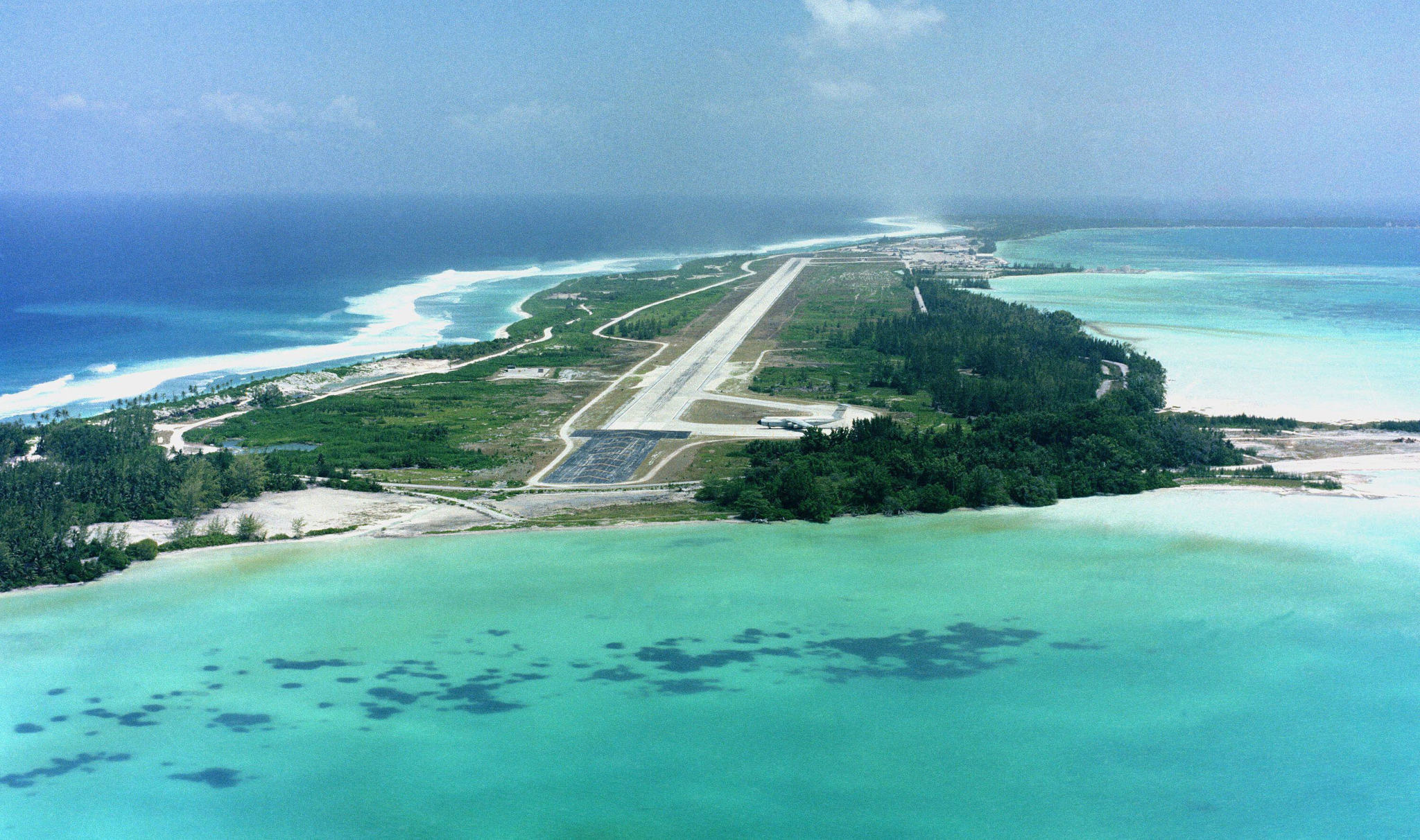
The US wants to use a British base on Diego Garcia to attack Iran. (Photo: Alamy)
Listen to this article
5 min
US president Donald Trump has signalled that British military bases may be crucial to an attack on Iran, without offering a legal justification for bombing that country.
Trump posted on Wednesday: “Should Iran decide not to make a Deal, it may be necessary for the United States to use Diego Garcia and the airfield located in Fairford in order to eradicate a potential attack by a highly unstable and dangerous Regime.”
RAF Fairford in Gloucestershire has a 10,000-foot runway and is the US Air Force’s only European airfield for heavy bombers.
It can host B-52s, which flew daily missions from the base to bomb Iraq during the 2003 invasion.
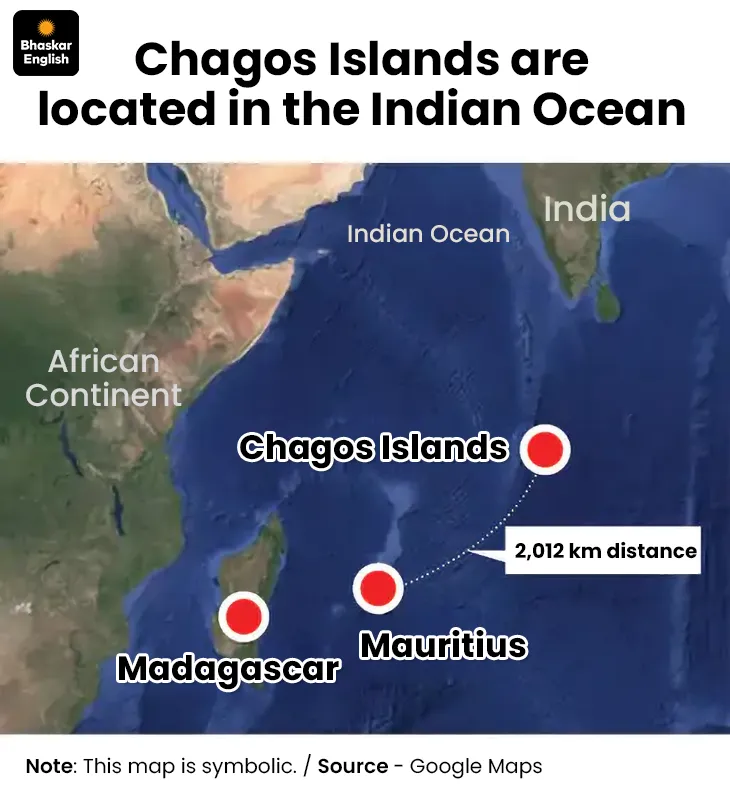
Diego Garcia is part of the Chagos Islands, an archipelago in the Indian Ocean which has a runway long enough for US B-2 stealth bombers that could bomb deep inside Iran.
Britain illegally occupies the Chagos Islands and has only just agreed to return them to Mauritius, while retaining a 99-year lease on Diego Garcia for US-UK military purposes.
Trump now opposes the proposed handover, despite it being necessary to comply with a ruling from the International Court of Justice, and denounced it as “wokeism”.
The Times reported his opposition is based on Britain’s apparent refusal to let him use Diego Garcia to stage attacks on Iran, which could happen over the coming days.
Trump did not use Diego Garcia or Fairford last June when he bombed Iran in Operation Midnight Hammer, opting instead to send heavy bombers all the way over the Atlantic from US soil.
Britain’s Ministry of Defence (MoD) declined to comment on Thursday when asked by Declassified if Trump had permission to use Diego Garcia or Fairford to bomb Iran this time.
An MoD spokesperson said: “As routine, we do not comment on the operational activity of other nations, including third party use of UK bases.
“The US is the UK’s principal defence and security partner. The depth of our defence relationship with the US remains an essential part of our security.”
‘Not enough’
The ministry also refused to comment on whether such an attack on Iran would be lawful.
Trump is not publicly making any legal case for his potential attack on a sovereign state, other than to suggest Iran might try to attack the US in future.
For a strike to be conducted in self-defence, the attack must be imminent.
This threshold was highlighted during the debate on invading Iraq in 2003, when Keir Starmer himself wrote: “The mere fact that Iraq has a capacity to attack at some unspecified time in the future is not enough”.
Trump’s bombardment of Iran in June 2025 also failed to reach that threshold, according to Sir Richard Dalton, the UK’s former ambassador to Tehran.
He told Declassified: “By every standard, this was not a legal preemptive attack.”
Despite these legal concerns, Starmer has allowed Trump to use US bases in Britain for his troop build-up around Iran.
There has been a surge in US fighter jets and refuelling aircraft passing through RAF Lakenheath and Mildenhall in Suffolk on their way to the Middle East since January.
‘Unprecedented’
Any British participation in an attack on Iran could result in serious consequences for UK troops abroad, as well as triggering an economic or refugee crisis.
Iranian officials have vowed an “unprecedented” response against “all who support the aggressor” if Trump attacks, signalling they will go much further than previous choreographed responses.
Britain has hundreds of military personnel in the Gulf that are well within range of Iran’s missile arsenal, especially the naval facility HMS Juffair in Bahrain, spy stations in Oman and airbases in Qatar and the UAE.
Although protected by air defences including Typhoon fighter jets, these could potentially be overwhelmed if Iran fires a high volume of short-range missiles at the bases.
UK military and intelligence personnel stationed at bases further from Iran could be within range, including staff in Jordan and even on Cyprus.
British naval personnel may also be dotted throughout the US carrier battle groups being deployed to the region, as several were believed to be ahead of Trump’s attack on Venezuela.
They too could be vulnerable to Iranian counter-attacks.
Tehran could also mine the narrow Strait of Hormuz, through which a fifth of the world’s oil supplies flow each day, causing an energy price shock.
Iran announced the temporary closure of the Strait of Hormuz on Tuesday for the first time since the 1980s for “live-fire naval drills”.
In any retaliatory strike, Iran is likely to target Israel, whose prime minister Benjamin Netanyahu has advocated for a US-led war against Tehran for decades.
In October 2024, RAF Typhoons and Voyager refuelling aircraft played a role in intercepting missiles which were fired by Iran at Israel.
Several of Britain’s most advanced fighter jets, the F-35, were moved to Cyprus a fortnight ago to boost air defences in the eastern Mediterranean.
UK denies US access to Fairford airbase:Trump reportedly upset as Washington eyes Iran strike from facility
London15 days ago
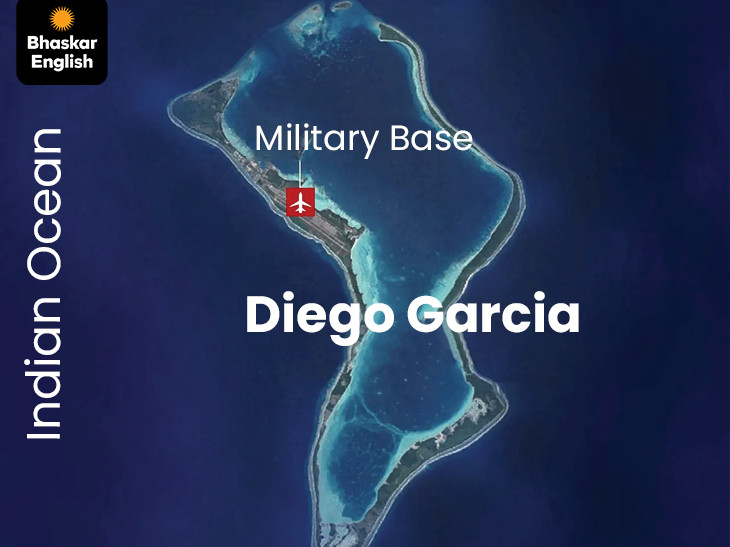
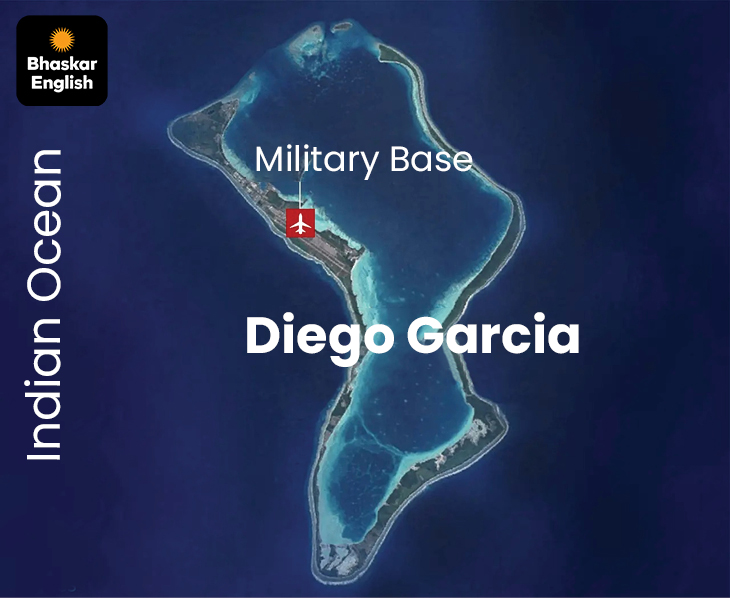
Diego Garcia is located in the Chagos Islands, where a common military base of Britain and America is present.
The United Kingdom has reportedly refused a United States request to use British-controlled airbases for potential military strikes against Iran, a move that has sparked signs of tension between the long-time allies.
According to a Daily Mail report, US President Donald Trump is said to be displeased with the decision.
The report claims that Trump has withdrawn support for British Prime Minister Keir Starmer’s proposed agreement to transfer sovereignty of the Chagos Archipelago to Mauritius.
US wanted access to Diego Garcia, RAF Fairford
The United States is reportedly preparing contingency plans for a possible strike on Iran and had sought access to Diego Garcia in the Indian Ocean and RAF Fairford in the United Kingdom.
Diego Garcia, the largest island in the Chagos Archipelago, has functioned as a joint UK-US military base since the 1970s.
Under existing agreements, British military facilities can only be used for offensive operations with the approval of the British Prime Minister.
International law also places responsibility on countries that knowingly assist in military actions deemed unlawful.
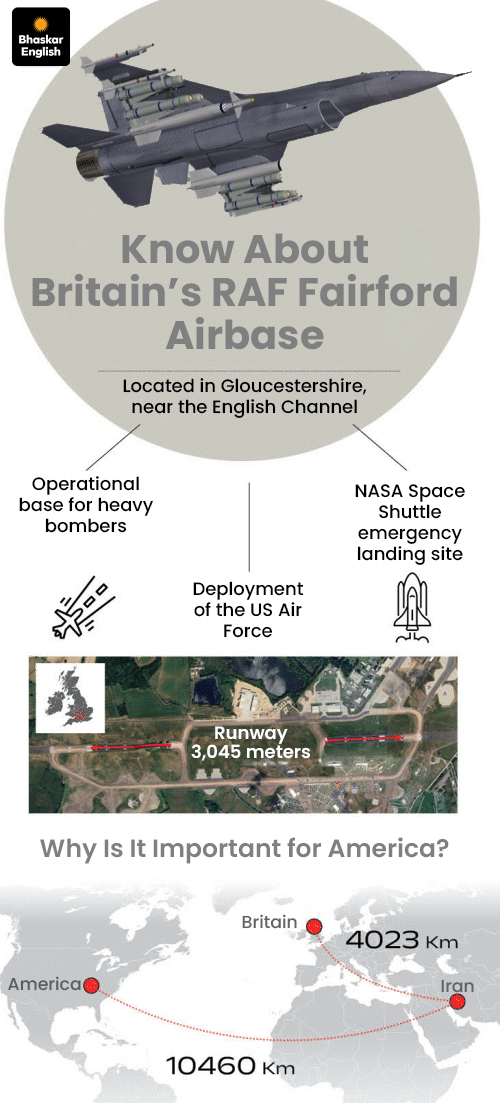
Trump calls Chagos decision a ‘Big Mistake’
President Trump criticised Britain’s handling of the Chagos issue on his social media platform, Truth Social.
He argued that granting a 100-year lease arrangement was not a sound strategic decision and warned that relinquishing control of Diego Garcia would be a “huge mistake.”
Trump stated that if Iran fails to reach an agreement with Washington, the US may need to use airfields at Diego Garcia and RAF Fairford. In such a scenario, maintaining control over these bases would be critical.
Meanwhile, the British government maintains that an agreement with Mauritius is necessary for long-term security and to avoid prolonged and costly legal disputes. Reports suggest the overall settlement could cost Britain up to £35 billion.
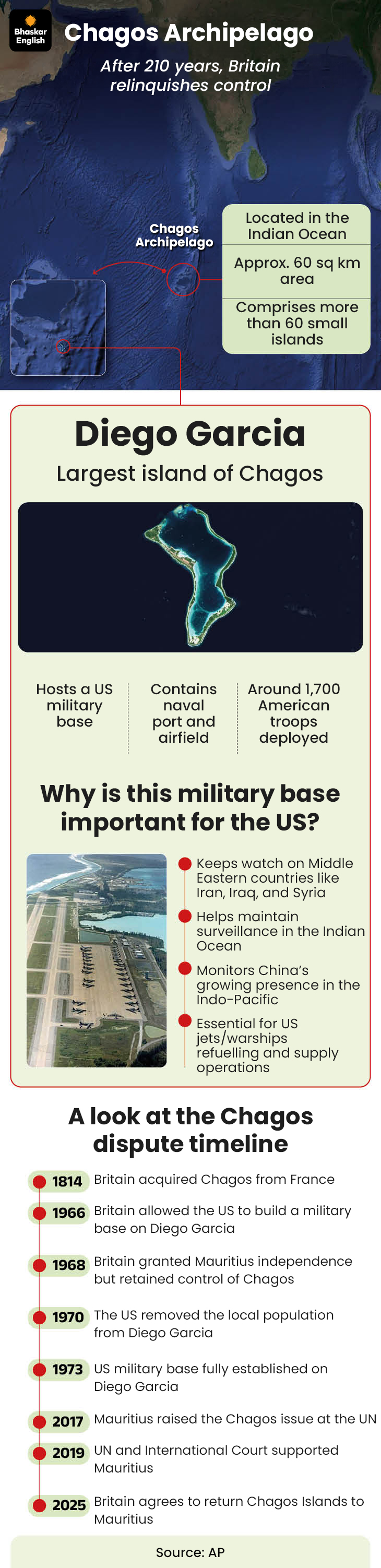
Background: The Chagos dispute
Britain took control of the Chagos Islands in 1814 after defeating Napoleon. In 1965, the islands were separated from Mauritius to form the British Indian Ocean Territory.
When Mauritius gained independence in 1968, it was agreed that the islands would be returned once they were no longer required for defence purposes. Subsequently, the UK and US established a joint military base on Diego Garcia.
Mauritius has contested British control for decades. In 2019, the International Court of Justice ruled that the decolonisation of Mauritius was incomplete and that Britain should end its administration of the Chagos Islands as rapidly as possible.
In 2022, the Conservative government led by Rishi Sunak announced negotiations with Mauritius over sovereignty.
Eleven rounds of talks were held before the July 2024 general election, aimed at resolving legal uncertainties while ensuring the continued operation of the UK-US base at Diego Garcia.
Why Diego Garcia is strategically important
Diego Garcia is considered a key strategic asset for potential operations against Iran. Located in the central Indian Ocean, it enables long-range missions without exposing aircraft to immediate threats.
The base lies approximately 3,800 kilometres from Tehran. It features a long runway capable of handling heavy bombers such as the B-2 and B-52, along with refuelling aircraft like the KC-135 and surveillance planes. A deep-water port also allows large naval vessels to dock, refuel and resupply.
The facility has previously supported military operations in the Middle East, Afghanistan and parts of Africa.
Strains in the ‘Special Relationship’
The disagreement highlights evolving differences in the decades-old UK-US partnership, often described as the “special relationship.” From World War II and NATO cooperation to joint operations in Iraq and Afghanistan and participation in the Five Eyes intelligence network, the two countries have historically aligned closely.
However, recent developments suggest emerging divergences:
1. Different approaches to military action Britain has adopted a more cautious stance on potential action against Iran, particularly after controversy surrounding the Iraq War. London now emphasises legal clarity and international backing before engaging in military operations. Washington, by contrast, has signalled a readiness to act swiftly in response to perceived security threats.
2. Chagos Archipelago negotiations US officials reportedly view Britain’s negotiations with Mauritius as potentially weakening American strategic positioning in the Indian Ocean.
3. Diverging foreign policy styles Observers describe the current US administration’s approach as more transactional and security-driven, while post-Brexit Britain has sought to emphasise adherence to international law and multilateral norms.
4. Differences over Greenland Differences have also surfaced over Greenland. When Trump previously expressed interest in purchasing the Danish territory, Britain, along with other European nations, signalled respect for Denmark’s sovereignty and international legal principles.
While both governments continue to describe their alliance as strong, the current episode underscores shifting geopolitical calculations and growing policy differences between Washington and London.
 Rosamond Press
Leave a comment