Capturing Beauty
by
John Presco
ALL RIGHTS RESERVED
Was it 1997 when a publicist for my cousin, Elizabeth Rosemond Taylor put a brief page of Taylor’s genealogy on Jimmy Rosamond’s site? This Rose Tree was not that wondrous. We and Jimmy were down in Mississippi reading about William Rosamond who could play a mean saw, and sang on the radio with the ‘Delta Clodhoppers’. Liz Taylor fans must have heard the strumming of a banjo and the twanging of a old guitar. and – she was out of there! These are not – her people!
Then I found Pharamond and Rosamonde!
“Come back, Liz! We might be kin to……. “The mother of all the kings of France”
A week ago I found Radbod again, and the possibility he retreated to Heligoland Island, Did her give birth to two sons, one who became
THE MAYOR OF THE PPALACE?
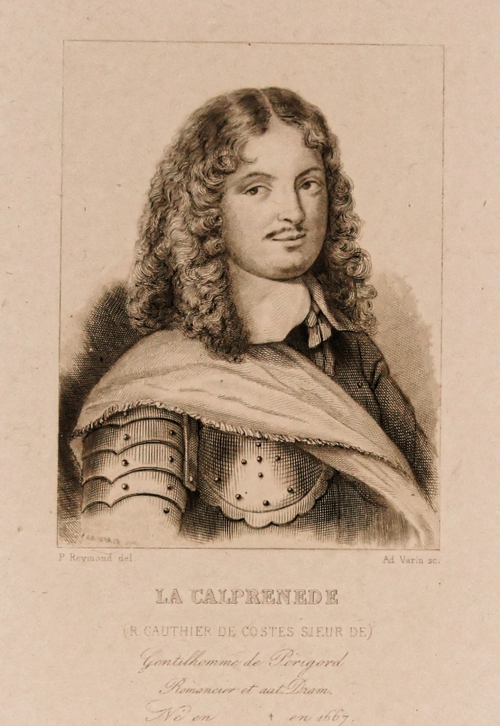
Gautier de Costes de la Calprenède makes a panegyric pronouncement when he compares the beauty of Elizabeth Monck, Duchess of Albermarle, to Fair Rosamond.
Where had I heard this title before? Ah! Yes! We read this name title on ye old yahoo-groups, where thousands followed the search for the Holy Blood and the Holy Grail, as sought by Baidgent and Leigh who sued Dan Bron for plagerism I coniderd doing the same when he lifted my Rose Line that several authors hated, espeically when I intorduded Gautier de Costes de la Calprenède who makes a panegyric pronouncement when he compares the beauty of Elizabeth Monck, Duchess of Albermarle, to Fair Rosamond. Did Gautier know Elizabeth descends from Rosamond via the Talbots?
I am considering publishing five art books that are taken from this blog, Royal Rosemond Press, and publishing them almost as is, as a oversized art book. They will be hardbacks. I know this is what Christine Rosamond Benton would want, and her late daughter, Drew Taylor Rosamond Benton. For sure Liz’s childrent nd grandchildren will be pleased to be part of a Grail Legend, that enhcance
THE ROSAMOND BRAND
I am going to get an attorney in order to get the copyright for all images the world famous artist, Rosamond, made. I am going to request the Mayor of Belmont send me a copy of my family history, who ere the founders of Belmont. The Belmont Historic Society had to have come upon the posts I repost today. I should have been given a free copy, being there are photographs of my great grandfather and his brother – were inside. This goes against the purpose of any historic society, that are not publishing houses – with an attorney at the gate.
This harassment of a human being, who brings up the fact his grandmother was named. Mary Magdalene Rosamond, led me to threaten my tormentors – to publish a Historic Romance, where facts and proof is not called for, I came to believe Pharmond was a fictional person. How about Argotta – also called Rosamond? For the reason the harassment has been going on for twenty-eight years, I hereby anoint Elizabeth Rosemond Taylor as the…
THE QUEEN OF THE ROSAMOND GENEAOLOGY
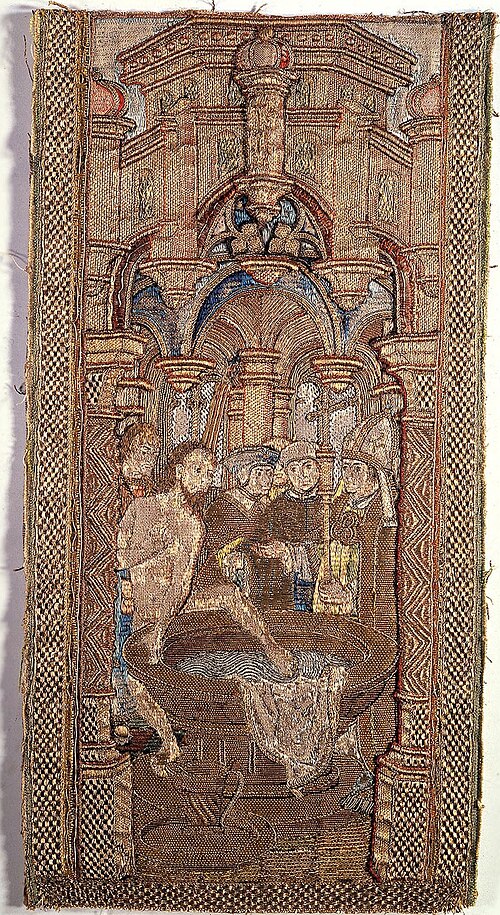
I am going to contact MOMA and see if they will exhibit this blog, that is a modern search for the Holy Grail using computers and social media platform groups. I believe the coroner who responded to the bones found in Belmont Creek, should dig down and get our DNA, that might be tied to the Merovingians, who married Radbods sons. I have a theory that Heligoland was a place treaties were made. How about royal pagan marriages? I suspect Radbod’s conversion to Christianity was complete, and in a later usurpation, they have have Radbod stepping out of the Baptismal waters, as depicted in the tapestry above. How many converted Christians were hunted down – as pagans? Consider the slaughter of alleged pagans by Charlamagne.
What are the odds, that a Grail Clue is dug up out of a grave in Twin Pines Park in the middle of the night – and cast into a pauper sgrave in Redwood City, in a highly insulting – heap.
From now on, I don’t have to prove anything. I am kin to famous thespians, who made a living playing make-believe characters. I want to play a wise old Radbod who gets to tell his side of the story – alas! I will be the …..Teacher of Way! I see a movie trilogy!
Look at this passport! Did Mutter Heinrich and her daughter have one? Two headstones were removed from in front of Ralston House. The BHS refused to tell me the names on them. Is it HEINRICH? Did Carl find his wife – in Belmomt? Is this why they hid the names, lest someone put two and two together? I suspect the Mayor of Belmont will have me arrested if caught inside the city limits, or, at the BHS
JP
John Rosenmund Belmonde Count of Belmont
Let us gather together a Free Peoples, and together write a new
Constitution that will sustain the principles of the original, and
set new guidelines on how to uphold true Freedom and Democracy, and sustain the People who love Beauty and the Truth.
The story concerns the attempt of Rosamunde, who was brought up incognito as a shepherdess by the mariner’s widow Axa, to reclaim her throne. The long-established governor Fulgentius (Fulvio in the revised version), who already has Rosamunde’s parents on his conscience, attempts to thwart Rosamunde, initially by intrigue, then by a marriage proposal and finally by an attempt at poisoning. Rosamunde, whose claim is backed by a deed in her father’s hand, enjoys the support of the Cypriots and the Cretan Prince Alfonso, her intended husband. All the attempts of Fulgentius fail; he dies by his own poison, and Rosamunde ascends the throne.[5]
https://rosamondpress.com/2026/02/23/helgoland-an-franz/
Between 690 and 692, Utrecht fell into the hands of Pepin. This gave the Franks control of important trade routes on the Rhine to the North Sea. Some sources say that, following this defeat, Radbod retreated, in 697, to the island of Heligoland. Others say he retreated to the part of the Netherlands that is still known as Friesland.

Rosamunde “The mother of all the kings of France”

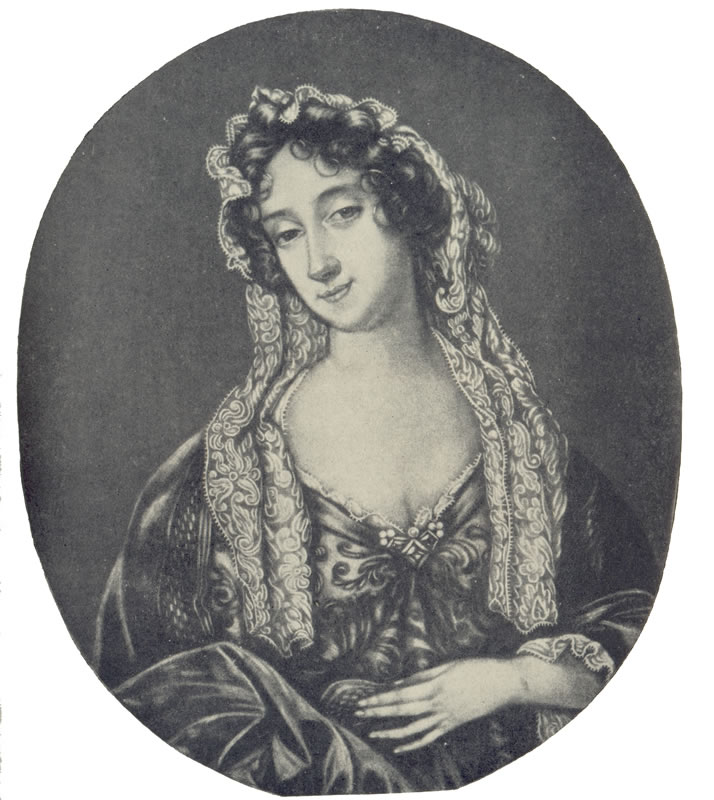
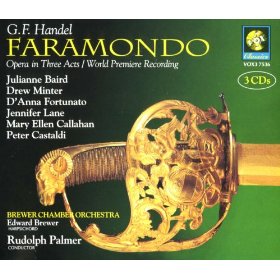

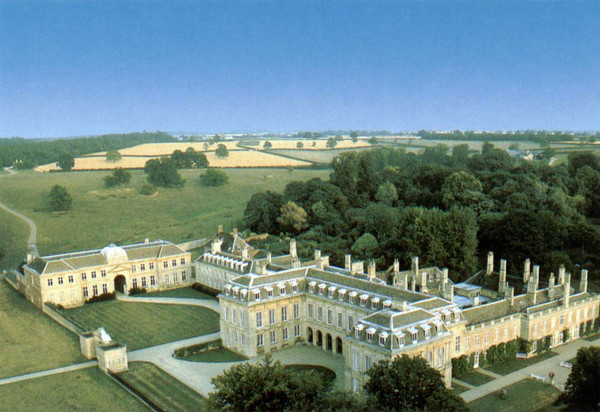
Gautier de Costes de la Calprenède makes a panegyric pronouncement when he compares the beauty of Elizabeth Monck, Duchess of Albermarle, to Fair Rosamond. Did Gautier know Elizabeth descends from Rosamond via the Talbots? Handel wrote an opera about Faramond and Rosamunde the queen of the Sicambri who lived in the Netherlands. A modern opera was composed about Elizabeth. With the Roman de Rou, and the claim Faramond was a Grail King who married Rosamunde “The mother of all the kings of France” one can coclude when it comes to the Grail Myth ‘The Rose of the World’ is at the epicenter of the Round Table and holds the Genetic Key to many Grail Legends.
Elizabeth Monck lived in the New World, Jamaica, thus one can make a panegyric pronouncement that the Holy Grail has come to America in regards to the world famous artist ‘Rosamond’ and her kindred, the movie legend, Elizabeth Rosemond Taylor.
Jon Presco
“That which I was obliged to tell you of the beauty of Rosamond, in
recounting to you what fashion she appeared to the eyes of my master,
hindered me from extending something upon that of Albisinda: but I
may tell you with truth, that if Rosamond were not in the world,
perhaps there would be nothing more beautiful then that Princess; and that next to Rosamond, she has those particular charms, which nothing can withstand: she has without doubt has less splendor and Majesty than the Princess of the Cimbrians.”
Elizabeth Monck, Duchess of Albermarle (22 February 1654 – 11 September 1734), later Elizabeth Montagu, Duchess of Montagu, was the eldest daughter of Henry Cavendish, 2nd Duke of Newcastle, and his wife, Frances Pierrepont (1630–1695; daughter of the Hon. William Pierrepont). She was known for most of her life as “the Mad Duchess of Albemarle”.
http://www.operaunlimited.org.uk/the-mad-duchess.html
The Mad Duchess is a short opera composed by Peter Cowdrey with libretto by Hamish Robinson based on a story about the Duchess of Albemarle, wife of the Earl of Montagu who sought to model Boughton House in Northamptonshire on Versailles
http://en.wikipedia.org/wiki/Low_Franconian
the Mad Duchess of Albemarle”.
Pierrepont was the second son of Robert Pierrepont, 1st Earl of Kingston-upon-Hull and his wife Gertrude Talbot, daughter of Hon. Henry Talbot of Burton Abbey, Yorkshire.[1]
http://en.wikipedia.org/wiki/George_Monck,_1st_Duke_of_Albemarle
Earl of Albemarle is a title created several times from Norman times onwards. The word Albemarle is the Latinised form of the French county of Aumale in Normandy (Latin: Alba Marla meaning “White Marl”, marl being a type of fertile soil), other forms being Aubemarle and Aumerle. It is described in the patent of nobility granted in 1697 by William III to Arnold Joost van Keppel as “a town and territory in the Dukedom of Normandy.”
During the period in which England and France contended for the rule of Normandy (through the end of the Hundred Years’ War), the kings of England not infrequently created peers as Counts and Dukes of Aumale. The last, to Richard de Beauchamp, 13th Earl of Warwick(d.1439), was in 1422; Aumale, anglicized as Albemarle, was not revived in the peerage until 1660.
In that year, Charles II bestowed the title of Duke of Albemarle on General George Monck. The title became extinct in 1688, on the death of Christopher, 2nd Duke of Albemarle.
Despite the fact that his name is now only recognised in scholarly circles, Gautier de Costes de la Calprenède was one of the most successful French writers of the seventeenth century. His novels, upon which his fame principally rests, remained extremely popular even beyond his lifetime, selling in their thousands, inspiring plays, and still being translated as late as the nineteenth century. He began his literary career, however, by writing for the stage, producing nine plays between 1635 and 1642, alternating between the two most popular genres of the time: tragedy and tragicomedy.
http://groups.yahoo.com/group/Templar-de-Rosemont/message/1466
http://fabpedigree.com/s068/f083133.htm
http://fabpedigree.com/s036/f166267.htm
Pharamond Lord of the West FRANKS (son of Marcomir Duke Of The East FRANKS and Hatilde (Princess) of FRANKS) was born 380 in Westphallia, Germany, and died 428. He married Argotta (Rosamunde) Queen of FRANKS.
Notes for Pharamond Lord of the West FRANKS:
AKA Faramund (Pharamond) of the GRAIL-KING
PHARAMOND, KING OF ALL FRANKS & keeper of the Grail lineage.
Under Pharamond reign the Franks were united under one crown. He succeeded his father as Duke of the East Franks in 404 A.D.; became King of the West Franks in 419 A.D. and King of Westphalia in 420 A.D. He married Argotta, daughter of Grimald, Duke of the West Franks, in 409 A.D. At his father-in- law’s death in 419 A.D., Pharamond became Duke of the West Franks
Note: 1. Pharamond, Duke of the East Franks, 404 A.D., elected King ofthe West
Franks, 419, died in 430, 16th in descent from Boadicea. He married
Argotta, “the mother of all the kings of France.” They were the great
great grandparents of Clovis. He was descended 13 generations from
Athildis, who married in 129 A.D. Marcomir IV., King ofFranconia, who
died in 149. Athildis was the daughter of “Old King Cole,” known also as
Colius I., who died in 170 A.D. He was educated in Rome, King ofBritain
in 125. Colius I. was the son of Marius
http://familytreemaker.genealogy.com/users/j/o/h/Katie-Johnston-Alabama/WEBSITE-0001/UHP-0393.html
http://familytreemaker.genealogy.com/users/j/o/h/Katie-Johnston-Alabama/WEBSITE-0001/UHP-0012.html
An anonymous work of 727 called Liber Historiae Francorum states that following the fall of Troy, 12,000 Trojans led by chiefs Priam and Antenor moved to the Tanais (Don) river, settled in Pannonia near the Sea of Azov and founded a city called Sicambria. In just 2 generations from the fall of Troy (by modern scholars dated in the late Bronze Age) they arrive in the late 4th century AD at the Rhine. A variation of this story can also be read in Fredegar, and similar tales continue to crop up repeatedly throughout obscure, mediaeval-era European literature.
These stories have obvious difficulties. Historians, including eyewitnesses like Caesar, have given us accounts that place the Sicambri firmly at the delta of the Rhine, and archaeologists have confirmed ongoing settlement of peoples. Furthermore the myth does not come from the Sicambri themselves, but from later Franks, and includes an incorrect geography. But most of all these stories are a “farrago nonsense” (Wood), for a man does not live that long. For these reasons, and since the Sicambri were known to have been Germanic, and not Scythian as the story claims, modern scholars reject it as an unhistorical legend. For example J.M. Wallace-Hadrill states that “this legend is quite without historical substance”. Ian Wood says that “these tales are obviously no more than legend” and “nonsensical”, “in fact there is no reason to believe that the Franks were involved in any long-distance migration”.
In Roman and Merovingian times, it was a custom to declare panegyrics. These poetic declarations were held for fun or propaganda to entertain guests and please rulers. Those panegyrics played an important role in the transmission of culture. One of the ritual customs of these poetic declarations is the use of archaic names for contemporary things. Romans were often called Trojans, and Salian Franks were called Sicambri. An example of this custom is remembered by the 6th century historian Gregory of Tours (II, 31), who states that the Merovingian Frankish leader Clovis I, on the occasion of his baptism into the Catholic faith, was addressed as a Sicamber by Saint Remigius, the officiating bishop of Rheims. At the crucial moment of Clovis’ baptism, Remigius declared, “Now you must bend down your head, you proud Sicamber. Honour what you have burnt. Burn what you have honoured.” It is likely that this recalled a link between the Sicambri and the Salian Franks, who were Clovis’ people.
More examples of Salians being called Sicamber can be found in the Panegyrici Latini, Life of King Sigismund, Life of King Dagobert and other sources.
When Caesar defeated the Eburones, he invited all of the peoples that were interested to destroy the remainder. The Sicambri responded to Caesar’s call. They took large amounts of cattle, slaves and plunder. Caesar commented that “these men are born for war and raids”, “No swamp or marsh will stop them”. After the raid on Eburones they moved on against the Romans. They destroyed some of Caesars units, in revenge of his campaign against them and when the remains of the legion withdrew into the city Atuatuca the Sicambri went back across the Rhine.
Claudius Ptolemy located the Sicambri, together with the Bructeri Minores, at the most northern part of the Rhine and south of the Frisii who inhabit the coast north of the river. Strabo located the Sicambri next to the Menapii, “who dwell on both sides of the river Rhine near its mouth, in marshes and woods. It is opposite to these Menapii that the Sicambri are situated”. This information places the Sicambri near the lower Rhine in or near what is now called the Netherlands.
Act 1
Based upon the story of Pharamond, a mythological King of the Franks, circa 420 AD and the early history of France, the opera opens with Gustavo (King of the Cimbrians) and Prince Adolfo lamenting the death of Sveno (Gustavo’s son) and swearing vengeance upon Faramondo (King of the Franks), by whose hands Sveno was slain. Into this tense situation comes the captured Princess Clotilde (sister to Faramondo), whom Adolfo loves – and it’s only by his pleading for her that Clotilde is not slain. Once the two young lovers are left alone, Clotilde extracts a promise from Adolfo to change his allegiance to her brother Faramondo, for love of her. Immediately after, Gustavo’s daughter Rosimonda finds her quarters invaded by Frankish soldiers, including Faramondo. As can only be expected in a Handelian opera, Faramondo is instantly struck with love for his fair captive. Even while she rails at him for killing her brother Sveno in battle, and for making an alliance with the Swabian king (Gernando) who is at enmity with the Cimbrians, Rosimonda too finds her heart captured by her erstwhile enemy, Faramondo.
But their sudden love is hindered; King Gernando has plans to keep Rosimonda for himself, and he suspects that Faramondo is not immune to the princess. His plot to kill Faramondo and win Rosimonda is foiled, but Faramondo spares his life.
King Gustavo is not idle in the meantime, for he has arranged his men to capture Faramondo when he learns that his enemy is actually in his very palace. Clotilde of course wants Adolfo to prevent this, and when Adolfo acts on her behalf to save her brother, it’s scarcely surprising that a truly dreadful confrontation between Adolfo and his father ensues, which ends with Adolfo being imprisoned for treason. Faramondo’s attempt to appease Gustavo and ask for Rosimonda’s hand in marriage meets with the lack of success one could have anticipated, for Gustavo desires nothing but his enemy’s death.
[edit] Act 2
A surprising meeting occurs – for Gernando, once the relentless enemy of the Cimbrians, suggests an alliance to King Gustavo, based on a mutual desire to bring down Faramondo. Gernando secures Gustavo’s agreement that if he can bring Gustavo the head of Faramondo, Gustavo will give him his daughter Rosimonda in marriage.
Rosimonda, though still in love with Faramondo, hides her feelings and tries to make Faramondo leave without her, and this so depresses Faramondo that he does not even bother to resist when Gustavo’s soldiers take him. Rosimonda’s intervention prevents his death, but sees him imprisoned; at least Adolfo is freed upon Rosimonda’s and Clotilde’s repeated pleading.
Rosimonda is now so beset with worry for Faramondo’s safety that she can no longer hide her love, and plans to free Faramondo herself and flee with him.
[edit] Act 3
Gustavo finds himself betrayed on all sides – Rosimonda has released Faramondo, and his son Adolfo is still stubbornly in love with Faramondo’s sister. But Rosimonda is not out of danger, for she is still the love-object of Gernando. Gernando has actually joined forces with a lieutenant of King Gustavo (by name, Teobaldo), persuading Teobaldo to abduct Rosimonda for him. Teobaldo’s plans do not stop at this, but he and his men attempt a coup to take Gustavo himself hostage. This sudden turn of events is stopped by Faramondo (who had overheard the entire plot, sent his men to rescue his beloved Rosimonda, and personally stopped the coup attempt). Gustavo embraces his unknown rescuer (whose armour hides his face), and when he realises who had saved him and his daughter, bitterly regrets that his oath MUST be carried out… He must still sacrifice Faramondo in blood-vengeance because of Faramondo’s slaying of his son Sveno.
Teobaldo, forgiven by Gustavo, is sent off to fight for the king in Sarmazia.
Rosimonda, whose fate might have been dire but for her successful rescue by Faramondo’s men, returns to her father’s court, with news that the treacherous Gernando has been captured. But she is in time only to see her father lead Faramondo to the altar in preparation for the blood-oath sacrifice. Disaster lies upon Faramondo – one stroke of the weapon, and he will lie dead… but for the sudden news brought by a messenger direct from Teobaldo. In the letter, Teobaldo (who lies dying of many wounds incurred in Sarmazia) admits that he had not turned suddenly against Gustavo, but rather that his desire to oust Gustavo of his position had been long in the planning. He had in fact switched infants when the king’s son was born; in other words, Sveno was NOT the king’s son… but Teobaldo’s. It slowly sinks in to all present that, since Sveno was not Gustavo’s son, Gustavo does not need to kill Faramondo. All ends happily with general rejoicing; Gustavo and Faramondo cry friends, Gernando is released and realises only too late what an ally he had lost in the noble Faramondo, Clotile and Adolfo are united, and so too are Rosimonda and Faramondo.
Share this:
Royal Rosamond Press
One response to “Rosamunde “The mother of all the kings of France””
Gendolfus Faramond & Rosamond





The Lords of Til-Chatel and Rougemont descend from the Merovingians via Garnier, Count of Troyes. There is a Gendolfus in this line, and Nibelung “the historian”. Much of the history of the Franks is myth that influenced J.R. Tolkein. The Franks claim they descend from the Kings and Queens of Troy, thus the city names of Paris and Troyes.
Many authors claime the Knight Templars descend from the Franks, but, there is no evidence of this link – until now!
I can go anywhere with my genealogical research. Anywhere! The love story of Pharamond and Rosamond is at the very root of Western Storytelling.
I saw myself as Strider as a young man. I behold Rena as the epitone of the Rosamonds. My personal myth has no bounds. I have overcome the Western World!
Jon Gregory the Nazarite
Florent Mundi
“In the Rose of the World”
Copyright 2013
The Lords of the place have their origins ofAudón I of Til-Châtel, son of Garnier, count of Troyes which found the signature in an act of Richard, Duke of Burgundy, dated 918. They pay tribute to the Dukes of Burgundy.
Til-Châtel family members will follow one another until 1299, date to which the name blends into the family of Rougemont through Til-Châtel Jeanne, daughter of Guy III of Til-Châtel. At the end of the 15th century, the last of the Rougemont, absence descendants, ceded the seigniory to Antoine de Baissey, which immediately paid tribute to the Bishop of Langres
Father: Nibelung I “the Historian” LORD PERRACY b: ABT 0718 in Perrancey, Haute-Marne, Champagne, France
The Frankish mythology that has survived in primary sources is comparable to that of the Aeneas and Romulus myths take in Roman mythology, but altered to suit Germanic tastes. Like many Germanic peoples, the Franks told a founding myth story to explain their connection with peoples of classical history. In the case of the Franks, these peoples were the Sicambri and the Trojans. An anonymous work of 727 called Liber Historiae Francorum states that following the fall of Troy, 12,000 Trojans led by chiefs Priam and Antenor moved to the Tanais (Don) river, settled in Pannonia near the Sea of Azov and founded a city called “Sicambria”. In just two generations (Priam and his son Marcomer) from the fall of Troy (by modern scholars dated in the late Bronze Age) they arrive in the late 4th century AD at the Rhine
http://en.wikipedia.org/wiki/Liber_Historiae_Francorum
http://wc.rootsweb.ancestry.com/cgi-bin/igm.cgi?op=GET&db=labron00&id=I30094
Dorothea Catherine Hendrickson Janke
Date of Birth: 1 Jul 1813
Born In: Germany
Age: 64
Occupation:
Marital Status: Married
Died: 16 Feb 1877
Cause of Death:
Death Location: Belmont
Burial Plot: 211
FindaGrave ID: 186938297
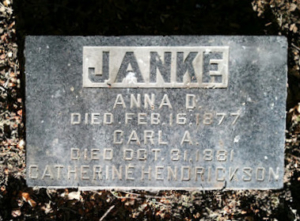
Obituary
Dorette Catherine, wife of Carl August Janke,
born in Hamburg, Germany, July 21, 1813,
died in Belmont, California, Feb 16, 1877
Mutter Heinrich, mother of Dorette Catherine Janke,
born in Island of Heligoland, Germany, 1781 died
in Belmont, California 1876

Sponsor this memorial with an exclusive premium layout and no ads.Sponsor this page
Carl Augustus Janke was a local merchant in the city of Belmont, California he founded Belmont Park in 1865 which was modeled after a German beer garden. Janke subsequently he founded a local soft drink bottling plant, the first industry for the town of Belmont.
— From the 1937 headstone survey — (apparently there was a different stone)
Carl August Janke, born in Dresden, Germany Oct. 1806,
died Belmont, Calif. Sept. 2, 1881
Dorette Catherine, wife of Carl August Janke,
born in Hamburg, Germany, July 21, 1813,
died in Belmont, California, Feb 16, 1877
Mutter Heinrich (spelled Catherine Hendrickson on the gravestone), mother of Dorette Catherine Janke,
born in Island of Heligoland, Germany, 1781 died
in Belmont, California 1876
Family Members
Spouse
Children
- Charles Ferdinand Janke1839–1888
- William August Janke1841–1902
- Elizabeth Dorothy Janke Johnson1844–1929
Flowers • 2
When writing The Hobbit in the early 1930s Tolkien gave the name Gandalf to the leader of the Dwarves, the character later called Thorin Oakenshield. The name is taken from the same source as all the other Dwarf names (save Balin) in The Hobbit: the “Catalogue of Dwarves” in the Völuspá.[4] The Old Norse name Gandalfr incorporates the words gandr meaning “wand”, “staff” or (especially in compounds) “magic” and álfr “elf”. The name Gandalf is found in at least one more place in Norse myth, in the semihistorical Heimskringla, which briefly describes Gandalf Alfgeirsson, a legendary Norse king from Eastern Norway and rival of Halfdan the Black.[5]
Odin, the Wanderer (1886) by Georg von Rosen (1843–1923)
“Odin disguised as a Traveller” from 1914.
The name “Gandolf” occurs as a character in William Morris’ 1896 fantasy novel The Well at the World’s End. Morris’ book is a multi-part ‘magical journey’ involving elves, dwarves and kings in a pseudo-medieval landscape which is known to have deeply influenced Tolkien.
The wizard that was to become Gandalf was originally named Bladorthin.[6][7] Tolkien later assigned this name to an ancient king who had ordered some spears from the dwarves.[8]
Name: Garnier de Sens COUNT OF TROYES 1 2 3
Name: Garnier de Sens GARNIER de Troyes
Name: Garnier\Warinus DE TROYES 4 3
Name: Garnier VISCOUNT SENS
Note: Vicomte de Sens 5 3
Name: Garnier DE SENS 2 3
Name: Warnarius VISCOUNT SENS 6 5 3
Name: Warnarius COUNT OF TROYES 6 5
Sex: M
Change Date: 18 AUG 2011
Birth: ABT 0868 7
Death: 06 DEC 0929
Note: He died in a battle against the Vikings. 8 6 9
Death: 0924 10
Death: 0925 11
Father: Richard OF TROYES b: ABT 0843 in Troyes, Aube, Champagne, France
Marriage 1Teutberga D’ARLES b: ABT 0882
Married:12 13 14
Children
1. Hugh COMTE DE VIENNE b: ABT 0900 in Vienne, Isère, Rhône-Alpes, France
2. Teutberga DE TROYES b: ABT 0908 in Troyes, Aube, Champagne, France
3. Fromond I VICOMTE DE SENS b: ABT 0910 in Sens, Yonne, Burgundy, France
4. Berta DE TROYES b: ABT 0912
Father: Nibelung I “the Historian” LORD PERRACY b: ABT 0718 in Perrancey, Haute-Marne, Champagne, France
Marriage 1Dunna OF RIPARIA b: ABT 0780 in Autun, Saone-et-Loire, Burgundy, France
Married:4 3
Children
1. Thierry I ‘The Treasurer’ COUNT OF AUTUN b: ABT 0805 in Autun, Saone-et-Loire, Burgundy, France
Name: Gendolfus BISHOP OF TONGRES 1
Name: Gendolfus OF THE FRANKS
Sex: M
Change Date: 03 JUN 2009
Birth: ABT 0532
Death: AFT 0598 2
Occupation: Mayor of the Palace.
Father: Munderic of Vitry LORD VITRY-EN-PARTHOIS b: ABT 0500 in Vitry-en-Perthois, France
Mother: Arthemia (OF VITRY) b: ABT 0512
Marriage 1 Spouse Unknown
Children
1. Bodigisel II DUKE OF AQUITAINE b: ABT 0562
http://wc.rootsweb.ancestry.com/cgi-bin/igm.cgi?op=GET&db=labron00&id=I2672
http://wc.rootsweb.ancestry.com/cgi-bin/igm.cgi?op=GET&db=labron00&id=I8532
http://wc.rootsweb.ancestry.com/cgi-bin/igm.cgi?op=GET&db=labron00&id=I8538
The name Rosamund means “horse protection”. The names Hengest and
Horsa means “stallion” and “stud” respectively. These twin brothers
were Jutes from Jutland where the Cimmerians came to dwell. Gauthier
de Costes de la Calprenede is said to have written the first historic
romance novel when 1668 he compiled the history of the Merovingian
Frankish Kings in ‘Faramond’. Within we have an account of
Pharamond’s love for Rosemonde, the Cambrian princess whose tribe,
the Cimri, are mentioned in the Bible, they associated with the Royal
Scythians and the people of the ‘Prince of Rosh’ that Ezekiel
prophecised against in chaper 38. They are the horseman of the
Russian Steppes who would form the Celtic peoples when they moved
west. The ancestors of the Merovingians are kin to the Cimri, who
they chased into Asia, all the way to Ceylon India. The Royal Scots
claim in the ‘Arbroath’ they are descended from theCimri, a name that
means “red”, or “rouge”.
“That which I was obliged to tell you of the beauty of Rosemonde,
inrecounting to you what fashion she appeared to the eyes of my
master, hindered me from extending something upon that of Albisinda:
but Imay tell you with truth, that if Rosemonde were not in the
world, perhaps there would be nothing more beautiful then that
Princess; and that next to Rosemonde, she has those particular
charms, which nothing can withstand: she has without doubt has less
splendor and Majesty than the Princess of the Cambrians.”
“Pharamond was a legendary Frankish king, possibly a historical ruler
of the fifth century. His life parallels that of Vortigern and
Arthur. Indeed, one can make a case Arthur was modeled after
Pharamond. In Arthurian romance he was a freedman (a slave who had
been setfree) who seized the French throne. He came in disguise to
Arthur’s court, for Arthur was an enemy, but his disguise was
penetrated. His daughter, Belide, was enamored of Tristan, who did
not requite herpassion, thereby causing her to die of a broken heart.
Pharamond provided a refuge for Tristan and Gorvenal after the of
Meliodas. Ariosto tells us that Tristan defeated Pharamond’s son,
Clodion, in combat . According to a non-Arthurian romance of the
seventeenth century, Pharamond was enamored of Rosemonde, daughter of
the King of the Cimbri. Gauthier de Costes de la Calprenede is the
said father/inventor of Historic-Romance, and his ‘Pharamond’ has
Rosemonde as the centerpiece of his story. ”
I am looking at the possibility Rosamund ‘Hrosmund’ is kin to the
horse goddess, Epona for the fact reliefs of her were nailed to the
centerpost of barns, and fresh garlands of roses hung about her image
for protection of the barns and the horses within. This may be the
source of the Rosary, a means of protection from the plague. Barns
were prone to catch barn due to lightening strikes and spontaneous
combustion.
If history in the last two thousands years had been written by
horses, rather then by the celebate fathers of Saint Paul, the lying
Pharisee for the Herodians, then one would behold the origional
Nazarite church going forth on horseback to all parts of the world,
even China, spreading the teaching of the Parthian ‘King of Kings’.
The Chinese called the Parthian horses “dragons”, no doubt Rouge
Dragaons of the Scythians and Cimri.
One author associates the Cimmerians to Tolkien’s horseman of Rohan. Another suggests the Cimri are the ‘Rose Line’ made famous by Dan Brown. Allow me to tweak his code device, and reveal to you the APPLE is a member of the ROSE family, and thus as a Magician, I turn the apple into a rose. Now, whom PROTECTED this real ROSELINE?
Jon Presco
Pharamond King of FRANCE Pharamond Lord of the West FRANKS (b. 380, d. 428)
Pharamond Lord of the West FRANKS (son of Marcomir Duke Of The East FRANKS and Hatilde (Princess) of FRANKS) was born 380 in Westphallia, Germany, and died 428. He married Argotta (Rosamunde) Queen of FRANKS.
Aragorn II, son of Arathorn is a fictional character from J. R. R. Tolkien’s legendarium. He is one of the protagonists of The Lord of the Rings. Aragorn was a Ranger of the North, first introduced with the name Strider at Bree, as the Hobbits continued to call him throughout The Lord of the Rings. He was eventually discovered to be the heir of Isildur and rightful claimant to the thrones of Arnor and Gondor. He was also a confidant of Gandalf and an integral part of the quest to destroy the One Ring and defeat the Dark Lord Sauron.
In J. R. R. Tolkien’s legendarium, the Rangers of the North, also known as the Dúnedain of the North, were the descendants of the Dúnedain from the lost kingdom of Arnor. Their menfolk ceaselessly patrolled the boundaries of Eriador and were by necessity skilled with the sword, bow and spear.
The Rangers were grim in life, appearance, and dress, choosing to wear rusty green and brown. The Rangers of the Grey Company (see below) were dressed in dark grey cloaks and openly wore a silver brooch shaped like a pointed star during the War of the Ring. These Rangers rode rough-haired, sturdy horses, were helmeted and carried shields. Their armament included spears and bows.
Rosamond and Female Line begot Franks
The male line from Pharamond to Merovee is traced from
Rosamond/Argotta and her daughters. Rosamond was an heiress, the
daughter of the Frankish King, Genobald. That the heiress, Jeanne de
Rougemont, one of four daughters of Ulrich de Rougemont, begot the
Habsburgs, and from Rougemont comes the name Rosamond, is profound,
as Jesus’ mother has been titled the ‘Rose of the World’. Some
authors claim the Habsburgs descend from Jesus’s brother,
James/Jacob the Nazarite, who I claim were a ‘race of prophets’.
This puts the name Rosamond at the apex of the Grail liniage.
Jon Presco
“note: the first three Frankish kings, Faramond, Chlodio, and
Merovee, were NOT father, son, & grandson, as they appear in
traditional genealogies, but rather each came from different
families, and are connected by marriages and/or female-links. the
Salic Law was not introduced until the time of Clovis I “The Great”,
from whom all succeeding Merovingian kings sprang. the traditional
genealogy of his descendants, the Merovingians, should be re-edited
to show that Thibert I, King East Franks 534-548, & Thibaut, King
East Franks 548-555, were NOT father and son, but brothers. too,
another side-bar, Caribert II, King West Franks 629, was father of
Chilperic (d632), father of Childebrand, father of a son, Clodulphe,
Duke of Austrasia (d718), &, a dau, Chalpaida, 3rd wife of Pepin II,
Major Domo of France.
http://www.talkabouteducation.com/group/soc.genealogy.medieval/messag
es/119310.html”
>From “The Jocelyn-Joslin-Joslyn-Josselyn Family”, Compiled by Edith
S. Wessler. Copyright in Japan 1961. First edition 1962.
Second wife of Pharamond, daughter and heiress of Genobald, another
Frank leader or king. Argotta was granddaughter of Marcomir V, who
was a descendant of the first Marcomir.
Early Frankish Kings
by RDAVIDHUGHES1@[EMAIL PROTECTED] (David Hughes) Apr 30, 2004 at
10:10 AM
The outbreak of civil war in Gaul in Year 451 obliged Ambrosius to
postpone his planned expedition to Britain. The civil war was among
the Franks between two claimants to the Frankish kingship, namely,
Clodoric [son of Chlodio, King of the Franks, and Pharamond’s
daughter] and his half-brother, Merovee [son of Pharamond’s daughter
and her first husband, a Roman prefect]. Pharamond [Faramond],
sometimes called the first King of the Franks, is an interesting
person with an even more interesting pedigree. His father was
Frotmund, the Duke of Provence, representing a “desposynic” descent-
line [the cousin of the Prefect of Viennensis; and their cousin, the
Marquis of Septimania, who represented a third branch of
the “Kyriakon” Family]. His mother was a Frankish princess, Hatilde,
daughter and only child of Himbald, King of the Franks, mentioned in
the “HRB” as the contemporary of the Roman Emperor Maximus.
Pharamond [Faramond], of his first wife, Imbegride, the daughter of
Basogast, a Frankish prince, begot a son, whose name is unsure, who
was murdered upon his father’s death in 428 by rival claimants to
the Frankish kingship; and, of his second wife, Rosamunde [also
called Argotta], daughter of Genobald, King of the Franks, begot two
daughters: Argotta [also called Siegse] [wife of Chlodio, King of
France; his third marriage, her second marriage] and Belizde [wife
of Gundicar (Gunther), King of Burgundy]. Argotta [Siegse] was
called “the ancestress of the French royal line” as the mother of
Merovee [after whom the Merovingians, the first French dynasty, take
their name], the founder of the first royal house of France. The
father of Merovee, the first husband of the Frankish heiress,
Argotta [Siegse], was Quintus Tarus [d438], Prefect of Province, who
descended from another desposynic descent-line [not from ancient
Trojan kings, which is a medieval invention]. Argotta, the Judeo-
Frankish princess, was the mother of three sons of her second
husband, the Anglo-Gothic prince, Chlodio, of the Balthae Dynasty
[identified with the Lombardic king Letho], namely, Cloderic [rival
claimant], Gunderic [King of Burgundy], and Childeric I [King of
France]; the three half-brothers of Claffo [King of Lombardy], the
son of Chlodio and his second wife, name unsure, a Lombardic
princess. Her sister, Belizde (Bellicies), killed herself in a
failed marriage. The confusion in the early genealogy of the
Merovingian kings is notable when comparing the various genealogical-
data given by early medieval writers.
http://www.angelfire.com/ego/et_deo/darkage.wps.htm
Gauthier de Costes de la Calprenede is said to have written the first
historic romance novel when 1668 he compiled the history of the
Merovingian Frankish Kings in his monumental work ‘Pharamond’. Within
we have an account of Pharamond’s love for Rosemonde, the Cambrian
princess whose tribe, the Cimri, are mentioned in the Bible, they
associated with the Royal Scythians and the people of the ‘Prince of
Rosh’ that Ezekiel prophecised against in chaper 38. They are the
horseman of the Russian Steppes who would form the Celtic peoples
when they moved west. The ancestors of the Merovingians are kin to
the Cimri, who they chased into Asia, all the way to Ceylon India.
They are more then likely the Tocharain people who traveled the Silk
Road, and whose mummies are now being unearthed.
Notes for Pharamond Lord of the West FRANKS:
AKA Faramund (Pharamond) of the GRAIL-KING
PHARAMOND, KING OF ALL FRANKS & keeper of the Grail lineage.
Under Pharamond reign the Franks were united under one crown. He succeeded his father as Duke of the East Franks in 404 A.D.; became King of the West Franks in 419 A.D. and King of Westphalia in 420 A.D. He married Argotta, daughter of Grimald, Duke of the West Franks, in 409 A.D. At his father-in- law’s death in 419 A.D., Pharamond became Duke of the West Franks
Note: 1. Pharamond, Duke of the East Franks, 404 A.D., elected King ofthe West
Franks, 419, died in 430, 16th in descent from Boadicea. He married
Argotta, “the mother of all the kings of France.” They were the great
great grandparents of Clovis. He was descended 13 generations from
Athildis, who married in 129 A.D. Marcomir IV., King ofFranconia, who
died in 149. Athildis was the daughter of “Old King Cole,” known also as
Colius I., who died in 170 A.D. He was educated in Rome, King ofBritain
in 125. Colius I. was the son of Marius
Note: This lineage comprises the mythical “Fisher kings of the Holy Grail.” Faramund is the Merovingian King Pharamond, q.v., but his alleged pedigree in Fisher King myth is different from the traditional Merovingian myth.
The Merovingian Line
Kings of All the Franks Pharamond Lord of Franks 370-430
Kings of Neustria
Kings of Austrasia
Pharamond 410-426
Clodio 426-447
Merovech 447-458
Childeric I 458-481
Clovis I 481 – 511
Childebert I 511-558
Clotaire I 511-561
Chlodomer 511-524
Theuderic I 511-534
Theudebert I 534-548
Theudebald 548-555
Clotaire I 558-561
Charibert I 561-567
Chilperic I 561-584
Clotaire II 584-629
Guntram 561-592
Theuderic II 592-613
Sigebert II 613
Sigebert I 561-575
Childebert II 575-595
Theudebert II 595-612
Theuderic II 612-613
Sigebert II 613
Clotaire II 613-629
Dagobert I 623-629
Dagobert I 629-639
Charibert II 629-632
Chilperic II 632
Clovis II 639-658
Clotaire III 658-673
Theuderic III 673
Childeric II 673-675
Theuderic III 675-691
Sigebert III 634-656
Childebert the Adopted 656-661
Clotaire III 661-662
Childeric II 662-675
Clovis III 675-676
Dagobert II 676-679
Theuderic III 679-691
Clovis IV 691-695
Childebert III 695-711
Dagobert III 711-715
Chilperic II 715-720
Clotaire IV 717-720
Theoderic IV 721-737
Childeric III 743-751
More About Pharamond Lord of the West FRANKS:
Date born 2: ABT 370 in Westphalia, Germany.
Children of Pharamond Lord of the West FRANKS and Argotta (Rosamunde) Queen of FRANKS are:
+Clodius* “the Long Hair” King of the FRANKS, b. 395, Westphallia, Germany335, d. Bet. 447 – 449335.
Copyright 2007
Name: Childebrand de Heristal LORD PERRACY 1 2 3 4 5
Name: Childebrand DUKE OF BURGUNDY 6
Name: Childebrand DE HERISTAL of Austrasia 7
Name: Childebrand I OF PERRACY 2
Sex: M
Change Date: 02 AUG 2011
Death: 0751 8
Event: Note
Note: Sponsored the continuations to Fredegar’s Chronicle.
Event: Accedence
Note: He was Lord of Perrecy-les-Forges in Saône-et-Loire, Burgundy, France; Lord of Bougy; Count of Autun in Saône-et-Loire, also in Burgundy, France. 9
Birth: ABT 0691 in Perrancey, Haute-Marne, Champagne, France 8
Birth: ABT 0678 in of Heristal, Liege, Belgium 10
Father: Pepin II de Heristal DUKE OF AUSTRASIA b: 0635 in Heristal, Liege (Belgium)
Mother: ALPAIS b: ABT 0654 in Austrasia
Marriage 1Rolande OF AUTUN b: ABT 0695 in Autun, Saone-et-Loire, Burgundy, France
Married:8
Children
1. Nibelung I “the Historian” LORD PERRACY b: ABT 0718 in Perrancey, Haute-Marne, Champagne, France
2. Theodericus DUKE OF TOULOUSE b: ABT 0720
Share this:
Royal Rosamond Press
Pharamond and Rosamond


In 1997, in the Probate of my late sister, the world famous artist known as ‘Rosamond’, is found my claim wherein I talk about the Holy Grail, and Pharamond, the legendary Merovingian King, whom Dan Brown and others claim descends from Jesus. This may not be so, but, what interested me, is, he was married to Rosamonde. Being a lover of Fairytales, I understood the value of these names.
“What is in a name?”
Above is a photograph titled ‘Fair Rosamond’ taken by Lewis Carrol (Alice in Wonderland) who was in love with Christina Rossetti, the sister of Dante Gabrielle Rossetti, who founded the Pre-Raphaelite Brotherhood, that I tried to reborn in 1970, I letting my hair grow long as was their style.
Waterhouse was a Pre-Raphaelite, and did the painting of Fair Roasamond, who was murdered by the jealous Queen Eleanore, who found her by following a scarlet thread that we see attached to a spinning wheel, and thus we find Grimm’s sleeping Beauty Princess, named Rosamond. Many artists were inspired by Fairytales, and Greek and Roman legends.
“Mirror on the wall, who’s the Fairest of them all?”
I understood MY family members were sitting on a gold mine. My family saw me as a claim jumper, and blessed the biographies of outsiders lest – I get some……family limelight!
Last week the President of France complained his nation was losing its culture due to outsiders.
As for my six year old grandson, Heather’s new boyfriend wants Tyler to be madeover in his image, he a hard driving racecar man who drives in a arena, around and around, as fast as he can – like a Roman chariot driver!
I bet you the movie Snow White rakes in a bundle!
Here is a beautful aria. Is this Rosamond? Too bad Heather did not attend college and major in music and literature. Faramondo is an opera in three acts by George Frideric Handel to an Italian text adapted from Apostolo Zeno’s Faramondo.
Jon Presco
Copyright 2012
On Sunday the fourteenth of August, I discovered that the Preston family married into the House of Stewart, and thus my family are kin to this royal family that includes Princess Diana and her two sons, William and Harry Windsor. Now I know why the Queen stayed at Blair House, and why John Breckenridge fled to England after he lost the Civil War – that the House of Stewart may have backed! This is huge!
She was the daughter of William Stewart, 1st Viscount Mountjoy and Hon. Mary Coote.1,2 From 1692, her married name became Preston.2 From 1709, her married name became Forbes. As a result of her marriage, Hon. Mary Stewart was styled as Countess of Granard on 24 August 1734.
Children of Hon. Mary Stewart and Phineas Preston
Jane Preston+2 b. c 1690, d. a 12 Nov 1746
Mary Preston2 b. 1696, d. 1749
Colonel John Preston+2 b. 1699, d. 1747
Jon Presco
Copyright 2011
http://thepeerage.com/p15313.htm
Act 1
Based upon the story of Pharamond, a mythological King of the Franks, circa 420 AD and the early history of France, the opera opens with Gustavo (King of the Cimbrians) and Prince Adolfo lamenting the death of Sveno (Gustavo’s son) and swearing vengeance upon Faramondo (King of the Franks), by whose hands Sveno was slain. Into this tense situation comes the captured Princess Clotilde (sister to Faramondo), whom Adolfo loves – and it’s only by his pleading for her that Clotilde is not slain. Once the two young lovers are left alone, Clotilde extracts a promise from Adolfo to change his allegiance to her brother Faramondo, for love of her. Immediately after, Gustavo’s daughter Rosimonda finds her quarters invaded by Frankish soldiers, including Faramondo. As can only be expected in a Handelian opera, Faramondo is instantly struck with love for his fair captive. Even while she rails at him for killing her brother Sveno in battle, and for making an alliance with the Swabian king (Gernando) who is at enmity with the Cimbrians, Rosimonda too finds her heart captured by her erstwhile enemy, Faramondo.
But their sudden love is hindered; King Gernando has plans to keep Rosimonda for himself, and he suspects that Faramondo is not immune to the princess. His plot to kill Faramondo and win Rosimonda is foiled, but Faramondo spares his life.
King Gustavo is not idle in the meantime, for he has arranged his men to capture Faramondo when he learns that his enemy is actually in his very palace. Clotilde of course wants Adolfo to prevent this, and when Adolfo acts on her behalf to save her brother, it’s scarcely surprising that a truly dreadful confrontation between Adolfo and his father ensues, which ends with Adolfo being imprisoned for treason. Faramondo’s attempt to appease Gustavo and ask for Rosimonda’s hand in marriage meets with the lack of success one could have anticipated, for Gustavo desires nothing but his enemy’s death.
[edit] Act 2A surprising meeting occurs – for Gernando, once the relentless enemy of the Cimbrians, suggests an alliance to King Gustavo, based on a mutual desire to bring down Faramondo. Gernando secures Gustavo’s agreement that if he can bring Gustavo the head of Faramondo, Gustavo will give him his daughter Rosimonda in marriage.
Rosimonda, though still in love with Faramondo, hides her feelings and tries to make Faramondo leave without her, and this so depresses Faramondo that he does not even bother to resist when Gustavo’s soldiers take him. Rosimonda’s intervention prevents his death, but sees him imprisoned; at least Adolfo is freed upon Rosimonda’s and Clotilde’s repeated pleading.
Rosimonda is now so beset with worry for Faramondo’s safety that she can no longer hide her love, and plans to free Faramondo herself and flee with him.
[edit] Act 3Gustavo finds himself betrayed on all sides – Rosimonda has released Faramondo, and his son Adolfo is still stubbornly in love with Faramondo’s sister. But Rosimonda is not out of danger, for she is still the love-object of Gernando. Gernando has actually joined forces with a lieutenant of King Gustavo (by name, Teobaldo), persuading Teobaldo to abduct Rosimonda for him. Teobaldo’s plans do not stop at this, but he and his men attempt a coup to take Gustavo himself hostage. This sudden turn of events is stopped by Faramondo (who had overheard the entire plot, sent his men to rescue his beloved Rosimonda, and personally stopped the coup attempt). Gustavo embraces his unknown rescuer (whose armour hides his face), and when he realises who had saved him and his daughter, bitterly regrets that his oath MUST be carried out… He must still sacrifice Faramondo in blood-vengeance because of Faramondo’s slaying of his son Sveno.
Teobaldo, forgiven by Gustavo, is sent off to fight for the king in Sarmazia.
Rosimonda, whose fate might have been dire but for her successful rescue by Faramondo’s men, returns to her father’s court, with news that the treacherous Gernando has been captured. But she is in time only to see her father lead Faramondo to the altar in preparation for the blood-oath sacrifice. Disaster lies upon Faramondo – one stroke of the weapon, and he will lie dead… but for the sudden news brought by a messenger direct from Teobaldo. In the letter, Teobaldo (who lies dying of many wounds incurred in Sarmazia) admits that he had not turned suddenly against Gustavo, but rather that his desire to oust Gustavo of his position had been long in the planning. He had in fact switched infants when the king’s son was born; in other words, Sveno was NOT the king’s son… but Teobaldo’s. It slowly sinks in to all present that, since Sveno was not Gustavo’s son, Gustavo does not need to kill Faramondo. All ends happily with general rejoicing; Gustavo and Faramondo cry friends, Gernando is released and realises only too late what an ally he had lost in the noble Faramondo, Clotile and Adolfo are united, and so too are Rosimonda and Faramondo.
Laurence Gardner’s first book Bloodline of the Holy Grail was published in 1996. [1] The book was serialized in the Daily Mail and a best seller.[2] He used his books to propose several theories, including a belief that Jesus and Mary Magdalene had married and had children, whose descendants included King Arthur and the House Of Stuart.[2] In Lost Secrets of the Sacred Ark he claimed that the Ark of the Covenant was a machine for manufacturing “monatomic gold” – a supposed elixir which could be used to extend life.[3] His books also included theories about Freemasonry, the Knights Templar, The Holy Grail and proposed connections between Atenism and Judaism.
Gardner referred to himself as “Chevalier Labhran de Saint Germain”, and “Presidential Attache to the self-styled European Council of Princes” also “Prior of the self-styled Celtic Churches Sacred Kindred of Saint Columbia”.[4] He also claimed to be Jacobite Historiographer Royal of the Royal House of Stewart. He was a supporter of Michael Lafosse, in particular his claims to be descended from the House of Stuart, which Gardner claimed was descended from Jesus Christ.[5][6]
Historians and scholars regard him as a conspiracy theorist,[7] and treat his work as pseudohistory.[5] Michel Lafosse’s claims have been dismissed.[8]
Rosamond and Female Line begot Franks
The male line from Pharamond to Merovee is traced from
Rosamond/Argotta and her daughters. Rosamond was an heiress, the
daughter of the Frankish King, Genobald. That the heiress, Jeanne de Rougemont, one of four daughters of Ulrich de Rougemont, begot the
Habsburgs, and from Rougemont comes the name Rosamond, is profound,
as Jesus’ mother has been titled the ‘Rose of the World’. Some
authors claim the Habsburgs descend from Jesus’s brother,
James/Jacob the Nazarite, who I claim were a ‘race of prophets’.
This puts the name Rosamond at the apex of the Grail liniage.
Jon Presco
“note: the first three Frankish kings, Faramond, Chlodio, and
Merovee, were NOT father, son, & grandson, as they appear in
traditional genealogies, but rather each came from different
families, and are connected by marriages and/or female-links. the
Salic Law was not introduced until the time of Clovis I “The Great”,from whom all succeeding Merovingian kings sprang. the traditional
genealogy of his descendants, the Merovingians, should be re-edited
to show that Thibert I, King East Franks 534-548, & Thibaut, King
East Franks 548-555, were NOT father and son, but brothers. too,
another side-bar, Caribert II, King West Franks 629, was father of
Chilperic (d632), father of Childebrand, father of a son, Clodulphe,
Duke of Austrasia (d718), &, a dau, Chalpaida, 3rd wife of Pepin II,
Major Domo of France.
http://www.talkabouteducation.com/group/soc.genealogy.medieval/messag
es/119310.html”
From “The Jocelyn-Joslin-Joslyn-Josselyn Family”, Compiled by Edith
S. Wessler. Copyright in Japan 1961. First edition 1962.
Second wife of Pharamond, daughter and heiress of Genobald, another
Frank leader or king. Argotta was granddaughter of Marcomir V, who
was a descendant of the first Marcomir.
Early Frankish Kings
by RDAVIDHUGHES1@[EMAIL PROTECTED] (David Hughes) Apr 30, 2004 at
10:10 AM
The outbreak of civil war in Gaul in Year 451 obliged Ambrosius to
postpone his planned expedition to Britain. The civil war was among
the Franks between two claimants to the Frankish kingship, namely,
Clodoric [son of Chlodio, King of the Franks, and Pharamond’s
daughter] and his half-brother, Merovee [son of Pharamond’s daughter
and her first husband, a Roman prefect]. Pharamond [Faramond],
sometimes called the first King of the Franks, is an interesting
person with an even more interesting pedigree. His father was
Frotmund, the Duke of Provence, representing a “desposynic” descent-
line [the cousin of the Prefect of Viennensis; and their cousin, the
Marquis of Septimania, who represented a third branch of
the “Kyriakon” Family]. His mother was a Frankish princess, Hatilde,
daughter and only child of Himbald, King of the Franks, mentioned in
the “HRB” as the contemporary of the Roman Emperor Maximus.
Pharamond [Faramond], of his first wife, Imbegride, the daughter of
Basogast, a Frankish prince, begot a son, whose name is unsure, who
was murdered upon his father’s death in 428 by rival claimants to
the Frankish kingship; and, of his second wife, Rosamunde [also
called Argotta], daughter of Genobald, King of the Franks, begot two
daughters: Argotta [also called Siegse] [wife of Chlodio, King of
France; his third marriage, her second marriage] and Belizde [wife
of Gundicar (Gunther), King of Burgundy]. Argotta [Siegse] was
called “the ancestress of the French royal line” as the mother of
Merovee [after whom the Merovingians, the first French dynasty, take
their name], the founder of the first royal house of France. The
father of Merovee, the first husband of the Frankish heiress,
Argotta [Siegse], was Quintus Tarus [d438], Prefect of Province, who
descended from another desposynic descent-line [not from ancient
Trojan kings, which is a medieval invention]. Argotta, the Judeo-
Frankish princess, was the mother of three sons of her second
husband, the Anglo-Gothic prince, Chlodio, of the Balthae Dynasty
[identified with the Lombardic king Letho], namely, Cloderic [rival
claimant], Gunderic [King of Burgundy], and Childeric I [King of
France]; the three half-brothers of Claffo [King of Lombardy], the
son of Chlodio and his second wife, name unsure, a Lombardic
princess. Her sister, Belizde (Bellicies), killed herself in a
failed marriage. The confusion in the early genealogy of the
Merovingian kings is notable when comparing the various genealogical-
data given by early medieval writers.
http://www.angelfire.com/ego/et_deo/darkage.wps.htm
Gauthier de Costes de la Calprenede is said to have written the first
historic romance novel when 1668 he compiled the history of the
Merovingian Frankish Kings in his monumental work ‘Pharamond’. Within
we have an account of Pharamond’s love for Rosemonde, the Cambrian
princess whose tribe, the Cimri, are mentioned in the Bible, they
associated with the Royal Scythians and the people of the ‘Prince of
Rosh’ that Ezekiel prophecised against in chaper 38. They are the
horseman of the Russian Steppes who would form the Celtic peoples
when they moved west. The ancestors of the Merovingians are kin to
the Cimri, who they chased into Asia, all the way to Ceylon India.
They are more then likely the Tocharain people who traveled the Silk
Road, and whose mummies are now being unearthed.
Early Frankish Kings
01. Regaise (d306), bro of Ascaric (d306)
02. Antharic
03. Ratheric
04. Mellobaude (376)
issue:
a. Richemar (d384), who, by wife, Ascyla (d413) [dau of Asyllius],
begot Teudemar (d413), who, by wife, Valentina Justina, begot Clovis,
King of Cologne (425), see
b. Bauto (385), the father of Arbogast (394) [father of Asturius] &
Basogast [father of Imbegride, 1st wife of Faramond, 1st King of
France, see]
c. Himbald, see
05. Himbald
06. Hatilde (dau), wife of Frotmund, a prefect
07. Faramond (Pharamond), 1st King of France 19 July 418 (d428)
=1 Imbegride, dau of Basogast, a Frankish prince
=2 Argotta [or Rosamunde], dau of Genobald (d419), see
issue by 1st:
a. son, mur 428
issue by 2nd:
b. Argotta [called Siegse also] (dau), see
c. Belizde (dau), wife of Gundicar [Gunther], King of Burgundians
———————————————————————
———-
note: genealogy of Genobald, father-in-law to Faramond
00. Malaric [II], a Frankish king (d360)
00. Priaric, a Frankish king (d396)
issue:
a. Marcomir, a Frankish king (d404)
b. Sunno (Huano), a Frankish king, the father of Alberic of Moselle,
Merovech (d445), & Sigimer of Tournai
c. Genobald, a Frankish king (d419), the father of Argotta [called
Rosamunde also], wife of Faramond, 1st King of France
———————————————————————
———-
08. Argotta [called Siegse also] (dau), see above
=1 Quintus Tarus (d438), a prefect
=2 Chlodio [Letho] “Le Chevalu”, 2nd King of France 428-447 [his 3rd
=]
———————————————————————
———-
note: Chlodio “Le Chevalu”, 2nd King of France [same person as Letho,
King of Lombards]
=1st [name], mother of his son, Chlodebaud, &, his dau, Clotswithe,
2nd wife of Merovech, 3rd King of France, see; =2nd [name], a Lombard
princess/heiress, mother of his son, Claffo, King of Lombards; =3
Argotta [called Siegse also], a Frankish princess/heiress, mother of
his sons Cloderic (d451) [claimant vs half-bro Merovech], Gunderic,
King of Burgundy 436-473, & Childeric I [id. with Hildeoc in the
Lombard genealogy, King of France 457/8-481], see
———————————————————————
———-
note: Childeric I, 4th King of France 457/8-481, son of Chlodio
(above); = Basine, a Thurginian princess
issue:
a. Clovis (d475) [note: his widow, Dochilt, married the other Clovis,
who became King Clovis “The Great”]
b. Albofleda, wife of Ragnachar of Germany
c. Lanthilde, wife of Ban of Samur, &, mother of Wlanc[a]
d. Audefleda (Andetleda), one of the wives of Theodoric “The Great”,
Ostro-Gothic King of Italy
———————————————————————
———-
09. Merovech (Merovee), 3rd King of France 447-457/8, son of Argotta
[# 8 above] by Quintus Tarus, her 1st = [note: he gave name to
dynasty, the Merovingians]
=1 Merira; =2 Clotswithe; =3 Verica, dau of Aetius
10. Childeric, prince [not to be confused with his father’s half-bro]
11. Clovis I “The Great”, 5th King of France 481-511 [his sis [name],
was mother of Isembard]
=1 Dochilt, widow of Prince Clovis, son of King Childeric I, above
=2 Evochilde, an Ostro-Gothic princess
=3 Clotilda (d545), dau of Chilperic, King of Burgundy (d486) [id.
with Hjalprek of medieval saga]
issue of 1st:
a. Ingomer (d494)
issue of 2nd:
b. Thierry I, King
issue of 3rd:
c. Clodomir
d. Childebert I
e. Clothaire I
f. Clotilde, wife of Amalaric, King of Spain
———————————————————————
—
note: the first three Frankish kings, Faramond, Chlodio, and Merovee,
were NOT father, son, & grandson, as they appear in traditional
genealogies, but rather each came from different families, and are
connected by marriages and/or female-links. the Salic Law was not
introduced until the time of Clovis I “The Great”, from whom all
succeeding Merovingian kings sprang. the traditional genealogy of his
descendants, the Merovingians, should be re-edited to show that
Thibert I, King East Franks 534-548, & Thibaut, King East Franks
548-555, were NOT father and son, but brothers. too, another side-
bar,
Caribert II, King West Franks 629, was father of Chilperic (d632),
father of Childebrand, father of a son, Clodulphe, Duke of Austrasia
(d718), &, a dau, Chalpaida, 3rd wife of Pepin II, Major Domo of
France.
http://www.talkabouteducation.com/group/soc.genealogy.medieval/messag
es/119310.html
Declaration of Independence
Let it be known that on the very day the false evangelical President
swears the oath of office, the lost Kingdom of Atland will exist
once more so that the Freedom loving people of America will be able
to behold that which is still Free, the Kingdom of the Sea.
May you go there that terrible day and look beyond the horizon and
find courage in the knowledge this Sea Kingdom connects you with the
People Mundi, who will look to the New Frisians for support in her
quest to remain free. We must let them know we are here, and will
never bow down to the destructive warriors of the ugly End Time
teaching that beckons a Killer Jesus to come quick and topple many
tall buildings, killing millions in a demented blood-lust.
For the reason the evangelicos declared war on the Arts, and thus
Beauty, may there forever exist a Sanctuary as far as the eye can
see when one comes to behold the bounty of the new found Kingdom of
the Frisian Folk Mothers, and be reconciled that the land now taken
prisoner by the false Church of William Darbey is surrounded by a
truer vision of Justice, Hope, and Democracy, that has been handed
down by a peoples and tradition that is much older then the teachers
of Paulianity that usurped the original Nazarite Church of John the
Baptist whom I have identified as Melicertes who was a Merman, a Sea-
God, the son of Ino the White Goddess and Mermaid, who put an end to
human sacrifice of the innocent lambs, the children.
I associate Ino with Lady Liberty who holds high the lamp of the
Frisian Folk Mother, Rosamond, that stand guard at the harbor of New
Amsterdam letting the New Frisian Navigators know that the torch of
Freedom burns brightly, even though the land of the Free has become
imprisoned by the terrible doomsday tales of Tim LaHaye that the
evangelcios have come to love, they praying for the destruction of
all of humankind.
Beverly LaHaye works hard to take away all the funding for the Arts,
and has corrupted the spirit of the Frisian Folk Mothers from which
most Europeans descend. I am sure they would condemn her, even order
her death.
The LaHaye’s follow the teaching of Saint Paul, the ugly troll who
castrated himself and is like the split Smeagle in the Lord of the
Rings, he spreading shame all over the world so that his false
priests may exhort a perpetual sin-tax from all the peoples of the
world, empowering the rich, and causing much suffering amongst the
poor.
In the last five years I have uncovered the Rosamonds, the Roses of
the Worlds, and believe they have kept the Kingdom of Atland safe
from the false priests who stole the teaching of Jesus Krisen who
was born amongst the Frisians, who are now seen as the Atlanteans
the rulers of the sea. It was in the name of Rosamonde the Queen of
the Cimri, and wife of Pharamond the first King of the Franks that
Albemarle (Charleston) was founded. The first American Constitution
was written for this community by John Locke who would have a great
influence on the Declaration of Independence. This community is a
Grail Community that has hereditary ties to Joan Clifford also known
as Fair Rosamond. Then there is Queen Fredegond also known as
Rosamond who was married to the Merovingian King, Chilperic and is
of the Diasporas line, as is Rosamonde.
My great grandfather Sergeant Rosamond rode with William of Orange
the Statholder of the Netherlands, and was knighted by this
Protestant King. My Rosamond/Rougemont kin came from the
Netherlands, the land of the Frisans Folk Mothers. We are kin to
Denis de Rougmont one of the co-founders of the United States of
Europe. Godstalc de Rougemont was the Master of Theology at Leuvan
University and corresponded with the great Erasmus who “laid the egg
that Luther hatched” The history of my linage and there coming to
America, predates any claim the evangelicos make to owning the
Christian teaching of the Protestant church that they have forsake
for the weird fantasy of Tim LaHaye and Pat Robertson, not to
mention Rousas Rushdoony the Christian Nazi whose followers have
taken over our Democracy in order to establish a false kingdom of a
false Jesus, forever establishing a ecclesiastical monarchy. Over my
dead body!
Let us gather together a Free Peoples, and together write a new
Constitution that will sustain the principles of the originall, and
set new guidless on how to uphold true Freedom and Democracy, and
sustain the People who love Beauty and the Truth.
Let us revive the order of the Good Templars, and apply for a grant,
so we can bring relief to those who suffer from the disease of
Alcoholism. Let us be known for our good works. Let us champion the
poor who have been targeted by the greedy and rich evangeliocs for
destruction, they blamed for all the world’s ills in their place.
May Justice forever reign in the Land of the Free, and the Light of
Rosa Mundi drive out the dark ones, and light our Way in the coming
dark age.
From: “Jon Presco” <braskewitz y…>
Date: Mon May 31, 2004 6:03 am
Subject: Rosamond
“That which I was obliged to tell you of the beauty of Rosamond, in
recounting to you what fashion she appeared to the eyes of my master,
hindered me from extending something upon that of Albisinda: but I
may tell you with truth, that if Rosamond were not in the world,
perhaps there would be nothing more beautiful then that Princess; and
that next to Rosamond, she has those particular charms, which nothing
can withstand: she has without doubt has less splendor and Majesty
than the Princess of the Cimbrians.”
http://www.geocities.com/prosemont/Pha_Ros.html
In 1677 de Costes de la Calprenede is said to have written the first
historic romance novel when 1668 he compiled the history of the
Merovingian Frankish Kings in his monumental work ‘Pharamond’. Within
we have an account of Pharamond’s love for Rosemonde, the Cambrian
princess whose tribe, the Cimri, are mentioned in the Bible, they
associated with the Royal Scythians and the people of the ‘Prince of
Rosh’ that Ezekiel prophecised against in chaper 38. They are the
horseman of the Russian Steppes who would form the Celtic peoples
when they moved west. The ancestors of the Merovingians are kin to
the Cimri, who they chased into Asia, all the way to Ceylon India.
The union of Pharmond and Rosamonde will create the Sicambrian
Franks. Gardener says this union brought together to Grail
Bloodlines.
Gauthier dedicated ‘Pharamond’ to the Dutchess of Albemarle who
marired Christopher Monck, the son of George Monck the Duke of
Albemarle. Albemarle is the orignal name of the city of Charelston
which was a city founded by the The Lords Proprietors. George Monck
was instrumental in restoring the Stuarts to the throne.
“The Stuarts succeeded Queen Elizabeth as monarchs of Britain.
Charles I was beheaded in 1649 and Oliver Cromwell ruled during
the “interregnum.” Charles II returned the Stuarts to the throne in
1660 and rewarded his loyal supporters. Eight of these loyalists
(Edward Hyde, Earl of Clarendon; George Monck, Duke of Albemarle;
William Craven, Earl of Craven; John Lord Berkeley; Anthony Ashley
Cooper, Earl of Shaftesbury; Sir George Carteret; Sir William
Berkeley, Governor of Virginia; and Sir John Colleton) were rewarded
by King Charles II by being made Proprietors of his new colony,
Carolina, which reached from the southern boundary of Virginia,
incorporating the Southern Plantation, to the northern boundary of
the Spanish colony of Florida. The western boundary of Carolina was
to be the “South Seas.”
I have traced the Grail Liniage to Alan de Gros to Albemarle and
Skipton castle where lived Fair Rosamond. This Rose Line came to
America when the Rosamond/Rougemonts came to live in South Carolina
where they owned a plantation, that may have consisted of land
granted by William of Orange. John Locke wrote the Fundamental
Constitutions for the Albemarle colony, he a good friend of Robert
Boyle, one of the Grand Masters of the Pirory de Sion.
What I suggest is We Americans who have no interest in being part of
a Nation now being taken over by the false kingdom of Paul’s Jesus,
gather together in the name Rose Grail “The Rose of the World” and
form an alliance with all those who share and respect our roots, here
and abroad, keeping the fire of Peace and Freedom that Denis de
Rougemont lit, forever searching for Truth and Freedom.
Let us compose a letter to the People of France letting them know we
have no union with the neo-Confederates who have taken over our
Democracy, and have formed another alliance with British Royalty and
Rothschild banking. Let us extend a welcome to Italy as well, whose
people marched in the streets of Rome against the new Roman conquest
of Iraq. Let all the Celtic people of the world know, that we know
this Democracy sprang from their Dream – and not the nightmare that
Saintan Paul has inflicted upon all of Humankind. May his evil reign
be brought to an end, and the roses amongst the thorns, bloom again.
Jon Presco
President: Royal Rosamond Press Co
Royal Rosamond Press
http://washington.ancestryregister.com/SALIAN_FRANKS00006.htm
 Rosamond Press
Leave a comment