The Bad Bunny of Belmont
Belmont
NOTES: on a movie and series.
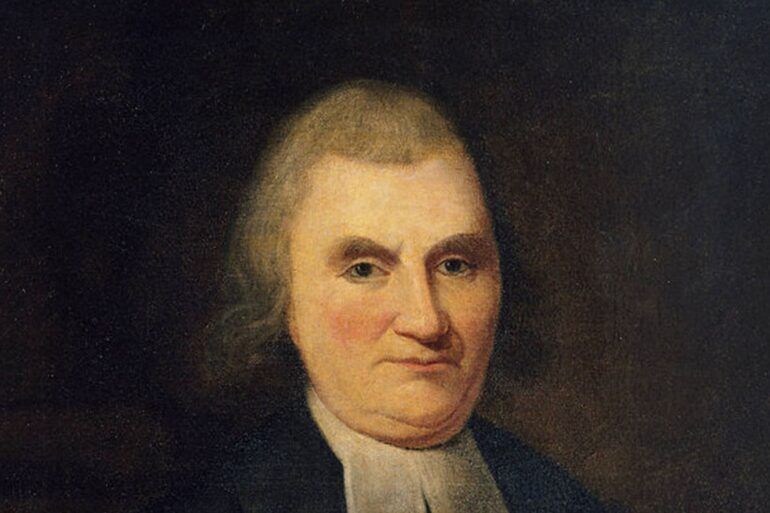
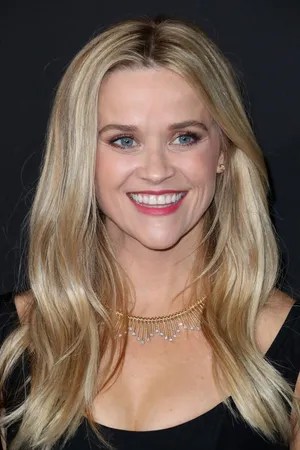
There is a very good chance John ‘Bunny’ Breckenridge, was named after Signer, John Withersppon, his famous ancestor. Thus has been proven. However, the calim that Reese Witherspoon is kin to the Signer, is…..rejected! Take note of this actresses chin and the chin of the Signer. A more distict portrait of John, has been removed. John in the daling of White Christian Nationaists.
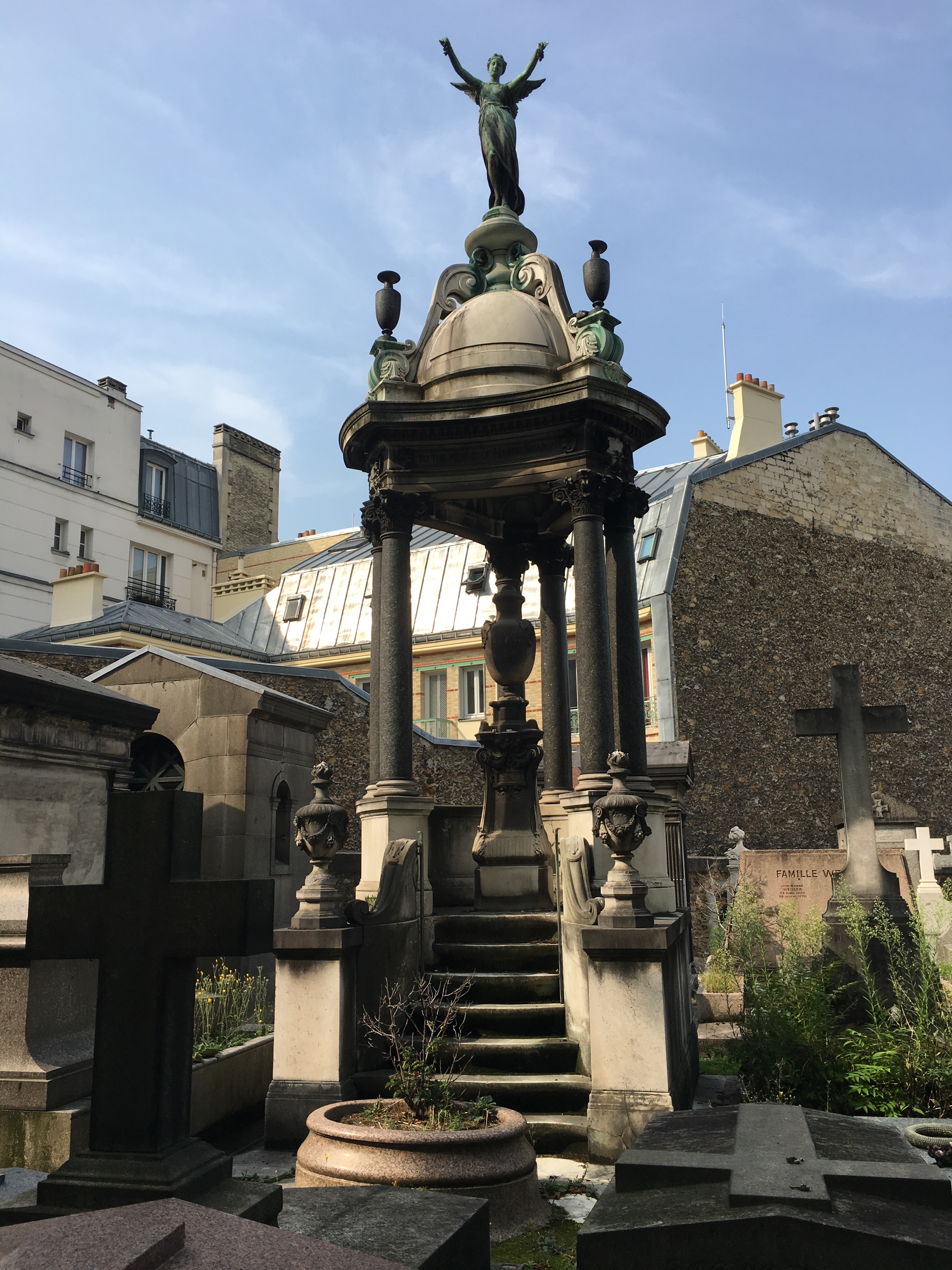
What I suggest, is Reese go to Paris, and climb the stairs to the monument of Bunny’s grandfather, and…..
DEMAND HIS REMAINS BE EXHUMWS AND A DNA TEST MADE!
I am composing a letter to the Coroner who examined the skeletal remains of the Native American found on the banks of….
BELMONT CREEK
Breckinridge died on May 9, 1892, in Merced, California.[1]
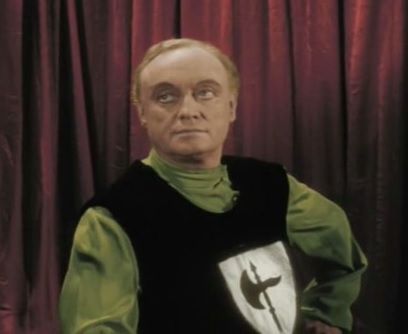
Through his son John, he was posthumously a grandfather of John Cabell “Bunny” Breckinridge Jr. (1903–1996), an actor and drag queen best known for his role as “The Ruler” in Ed Wood‘s film Plan 9 from Outer Space.[16]
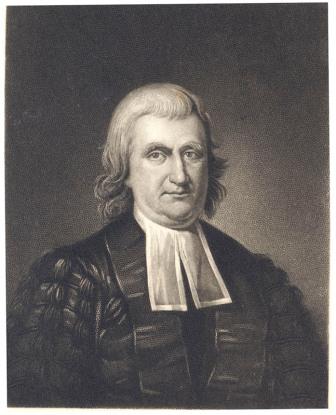
John Witherspoon: A Presbyterian’s Impact on America’s Founding
By: Paul A. Cleveland August 16, 2022
John Witherspoon was born in Scotland and educated in Edinburgh. He was a leading Presbyterian, a signer of the Declaration of Independence, and a member of the Continental Congress. He came to America in 1768 to become president of Princeton College, which was founded in 1746 and was originally named the College of New Jersey. He was well-respected as an educator and taught many students who would go on to become influential judges and legislators, including James Madison.
Related links:
- Explore American Political Sermons from the founding era at the OLL
- Law and Liberty reviews “Beyond Belief, Beyond Conscience” about religion in the founding
- Dominion of Providence over the Passions of Men (Sermon)
In 1776, he preached a somewhat divisive sermon titled, “The Dominion of Providence Over the Passions of Men,” in which he took issue with an assertion in Thomas Paine’s popular pamphlet, Common Sense. Paine had argued against the Christian doctrine of original sin. In his sermon, Witherspoon took issue with that stance and went to great lengths defending the doctrine and criticizing Paine. Nevertheless, he joined Paine as a proponent of independence from England. Despite their religious differences, both men were strong advocates of liberty. As Witherspoon declared in his 1776 sermon, “I willingly embrace the opportunity of declaring my opinion without any hesitation, that the cause in which America is now in arms, is the cause of justice, of liberty, and of human nature.” In addition to this, Witherspoon’s position on the doctrine of original sin was important in forming the government of the United States. First, the reality of an embedded sin nature meant that every individual was prone to misuse power. As the British historian Lord John Acton noted, power in the hands of sinful men tends to be abused. Moreover, as power tends to consolidate in the hands of the few, tyranny, despotism, and corruption will rise. As such, there was a strong suspicion among the founders that power needed to be limited and dispersed. The result of this was both to limit the powers of the federal government and to disperse that power among the three branches of government that were established in the Constitution. Secondly, the concept of federalism is also at the heart of the doctrine of original sin. The sin of Adam, humanity’s representative head, doomed humanity and everyone proceeding from him. According to the Christian religion, Adam’s failure as our federal head was passed on to humanity. Accordingly, the solution to the problem of sin and evil is to be found in the voluntary atonement of Christ, humanity’s second representative. Since many of our founders embraced the Christian religion, or were at least impacted by it, this federalism became firmly fixed in the nature of government that was instituted in the United States. The idea that people can be represented by another is foundational to America’s form of government. It is also very Presbyterian at its core.
Witherspoon’s support of independence from England was not without cost. He lost two sons in the Revolutionary War. Nevertheless, he remained committed to the cause because he saw in it biblical principles that always remained the foundation of his life. Later in life, that foundation also led him to call the legislature of New Jersey to abolish slavery. He could not reconcile that practice with his understanding of scripture. Like William Wilberforce in England, he saw the slave trade as being totally counter to securing peace for everyone.
John Witherspoon was a scholar, minister, educator, and statesman. He, among many, had a profound impact on the formation of the United States of America.
John Witherspoon “Owen” Breckinridge (December 22, 1850 – May 9, 1892) was an American lawyer and politician who served in the California State Assembly.
Early life
Breckinridge was born on December 22, 1850, in Lexington, Kentucky, in the prominent Breckinridge family.[1] He was the fourth child of John Cabell Breckinridge (1821–1875), who served as U.S. vice president under James Buchanan, and Mary Cyrene (née Burch) Breckinridge (1826–1907). Among his siblings were Joseph Cabell Breckinridge, Clifton Rodes Breckinridge,[2] Frances Viley (née Breckenridge) Steele, and Mary Desha (née Breckinridge) Maltby.[3] He was named after his great-great-grandfather, John Witherspoon, who signed the Declaration of Independence.[3]
Known as “Owen” in appreciation of the heavy vote his father received in Owen County,[4] he attended Washington and Lee University in Lexington, Virginia.[5]
Career
Around 1877, Breckinridge moved to California eventually settling in Merced in the northern San Joaquin Valley section of the Central Valley.[6] Breckinridge was a member of California State Assembly from 1884 to 1885.[7] He also served as District Attorney of Merced County, California, until his death in 1892. In his obituary, it was said:[7]
“Mr. Breckinridge was one of the most talented men in California gifted with all that goes to make up a brilliant lawyer and gentleman. Although still a young man, he had climbed high in his profession and was known in many cities and towns of California as a lawyer of unquestioned ability and of unquestioned integrity in business matters.”[8]
Personal life
In 1877, Breckinridge was married to Florence Louise Tevis, a daughter of Lloyd Tevis, the President of Wells Fargo Bank. Together, they were the parents of:
- Lloyd Tevis Breckinridge (1878–1901), who attended Harvard and later killed himself at the family home in San Francisco, where he lived with his grandmother and uncle, Dr. Harry Tevis.[9][10]
- John Cabell Breckinridge Sr. (1879–1914), who married Adelaide Murphy, a daughter of Samuel Green Murphy, president of the First National Bank of San Francisco, in 1902.[11][12] He later became ill and was confined to a mental asylum outside of Paris.[13]
- Florence Louise Breckinridge (1881–1956), who married Thomas Fermor-Hesketh, 1st Baron Hesketh.[14]
Owen and Louise divorced and she remarried to Frederick William Sharon (a son of U.S. Senator William Sharon)[15] in 1883 with whom she had four more children. Owen remarried to Harriett Dudley.[3]
Breckinridge died on May 9, 1892, in Merced, California.[1]
Through his son John, he was posthumously a grandfather of John Cabell “Bunny” Breckinridge Jr. (1903–1996), an actor and drag queen best known for his role as “The Ruler” in Ed Wood‘s film Plan 9 from Outer Space.[16]
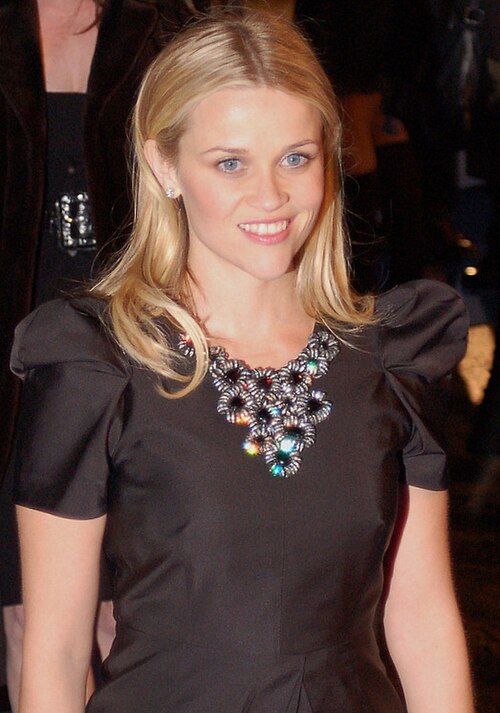
Reese Witherspoon is NOT a descendant of John Witherspoon, Signer of the Declaration of Independence
April 21st, 2013
Though she has made the claim that she is a descendant of John Witherspoon, signatory of the Declaration of Independence from New Jersey, it has not been verified.
While Reese has in fact made this claim, the Society has not be able to verify it with our records. The genealogical position is “if you cannot document it, you cannot claim it”. She has not been able to document it. I suspect one of the issues here is that many folks get descendant and related to mixed up, so it is possible that Reese is somehow related to the Signer, but she is not a descendant of the Signer. When you consider that over 250,000 Scotsmen immigrated to this country between 1720 and 1750, and that many of them ended up in the Appalachian region of the Southeast and that Witherspoon is a widespread Scotch surname, I suspect that when Reese does her homework, she will find her family in is this group.
It seems tonight is the night to pile on her. This is the best I got.
I did like Legally Blonde. When I saw it in High School, I had no idea what an LSAT was. 179? No big deal, right?
Another bit of trivia:
Producers originally wanted to set the film at The University of Chicago. School administrators declined, however, because of a scene toward the end of the movie where a professor places his hand on Elle’s leg. Filmmakers subsequently decided to have the story take place at Harvard University.
Recently, a friend was trying to impress me, and said, “The law is reason, free from passion.” I asked, did you get that from Legally Blonde. Yep.
Sponsor this memorial with an exclusive premium layout and no ads.Sponsor this page
According to records, Louise was the 3rd child of Lloyd Tevis (1824-1899) & Susan Gano Sanders (1931-1902). Married 1st, John Witherspoon Owen Breckinridge (1850-1892) on 19 Jul 1877, divorced in 1881, and were the parents of: Lloyd Tevis Breckinridge (1878-1901), John Cabell Breckinridge (1879-1927) & (Baroness) Florence Louise (nee Breckinridge) Fermor-Hesketh (1880-1956). Married 2nd, Frederick William Sharon (1857-1915) on 2 Aug 1884, and were parents of Henry “Harry” William Tevis Sharon (1885-1896).
Gravesite Details
Not certain she was laid to rest in this cemetery, however her daughter Florence was, whom she lived with at time of death. Her obituary listed she was buried near Baroness Florence Fermor-Hesketh’s Royal Estate.
Family Members
Parents
Spouses
Siblings
- Margaret Sanders Tevis Blanding1855–1915
- Dr Harry Lloyd Tevis1857–1931
- Hugh Tevis1860–1901
- William Sanders Tevis Sr1863–1943
Children
- Lloyd Tevis Breckinridge1878–1901
- John Cabell Breckinridge1879–1927
- Mrs Florence Louise Breckinridge Fermor Hesketh1880–1956
- Henry William Tevis “Harry” Sharon1885–1896
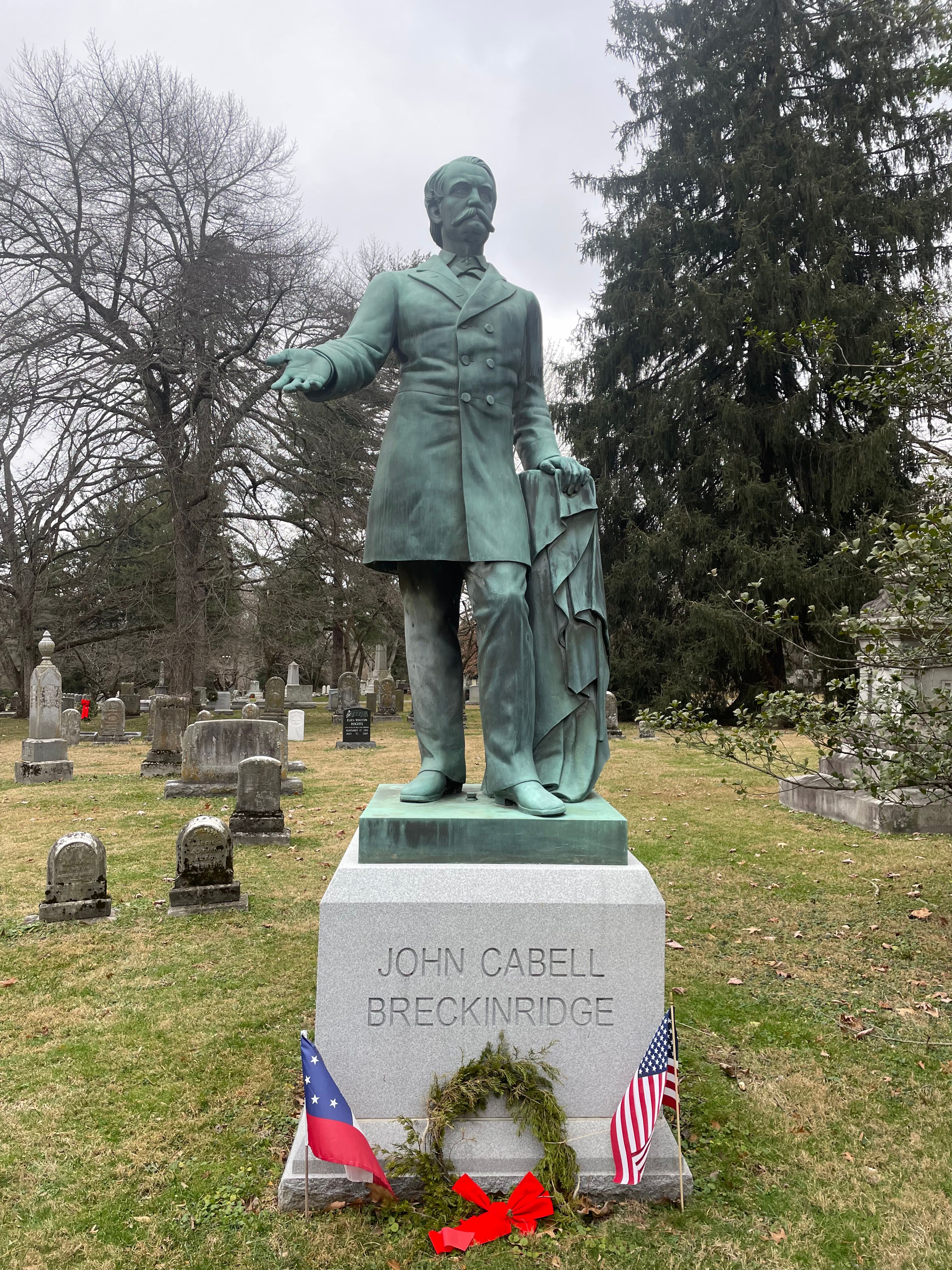
14th United States Vice President, U.S. Congressman, U.S. Senator and American Civil War Confederate Major General. A member of the Democratic Party, he served in the U.S. House of Representatives for Kentucky’s 8th congressional district from March 1851 until March 1855. In 1856, he was elected as the 14th U.S. Vice President under President James Buchanan, serving from March 1857 until March 1861. As a Senator, he served briefly from March 1861 until December 1861 when he was expelled for joining the Confederate Army. The son of a Kentucky state politician, his father died when he was two years old and the family went to live with his paternal grandmother. He graduated with a bachelor of law degree from Transylvania University in Lexington, Kentucky in February 1841, admitted to the bar and established a law practice in Lexington. He briefly served as a non-combatant during the Mexican American War and upon his return home, he was elected to the Kentucky House of Representatives, serving from 1849 until 1850. He was then elected to two terms in the U.S. House of Representatives, returning home at the end of his second term. In 1856, he was nominated as James Buchanan’s running mate and won the general election. In 1860, he was chosen by the Democratic Party as their nominee for United States President with Joseph Lane as his running mate and they lost the presidential race to Abraham Lincoln and the newly formed Republican Party. He was then elected to the U.S. Senate but was expelled as a traitor after accepting a Brigadier General commission in the Confederate Army. During the American Civil War, he participated in numerous engagements, including the Battle of Shiloh (1862), after which he was promoted to the rank of Major General, and the Battle of Chickamauga (1863). He commanded the Confederate forces during the 1864 battle of New Market, Virginia, which featured the famous charge of the Virginia Military Institute Corps of Cadets. In January 1865, Confederate President Jefferson Davis appointed him to serve as the Confederate Secretary of War, replacing James Seddon who had resigned. Following the end of the war, he fled to Florida and then to Cuba, where he obtained passage to England and from there to Canada, where he was reunited with his wife. The following year, they left for Europe and spent a year travelling to different countries. In June 1868, they returned to Canada and when President Andrew Johnson declared amnesty for all former Confederates six months later, he returned to Lexington, Kentucky in March 1869 and resumed his law practice and other business ventures which proved to be unsuccessful. He refused all requests to re-enter politics and by 1873, his health began to decline. He died of complications from surgery two years later at the age of 54.
Bio by: William Bjornstad
Inscription
JOHN C. BRECKINRIDGE
BORN JAN. 16TH. 1821,
DIED MAY 17TH. 1875.
Gravesite Details
Interment Date: May 18, 1875
Family Members
Parents
Spouse
Siblings
Half Siblings
- Mary C. Breckinridge Satterwhite1815–1835
- Laetitia Breckinridge Parkhill1822–1852
- Ann Cabell Breckinridge1824–1827
Children
 Rosamond Press
Leave a comment