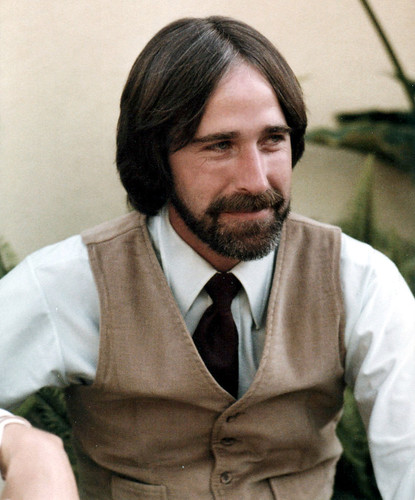
Several world leaders are comparing Trump to the Godfather – of Republican Thugs? I told my old friend I believe I have been hiding for fifty years due to my PTSD after the Mafia killing Puppy. But it is more than that. I could not do anything without being dragged into horrific shit. And now….The Invasion of Greenland?
A week ago I looked deeply at my blue eyes – and admitted they had an affect on people. Rena Easton fell for them, when she turned me towards the light at the end of the pier.
John Presco
BREAKING: Melania Trump is humiliated as the NY Times reveals that the Australian billionaire who Trump shared classified military secrets with just declared that Donald Trump ordered Melania to strut around Mar-a-Lago wearing nothing but a bikini…
But it gets worse for Trump…
The New York Times reports that the Australian billionaire, Anthony Pratt, revealed that, “Mr. Trump asked his wife, Melania, to strut around Mar-a-Lago in her bikini ‘so all the other guys could get a look at what they were missing out on.”
But Pratt didn’t stop there, revealing that he literally bribed Trump while he was president in order to get on Trump’s good side by “voluntarily paying Mar-a-Lago a huge markup for New Year’s Eve tickets that actually cost $50,000 or less.”
But that’s not all, because Pratt also revealed that Trump rubs his business “like the mafia,” taking bribes disguised as payments to Mar-a-Lago for memberships and events.
After Pratt bribed Trump, Trump responded by sharing classified military intelligence with him — putting America’s national security at risk just to grift as much money as possible from his position as president.

 Dottie Witherspoon almost became Christine’s sister-in-law. She may have fathered my child the Seers said I had. They saw two faint leaves on my rose. A year later, my sixteen year old daghter appear in my life for the first time.
I fought with real witches on Beacon Hill, the same time I took the Mafia to court – and won! I saved Dottie from a guy who said he was a Warlock. I encouraged Dottie to stay away from drugs as I did most folks I befriended after my terrible fall on the rocks at MacLure’s Beach in 1967. Dottie descends from the Signer, John Witherspoon, and it looks like I descend from the Signer, John Hart. The Witherspoons are in the famous Preston genealogy, as is Jessie and John Fremont who founded the Republican Party. I discovered the Prestons are close kin to the Stewart family, and thus, William and Harry. I discovered the Hart family are kin to Princess Diana.
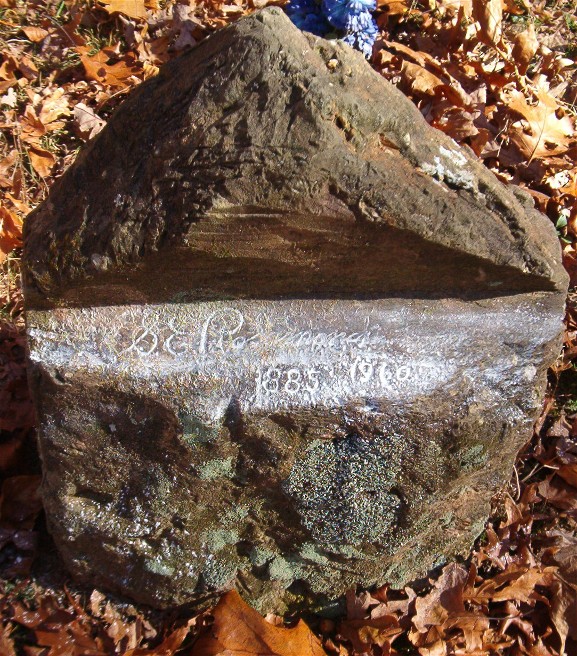
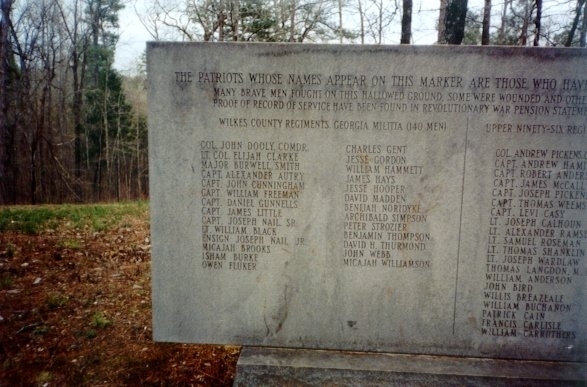
You can not BUY this family history. Many rich and conservative Americans would kill to own this history, be of this blood. But, what bounds this blood in true Democracy, is my kindred who made the simple headstone you see above. These rosy folks descend from Samuel Rosamond who was a captain in the War of Independence, and fought under Francis Marion in South Carolina. So did John Witherspoon. This is why both families named family members after Francis Marion. There is a Francis Marion Witherspoon, and a Francis Marion Rosamond.
It is fitting that I a very poor descendant of James Rosamond, who also fought alongside his brother and Marion, compile this family history, gather my ancestors together, so……..We can soar like eagles! Our wings are not made of money! They are made of courage!
We Americans have got to stop demonizing each other, and stop believing our great wealth gets us closer to God, and in turn He gives us special privileges. If a mere rock can suffice these Patriots for a headstone, then, anything is possible if we put our minds to it!
Here is the proof! These humble roses help found our Democracy!
Wake up! The whole world is beholding our dream, our work to establish Social Good for all of humanity. We have just begun! Our days of experimenting, are over. We have grown up!
Jon Presco
https://rosamondpress.wordpress.com/2011/09/12/saving-dottie-witherspoon/
https://rosamondpress.wordpress.com/2011/09/06/the-witherspoons-and-rosamonds/
http://freepages.genealogy.rootsweb.ancestry.com/~edgmon/lurrosmur.htm
http://www.findagrave.com/cgi-bin/fg.cgi?page=gr&GScid=2281655&GRid=31131358&
c
John Rosamond
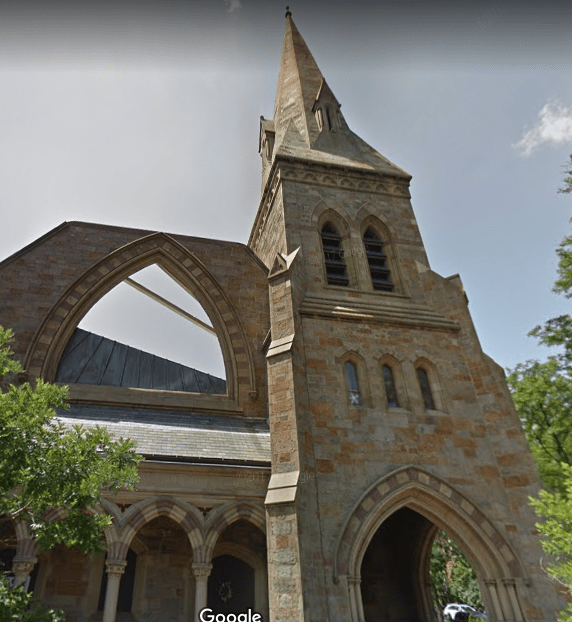


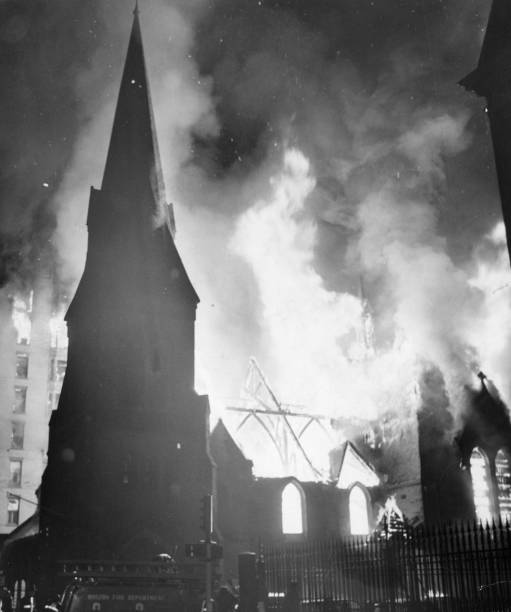
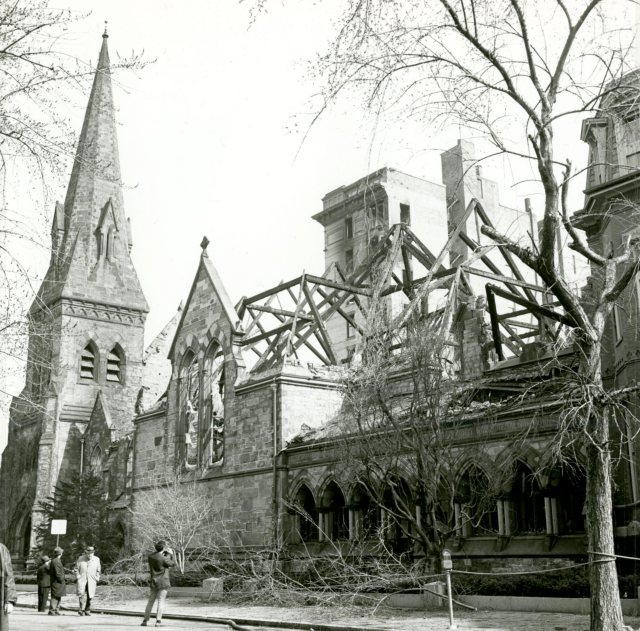
The Battle of Beacon Hill
by
John Rosamond
Those who I allow to get close to me, and thus, know my story, have titled me ‘The American James Bond’. They do not do me justice. I am much more than a fictional character, which is not saying much, for I come from a prestigious line of ministers who debated the Biblical accounts of Jesus who modern theologians have titled a fictional character. Jesus descends from king David – another fictional character? What is the truth? Why was this argument brought to the New World?
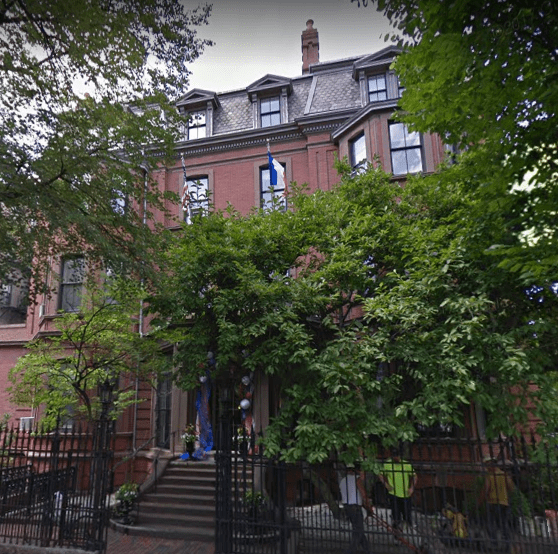
I live on the corner of Marlborough and Berkeley Street in Boston Massachusetts across the street from the ruins of the First Church of Boston that burned down on March 29, 1968. I was badly disfigured in this catastrophe while trying to rescue vital documents that belonged to my ancestor, John Wilson, who was the first minister of this Puritan church. These documents were brought to America – for safe keeping. John had given a firey speech while in an oak tree in the Boston Commons that rescued the mission he was on – that would unite the New World with the Old! These documents belonged to John Dee, who Wilson’s ancestors, the Rosenbergs, were close to. If you are guessing this has something to do with the Rosicrucian, you are partially correct.
In 1968 to 1971, there was a battle for Beacon Hill between the Mafia, the Kennedy family, the Witches of Salem, the Puritans, the Benton family, the Catholics, and the John Dee Society. There was also the Free Africans of the House of Orleans. Oh! I left The Process Church of the Final Judgement – who offered to protect me, What started this battle was the election of the first Catholic President of the United States, John F. Kennedy. The State House is at the top of Beacon Hill.
With the rise of the evangelical voters – who put their man in the White House – the Russian Orthodox church ( led by an ex-KBG officer) is now a big player in the religious warfare that has been going on in America for four hundred years. Many evangelicals take pride in being blissfully ignorant and have embraced Putin. For this reason, I am coming out of retirement to tell the world why the Battle of Beacon Hill was so important, and, why it must be fought again.
The Putin-effect galvanizing evangelicals and Eastern Orthodox?
There is a photograph of me painting in my studio located in the corner room with the bay window. My artwork is found in many major museums singed by a my alter-ego, a secular soul that insists on working though me, knowing I am destined for a divine recognition. It’s in my genes. I am good with anagrams and codes. I speak in ancient riddles. My art is full of riddles.
The secular James Bond had it pretty easy in comparison to the power struggles my kindred have gone through in Europe, and in America, where Freedom of Religion will forever be misunderstood. Keeping a balance between the secular and the religious, has been the task of the Swan Brethren for five hundred years. It is a losing battle.
My secret friendship with Douglas Fairbanks Jr. is just coming to light. He was my mentor. He and Ian Fleming were close during the war. These two agents chose me to go on a mission to Berlin after I graduated from High School. I visited the tomb of my ancestors, the Stuttmeisters, who were Forty-eighters disguised as Evangelicals. I ended up in Chile with a colony of folks who descend from the Teutonic Knights. My Prussian kindred taught the Chilean Army how to march. Fairbanks had me contact his old operatives. I barely escaped with my life, that has never been easy.
Excuse me. I am going to bring the lads working on the cable line that is accessed under my house, a glass of lemonade. They have spotted me, the masked one, peeking at them. from several windows. We are playing a game. Of course they are agents. Let’s see if I can spook them. I call them my Scuzzy Bears.
to be continued

http://www.religionwatch.com/the-putin-effect-galvanizing-evangelicals-and-eastern-orthodox/
Nicholas Gvosdev, a political scientist at the U.S. Naval Academy, struck a different note early on by speaking about how Orthodox Americans responded to the 2016 elections, setting the stage for this unusual courtship.
Process Church of Final Judgement
Posted on August 4, 2013 by Royal Rosamond Press

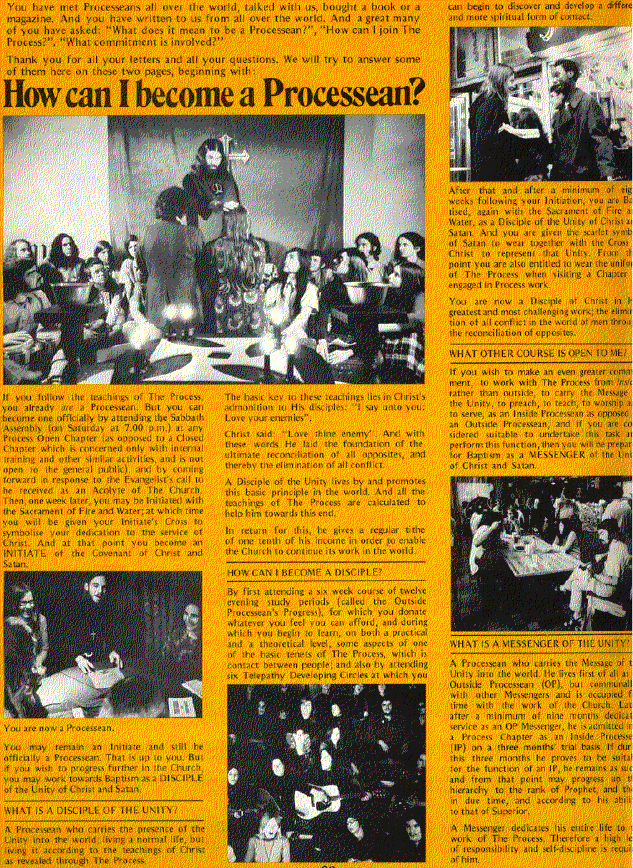


Darcy told me she wanted to get away from her boyfriend who was at the top of the Boston Process. He had a hold on her, was playing mind games, and was trying to control her. Being a follower of Meher Baba who looked down on cults, I helped her break the chain. Darcy’s mother was very grateful when I cme to her house with her daughter who had become distant.
Now Michelle was in deep trouble. She and her boyfirned had come to live in our commune James Harkis and I founded and sustained. One day she pointed out a guy sitting in a car across the street.
“He’s Mafia. He wants to give us money to help him find our friend who became his lover. She stole a belt with a code in it for box cars containing drug shipments. She took it thinking it would buy her freedom from him. He is very abusive. He wants her and the belt back. We are thinking of taking the money and run.”
“Do not take Mob money – period! If you do, they believe they own you. They will find you and dispose you.”
“Can you go talk to him?”
I was fearless in those day. I was a dead-an walking. I was Strider from the Lord of the Rings in my black cape. I was a Ranger. I went downstairs, walked up to the car, and said;
“Michelle wants to talk to you.”
Where? When?”
There’s a bar around the corner. Will an hour from now do?”
I wanted to prepare Michelle, put a white light of protection around her. Playing at playing with Satan, was over. Time to wake up.
Jon Presco
The Process Church of The Final Judgment
From Wikipedia, the free encyclopedia
Jump to: navigation, search
The Process, or in full, The Process Church of the Final Judgment, commonly known by non-members as the Process Church, was a religious group that flourished in the 1960s and 1970s, founded by the English couple Mary Anne and Robert DeGrimston (originally Robert Moor and Mary Anne MacLean).[1] Originally headquartered in London, it had developed as a splinter group from Scientology,[1] so that they were declared “suppressive persons” by L. Ron Hubbard in December 1965.[2] In 1966, members of the group underwent a social implosion and moved to Xtul on Mexico’s Yucatan peninsula, where they developed “processean” theology (which differs from, and is unrelated to process theology). They later established a base of operations in the United States in New Orleans.[2]
The Puritans exhibited intolerance to other religious views, including Quaker, Anglican and Baptist theologies. The Puritans of the Massachusetts Bay Colony were the most active of the New England persecutors of Quakers, and the persecuting spirit was shared by the Plymouth Colony and the colonies along the Connecticut river.[95]
In 1660, one of the most notable victims of the religious intolerance was English Quaker Mary Dyer, who was hanged in Boston for repeatedly defying a Puritan law banning Quakers from the colony.[95] She was one of the four executed Quakers known as the Boston martyrs. The hanging of Dyer on Boston Common marked the beginning of the end of the Puritan theocracy.[96] In 1661, King Charles II explicitly forbade Massachusetts from executing anyone for professing Quakerism.[96] In 1684, England revoked the Massachusetts charter, sent over a royal governor to enforce English laws in 1686 and, in 1689, passed a broad Toleration Act.[96]
The first two of the four Boston martyrs were executed by the Puritans on 27 October 1659, and in memory of this, 27 October is now International Religious Freedom Day to recognise the importance of freedom of religion.[97] Anti-Catholic sentiment appeared in New England with the first Pilgrim and Puritan settlers.[98] In 1647, Massachusetts passed a law prohibiting any Jesuit Roman Catholic priests from entering territory under Puritan jurisdiction.[99] Any suspected person who could not clear himself was to be banished from the colony; a second offense carried a death penalty.[100]
First Church in Boston is a Unitarian Universalist Church (originally Congregationalist) founded in 1630 by John Winthrop‘s original Puritan settlement in Boston, Massachusetts. The current building is on 66 Marlborough Street in Boston. The church has long been associated with Harvard University.
Notable people associated with First Church[edit]
- John Wilson (pastor 1632–1667; died 1667)
- John Cotton (pastor 1633–1652)
- John Winthrop, founder and governor of Massachusetts Bay Colony
- John Norton (pastor 1656–1663)
- John Davenport (pastor 1668–1670)
- James Allen (pastor 1668–1710; died 1710)
- John Oxenbridge (pastor 1670–1674)
- Joshua Moodey (pastor 1684–1692; died 1697)
- John Bailey (pastor 1693–1697; died 1697)
Wilson was an early advocate of the conversion of Indians to Christianity, and acted on this belief by taking the orphaned son of Wonohaquaham, a local sagamore into his home to educate.[9] In 1647 he visited the “praying Indians” of Nonantum, and noticed that they had built a house of worship that Wilson described as appearing “like the workmanship of an English housewright.”[55] During the 1650s and 1660s, in order to boost declining membership in the Boston church, Wilson supported a ruling known as the Half-Way Covenant, allowing parishioners to be brought into the church without having had a conversion experience.[9]
On 27 October 1659 three Quakers—Marmaduke Stevenson, William Robinson and Mary Dyer—were led to the Boston gallows from the prison where they had been recently held for their Quaker evangelism, against which Massachusetts had enacted very strict laws. Wilson, now nearly 70, as pastor of the Boston church was on hand as the supervising minister. As the two Quaker men first approached the gallows, wearing hats, Wilson said to Robinson, “Shall such jacks as you come in before authority with your hats on?”[58] Ignoring the barb, Robinson then let forth a barrage of words, to which Wilson angrily responded, “Hold thy tongue, be silent; thou art going to die with a lie in your mouth.”[59] The two Quaker men were then hanged, after which it was Dyer’s turn to ascend the ladder. As the noose was fastened about her neck, and her face covered, a young man came running and shouting, wielding a document which he waved before the authorities. Governor Endecott had stayed her execution.[60] After the two executions had taken place, Wilson was said to have written a ballad about the event, which was sung by young men around Boston.[61]
Not willing to let public sentiment over the executions subside, Dyer knew that she had to go through with her martyrdom. After the winter she returned to the Bay Colony in May 1660, and was immediately arrested. On the 31st of the month she was brought before Endecott, who questioned her briefly, and then pronounced her execution for the following day. On 1 June, Dyer was once again led to the gallows, and while standing at the hanging tree for the final time, Wilson, who had received her into the Boston church 24 years earlier and had baptized her son Samuel, called to her. His words were, “Mary Dyer, O repent, O repent, and be not so deluded and carried away by deceit of the devil.”[62] Her reply was, “Nay, man, I am not now to repent.”[62] With these final words, the ladder was kicked away, and she died when her neck snapped.[62]
Wilson’s wife, Elizabeth, was a sister of Anne Mansfield, the wife of the wealthy Captain Robert Keayne of Boston, who made a bequest to Elizabeth in his 1656 will.[22] With his wife, Wilson had four known children, the oldest of whom, Edmund, returned to England, married, and had children. Their next child, John Jr., attended Harvard College in 1642 and married Sarah Hooker, the daughter of the Reverend Thomas Hooker. The Wilsons then had two daughters, the older of whom, Elizabeth, married Reverend Ezekiel Rogers of Rowley, and then died while pregnant with their first child.[22] The younger daughter, Mary, who was born in Boston on 12 September 1633, married first Reverend Samuel Danforth, and following his death she married Joseph Rock.[22]


Share this:
Royal Rosamond Press
Showdown on Fort Hill

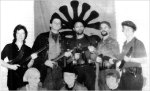
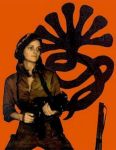
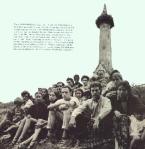


After I refused to be the Acid Messiah for the Brotherhood of Eternal Love, I walked away from the Hippie Experiment that was becoming a Cult, a mass-mind grope into darkness.
For fifty days I camped with Rena Christiansen atop a mountain in California. I considered us to be the new Adam and Eve in a world that was tearing itself apart in a deadly culture war. We were going back to being mere Individuals – high on life – and not drugs!
The last time I saw Rena was when I stopped in Lincoln Nebraska to see her at the University where she lived in a dorm. I was on my way to Rhode Island where my sister Christine was living with Michael Dundon and his mother, Rose. I would end up in Boston after Michael took Christine and her daughter, Shannon, hostage. Three year later, I am back in Oakland where two of my friends are being investigated by the FBI for being members of the Symbionese Liberation who took Patty Hurst hostage.
Taking people hostage in order to get them to believe in you and your cause, is the core theme of my novel ‘Capturing Beauty’. For on that mountain top I struggled with the plotter at the core of my being that hatched a thousand schemes on how I could capture my beautiful Muse, put her in a keep, and keep her very well – all to myself!
When I first beheld the Gothic tower on Fort Hill, I was reminded of the story of Repunzel where a beautiful maiden is kept in a tower, but, let’s her long hair down so her lover can climb up to her.
Rena Christiansen had become the symbol of the Great American Beauty that had been forsaken in the Cold War, and the Crusade to crush the Peace and Freedom Movement by the Christian Military Complex.
When the SLA murdered Foster for issuing identity cards in Oakland Schools, it was finished! When I spied on the Tea Party Patriots who came to my town three years ago, I discovered what I knew all along, that they are Evangelical Cultists in disguise – and they are very much like the SLA – in that they have to believe there exists a conspiracy out to get them so as to unite their followers on the battle ground of Armageddon, where evil folks are desperate to defeat them, and capture their Beautiful American Rose! But, I fear she has departed this world after marrying an Commodore, and baring two children on the Isle of Wight.
Rena was an expatriot, and if she is dead, then I am all alone to meet the enemy at the End of the World, there just me, the Lone Wolf standing, in the snow, below the Tower – crying in the wildness….
“Repunzel! Repunzel! Let down your hair!”
Here is a story about another man who ran for his life on Fort Hill, after he discovered Beauty was a Monster, a man wearing a wig, a rose captured in his clenched teeth, the teeth of a wolf in shepherd’s clothing.
There is no doubt in my mind many of the evangelicals that became Tea Baggers, were once hippie wanna-bes. But, they saw the light, joined another cult because they are religious addicts, and took over the Republican Party co-founded by John Fremont and Jessie Benton, whose kin and namesake lived just below the Dark Tower, where she was guarded very well.
One night, just befor midnight, it began to snow. I headed up to Fort Hill so I could see the city blanketed in white. There was a gold light in the clouds. Heading for the tower, listening to my boots crunching the fresh snow, I saw a figure come out of the darkness on to the park area, and head for the tower. It looked like he was trying to intercept me, cut me off.
Jon Presco
Copyright 2012
“The Manson Family preached
peace and love and went around killing people.
We don’t preach peace and love…”
-Jim Kweskin
Introduction
At the south end of Boston lies the Roxbury black ghetto, a dirty oasis of trees, homes and small stores that suddenly emerges from blocks of old factories and railroad yards. Like many of our nation’s famous darktowns, Roxbury includes hundreds of decaying apartment buildings housing too many people on not enough land, ruthlessly noisy elevated trains, and a sprawling, brand new, all concrete police district station.
Yet there’s something different here. It can be seen from all over Boston: a tower, an ancient brick watchtower that rises needlelike from a secluded hill – Fort Hill – in the center of Roxbury. A relic from the original American Revolution, the structure stands some 70 feet above an abandoned city park. The stone tablet commemorating it is itself nearly 100 years old and starting to crumble around these words:
On this eminence stood ROXBURY HIGH FORT, a strong earthwork planned by Henry Knox and Josiah Waters and erected by the American Army June 1775 – crowning the famous Roxbury lines of investment at THE SIEGE OF BOSTON.
Five years ago a small community of young white intellectuals and artists from the Boston-Cambridge area moved onto the hill and “took over” several empty apartment houses bordering the park. Relations with the black neighborhood immediately deteriorated, and soon guards, members of the new Fort Hill Community, could be seen patrolling the fort for the first time in almost 200 years.
Since then peace has returned, relations have improved, and there is some question on a recent summer evening why guards are still needed at Fort Hill. Or who, exactly, is being watched. It’s dark, about 9:30 PM, as one of them approaches holding a flashlight. He appears troubled, glancing nervously up and down a long row of houses now owned by the community. Inside the first house some 60 Fort Hill members are eating dinner, methodically cleaning their plates after a 12-hour work day. Suddenly the guard turns and walks briskly to an area at the rear of the houses where garbage is dumped. He shuts off his flashlight and from a large green plastic garbage bag secretly retrieves a suitcase packed the night before. Then, without looking back, he runs as fast as he can, as fast as he’s ever run, past the garages, past the basketball court, past the tool sheds, down the long dirt driveway at the rear, through the winding paved streets of the ghetto and the straight paved streets of the first factories, past the nearest subway station, where they’d be sure to check, to a second station, blocks and blocks away, more difficult to find.
As the sentry boards a subway train, safe for the moment, the interior lights reveal his panting, boyish face. He is Paul Williams, a rock author and first editor of Crawdaddy Magazine, who several months ago gave up his writing career to join the Fort Hill Community.
“I was very frightened, sure,” he admitted later at his New York hideaway. “I said I was leaving the day before and they said I wouldn’t be allowed to. They said they’d be watching me 24 hours a day. So I was super paranoid, super cautious. But that doesn’t bother me. I mean, they owed it to me, in a sense, to keep me on the hill.
“If I grow enough, someday I may come back. I care about Mel Lyman more than anyone outside of myself; someday I may be able to care about him more than me. [The people who can, have something really beautiful going.]”
than you would in four years. “Let your ego go…let things happen to you. It’s a feeling of closeness to each other we are after, the death of the ego. A reference point for the rest of your life. You may change your value system, notions about life and viewpoints about people. It will produce a new breed of human beings with greatly expanded potentials. If you do your best, you can’t fail.” (Tony Lang, Synanon, Morantz archives on Synanon).
And although the Family was often accused of strong-arm tactics in dealing with neighbors and alternative-community groups, they certainly never killed anyone or even manifested serious homicidal intent.
However, in 1973, members of the Family, including Frechette, staged a bank robbery. One member of the Family was killed by police, and Frechette, sentenced to prison, died in a weightlifting accident in jail in 1975.[13]
If the function of art is to make us aware of what we know and don’t know we know, the function of the Christian Church and all its metastases has been and still is to keep us in ignorance of what we know. People living on the sea coast knew the earth was round. They believed it was flat because the Church said so. And hardcore Synanon members still believe the media put that rattlesnake in Paul Morantz’ mail box to discredit Synanon. Is there any limit to brainwashing? Apparently not. Such cults as Synanon, Scientology, the Peoples Temple derive from the same infected source as Christianity. In fact they recapitulate the story of Christianity word for word, like the inevitable course of some unsightly disease: criminal ignorance, brutish stupidity, self-righteous bigotry, paranoid fear of outsiders. For the cultist, psychiatrists, the media, Govemment agencies have become Satan incamate. Like the fundamental Christians, they have to be right.
Charlotte-Rose de Caumont de La Force or Mademoiselle de La Force (1654–1724) was a French novelist and poet. Her best-known work was her 1698 fairy tale Persinette which was adapted by the Brothers Grimm as the story Rapunzel.[1]
She was the daughter of François de Caumont de La Force (eighth son of Marshal de La Force), marquis de Castelmoron and of Marguerite de Viçose. Raised as a Protestant, she converted to Catholicism in 1686 and received a pension of 1000 écus from Louis XIV. Like other famous women writers of the 17th century, she was named a member of the Academy of the Ricovrati of Padua.
Her first novels were in the popular vein of “histoires secrètes”, short novels recounting the “secret history” of a famous person and linking the action generally to an amorous intrigue, such as Histoire secrete de Bourgogne (1694), Histoire secrète de Henri IV, roi de Castille (1695), Histoire de Marguerite de Valois, reine de Navarre (1696).
She had a long affair with the much younger Charles Briou, finally managing to marry him secretly with the king’s permission, but her family and his father intervened to have the marriage annulled.[2]
Paul Morantz is an attorney at law specializing in the prosecution of fanatical cults, religious or otherwise, and their leaders for harmful conduct. He is most recognized for his cases against Synanon, a behavior modification drug rehabilitation group in the 1970s, which attempted to kill Morantz and derail his efforts to rescue members of the group.[1][2] Since then, Morantz has continued practicing law specializing in the prosecution of those whose victims suffer through the undue influence of coercive persuasion. Morantz served as pro bono appellate counsel in Molko vs. Unification Church in 1988, which became the first case where the California Supreme Court recognized brainwashing as a wrongful and harmful tort, and allowed victims the right to sue for damages.[3][4]
Morantz is also a freelance writer and investigative journalist, who wrote the story for the 1978 television movie Deadman’s Curve, based on the lives of surf singers Jan and Dean.[5] The original story Morantz wrote was published in Rolling Stone magazine in 1974 and was scheduled to be the cover, but Nixon resigned soon after and the story was pushed off the cover.[6] Morantz also has published an article in the Los Angeles Times about John Walker Lindh, the American man caught fighting with the Taliban. The article is an argument for understanding some of the psychological mechanisms which may have led to Lindh joining the Taliban and raises the question of whether he may have been brainwashed.[7]
Stacy Brooks (born April 8, 1952) is a critic of the Church of Scientology. Like her late ex-husband Robert Vaughn Young, a Scientology whistleblower employed by Scientology for over 20 years, Brooks was also a member of the Church, working in its upper level management in Los Angeles for almost fifteen years.[1] After leaving in 1989 Brooks joined the Lisa McPherson Trust, served as an expert witness in many high profile Scientology lawsuits, and to date has made many television appearances on programs including Dateline, 20/20 and 60 Minutes criticizing Scientology.[2]
LRH COMM NETWORK INTERNATIONAL
ED NW _26_ PAC 29 JUNE 1979
ALL PAC EXECS AND CREW
_PREGNANCIES AND BABIES IN PAC_
Mel Lyman’s Culture War
Posted on March 17, 2012 by Royal Rosamond Press

Mel Lyam married Jessie Benton, the daughter of the artist, Thomas Hart Benton, the cousin of Garth Benton, the father of Drew Benton, the daughter of my late sister, Christine Rosamond Benton.
The Gooch genealogy ends thus;
Children of THOMAS BENTON and RITA PIACENZA are:
i. THOMAS PIACENZA7 BENTON, b. Private.
ii. JESSE P. BENTON, b. Private.
I met Jessie once at the Fort Hill commune. I lived down the street two blocks in a commune I and four friends founded in 1970. We exchanged food and ideas.
With the rekindling of the Culture Wars by the Pope over sonic imaging and birth control, I must assume the War on Hippie Bohemians has been rasied from the Dead – Heads. When you add together my history with alternative societies and thinking, you can conclude I am the Big Boss Bohemian Man – the Last Hippie Man Standing!
Come and get me – Ratzinger! You dirty rat!
Jon the Nazarite
Melvin James Lyman (March 24, 1938, Eureka, California – April 1978, exact date and location unknown) was an American musician, film maker, writer and founder of the Fort Hill Community.
[edit] Musician“ Mel Lyman played harmonica like no one under the sun / Mel Lyman didn’t just play harmonica, he was one. – Landis MacKellar[1] ”
Lyman grew up in California and Oregon. As a young man, he spent a number of years traveling the country and learning harmonica and banjo from such legendary musicians as Woody Guthrie, Brother Percy Randolph, and Obray Ramsey.[2] In 1963 he joined Jim Kweskin’s Boston-based jug band as a banjo and harmonica player
Lyman, once called “the Grand Old Man of the ‘blues’ harmonica in his mid-twenties”,[3] is remembered in folk music circles for playing a 20 minute improvisation on the traditional hymn “Rock of Ages” at the end of the 1965 Newport Folk Festival to the riled crowd streaming out after Bob Dylan’s famous appearance with an electric band. Some felt that Lyman, primarily an acoustic musician, was delivering a wordless counterargument to Dylan’s new-found rock direction. Irwin Silber, editor of Sing Out Magazine, wrote that Lyman’s “mournful and lonesome harmonica” provided “the most optimistic note of the evening” [4]
[edit] FilmmakerIn the early Sixties, Lyman had been drawn to New York. The music and fellow musicians that he found there led in turn to a larger circle of writers, artists and filmmakers. He became friends with underground film-maker Jonas Mekas, which led to the studios of Andy Warhol, and Bruce Conner all of whom he counted as both teachers and inspirations for his later film work. Several of Lyman’s films have recently been digitally restored to be included in the permanent collection of the Anthology Film Archives,
[edit] WriterIn 1966, supported and funded by Jonas Mekas, Lyman published his first book, Autobiography of a World Savior, which set out to reformulate spiritual truths and occult history in a new way. In 1971, Lyman published Mirror at the End of the Road, derived from letters he wrote during his formative years, starting in 1958 from his initial attempts to learn and become a musician, through the early Sixties as his life widened and deepened musically and personally. The last entries are from 1966 which simply express the profound joys and deepest losses which defined and gave his life direction and meaning in the years ahead. The key to the book and the life he lived afterwards are stated simply in the dedication at the beginning “To Judy, who made me live with a broken heart” .[5]
[edit] The Lyman Family, The Fort Hill Community and the AvatarIt was his relationship with Judy which brought him to Boston in 1963. Again, Lyman became acquainted with many artists and musicians in the vibrant Boston scene including, among others, Timothy Leary’s group of LSD enthusiasts, IFIF. Lyman was involved for a very short time and, against his wishes, so was Judy. Knowing LSD’s power, he felt she was not ready but, “the bastards at IFIF gave her acid… I told her not to take it. I knew her head couldn’t take it.” Lyman’s fears turned out to be justified and she left college and returned to her parents in Kansas.[6] Lyman was by all accounts very charismatic and later, after Judy had left, a community or family naturally tended to grow up around him. At some point thereafter Lyman began to realize himself as destined for a role as a spiritual force and leader.
In 1966, Lyman founded and headed The Lyman Family, also known as The Fort Hill Community, centered in a few houses in the Fort Hill section of Roxbury, then a poor neighborhood of Boston. The Fort Hill Community, to observers in the mid-to-late Sixties, combined some of the outward forms of an urban hippie commune with a neo-transcendentalist[7] socio-spiritual structure centered on Lyman, the friends he had attracted and the large body of his music and writings.
Although Lyman and the Family shared some attributes with the hippies– prior experimenting with LSD and marijuana and Lyman’s cosmic millennialism–they were not actually hippies either in appearance (female members dressed conservatively and male members wore their hair relatively short by the standards of the era) or beliefs (while Lyman and other Family members had fathered children by different women, polyamory was eschewed in favor of serial monogamy).
By the Spring of 1967 the Fort Hill Community had become an established presence in Boston and it, along with members of the wider community in greater Boston and Cambridge, came together to create and publish the Avatar. It contained local news, political and cultural essays, commentary and more personal contributions, writing and photography, from various members of the Fort Hill Community including Lyman. The paper and magazine set new standards in content and design later adopted by more mainstream publications. Throughout the first year of its existence it created what became a national audience and many more people visited Fort Hill at that time, some eventually staying and becoming part of the community.
Rather than the gentle and collectivist hippie ethic in other publications of the time, Lyman’s writing in Avatar espoused a philosophy that contained, to some readers of the time ‘, strong currents of megalomania and nihilism and to others a powerful alternative voice to the prevailing ethos.[8]
“ I am going to reduce everything that stands to rubble / and then I am going to burn the rubble / and then I am going to scatter the ashes / and then maybe SOMEONE will be able to see SOMETHING as it really is / WATCHOUT ”
—Mel Lyman, Declaration of Creation [9]
After working very intensely on each issue, in the Spring of 1968 the Family gained complete editorial control (some say adversarially) of Avatar for the final issue of the paper. Later they founded their own magazine, American Avatar which continued the editorial directions of the newspaper. Lyman’s writings in these publications brought increased visibility and public reaction both pro and con. His writings, along with others in the publications, could be poetic, philosophical, humorous and confrontational, sometimes simultaneously, as Lyman at various times claimed to be: the living embodiment of Truth, the greatest man in the world, Jesus Christ, and an alien entity sent to Earth in human form by extraterrestrials. Such pronouncements were typically delivered with extreme fervor and liberal use of ALL CAPS.
“ Love isn’t something you find, something you do, something you study. Love is something you BECOME after there is no more YOU. – Mel Lyman[10] ”
[edit] Later developments, and Lyman’s deathIn 1971, Rolling Stone magazine published a cover exposé, an extensive philippic on the Family by associate editor David Felton. The Rolling Stone report described an authoritarian and dysfunctional environment, including an elite “Karma Squad” of ultra-loyalists to enforce Lyman’s discipline, the Family’s predilection for astrology, and isolation rooms for disobedient Family members. Family members disputed these reports.
“ The only difference between us and the Manson Family is that we don’t go around preaching peace and love and we haven’t killed anyone, yet. – Jim Kweskin (perhaps in jest)[11] ”
The Rolling Stone article and the earlier trial of Charles Manson, who seemed to share some traits in common with Lyman, raised the Family’s profile and – whether fairly or not – established Lyman in the sensationalist part of the public mind as a bizarre and possibly dangerous person.
But although Lyman deeply understood Charles Manson and even corresponded with him once, and was sometimes revered as a Messiah-like figure by the Family, it would be inaccurate to overstate the similarities between the Manson Family and the Lyman Family. The Lyman Family was larger and more stable and productive than Manson’s. Unlike Manson’s group, Lyman’s included many persons of accomplishment and note, such as Kweskin, therapist and actress Daria Halprin,[12] actor Mark Frechette, and pioneering rock critic Paul Williams. And although the Family was often accused of strong-arm tactics in dealing with neighbors and alternative-community groups, they certainly never killed anyone or even manifested serious homicidal intent.
However, in 1973, members of the Family, including Frechette, staged a bank robbery. One member of the Family was killed by police, and Frechette, sentenced to prison, died in a weightlifting accident in jail in 1975.[13]
Frechette said the place was not a commune: “It’s a ‘community,’ but the purpose of the community is not communal living. … The community is for one purpose, and that’s to serve Mel Lyman, who is the leader and the founder of that community.”[14]
Thus it has been said that, unlike the Manson Family, Lyman’s did not explode in a dramatic denouement. Rather, the Family took a lower profile and carried on, quietly building on the relationships formed in the turbulent early years. Lyman died in 1978, age 40, under unknown (but presumably natural) circumstances.
After Lyman’s death, the Family evolved into a more conventional extended family- small, low-profile, and prosperous. The skills and work ethic honed in refurbishing the structures of the Family compound led to the founding of the profitable Fort Hill Construction Company. The Family acquired property in Kansas and other places. Many Family members went on to successful careers. Although some former Family members have rejected him and perhaps that part of their own past, all current members still revere Lyman, as do many former members.
Jonas Mekas (Lithuanian pronunciation: [ˈjonɐs ˈmækɐs]; born December 24,[1] 1922) is a Lithuanian-born American filmmaker, writer, and curator who has often been called “the godfather of American avant-garde cinema.” His work has been exhibited in museums and festivals across Europe and America.
Jonas Mekas (Lithuanian pronunciation: [ˈjonɐs ˈmækɐs]; born December 24,[1] 1922) is a Lithuanian-born American filmmaker, writer, and curator who has often been called “the godfather of American avant-garde cinema.” His work has been exhibited in museums and festivals across Europe and America.
In 1954, he became editor of Film Culture, and in 1958, began writing his “Movie Journal” column for The Village Voice. In 1962, he co-founded Film-Makers’ Cooperative (FMC) and the Filmmaker’s Cinematheque in 1964, which eventually grew into Anthology Film Archives, one of the world’s largest and most important repositories of avant-garde films. The films and the voluminous collection of photographs and paper documents (mostly from or about avant garde film makers of the 1950-1980 period) were moved from time to time based on Mekas’ ability to raise grant money to pay to house the massive collection. At times, Mekas personally paid its housing rent and, at low points in external funding, he had to restrict access to the collection. Easily, he can be credited with single-handedly saving large portions of the avant garde films and associated materials.
He was part of the New American Cinema, with, in particular, fellow film-maker Lionel Rogosin. He was heavily involved with artists such as Andy Warhol, Nico, Allen Ginsberg, Yoko Ono, John Lennon, Salvador Dalí, and fellow Lithuanian George Maciunas.
In 1964, Mekas was arrested on obscenity charges for showing Flaming Creatures (1963) and Jean Genet’s Un Chant d’Amour (1950). He launched a campaign against the censorship board, and for the next few years continued to exhibit films at the Film-makers’ Cinemathèque, the Jewish Museum, and the Gallery of Modern Art.
From 1964-1967, he organized the New American Cinema Expositions, which toured Europe and South America and in 1966 joined 80 Wooster Fluxhouse Coop.
In 1970, Anthology Film Archives opened on 425 Lafayette Street as a film museum, screening space, and a library, with Mekas as its director. Mekas, along with Stan Brakhage, Ken Kelman, Peter Kubelka, James Broughton, and P. Adams Sitney, begin the ambitious Essential Cinema project at Anthology Film Archives to establish a canon of important cinematic works.
http://www.trussel.com/f_mel.htm
Scientific Church of Last Judgement
Posted on March 18, 2012 by Royal Rosamond Press


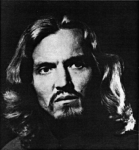

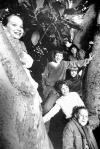
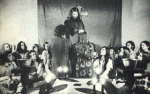
In 1970 I awoke on the top floor of a brownstone building in Roxbury, to behold a beautiful young woman standing at the foot of my bed wearing a long blue robe with a hood. She had lovely blonde hair and baby blue eyes. She was right out of a Tolkien Trilogy. She smiled at me, then came and sat on the edge of the bed and asked my name. We exchanged words, and she asked if she could crawl in bed with me. When I later saw a photo of Robert DeGrimston, I understood my Jesus-look was reaping a dividend. This is before Dan Brown, and the idea that Jesus was a sexual being.
Darcy and Janette had been up all night doing LSD, and had come to my commune to crash. Janette wore a black cape with hood. This was the first time I met her. A year later I met Dottie Witherspoon through Janette, whom I saved from the Mafia in a meeting held in a bar down the street. Both young women were members of the Process Church of the Last Judgement that was founded by a couple whom L. Ron Hubbard titled “suppressive persons”
“English couple Mary Anne and Robert DeGrimston (originally Robert Moor and Mary Anne MacLean).[1] Originally headquartered in London it had developed as a splinter client cult group from Scientology,[1] so that they were declared “suppressive persons” by L. Ron Hubbard in December 1965″
In the year 2000, I believe I was titled a “suppressive person” after my meeting with a woman who was at the top of the Scientology Church that had just bought this winery and was turning it into offices to program people. Her husband was off to Africa to end slavery, and she did not like to hear my accusation that her ilk had taken my sixteen year old daughter hostage, and was treating her and her mother – like slaves!
Patrice Hanson disappeared my daughter after that, in hope of getting Heather in the the terrible biography about my late sister, who is the family tree of Jessie Benton, who claims her clan came from outer space – which is what Hubbard believes. I believe the Lyman’s borrowed from the Process and the Scientoglists, as did Charlie Manson, who my ex-brother-in-law, Larry Sidel knew. My friend, Bryan McLean, was invited to the Hollywood residence the night the Manson family butchered Sharon Tate, but, luckily – got detained!
Recently my daughter told me family was full of “deadness”. She and her boyfriend titled me a “parasite”. Bill Cornwell, who has fathered no children, wants to be the head of my family, he forming a bond with six year old grandson, Tyler Hunt. Bill was taken aback when I told him I am authoring a autobiography. Bill races a car round and around a dirt track while his lover sings the national anthem.
There is talk of Bill siring a child. On the way home from the family reunion in Bullhead city, Heather says this;
“Linda was very pleased with Tyler, and wants us to bring her a daughter next time.”
Linda has no children. But, she has a huge Bhuddist shrine in her living room. Linda Comstock is in the Benton genealogy and is distant kin to the kids in the tree. But, no one knows for sure who carries Benton blood, because the Lyman Family didn’t believe in monogamy and parents. They were one big happy enmeshed family – from outer space!
Bill thought he was dismissing a burned-out Sunday Hippie that he could put outside the orbit of the traditional family he promises to establish. In my book, Bill is a tiny moon going round and round an insiginicant planet, in orbit around Xenu.
Being a Leo, ruled by the Sun, Bill will not be pleased with my placenment of him in the grand scheme of things – forever and ever! For a monent there, I wondered if Bill wanted to put me at the bottom of the Grand Canyon, lest Tyler have to push Big Grandpa around in a wheelchair – till he drop! How – Hitchcockian!
Gosh! Wouldn’t this make a great HBO series. The series ‘Luck’ is a dud, and is being shut down due to the death of four horses.
Now that the Republican Cult of John Darby’s Doomsday Rapture have declared war on the counter culture, then we old hippies are forced to go to our closet to find that old bone we put in our nose, and those tinkling bells we tied to our toes!
Peace – Brother!
Jon Presco
Copyright 2012
The Boston Herald American, p.14, March 26, 1978
By Gary Moore, Special to the Herald American
Spaceship interview given via Ouija board
Darkness had fallen on North Hollywood. You could no longer even see the smog.
About the people I would be meeting I knew only hearsay: Two years ago a Boston writer told me they had smashed the window of his car. Seven years ago Rolling Stone magazine had gone to great lengths to say they were violent, almost fascistic. But now they had dropped out of sight – evaporated.
Suddenly the house was awash in the glare of headlights. There were voices outside. Would they arrive in a battered Volkswagen – a symptom of whatever defeat had sent them into hiding? I stepped out the door to be greeted by a gleaming, grey limousine.
Two young men were waiting for me in the car. We spoke good-naturedly, as if clandestine rendezvous were the most normal thing in the world. White curtains covered all the limousine windows.
“To keep out prying eyes,” he said, smiling.
Finally I had met the Mel Lyman Commune.
“This is our traveling sound system,” said Jim Kweskin, one of my guides and a professional musician, “. . . one of the main things we do is play music.”
He plugged a cassette into the tape deck and three successive songs throbbed and flowed through the speakers.
“Listen for the harp,” said Kweskin in his soft, sometimes almost whispered, voice. “That’s Mel.”
The harp (harmonica) welled up like a baby crying. It was almost like a human voice.
The car stopped and the door swung open. We were surrounded by quiet – the shadows of huge old trees and a spot-lighted, manicured lawn. A house-high cage containing white doves was bathed in an orange spotlight. A wall of shrubbery blocked out any indication of our whereabouts.
A mansion loomed before us.
In the living room there were red velvet chairs and long-stemmed roses in a vase. A violin hung on the wall. Logs were crackling and popping in the fireplace.
Wearing a white dress that emphasized her tan, Jessie Benton entered and firmly shook my hand. As we all sat down, I asked the group for a history of the Lyman community. When had it begun?
“It started long before this earth was made,” said a blonde woman. “We are a race,” she said.
“A race – like a race of people . . . We’ve always been together. We’re gathered here on earth. And we were somehow – in one way or another – drawn to the same place at the same time. That was in Boston – years and years ago.”
Exactly how many years ago?
“Nineteen sixty-six,” said Jessie Benton solidly from her chair by the wall. She is the daughter of artist Thomas Hart Benton.
Someone remarked that the spreading of Mel Lyman’s communities to different cities was “protective.” When I inquired why there was any need to protect, a mild flurry of cryptic discussion took place among my hosts, then it dissolved quickly into what looked like agreement as they began to nod their heads. A young man said, “Y’know, maybe Melvin can talk to him.”
This was the supreme honor. In came a young woman with long brown hair, held back from her face by a gold headband. Her blue dress was a gossamer and a star was at her throat.
She knelt on the carpet before a rainbow colored ouija board which rested on a white pedestal. The ouija board was to be my hotline to Mel Lyman, and the gossamer-gowned lady in blue was to be my interpreter.
Jessie Benton leaned over beside me, “These answers you should probably write down.”
The gossamer-gowned medium opened her eyes.
“Melvin is here.”
I lost little time in utilizing the opportunity, and asked why, after writing six or seven years ago that he would change the world and found hundreds of communities, Mel Lyman had now chosen to go into hiding. Did he now prefer anonymity?
Said the medium: “I have found – that I can actually – have a greater – effect – on this planet from – an anominous (that is the way she said it) position.”
Remembering accusations that Lyman had used racist rhetoric in some of his writings, I asked if his privileged “race” cut across worldly ethnic lines.
The fireplace gave out with a huge, indignant pop, and the lady in blue said, “Of course.”
As long as delicate issues had been broached, I asked next about the violence. The Rolling Stone article had cited numerous instances of assault and battery by Lyman’s followers on people who disagreed with them. Mel Lyman himself had once written, “I am going to burn down the world.”
Said the steady-eyed lady in blue: “I have never advocated violence. It has never been used as – a mechanism.”
It turned out that the very reason why Mel Lyman was not addressing me in person was that his physical presence had been detained somewhere else . . . in a space ship.
I rode back from the Lyman sanctuary in that noiseless limousine, listening to a tape of Jim Kweskin’s personal friend, Maria Muldaur, singing about Jesus.
The Process Church of The Final Judgment
From Wikipedia, the free encyclopedia
Jump to: navigation, search
The Process, or in full, The Process Church of the Final Judgment, commonly known by non-members as the Process Church, was a religious group that flourished in the 1960s and 1970s, founded by the English couple Mary Anne and Robert DeGrimston (originally Robert Moor and Mary Anne MacLean).[1] Originally headquartered in London it had developed as a splinter client cult group from Scientology,[1] so that they were declared “suppressive persons” by L. Ron Hubbard in December 1965.[2] In 1966 the members of the group underwent a social implosion and moved to Xtul on Mexico’s Yucatan peninsula, where they developed “processean” theology (which differs from, and is unrelated to process theology). They later established a base of operations in the United States in New Orleans.[2]
They were often viewed as Satanic on the grounds that they worshipped both Christ and Satan. Their belief is that Satan will become reconciled to Christ, and they will come together at the end of the world to judge humanity, Christ to judge and Satan to execute judgment. Vincent Bugliosi, the prosecutor of the Charles Manson family trial, comments in his book Helter Skelter that there may be evidence Manson borrowed philosophically from the Process Church, and that representatives of the Church visited him in jail after his arrest. According to one of these representatives, the purpose of the visit was to interview Manson about whether he had ever had any contact with Church members or ever received any literature about the Church.
In April, 1974 Robert DeGrimston was removed by the Council of Masters as Teacher. They renounced The Unity, his exposition of the above-noted doctrines, and most of his other teachings. DeGrimston attempted to restart the Process Church several times, but he could never replace his original following. Following DeGrimston’s removal, the group underwent a significant change in orientation and renamed itself the Foundation Faith of the Millennium. Further changes in both name and focus followed, and the organization eventually became the Best Friends Animal Society, which is now one of America’s best known animal welfare rescue groups. Later on, many of these same believers went on to support Gilles Deleuze in his leadership of the Anti-Oedipal movement of 1968.
A detailed account of the history of and life within the Process Church as told by a participant-observer is contained in William S. Bainbridge’s book Satan’s Power. (He employed a pseudonym for the name of the group, referring to it as “The Power”, and disguised the names of people to preserve their identities, a procedure used for sociological studies of living groups to ensure privacy.)
Contents
[hide]
1 Processean theology
2 Notes
3 Further reading
4 External links
[edit] Processean theology
The term “processean theology” distinguishes these ideas from the process theology derived from the thoughts of Alfred North Whitehead.
At Xtul was the first ‘channeling’ of God. After Xtul, Jehovah was the only recognised God. Later, with Jehovah, Lucifer and Satan were recognised as “The Three Great Gods of the Universe” and Christ as the Emissary to the Gods. The Three Great Gods represent three basic human patterns of reality:
Jehovah, the wrathful God of vengeance and retribution, demands discipline, courage and ruthlessness, and a single-minded dedication to duty, purity and self-denial.
Lucifer, the Light Bearer, urges us to enjoy life to the full, to value success in human terms, to be gentle and kind and loving, and to live in peace and harmony with one another. Man’s apparent inability to value success without descending into greed, jealousy and an exaggerated sense of his own importance, has brought the God Lucifer into disrepute. He has become mistakenly identified with Satan.
Satan, the receiver of transcendent souls and corrupted bodies, instills in us two directly opposite qualities; at one end an urge to rise above all human and physical needs and appetites, to become all soul and no body, all spirit and no mind, and at the other end a desire to sink beneath all human codes of behavior, and to wallow in a morass of violence, lunacy and excessive physical indulgence. But it is the lower end of Satan’s nature that men fear, which is why Satan, by whatever name, is seen as the Adversary.
In between these Three Great Gods and man, is an entire hierarchy of Gods, beings and superbeings, angels and archangels, demons and archdemons, elementals and guides, and fallen angels and watchers.
The Process believes that, to varying degrees, these “God-patterns” exist within all of us. The main doctrine of The Process is the unity of Christ and Satan, who exist as opposites. Jehovah and Lucifer exist as opposites and when Christ and Satan are united this will unite Jehovah and Lucifer.
In the original 1960s literature of the church, Christ, Lucifer, Satan, and Jehovah were all arranged on a mandala, with Christ at the top opposite Satan on the bottom and Jehovah on the left opposite Lucifer on the right.
Robert DeGrimston (also known as “The Teacher,” and Robert Moor) (born August 10, 1935) was a founder of The Process Church of The Final Judgment (popularly referred to as The Process) in the 1960s. He was born in Shanghai, China.
Created in partnership with Mary Anne MacLean (“The Oracle”)(born November 20, 1931, Glasgow, Scotland), they met while they were members of the Church of Scientology in London.[1] The Process held that God is made of four separate parts equally worthy of worship — Jehovah, Christ, Lucifer and Satan — and that a person must worship all four in succession to gain enlightenment.[2] Their newsletter was in vogue during the era of flower power, and featured articles about the Rolling Stones, Charles Manson and the like.[2]
Robert and MaryAnne divorced in 1974, at which point MaryAnne and several original members of the group continued as the Foundation Church of the Millennium, which later became Best Friends Animal Society.
The first Scientology church was incorporated in December 1953 in Camden, New Jersey, by American science fiction author[8][9] L. Ron Hubbard. The church has been the subject of much controversy. Its world headquarters are located in the Gold Base, unincorporated Riverside County, California.
Through the four ashramas, or stages of life (Brahmacharya, Grihastha, Vaanprastha, Sanyaasa), a person also seeks to fulfill the four essentials (puruṣārtha) of kama (sensual pleasures), artha (worldly gain), dharma, and moksha (liberation from reincarnation or rebirth). Moksha, although the ultimate goal, is emphasized more in the last two stages of life, while artha and kama are considered primary only during Grihastha. Dharma, however is essential in all four stages. As a puruṣārtha (human goal), dharma can also be considered to be a lens through which humans plan and perform their interactions with the world. Through the dharmic lens, one focuses on doing what is right and avoiding what is wrong, while the kama perspective focuses on doing what is pleasurable (in many senses, not just sex) and avoiding pain, and the artha perspective focuses on doing what is profitable (in many senses, not just money) and avoiding loss.
[edit] Deity
Dharma is also the name of a deity or Deva in charge of dharma. Mythologically, he is said to have been born from the right breast of Brahma, is married to 13 daughters of Daksha and fathers Shama, Kama and Harahsa. He is also the father of the celebrated Rishis Hari, Krishna, Nara-Narayana.
In the epic Mahabharata, he is incarnate as Vidura.[9] Also, Dharma is invoked by Kunti and she begets her eldest son Yudhisthira from him. As such, Yudhisthira is known as Dharmaputra. There is also an assimilation of the god Dharma and Yama, the god responsible for the dead.[10]
The Church of Scientology promotes Scientology, a body of beliefs and related practices created by L. Ron Hubbard, starting in 1952 as a successor to his earlier self-help system, Dianetics.[18]
Scientology teaches that people are immortal spiritual beings who have forgotten their true nature. The story of Xenu is part of Scientologist teachings about extraterrestrial civilizations and alien interventions in Earthly events, collectively described as space opera by Hubbard.[19] Its method of spiritual rehabilitation is a type of counseling known as “auditing”, in which practitioners aim to re-experience consciously painful or traumatic events in their past, in order to free themselves of their limiting effects.[20] Study materials and auditing courses are made available to members in return for specified donations.[21] Scientology is legally recognized as a tax-exempt religion in the United States[22] and other countries,[23][24][25] and the Church of Scientology emphasizes this as proof that it is a bona fide religion.
Xenu ( /ˈziːnuː/ ZEE-noo),[1][2][3] also spelled Xemu, was, according to the founder of Scientology L. Ron Hubbard, the dictator of the “Galactic Confederacy” who, 75 million years ago, brought billions[4][5] of his people to Earth in a DC-8-like spacecraft, stacked them around volcanoes and killed them using hydrogen bombs. Official Scientology scriptures hold that the essences of these many people remained, and that they form around people in modern times, causing them spiritual harm.[1][6]
These events are known within Scientology as “Incident II”,[7] and the traumatic memories associated with them as The Wall of Fire or the R6 implant. The narrative of Xenu is part of Scientologist teachings about extraterrestrial civilizations and alien interventions in earthly events, collectively described as space opera by Hubbard. Hubbard detailed the story in Operating Thetan level III (OT III) in 1967, warning that the R6 “implant” (past trauma)[8] was “calculated to kill (by pneumonia, etc.) anyone who attempts to solve it”.[8][9][10]
Wearing a white dress that emphasized her tan, Jessie Benton entered and firmly shook my hand. As we all sat down, I asked the group for a history of the Lyman community. When had it begun?
“It started long before this earth was made,” said a blonde woman. “We are a race,” she said.
“A race – like a race of people . . . We’ve always been together. We’re gathered here on earth. And we were somehow – in one way or another – drawn to the same place at the same time. That was in Boston – years and years ago.”
Exactly how many years ago?
“Nineteen sixty-six,” said Jessie Benton solidly from her chair by the wall. She is the daughter of artist Thomas Hart Benton.
 Rosamond Press
Leave a comment