Bond With Angels
Thee are two theological debates I follow closely.
- Was Absolon a Nazarite?
- Did the town of Nazareth exist when Jesus was born?
If Jesus was God in disguise, why did He not make things clear? Why is he not called….
JESUS OF BETHLEHAM?
Bethlehem is the DYNASTIC City of David. I have looked at Absalom being David’s father.
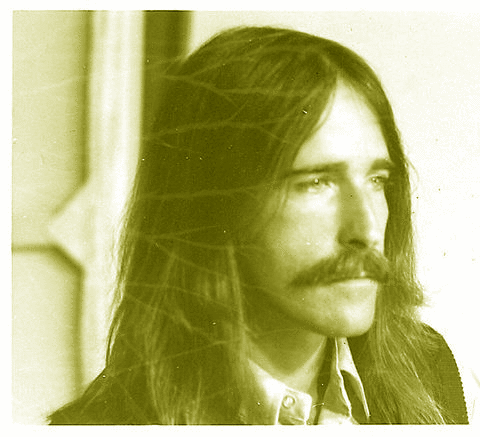
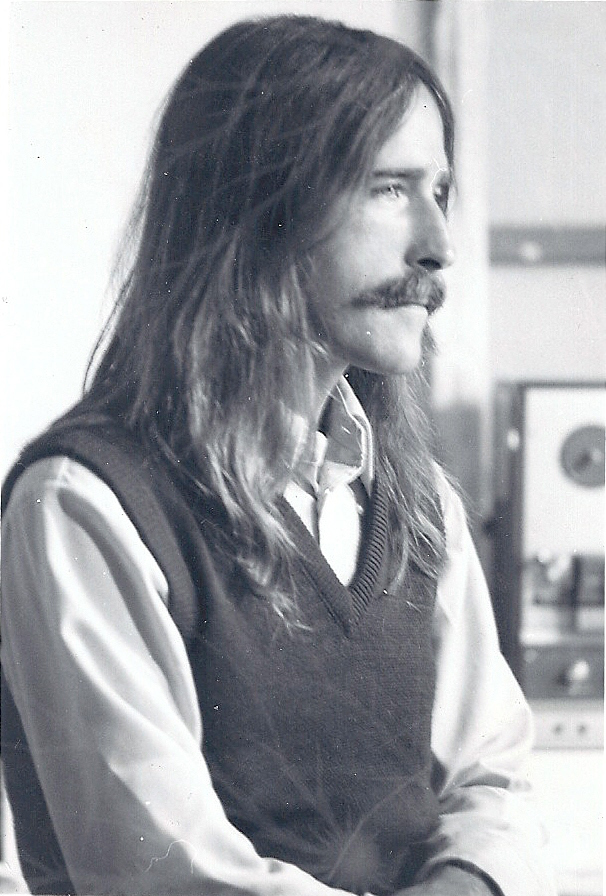
Abve are two photographs of me take by my famous sister in her studio. Christine Rosamond who was going to have me be her first adult male image. Then she got the photos back – and freaked when she saw the ENERGY around my head – that is clearer in the originals. It may originate at my Solar Plexus.
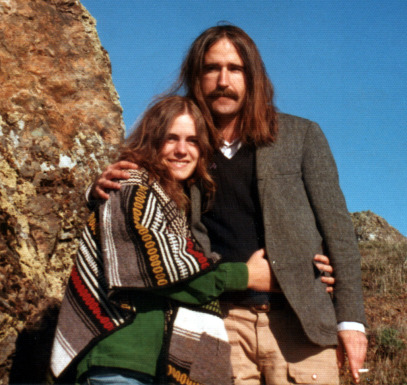
That is Gloria Ehlers and I on Mount Tamalpias. I have considered doing a Charlie Kirk – which I did five years ago. History is already proving that I am the only Man of God who stood in the way the Trumpite Insurrection! I debated ARMED MEN in a public square.
WHY WAS I NOT AFTAID?
John The Nazarite
In conclusion, how can we summarize Matthew and Micah’s contribution to a “theology of Bethlehem”? If Luke and the traditions he draws on use Bethlehem to focus on the linear continuity of the seed from Adam through David to Christ, Matthew and Micah use Bethlehem to testify to a deeper problem with the fallen constitution of that seed and the need for vertical divine intervention. The paradox is that both views are true: the Messiah is both of the seed of Eve through Mary yet also born from above through the Holy Spirit. John the Seer captures both aspects in his contradictory image: Jesus is both “the root and the descendant of David” (Revelation 22:16). Bethlehem is used to symbolize both.
Neither Absalom nor Samson dies in a dignified way. Absalom is stabbed by ten men who take his body and flung him into a large pit in the forest (II Sam. 18:17). Samson dies when the Philistine temple collapses on top of him and only after his brothers come to recover his corpse is he finally buried (Jud. 16:31).
SAMSON, ABSALOM, AND THE PITFALLS OF NEZIRUT
The sixth chapter of the book of Numbers details the laws of the Nazirite, i.e., the Israelite who forbids him or herself, through a voluntary vow, from consuming any alcoholic beverages or grape products, coming into contact with a human corpse, and cutting his or her hair. Whether the asceticism of the Nazirite constitutes a religious ideal, or an aberration thereof, is subject to dispute among the rabbinic commentaries. Concerning the mandatory sin-offering which the Nazirite must present upon the completion of his term, Rashi, citing the Talmud, explains: “[this offering is required] because he tormented himself over [withdrawal from] wine.”1 By contrast, Ramban posits that it is not the Nazirite’s abstinence, but indeed, his termination of that abstinence, which obligates him to sacrifice a sin-offering.2 Thus, we find two positions entirely at odds with each other: Rashi casts nezirut as the cause of sin, while Ramban views it as the bulwark against said sin.
Nor does our picture of nezirut grow any clearer when we turn from the section of text in which its laws are recorded to the Haftarah associated with that particular Torah portion of Naso. This Haftarah, Judges 13:2-25, tells of the birth of Samson, a notoriously complex character. For twenty years, Samson fights the Philistines on behalf of the Israelites. His formidable might is legendary, but his short temper, his erratic behaviour, and his uncurbed lust alienate many of his would-be supporters. Ultimately, Samson’s lack of discipline catches up with him; later in his life, the Israelite hero is seduced by a Philistine temptress named Delilah to whom he reveals that the secret of his strength lies in never cutting his hair. It is a tragic mistake. Upon discovering Samson’s secret, Delilah lulls him to sleep, chops off his locks, shackles him in chains and hands him over to his enemies. He kills himself and many Philistines in a final act of revenge while in captivity.
Few biblical personalities lead lives as colorful as Samson’s. Yet there is in fact one character to whom Samson bears uncanny resemblance: Absalom. Absalom is a son of King David who rebels against his father in an attempt to usurp the throne. Though not a Nazirite, Absalom let his hair grow long, and beyond this the events of his life parallel Samson in a number of significant ways. Comparing Samson and Absalom will help us better evaluate the legacy of Samson, and will in turn shed light on the institution of nezirut which he represents.
LONG HAIR
Both Samson and Absalom possess distinctively long hair. Absalom’s hair weighs two hundred shekels and he cuts it only once a year (II Sam. 14:25-26); Samson’s head had never been touched by a razor from the time I was in my mother’s womb (Jud. 16:17). Absalom’s hair represents the physical beauty which endears him to the people of Israel: like Absalom there was not a man in all Israel as beautiful… from the sole of his feet to the crown of his head (II Sam. 14:25); and Absalom stole the hearts of the men of Israel (II Sam. 15: 6). Samson’s hair, meanwhile, is associated with the superhuman strength which allows him to conquer the Philistines (Jud. 16:17). Yet for both men, their hair is also the cause of their eventual downfall. Absalom is captured and killed when his hair becomes entangled in an elm and his mule rides off without him, leaving him suspended between heaven and earth (II Sam. 18:9-15). Samson is captured and killed when Delilah cuts off his hair, thereby sapping him of his strength (Jud. 16:18-20).
ANGER, VIOLENCE AND REVENGE
Both Absalom and Samson grow angry often, and both bear grudges. Absalom refuses to speak with Amnon for a period of two years, and hates him for violating Tamar, his sister (II Sam. 13:22). He also spends two full years harboring hatred against Joab, David’s general, before attacking him (II Sam. 14:28-32). Samson, too, grows irritated easily. His wrath flares against the Philistines after they solve his riddle, so he kills them (Judges 14:19). Then, when he leaves his wife for a year without any explanation, her father assumes – correctly, it would seem – that he walked on out her because he found some reason to hate her (ibid. 15:2).
Additionally, both Absalom and Samson take the lives of their enemies through acts of revenge, and in similar circumstances. Both kill those responsible for harming a beloved woman. Absalom kills Amnon as punishment for the raping of Tamar (II Sam. 13:21-9). Samson kills a group of Philistine men after they execute his ex-wife (Jud. 15:6-7).
Finally, it is interesting to note that both characters burn the fields of their enemies – and both do so as a reaction to being denied access to a loved one. Absalom sets fire to the field of Joab, David’s general, because the latter refused to let him see his father (II Sam. 14:28-32). Likewise, Samson sets fire to the fields of the Philistines because his father-in-law, a Philistine, refused to let him see his wife (Jud. 15:1-5).
KEEPING COMPANY WITH THE ENEMY
Both Absalom and Samson spend a period of time living in the territory of Israel’s enemies. Absalom lives with the king of Geshur for three years (II Sam. 13:37-39) while Samson cohabits with women in the Philistine cities of Timnah (Jud. 14:1-6), Gaza (16:1), and Sorek (16:4). Moreover, both consort with the women of their political opponents – and both do so in full public display. Absalom pitches a tent on the roof of David’s palace and mocks the exiled king by consorting with his concubines in front of all of Israel (II Sam. 16:22). When Samson, for his part, consorts with a harlot in Gaza, the entire city finds out (Jud. 16:1-2).
OTHER POINTS OF COMPARISON
Both Absalom and Samson have a price on their head. Joab offers ten silver pieces and one belt to whoever kills Absalom (II Sam. 18:11). Likewise, each of the Philistine governors offers Delilah eleven-hundred pieces of silver in exchange for capturing Samson (Jud. 16:5).
Both characters place their trust in confidants who turn out to be double-agents. Absalom is betrayed by his adviser, Hushai the Arkhite, who is a spy of David’s (II Sam. 17:14-17). Likewise, Samson reveals the secret of his strength to Delilah, his consort, who has been paid by the Philistine governors to capture him (Jud. 16:16-20).
Both Absalom and Samson make apparently illogical decisions which the text’s narrative voice informs us were arranged by God. Absalom rejects the sound advice of his long-time adviser, Ahitophel, and adopts the unreasonable plan of Hushai the Arkhite – a spy of David’s – because the Lord had ordained to nullify the good advice of Ahitophel in order to bring calamity upon Absalom (II Sam. 17:14). Likewise, Samson falls in love with a Philistine girl because it was from the Lord – He was seeking a pretext against the Philistines (Jud. 14:4).
Both Absalom and Samson call out to God in their moment of distress. While in exile, Absalom vows that if the Lord shall return me to Jerusalem, I shall worship Him (II Sam. 15:9). While in captivity, Samson prays: O Lord God! Remember me and strengthen me just this one time, O God, and I will exact vengeance from the Philistines . . . (Jud.16:28).
The texts of both stories state explicitly that more men died indirectly in the course of conflict with Absalom and Samson than were killed directly by the hands of either character. Of the war between Absalom and David we read that the forest [where they fought] consumed more people than the sword (II Sam. 18:8). Samson’s enemies also died as a result of being submerged by their surroundings. Samson committed suicide by leaning on the pillars of the Philistine temple in which he was being held captive. As a result, the building collapsed on the governors and all the people inside it: the dead whom Samson killed as he died were more than he had killed in his lifetime (Jud. 16:30).
Neither Absalom nor Samson dies in a dignified way. Absalom is stabbed by ten men who take his body and flung him into a large pit in the forest (II Sam. 18:17). Samson dies when the Philistine temple collapses on top of him and only after his brothers come to recover his corpse is he finally buried (Jud. 16:31).
Both stories end with an abrupt transition from a mood of joy to one of grief. When Absalom dies, David’s loyalists celebrate the fact that the rebellion has been quashed. But when they see David grieving over his son, the salvation of that day was transformed into mourning for all the people (II Sam. 19:3). When Samson is captured, the Philistines throw a great party replete with public sacrifices, praises to the gods, dancing and merry-making (Jud. 16:23-5). But festivities give way to tragedy when Samson brings the temple crashing down, killing over three thousand Philistines (Jud. 16:27–30).
THE MEANING BEHIND THE PARALLELS
The pointed parallels between Samson and Absalom serve to highlight underlying issues common to both. These are issues that we are tempted to gloss over when we encounter the narrative of Samson in isolation, because Samson’s great contributions on behalf of the Israelite nation overshadow some of his more questionable conduct. Only when confronted with a character so similar to Samson – yet so much less forgivable – do we suddenly recognize the nefarious ends to which, under different circumstances, his behavior might have led.
Both Samson and Absalom are tremendously talented. But both get carried away on account of their talents, convincing themselves that they do not need to abide by the same rules and even appearance as the rest of society. That, in fact, is precisely the danger inherent in the endeavor of the Nazirite; as Dr. Erica Brown observes, one who adopts ritual strictures which the Torah does not legislate implies that the standards to which his friends and neighbors hold themselves are somehow beneath him.3 With time, he may begin to fancy himself as “holier-than-thou.”
In this vein, it is instructive to note that the Hebrew word for Nazirite, nazir, is related to the word nezer, “crown.” Properly performed, nezirut offers its practitioners the opportunity to lead their lives with an added measure of dignity, perhaps even of regality. Yet the practice can also lead to arrogance and self-importance, if appropriate perspective is not maintained. All too often, those who pride themselves on their ability to act beyond the letter of the law wind up believing that they are above it; they place themselves outside of the community as a way of asserting their position atop of it. In this sense, there is little difference between Samson, the Nazirite, and Absalom, the would-be-king — for both claim “crowns” that their contemporaries never offered them.
Our sages caution us that we should not seek to separate ourselves from the collective of which we are a part.4 One who, like the Nazirite, refuses to drink wine or to expose him or herself to a dead body, inevitably distances himself from his community. Suddenly, this person no longer shares in the joy or the grief of his neighbors: he cannot fully participate in their festive occasions and he cannot attend the funerals of their loved ones. In his quest to exalt himself, he isolates himself. Eventually, he may, like Samson and Absalom, push away even his own parents, and find that those whom he believed he could trust were never quite as close to him as he imagined.
To be sure, it is a worthy goal to cultivate individuality and to strive for personal excellence. The key is to do so in the context of a community. Only in this way can we use our gifts and talents as they were meant to be used: not to compete, but to collaborate; not to intimidate, but to inspire.
Bethlehem, the Other City of David
June 25, 2019 Articles
Related Articles
Nazareth – Why did Jesus have to Grow Up Here?
June 29, 2019
Is The God of the Bible the same as the God of the Quran?
January 20, 2016
By Dr. Philip Sumpter
Perhaps no other town is as strongly associated with Jesus in the Western Christian imagination as the “little town of Bethlehem,” and this despite the fact that Jesus had to be called a “Nazarene” (Matthew 2:23) and had to die in Jerusalem (Luke 13:33). The association is largely generated by the way the Western church celebrates Christmas, which has developed a variety of rituals, songs, and art forms to commemorate the mysterious events of Bethlehem. But what do we discover afresh if we lay aside popular piety for a moment—as valuable as it may be—, turn once again to the plain sense of Scripture, and ask ourselves, “Is the town of Bethlehem itself part of the message? And if so, what does it communicate?”?
As the following will show, a glance at the key texts indicates that Bethlehem does develop a distinctive theological profile within the Bible as a whole. Perhaps the best avenue into the material is to start with the two most famous Bethlehem texts, the birth narratives in Matthew (1:18—2:18) and Luke (2:1-21). There we will identify two distinct perspectives on the meaning of Bethlehem. We will then discover that these two perspectives have their roots in the Old Testament, which provides a broader context for understanding their significance. In the final step, we will attempt to synthesize these two perspectives in order to attain a more adequate, three-dimensional view on the meaning of Bethlehem.
Let us start with Luke and see where he takes us.
Luke: Bethlehem as the City of David
The emphasis of Luke’s opening chapters is on the Davidic lineage of Jesus. He stresses that Joseph is “of the house of David” (1:27); Joseph is forced to register in the Davidic town of Bethlehem because he is “of the house and lineage of David” (2:4). Indeed, Luke first identifies the city as “the city of David” before adding as an afterthought that its name is “Bethlehem” (2:4). It is thus clear that in Luke’s mind the primary significance of Bethlehem as the birthplace of Jesus is that it associates him with the town’s most famous inhabitant and Jesus’ most famous ancestor. But Jesus’ association with David through Bethlehem seems to be more than just a matter of genealogy. As one born “in the house of [God’s] servant David” (Luke 1:69), he did not actually have to be physically born in Bethlehem in order to make a dynastic claim to the Davidic throne (2 Samuel 7:13-14). After all, all of David’s sons after him were born in that other city of David, namely “Jerusalem,” the city that David conquered and in which he established his royal house (2 Samuel 5:7). So why couldn’t Jesus be born there? Why did God have to move a Roman emperor to force his subjects to register in their ancestral homes (Luke 2:1-3) so that Jesus could be born where the story of David began?
The answer is surely that part of Jesus’ mission was not just to ascend the Davidic throne but to relive and re-do what David did, albeit in greater perfection and universality of scope. In other words, Jesus had to retrace David’s steps from Bethlehem to Jerusalem, so that his kingdom in Jerusalem could be more perfectly established. The Davidic patterning of Jesus’ ministry can be seen when the two stories are compared: Both Davids, new and old, were men after God’s own heart (1 Samuel 13:14; 16:7), born in obscurity in Bethlehem (1 Samuel 16:11), associated with literal shepherds (David was a shepherd boy; Jesus was visited by shepherds [Luke 2:8-20]) yet called to be shepherds of God’s people; they were secretly anointed in Bethlehem to rule (1 Samuel 16:13), became victorious over Israel’s greatest enemy due to their trust in God (1 Samuel 18), and yet they faced constant conflict with their own people (1 Samuel 19—2 Samuel 1; 12—18); both were rejected, persecuted and exiled before returning to establishing a kingdom of peace, one that has its epicentre in Zion but which extends beyond the borders of Israel (2 Samuel 5—10; 19).
An initial answer to the question of the meaning of Bethlehem, then, is that it marks the place of Davidic beginnings, the opening scene of a narrative plot comprising humility and greatness, faith and victory, rejection and acceptance, a plot that finds its resolution in another city of David, Jerusalem, with the conclusion of redemption for all. Jesus’ birth there casts him as a second David.
Now Jesus’ Davidic identity does not exhaust all that Luke wishes to communicate about who Jesus is. There is another aspect, again presented in terms of genealogy, which casts Jesus not only as a son of David but also the son of a far more ancient ancestor, namely “Adam, the son of God” (3:8).
This connection is made at the end of a long genealogy that spans the entirety of human history, bringing us right back to its roots in the Garden of Eden. And by bringing us to the roots of human history, it also brings us to the root problem of that, humanity’s failure to truly be that Adamic “son of God.” In this connection, Jesus did not just come to do what David did (but better), as a second Adam he came to do what Adam ought to have done but failed.
A review of the Old Testament story from Adam to David (Genesis—Kings/Chronicles) reveals the true nature of the problem and the kind of solution sought by God. Yet at this point we might ask whether we run the risk of leaving our theme behind us, for what does Adam have to do with Bethlehem? Interestingly, quite a lot. For in two sets of stories set at a critical junction of that Old Testament narrative, Bethlehem becomes a stage upon which both the problem and the solution of Adam’s condition are enacted with paradigmatic clarity. So let retrace the story from Eden to Bethlehem:
In Eden we catch a glimpse of the purpose of creation: communion in paradise between God and the human creatures created in his “image” (Genesis 1:26; 3:8). As his creatures they are to love, trust, and depend on him for all things. But something goes wrong: the relationship is undermined when Adam attempts to switch roles and himself become “like God” (3:5) by eating from the tree that promises divine “wisdom” (2:17; 3:22; see Proverbs 8); yet as a creature he cannot take on this role, and so his misplaced wisdom becomes a tool for destruction and alienation. The only solution is to practice his wisdom as a creature, and that means in an attitude grounded in the “fear of the LORD” (Proverbs 1:7).
Rather than destroying his children, God makes provision for them by promising the coming of new offspring, the “seed” of Eve (3:15) created in the likeness of Adam (5:3), a humanity that would reenact the divine-human relationship as it should have been, thereby restoring Adam’s likeness to God (5:1) and thus destroying his satanic accuser (Job 1:9; Genesis 3:15). This new seed is the hope of both humanity and the cosmos.
The ensuing drama of humanity and, in more concentrated form, that of Israel can be read as the story of the tortuous struggle for this “seed” to appear on the stage of history in the face of a nowinherent human impulse to fear anything but the LORD, with disastrous consequences (Genesis 20:11). Generations come and go but their behaviour consistently brings divine judgement followed by God’s merciful granting of new chances (Genesis 6—11). Through the seed of Abraham a particular slice of humanity is carved out, given the task to truly know God through his word and deed and thus respond to him the way that is appropriate (Genesis 12—Deuteronomy). The early career of this new covenant community had its ups (Joshua) and its downs (Judges), but the overall trajectory was so far down that a prophet could summarize the behaviour of these first generations with the following words: “Everyone did what was right in his own eyes” (Judges 21:25).
We here come to that critical juncture in Israel’s history, and thus a step closer to Bethlehem. Given Israel’s failure, a new act of divine intervention was necessary. Israel needed a king (Judges 21:25), someone who would represent the people (as Israel should have represented humanity) and embody the faith and obedience needed to overcome their alienation from God, bringing them back into the fullness of his presence. During this period of the “judges,” Bethlehem is the place where both the failure of Israel and its future hope is dramatized.
In terms of failure, Bethlehem is one of a number of key regions chosen to illustrate in paradigmatic manner the depravity of Israel and thus its distance from becoming the true “seed” of Eve. These stories are bundled together at the end of the book of Judges (17—21). In one, Bethlehem is home to a renegade Levite, a member of an elite tribe charged with teaching and guiding Israel in the truth. He establishes an idolatrous cult in Ephraim and then joins a band of murderous thugs (the tribe of Dan) in order to start a new colony by wiping out an innocent city (Judges 17—18). In another, Bethlehem is the home to a concubine belonging to a man from Ephraim. She flees to her father’s house. After consenting to return, her master delivers her to a gang of rapists from Benjamin who abuse her to death (Judges 19). This triggers a civil war in which Benjamin is almost wiped out, necessitating the kidnapping of more women to stop the tribe becoming extinct (20 — 21). Here Bethlehem provides a snapshot of the “kingdom of Adam” when Adam himself takes on the role of God.
In terms of hope, during this same period (Ruth 1:1) Bethlehem also sets the stage for the emergence of an alternative kingdom—one headed by a second Adam whose life conforms more to his true identity as a creature in the image of God. This development is found in the book of Ruth, a short novella telling a heart-warming story of tragedy and loss reversed by divine providence at work through the loyalty, boldness, and nobility of a Moabite woman, Ruth, and a Bethlehemite farmer, Boaz. In this narrative we see how the divine virtues of Ruth and Boaz redeem the life of the widow Naomi. But their actions have a redemptive significance that goes beyond the life of this one widow. This is made clear by a genealogy that is tacked on to the end of this story (4:18-22). Here we see that the fruit of their marriage union will issue into a future seed who will display the same moral characteristics and thus become God’s vehicle for establishing a kingdom more in line with one original envisioned in the Garden of Eden. This future seed, is of course, David, Bethlehem’s most famous son until the birth of Christ.
But if David is the redeemer, why the prophetic hope that a new David will have to arise? The rest of the history of Israel from the middle of David’s career until the exile and beyond (see the books of Samuel; Kings) make the reason clear: though Israel’s greatest role model (see especially the Psalms and Chronicles), David was not ultimately above grasping at god-like power and usurping the throne of Israel’s true king (the story with Bathsheba is paradigmatic for this: 2 Samuel 11). Almost all of his sons did worse (see the books of Kings and virtually all the prophets). Israel’s prophets saw only one solution: another David would have to arise, one that would truly enact the drama of Eve’s seed and thus as a true Adam more perfectly establish the kingdom of God (e.g. Isaiah 9:7; Jeremiah 30:9; 33:15; Ezekiel 34:23-24).
This brings us back to Bethlehem in the gospel of Luke. Once again a critical juncture in the history of Israel and the world has been reached. The seed of Eve is still waiting to be born and do his work. Bethlehem’s previous inhabitants made a good start, though ultimately failed. In Jesus, the story will be re-enacted and brought to perfection.
Matthew: Bethlehem as the other City of David
There is one last twist to this tale of the emergence of a Seed in Bethlehem. If Luke and the Old Testament texts discussed above highlight the continuity of the seed from Adam and David, Matthew and two key Old Testament prophecies point out the need for discontinuity. In a paradox difficult to grasp, the future redeemer of Israel and the world must be from David but yet, at the same time, not of him… This becomes clearer if we move from prophecy to fulfilment. In the process we will see that the image of the town of Bethlehem is central to the way the message is rendered.
We noted above that the Bible knows of two cities of David: Bethlehem and Jerusalem. The one marks the beginning of David’s career, the latter its climax and resolution. David of Bethlehem saved his people and consolidated his empire by creating Jerusalem as the centre from which he, ideally as God’s vehicle, would rule a kingdom of peace. Jerusalem thus became the source of Israel’s blessings and greatest joy as well as object of greatest hope (e.g. Psalms 68; 122; 128; 147).
But what happens when Jerusalem’s Davidic rulers chronically fail to be what they need to be so that Jerusalem can become what it ought to? What if the problem is located in the genes of the genealogy itself, in the Davidic and Adamic bloodline? We’ve already noted the prophetic promise of a new David to rule on the throne, one different in kind from all the Davids before, one who will have a heart of flesh (Ezekiel 11:19), upon which is written the law of God (Jeremiah 31:31). Two unique prophecies push this element of difference further, making clear that the one to come will have a source both somehow within yet also without David.
The first announcement is made by Isaiah, who talks of God’s complete destruction of the Davidic line. It will be like a tree that has been felled and then burnt for good measure; all that remains is a stump (6:13). And then, miraculously, hope nevertheless sprouts:
There shall come forth a shoot from the stump of Jesse,
and a branch from his roots shall bear fruit (Isaiah 11:1).
At first glance this may look like a simple reaffirmation of the Davidic covenant, but notice how Isaiah interrupts the linear genealogy of David –> Messiah that the Davidic covenant would lead us to expect (2 Samuel 7:12). Jesse is the father of David, he precedes him genealogically. This is one metaphorical way of saying that the Messianic “branch” will have its source in the historical David but it will also have its source beyond him – or to put it differently, as our next text does, “his coming forth is from of old, from ancient days” (Micah 5:2; English version [Hebrew 5:1]).
The prophet Micah develops a similar idea using different imagery, the imagery of David’s two cities: Jerusalem and Bethlehem. The logic of their relationship is that of the role they play in David’s career: Bethlehem is the source of the dynasty, Jerusalem its final home. Jerusalem is the city of Israel’s salvation; Bethlehem is the city of the means to get there. In 4:8—5:6 Micah picks up this configuration and re-applies it in his own day, a time when Jerusalem has already long had a Davidic king on its throne but desperately needs a new one from a different stock. His message is packed into a series of juxtaposed messages that, when read together, generate a pattern. This pattern can be summarized as follows:
- The focus is the salvation of Jerusalem (4:8, 10b, 12-13), which matters because Jerusalem is the epicentre of the salvation of “the ends of the earth” (5:4).
- As Micah speaks, however, Jerusalem is in the process of being judged: “Writhe and groan, O daughter of Zion, … you shall go to Babylon” (4:10). God’s instrument of judgement are “many nations” which he has brought upon her to lay “siege against” her (4:11; 5:1); Jerusalem’s current Davidic king has been humiliated and rejected (“with a rod they strike the judge of Israel on the cheek,” 5:1; see 2 Kings 25:4-7). The cause is the rebellion against God of both king and nation.
- Yet there is hope. In a mysterious way, Jerusalem’s destruction is actually for its good. The evil empires “do not understand [God’s] plan” (4:12); they “assemble against” her to “defile” her, but through the destruction they wreak they both judge themselves (4:12) and pave the way for the redemption of the city of David (4:13). And so God can address Jerusalem directly with the promise:
“to you shall it come,
the former dominion shall come,
kingship for the daughter of Jerusalem” (4:8).
What was lost shall be restored. But where shall it be restored from? - The kingship cannot come from the current, humiliated dynasty (5:1) which has been felled like a tree (Isaiah 6:13; see Jeremiah 22:30). Instead, God must go back behind it in order to make a new start. This new king’s source will be “from of old, from ancient days” (5:2), a primordial beginning not symbolized by ancestry, as with Jesse in Isaiah’s prophecy, but by social geography: “Bethlehem Ephrathah” (5:2;), the place of David’s roots from which now a different David will come to replace the current David sitting on the throne.
- This new shepherd will recapitulate a central quality of the original David, and indeed his grandparents Ruth and Boaz, but which was forgotten by his descendants: he will be weak and dependent on God (1 Samuel 16:7, 11; see Genesis 3:5). This quality is symbolized by “Bethlehem Ephrathah” itself, “Ephrathah” referring to the Davidic clan of the Ephrathites, which is “too little to be among the clans of Judah” (5:2). Like other leaders from weak clans chosen by God in the past (Gideon [Judges 6:15]; Saul [1 Samuel 9:21]), this new David will be a true “ruler in Israel” (5:2), precisely because he knows where his true strength lies: outside himself and within his Creator. If we set this image within Biblical story outlined above, we can say that this new David will re-enact the drama of Adam in Eden and succeed in not “grasping” at “equality with God” (Philippians 2:6).
How is this particular version of the Messianic promise taken up in the Gospel of Matthew? In the first instance we can simply note that Micah 5:2 is explicitly cited in Matthew 2:6 as an explanation for Jesus’ birth in Bethlehem (the changes in wording do not change the message). The immediate function of the prophecy is to provide straightforward evidence of the fulfilment of an ancient promise: the Christ will be born in “Bethlehem of Judea, for so it is written by the prophet …” (2:5). As it was predicted, so it came to pass. At first glance, there seems to be nothing more to it, no symbolism or deeper layers of meaning, just a piece of predicted geography that could be used hundreds of years later by local “Biblical scholars” to guide foreign pilgrims to the Messiah’s expected birthplace.
But when we look at the structure of the birth narrative as a whole in light of the broader context of the prophetic citation (Micah 4:8—5:9), it is difficult to avoid the conclusion that something more is going on than just proof-from-prophecy: as in Micah, the significance of Bethlehem as the place of Jesus’ birth only comes to light through its unique relationship to that other city of David, Jerusalem. In short, Jesus’ birth in Bethlehem not only marks him as the predicted Messiah, as a second or new David, it marks him as an alternative David, one whose mission is to enact judgement on the current ruling dynasty and replace it with something entirely new. Let us unpack the correlations:
For start, as with Micah (4:8), the initial focus of the Christmas story is not on Bethlehem but on Jerusalem. This is where the magi from the East first arrive, and the reason they choose to go to Jerusalem is that the star they had seen portended the birth of a Jewish king. Where else does one
go than Jerusalem if one is looking for the “king of the Jews”? The search for the true king of Jerusalem thus sets the tone for the rest of the narrative.
Upon arrival in this city we encounter another Micah motif: the rebellious nature of its inhabitants. The magi do indeed meet a king of the Jews, “Herod the king” (2:1), but as will become clear in his slaughter of the innocents in order to remain in power (2:16-18), this evil figure is far removed from the figure these Gentiles wished to submit to. And it is not just the king who is the problem, “all Jerusalem” is troubled with him (2:3), including the chief priests and the scribes (2:4), who know their Bible’s well enough to locate the birthplace of their true king yet show no interest in going to see him.
Again, Jesus shares the same context that occasioned Micah’s prophecy: not only is Jerusalem currently in rebellion against God, God’s judgement of the nation is already underway. The occupiers are now the Romans rather than the Assyrians (Micah 5:5) or Babylonians (4:10), but the cause and the effect are the same. Already “the axe is laid to the root” (Matthew 3:10), the final destruction is yet to come (Matthew 24). And yet, of course, there is also hope for Jerusalem, for God has provided her with a true king who will finally bring back “the former dominion… , kingship for Daughter Jerusalem” (Micah 4:8). Yet this king is unlike the current pretender to the Davidic throne. He is of Davidic stock (Matthew 1; Luke 3), yet at the same time his roots go way back before David, they are “from ancient days” (Micah 5:2), indeed they are also located in God himself (Matthew 1:18, 20). And so for this reason the magi cannot remain content with the current order reigning in Jerusalem, they need to go to Bethlehem, the place where the whole history once began and is now about to begin anew, albeit in a different key.
This brings us to a final observation: the character of this new son of David, son of Adam, yet also son of God. We have noted above that since Adam’s attempt to “be like God” (Genesis 3:5), God has sought for a human response that lets God be God. With this new beginning in Bethlehem, he gets what he was looking for. Jesus Christ, precisely as one who was “in the form of God,” “did not count equality with God a thing to be grasped, but emptied himself, by taking the form of a servant” (Philippians 2:6-7). It is through this weakness that he fulfils the promise of a seed to Eve and thus earns to right to bear the name to which every knee will bow (Philippians 2:10). The whole of Matthew’s gospel provides a vivid illustration of what this embodiment looks like in the life of Jesus.
In conclusion, how can we summarize Matthew and Micah’s contribution to a “theology of Bethlehem”? If Luke and the traditions he draws on use Bethlehem to focus on the linear continuity of the seed from Adam through David to Christ, Matthew and Micah use Bethlehem to testify to a deeper problem with the fallen constitution of that seed and the need for vertical divine intervention. The paradox is that both views are true: the Messiah is both of the seed of Eve through Mary yet also born from above through the Holy Spirit. John the Seer captures both aspects in his contradictory image: Jesus is both “the root and the descendant of David” (Revelation 22:16). Bethlehem is used to symbolize both.
The path to Jerusalem still passes through Bethlehem
A final question may be asked: what does this have to do with us today? As is often the case in Biblical theology, the answer as to do with the “already” and the “not-yet.”
In one sense, the Christ of Bethlehem has already completed his entry into Jerusalem, riding on the back of a donkey, where he was greeted with “hosannas!” by the inhabitants (Matthew 21:1-11; Mark 11:1-10; Luke 19:29-38; John 12:12-15). Here he waged his decisive battle to claim the throne
of the city and thus the keys of the kingdom. His enemy, however, was not the flesh and blood enemy of Jerusalem’s Jewish inhabitants and Gentile occupiers but the enemy of all humanity, the “ancient serpent, who is called the devil and Satan, the deceiver of the whole world” (Revelation
12:9; Genesis 3:1). His battle tactic was to take Jerusalem’s punishment as prophesied by Micah upon himself: it was his cheek that was struck and humiliated; he was the one driven out of the city and caused to descend to his spiritual Babylon. And just as Micah had predicted regarding Jerusalem, this act of defilement of Christ by his enemies turned out to be the means of their own redemption (Micah 4:11-12; Isaiah 53). Only in this way could the gates of Jerusalem be opened for all to enter and find peace.
And yet the pilgrimage of King Jesus’ people to his city has not yet been completed. We are still on the way, waiting to cross the threshold of the heavenly Zion to be fully re-united there with our Lord (Hebrews 12:22; Revelation 21—22). When we arrive, the entry requirements will be the same as those imposed upon Adam and Eve in the garden: do not grasp at equality with God; reflect his image as his creature and entrust your life to him. Or, if you cannot do this (Romans 3:23!), make sure you pass through Bethlehem first and meet the one who did this in your stead. From there he will lead us to his new city, open the gates, and take us through (Psalm 24).
We are down to the final 4 weeks of the semester. It’s hard for me to believe that in a few weeks, my stay in Jerusalem will be over. While I look forward to getting home, part of me wants to add a few more weeks to the stay—or at least slow down the clock. There are so many things I want to do and see that I ‘ve not been able to get to. I am doing my best to soak in as much as I can in the short time remaining.
This is the time in the semester when writing papers becomes the priority. Midterms are completed and Finals are a bit too far off to worry about (except Hebrew. We worry about Hebrew every day). We’ve had a brief break in classes due to the Physical Settings students being on their field study trip to Jordan. So, I’ve taken the time to get research done for my two remaining papers.
One of my classes examines how the early church fathers (pre-325 CE) interpreted the Old Testament compared to how the Jewish rabbis of the same period looked at it. What we are finding is that there are far more similarities than most people would think. It’s also been interesting to see how the “western” church from Rome distanced itself from Jewish thought more rapidly than the “eastern” church did. This was due in large part to the Greco-Roman influences of the culture and the fact that they were not interacting with Jews on a regular basis, like those in the eastern church were. I’ve started to develop a greater respect and appreciation for our Eastern Orthodox brothers and sisters.
For my research paper, I am examining how the early church fathers interpreted the passage in Numbers 6 that detailed the Nazirite vow as compared to how the rabbis of the time interpreted it. For those of you that are not asleep at this point, I am probably dangerously close to losing your interest altogether. I know, it’s a pretty nerdy topic. I’ll admit, the whole Nazirite vow thing is pretty weird. What’s interesting, is that the rabbis seem to think it’s a bit odd too.
What is a Nazirite?
The requirements of a Nazirite in Numbers 6 are pretty straightforward:
Speak to the Israelites and say to them: When either men or women make a special vow, the vow of a nazirite, to separate themselves to the LORD, they shall separate themselves from wine and strong drink; they shall drink no wine vinegar or other vinegar, and shall not drink any grape juice or eat grapes, fresh or dried. All their days as nazirites they shall eat nothing that is produced by the grapevine, not even the seeds or the skins.
All the days of their nazirite vow no razor shall come upon the head; until the time is completed for which they separate themselves to the LORD, they shall be holy; they shall let the locks of the head grow long.
All the days that they separate themselves to the LORD they shall not go near a corpse. Even if their father or mother, brother or sister, should die, they may not defile themselves; because their consecration to God is upon the head. All their days as nazirites they are holy to the LORD. (Num. 6:2-8, NRSV)
There are only a few Nazirites mentioned in the Bible. Samuel and John the Baptist were lifelong Nazirites. The rabbis taught that David’s son, Absalom, was also a Nazirite. Contrary to what some claim, Jesus was not a Nazirite. He was from the town of Nazareth and was therefore called a Nazarene, not a Nazirite. Yet the most famous Nazirite, the one that everyone knows about is The Myth. The Man. The Legend. Samson!
Anyone that has ever set foot in a Sunday school or Vacation Bible School has heard the story of Samson with his incredible strength and flowing locks of hair. We’ve made him into a Biblical superhero. He goes around killing Philistines and falling in love with the wrong women. His feats of strength were the stuff of legend. I’ll admit, it’s a great way to keep the kid’s attention—especially if you have a long-winded preacher. Unfortunately, Samson was not a superhero. His time as a judge was a disaster. He failed in every respect to live into the calling God had given him. If you want to read about this, I highly recommend my friend, Brad Gray’s book: Make Your Mark. He does a great job examining Samson’s life in detail and uncovering meaning for our lives today.
In Hebrew, the word used for these people is “Nazir.” It comes from the Hebrew root nzr, which means to separate or abstain. As seen from the text above, there are some restrictions required of people that take this vow:
- No wine or anything from the vine
- no vinegar, grapes, raisins, grape juice, grape jelly, grape pop tarts, grape chewing gum, etc..
- Don’t drink it, eat it, touch it or even get close to it.
- Don’t cut your hair.
- Stay away from dead bodies—even if it’s a parent or sibling.
Weird.
Yeah, apparently the rabbis thought it was weird too. In good rabbinic fashion, they began to examine this passage and ask questions. One question they asked was: ‘why does this passage show up in the Bible where it does?’ In other words, what is going on before and after it in the Text? Well, the section before it deals with regulations for people that have broken faith with one another. This included doing harm to someone. Just before it, there is a whole section on dealing with accusations of adultery—specifically a wife accused of adultery. Immediately after the section on Nazirites was where God instructed Aaron (the High Priest) how to bless the people (The LORD bless you and keep you. The LORD make His face to shine upon you…).
So, why is the Nazirite vow sandwiched between these two passages? For the rabbis, everything in scripture was placed where it was with Divine intentionality. If God put these passages next to each other, then it must be for a specific reason. He must be communicating something “in the white space” between the Text. What they began to tease out the Text was actually pretty interesting.
Dedicated to God
Not too long after the Israelites left Egypt, God told Moses to set apart the entire tribe of Levi. They were not to be given an allotment of land. They were to serve as the priests. Moses’ brother Aaron and his male descendants would serve as the High Priest. In fact, the book of Joshua says, “but to the tribe of Levi Moses gave no inheritance; the LORD God of Israel is their inheritance” (Josh. 13:33). In effect, this entire tribe had taken a vow to the LORD. This vow came with certain obligations and restrictions as well as perks. Nobody else could serve in a priestly capacity.
Well, in the interest of being inclusive, suppose someone that wasn’t a Levite wanted to devote themselves to God? They could not be a priest, but what about devoting themselves in other ways? According to the rabbis, that was the purpose of the Nazirite vow. It was the means by which a non-Levite could voluntarily devote themselves to God. The rabbis came to this understanding based upon what immediately followed the Nazirite instructions. Numbers 6:23 says, “Thus you shall bless the Israelites.” In context, this was taken from God’s instructions to Aaron about giving the priestly blessing over Israel. Yet, because of its close proximity to the Nazirite text, they made the connection that a person who voluntarily devoted himself to God was a blessing to Israel.
So why all the weird restrictions? Well, the rabbis taught that the priests were to abstain from wine before giving the Priestly Blessing so as to ensure that they didn’t mess it up. Also, they believed that wine led to lowered inhibitions that could enable someone to fall into adultery or other sinful behavior (hence the passage just before the Nazirite text about adultery). Apparently, the rabbis thought long hair was unattractive, so by not cutting their hair a Nazirite became repulsive, thereby reducing their chances to fall prey to the lust of the flesh.
What’s really interesting is that the Nazirite restrictions regarding dead bodies were also required for one other person: the High Priest. Nobody else had those restrictions about dead bodies. Sure, if you came into contact with a dead body, there were required purification rituals. But to forbid someone from even attending to the funeral of their parent was only given twice in scripture: for the Nazirite and for the High Priest.
Why Have Nazirites?
In light of this, I think it shows something really special about this passage. Devotion and service to God was not limited to the priestly tribe of Levi. Anyone (man, woman, slave or free) with the desire, could devote themselves to God. As the rabbis interpreted it, God had a special place in his heart for anyone who voluntarily devoted themselves to His service. He thought so much of their devotion that in certain respects he put them on the same level as the High Priest.
What I think is really cool about this is that God didn’t limit service to him only to the defined priestly class. He set up a mechanism whereby anyone with the desire could devote themselves. He seems to indicate that people who took on this responsibility—even for a short period of time—were as highly esteemed as if they were the High Priest of Israel. The requirements of this vow were designed to be a sign and a blessing to all the people of Israel.
So, what about Samson? He was set apart as a Nazirite from before his birth. He really didn’t have a choice and he failed pretty miserably. It seems that the entire account of his life is about him breaking his vow over and over again. Well, the rabbis had an answer for this too. Here is what they said:
The Holy One, blessed be He, foresaw that Samson would go wherever his eyes led him, and He therefore admonished him to be a nazirite; that he should not drink wine, because wine leads to lewdness. Now, if while he was a nazirite he went wherever his eyes directed him, surely, had he been drinking, there would have never been any remedy for him at all, by reason of his headstrong pursuit after lewdness. (Numbers Rabbah X.5)
In other words, if you think Samson was not a good Nazirite, imagine what sort of person he would have been if he wasn’t one! God’s choice to make him a Nazirite was to protect him from doing even more harm to himself and Israel. So, in effect, Samson and all of Israel was blessed by the fact that he was a terrible a Nazirite.
You are free to agree or disagree with that assessment—the rabbis would certainly encourage the debate. But, it makes me wonder how God might place things in our lives—whether they be obstacles, hardships, handicaps or other limitations purely for our own protection and to enable us to bless others. Perhaps without these restrictions we would not live into the calling that God has for us.
I wonder if this is similar to what Paul discussed in 2 Corinthians 12. He writes about having a “thorn in the flesh” that tormented him. He seemed view this as an unproductive limitation on his ministry. He said he prayed three times for God to remove it. The answer to his prayer? “My grace is sufficient for you, for power is made perfect in weakness” (2Cor. 12:9).
I’m not sure I’ve fully processed the practical and theological implications of that. I don’t think that all the bad things that happen to us are God’s will. I don’t think that holds water theologically. Yet, I do take comfort in the reminder that God has our best interests at heart—even when life seems to throw a bunch of “junk” at us.
Are there limitations/restrictions that God has put in your life that have ultimately resulted in you being a better person for His greater glory? I’m curious to hear your thoughts on this. I, for one, am still trying to figure it out.
 Rosamond Press
Leave a comment