I cut off a friend who accused me of being a abusive GASLIGHTER. Wait till she reads your GASLIGHTING – Cian. My Templars are not CRAP. They are – MY BOOK!
Rosemary told me her son Mark was encouraging Christine Benton not to pay her taxes. What aa great story there would be about two abused brother forced to be CHILD LABORORS for a child rapper and tax evader – and rise above to do amazing things! I couldn’t BE TRUTED when Christine was alive. This is why she put me out of the loop. Now add her achievements that were trashed by the biographers Mark Presco hired, to create a EVIL FOG that would life…..WITH HIS DEATH – AND DREWS. How abut Vicki’s death. She was an accountant. Her and Ken Prather – were TAX EVADERS!
CRIMONALS
John Presco
Rougemont Templars Owned Holy Shroud
I hereby order all Knight Templars to protect the Free Press everywhere!
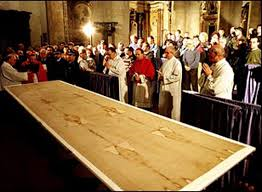
Rougemont Family Templars Worshipped at Fontenotte and owned the Shroud of Turin.
The First Preceptor of La Fontenotte
My mother’s maiden name has been traced to Rougemont who appear to have ties to the Windsors, thus much of the royalty of Europe. I am sharing this discovery with Robert Sinclair, and Ben Toney, who may be related to the Robert de Ros who lived in Belvoir castle that belonged to the House of Toney.
Because the world is going mad, and in order to strengthen Britain and recreated a European Union co-founded by Denis de Rougemont, I revive the order of Knight Templars, whom the Sinclairs are now tied via Anges de Toney.
Alexandre, and Francois de Rougemont are buried with Knight Templars as Til-Chatel. Gui 1er de Rougemont married Etinnette de Ruffey. Here are the Seigneur de Til-Chatel. Guy 2 de Rougemont Thibaut V de Rougemont 1306-1333 Guillaume de Rougemont Humbert de Rougemont married Alix Neufchatel Aymon 2 (Aimon) de Rougemont married Guillemette de Ray daughter of Othon de La Roche, owner of the Shroud of Turin. Thibaut V1 de Rougemont father of Catherine de Rougemont who married Jean de Neufchatel the son of Margarita de Castro e Souza from who the Windsors descend.
The fifth son of Guy II of Rougemont and Guillemette de Coublant, Etienne de Rougemont was lord of Pichanges. In December 1265, having recalled the donations made to the temple by Aimon IV and Guy II, he gave to the Templars, with the agreement of his elder brother, Jean, Lord of Rougemont, the right of pasturage on his lands of Pichanges and Spoy. He died in 1271 and was buried before the altar in the chapel of Fontenotte and conferring his Templar rank of Preceptor (priest-templar).
After the death of Etienne, Jean de Til-Chatel had to confirm in 1274 the rights of the Templars over Fontenotte. In 1278 his younger brother, Guy, who had been curate of Til-Chatel in 1242 then archdeacon of Le Tonnerois in the church of Langres, succeeded him at the head of the lordship of Pichanges.
In May, 1274, Jean de Rougemont, Marshal of Burgundy legally recorded “for the repose of his soul and that of his elder brother, Etienne de Rougemont, who lies in the cemetery of the said Temple, and of the souls of his forebears”, granted to Henri de Dole, Commander of the House of Fontenotte:”
I have found a Hughes/Hue de Rougemont who a “grand maître du Temple”in two accounts, and the maître du Temple of Burgundy in another.This Hugues appears to be related to Humbert de Villersexel who wasthe Lord of Rougemont and Til-Chatel. Is this the Hughes that preceeded Bernard de Tramelay/Dramelay? Did this Hugues come after Bernard. In the Fromond/Dramelay genealogy we find a line of De La Roches, and thus the Rougemonts are kin to another Templar Grand Master, Amaury de La Roche.
“Bernard de Tramelay (died August 16, 1153) was the fourth Grand
Master of the Knights Templar. He was born in the castle of Tramelay near Saint-Claude in the Jura. According to Du Cange, he succeeded a certain Hugues as Master of the Temple, although this Hugues is otherwise unknown. He was elected Grand Master in June of 1151, after the abdication of Everard des Barres, who had returned to France following the Second Crusade.et”
“Hugues de Rougemont, grand maître du Temple””and Hugues de Rougemont, large main of the Temple”
Humbert de Rougemont owned the Shroud of Turin. Humbert is a Hue name and is kin to at least two Templar Grandmasters. Humbert was also the Lord of Villersexel. He married the great granddaughter Geoffrey de Charnay a Templar Grand Master. This is to say this Knights Templar family, and thus the Knights Templars, owned and protected the Shroud of Turin that they may have seized at Ascalon along with a great treasure which would account for the large number of castle owned by this very large Templar family. Never has such a constellation of Knights Templars gathered in one place, under one roof as they did come Sunday in Fontenotte. Amaury and Othon de La Roche brought Jacque de Molay into the Templar Order, the last Grand Master. Amaury disappears from history, it alleged he was in keeping of the Templar Treasure. Did he go to Holland where the Roesmont live, they members of the Swan Brethren and Masters of Janskirk church?
“The legend says that it manages to escape and disparaitre definitively at the same time as the Treasury and the secrecies of Templiers.”
My search for my ancestor, Sergeant Rougemont, has led me to a Templar family that was invisible. Sergeant was a Templar rank, a title for a mayor of the Sungau, and a Seneschal. I have no direct evident Sergeant Rougemont was kin to these Lords of Rougemont – as yet!
“I have three separate pages for Rosamond families we believe are descended from a Sergeant Rosamond, a Huguenot who left France in 1685 at the Revocation of the Edict of Nantes, and fought in the Battle of the Boyne in Ireland in 1689. We have not yet been able to definitively tie these three families together, but each family was independently aware of the story of Sergeant Rosamond and claimed him as an ancestor. We are hoping that as research continues we will find records showing us the relationship between our families.”
(Images: Montfort Castle home to Humbert and Margaret de Charny/Rougemont)”
June 1418: The widowed Margaret de Charny marries Humbert of Villersexel, Count de la Roche, Lord of St.Hippolyte sur Doubs.”Humbert de Villersexel is Humbert de Rougemont.
“1208 – Pons de la Roche presents to Amadeus de Tramelay, Archbishop of Besançon, the Shroud that his son Othon de la Roche, Latin Duke of Athens, had sent him from Constantinople.”Aymon 2 de Rougemont was the Seigneur of Villersexel. He married Guillemette de Ray, the daughter of Othon 2 de la Roche.Othon 1 de la Roche (-before 1161) had a son named Pons de la Roche the Seigneur de Ray. He first married Marguerite Tilchatel who may be a Rougemont who came to own Til-Chatel. Guillaume, Gui, Humbert4, Gui 2, and Thibaut 6 were Seigneurs of Til-Chatel. Othon then married Pontia de Rougemont/de Dramelay the daughter of Thiebaud 2 de Rougemont. They has three children. Humbert, Thiebaud, and Sibylle de la Roche. This union makes the Shroud the Rougemont family icon, or relic.Jon PrescoCopyright 2006
Amaury de La Roche fut grand prieur puis maître de la Maison du Temple de Paris jusqu’en 1264, puis élu Grand maître de l’ordre du Temple de 1265 à 1271[1
Amaury of the Rock was large host prior then of the Temple of Paris until 1264, then elected Grand Master of the order of the Temple of 1265 to 1271[1]
“In 1260, Jean de Chalon gives his son ainé Hughes his strongholdsand castles.””in liaison with Jean de Chalon, count de Bourgogne, Amé, lord deColigny and of Andelot and Hugues de Rougemont, large main of theTemple, by its seal the authenticity gave to a famous donation. Itwas with that which Manassès de Coligny, brother of Amé, did with theorder of the Temple, while being made there receive knight of thesuzerainty of Montagna, BroissiaSeries B of the AD Besancon – 467 B – Montagna-the-Templar.Manasses Coligny recognizes, in the presence of Jean Chalon, AméColigny, Point, prior of Gigny, and Hue de Rougemont, master of theTemple in Burgundy, having resumed on the order of the Temple landsMontagna , St. Fontaine and dependencies. An 1227(This charter offers the oldest text of the novel archives Doubs). Concerned with the bishop of LangLMBO, they drew their origin from Audon I of Til-Châtel, wire of Garnier count de Troyes attested into 918 by its signature in an act of the duke of Burgundy Richard. This family, which carried like armorial bearings a key out of stake, also paid homage to the dukes of Burgundy and held a row raised among the lords of the duchy and county of Burgundy. Its members followed one another of wire father until the year 1299 dates to which Isabelle of Rochefort, girl of Left-handed person of Rochefort lord of Puiset in Beauce, widow of Guy III of Til-Châtel Gonfalonier of the County of Burgundy, became injury of Til-Châtel. It remaria with Humbert de Rougemont about 1306 and Maria her Jeanne daughter whom it had had with Guy III of Til-Châtel with Thiébaud de Rougemont wire of a first marriage of her new husband. The seigniory passes then in this family until the end of the 15° century time to which the last of Rougemont, not having children yielded the seigniory to Antoine de Baissey resulting from a family of Montsaugeonnais which immediately paid homage to the bishop of Langres.”
Humbert de Rougemont owned the Shroud of Turin. Humbert is a Hue name and is kin to at least two Templar Grandmasters. Humbert was also the Lord of Villersexel. He married the great granddaughter Geoffrey de Charnay a Templar Grand Master. This is to say this Knights Templar family, and thus the Knights Templars, owned and protected the Shroud of Turin that they may have seized at Ascalon along with a great treasure which would account for the large number of castle owned by this very large Templar family. Never has such a constellation of Knights Templars gathered in one place, under one roof as they did come Sunday in Fontenotte.
Amaury and Othon de La Roche brought Jacque de Molay into the Templar Order, the last Grand Master. Amaury disappears from history, it alleged he was in keeping of the Templar Treasure. Did he go to Holland where the Roesmont live, they members of the Swan Brethren and Masters of Janskirk church?
My search for my ancestor, Sergeant Rougemont, has led me to a Templar family that was invisible. Sergeant was a Templar rank, a title for a mayor of the Sungau, and a Seneschal. I have no direct evident Sergeant Rougemont was kin to these Lords of Rougemont – as yet!
Page 1
Til-Châtel
Presentation
Our town is situated on two major roads.
On the one hand the RN74 which incorporates the historic route of the Via Agrippa at the time
Roman connecting the Northeast and Southern Europe for two millennia, and,
from the A31 and its ramifications for the crossing of the continent in 48 hours.
Moreover, the railway ROTTERDAM-MARSEILLE, the county road 959
and airfield VAL IS complete these 2-way communications.
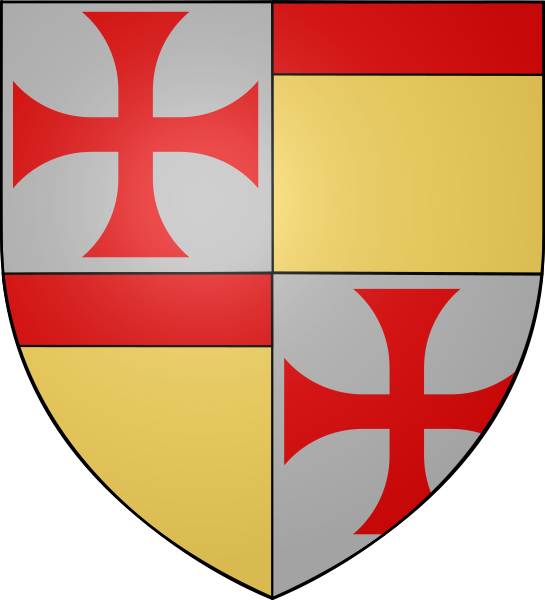
The Til-Châtel blazon
This location will not fail to arouse
the interests of companies wishing to set up this site
qualified strategic management by groups
important. The town has also been
many requests about it. For these reasons the
Covati retained under its statutes achievement
an economic zone under our Local Plan
Urban Planning (PLU) on an area of about one hundred hectares.
This area is located north-west of Til-Chatel near the
toll and highway district. The feasibility study concluded that the
relevance of the project, especially since several companies had already
expressed interest in this site.
The creation of this area, through the jobs and services it will generate,
undoubtedly represents a decisive step for the economic development and
Social our county and our town.
Page 2
Heritage
1- Origin
The village, located on the road between Agrippa Langres (Andemantuno) and Chalon
(Cabillione) is mentioned on the Peutinger map in the year 230 AD under the
Filena name on the Tille River.
Historians believe it was probably a locality with
great importance, at least strategically, Dijon (Divio) are being mentioned.
Father Vignier who had consulted the texts of Claudian wrote over 17 °
century there existed during the Roman occupation a location named Motte
Ronde, located in the lower village constituting a Castrum along the way
Agrippa, which allowed to monitor both the river and the road.
It was bordered by Aval street, the Coupé street and alley in the Reculée.
The excavations that were carried out in this scope have enabled updating of
many relics, statues, tombstones and coins dating from the time of
the Roman occupation.
At the time, a channel of 2 meters wide and 1.5 deep to do
sail boats flat bottom connected the bridge over the Tille to a place called Ogne,
located between Til-Châtel and Lux where excavations in the years 1980-1992
have confirmed the existence of a complex of buildings occupying a
9 hectare site around which could be, according to René who Goguey
directed the excavations, a set of warehouses linked to river navigation which were
grouped grains from Bassigny for feeding of Rome.
Later, around the year 264 is the martyrdom of Saint Florent patron of the church
town. Father Roussel said that the invaders from the north of Europe,
controlled Chrocus, after ravaging Langres and massacred Saint Didier
bishop of that city, stopped at Tilae castrum (Castrum ad Tillam) as
then called the village.
There they met a Christian named Florent, son of the governor of the Castrum they
took prisoner and who they wanted to recant his faith. When he refused they
beheaded with a plow. His head rolled in the range where the Tille
aware she was driven to the island Barbe on the Saône near Lyon where she was
preserved in the Church of St. Martin. As for Florent his relics on display in
the church are at the origin of many miracles. Ogne and Castrum were destroyed
during an invasion after the year 400.
Around the year 407, the kingdom of Burgundy is created by Gondicaire, barbarian chief
Christian came from beyond the Rhine that ended the Roman occupation.
It is not known what is happening in the village until the year 801. At that time
depended on the Bishop of Langres Betto, who that year, concedes church
Tilicastro and income to the Augustinians of St. Etienne de Dijon. Since then,
the village name is written according to the mood of the scribes and the language in Latin or
French, Tylicastrum, Trichastel, Trie-Château, Trichâtel, Tilchastel, Tréchâteau and
Finally Til-Châtel in 1860, after being called Mont-sur-Tille for the period
revolutionary.
page 3
2- The Lords
Reporting to the Bishop of Langres, they had their origin in a Audon I of Til-Châtel,
son of Garnier count of Troyes in 918 attested by his signature in an act of Duke
Richard Burgundy.
This family, which carried arms as a key pal, paid tribute
also the Dukes of Burgundy and held a high rank among the lords of
duchy and county of Burgundy. Its members succeeded from father to son until
the year 1299 when Isabelle Rochefort, Left Girl Rochefort
lord of Puiset in Beauce, Guy III widow of Til-Châtel Gonfalonier County
Burgundy, became lady of Til-Châtel. She remarried Humbert
Rougemont to 1306 and married his daughter Jeanne she had with Guy III Til-
Rougemont Châtel Thiébaud son from a first marriage of her new husband. The
Lordship then happening in that family until the late 15th century time to
when the last of Rougemont, having no children yielded to the lordship
Antoine Baissey from a family who immediately went Montsaugeonnais
tribute to the bishop of Langres
Freemasonry and the knights templar legacy of secrecy. If life was a movie, and god was the director, then he wold raise the knight templars of til chatel and rougemont from their tombs and have them ride into. The lost treasure of the knights templar ii movie. Arn knight templar movie trailer. A massive battle in arn the knight templar. … arn the knight templar replica movie prop. Mongol / beowulf grendel / arn the knight templar blu ray.
Trichatel and Til-Chatel, a Knights Templar place, is one and the same.
Jon Presco
Since this date, the name of the village east written according to the mood of the scribes and the language employed, Latin or French, Tylicastrum, Trichastel, Trichâteau, Trichâtel, Tilchastel, Tréchâteau, and finally Til-Châtel in 1860, afterhaving been called Mount-on-Bast for the revolutionary period.
“The First Preceptor of La Fontenotte
The fifth son of Guy II of Rougemont and Guillemette de Coublant, Etienne de Rougemont was lord of Pichanges. In December 1265, having recalled the donations made to the temple by Aimon IV and Guy II, he gave to the Templars, with the agreement of his elder brother, Jean, Lord of Rougemont, the right of pasturage on his lands of Pichanges and Spoy. He died in 1271 and was buried before the altar in the chapel of Fontenotte and conferring his Templar rank of Preceptor (priest-templar).




 Rosamond Press
Leave a comment