
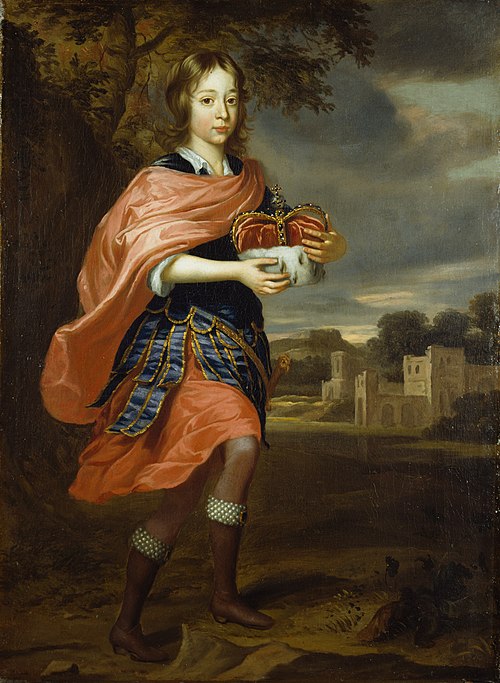
The Royal Janitor
“Are you speeding?” onquried Starifsh.
Victoria considered lying. But getting her wife’s consern was for Baby Her..
“I slowed down!”
“Don’t speed again! I want you to listen carefully. It’s time to name Baby Her. Her great, great, great grandmother is Christine Charlotte of Brunswick, who had two children by Peter the Czar of Russia, Both of these children died after Charlotte died. However, her son was a twin, and with him they fled to New Orleans. Her grandson bought a land grant in Belmont California. From there we tried to purchase California from Mexico with the help of the Franciscans. John Fremont was in on this plot. We were discovered. The sale was off. Catherine the Great had tried to overcome the Motherland via good German breeding. She had much to do with the colonization of Alaska and California. Are you following me? There is a legend!
“Excuse me. Are you going to tell me a ghost story?”
“How did you know?”
Marriage
She seemed a good match to Tsar Peter for his son because her elder sister Elizabeth Christine was married to the Holy Roman Emperor Charles VI, and the support of Austria in the upcoming fight with the Turks was appreciated by Russian diplomats.
On 25 October 1711 at Torgau, Charlotte Christine married Tsarevich Alexei, eldest son and heir of Peter I of Russia by his first wife, Eudoxia Lopukhina. She was allowed to keep her Lutheran faith, but any children would be raised as Russian Orthodox. This marriage was the second to break the old tradition of the Russian imperial family only marrying members of the Russian nobility, the first being Anna Ivanovna’s marriage to Frederick William, Duke of Courland the year before.[1]
Children and death
Charlotte found some consolation in the birth of a daughter, Natalia, and a son, later Peter II of Russia. She died a month after the birth of her son.[3] Both her daughter Natalia and son Peter died young without issue.
Legend
Some fifty years after her death, a legend developed, according to which Charlotte did not die in 1715 and, instead of her corpse, a wooden doll was put in her coffin. According to this, she fled to Louisiana, where she married a French officer named d’Auban or d’Aubant, with whom she had a daughter and lmoved to Paris, France. Later they moved to the island of Bourbon, and when d’Auban died, Charlotte returned to Europe, living in Paris and Brussels, Belgium, with a pension from her niece, Empress Maria Theresa of Austria.
In popular culture
Heinrich Zschokke developed the legend of Charlotte into a novella, titled “Die Prinzessin von Wolfenbüttel”. Charlotte Birch-Pfeiffer wrote a libretto about it.
Santa Chiara opera
Duke Ernest of Saxe-Coburg wrote the opera “Santa Chiara” about the wife of the Tsarevich. In the version of this opera, which takes places in the magnificent palace of the tsarevich in Moscow, Charlotte Christine, who suffers because of her abusive husband, desperately wants to return to Germany. She sent her secretary, Herbert, to Germany to ask for permission to return, but it was rejected. It is revealed that she is secretly in love with Victor de St Auban. With the intention of getting rid of his wife, the tsarevich Alexis tries to kill Charlotte Christine with a glass of poisoned wine. After drinking it, Charlotte Christine falls lifeless.
Elisabeth Christine of Brunswick-Wolfenbüttel (28 August 1691 – 21 December 1750) was Princess of Brunswick-Wolfenbuttel, Holy Roman Empress, German Queen, Queen of Bohemia and Hungary; and Archduchess of Austria, etc. by her marriage to Charles VI, Holy Roman Emperor.[1] She was renowned for her delicate beauty and also for being the mother of Empress Maria Theresa and grandmother of Joseph II, Holy Roman Emperor, Leopold II, Holy Roman Emperor, Maria Carolina of Austria and Marie Antoinette of France. She was the longest serving Holy Roman Empress.[2]
Prussia
Prussia, alone among the contenders for California, had no colonies of its own. All but without a navy of its own, and the weakest and smallest of the European great powers, its position as a candidate for the vast state of California upon the other side of the world can seem unlikely at first. Friedrich Ludwig von Roenne, the German ambassador to the United States, was a vigorous proponent of colonies, and wrote the following to Christian von Bunsen, the Prussian ambassador to the United Kingdom, as follows:
I fully agree with you that now is the moment, under the rule of our excellent King, who has a genuine German mind and heart, which beats aloud for everything that is noble, to lay the foundations of the greatness of our beautiful German Fatherland, in a political as well as in a commercial sense. England will always, as you say, see in us an awkward rival, but the time has arrived when we must act in a bold and independent way, and this can only happen if we are united as if we have a Navy and colonies. What a country Germany could become in such circumstances! She would be the equal of any other . . .
Your idea of purchasing California is an excellent one. I would never have thought of doing such an audacious thing, but, nevertheless, as early as the year 1837 I already had the notion, for when I reported on the condition of immigrants- especially with regard to the question of establishing a penal colony- I called attention to the possibility that Mexico might agree to give up a piece of land in California. The idea of buying all California deserves in every way to be preferred to this. The many Germans who go there yearly from the United States very soon cease to be Germans; they adopt local manners and customs and are entirely lost to Germany. On the other hand, a completely German colony, even long after migration, would retain for our German manufactures a permanent market and yield all the profit to the Mother Country. The possession of such a colony would also provide a good training-ground for our army and offer innumerable other benefits.
Upper California- which alone can be considered- if one can trust the many descriptions of it which which have been produced- the [latest] is I believe that by Alexander Forbes,12 published in 1839 in London- is one of the finest countries in the world, and on account of its happy position between the tropical and northern zones, is capable of bringing forth all the products which are suitable for exchange with the Mother Country, and which also would even be sought after by Mexico and the South American states. It is only necessary that it should be in the possession of an active, industrious and energetic people, and who would dispute these qualities to our German countrymen? These are the qualities whereby they earn so much respect here in the United States. No people on earth are better as cultivators of the soil than the Germans.
England, France and the United States would no doubt look at such an undertaking with jealous eyes, but I can hardly believe they would use force to prevent it from happening. Certainly not the United States! But in any case it would be a good thing, before taking any of the contemplated steps, to assure the cooperation of Denmark through her Navy. Only then would we be powerful enough, and have the means to carry out this plan.
The sovereignty of Mexico over California may hardly at be said at present to be more than a paper one-as a matter of fact I don’t exactly know what the situation is. Three years ago independence was declared.13 Nevertheless it would be very important vis-à-vis the other powers that sovereignty should be ceded by Mexico. Actual possession could then easily be secured without the use of very much force being required. Also, I am inclined to think, because of the looseness of the existing connection, that she would be readily disposed to entertain such a proposition. In any case she would prefer to see Germans there to the English, the Americans or the Texans, and I believe that even these two last would prefer to have Germans to the English.
Nevertheless I am not absolutely in a position to say whether this is likely to have enthusiastic acceptance on the part of Mexico. If Denmark appreciated her advantage she would not hesitate for a moment to cooperate in the closest possible way with Germany. The time is past- or at least should be- when smaller nations should see advantage in being hostile to their more powerful neighbours. . . . The smaller states can only reckon on the continuance of their independence if they don’t stand in the way of their larger neighbours. . .
Scroll to Continue
How to Make Out: A Simple Guide
95+ Awesome Outdoor Decorations for Christmas
Ludwig von Roenne’s words were not just idle musings. He planned to negotiate with Denmark for the usage of the Danish navy in communications with the colony, and to have his colleague Baroth von Gerolt, a fluent Spanish speaker, conduct negotiations with the Mexicans. In December 1842, he met with the the Mexican ambassador to the United States in Washington DC. Talking with Mr. Almonte, the Mexican ambassador, he was convinced that the Mexicans saw advantage in ceding Northern California to the Germans, rather than, as rumors put it, to the American or the English. For the Mexicans, the idea was that it would form an effective buffer state between them and the Americans. He would go ahead as well to contact William Hogan, a former US congressman and the equivalent of a lobbyist, who declared his support for the endeavor. This all came to nought: at this points sources differ with either that the Prussian government advanced no further, quietly shelving the project, or that it proceeded as far as negotiations with the Mexicans in Washington and London for the sum of some $6 million to purchase the colony, but then abruptly dropped out of negotiations. Whichever that it was, California would not be painted in Prussian blue.

What if these attempts had succeeded?
As with any discussion of attempts that might have succeeded, but didn’t, there is the question what if they did work out? What if one of these nations managed to take California from the Spanish or the Mexicans, establishing it as one of their own colonies?
In all of these nations, the question they faced is not whether they could take California, but whether they could keep California. As American settlers expanded West in huge numbers, the possibility existed that any European colony might be overwhelmed by them, just as Mexican Texas faced an American revolt as Americans grew to outnumber the Mexicans in its territory. European powers would have to ensure that any territory they took had a strong enough government, or enough of their own emigrants (and loyal ones) to be able to prevent an internal rebellion from snatching it from their hands. Here, the capabilities of California’s suitors diverged.
- England
Throughout the long 19th century, England possessed the largest colonial empire in the world, one which continued to expand throughout time. Although in North America the English had lost and were challenged by the newly-rising United States, with the world’s largest colonial empire and the world’s largest and most powerful navy, the capability for the English to be able to project power to California would have been more than enough to deal with any American incursions there. In addition, large numbers of people emigrated from England, driven from conditions of misery in that country, and thus a large settler pool existed for any potential Californian colony. Thus, a Californian colony would in the intermediate future in all probability remain British.
British California would probably look somewhat like Australia, with a relatively small settler population (smaller than the American equivalent), lots of herding and other extensive facilities, domination of miner interests. It would have some connection to the rest of North America but this would come about later than the American transcontinental railroads, while there would be much more limited settler populations.
- France
In the 19th century, the only nation which stood second to the United Kingdom in terms of its colonial empire, and in terms of its navy, was France. While the France of the 1840s, increasingly riven by internal turmoil and division, had fallen in relative terms from its position half a century before, France still had a powerful navy, army, and world-wide reach. In the event that the French succeeded in gaining control of California, they seem likely to continue to be able to hold it. France’s only problem was a small settler population during the 19th century, as few Frenchmen preferred to leave overseas: the lack of the same explosive population growth as elsewhere, and the solution of rural landlessness through land re-distribution, meant that few French left the country. But during the pre-Gold Rush days in California, the French population was relatively abundant from trappers and explorers, and during the Gold Rush itself some 25% of the population was foreign and a third of that French, an entirely reasonable base combined with French support with them and fewer Americans. Thus, a French California seems like a colony that would remain French, instead of being supplanted by the United States. France would both be able to settle enough French into the territory to ensure the reliability of its population, and to threaten the United States with sufficient military power, to ensure that the costs of taking California would be too high to make it worth it for the Americans.
France’s development of California is hard to say, since the French never had a settler colony like California in the 19th century: their main settler colonies, New Caledonia and Algeria, had large numbers of natives, which would have been ravaged by diseases in North America. Probably the native population would fare better under French control than British domination, since there would be a more limited French settler population with the small French colonial population in the 19th century. The European population which would come would be diverse, and probably look like the European demographics in Algeria: extensive Spanish, Italian, Maltese, immigrants. The Californian wine industry would certainly develop faster!
- Prussia
The smallest and the weakest of the European great powers, and lacking in a navy, Prussia’s capability to hold onto the distant colony of California would have been highly doubtful. Although many German colonists came to the United States in the 19th century, few of these were ones that the Prussian state could call upon or view as loyal to its projects: many came from outside of Prussia, such as in Saxony, and of those that came from Prussia, a great number were German liberals fleeing from oppression at home. Prussia’s capability to send colonists was questionable, while its limited navy meant that supporting its colony through military means was equally problematic. It was envisioned that Denmark would enable Prussia to support its colony through the support of the Danish navy, but this raises the great problem of colonies: that colonial and continental politics diverged. If Danish support would enable the Prussians to guard their colony, in Europe, Germany desired Schleswig-Holstein, under Danish control, and if, as historically, this conflict flared into war, it would make Danish-German colonial cooperation infeasible. Still, lacking a navy didn’t historically preclude colonial endeavors, such as Belgium’s colony in the Congo, created by a state almost entirely lacking in a navy, Prussia had a famed army and government administrative system, and at least some German settlers might be drawn to California. A continued Prussian hold over California might be unlikely, but with careful management of power politics and an iron hand, Prussia might have been able to forestall American interest in the region long enough to secure it.
Prussia would have state settler programs, and given its later record in Africa at the end of the 19th century, would probably be terribly brutal against the Native Americans of California, regardless of the positive portrayal of them in German fiction books at the end of the century. An extensive military presence would probably appear given Prussia’s proclivity to this, and it would be treated as an outlet for the small farmers of Eastern Germany, enabling a resolution of social ills at home through export of the peasant population abroad.
- Russia
If Prussia’s opportunities to take and hold California were limited but feasible, then Russia’s capabilities towards a Californian colony were painfully lacking. Russia sent emigrants overseas in the 19th and 20th century, but most of them were Jews, fleeing from Russian persecution, and most of them left in the later 19th century. In Russian North America, comprising principally Alaska, the Russian population never rose to more than 700 Russians, and any Russian settlement which did occur, occurred in Siberia. Any Russian colony would find its pool of available settlers sharply circumscribed, and be almost certainly doomed to collapse from American settlers entering over time. Even if it avoided this fate, it would be a dangerously vulnerable colony in the event of any war, and in the event of a conflict like the Crimean War, the result would almost inevitably be a conquest of the colony. Thus, any Russian California seems like a colony which would last for but a brief time, before another nation took it or it separated from Russia.
Russian California, during the time which it existed, would be similar to Alaska: very extensive usage of the fur trade, but limited penetration into the interior.
Reading
- A Projected Prussian Colonization of Upper California by John A. Hawgood
- Proposals for the Colonization of California by England by Lester G. Engelson
- The French in Early California by Claudine Chalmers
 Rosamond Press
Leave a comment