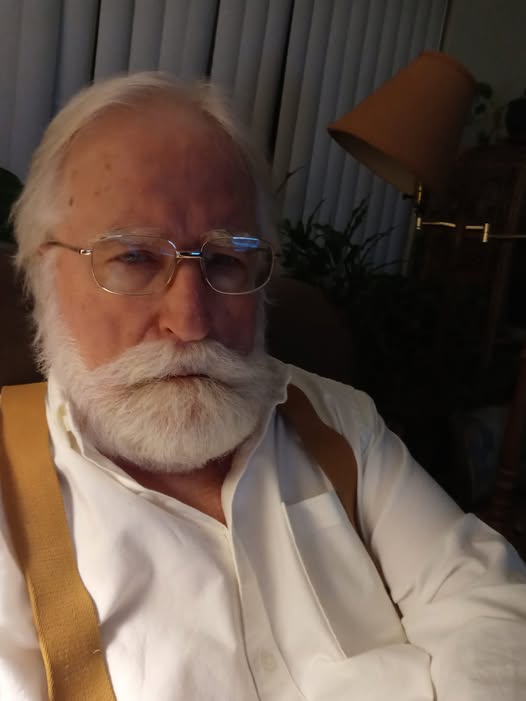
Hesgeth Does Kirill

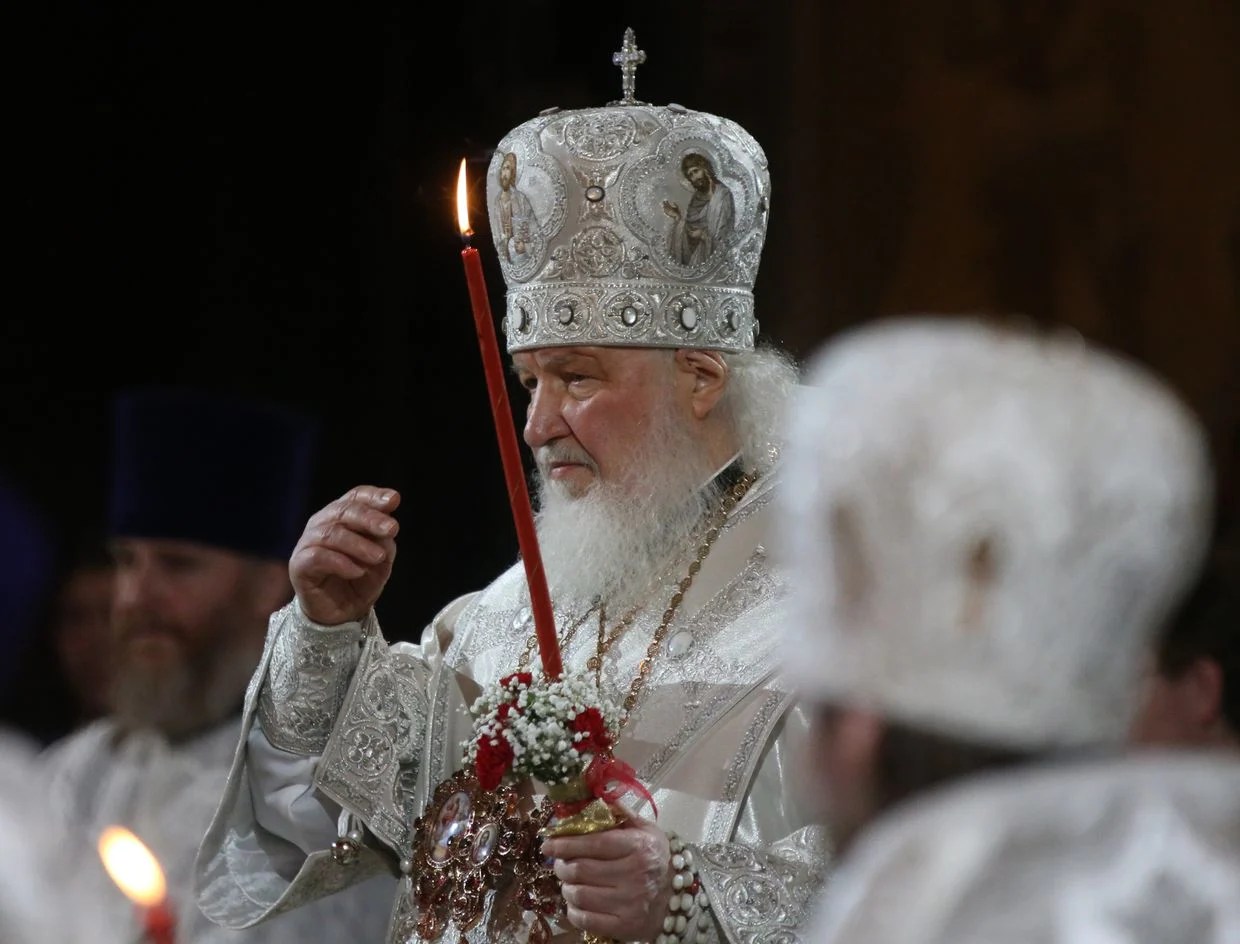
On Morning Joe, Michael McFaul asked what Putin wants. It can not be more land. How about – more people – because Putin is sending tens of thousands of young men to die. What happened to the lessons learned when the Soviet Union invaded Afghanistan.
THAT WAS DIFFERENT
How so?
It was a Secular Invasion. This is a – HOLY INVASIOM – by extremely RADUCAL CGRISTIANS. Putin launched a Holy Jihad against Ukraine, and was supposed to have overcome it – in weeks! When that did not happen, then, religious nuts would have to conclude….
GOD IS NOT ON PUTIN’S SIDE!
I believe Radical Christians in America – knew of Putin’s Crusade…..
YEARS AGO!
I have – two letters to write to Pope Leo.
I am going to get a literary agent who will promote the truth I am the author of a very prophetic James Bond book.
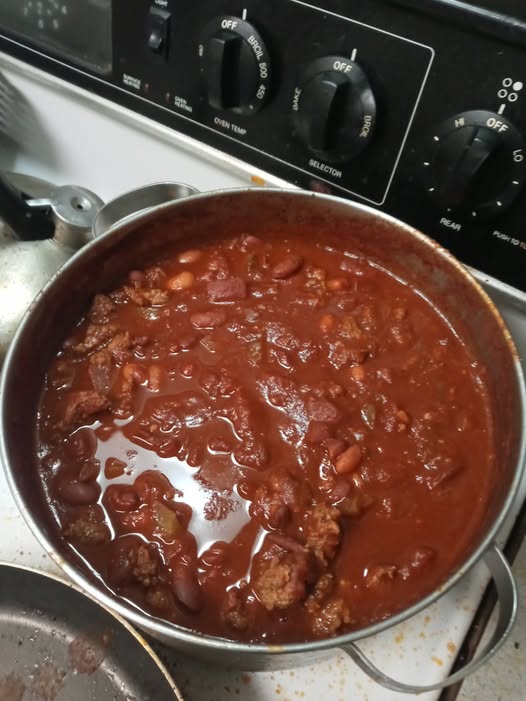
Last night I made a big pot of Presco’s Sacred Winter Chili! Is it…
THE END OF THE WORLD CHILI?…..DIG IN!
John Presco
President: Royal Rosamond Press
Newt Gingrich unloaded on the emerging U.S. peace proposal for Ukraine on Thursday, blasting the framework as a dangerous capitulation that would pave the way for Russia to eventually swallow the entire country. Taking to X, he denounced the plan with unmistakable force. “Any ‘peace’ agreement between Ukraine and Russia which weakens Ukraine’s ability to defend itself is in fact a surrender agreement which guarantees that in the next few years Putin will overrun all of Ukraine,” he wrote.
Gingrich argued that any pressure on Kyiv to shrink its military footprint or scale back its ability to fight would reward Moscow’s aggression and punish Ukrainian resilience. “Ukrainian courage and patriotism should not be betrayed by Americans growing tired of stopping evil. A Putin victory will be a stepping stone to a much, much more dangerous world,” he declared, framing the moment as a global crossroads rather than a localized dispute.
https://matzav.com/newt-gingrich-slams-us-peace-plan-betrayal-ukraine-must-reject/
Orthodox Christian clergy’s visits with US officials draw accusations of Russian influence
(RNS) — The visits have caused feuds among both US Orthodox Christian groups and Republicans.
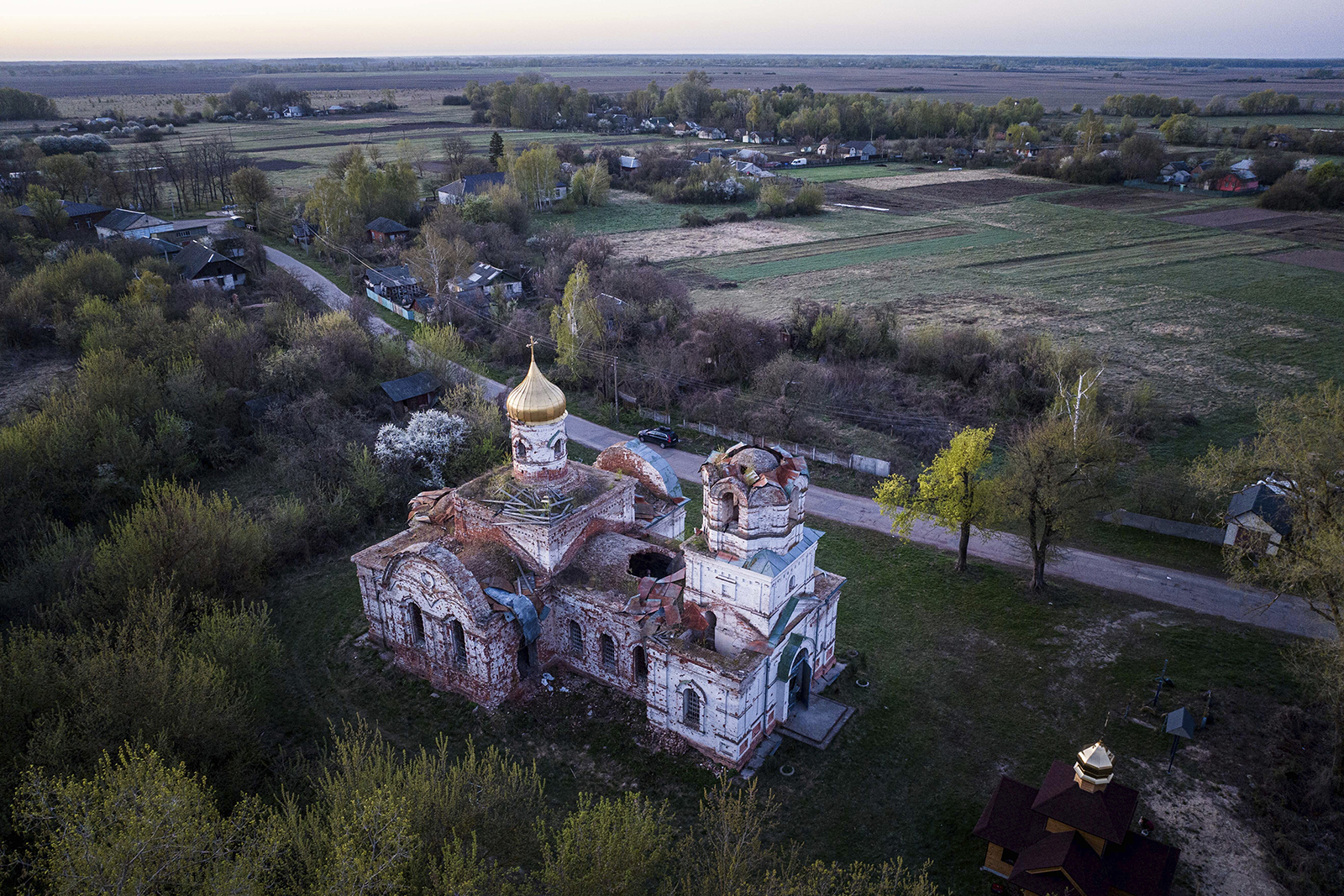
FILE – A church destroyed in fighting between Russian and Ukrainian forces is seen from above during celebration of the Orthodox Easter in Lukashivka village, Ukraine, on Sunday, April 20, 2025. (AP Photo/Evgeniy Maloletka)
November 21, 2025
(RNS) — A delegation of Orthodox Christian clergy and lobbyists met with Trump administration officials and members of Congress this week, igniting feuds among both U.S. Orthodox Christian and Republican groups amid accusations that the visitors were agents of Russian influence.
On Tuesday (Nov. 18) and the following days, representatives from various Orthodox churches in the U.S., including the Russian Orthodox Church Outside of Russia and the Orthodox Church of America, met with Tulsi Gabbard, director of national intelligence; U.S. Reps. Anna Paulina Luna of Florida and Darrell Issa of California, both Republicans; U.S. Rep. Raja Krishnamoorthi of Illinois, a Democrat; the incoming ambassador for international religious freedom, Mark Walker; and the State Department’s undersecretary for public diplomacy, Sarah Rogers.
Issa, an Antiochian Orthodox Christian, is vice chair of the House Foreign Affairs Committee.
The delegation was scheduled to meet with the White House Faith Office, but White House staff canceled the meeting as the delegation arrived, according to a source close to the White House. The White House did not respond to a request for comment.
The meetings had been organized by members of the Young Republicans National Federation and the Society of Saint John of Shanghai and San Francisco, a religious fraternity that evangelizes for Orthodox Christianity in the United States and supports the Ukrainian Orthodox Church, which is historically linked to Russia. The groups apparently aimed to draw attention to what they call the persecution of the UOC, which has seen its churches shut down by the Ukrainian government and its priests accused of being spies for Russia.
According to a statement by Catherine Whiteford, co-chair of the Young Republicans National Federation, the delegation asked that the U.S. stop funding efforts that directly contribute to persecution of religious groups, end the drafting of clergy for roles other than chaplaincy, provide medical care to imprisoned clergy and release clergy and journalists detained allegedly for their faith or for reporting on alleged abuses against UOC members.
But ahead of the delegation’s visit, U.S. Rep. Joe Wilson, a South Carolina Republican, released a letter he had sent to Attorney General Pam Bondi asking her to investigate “Russian Orthodox Church institutions operating within the United States, including the Russian Orthodox Church Outside of Russia (ROCOR)” as to “whether the Russian Federation or its intelligence services have sought to recruit, leverage, influence or otherwise compromise” their independence.
In a Nov. 17 post on X, Wilson clarified his position, saying, “The Russian Orthodox Church is not a separate religious organization but an extension of the Russian state,” adding, “Evangelizing is illegal in Russia and Christians are targeted and killed in Ukraine. Members should not entertain this intelligence operation.”
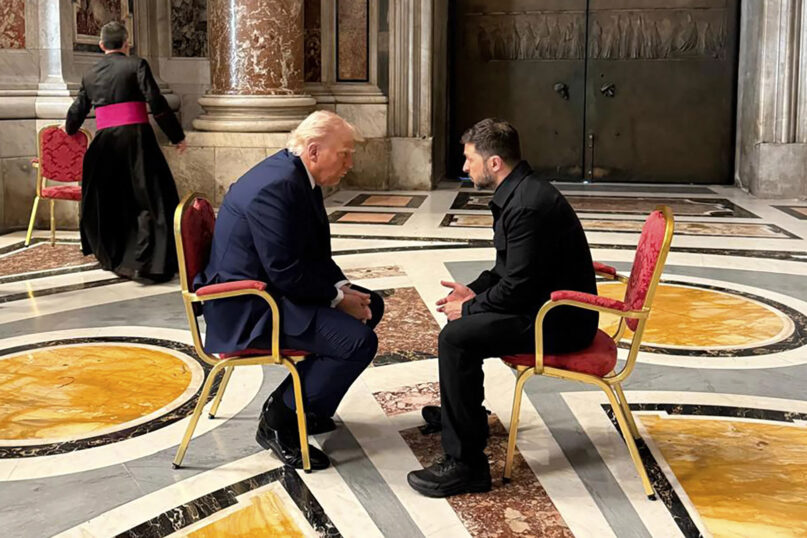
FILE – Ukraine’s President Volodymyr Zelenskyy, right, and President Donald Trump, talk in St. Peter’s Basilica as they attend the funeral of Pope Francis at the Vatican, Saturday, April 26, 2025. (Photo courtesy Ukrainian Presidential Press Office)
The Republican infighting over the delegation shows the GOP’s ambivalence toward Ukraine, even as Trump’s peace envoy, Steve Witkoff, reportedly closes in on a peace deal that would award Russia large swaths of Ukrainian territory that Ukrainian President Volodymyr Zelenskyy has previously vowed to never cede.
Ukraine, whose population is primarily Eastern Orthodox, has two competing Orthodox church bodies since 2018: the Ukrainian Orthodox Church, which declared itself independent after the war began but, without recognition from Moscow, officially remains under its jurisdiction, and the Orthodox Church of Ukraine, whose independence was recognized by the Ecumenical Patriarch Bartholomew in Istanbul, historically the center of Eastern Orthodoxy.
A 2024 survey by the Kyiv International Institute of Sociology found that 56% of Orthodox Ukrainians identified with the Ukrainian independent church, while only 6% identified with the Russia-linked church. Many former UOC parishes have voted to join the independent Ukrainian church since the war began.
In response to the OCU’s recognition, the Russian church broke communion with the Ecumenical Patriarchate. The schism has created a dividing line among other Orthodox churches worldwide, with some remaining in contact with the most powerful Orthodox hierarchs in Moscow, and others remaining in communion with Istanbul. As Russian Patriarch Kirill has championed the war, the divide has also expressed itself politically, with many Orthodox Christians loyal to Moscow blaming NATO and the U.S. for Russia’s invasion of Ukraine.
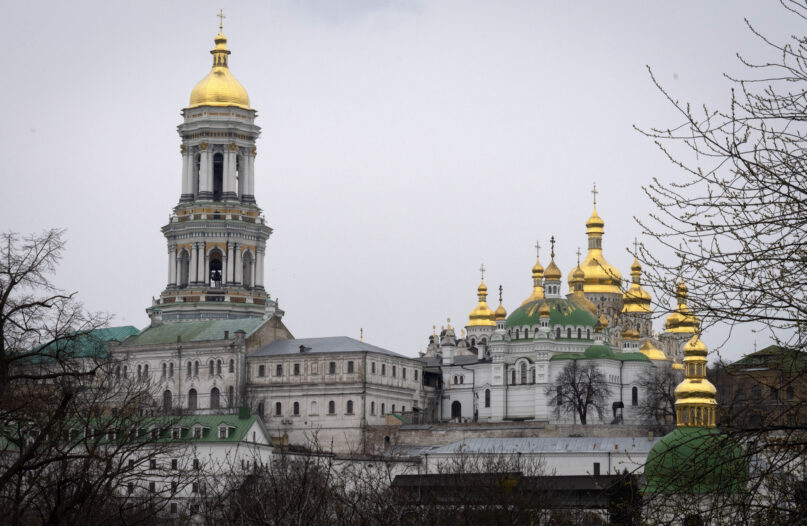
FILE – The Monastery of the Caves, also known as Kyiv-Pechersk Lavra, one of the holiest sites of Eastern Orthodox Christians, in Kyiv, Ukraine, Thursday, March 23, 2023. (AP Photo/Efrem Lukatsky, File)
In 2024, Ukraine passed a law banning religious organizations with ties to the Russian church over concerns of Russian intelligence gathering. Several watchdog agencies, including the United Nations, have warned Ukraine that the law, and the church closings, violates religious freedom. Some clergy and lay members of the Ukrainian Russian-linked church have faced violence, arrests and property seizures from members of the independent Ukrainian church.
The Hill, a Washington outlet focused on Congress, report raised the question of whether the delegation was lobbying for Moscow. Together with Wilson’s remarks, the implications generated alarm and fierce criticism among Orthodox Christians, most notably a group of lay church members, many of them wealthy Greek Americans, who serve as ambassadors and fundraisers for the Ecumenical Patriarchate.
This group, the Archons of the Ecumenical Patriarchate, harshly criticized the delegation. “The AEP condemns this deceptive attempt to legitimize Russia’s use of the Orthodox Church as an arm of its aggressive foreign policy.” The archons asked the Trump administration to cancel the planned White House Faith Office meeting with “Russian agents,” saying the group behind the meetings seeks “to solicit an American blessing upon its misleading tactics, which result in the persecution of the Orthodox Christians in Ukraine.”
Archbishop Elpidophoros, the head of the Greek Orthodox Archdiocese in America, issued a statement Friday that made clear that he does not see any of his fellow hierarchs or their representatives as agents of foreign governments and noted that the Orthodox Assembly of Bishops, which has tenuously united Orthodox Christians across jurisdictions in the U.S., expressed unanimous concern over Ukraine’s restrictions on the UOC last year.
“All of us jointly recognize that, when the church becomes entangled with political matters, it does so at the risk of itself and its faithful,” he said, adding, “We must focus on growing relationships and healing wounds, rather than provoking one another.”
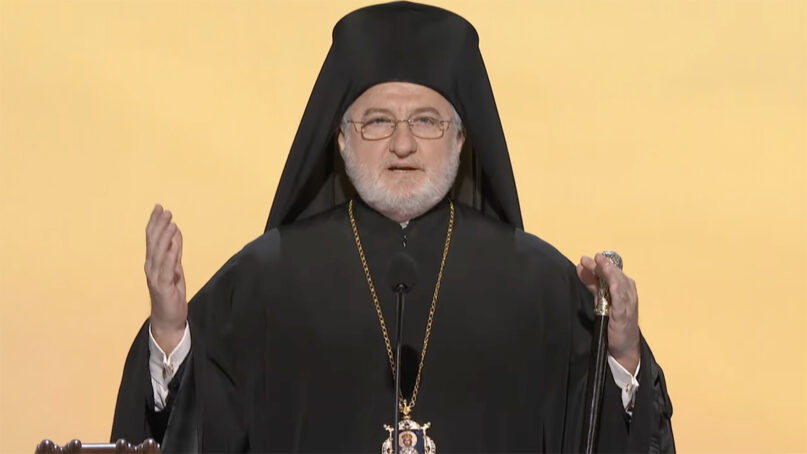
FILE – Archbishop Elpidophoros offers a prayer during the Republican National Convention, Monday, July 15, 2024, in Milwaukee, Wis. (Video screen grab)
But the archbishop did little to cool the anger over the visit and the response it generated. The Rev. Thomas Soroka, a priest in the Orthodox Church of America, has petitioned its bishops to suspend their membership or withdraw from the Assembly of Bishops.
The Rev. Vasilije Vranic, episcopal dean of Washington in the Eastern America diocese of the Serbian Orthodox Church and a member of the delegation, said in a statement posted on Telegram on Friday, “I … unequivocally reject as unwarranted, utterly false, and completely misguided the Archons’ characterization of myself and/or my Church as boosters of ‘Putin’s war.’ Our sole purpose has been and always will remain peace and immediate stop of the suffering of the people of Ukraine.” He demanded the archons apologize and urged Elpidophoros to distance himself from them.
Nonetheless, this week’s delegation raised concerns in part because it was suspected that Russian influence had quietly secured so many top-level meetings with American officials. One of the organizers was tied to Robert Amsterdam, a lawyer who works for Vadim Novinsky, a Russian-Ukrainian oligarch and a deacon who has been serving the Russian Orthodox Church in Zurich.
Though Novinsky has provided millions of dollars in humanitarian aid for Ukrainians since the war began, he is also a former member of a pro-Russian party in Ukraine and is facing criminal charges there. Ukrainian security services have seized more than $200 million worth of his assets.
Amsterdam has retained an American lobby firm for the past two years to run a campaign called Save The UOC, which seeks to defend freedom of religion in Ukraine. He has appeared on “The Tucker Carlson Show” to spread his message.
Catherine Whiteford, the daughter of the Rev. John Whiteford, a controversial ROCOR priest, published a letter Thursday on behalf of the Society of Saint John of Shanghai and San Francisco. She called for the archons to retract their statement and for Greek Orthodox Archbishop Elpidophoros to apologize. “The path forward lies not in accusation, but in honesty, repentance, and open cooperation,” Whiteford said. “We remain committed to that path.”
The delegation, which included representatives of the Serbian and Antiochian Orthodox Churches, plans to hold a larger Legislative Day of Action for the UOC on Dec. 12 on Capitol Hill. Rep. Luna is slated to host.
Bottom Line
The Russian Orthodox Church (ROC) has become a central pillar of the Kremlin’s political and informational warfare strategy, which shapes narratives by fusing spirituality with nationalism. Through doctrines like the “Russian World” (Russkiy Mir) and appeals to shared Orthodox identity, Moscow weaponizes faith to justify aggression and extend its ideological reach. These narratives have influenced attitudes in Ukraine, Georgia, Moldova, and across parts of Africa and Europe—undermining Western integration, sowing local skepticism toward NATO and the EU, and reinforcing pro-Kremlin movements through cultural affinity and religious symbolism.
The infrastructure that sustains this spiritual-political influence is an interconnected ecosystem of state, church, and media. The ROC hierarchy operates in tandem with state-controlled broadcasters, diplomatic missions, private “patriotic” NGOs, and digital platforms such as Telegram and YouTube channels linked to the Moscow Patriarchate. Financially, the system is underpinned by Kremlin-aligned oligarchs, state enterprises, and tax-exempt church assets, while its logistical reach relies on global dioceses, cultural centers, and ecclesiastical missions that double as nodes of soft power. This coordination allows Moscow to adapt its messaging to local contexts—presenting itself alternately as a defender of faith, a peace broker, or a bulwark against Western “moral decay.”
Countering this form of religiously cloaked disinformation requires targeting both the financial and institutional lifelines that enable it. Transparency over church-state funding flows, regulation of foreign-linked religious structures, and exposure of clerical actors engaged in political propaganda are essential to curbing the Kremlin’s influence. Cases like the Ukrainian autocephaly movement in 2019—when the spiritual head of the Orthodox Church, the Ecumenical Patriarch Bartholomew I of Constantinople, granted the Orthodox Church of Ukraine (OCU) independence from the ROC—and proactive oversight in states such as Moldova show the importance of dismantling hybrid religious-political networks. Complementary measures—strengthening independent Orthodox institutions, enhancing media literacy, and deepening international cooperation—are vital to defending democratic resilience against this evolving form of ideological warfare.
Introduction
Between faith and manipulation lies a blurred frontier. For millions of believers, the ROC is a pillar of tradition and spirituality, a continuation of centuries-old liturgy and culture. Yet behind the sacred façade, the church’s hierarchy has for decades been intertwined with the Soviet and Russian state security apparatus. What began as a project of survival under Bolshevik persecution evolved into systematic subordination to the KGB—and now, to the FSB and Patriarch Kirill— and into a global network of political influence.
This is not an indictment of Orthodoxy or its faithful. It is an examination of how the Kremlin has hijacked the ROC’s institutional structure, transforming it from a spiritual community into an instrument of Kremlin statecraft and soft power. Understanding this evolution—its Soviet origins, its post-Soviet continuity, and its expansion across Ukraine, Africa, and the West—reveals how the ROC has become a “transmission belt” of Russian power, to borrow Vladimir Lenin’s own term for ideological front organizations.
From Subjugation to Collaboration: Soviet Origins
The subjugation of the ROC to state power began long before the Bolsheviks. In the early 18th century, Peter the Great abolished the Patriarchate and replaced it with the Holy Governing Synod in 1721, effectively turning the church into a department of the imperial bureaucracy. Bishops became state officials, sermons were monitored for loyalty, and the clergy were obliged to report politically suspect behavior among their parishioners. This transformation marked the beginning of the church’s long entanglement with the state—a system of spiritual servitude masked as “symphony” between altar and throne.
Resistance emerged almost immediately. The Old Believers, who rejected Peter’s and Patriarch Nikon’s earlier liturgical reforms, became symbols of defiance against both religious standardization and state coercion. Brutally persecuted and driven underground, they preserved an alternative model of faith rooted in autonomy and conscience. Yet their marginalization reinforced the dominance of a church hierarchy dependent on imperial favor—setting a precedent for later regimes to exploit its structures for political ends.
The story then continues with the Bolshevik revolution and Soviet repression. The All-Russian Local Council of 1917–1918 sought to restore the church’s self-governance after centuries of imperial control, but its brief renewal was crushed under the Bolshevik state. Lenin’s Decree on Land and subsequent anti-religious campaigns stripped the church of property, outlawed religious education, and executed or imprisoned tens of thousands of clergymen and women. Yet the Soviet approach was not only about destruction—it was also about infiltration.
By the late 1920s, the OGPU, the Soviet secret police, had adopted a dual strategy of terror and co-optation. Thousands of bishops, priests, and monastics were purged, while others were recruited as informants or installed as loyal agents. In 1927, under pressure from OGPU officer Yevgeny Tuchkov, Metropolitan Sergius issued his notorious Declaration of Loyalty to the Soviet Union, pledging that “the joys and successes of our Soviet homeland are our joys and successes, and its misfortunes are our misfortunes.” With that act, the ROC’s institutional independence was extinguished. A regime-approved synod replaced genuine leadership, and the principle of Sergianism, submission to state power, became the defining doctrine of Soviet ecclesiastical life.
After World War II, the church was revived not as a free institution but as a controlled one. The Council for Religious Affairs and the KGB vetted every bishop and seminary rector. After 1943, the Soviet authorities not only “allowed” the revival of the ROC but placed it entirely under the control of the OGPU’s successor, the NKVD, and later the KGB. The church’s leadership, especially at the episcopal level, largely consisted almost entirely of agents or collaborators of the state security services. Abroad, ROC missions operated as instruments of Soviet diplomacy and intelligence. Among their representatives was a young cleric named Vladimir Gundyaev, today Patriarch Kirill, who, according to Swiss archival evidence, served as a KGB officer under the codename “Mikhailov” while stationed in Geneva in the 1970s. His assignment at the World Council of Churches illustrates how Soviet religious diplomacy doubled as espionage and propaganda.
Continuity under Kirill: The Post-Soviet Church of Power
The collapse of the Soviet Union did not sever these ties—it institutionalized them. When Kirill became Patriarch in 2009, the Church’s mission was recast within the ideological framework of the Russkiy Mir (“Russian World”), a doctrine fusing Orthodoxy, patriotism, and empire. The ROC emerged as a key partner in the Kremlin’s soft-power strategy, sanctifying Russian geopolitical ambitions as a civilizational mission.
Kirill’s public statements have consistently aligned with Kremlin narratives. His 2022 sermons depicted the invasion of Ukraine as a “holy struggle” against a morally corrupt West. In January 2025, he blessed crosses engraved with President Vladimir Putin’s initials to be distributed to “war heroes.” These symbolic acts illustrate a deeper continuity: the church not merely as a moral authority, but as a legitimizing arm of state power.
Global Missions of Influence
Today, the ROC’s foreign reach extends far beyond its traditional sphere. In Africa, Moscow has built a new Patriarchal Exarchate since 2021, establishing over 350 parishes across 32 countries. The official purpose is to serve Orthodox believers who allegedly felt “abandoned” by the Patriarchate of Alexandria after it recognized the independence of the OCU. Yet Ukrainian intelligence reports describe the project as a hybrid influence operation, blending religious diplomacy, propaganda, and soft-power projection under the guise of pastoral care.
ROC emissaries in Africa meet with local officials, cultivate political contacts, and promote narratives of Russian moral leadership. These efforts mirror Soviet-era tactics, replacing Marxism with Orthodoxy as the ideological export. The Kremlin’s objective remains the same: to undermine Western influence and expand Russian presence across strategic regions.
Similar operations occur closer to home. In Georgia and Moldova, ROC-linked clergy propagate anti-Western messages, framing NATO and the EU as threats to traditional Christian values. In the United States and Western Europe, ROC parishes within the Moscow Patriarchate have served as platforms for pro-Kremlin messaging—often cloaked in appeals to “family values” or “spiritual resistance to globalism.” What appears as religious conservatism frequently doubles as information warfare.
Ukrainian Autocephaly and the Post-2022 Contest Over Faith and Influence
The January 2019 decision by the Ecumenical Patriarchate to grant autocephaly to the OCU marked a historic rupture. It ended Moscow’s centuries-old claim over Ukrainian Orthodoxy and struck at one of the Kremlin’s key channels of soft power. Yet it was only after Russia’s full-scale invasion in 2022 that the conflict over ecclesiastical allegiance transformed into an open struggle between a sovereign Ukraine and a weaponized church hierarchy.
For Patriarch Kirill, the war in Ukraine became a sacred mission. Through televised liturgies, state-sponsored processions, and martial blessings, he recast Russian aggression as a crusade against Western decadence and moral relativism. The blessing of crosses engraved with Putin’s initials symbolized this fusion of faith and war. Such ceremonies reinforce the idea that Russia’s campaign is not merely political but spiritual—defending “Holy Rus” from a hostile world.
In Ukraine, however, the OCU’s independence has enabled the state to reassert control over its religious sphere. Since 2022, the Security Service of Ukraine (SBU) has opened at least 174 criminal proceedings against clergy of the Moscow-affiliated Ukrainian Orthodox Church (UOC-MP), with 122 priests formally charged and 31 convicted for collaboration or propaganda in support of the aggressor state. Investigations uncovered priests spreading anti-Ukrainian propaganda, coordinating with Russian operatives, or even stockpiling weapons left by retreating Russian troops. One Kherson-based priest was arrested for attempting to sell Igla missiles and explosives hidden beneath a church under construction.
Other cases reveal more subtle forms of collaboration. A seminary rector in Pochaiv was accused of spreading Russian narratives online, while in Kirovohrad, a UOC-MP bishop allegedly distributed pro-Kremlin leaflets and justified the occupation of Crimea. The Ukrainian parliament has since advanced legislation restricting religious organizations with direct administrative ties to Russia, arguing that such structures represent a threat to national security.
Moscow’s response has been predictably fierce. The ROC accuses the OCU and Constantinople of “schism,” portraying Ukraine’s religious independence as a Western-engineered plot to divide the Orthodox world. These narratives are amplified through Russian media and church channels abroad, turning theology into geopolitics. What began as an ecclesiastical dispute has thus become a front line of hybrid warfare, where sermons, icons, and canonical decrees serve as tools of statecraft.
For Kyiv, confronting this challenge means balancing national security with religious freedom—rooting out subversive networks while safeguarding the faith of millions who worship sincerely. The autocephaly of the OCU has provided a moral and legal framework for such efforts, allowing Ukraine to reclaim its religious sovereignty from a hierarchy that long served Moscow’s interests.
Conclusion
The tragedy of the Russian Orthodox Church lies not in its faith, but in its capture. What began as persecution under Lenin evolved into co-optation under Josef Stalin and institutional servitude to the KGB. Under Putin, this system endures: the Church remains a pillar of Kremlin ideology and a vehicle of political influence from Kyiv to Nairobi.
For policymakers, the lesson is clear. Religious institutions, when intertwined with authoritarian power, can become instruments of disinformation and espionage. Western governments should enhance transparency over foreign-linked religious networks, support independent Orthodox institutions, and include ecclesiastical influence mapping in broader analyses of hybrid warfare. Protecting the autonomy of faith communities is not only a matter of religious liberty—it is a matter of national security.
The Kremlin’s political warfare now wears vestments. Understanding how the Russian Orthodox Church became both a soft-power shield and sword for the state is essential to countering its reach—and to ensuring that faith remains the domain of the faithful, not of the powerful.
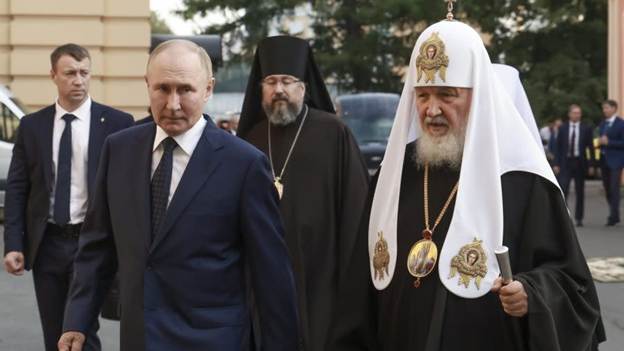
Image credit: Russian President Vladimir Putin and Patriarch Kirill of Moscow and all Russia visit the exhibition Orthodox Rus’ dedicated to the National Unity Day in Moscow, Russia November 4, 2024. Sputnik/Vyacheslav Prokofye via REUTERS

Laura Kelly
Mon, November 17, 2025 at 11:25 AM PST
0
CORRECTION: The head of the Serbian Orthodox Church, Patriarch Porfirije, met with Russian President Vladimir Putin and Patriarch Kirill in Moscow in April. An earlier version of this story included incorrect information.
Lobbyists and clergy with ties to the Russian Orthodox Church, which has been a staunch backer of Russian President Vladimir Putin’s war in Ukraine, are campaigning this week on Capitol Hill and meeting with the Trump administration.
The delegation is meeting with the White House Faith Office, a White House official confirmed to The Hill. In outreach emails to members of Congress, the delegation said meetings were also scheduled at the State Department. The delegation is raising awareness over what it says is Kyiv’s religious persecution against Orthodox Christians.
But Ukrainian officials, analysts and pro-Ukraine members of Congress argue Putin employs the Russian Orthodox Church at home and abroad as a key arm of the war effort against Ukraine — providing ideological justification to fight and strategic positioning to gather intelligence.
“The White House Faith Office will meet with a delegation of American representatives from the Orthodox church to discuss the persecution of the Ukrainian Orthodox Church,” a White House official said in a statement to The Hill.
“The Faith Office regularly meets with advocacy groups and religious leaders upon request to discuss issues related to faith in our country and around the world.”
Some House Republicans are requesting Attorney General Pam Bondi investigate whether the Russian Federation or its intelligence services have sought to recruit, leverage, influence or compromise U.S.-based Orthodox churches with ties to Moscow.
“It has come to my attention that ROCOR [Russian Orthodox Church Outside of Russia] is actively seeking to expand its political influence in the United States, including through an event reportedly scheduled for November 18, 2025, aimed at lobbying Members of Congress and their staff,” read a draft letter addressed to Bondi led by Rep. Joe Wilson (R-S.C.), which was shared with The Hill while additional House Republicans are signing on.
“This development raises legitimate concerns that ROCOR or other Russian Orthodox jurisdictions could serve as vehicles for intelligence collection or foreign influence operations directed at U.S. policymakers.”
Last week, Finland’s Security and Intelligence Service warned that Orthodox parishes in Finland operating under the Moscow patriarchate are connected to influence activities linked to the Russian state, but it added that the activity is not extensive.
Among the clergy lobbying Capitol Hill this week include representatives from at least three churches that hold ties with the Russian Orthodox Church. This includes the Russian Orthodox Church Outside of Russia, which in 2007 entered into “canonical unity” with the Russian Orthodox Church, preserving the outside churches’ independence but viewed as an “indissoluble part” of the Moscow patriarch.
The Orthodox Church in America, part of the delegation, maintains representation in Moscow.
Bishop Irinej of the Washington-New York and Eastern America Serbian Orthodox Church is also participating in the delegation. The head of the Serbian Orthodox Church, Patriarch Porfirije, was in Moscow in April and met with Putin and Patriarch Kirill, a key Putin ally accused of being a veteran of the Soviet-era spy agency, the KGB.
Likewise, the Serbian Orthodox Church is being represented by Bishop Irinej, who recently met in April with Putin and Patriarch Kirill, a key Putin ally accused of being a veteran of the Soviet-era spy agency, the KGB.
The group said it is looking to discuss with the administration and members of Congress “escalating religious freedom violations being carried out against the Ukrainian Orthodox Church by the Ukrainian government.”
That narrative has found allies among President Trump’s MAGA base, including Vice President Vance and Tucker Carlson, the former Fox News host whose independent podcast garners hundreds of thousands to millions of views.
The delegation is being shepherded by Peter Flew, listed as a member of the legal team representing the Ukrainian Orthodox Church, and Catherine Whiteford, co-chair of the Young Republican National Federation, according to an email reviewed by The Hill.
Whiteford has been endorsed by Robert Amsterdam, who represents the Ukrainian Orthodox Church (UOC) in its U.S. campaign to emphasize Kyiv as the religious oppressor. Amsterdam was brought in as a lobbyist for the UOC by Vadim Novinsky, The Washington Post reported last year, citing him as a Russian Ukrainian tycoon with ties to the top leadership of the Russian Orthodox Church.
The Ukrainian Orthodox Church is an offshoot of the Russian Orthodox Church, headquartered in Moscow and under the leadership of Patriarch Kirill.
Patriarch Kirill has been criticized for blessing Putin’s decision to launch the full-scale invasion against Ukraine in February 2022 — ruling it a “holy war” — and backing a partial mobilization in September 2022, saying that dying in military service “washes away all sins.”
In August 2024, Ukraine banned the Russian Orthodox Church (ROC), a move that largely targeted the church’s offshoot in the country, the Ukrainian Orthodox Church of the Moscow Patriarch.
The move was criticized by the United Nations, the pope, and human rights organizations as an assault on religious freedom, and some analysts raised alarm that it was an overreach by Kyiv in its push to disrupt the ROC’s influence and operations in Ukraine.
While religious freedom advocates raise concern over Kyiv’s targeting of the Ukrainian Orthodox Church, Russia is designated a “country of particular concern” by the U.S. for engaging or tolerating “particularly severe violations of religious freedom.” Only 13 countries are designated as a such with China, North Korea, Iran and Cuba among them.
Ukraine’s secret service has reportedly issued more than 170 criminal proceedings against Ukraine Orthodox Church priests. The crimes largely focus on justifying Russia’s armed aggression against Ukraine, but more than two dozen cases allege collaboration with Moscow. Other charges reportedly include dissemination of communist and Nazi symbols, treason, and aiding Russia.
The move to ban the ROC in Ukraine followed an April 2024 resolution in the Parliamentary Assembly of the Council of Europe encouraging member states to view the ROC as “in fact being used as an instrument of Russian influence and propaganda by the Kremlin regime” and is in no way related to the guarantees of religious freedom and freedom of expression.
In Sweden, concern was raised around the 2023 opening of a highly fortified Russian Orthodox Church less than 1,000 feet from a strategic airport that also hosts NATO training.
In Norway, concerns over the construction of a Russian Orthodox chapel on a small island hosting NATO radars has stalled the project.
In November 2024, the Ukrainian open-source intelligence education organization Molfar Intelligence Institute published a report analyzing Russian Orthodox Church outposts near critical and strategic infrastructure in at least five European countries.
This story was updated at 5:41 p.m.
Bottom Line
The Russian Orthodox Church (ROC) has become a central pillar of the Kremlin’s political and informational warfare strategy, which shapes narratives by fusing spirituality with nationalism. Through doctrines like the “Russian World” (Russkiy Mir) and appeals to shared Orthodox identity, Moscow weaponizes faith to justify aggression and extend its ideological reach. These narratives have influenced attitudes in Ukraine, Georgia, Moldova, and across parts of Africa and Europe—undermining Western integration, sowing local skepticism toward NATO and the EU, and reinforcing pro-Kremlin movements through cultural affinity and religious symbolism.
The infrastructure that sustains this spiritual-political influence is an interconnected ecosystem of state, church, and media. The ROC hierarchy operates in tandem with state-controlled broadcasters, diplomatic missions, private “patriotic” NGOs, and digital platforms such as Telegram and YouTube channels linked to the Moscow Patriarchate. Financially, the system is underpinned by Kremlin-aligned oligarchs, state enterprises, and tax-exempt church assets, while its logistical reach relies on global dioceses, cultural centers, and ecclesiastical missions that double as nodes of soft power. This coordination allows Moscow to adapt its messaging to local contexts—presenting itself alternately as a defender of faith, a peace broker, or a bulwark against Western “moral decay.”
Countering this form of religiously cloaked disinformation requires targeting both the financial and institutional lifelines that enable it. Transparency over church-state funding flows, regulation of foreign-linked religious structures, and exposure of clerical actors engaged in political propaganda are essential to curbing the Kremlin’s influence. Cases like the Ukrainian autocephaly movement in 2019—when the spiritual head of the Orthodox Church, the Ecumenical Patriarch Bartholomew I of Constantinople, granted the Orthodox Church of Ukraine (OCU) independence from the ROC—and proactive oversight in states such as Moldova show the importance of dismantling hybrid religious-political networks. Complementary measures—strengthening independent Orthodox institutions, enhancing media literacy, and deepening international cooperation—are vital to defending democratic resilience against this evolving form of ideological warfare.
Introduction
Between faith and manipulation lies a blurred frontier. For millions of believers, the ROC is a pillar of tradition and spirituality, a continuation of centuries-old liturgy and culture. Yet behind the sacred façade, the church’s hierarchy has for decades been intertwined with the Soviet and Russian state security apparatus. What began as a project of survival under Bolshevik persecution evolved into systematic subordination to the KGB—and now, to the FSB and Patriarch Kirill— and into a global network of political influence.
This is not an indictment of Orthodoxy or its faithful. It is an examination of how the Kremlin has hijacked the ROC’s institutional structure, transforming it from a spiritual community into an instrument of Kremlin statecraft and soft power. Understanding this evolution—its Soviet origins, its post-Soviet continuity, and its expansion across Ukraine, Africa, and the West—reveals how the ROC has become a “transmission belt” of Russian power, to borrow Vladimir Lenin’s own term for ideological front organizations.
From Subjugation to Collaboration: Soviet Origins
The subjugation of the ROC to state power began long before the Bolsheviks. In the early 18th century, Peter the Great abolished the Patriarchate and replaced it with the Holy Governing Synod in 1721, effectively turning the church into a department of the imperial bureaucracy. Bishops became state officials, sermons were monitored for loyalty, and the clergy were obliged to report politically suspect behavior among their parishioners. This transformation marked the beginning of the church’s long entanglement with the state—a system of spiritual servitude masked as “symphony” between altar and throne.
Resistance emerged almost immediately. The Old Believers, who rejected Peter’s and Patriarch Nikon’s earlier liturgical reforms, became symbols of defiance against both religious standardization and state coercion. Brutally persecuted and driven underground, they preserved an alternative model of faith rooted in autonomy and conscience. Yet their marginalization reinforced the dominance of a church hierarchy dependent on imperial favor—setting a precedent for later regimes to exploit its structures for political ends.
The story then continues with the Bolshevik revolution and Soviet repression. The All-Russian Local Council of 1917–1918 sought to restore the church’s self-governance after centuries of imperial control, but its brief renewal was crushed under the Bolshevik state. Lenin’s Decree on Land and subsequent anti-religious campaigns stripped the church of property, outlawed religious education, and executed or imprisoned tens of thousands of clergymen and women. Yet the Soviet approach was not only about destruction—it was also about infiltration.
By the late 1920s, the OGPU, the Soviet secret police, had adopted a dual strategy of terror and co-optation. Thousands of bishops, priests, and monastics were purged, while others were recruited as informants or installed as loyal agents. In 1927, under pressure from OGPU officer Yevgeny Tuchkov, Metropolitan Sergius issued his notorious Declaration of Loyalty to the Soviet Union, pledging that “the joys and successes of our Soviet homeland are our joys and successes, and its misfortunes are our misfortunes.” With that act, the ROC’s institutional independence was extinguished. A regime-approved synod replaced genuine leadership, and the principle of Sergianism, submission to state power, became the defining doctrine of Soviet ecclesiastical life.
After World War II, the church was revived not as a free institution but as a controlled one. The Council for Religious Affairs and the KGB vetted every bishop and seminary rector. After 1943, the Soviet authorities not only “allowed” the revival of the ROC but placed it entirely under the control of the OGPU’s successor, the NKVD, and later the KGB. The church’s leadership, especially at the episcopal level, largely consisted almost entirely of agents or collaborators of the state security services. Abroad, ROC missions operated as instruments of Soviet diplomacy and intelligence. Among their representatives was a young cleric named Vladimir Gundyaev, today Patriarch Kirill, who, according to Swiss archival evidence, served as a KGB officer under the codename “Mikhailov” while stationed in Geneva in the 1970s. His assignment at the World Council of Churches illustrates how Soviet religious diplomacy doubled as espionage and propaganda.
Continuity under Kirill: The Post-Soviet Church of Power
The collapse of the Soviet Union did not sever these ties—it institutionalized them. When Kirill became Patriarch in 2009, the Church’s mission was recast within the ideological framework of the Russkiy Mir (“Russian World”), a doctrine fusing Orthodoxy, patriotism, and empire. The ROC emerged as a key partner in the Kremlin’s soft-power strategy, sanctifying Russian geopolitical ambitions as a civilizational mission.
Kirill’s public statements have consistently aligned with Kremlin narratives. His 2022 sermons depicted the invasion of Ukraine as a “holy struggle” against a morally corrupt West. In January 2025, he blessed crosses engraved with President Vladimir Putin’s initials to be distributed to “war heroes.” These symbolic acts illustrate a deeper continuity: the church not merely as a moral authority, but as a legitimizing arm of state power.
Global Missions of Influence
Today, the ROC’s foreign reach extends far beyond its traditional sphere. In Africa, Moscow has built a new Patriarchal Exarchate since 2021, establishing over 350 parishes across 32 countries. The official purpose is to serve Orthodox believers who allegedly felt “abandoned” by the Patriarchate of Alexandria after it recognized the independence of the OCU. Yet Ukrainian intelligence reports describe the project as a hybrid influence operation, blending religious diplomacy, propaganda, and soft-power projection under the guise of pastoral care.
ROC emissaries in Africa meet with local officials, cultivate political contacts, and promote narratives of Russian moral leadership. These efforts mirror Soviet-era tactics, replacing Marxism with Orthodoxy as the ideological export. The Kremlin’s objective remains the same: to undermine Western influence and expand Russian presence across strategic regions.
Similar operations occur closer to home. In Georgia and Moldova, ROC-linked clergy propagate anti-Western messages, framing NATO and the EU as threats to traditional Christian values. In the United States and Western Europe, ROC parishes within the Moscow Patriarchate have served as platforms for pro-Kremlin messaging—often cloaked in appeals to “family values” or “spiritual resistance to globalism.” What appears as religious conservatism frequently doubles as information warfare.
Ukrainian Autocephaly and the Post-2022 Contest Over Faith and Influence
The January 2019 decision by the Ecumenical Patriarchate to grant autocephaly to the OCU marked a historic rupture. It ended Moscow’s centuries-old claim over Ukrainian Orthodoxy and struck at one of the Kremlin’s key channels of soft power. Yet it was only after Russia’s full-scale invasion in 2022 that the conflict over ecclesiastical allegiance transformed into an open struggle between a sovereign Ukraine and a weaponized church hierarchy.
For Patriarch Kirill, the war in Ukraine became a sacred mission. Through televised liturgies, state-sponsored processions, and martial blessings, he recast Russian aggression as a crusade against Western decadence and moral relativism. The blessing of crosses engraved with Putin’s initials symbolized this fusion of faith and war. Such ceremonies reinforce the idea that Russia’s campaign is not merely political but spiritual—defending “Holy Rus” from a hostile world.
In Ukraine, however, the OCU’s independence has enabled the state to reassert control over its religious sphere. Since 2022, the Security Service of Ukraine (SBU) has opened at least 174 criminal proceedings against clergy of the Moscow-affiliated Ukrainian Orthodox Church (UOC-MP), with 122 priests formally charged and 31 convicted for collaboration or propaganda in support of the aggressor state. Investigations uncovered priests spreading anti-Ukrainian propaganda, coordinating with Russian operatives, or even stockpiling weapons left by retreating Russian troops. One Kherson-based priest was arrested for attempting to sell Igla missiles and explosives hidden beneath a church under construction.
Other cases reveal more subtle forms of collaboration. A seminary rector in Pochaiv was accused of spreading Russian narratives online, while in Kirovohrad, a UOC-MP bishop allegedly distributed pro-Kremlin leaflets and justified the occupation of Crimea. The Ukrainian parliament has since advanced legislation restricting religious organizations with direct administrative ties to Russia, arguing that such structures represent a threat to national security.
Moscow’s response has been predictably fierce. The ROC accuses the OCU and Constantinople of “schism,” portraying Ukraine’s religious independence as a Western-engineered plot to divide the Orthodox world. These narratives are amplified through Russian media and church channels abroad, turning theology into geopolitics. What began as an ecclesiastical dispute has thus become a front line of hybrid warfare, where sermons, icons, and canonical decrees serve as tools of statecraft.
For Kyiv, confronting this challenge means balancing national security with religious freedom—rooting out subversive networks while safeguarding the faith of millions who worship sincerely. The autocephaly of the OCU has provided a moral and legal framework for such efforts, allowing Ukraine to reclaim its religious sovereignty from a hierarchy that long served Moscow’s interests.
Conclusion
The tragedy of the Russian Orthodox Church lies not in its faith, but in its capture. What began as persecution under Lenin evolved into co-optation under Josef Stalin and institutional servitude to the KGB. Under Putin, this system endures: the Church remains a pillar of Kremlin ideology and a vehicle of political influence from Kyiv to Nairobi.
For policymakers, the lesson is clear. Religious institutions, when intertwined with authoritarian power, can become instruments of disinformation and espionage. Western governments should enhance transparency over foreign-linked religious networks, support independent Orthodox institutions, and include ecclesiastical influence mapping in broader analyses of hybrid warfare. Protecting the autonomy of faith communities is not only a matter of religious liberty—it is a matter of national security.
The Kremlin’s political warfare now wears vestments. Understanding how the Russian Orthodox Church became both a soft-power shield and sword for the state is essential to countering its reach—and to ensuring that faith remains the domain of the faithful, not of the powerful.
Image credit: Russian President Vladimir Putin and Patriarch Kirill of Moscow and all Russia visit the exhibition Orthodox Rus’ dedicated to the National Unity Day in Moscow, Russia November 4, 2024. Sputnik/Vyacheslav Prokofye via REUTERS
 Rosamond Press
Leave a comment