Capturing Beauty
Chapter: Is Francis Marion Real”
I found a constelation of this name
FRANCIS MARION BENTON
What is going on?
Ken Burns describes the Revolutionary War
A CIVIL WAR
Were there divided loyalties in the Benton – FAMILIES? Did ‘The Swamp Fox conceal his true identity, unless he lose, and the British take revenge on all the Bentons?
Then there is the complex post-war politics in Sought Carolina. There were rewards being handed out. After going Sub-Rosa, was this Name Game invented to reward the…..
SECRET LINEAGE OF THE SWAMP FOX?
Here again. I have a HUGE STUDY AND BOOK. Has any member of my family helped me? No!
John Presco
B7. Francis Marion BENTON
Birth1755 – Cannock, Staffordshire, England
Death1812 – Warren, Georgia, United States
MotherJoan Anson
FatherFrancis Benton
Francis Marion Benton
Male
15 November 1887–19 October 1954
•
MDFJ-N59
Brief Life History of Francis Marion
When Francis Marion Benton was born on 15 November 1887, in Mineola, Wood, Texas, United States, his father, Samuel Jackson Benton, was 22 and his mother, Mattie B Hall, was 19. He had at least 1 son with Georgia Lee Willard. He lived in Wood, Texas, United States in 1920 and Justice Precinct 1, Hunt, Texas, United States in 1940. He died on 19 October 1954, in Greenville, Hunt, Texas, United States, at the age of 66, and was buried in Forest Park Cemetery, Greenville, Hunt, Texas, United States.
Civil War Days & Those Surnames
This site deals with surnames of the wars of the United States, up to the Civil War, and the civilians of the same era. It will also cover the surnames of the Colonial era. This site is to help all searchers find a lead to their family lines (including Native American ancestors). This site will cover the years from 1700’s to the early 1900’s.
Friday, July 09, 2010

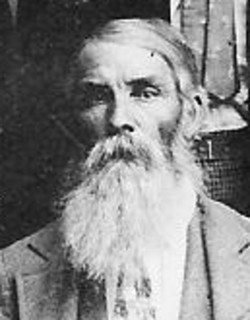
Francis Marion Benton.
Birth: 15 Jul 1841 Tennessee.
Death: 2 Dec 1911 Lyon Co., Kentucky.
Burial Dec 1911 Macedonia Cem., Kuttawa, Ky.
Photo provided by Kenneth A. Allgood
Father: JOHN BENTON
Mother: MARTHA RODGERS
Francis Marion Benton.
Wife: MARY ELLEN PERIN.
Married June 30, 1861, at Dycusburg, Kentucky.
No record of any children.
Civil War Vet.
Enlisted in November of 1861 as a private in the Union Army, 20th Kentucky Volunteer Infantry Company H., was mustered out in January of 1865, as a private, with a honorable discharge. Between the years of 1865 and 1911, he was a farmer.
Francis Marion “Bud” Benton
Birth
1873
Death
24 Sep 1955 (aged 81–82)
Burial
Howard Grove Primitive Baptist Church Cemetery
Cottonwood, Houston County, Alabama, USA
Memorial ID
88150114 · View Source
Receipt signed by Lemuel Benton and Francis Marion dated January 20, 1783. | |
| Creator | Marion, Francis, 1732-1795 Benton, Lemuel |
| Contributors | Johnstone, James D., 1923-1990 |
| Date | 1783-01-20 |
| Source | Johnstone Family papers, M-14, Box 1, Folder 4 |
| Subject | United States–History–American Revolutionary War, 1775-1783 Receipts (financial records) |
| Description | Supply certificate, issued during the American Revolutionary War, stating that Jesse Vining provided one hog weighing sixty-five pounds to the public, under the order of General Francis Marion. The document is certified by General Marion himself and signed by Sam Benton, likely a Commissary Officer. |
Revolutionary War Continental Brigadier General. In 1753, he joined a militia company to fight in the French and Indian War, but did not see action. During the 1760 Cherokee War, he served as a Lieutenant under Captain William Moultrie. In 1773, he established Pond’s Bluff Plantation and was elected to the South Carolina Provincial Congress. Upon the outbreak of hostilities against the British, he was made a Captain in the 2nd South Carolina Regiment. In November 1775, he participated in Snow’s campaign against the Tories. Promoted to Major in February 1776, he attempted to fortify the Charleston Harbor, and defended the left side at Fort Sullivan on June 28 of that year. Promoted to Lieutenant Colonel, he assumed command of the 2nd South Carolina regiment on September 23, 1778. A year later, he was called upon to fight at the second Battle of Savannah, Georgia. On May 12, 1780, he escaped capture at the fall of Charleston because he fractured his ankle at a party. In July, he marched with General Horatio Gates to Camden, South Carolina, where General Gates ordered Marion to set up a spy ring in Charleston (among his men in this operation are James and Micajah Pickett). After Gates’ defeat, Francis Marion and his men set up a guerrilla movement to harass and destroy the British, giving rise to the legend of “Swamp Fox.” In December of 1780, Governor John Rutledge promoted Francis Marion to Brigadier General. Joining with General Nathanael Greene, Continental forces slowly pushed General Lord Cornwallis out of the South and consolidated their hold. In 1782, Colonel Thompson led a 700 man force from Charleston and managed to scatter Marion’s men, but was subsequently defeated. Francis Marion’s last action in the war was on August 29, 1782, when he ambushed 200 men under Major Thomas Fraser at Fair Lawn, who attempted to reverse the trap and was left with an ammunition wagon. After the war, he was elected to the South Carolina State Senate in 1782 and 1784. When the state appointed him commander of Fort Johnston, the salary he earned helped him to rebuild his plantation, which was destroyed during the war. In 1790, he was elected to the Constitutional Convention, in which to served effectively. He had to resign his post at Fort Johnston. He was elected again in 1791 and voted for the federal union.
Yes, Francis Marion served in the South Carolina State Senate in 1782, elected to the Jacksonborough General Assembly. He was reelected in 1784 and also served from 1783–1786, 1791, and 1792–1794.
- 1782 Election: Marion was elected to the state legislature, which met at Jacksonborough, during his absence from his brigade.
- Legislative Actions: The Jacksonborough Assembly, while Marion was serving, voted to confiscate Loyalist estates.
- Subsequent Service: He was reelected in 1784 and continued to serve multiple terms in the senate, which were crucial in shaping the post-war government of South Carolina.
Details on the elections themselves are pretty scarce. The 1778 constitution limited the vote to free white men who professed a belief in God, who were at least 21 years old, and who owned at least 50 acres of land, among a few other restrictions. There were no private ballots in the 18th century, so men had to declare their votes publicly, in front of everyone. Loyalists could not vote, and it appears that the military was in charge of the elections in many places.
Whatever the limitations, the elections marked a return to civilian government after two years without any legislature at all. Many of those elected were also military leaders. Generals Sumter and Marion both became senators, as did Colonels Hugh Horry, Thomas Taylor and William Thompson. General Pickens was elected to the House, as was Continental Colonel John Laurens. The governor’s brother Hugh Rutledge, was elected Speaker of the House.
A more controversial debate focused on slaves. Senator John Laurens had long supported the idea of arming slaves to fight and offering them their freedom in exchange for service. Those suggestions had been shot down pretty overwhelmingly in the past. This time, Laurens tried to push the idea into one that focused on the popular idea of confiscation from the loyalists. He proposed that 2500 slaves, confiscated from loyalist plantations, be formed into regiments that would fight under white officers. The state was under an obligation to provide more soldiers to the Continental Army and could not seem to raise them among the white population. Since no patriots would lose slaves under this plan, and because this would resolve the problem of raising more Continental Regiments in the state, Laurens hoped that it might be more palatable to the delegates.
The other big slave debate during this session was over Sumter’s policy of paying militia with slaves seized from loyalist plantations. This also proved controversial. Sumter, as you might guess, was a vocal supporter of the bill, which authorized what he had been doing. Marion was a leading opponent. The Assembly ended up neither approving or disapproving of the practice, which had already been in place for months. In fact, the Assembly disbanded without coming to any decision on how to pay the state’s soldiers. Some of the slaves seized from the loyalists under the Confiscation Act that was passed would be used to pay Continental recruits. The Assembly also voted to grant immunity from suit for all officers who had seized private property for public use. So, although they did not approve Sumter’s practices of seizing slaves for his soldiers, they made sure he could not be sued for doing so.
ee’s resignation letter to Greene, and subsequent letters over the next few days as Greene attempted to get him to change his mind, indicated his level of frustration. Lee believed he had received insufficient credit for his deeds at Eutaw Springs. He also seemed to show frustration at Laurens’ involvement in the attack on John Island. After Greene determined that Laurens would take over Lee’s Legion after his departure, Lee criticized the appointment. He told Greene that Laurens was not experienced enough and that he would “waste the troops very fast.”
Benton Genealogy
at Thomas Hart Benton Home and Studio State Historic Site
The Bentons were originally established in Lincolnshire England. A branch of the family went to South Wales. In 1731, three brothers, Benton, came from Wales to America. They intended to settle on Chesapeake Bay, but contrary winds drove the ship south, and the brothers landed on Albermarle Sound, North Carolina, whence they went to the uplands and settled at Hillsboro, Orange County, N.C. These brothers were Samuel, Abner, and Jesse. The latter never married. Abner married in Wales, Samuel in North Carolina. This sketch has to do with Abner Benton and heirs. To him was born Jesse B. and Catherine. The latter never married, both born in North Carolina U.S.A. Jesse B. Benton was sent to England and educated. On his return from England, he was appointed (by the Crown), Secretary to the Lord Tryon, Governor of the Province. Afterwards an ugly British General in the Revolutionary War, Jesse B. Benton broke with his chief in the War for American Independence, and was an officer in the American Patriot Army. He, Jesse B. Benton, was married during the War for Independence to Ann Gooch, the daughter of a disreputable English officer under Lord Tryon. Her mother was named Hart and was American born, and Ann Gooch always said, “I came from a family of Harts.” Her cousin Col. Nathaniel Hart was killed at the “River Raisin”, in a battle with British and Indians, during the War of 1812. To the union between Jesse B. Benton and Ann Gooch, there was born Thomas Hart [the Senator], Jesse, Samuel, Nathaniel, Susan, and Catherine Benton. Susan and Catherine never married. In 1793, at the age of 46, Jesse B. Benton died at Hillsboro, N.C.
In 1796, the year Tennessee was admitted to the Union, Jesse B. Benton’s widow Ann, with her family, moved to Tennessee, and settled some forty miles south of Nashville, on land provided by her husband during his life. In 1800 Ann Benton’s sons Thomas H. and Nathaniel returned to North Carolina and entered the State school at Chapel Hill. Neither of them graduated. Of the four brothers Thomas H., Jesse, Samuel, and Nathaniel, the following facts are worthy of record: Samuel married in 1808, a Miss Grundy, and raised six children all born in Carroll County, West Tennessee. Four of these were boys, Nathaniel, Abner, Thomas H., and Samuel (the latter twins) and Catherine and Sarah. Catherine never married. The elder, Nat, went to California and reared a family. Abner died in youth. Thomas H. settled in Iowa, was a Democrat, was a Colonel and Brig. General in the U.S. Army during the Civil War. Was father of Maria Benton, a brilliant woman who married Ben Cable of Illinois and is living. Samuel settled in Holly Springs, Mississippi, reared a family, was twice a Whig Candidate for Congress, was a Confederate Colonel and brevet Brigadier General, was wounded at Resaca, Ga., and died in 1864. Sarah married a Brandt, reared a family and lived and died in St. Louis. Jesse, son of Jesse B. and Ann Benton, married in middle Tennessee, Mary (Polly) Childress, both of whom in old age died near Nashville without children. Thomas Hart, the eldest son was a member of the Tennessee Legislature, a lawyer and a Lieut. Colonel in the War of 1812. An unfortunate break between Generals Jackson, Carroll and Coffee, and Thos. H., Jesse and Nathaniel Benton brothers, resulted in a street duel in Nashville, in September 1813, in which General Jackson and General Carroll were both shot. In 1814 Thos. H. and Nathaniel moved to the Territory of Missouri. Thos. Hart Benton was elected one of the two first United States Senators for Missouri, and served thirty consecutive years, followed by two years in the lower House of Congress. After becoming a Senator he married a daughter of Governor McDowell of Virginia. To this union were born: Sarah, Mary, Jesse Ann, Elizabeth, and Randolph Benton. The latter died in his minority. Sarah married Baron Bolieau, French Minister to the U.S. in the forties, and was the mother of the celebrated artist Philip Bolieau later of New York, now deceased. Mary married a Mr. Jacobs of Jefferson County, Kentucky, an extensive Planter. Jesse Ann married Jon C Fremont, a U.S. Lieutenant of French descent, and afterwards the California Pathfinder, and later in 1856 the first Republican Candidate for President, against James Buchanan, and was not supported by Col. Benton, his father-in-law. Fremont was a Major General U.S.A. in the Civil War. Fremont and Jesse Ann Benton, had born to them John C. (who was a U.S. Naval Captain), and Lilly, who never married but lived to be sixty years old. John C. Jr., died a Captain and has a son John C. now a Captain in the U.S. Navy, and two girls not married. Elizabeth married Commodore Jones, U.S.N. and died in Florence, Italy in 1903.
Nathaniel Benton (our direct ancestor), was born in February 1788, in Hillsboro, Orange County, North Carolina, moved with his mother and family to middle Tennessee in 1796, spent afterwards two years in the North Carolina University and in 1810 married Dorothy Myra Branch, daughter [cousin] of Governor Branch of North Carolina. To this union were born Nathaniel in 1811, Alfred in 1814, Columbus in 1819, Abner in 1816, Susan in 1822, Thomas Hart in 1825, Rufus in 1829, and Maecenas in 1831. Nathaniel and Alfred were born in middle Tennessee; Abner, Columbus and Susan were born in Jefferson County, Missouri; Thomas Hart, Rufus and Maecenas were born in Dyer County, Tennessee. The elder of this family Nat Benton, spent two years at West Point Military Academy, resigned, and with his mother’s family (his father Nat Benton having died in 1833) moved to Texas in October 1835, and settled on the Brazos, near Waco. In February 1836, Nat Benton together with his brother Alfred joined the army of General Sam Houston for the liberation of Texas from Mexican domination. Nat Benton, however, accidentally shot himself in the foot, and came near passing away. Alfred Benton and Ben McCulloch were with Houston at San Jacinto and helped in Texas Independence in 1836. Nat Benton in 1837 returned to Tennessee and married Harriet, the sister of Henry and Ben McCulloch. To this union was born Benjamine Eustace Benton. Nat Benton’s wife died in 1845. In 1853 Nat Benton and son left Dyersburg, Tennessee and went to Texas. Both he and his son Eustace were in the Texas Rangers, and while so engaged Eustace was badly wounded, losing one eye. Captain Nat Benton married again during the’50s to a Miss Harris and children were born to this marriage, but the family history to which I had access did not state how many children, nor where the second Mrs. Benton died.
Nat Benton was a soldier in the Confederate army attaining the rank of Colonel, and was badly wounded at Port Hudson. He returned to Sequing Texas, and lived there till his death which occurred in 1873. His son Capt. Ben Eustace Benton married during the Civil War on April 15 1863, Miss Margaret C. Walker, daughter of General B.W. Walker, and to this union was born Miss Eulalia Benton now living in Pine Bluff, Arkansas. Capt Ben E. Benton died at Pine Bluff, Arkansas June 13 1914.
Alfred Benton, second son of Nat and Dorothy M. Benton, after serving in the war for Texas Independence, died in Texas in 1838. Abner the third son, married Mary Ann Wardlaw of Ripley, Lauderdale County, Tenn., and to this union were born eleven children. Fannie, the eldest, married Tom W. Neal at Dyersburg, had two children. Ella N. Crook, now of Little Rock, Arkansas, and Lillian Simpson, and died in 1880. Alfred lives in Louisville, Ky., Ed at Trenton, Tennessee, Hattie at Memphis, Annie at Dyersburg, Tenn., and Minne at Memphis, others all dead. Columbus Benton died in infancy. Susan married one Boggess, had eleven children, none of whom are living to my knowledge, and she died in June 1885.
Thos H. Benton Jr, son of Nat and Dollie Benton, married Mary Ellen Eason, whose father was Carter T. Eason, and mother Ellen, daughter of Gen. Daniel Morgan who defeated Tarleton at the “Cow Pens”. To this union were born Maecenas E., Mary Ellen, Nat (both the latter died in infancy), Jesse Ann, Thomas H. (both of whom died when about grown), Dollie who married Frank E. Miller and had one child named Mary Ruth Miller. Dollie Benton Miller died May 1895. Samuel Abner born in 1863 died in 1894, and Fannie May, who married E.L. Logan and has had two children, Sam Benton and Ernestine. They live in Little Rock, Arkansas.
Maecenas E. Benton, the eldest of this family is a lawyer, born in Obion County, Tennessee, removed to Missouri in 1869. Was two terms State’s attorney, one term as State Representative, one term United States Attorney, and five terms a member of Congress. He was married in 1888 to Elizabeth Wise of Waxahachie, Texas and of Kentucky parentage. To whom were born Thomas Hart [the artist], Mary Elizabeth, Nathaniel Wise, and Mildred Benton, all now grown.
Rufus and Maecenas, the youngest of the children of Nat and Dorothy Benton and brothers of Nat, Abner, and Thomas H., died in youth.
This statement covers the direct line from Abner Benton the Englishman who came to America in 1731, down to and including all of the present generation of whom the writer has any knowledge.
Compiled by Maecenas E Benton of Neosho, Missouri, from old family records, from Dorothy Myra Benton’s family bible and from his personal knowledge.
Dated July 22, 1915 (signed) ME Benton
Francis Benton – Genealogical Records
Find your family on Ancestry — the world’s largest online family history resource. Try Free for 14 days
Results for Francis Benton
1 – 25 of 432 Records
- Francis BentonBirth: 31 Mar 1861 Floyd, White, Arkansas, United StatesDeath: after Jan 1920 Floyd, White, Arkansas, USA Father: John Washington BentonMother: Rachel G Burkett
- Francis BentonBirth: 31 Mar 1861 Floyd, White, Arkansas, United StatesDeath: after Jan 1920 Floyd, White, Arkansas, USA Father: John Washington BentonMother: Rachel G Burkett
- Francis Josephine BentonBirth: Jul 1863 MarylandDeath: 10 March 1938 Baltimore City, Maryland, United States of America Father: Francis BentonMother: Charlotte Williams
- Francis P BentonBirth: 15 Jun 1918 New YorkDeath: 25 Feb 1995 Auburn, New York Father: Haydon Willey BentonMother: Pearl Amelia Diddy
- Francis Ernest BentonBirth: 7 Jan 1881 Salem, NebraskaDeath: Nov 1971 San Antonio, Bexar, Texas, USA Father: George Augustus BentonMother: Mary Jane WRIGHTON
- Francis Josephine BentonBirth: Jul 1863 MarylandDeath: 10 March 1938 Baltimore City, Maryland, United States of America Father: Francis BentonMother: Charlotte Williams
- Francis Ernest BentonBirth: 7 Jan 1881 Salem, NebraskaDeath: Nov 1971 San Antonio, Bexar, Texas, USA Father: George Augustus BentonMother: Mary Jane WRIGHTON
- Francis Marion BentonBirth: 07 Aug 1888 Grandview, Johnson Co., TXDeath: 8 Jun 1966 Sabinal, Uvalde, Texas, United States of America, Father: James Davis BentonMother: Ophelia Smith
- Francis Pauline BentonBirth: 23 Jan 1917 Marion Wmson, IllinoisDeath: 17 Jun 2004 IL Father: Raymond Scott AlexanderMother: Kate May McAlpin
- Francis Asbury BentonBirth: 1856 Metropolis, IllinoisDeath: 15 February 1947 Metropolis, Massac, Illinois, USA Father: Robert R BentonMother: Nancy Samantha Hill
- Francis Asbury BentonBirth: 1856 Metropolis, IllinoisDeath: 15 February 1947 Metropolis, Massac, Illinois, USA Father: Robert R BentonMother: Nancy Samantha Hill
- Francis Lynwood BentonBirth: 26 Feb 1931 Pleasant Grove, White, ArDeath: 19 OCT 1974 LITTLE ROCK, PULASKI, AR Father: Everett Lee BentonMother: Bessie Hazel Wiggs
- Francis Riley BentonBirth: 1906 Blair County, , PennsylvaniaDeath: 25 October 1975 Jefferson, Kentucky Father: Frank H BentonMother: Mary E Reilly
- Francis Hiram BentonBirth: 1872 Topeka, Shawnee County, Kansas, USADeath: 1959 Topeka, Shawnee, Kansas Father: William Richmond BentonMother: Adella Maria Fowler
- Francis Riley BentonBirth: 1906 Blair County, , PennsylvaniaDeath: 25 October 1975 Jefferson, Kentucky Father: Frank H BentonMother: Mary E Reilly
- Francis Hiram BentonBirth: 1872 Topeka, Shawnee County, Kansas, USADeath: 1959 Topeka, Shawnee, Kansas Father: William Richmond BentonMother: Adella Maria Fowler
- Francis W BentonBirth: 13 APR 1870 Sutton St JamesDeath: Abt. May 1958 Scunthorpe, Lincolnshire, England Father: John Henry BentonMother: Sarah Ann Dalleday
- Francis Hiram BentonBirth: 1872 Topeka, Shawnee County, Kansas, USADeath: 1959 Topeka, Shawnee, Kansas Father: William Richmond BentonMother: Adella Maria Fowler
- Francis Riley BentonBirth: 1906 Blair County, , PennsylvaniaDeath: 25 October 1975 Jefferson, Kentucky Father: Frank H BentonMother: Mary E Reilly
- Francis BentonBirth: 1890 Lincoln, Linconshire, EnglandDeath: Dec 1973 North Kesteven, Lincolnshire, England Father: Frederick BentonMother: Emmaline Warren
- Francis “Frank” BentonBirth: Oct 1865 South CarolinaDeath: 26 JAN 1916 Carmichael Township, Dillon County, SC Father: William Edwin BentonMother: Martha Ann Sing (Davis)
- Francis BentonBirth: 1840 Swavesey CambridgeshireDeath: 18 Jan 1872 Swavesey, Cambridgeshire, England Father: Joseph BENTONMother: Ann Tomlin
- Francis W BentonBirth: 13 APR 1870 Sutton St JamesDeath: Abt. May 1958 Scunthorpe, Lincolnshire, England Father: John Henry BentonMother: Sarah Ann Dalleday
- Francis George BentonBirth: 29 Mar 1891 Baltimore, Maryland, USADeath: Apr 1983 Baltimore, Baltimore City, Maryland, USA Father: John Richard BentonMother: Alice Gertrude Hopkins
- Francis H BentonBirth: 22 May 1913 MarylandDeath: 21 Jul 1998 Baltimore, Baltimore, Maryland, United States of America Father: Charles F BentonMother: Eva Marie Chambers
What can I do next?
d
 Rosamond Press

Leave a comment