This morning I lie in bed with my cat recalling the truth, that I am not but two hours in Boston, and I am lying on a floor that is wall to wall homeless people. It is six in the morning when Michelle and her enterage walk in, and looking for a place to stand, while they talk, this witch puts one foot over my legs, and…..I am amazed! She gives me a glance, and, thus is what it is. I did not know my ancestor is John Wilson. Did she hace a clue? In two months I am in a bar in Roxbury with my friendly witch – with a Mafia Chieg – who pulls out a gun and oints it at her head!
“Are you going to do it?” he asks
Michelle counts to three, and makes unwaverung eye contact – like I taught her!
“No!
He counts to three, uncocks his snub-nose 38, and puts his power away. We engae in small talk. I spent hours convincing Michejlee the answer was “No!” . She wanted to take his money – and pretence to go to Lousiania and look for her best friend – that was his lover.If she took his money – she is dead! He will find her.
When we leave the bar, he whips out his Smith and Wesson and fire three shots in the air, while shouting
“Come and het me – Niggers! Bang! Bang! Bang!
I could feel a wave of great relief from Michelle, because hs was saying :Us!”. He was parked in his car in front of our house for several days, and saw us hippies come and go in a neighborn no Boston Italian would dare go – with a un – and or, a gang! He had sized me up. He knew I had the right stuff. He was amazing som black had not shot me dead. Those attmepts would come later. When I worked the gravyard shift at Yale Trucking on the East River, they stevador called me
THE CALIFORNIA KID
So, as the Chief puts his gun away – for the second time – we know we are on…..THE INSIDE! And I am – a standup guy! I was a go between. I got the interested party to the the truth…..
MICHELLE DIDNT HAVE A FUCKING CLUE WHERE HER FRIEND WAS.
Seven months later she asks;
“Would you help my frind Dotty. She is being contro;;ed by a bad guy.”
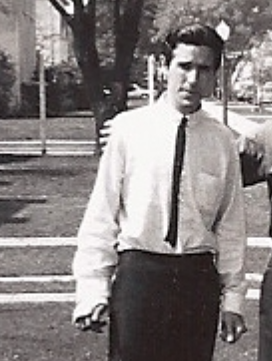
Above is a photo of of me with a cast on my hand. I punched a wall after Marilyn slept with a twenty-four years old German Jet Setter. His name will come to me. Theee is nothing like being a man with a boked heart – in America! I was seventteen.
I turned on my TV and there is Ken Burnes talking about his new seriesThe Revoultion Revo;ition – that he titles our first Civil war. I believe my kin, Lucretian and Herny Clay – would agree. They bred Americas fir thorubreds in Americ on their Ashland famm, When I saw our soldier on horseback leading a Murderer of a Jounralist to our White House – I felt like throwing up! I knew the history of Ashlnd and the Kentucky Derby – that the Queen of England attened. Elizabeth was a devout and studue lover of horses, Her son and grandonss – dont ride! I assume the Arbian Stallions are being honored. I will try to find what breed OUR HORSES are, and if they belong to our military.
Seeing Musk at the table completeed THE AGELESS HISTORIC SCENE that Marie Antionette – made famous! Trjump, The Prince, and Musk are celebrationg the solding of the Ancient Poor Problenem
JUST DONT GIVE THEM ANY MONEY, AND TAKE AWAY THEIR MONEY.
The sight of Musk dining with the head of the Saud family, completes the ATROCIOUS ACT, because the Prince give thiudands of his family and subjecets……
FREE MONEY! FREE MONEY! FREE MONEY!
Trump has been promising to give Americans FREE MONEY – but only if they WORK! That $2,000 is hush money, because the Trump Tarrifs are…………….A TAX!
The Orince wants to invest a trillion in America, What does he want for his money? I think he NEEDS a tour of Boston. Just me and him in an old Caddy. I am…………………………..
THE REAL PRESS
Dottie and I were supposed to get married and begat a Patriotic Christian Linage. John Witherspoon. John Wilson. I add the Gooch and Hightower linage to the Benton, Boone, Hart line. Ken Burns does keep track of HOW MANY Americans there are, and, who is loyal to King George, and who is not.
All that gold shit Donald put in the White House, has got to be scraped off. He is a stupid, rich man.
EXTRA! On November 19, 2025 I believe I found proof my direct grandfather served alongside his brother, Samuel Rosamond, and, he was close with John Hodges, who lost all of his family, but Dorothy Hodges, who is said to be James’ wife. He might have signed as a brother-in-law. I have spent thousands of hours on mu rosy tree, I ight join the Daughters of the American Revolution. There is confusion because these families did not keep good records, and their memories were taxed when it cam time to get a pension for the…
U.S. GOVERNMENT
[p 31: Certificate dated May 11, 1846 from the South Carolina Comptroller General listing
payments made to a James Hodges for militia service during the revolution including payments
for 57 days duty as a Sergeant and 60 days duty as a private per Captain Samuel Rosamond’s pay
Bill; payment for 34 days service in the militia in 1782; payment for 32 days service as a private
in General Marion’s Brigade under the command of Lieutenant John Pledger in 1782.
Transcriber’s Note: I think the only service which related to this veteran is the service under
Capt. Samuel Rosamond as that veteran signed his claim with his mark and the other services
were claimed by men who could sign their names. Also Rosamond was in the Upper Ninety Six
District Regiment which would have included Laurens County, SC, whereas men serving under
Gen. Francis Marion were almost exclusively from the coastal areas of South Carolina. See
below for transcript of the relevant South Carolina Audited Account.]
South Carolina Audited Accounts4 relating to James Hodges pp14
Audited Account No. 3648
Transcribed and annotated by Will Graves 8/24/22
[p 2]
No. 28 April 25th 1785
[Book] O
[No.] 504
Mr. James Hodges his Account of Militia Duty per Captain Samuel Rosamond’s Pay Bill
commencing in February 1779 & ending in May 1780 Amounting to Viz.
57 Days as Sergeant at 22/6 [22 Shillings 6 pence old SC currency per day] £64.2.6
60 Days as Private at 20/ 20 shillings old SC currency per day] 60.0.0
also Duty
beside per Col. Anderson’s [Robert Anderson’s] Return [not extant] 10.0.0
Currency £134.2.6
Stg. [Sterling] £19.3.2 ½
Exd
. W.R. [Examined by W. R. [identity unknown]]
J. Mc
. A.G. [approved by] John McCall, Adjutant General]
Received 25th April 1785 the full amount of the within Account in a Treasury Indent No. 504
Book O for James Hodges by Virtue of an Order
S/ James Rosamond
[p 3: Restatement of the veteran’s claim as set forth above except in a slightly different format]
[p 4]
Abbeville County 25th [too faint to discern] 85
Gentlemen
Please to deliver my Indents to Mr. James Rosamond the bearer hereof and oblige
Gentlemen
Your very humble Servant
S/ James Hodges, X his mark
Edward Blake & Peter Bocquet Esquires
Commissioners of the Treasury
The above order was Signed in my presence the 25 July 1785
S/ John Buie, JP
Sarah Hodges was born circa 1764, a daughter of Richard and Elizabeth Hodges. Her brother, James Hodges, was a Sergeant in Captain Samuel Rosamond’s company. [1] Samuel and Sarah became the parents of as many as ten children. [2]
On August 11, 1785, in the Ninety Six District of South Carolina, Sarah married Captain Samuel Rosamond, a veteran of the American Revolutionary War. Applications for membership in the Society of the DAR have been made by the descendants of their son, Richard Rosamond, who married Mary Stribling; Addison Rosamond, who married Mary E. Ramsey; James Samuel Rosamond, who married Francis Hill; and of their daughters, Sarah Rosamond, who married Barksdale Dunham Garrison; Elizabeth Rosamond, who married William Pyles; and Margaret “Peggy” Rosamond, who married Ezekiel Powell. [3]
James was married twice. First to Lettice Tillman about 1778 and from this union had the following children: Nathaniel, Thomas, Benjamin, Samuel and Mary. After Lettice’s death, he secondly married Mary, widow of Daugherty after October 1795 when her husband died. They only had one child from this union. The son, James mentioned in his will was his second wife’s son from her first marriage.
(special thanks to Karyl Lee Rodabough for the following info) James’ birth was between 1750 and 1760 when John and Sarah were still in Virginia.
James Rosamond, R255, M. Born ca 1754 in Augusta County, Virginia. James died in Abbeville District, SC bef 10 Jul 1806, he was about 52. Occupation: Farmer.
James served in the Revolutionary War in the Ninety-Six District before a nd after the fall of Charleston. The Siege of Charleston occurred in 1780 by the British Army led by Sir Henry Clinton. James furnished 150 lbs. of pork to the militia in 1782. He obtained land grants as a result of his service in the war. An abstract of his service in the Revolutionary War is on file at the Historical Commission in South Carolina.
In the first national census in 1790, James, his brother Samuel, and his m other Sarah were the only Rosamond Heads of Household listed in South Carolina.
He and his brother Samuel are mentioned in their sister Jean Rosamond’s will.
Marriage date to Mary Daugherty is based on the approximate date of death of her first husband around October 1795.
1800 Census Abbeville SC
Name: James Rosemond County: Abbeville State: South Carolina
Free White Males
Under 10: 1 Free White Males – Benjamin
10 to 15: 2 Free White Males – Samuel E., Thomas A.
16 to 25: 1 Free White Males – Nathaniel Jones
«b»45 and Over : 1 – James
«/b»Free White Females – )
«b»45 and Over : 1 («/b»Mary (Doherty
Number of Slaves: 9
Per: Emma A. Maughan
General Barksdale Dunham Garrison was a veteran of the War of 1812. The Thomas Fournay Chapter of the Daughters of 1812, Spartanburg, South Carolina placed a marker on his grave in 1967. They have also traced his lineage back to his ancestors in Scotland. [1]
Barksdale was born June 20, 1778, in Rockingham, North Carolina, a son of David Charles Garrison, Sr. and Elizabeth Frances Barksdale, married circa 1774, in Fairfax county, Virginia. Barksdale married Sarah Rosamond, a daughter of Captain Samuel Rosamond and Sarah Hodges. [2]
“B.D.Garrison” is found at the age of 72, on the United States census of 1850, living in Greenville, South Carolina, with children B.D. Garrison, Jr. age 30, Elizabeth Garrison, age 24, Matilda Garrison, age 20 and Ann Garrison, age 18, all born in South Carolina. [3]
General Barksdale Dunham Garrison died July 18, 1853, at the age of 75, in Greenville county, South Carolina and is buried in Piedmont. There is a photograph of the 1812 marker placed on his grave in 1967. [4]
Family Tree of Sarah (Hodges) Rosamond
Regulus (f.1739) also claimed the
bloodline of the Godolphin Arabian. In
1745 he won eight Royal Plates in Great
Britain. He stood at stud willingly, and his
most famous offspring was Fearnought
(f.1755). Fearnought earned the
reputation of the most important sire in
America in the colonial era, and was
considered by many the most dominant
stallion until the arrival of Medley (f.1776)

President Donald Trump welcomes Saudi Arabia’s Crown Prince Mohammed bin Salman to the White House in Washington DC on Tuesday, November 18. 2025. The two leaders are expected to discuss defense, nuclear power, technology, and Israel during the visit. Photo by Anna Rose Layden/UPI
womenhistoryblog.com/2014/11/lucretia-clay.html
Although Clay was a practical politician of flexible rather than rigid beliefs, he did emerge as the great champion of the “American System.” He called for a protective tariff in support of home manufactures, internal improvements (federal aid to local road and canal projects), a strong national bank, and distribution of the proceeds of federal land sales to the states.
Elected to the U.S. Senate in 1831, Clay served in that body until 1842 and again from 1849 until his death. In 1833 he devised a compromise tariff that resolved the crisis brought on by South Carolina’s attempt to “nullify” the prevailing tariff set by Congress. In the same period he became a leader of the new Whig party that emerged to oppose Andrew Jackson‘s administration.

John Trumbull’s “Declaration of Independence” (1819). John Witherspoon is pictured in the background facing the large table, the second seated figure from the (viewer’s) right.
The Articles of Confederation
The Duchess enjoyed a “long and devoted” relationship with her husband of more than 40 years, the great general John Churchill, 1st Duke of Marlborough.[1] After Anne’s father, King James II, was deposed during the Glorious Revolution, Sarah Churchill acted as Anne’s agent, promoting her interests during the reigns of William III and Mary II. When Anne came to the throne after William’s death in 1702, the Duke of Marlborough, together with Sidney Godolphin, 1st Earl of Godolphin, rose to head the government partly owing to his wife.
- Royal family‘s reliance on oil revenue: The Saudi royal family’s wealth is closely tied to the country’s vast oil reserves. For decades, oil revenue has been used to support a large royal family with billions of dollars in allowances, public sector jobs, and other perks, according to The New York Times.

Here
Thomas Hart and Daniel Boone of Kentucky

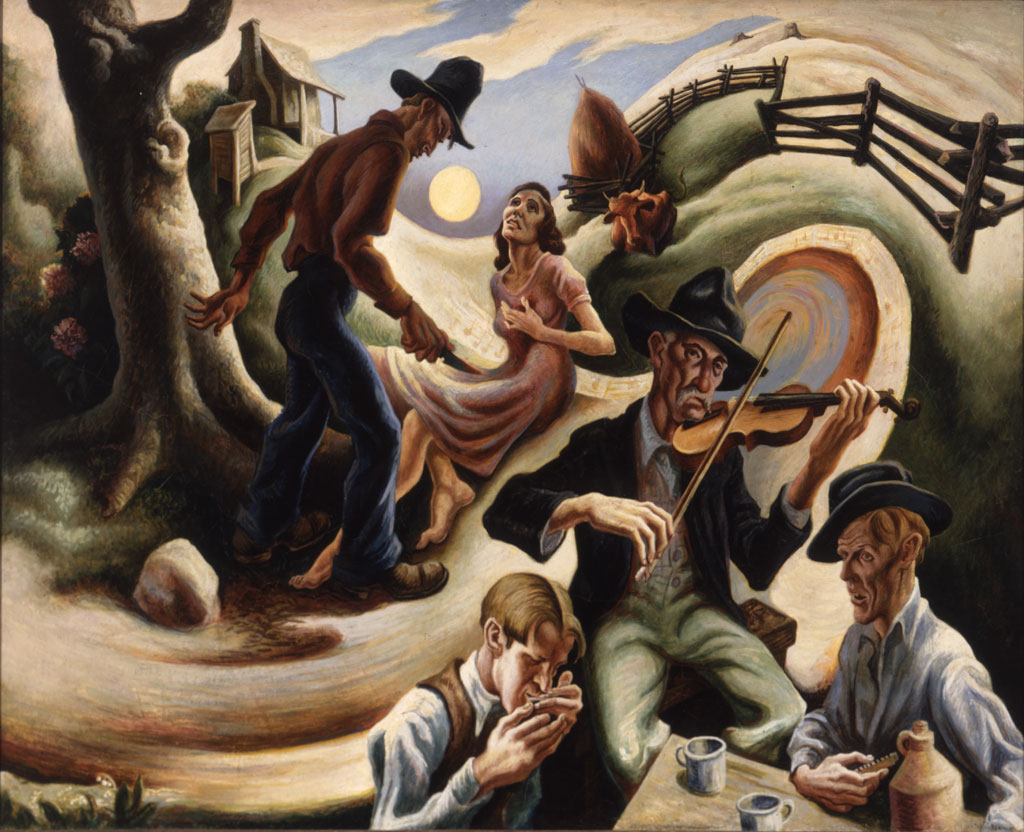 My adopted son, Hollis Lee Williams, was born in Louisville Kentucky, and is kin to Thomas Hart from whom the famous artist, Thomas Hart Benton, descends. My brother-in-law, Garth Benton, was a cousin of Thomas
Jon
Colonel Thomas Hart
Colonel Thomas Hart was the son of Thomas Hart and Susanna Rice Hart and the brother to John, Benjamin, David, Nathaniel and Ann.
“The mother of Lucretia Hart was Susanna, daughter of John Gray, Colonel in the Royal Army. Tradition says he opposed his daughter’s marriage on the grounds that Thomas Hart, her intended, was a rebel. He was, indeed, a bold and active rebel, a member of two Provincial Congresses of North America, a Colonel in the Revolutionary Army, and one of the principals of that daring and romantic enterprise, the Transylvania Land Company. In spite of her father’s disapproval the wedding of Susanna Gray and Thomas Hart, parents of Lucretia Hart, went off as planned.” (Simpson, Letters to)
In 1780 Thomas Hart moved from North Carolina to Hagerstown, Maryland, where his two older daughters, Eliza and Susan, were married and where Lucretia was born.
“In the spring of 1794 Thomas Hart wrote to Governor Blount of Tennessee, who had married his wife’s niece, ‘You will be surprised to hear I am going to Kentucky. Mrs. Hart, who for eighteen years has opposed this measure, has now given her consent and so we go, an old fellow of 63 years of age seeking a new country to make a fortune in…
Another letter, written by Thomas Hart, dated Lexington, Kentucky 1795 says, ‘Oh, if my old friend Uncle Jacob Blount were here! What a pleasure we would have in raking up money and spending it with our friends -This is really one of the finest countries in the world -The society is equal to that of any interior town in the United States’. He did, indeed prosper.” (Simpson, Letters to)
“The fact that at a time when sailing vessels and clipper ships ruled the seas, Colonel Hart supplied all the rope used by the navy, proving that his cordage business was both extensive and successful. He rapidly laid the foundation of an immense fortune, comparable to the Vanderbilt wealth in New York”. (Schwartz)
“From his land sales Boone had raised about $20,000, and had been given additional money to purchase warrants by the Harts. Boone had between forty and fifty thousand dollars in cash in his saddlebags when he began his journey.” (Loforo)
There are conflicting stories as to exactly what happened with this great some of money. Here’s one version: “At the inn in James City, Virginia, described as Painter’s Fork, Boone while asleep was robbed of the entire amount. The incident caused much criticism and injured his reputation”.(Henderson)
Over the years, Boone paid this lost money back to the contributors, except for the Harts. “The Hart brothers, who had lost the most, saw the matter differently. In a letter dated August 3, 1780, Thomas Hart summed up their position on the robbery: ‘I feel for the poor people who perhaps are to loose even their preemptions by it,
but I must say I feel more for poor Boone whose character I am told suffers by it.’ Hart praised Boone as a ‘Just’ and ‘Upright’ person, who even in the most ‘Wretched Sircumstances’ was ‘a Noble and generous soul.’ He concluded his comments by stating that ‘therefore I will freely grant him a discharge for whatever sums of mine he might be possest of at the time.’ “(
challenged and removed. (September 2011)
Thomas Hart Benton (April 15, 1889 – January 19, 1975) was an American painter and muralist. Along with Grant Wood and John Steuart Curry, he was at the forefront of the Regionalist art movement.
Benton was born in Neosho, Missouri, into an influential family of politicians and powerbrokers. Benton’s father, Maecenas Benton, was a lawyer and U.S. congressman. His namesake, great-uncle Thomas Hart Benton, was one of the first two United States Senators elected from Missouri
“*Nathaniel G. Hart, in honor of whom Hart County, Ky., received its name, was a son of Colonel Thomas Hart, who was an immigrant from Maryland to Kentucky in pioneer days. Nathaniel G. Hart was born at Hagerstown, Md., and came to Kentucky when he was but a few years old. He was a brother-in-law of Hon. Henry Clay and Hon. James Brown, they having married his sisters. He was about twenty-four years of age at the time of his marriage to Anna E. Gist. At the breaking out of the War of 1812 he was in command of a volunteer company called the “Lexington Light Infantry,” and with his company enrolled for service in the Northwest. He served through the winter campaign of 1812-13, a portion of the time as staff officer. He was taken prisoner at the Battle of the River Raisin. On the way from Frenchtown to Malden he was massacred by his Indian guard. His wife survived him but a short time. They were the parents of two sons. Mrs. Judith Cary Scott had formerly been Mrs. Gist and at this time was the wife (second) of General Charles Scott, Governor of Kentucky. See Collins’ History of Kentucky.”
Hart vs. Benton Lawsuit
August 22, 1812
‘Just’ and ‘Upright’ person, who even in the most ‘Wretched Sircumstances’ was ‘a
p.187, August 22, 1812,
THOMAS HART, JAMES BROWN and ANNA BROWN, his wife, HENRY CLAY and LUCRETIA CLAY, his wife, NATHANIEL G. S. HART, JOHN HART, JAMES SHELBY and POLLY SHELBY, his wife, ELIZA PINDELL and THOMAS HART PINDELL, heirs and devisees of THOMAS HART, deceased,
v.
NANCY BENTON, SR., PEGGY BENTON, POLLY BENTON, THOMAS BENTON, JESSE BENTON, NANCY BENTON, SAMUEL BENTON, NATHANIEL BENTON, SUCKY BENTON, and SAMUEL ESTILL and DANIEL MAUPIN, et. al.
Petition recites: SQUIRE BOONE obtained a certificate of settlement and preemption, and Nathaniel Hart obtained a certificate for settlement and preemption of 1,400 acres of land adjoining said Boone. Jesse Benton obtained from same commissioners a certificate for settlement and preemption adjoining claim of Nathaniel Hart on north and east, which was entered with surveyor…your orator purchased of said Benton all his claims and paid him a full consideration and obtained assignment of said settlement and preemption. And said Jesse Benton, afterwards, by letter dated September 3, l789, acknowledged the sale of said claims to your orator and promised your orator another assignment if the original one was lost. And said Jesse Benton departed this life leaving a will disposing of all his lands excepting the said claim which being sold to your orator was omitted in his will. Said Benton leaving his wife Nancy and his children Peggy Benton, Polly Benton, Thomas H. Benton, Jesse Benton, Nancy Benton, Samuel Benton, Nathaniel Benton and Sucky Benton. Said court of commissioners granted JOSEPH HUGHES right of preemption which was surveyed contrary to location and in such manner as to interfere with the settlement and preemption of said Jesse Benton, and having underwent several sales hath at length been conveyed to Samuel Estill . PHILLIP WEBBER illegally obtained forom commissioners a certificate claiming 400 acres and vaguely entered same and sold it to said Estill who surveyed contrary to entry and so as to interfere, and obtaining grant in his own name, conveyed [blank] acres to Daniel Maupin, and said Estill and Maupin have refused…
Answers filed by defendants. Estill pleads that it may be true that patents have been secured in the names of Squire Boone, Nathaniel Hart and Jesse Benton, and that plaintiff hath purchased claim of Jesse Benton, but defendant has been informed that previous to the opening and establishing of the land office in the Commonwealth of Virginia, in the year of 1776, a certain RICHARD HENDERSON and Company claimed all the lands lying on the south side of the Kentucky River, that complainant and said Jesse Benton were partners with said Richard Henderson, who in the said year of 1776, for a valuable consideration actually paid by said Hughes, sold and conveyed to him 640 acres of the land now included in his survey and patented, which will appear from the books of said Richard Henderson and Company. That in consequence of said sale a survey was made in 1776 for said Hughes.
Said defendant is advised that although the claim of said Henderson and Company to these lands…was destroyed by act of law, yet plaintiff nor said Jesse Benton ought not deprive Joseph Hughes or this defendant of said land by any claim which they may have acquired since.
Amended petition recites: JAMES DINWIDDIE claims part of lands to which your orator is entitled as devisee, from Joseph Hughes.
Various interrogatories were filed. Complainant’s answer to same:
1. That he was one interested in the adventure of Richard Henderson and Company.
2. That the said company claimed at one time all the land on the south side of the Kentucky River to the Cumberland River by purchase from the tribe of Cherokee Indians, but the then Legislature of Virginia and North Carolina annulled their purchase and that of all persons claiming under them, and they now hold no lands except those granted by said Legislature at the mouth of the Green River.
3. That Jesse Benton was never considered as an original partner in the company but obtained a part of DAVID HART’s share by private purchase, who was one of the original partners of the company.
4. That he does not know Joseph Hughes ever purchased 640 acres of land from Henderson and Company, but thinks it probable that he might have, as many others did, but believes no monies were ever recived by the company in consequence, or that he ever heard that the executive of Virginia had issued a proclamation forbidding the inhabitants of Kentucky to pay monies to said company for land sold by the company until their claims should be litigated before the Legislature of said state and who decided by making null and void their purchase from said Indians.
5. That he has not the books of the said company nor does he know in whose possession they are, not having seem them for upwards of twenty years.
Sworn to by Thomas Hart, Lexington, September 18, 1801.
CHARLES BROWN, JOHN DAVIDSON, WILLIAM ANDERSON, BENJAMIN ESTILL, JAMES BLESKY and the heirs of JAMES ESTILL, deceased, appear as defendants.
p.229, Abstract of will of NATHANIEL HART, dated June 27, 1782, names wife SARAH HART, sons SIMPSON HART and NATHANIEL HART, brothers DAVID HART and THOMAS HART. Children, KEZIAH THOMPSON, SUSANNAH HART, JOHN HART, CUMBERLAND HART, CHINA HART, and RICHARD HART.
p.237, Deposition of WILLIAM HART, aged 38 years (taken on September 17, 1811, in Fayette County: About 16 or 17 years ago he was and had been for several years before well acquainted with the family of Jesse Benton, whose heirs are the defendants. That the said Jesse Benton resided in North Carolina near Hillsborough and died in latter part of the year 1791 or the beginning of the year 1792. Said Benton’s children were all very small at time of his death, one at breast, and some years after his death the family removed to Tennessee where they now reside.
p.238, Deposition of JESSE OLDHAM, aged 72 years (taken at the improvement of NATHANIEL HART in Madison County, on March 3,
1802); He came to Kentucky from North Carolina in the year of 1775 at which time he passed by the blue licks and from thence near this improvement to Twitty’s fort and the trace which he traveled was then called and known by the name of Boone’s trace. That in the year 1775, he, together with Nathaniel Hart and others, planted a crop of corn at Boonesborough. That he came out of Kentucky agin in the spring of the year of 1779 at which time
he, together with Nathaniel Hart and others, raised a crop of corn at Boonesborough and in the same year raised a crop of corn at this improvement and also at deponent’s improvement which lies near this improvement and on this creek. That he has never heard or known of this improvement by any other name than Nathaniel Hart’s improvement. I was not here when the commissioners sat and never saw Nathaniel Hart’s certificate. We were not in
partnership, his corn was for himself and mine for myself. They were two separate and distinct claims. These improvements were about one mile apart. There was no improvement here when I first came to Kentucky in 1775.
[p.252. Deposition of JESSE OLDHAM (taken December 1, 1810). [Repeats first what was in preceding deposition.] States that Nathaniel Hart and I married sisters. Boone’s old trace was marked out in year 1775 and was the road leading from Boonesborough and upper part of Kentucky through the wilderness and it was then generally traveled.]
p.239, Deposition of THOMAS ALLEN (taken at Harrodsburg on July 28, 1803): Relates facts of a survey made by him and DANIEL BOONE sometime during year of 1783 or 1784 at the request of the widow of Nathaniel Hart.
p.241, Deposition of JOHN HARPER (taken at Montgomery County Court House on November 17, 1810): He set out from Boonesborough in the month of June 1779 to go to Virginia and encamped the first night at Hart’s fork of Silver creek in company with a number of others and Nathaniel Hart, deceased and Jesse Oldham set out at the same time for the settlements but were obliged to go out of the way for a horse that was bit by a snake and did not join the company until that evening. When said Hart and Oldham et out from Boonesborough they appointed to meet the company at the said Jesse Oldham’s improvement which lies above Nathaniel Hart’s improvement about a mile and on east side of Hart s fork. There was a field of corn growing at Jesse Oldham’s improvement which the company worked over and cleaned out the weeds. The next morning they went on to Nathaniel Hart’s improvement where there was a considerable field of corn growing which they also worked over and laid by, and then the company proceeded on to Virginia.
p 243, Deposition of JOHN KIMBROUGH (taken at the office of THOMAS H. BENTON, in Franklin, Tennessee, on the last Saturday in
November 1811): About the year of 1790 and for several years before and after that time, he lived in the State of North Carolina and was well acquainted with the family of Colonel Jesse Benton, who died about that year near Hillsborough in said State, deponent being nephew of wife of said Jesse Benton, and he remembers that after the death of said Benton, a daughter of Jesse Benton named SUSANNAH BENTON was born…
p.245, Deposition of THOMAS J. OVERTON (taken in Fayette County on September 23, 1811 ): Repeats testimony regarding Benton’s children and states “all very small at time of his death.”
p.245, Deposition of JESSE HODGES (taken at the house of JAMES DINWIDDIE, in Madison County, November 30, 1800): He saw in 1779 the tree standing on Boone’s trail marked with letters of Nathaniel Hart’s name…and some chopping on the trees about it…and heard it called Hart’s improvement. It was generally known by hunters accustomed to hunt these woods and parts. I passed by his improvement the first time in the summer of 1779 and my recollection is that Jesse Oldham removed his family to this state in the year of 1787.
p.247, Deposition of JESSE CARTWRIGHT (taken at the house of JAMES DINWIDDIE, Madison County, November 30, 1800): I came to Boonesborough in November 1780 and resided here until 1782. Shortly after I came here I became acquainted with Captain Nathaniel Hart who lived at the place called White Oak Spring. We had some trading and much talk about land trading during the course of the next year, in the meantime I had seen an improvement on the waters of Silver Creek which I was informed by several was Nathaniel Hart’s. He had a stud horse I think he called Spidella which he asked me 1,000 acres of preemption land. I understood from Hart he made his improvement in 1775. It was shewn me by JAMES ESTILL as we were riding through it. I lived a considerable time at Estill’s old station.
p.248, Deposition of JOSEPH KENNEDY (taken at the house of JAMES DINWIDDIE, in Madison County, on December 1, 1810): Was
well acquainted with Boone’s old trace that leads up to Hart’s fork of Silver creek on to Twitty’s fort in the year 1777, and about 1/2 of a mile on a southwest course from Twitty’s fort I saw an improvement which was on Boone’s trace and my brother JOHN KENNEDY and MICHAEL STONER being with me, they informed me that it was Nathaniel Hart’s.
p.249, Deposition of STEPHEN HANCOCK, aged 58 years (taken on April 3, 1802 at Hart’s improvement on Silver creek in Madison County): I came to Kentucky in January of the year of 1776 and traveled along the trace then called Boone’s trace. Blue Licks to Twitty s and thence to Boonesborough. Then I saw an improvement on the trace, several trees belted. Nathaniel Hart’s field in which he raised corn in 1779. Silver Creek, Hart’s fork and SQUIRE BOONE’s Stockfield tract were called and known by those names in the year 1779. Nathaniel Hart raised a crop of corn at
Boonesborough in the year of 1776 and kept hands there for several years afterwards. Deponent understood from information that as people were traveling out to this country, they got pumpkins from Hart’s field upon Boone’s trace and carried them to the waters of Otter creek where they cooked them and from the seed being scattered around there, they came up and that branch was afterwards called Pumpkin Run.
p.251, Deposition of Colonel JOHN SNODDY taken at DINWIDDIE’s house in Madison County, on April 3, 1802): In the year of 1775 I came to Kentucky in company with DANIEL BOONE and as we traveled along Boone’s trace I saw an improvement on said race near to a small pond. about half a mile south of Twitty’s fort, which Daniel Boone informed me was Nathaniel Hart’s. Then there was several trees belted and some cut down. It appeared to me to be an improvement and not a camping place.
p.253. Deposition of THOMAS WARREN (taken at Hart’s fork of Silver Creek, on September 14, 1811): I first knew of this improvement in 1760 and it was called Hart’s upper improvement at that time. It had appearance it had been cultivated in corn the year before. It was generally known by name of Hart’s field 1780 by hunters from Estill’s station. I first settled at Estill’s station in February of 1780 and lived at that station between eight and nine years. The trace from Estill’s to Adam’s station passes through the edge of Hart’s improvement. [Note: in deposition taken in same case on March 19, 1808, same witness says:] It was between the 11th and 15th of February 1780 when I came to the old station and by direction of JAMES ESTILL. I was the first one to settle at Estill’s station and James Estill settled in a few days after with part of his family. He and myself raised corn in 1780 at that place. There were seven or eight families at this station in the year 1780. I first became acquainted with little fort in the last of February 1780. It was about 100 yards off trace called Boone’s trace. I have no knowledge of Twitty’s fort, more than I have saw it often. Some called it Twitty’s fort and some Little Fort.
p.254. Deposition of DAVID LYNCH (taken September 14, 1811 in Madison County): I have known Nathaniel Hart’s improvement since the spring of the year of 1780 and it was then called Hart’s improvement. There was some appearance of corn stalks on it when I first saw it. It was generally known by the name of Hart’s improvement by the hunters from Estill’s station and well known to settlers at Adam’s station and Boonesborough.
p.255 Deposition of PETER HACKETT (taken near the house of JAMES DINWIDDIE in Madison County, on July 21, 1812): I settled at Estill’s station about the last of February or first of March in the year of 1780. I believe I became acquainted with the settlement we are now on in the last of spring of the same year. There were seven families at Estill’s station in 1780. When I first saw this improvement there was an appearance of corn being raised. The only trace from Estill’s to Adam’s station and from that to Logan’s station was the one passing through the edge of this improvement. It was the only trace used by people from Adam’s station to Estill’s station and was well known to the people of that station in 1780, as they hunted for their stock and for game along same. TWITTY was wounded and died at the little fort and was buried there. The fort was built while he lay there wounded.
p.259, Deposition of Captain WILLIAM BUSH (taken at an Elm tree on Hart’s fork of Silver creek on March 23, 1803): In the spring of the year 1775 with Captain NATHANIEL HART, JONATHAN JENNINGS, came to Boonesborough. I heard them say they had better take their choice of land as they came along, they were asked where, and, they told us that Captain Hart had made his choice at the camp at the mouth of the branch that leads up toward’s Twitty’s fort and that Jennings choice of land was between him and said fort on that trace. In summer of 1782 I was applied to by BENJAMIN CRAIG to shew Hart’s improvement, and I came to Captain Hart’s improvement and with THOMAS ALLEN, surveyor, we came to this Elm tree, the beginning corner of Jenning’s and proceeded to survey and they expected to hold not over one mile square under the proprietors RICHARD HENDERSON and Company. I first saw Twitty’s fort the day after Twit-by was killed.
p.259, Deposition of SQUIRE BOONE (taken at his own house in Shelby County, on May 18, 1804): He is principaled against going into the town of Shelbyville upon any business whatsoever but is willing to depose to any facts within his knowledge relative to said suit at his own house. Deponent is well acquainted with the beginning called for in GEORGE MERIWETHER’s entry of 1,000 acres in Madison County, which deponent sold to said George Meriwether, and known as the Stockfield tract. He had survey made in the year 1776 of 1,000 acres and began at said honey locust which is south east corner of said preemption as surveyed under the State of Virginia. Deponent was present when this survey was made and showed lines to the surveyor.
p 261, Deposition of SQUIRE BOONE (taken at Sassafras tree, corner of survey made by DANIEL BOONE, as assignee of JOSEPH HUGHES, on Silver Creek, October 2, 1802): In the month of April 1776 he was employed by Joseph Hughes to assist in laying of piece of land for said Hughes which he had purchased of colonel RICHARD HENDERSON and Company in a State then called Transylvania, and, on the waters of Silver Creek, where he attended as a marker and sometimes carried the chain to go around said land, and this is the beginning tree. [Taking of the deposition was then removed to Boone’s old trace on Silver Creek leading by CHARLES BROWN’s towards TWITTY’s fort on TAYLOR’s fork]: That this is the trace he marked on his way from the old settlement to Boonesborough and was called Boone’s trace marked for Colonel Richard Henderson.
p.261, Deposition of BENJAMIN VANCLEVE (taken in Madison County on March 28, 1803): Sometime in the month of April of 1776
deponent came to this corner where we have met and made this corner for JOSEPH HUGHES’ beginning corner. This corner was marked by JOHN KENNEDY for the beginning corner of Hughes. Question by JAMES DINWIDDIE: Was it usual to pay to Henderson and company the money for entering of lands before it was entered? Answer: I can only answer for myself. I paid I think the best of my recollection $2.00. [Taking of the deposition was then removed to an oak tree, northeast corner of the Stockfield tract, surveyed by J. Kennedy for Squire Boone under Henderson and Company]: This is the South East corner of a survey made by J. Kennedy in April 1776.
p.262, Deposition of EDWARD WILLIAMS (taken at house of NICHOLAS ANDERSON in Montgomery County, on May 14 1804): He set out from Boonesborough in the month of June 1779 to go to Virginia and encamped the first night on waters of Silver creek in company with a number of others and that NATHANIEL HART and JESSE OLDHAM set out at same time for the settlements but were obliged to go out of their way for a horse that was bit by a snake and did not join the company until that evening. That when the said Hart and Oldham set out from Boonesborough they appointed to meet the company at said Jesse Oldham’s improvement at the creek. That they all set out together the next morning and passed by Nathaniel Hart’s improvement, and said Hart informed deponent and company that it was his improvement and there was a considerable field of corn at the said improvement. Deponent was present at Boonesborough when Nathaniel Hart laid in his claim before the Commissioner’s for his settlement and preemption, and the said Hart informed this deponent that he had obtained his certificate for this improvement on Silver creek.
p.264, Deposition of SAMUEL ESTILL (taken on March 19, 1808 at house of ROBERT MILLER in Madison County): [Said deposition was taken for use in suit of BENJAMIN ESTILL and JOHN ESTILL v. BENJAMIN SCRIVENER and used by consent in this case.] Some time in the summer of the year 1779 I was with JAMES ESTILL, MICHAEL BEDINGER and others at the spring at Estill’s old station and he shewed me that. In the year of 1780 I saw some marks at JAMES ESTILL JR. spring which I thought probably might be another claim. I then told James Estill about the marks and he told me JOHN BOUGHMAN got to marking of it and he stopped him, and he told me he marked the spring at the old station first and went on to James Estill, Jr. spring and marked it the same day. I never heard James Estill claim that last mentioned spring until after we settled the old station. I think my brother James Estill, deceased, or some of those at the station tanned leather at this spring in the year of 1780. The old buffalo road or trace lead down Muddy creek, by the improvement at James Estill, Jr. spring, plain when I first saw it. I don’t know when my brother settled the old station. I was from this country and found his family living there on my return in May 1780. He first showed me this improvement in the summer of 1779. James Estill, Michael Bedinger, JOHN SOUTH JR., JOHN WEBBER and others were with me but don’t recollect the rest. It was known as the Locust thicket improvement. The trace that was called Boone’s trace was close by the fort. In 1780 the fort was called the Little fort by some and TWITTY’s fort by others. When I first saw the spring at the old fort, it was beat about by creatures using it, Buffaloes and other wild beasts. In the year of 1780 the spring at the fort went dry and the people at the fort had to get water at BOYLE’s spring. There was some heavy cane in places where the trace went along but the creatures broke it so that it was tolerable handy passing. The fort was a few logs put in the likeness of a square cabin. There was no roof on it when I saw it. It was not built in as good a way as cabins generally are. The trace traveled was the one that went along the dividing ridge between Muddy creek. Otter creek and Silver creek and was called GALLOWAY’s trace, which lead from Boonesborough to the Blue Lick on the head of Station Camp creek. I understood the fort was built for safety from the Indians by TWITTY. The place claimed by Estill for his improvement near the old station as I first saw it in 1780 was twenty or thirty acres open land around the spring which was surrounded by very strong cane brake. Could not be easily found, Captain James Estill began to tan his hides in the spring of the year. We pulled the hide off [Buffalo] and put it in the tan trough with some water and ashes (that was the lime we had then). When the hide was limed we then took them out and washed them in Little Muddy creek and took the hair off and perhaps let them ly all night in the creek to take the lime out and the next day put them back in the trough. That’s the way we did them.
p.273, Deposition of JOSEPH PROCTOR (taken at ROBERT MILLER’s house in Madison County, on April 5, 1808): James Estill first settled the old station on March 1, 1780, and he and his company raised corn there in 1780. About six or seven families resided there. James Estill immediately after settling at said place commenced surveying land to raise corn. First became acquainted with Little Fort in spring of 1780 but don’t recollect how long it was before I saw the place. Understand it was built some years before I came to Kentucky and that TWITTY was wounded and lay there. The company that was with him built the fort for his safety.
f
 Rosamond Press
Leave a comment